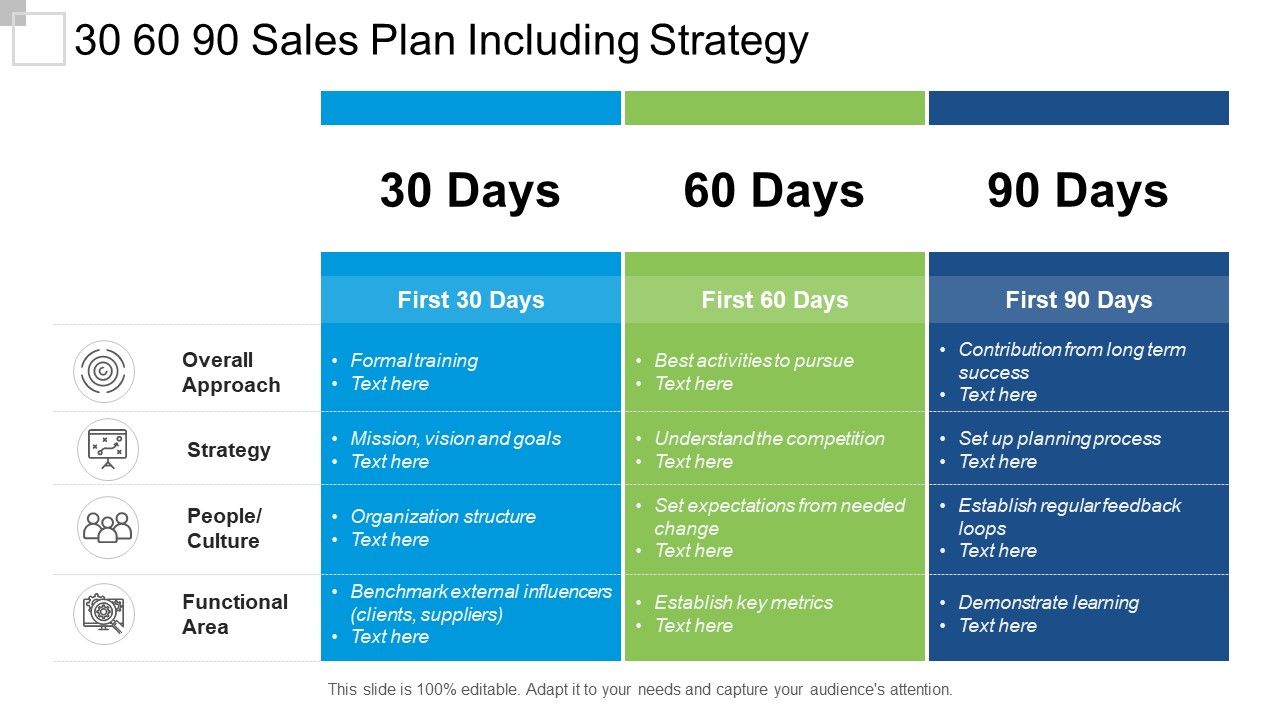
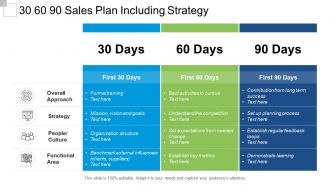
30 60 90 Plan de vente avec stratégie

Slide 1 of 5
Favourites Favourites

Try Before you Buy Download Free Sample Product

Audience Impress Your
Audience
Editable 100%
Editable
Time Save Hours
of Time
The Biggest Sale is ending soon in
0
0
:
0
0
:
0
0

Caractéristiques de ces diapositives de présentation PowerPoint:

Présentation de cet ensemble de diapositives portant le nom 30 60 90 Plan de vente, stratégie incluse. Les sujets abordés dans ces diapositives sont 30 60 90 Plan, Plan d'intégration. Il s'agit d'une présentation PowerPoint entièrement modifiable et disponible pour téléchargement immédiat. Téléchargez maintenant et impressionnez votre public.

FAQs for 30 60 90 sales

So you need five main things: define your target market clearly, do competitive analysis (seriously, don't skip this part - I've watched so many people bomb because they ignored competitors), set revenue goals with actual timelines, map out your lead gen tactics, and pick metrics you can realistically track. Also throw in your sales process stages and pricing strategy. Oh, and resource requirements - like what you'll actually need to pull this off. Address the obvious objections before they come up, show how it fits with company goals, and end with specific next steps. Otherwise everyone just nods and nothing happens after.

Think of it like this - instead of screaming the same message at everyone, you're having actual conversations. Break your customers into groups based on what they want or how they act. Then speak directly to each group's problems. Way better than the spray-and-pray approach most people use. Your conversion rates will thank you because you're hitting their specific pain points. Honestly, just pick your top 3 customer types first and write different messages for each. Don't overthink it - you can always tweak later.

Honestly, you gotta know what your competitors are doing or you're flying blind. Map out their pricing and messaging first - that's where you'll spot the biggest opportunities. I usually pick 3-5 main players and just keep tabs on them regularly. Look for their weak spots because that's gold for your positioning. Like, if they all suck at customer support, boom - that's your angle. You can't really craft a solid pitch without understanding where you stack up against everyone else. Oh and their pricing strategy will totally influence yours, so don't skip that part.

Honestly, sales forecasting is like having a cheat sheet for your business decisions. You can spot revenue patterns and see what's actually happening in your pipeline instead of just winging it. Smart resource allocation becomes way easier - you'll know exactly when to bring on more reps or which areas need backup. It also saves you from those cringe meetings where you overpromise to leadership and then... yeah, that never ends well. The trick is keeping your forecasts fresh so you can adjust course when things inevitably go sideways.

Honestly, the worst thing you can do is try to sell to everyone - you'll end up connecting with nobody. Most people also mess up by ignoring how customers actually buy stuff and just pushing features instead of solving real problems. Leadership always wants these crazy quotas for "aggressive growth" but that usually just burns out your team. Don't skip researching your competitors either, even if you think your product is amazing. I'd probably start by figuring out your buyer's journey first - like, really dig into their timeline and pain points. Then build everything around what they actually need, not what sounds good in meetings.

Honestly? Get them in the same room weekly, not just those awkward quarterly meetings. Both teams need to agree on who you're actually targeting - same buyer personas, same ideal customers. Marketing feeds sales the right leads, sales tells marketing what's working (or what sucks). Most places totally bomb this because everyone stays in their own little bubbles. Your messaging has to match too - can't have marketing promising one thing while sales says another. Oh, and track stuff you both actually care about, like how much revenue came from where. Otherwise you'll just keep optimizing for your own departmental metrics instead of what actually makes money.

Track both your leading and lagging indicators - revenue growth and conversion rates are the obvious ones everyone watches. But honestly? Pipeline velocity and sales cycle length are where the magic happens. Those tell you way more about what's actually working. Don't forget the activity stuff either - calls made, demos scheduled, qualified leads coming in. I'd obsess over maybe 3-5 metrics max that actually change how your team behaves. Nobody needs another pretty dashboard that just sits there looking impressive, you know? Pick what matters, measure it consistently, then tweak from there.

Honestly, get a decent CRM first - that's your foundation. It'll show you exactly where every deal sits without digging through spreadsheets. From there, you can automate the boring stuff like lead scoring and follow-up emails. I was skeptical about AI at first, but it's pretty solid at predicting which leads will actually buy. The scheduling tools are clutch too. Just don't go crazy buying every shiny tool you see - half of them won't even talk to each other. Start simple and add pieces that actually integrate. You'll wonder how you survived without it.

Honestly, customer feedback is gold for your sales strategy. You'll start noticing patterns in objections and figure out what messaging actually works. I've watched teams completely change direction once they realized customers didn't care about bells and whistles - they just wanted solid support during implementation. Feedback shows you blind spots in your process too. Win or lose, collect it systematically. Then dig into it monthly and tweak your approach. It's basically getting insider info straight from the people you're trying to sell to.

Dude, forget dumping spreadsheets on people - they'll zone out instantly. Tell stories instead. Find a customer who had their exact problem, then walk through what happened: "Company X was struggling with the same revenue issue you mentioned." Problem, solution, results. That's it. Keep each one under 2 minutes or you'll lose them. Honestly, I've watched so many reps bomb with endless data slides, but the second they start telling an actual story? Everyone leans in. Always connect it back to their situation and end with something like "imagine your team hitting those same numbers."

Honestly, templates are a game changer for sales presentations. You'll save so much time not starting from zero every single pitch. Just swap in your client details and you're good to go. New reps especially benefit since they can follow frameworks that actually work instead of fumbling through their own approach. I've watched people completely bomb presentations because they winged it and forgot major selling points. Testing becomes way simpler too - you can just tweak one section at a time rather than redoing everything. My advice? Start basic, then adjust based on who you're pitching to.

Honestly, just bake flexibility into your process from day one. Have your team do monthly market check-ins - yeah I know, another meeting, but hear me out. Track stuff that predicts the future, not just closed deals. Your reps are goldmines here since they're chatting with prospects constantly and pick up on shifts early. Oh, and don't roll out massive changes right away - that's asking for trouble. Test tweaks with one territory first, see what actually moves the needle, then expand from there. Way less risky than betting the whole farm on a hunch.

Honestly, mix some hands-on stuff with actual training sessions. Role-playing works really well - have them practice with real situations they'll actually deal with. I'd definitely do shadowing with your best people because watching someone crush it is way better than just talking about it. Weekly sessions at first so you can answer questions and work through problems together. Oh, and make some quick reference sheets they can grab during calls - nothing fancy. Start with just one strategy though. Don't dump everything on them at once or they'll get overwhelmed.

Honestly, just have your reps peek at LinkedIn before making cold calls - changes everything. The conversations feel way less awkward when you actually know something about the person. Don't ditch what you're doing now though. Use social to warm people up first, then hit them with your usual pitch. Have everyone share useful stuff and comment on prospects' posts. I swear it sounds like extra work but it's not - makes the calls so much easier. Pick LinkedIn (or whatever) and do like 15 minutes daily engaging with target accounts. Your close rates will thank you.

Honestly, it's all about knowing who you're talking to. Younger people? Hit them up on social media with casual messaging. Older folks usually want phone calls or emails that don't sound like you're their drinking buddy. Location matters too - I've seen campaigns crush it in cities but totally bomb in small towns. Income's huge for how you position pricing (obviously). The trick is digging into each group's preferences first. Then just test different approaches until something clicks. Geography can be tricky though - what resonates in one area might feel completely off somewhere else.

Ratings and Reviews

0% of 100
Review Form
Write a review
Most Relevant Reviews

No Reviews