3d market segmentation powerpoint template slide
Try Before you Buy Download Free Sample Product
Audience
Editable
of Time
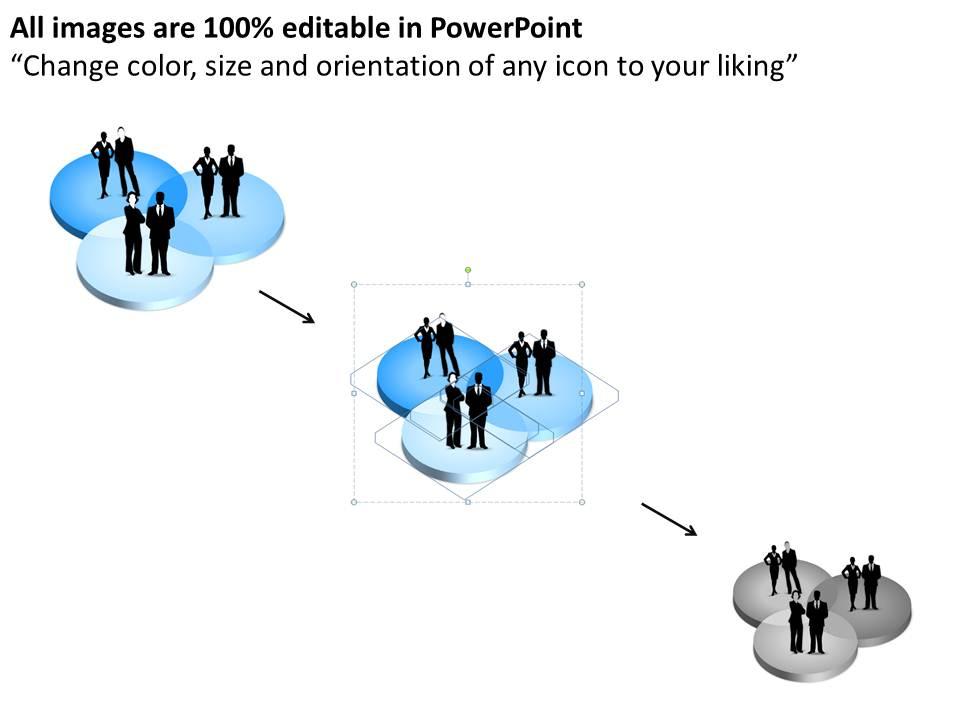
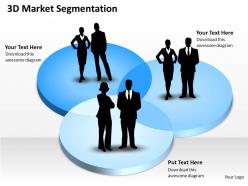
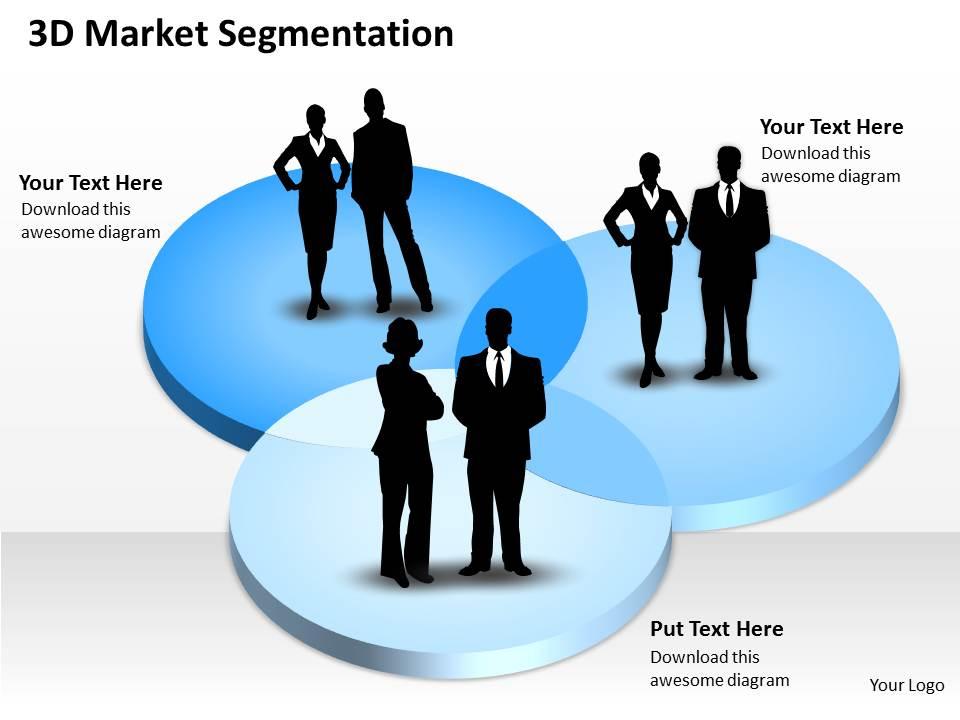
Sales and marketing being the most vital business concepts need to be taken care of while performing other operations to sustain growth and progress and to cope up with the cutthroat competitive scenario. Our team has crafted three-dimensional market segmentation PPT design diagram to enable a better understanding of marketing and research in order to enhance the business performance. Dividing the market into groups who share similar traits is important to reach the target market and to increase the sales and production in a short time. These layouts will guide the viewers to understand the process of market segmentation along with its importance and any plans and strategies that are required to be formed prior to separating the customers on the basis of their interests, likes and dislikes. These illustrations contain the graphic of three different circles with human figures which clearly indicates the market segmentation concept. So, what are you waiting for? Simply merge these informative backgrounds and attain your objectives. Attracting customers is our 3D Market Segmentation Powerpoint Template Slide forte. They are extremely effective in acquiring clients.
People who downloaded this PowerPoint presentation also viewed the following :
Content of this Powerpoint Presentation
Description:
The image is a PowerPoint slide titled "3D Market Segmentation" featuring silhouettes of business professionals standing on three overlapped circular shapes that likely represent different market segments. The design suggests a layered approach to market segmentation, with each circle and the figures upon it symbolizing a distinct segment.
Text placeholders marked "Your Text Here" and "Put Text Here" accompanied by the phrase "Download this awesome diagram" suggest areas where specific information about each market segment can be added by the presenter.
Use Cases:
The slide can be effectively used in various industries to demonstrate market segmentation strategies:
1. Marketing and Advertising:
Use: Demonstrating targeted audience segments.
Presenter: Marketing Strategist
Audience: Marketing team, clients
2. Retail:
Use: Categorizing customer demographics.
Presenter: Sales Manager
Audience: Sales and marketing teams
3. Healthcare:
Use: Segregating patient groups for specialized care.
Presenter: Healthcare Administrator
Audience: Medical staff, department heads
4. Financial Services:
Use: Outlining different investment product categories for clients.
Presenter: Financial Advisor
Audience: Clients, investors
5. Real Estate:
Use: Dividing property markets by buyer types.
Presenter: Real Estate Developer
Audience: Agents, investors
6. Technology:
Use: Identifying user groups for technology products.
Presenter: Product Manager
Audience: Development team, stakeholders
7. Education:
Use: Segmenting educational services for different student groups.
Presenter: Academic Director
Audience: Educators, school board
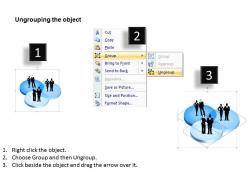
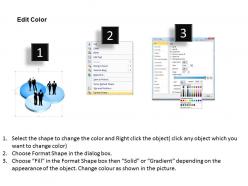
3d market segmentation powerpoint template slide with all 5 slides:
Bond with the best with our 3D Market Segmentation Powerpoint Template Slide. They attract folks of caliber.
FAQs for 3d market segmentation
So 3D segmentation basically gives you way better precision because you're adding depth to customer profiles. You're not just stuck with demographics and behavior anymore - throw in psychographics, life stage, values, whatever fits your market. It's like switching from a flat map to Google Earth, honestly. Traditional methods totally miss those subtle customer clusters that are often your most valuable ones. You'll spot segments you didn't even know existed and finally get why some campaigns crush it while others completely bomb. My advice? Just add one new dimension to what you're already doing and watch what pops up.
So basically dig into your customer data first - buying patterns, demographics, all that stuff to find natural groupings. Check out what competitors are doing too, but don't just steal their playbook if you're in totally different markets. Mix and match geographic, demographic, and behavioral factors until you find combos that actually predict different buying habits. Honestly, half the segments I see are just pretty charts that don't mean anything actionable. Test small campaigns with each segment before going all-in. You'd be surprised how often segments that look great on paper respond exactly the same way.
Look at what your customers actually do first - that's what tells you which three dimensions to pick. Say you notice people care most about price, how often they use your stuff, and whether they stick with brands. Boom, there's your three axes. I'd honestly skip demographics like age if the data shows income and lifestyle drive behavior more - why waste time on irrelevant stuff? Check your customer data for the strongest patterns in things like when they buy, which channels they prefer, or what features they actually use. Then just build your 3D model around those insights.
Tableau or Power BI are your best bet for 3D market segmentation - both crush it with interactive scatter plots and bubble charts. If you're into coding, R with plotly gives you tons of customization options. Python works too but honestly, unless you're already comfortable with it, the learning curve sucks. Quick prototypes? Excel's 3D charts aren't terrible. I'd probably go with Tableau first if you can swing the cost - that drag-and-drop thing saves so much time compared to writing code for everything. Way less headache overall.
Look, 3D segmentation is where you slice your customers three different ways at once - demographics, behavior, psychology, whatever combo works. Way better than the basic stuff most companies do. You can spot these tiny niches that are actually goldmines instead of building generic products nobody loves. Honestly, it's pretty wild how much you miss with traditional methods. Map your current customers across three angles and watch the patterns pop up. Then you'll know exactly which features your best segments actually care about. Game changer for sure.
Think of demographics as your starting GPS coordinates - age, income, location, education give you the basic map. But here's the thing: people are way messier than spreadsheets suggest. You can't just stop there anymore. What I do is use those demographics as my foundation, then pile on the behavioral stuff and psychographic data to build actual 3D customer clusters. Like, two 35-year-old accountants might buy totally different things for completely different reasons. Demographics get you in the ballpark, but the layered approach is what makes your segments actually useful for targeting. Start basic, then get weird with it.
Build flexibility into your segments from day one - that's the biggest thing. I'd do quarterly reviews minimum to check against new data and market changes. Most companies honestly wait way too long and miss stuff. Use variables that can actually evolve instead of those rigid demographic boxes that go stale fast. Real-time data feeds help a ton here, plus ML models that catch emerging patterns early. Oh, and pick 2-3 warning signs that tell you when it's time to completely rethink your approach. That'll save you from scrambling later.
Honestly? Most people go crazy with too many dimensions and end up with these useless tiny segments. Like, what's the point if you can't actually market to them? Also seen tons of companies build these gorgeous segmentation models then just... ignore them completely when making decisions. Wild. Don't just look at demographics either - that stuff's pretty surface level. Behavior matters way more. Oh, and please use recent data, not whatever you had lying around from 2019. Start simple with maybe 2-3 key things, test it out first. You can always add complexity later once you know what actually works.
Okay so 3D segmentation is basically when you stack different customer traits on top of each other instead of just using one thing. Like, don't just look at age - combine that with buying habits and lifestyle stuff too. You end up with these super specific customer groups that are way easier to target. Honestly, the patterns you find can be pretty surprising. Your messaging hits different when you really know who you're talking to. I'd start with your three biggest customer characteristics and see what happens when you layer them together. It's kind of like those clear sheets in science class, you know?
So you'll definitely want to track the usual stuff - conversion rates, customer lifetime value, engagement across each segment. But honestly, the real test is whether customers actually behave differently across your behavioral, demographic, and psychographic splits. Segment stability matters too - are people jumping between categories constantly? Set up a dashboard showing migration patterns and how the dimensions interact with each other. The overlap analysis is huge here. Otherwise you might just be making things complicated for no reason. Oh, and track cross-dimensional performance - that's where you'll see if this whole 3D thing is actually worth the extra work.
Basically, qualitative research shows you *why* people act the way your data says they do. Your segments tell you what's happening, but talking to actual humans reveals the real motivations behind those patterns. Honestly, the stories are way more compelling than staring at numbers all day. Focus groups help you figure out which pain points actually matter and how to talk to each segment without sounding like a robot. I'd start with maybe 8-10 interviews per segment - nothing fancy, just real conversations. It's like finally understanding why your data looks the way it does instead of just knowing that it does.
Honestly, I'd start with your best customers and map them across demographics, behavior, and psychographics. Don't try to do everything at once though - I made that mistake before and it was a mess. Layer it slowly so your team can actually handle the complexity. Your highest-value segments should come first since that's where you'll see real overlap between the three dimensions. Also make sure your marketing automation won't crash under all this new segmentation before you go crazy with it. Once you're seeing good ROI, then you can get into the really detailed stuff.
3D segmentation is a game changer for mapping customer journeys - you're tracking behavior, demographics, and psychographics simultaneously. This lets you pinpoint exactly where different customer types hit roadblocks or get excited. A tech-savvy millennial's buying path looks completely different from a budget-conscious boomer's, even for identical products. You'll catch patterns that traditional segmentation misses entirely. Maybe one group abandons cart at pricing, while another drops off during onboarding (which honestly surprised me when I first saw it). Start by layering your existing journey maps with 3D segment data. The disconnects become super obvious.
Dude, AI and ML are perfect for this. They crunch way more data than you could ever handle manually - demographics, behavior patterns, psychographics, all at once. Machine learning spots those weird correlations you'd totally miss, like how someone's buying habits connect in unexpected ways. The cool part? It keeps learning and updating your segments automatically as new data rolls in. Way better than doing it the old-school way, honestly. Oh, and k-means clustering is probably where you'd want to start - just figure out what customer data you've got first.
Retail and e-commerce are crushing it with 3D market segmentation right now. They're doing personalized shopping experiences, store layouts - that whole thing. Automotive companies segment by mapping 3D preferences for car features, which is pretty clever actually. Healthcare's gotten super sophisticated too with patient journey mapping in 3D spaces. Gaming and real estate are picking up steam fast, makes total sense though. Oh, and if you're thinking about trying this - honestly I'd peek at what retail competitors are doing first since they're way ahead of everyone else on this stuff.
-
Qualitative and comprehensive slides.
-
Editable templates with innovative design and color combination.