3d web template for designing flat powerpoint design
Try Before you Buy Download Free Sample Product
Audience
Editable
of Time
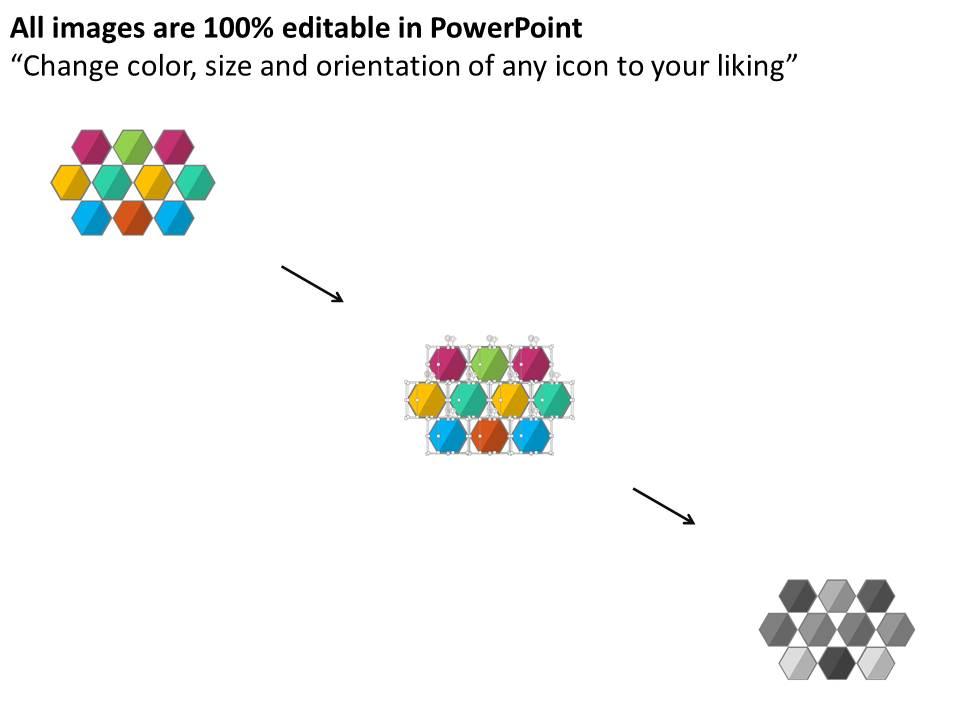
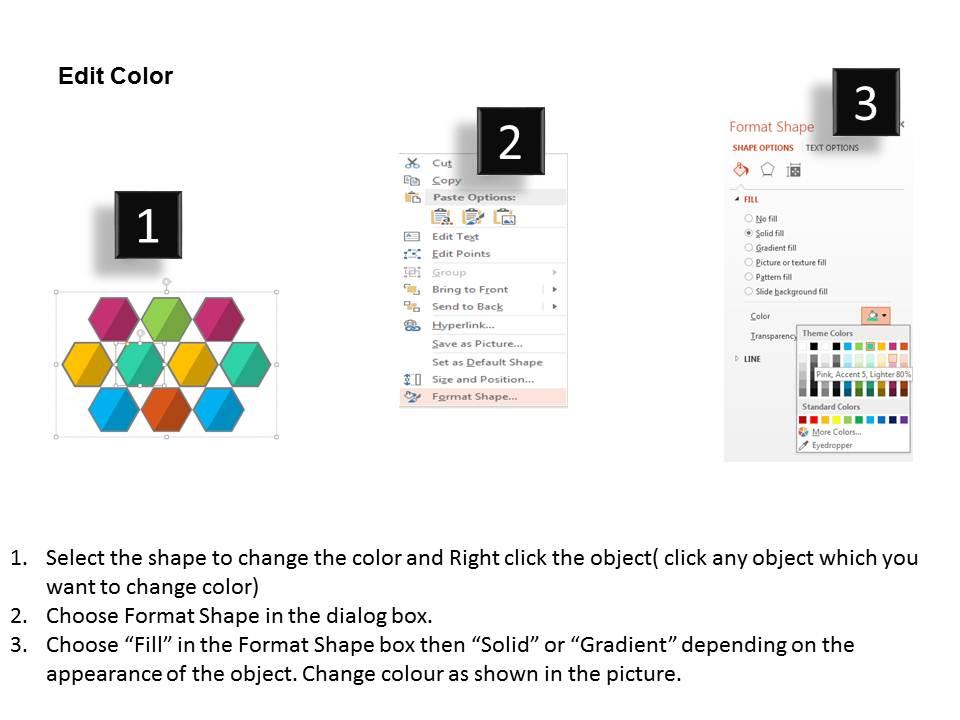
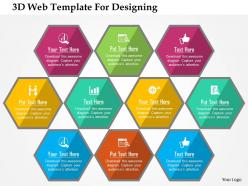
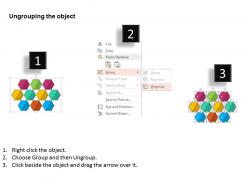
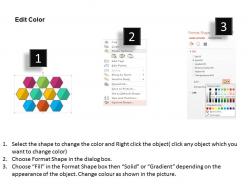
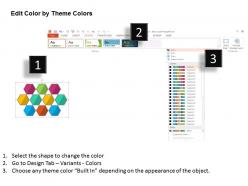
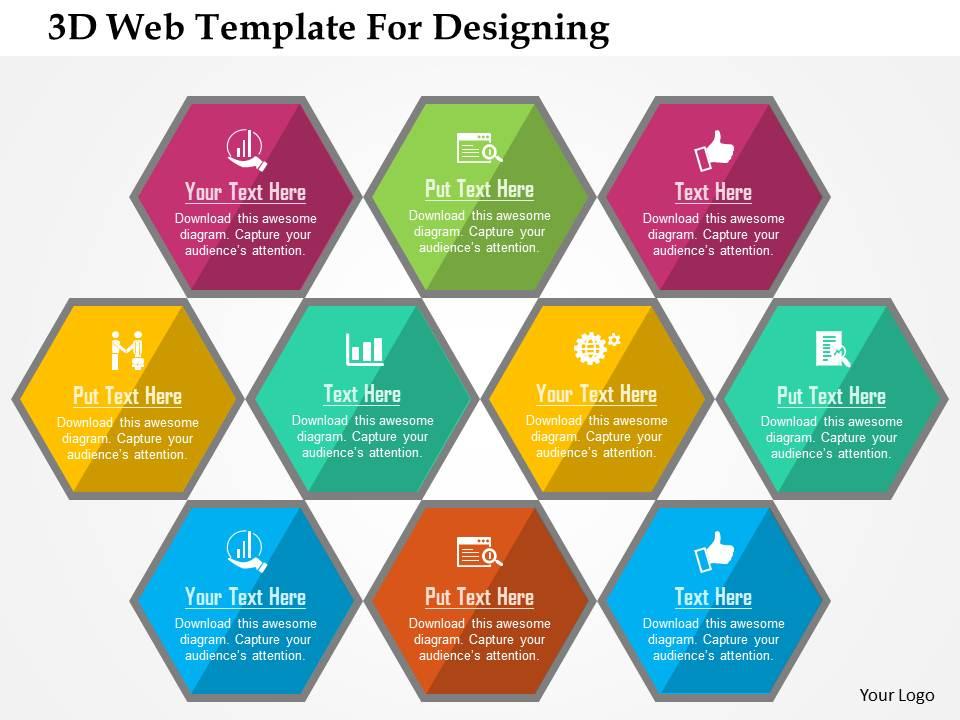
Provided here is a set of ten hexagonal diagrams of varied colors with text space as presented in form of 3d web template for designing flat PowerPoint design. This is an abstract PPT template and hence can be used for variety of business and non business topics depending upon on your stretch of imagination and creativity. Club the available hexagonal ten designs PPT PowerPoint presentation model for talking about the ten functions of an organization, ten attributes of a process, the ten steps or any such ten numbers. The overall designing and color scheme of the 3D web PowerPoint PPT slide design background is very eye catchy. Audience is bound to remain glued to their position once they have a first look on the slide. Creative visualization, aesthetically sound, flawless craftsmanship and professional proficiency are the traits associated with the available web designed PowerPoint picture. Simply download the presentation and use it for customization ad further presentation. Creative visualization, aesthetically sound, flawless craftsmanship and professional proficiency are the traits associated with the available web designed PowerPoint picture. Simply download the presentation and use it for customization ad further presentation.
People who downloaded this PowerPoint presentation also viewed the following :
3d web template for designing flat powerpoint design with all 5 slides:
Help yourself to happiness with our 3d Web Template For Designing Flat Powerpoint Design. Be able to fulfill your cherished dreams.
FAQs for 3d web template for designing
3D web templates deliver enhanced visual engagement, improved audience retention, professional credibility, interactive storytelling capabilities, and memorable brand differentiation. These templates streamline complex data presentation by creating immersive experiences, enabling dynamic content navigation, and facilitating better audience comprehension, with many organizations finding that 3D presentations significantly increase stakeholder engagement and decision-making speed.
3D web templates enhance audience engagement by creating immersive visual experiences, enabling interactive navigation, and delivering dynamic content presentation that captures attention more effectively than static slides. These templates transform presentations into explorable environments, with companies in sectors like real estate, education, and product marketing finding significantly higher viewer retention rates, increased interaction time, and improved information recall compared to traditional flat presentation formats.
Effective 3D web storytelling templates should incorporate intuitive navigation paths, dynamic lighting effects, strategic camera angles, immersive spatial layouts, and progressive content reveals. These design elements work together by guiding user attention through visual hierarchy, enhancing emotional engagement through atmospheric lighting, and creating memorable brand experiences, with many businesses finding that strategic depth and motion ultimately deliver higher conversion rates.
3D web templates can be optimized through responsive design frameworks, adaptive mesh simplification, dynamic level-of-detail rendering, progressive loading techniques, and CSS media queries that adjust complexity based on device capabilities. These optimization strategies enable seamless experiences across desktop, tablet, and mobile platforms by automatically reducing polygon counts, texture resolutions, and animation complexity on lower-powered devices, ultimately delivering consistent visual appeal while maintaining optimal performance.
3D animations enhance presentation clarity by enabling spatial visualization of abstract concepts, breaking down complex processes into sequential steps, and providing interactive exploration of detailed structures. Through dimensional modeling and dynamic transitions, presenters can illustrate intricate data relationships, technical workflows, and product architectures more effectively than static slides, with audiences experiencing significantly improved comprehension and retention rates.
**INPUT**: What software or tools are commonly used to create 3D web templates? **OUTPUT**: Common tools for creating 3D web templates include Three.js, Blender, WebGL frameworks, A-Frame, and Babylon.js for development and modeling. These technologies enable organizations to streamline interactive experiences, enhance user engagement, and deliver immersive web interfaces, with many e-commerce and marketing teams finding significant competitive advantages through enhanced visual presentations. **Word count: 52 words**
3D web templates can significantly impact loading times through larger file sizes, complex rendering requirements, and increased browser processing demands. However, modern optimization techniques like compressed textures, progressive loading, and WebGL efficiency enable many businesses to deliver immersive experiences without compromising performance, with e-commerce and portfolio sites finding strategic balance between visual impact and speed.
Best practices for integrating multimedia elements within 3D web templates include optimizing file sizes, ensuring cross-browser compatibility, maintaining responsive design, implementing progressive loading, and balancing visual impact with performance. These approaches streamline user experiences by reducing load times, enhancing accessibility, and delivering seamless interactions, with many organizations finding that strategic multimedia integration ultimately drives higher engagement and competitive advantage.
Businesses can leverage 3D web templates to create immersive marketing presentations that showcase products, services, and data through interactive visualizations, dynamic product demonstrations, and engaging storytelling elements. These templates enable companies to deliver memorable pitches with rotating product models, interactive infographics, and spatial data presentations, ultimately enhancing client engagement and differentiation in competitive markets.
Interactivity in 3D web templates enables users to manipulate objects, navigate environments, and engage with content through clickable elements, hover effects, and immersive experiences. This engagement significantly enhances viewer retention by creating memorable interactions, reducing bounce rates, and encouraging deeper exploration, with many e-commerce and educational platforms finding that interactive 3D elements increase session duration and conversion rates.
3D web templates can be customized through color scheme adjustments, typography modifications, logo integration, material texture changes, and interactive element styling to align with brand guidelines. These customization options enable businesses across retail, technology, and creative industries to maintain brand consistency while leveraging immersive visual experiences, ultimately delivering enhanced user engagement and stronger brand recognition in an increasingly competitive digital landscape.
Common pitfalls include overloading slides with excessive 3D elements, choosing templates that don't align with your brand identity, neglecting mobile compatibility, and using complex animations that distract from key messages. These issues can overwhelm audiences and reduce presentation effectiveness, with many organizations finding that strategic restraint in 3D usage ultimately delivers clearer communication and stronger audience engagement.
3D web templates accommodate accessibility by incorporating alternative text descriptions, keyboard navigation controls, reduced motion options, high contrast modes, and screen reader compatibility. Through semantic HTML structures and ARIA labels, websites using these templates enable users with visual, motor, or cognitive disabilities to access interactive content, while customizable settings ultimately deliver inclusive experiences across diverse user needs.
Emerging trends in 3D web template design include immersive interactive elements, AI-powered customization, minimalist depth layering, micro-animations, and responsive cross-platform compatibility. These advancements streamline presentation creation by enhancing visual engagement, reducing design complexity, and enabling seamless device integration, with many organizations finding that strategic 3D elements ultimately deliver stronger audience retention and competitive presentation advantages.
Feedback and analytics enable continuous improvement of 3D web templates through user behavior data, performance metrics, loading time analysis, and interaction tracking. These insights help designers optimize rendering efficiency, streamline navigation pathways, and enhance visual elements, with many web development teams finding that data-driven iterations ultimately deliver better user experiences and higher engagement rates.
-
Excellent template with unique design.
-
Thanks for all your great templates they have saved me lots of time and accelerate my presentations. Great product, keep them up!