


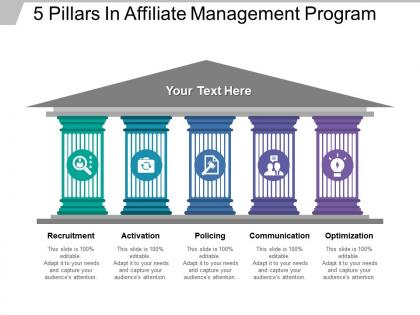
5 pillars in affiliate management program




Try Before you Buy Download Free Sample Product
 Impress Your
 Audience
 100%
100% Editable
 Save Hours
 of Time


Our 5 Pillars In Affiliate Management Program are definitely a class apart. You will find them extremely exotic.
People who downloaded this PowerPoint presentation also viewed the following :
5 pillars in affiliate management program with all 5 slides:
Give your brains a good feed with our 5 Pillars In Affiliate Management Program. They contain the best food for thought.

FAQs for 5 pillars in
Honestly, recruiting good affiliates is the trickiest part - you want people who'll actually care about your product, not just throw links everywhere. Fair compensation keeps them motivated, obviously. Regular communication matters too, like updates and actual support when they need it. Oh and tracking systems are absolutely essential or you're screwed - gotta monitor clicks, conversions, all that stuff. I'd start by figuring out what your ideal affiliate looks like first. Then build everything around attracting those specific people and keeping them happy long-term.
Skip the mass email thing - it's basically pointless now. Hit up industry forums and LinkedIn groups where good affiliates actually spend time. ShareASale and CJ Affiliate work too. Find people already pushing similar stuff in your space (just not direct competitors, obviously). Competitive commissions help, but honestly? They want real support more than anything. Custom landing pages, product demos, someone they can actually talk to. I'd start small - maybe 10-20 solid prospects and write actual personal messages. Quality affiliates treat this like a real business partnership, not some side hustle for beer money.
Track your conversion rates and average order value first - those are the basics. Revenue per affiliate matters too, obviously. Growing your affiliate base is huge but honestly, quality beats quantity every time. I'd rather have 10 affiliates bringing in solid customers than 50 random ones just driving cheap traffic. Monthly recurring revenue from affiliate customers is where the real money is if you're subscription-based. Also watch your click-to-sale ratios and lifetime customer value. You can always get fancier with tracking later, but start there.
Yeah, higher commissions definitely get affiliates working harder, but the structure matters just as much as the percentage. I'd go with flat rates for products that sell consistently. Tiered systems are gold though - nothing motivates like volume bonuses. Performance bonuses for hitting targets? Your best affiliates will absolutely grind for those. Revenue sharing beats one-time payouts if you want long-term commitment. Honestly, match whatever structure to what you actually want them focusing on. Oh, and test different approaches with smaller groups first - saves you from making expensive mistakes across your whole program.
Dude, just be super upfront about everything from the start. Commission rates, when they get paid, what you expect - lay it all out there. I've watched so many partnerships crash because someone wasn't clear about the basics upfront. Keep your affiliate dashboard updated with real numbers and send them regular reports so they know how they're doing. Oh, and if you're changing anything in your program? Give them a heads up first. Nothing kills relationships faster than surprising your affiliates with new rules they never saw coming. Trust me on this one.
Dude, get yourself an affiliate management platform - it'll save your sanity. No more spreadsheet hell tracking clicks and conversions manually. These things handle payments, spit out reports, and even help you find new affiliates. The fraud detection alone is worth it (saved my butt so many times). Impact and ShareASale are solid starting points, though honestly the interfaces take some getting used to. Real-time tracking changes everything once you're set up. Way better than trying to piece together data from five different sources at month-end.
Honestly, the tracking thing will kill you - I've seen so many people lose their shirts because they can't figure out which affiliates are actually driving sales. Commission rates are tricky too. Set them too low and nobody good wants to work with you, too high and you're basically paying people to bankrupt you. Most people also just throw anyone into their program without checking if they're legit first. Bad idea. The communication piece is huge though - your affiliates aren't mind readers. They need updates, materials, someone to actually talk to when stuff goes wrong. You can't just set it and forget it like some infomercial. Get decent tracking software first, then peek at what competitors are paying.
Start with solid guidelines that spell out FTC rules and what promotional stuff they can't do. Actually walk them through it during onboarding - don't just send a PDF and hope for the best. You'll need to check their content regularly too, which honestly is kind of a pain but necessary. Set up approval for any major campaigns. Training materials help a lot. The real key though? Don't hesitate to cut ties when someone keeps breaking rules. I've seen too many companies get burned because they were scared to terminate problem affiliates. Make compliance part of your whole relationship, not an afterthought.
Honestly, it's all about treating them like actual partners instead of just another marketing thing. Send performance updates and industry stuff regularly - they love that insider info. Tiered commissions are clutch because your top performers always want something bigger to chase. Personal recognition hits different though. Like, just shooting them a quick message saying "killed it this month" makes people feel seen, you know? Oh and definitely be quick with replies when they hit you up with questions. Your best affiliates will totally stick around if they feel valued rather than used.
Affiliate marketing is basically getting other people to be your hype team. They push your stuff to their followers and earn commission when someone actually buys. Pretty sweet deal since you're not paying unless they deliver real sales. The best part? Good affiliates genuinely love what they're promoting, so it doesn't feel like some random ad. You can see exactly who's driving traffic and focus more energy there. Honestly, I'd start small - find people whose audience matches your ideal customers. That's where you'll get the most bang for your buck on brand awareness.
Get them a welcome sequence that covers everything - commission details, payment timeline, promo rules, all that stuff. Don't make them wait for marketing materials either, that's where most programs screw up honestly. Those first few weeks are make-or-break. I'd do a personal onboarding call to handle their questions, then check in regularly that first month. Nobody wants to feel like they're flying blind, you know? Oh and create some kind of simple checklist so they can actually get their first campaign running fast. The hand-holding early on pays off big time later.
Honestly, social media is perfect for affiliate stuff if you do it right. Pick one platform where your people actually are - don't spread yourself thin across everything. Instagram stories work great for quick product demos. TikTok's amazing for showing how you actually use things in real life. I've seen people crush it with honest reviews on Facebook too. Twitter's solid for sharing tips, though those character limits drive me crazy sometimes. The biggest thing? Don't be all salesy about it. People instantly know when you're being fake, and it's such a turnoff. Just be genuine when recommending stuff you actually like.
Networks are great for getting started – instant access to affiliates plus they handle payments and tracking. Downside? You're paying 3-5% fees and can't really control those relationships. Going in-house keeps those fees in your pocket and lets you build real partnerships. Some of our best results honestly came from those direct relationships with top performers. But man, the setup is brutal – recruiting, vetting, all the tech stuff. Takes forever. Most people test with networks first, then poach their best affiliates later. I'd probably do both if you can swing it.
Oh man, seasonal stuff is HUGE for affiliate marketing. Black Friday and back-to-school? Traffic goes absolutely nuts. But then January hits and it's like tumbleweeds everywhere. I got burned so bad my first year not seeing this coming! Your conversion rates bounce all over the place too since people shop differently depending on the season. What works is mapping out your promo calendar ahead of time. Boost your best affiliates before the busy seasons start, and throw some bonus incentives at them during the dead periods. Otherwise you'll lose momentum when things get slow.
Dude, video content is where it's at right now - TikTok and Reels are getting insane engagement for affiliates. Companies are moving away from one-off influencer posts toward actual long-term partnerships, which honestly makes way more sense. AI tracking is finally catching up too, so you can actually see how customers move between devices. Oh, and micro-influencers are having a moment since their audiences are way more engaged than the big names. Even B2B companies are jumping into affiliate programs now, not just the usual e-commerce brands. You should definitely test some video partnerships and fix your mobile tracking if you haven't already.
-
Attractive design and informative presentation.
-
Content of slide is easy to understand and edit.