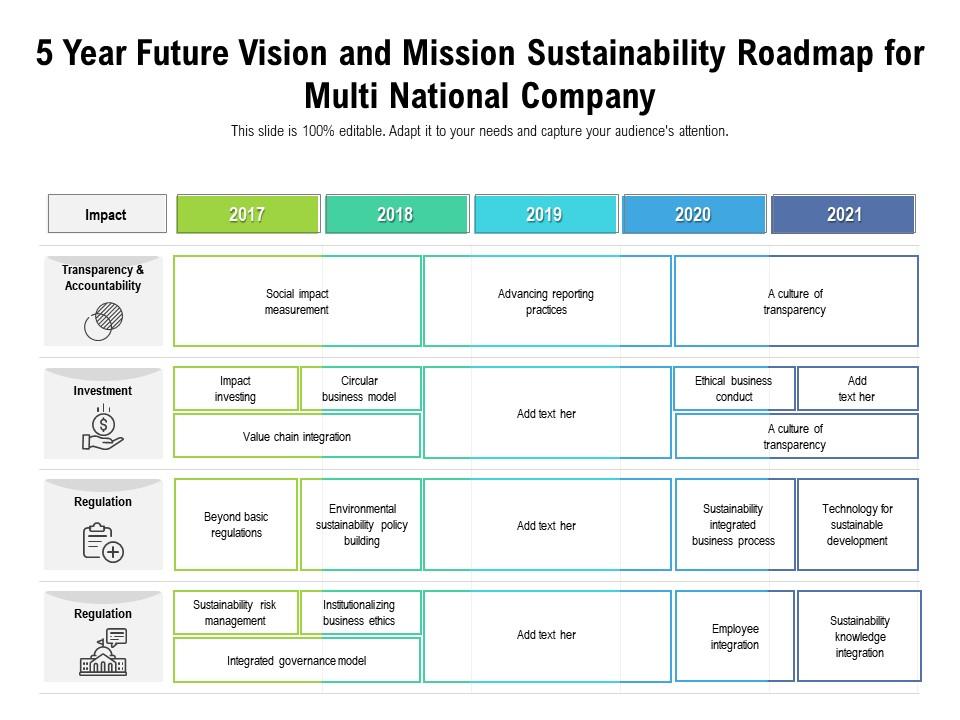
5-Jahres-Zukunftsvision und -mission Nachhaltigkeitsfahrplan für multinationale Unternehmen

5 year future vision and mission sustainability roadmap for multi national company
Slide 1 of 2
Favourites Favourites

Try Before you Buy Download Free Sample Product

Audience Impress Your
Audience
Editable 100%
Editable
Time Save Hours
of Time
The Biggest Sale is ending soon in
0
0
:
0
0
:
0
0

Merkmale dieser PowerPoint-Präsentationsfolien:

Präsentieren der 5-jährigen Zukunftsvision und Nachhaltigkeits-Roadmap für multinationale Unternehmen PowerPoint-Folie, die zu 100 Prozent editierbar ist. Sie können Farbe, Schriftgröße, Schriftart und Formen dieses PPT-Layouts nach Ihren Wünschen ändern. Diese PPT-Vorlage ist mit Google Slides kompatibel und in den Seitenverhältnissen 4,3 und 16,9 verfügbar. Diese gebrauchsfertige PowerPoint-Präsentation kann in verschiedenen Formaten wie PDF, JPG und PNG heruntergeladen werden.

FAQs for 5 year future vision and mission sustainability roadmap for

Look, most companies mess this up by treating sustainability like some separate thing instead of weaving it into their actual business decisions. You need clear goals you can actually measure, plus get everyone involved - your team, customers, suppliers, the whole crew. Track your data religiously because numbers don't lie. Oh and be transparent about it all or people will smell the BS from miles away. Honestly? Don't try to boil the ocean right away. Pick one area where you can actually move the needle and build momentum from there. The integration piece is what separates the real players from the greenwashers.

Honestly, you've gotta track both the hard numbers and the softer stuff. Carbon reduction, waste rates, energy/water savings - that's your bread and butter data. But don't sleep on employee surveys and customer feedback either. Those tell you things spreadsheets can't. Here's what I'd do: pick your baseline before starting anything, then check progress every quarter or so. Focus on maybe 3-5 metrics that actually matter to YOUR goals instead of measuring random stuff just because you can. I learned that the hard way at my last job - we were drowning in data but couldn't see what was actually working. Start simple, you can always add more later.

Honestly, stakeholder engagement can make or break everything. Map out who actually affects your business or gets impacted by it - employees, customers, suppliers, the whole crew. Getting their input early helps you figure out what really matters instead of just winging it. They'll catch risks you'd totally miss sitting in your office bubble. Regular check-ins throughout the process work way better than asking for feedback at the very end when it's too late to change anything. Plus you need their buy-in anyway if you want stuff to actually happen.

Look, you've gotta flip the script and make sustainability about making money, not spending it. Quick wins are your friend here - energy efficiency stuff, cutting waste - these pay for themselves fast and get everyone excited. The bigger investments like renewables take a few years to pay off, but that's fine. Companies that nail this early are gonna leave everyone else in the dust, honestly. Finance needs to see real numbers though, so map out your ROI timelines for each thing you want to do. I'd mix it up - some projects that save cash right away, others that position you better for whatever's coming next.

Honestly, the worst thing companies do is just slap "green" on their marketing while changing nothing behind the scenes. Super obvious and customers see right through it. Don't set fuzzy goals like "be eco-friendly" either - you need actual numbers and deadlines or you're just spinning your wheels. Get everyone on board early, not just the C-suite. Most people totally underestimate how much time and money this stuff takes too. My advice? Figure out where you're at first, then pick maybe 2-3 solid goals for the year. Way better than trying to save the world overnight.

Honestly, tech is like a cheat code for sustainability stuff. Start with something you're already tracking - energy bills, waste costs, whatever. IoT sensors can show you real-time energy usage, which is pretty cool actually. AI helps predict where you'll waste resources before it happens. Cloud platforms let you see your whole supply chain's carbon footprint too. The best part? Having actual dashboards makes it way less overwhelming for your team - they can see real numbers instead of just abstract "be greener" goals. Don't try to digitize everything at once though, you'll go crazy. Pick one area and build from there.

First thing - map out your whole supply chain to spot the big sustainability risks. Carbon footprint, water use, labor stuff, you know the drill. Create scorecards for suppliers and actually use them when picking vendors. Here's what works way better though: partner with your key suppliers on improvements instead of just auditing them constantly. Nobody likes the sustainability police approach anyway. Think circular too - recyclable designs, less packaging waste. Oh, and this is crucial - treat sustainability metrics like they're as important as cost and quality. That's honestly where most companies mess up.

Honestly, culture makes or breaks sustainability stuff. Leadership has to actually care - not just pretend for shareholders. Your employees will sniff out fake commitment from miles away, trust me. The magic happens when green practices feel natural, not forced. I've watched companies with brilliant plans crash because only the executives gave a damn. You can't just slap it in the annual report and call it done. Find those passionate people on your team first. They'll spread the energy way better than any top-down mandate ever could.

You gotta track the obvious stuff first - carbon emissions, energy use, water consumption, waste rates. That's your baseline. But here's what people miss: the business side matters just as much. Cost savings from going efficient, how employees actually feel about your green initiatives, customer feedback on sustainability efforts. Honestly, I'd rather see you nail 5-7 metrics consistently than half-ass tracking everything. Monthly dashboard reviews work best - keeps you honest and lets you pivot when something's not working. Oh, and employee engagement scores around this stuff can be surprisingly telling about whether your programs actually stick.

Honestly, people can spot fake sustainability stuff instantly, so don't even try it. Set actual deadlines for your goals instead of saying you'll "improve" someday. Stories work way better than stats - show real examples or highlight employees doing cool green stuff. Videos of your actual processes are gold, and infographics too. Yeah, social media's obvious, but your packaging and website matter just as much. Oh, and don't pretend you're perfect - talk about your struggles too. I'd start by checking where you already mention sustainability and make sure it all matches up. Consistency's everything here.

Honestly, LCA is like being a detective for your environmental impact. Most companies only look at what's happening in their own facilities, but the real damage? Often hiding in your supply chain or how customers actually use your stuff. I've seen companies shocked when they realize their "green" product has a massive carbon footprint from shipping or manufacturing. The whole cradle-to-grave view helps you figure out where to spend your sustainability budget instead of just throwing money at random initiatives. Just pick one product first though - don't try to analyze everything at once.

Start with a big-picture risk assessment - map out environmental, social, and governance stuff across your whole operation. Climate disruption to your supply chain, new regulations, rep damage, all of it. Don't just focus on carbon emissions though. Water issues, labor problems, waste - there's so much more that can bite you. Then rank everything by how likely it is and how bad it'd hurt your business. Honestly, a simple matrix works great for this. Get people from different teams involved too since they'll catch things you totally missed.

Honestly, sustainable certifications are pretty solid for giving your strategy some structure and credibility. B Corp, LEED - they create actual benchmarks instead of just random "we're green" nonsense. Customers and investors want proof these days, not empty promises, so the marketing boost is real. Downside? They're pricey and kind of a pain to keep up with. I'd say pick ones that actually match what your business does - like, don't get a water certification if you're a software company, you know? Check what your competitors have first, then see what your stakeholders actually give a damn about.

Honestly, teaming up with other orgs is a game changer - you can split costs on big projects and share resources instead of doing everything solo. Joint renewable energy buys, shared research, that kind of stuff. When you're pushing for policy changes, having numbers behind you makes such a difference (I've seen companies try to lobby alone and it's pretty painful to watch). You'll pick up tricks faster too by seeing what actually works for them. I'd start small though - find someone with similar goals and test out a pilot project first. Way less risky than jumping into something huge.

Yeah, consumer demand is huge for pushing companies toward sustainability - honestly bigger than regulations most of the time. Look at Patagonia or Unilever - they've basically built their whole competitive edge around it. Your customers actively wanting eco-friendly stuff and paying more? That hits the bottom line hard and forces real strategic changes. Here's the thing though - people lie on surveys all the time about what they'll actually buy. You need to check real purchasing data instead. I'd start by just asking your current customers what sustainability stuff matters to them most. Gives you a clear direction to work with.

Ratings and Reviews

0% of 100
Review Form
Write a review
Most Relevant Reviews

No Reviews