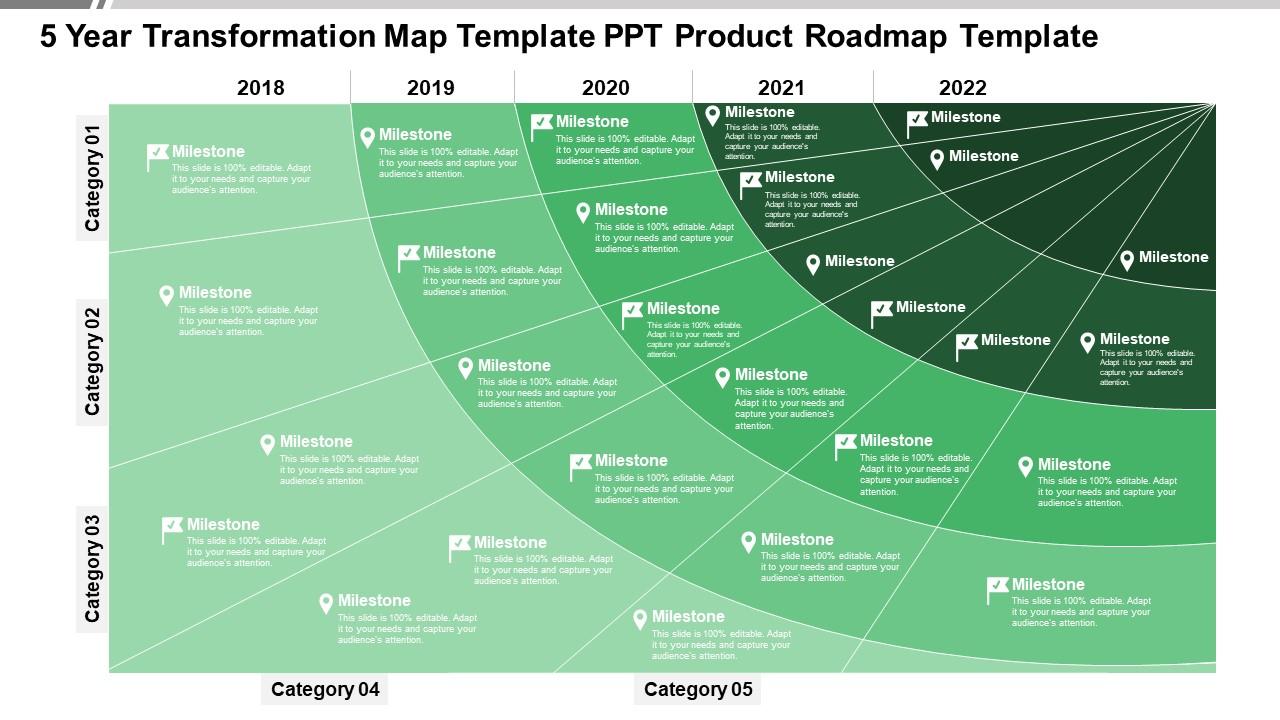
Plantilla de mapa de transformación de 5 años Plantilla de mapa de ruta de producto Ppt

Slide 1 of 5
Favourites Favourites

Try Before you Buy Download Free Sample Product

Audience Impress Your
Audience
Editable 100%
Editable
Time Save Hours
of Time
The Biggest Sale is ending soon in
0
0
:
0
0
:
0
0

Características de estas diapositivas de presentación de PowerPoint:

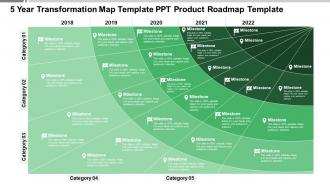
Presentando este conjunto de diapositivas con el nombre - Plantilla de mapa de transformación de 5 años Plantilla de hoja de ruta de productos Ppt. Este es un proceso de cinco etapas. Las etapas de este proceso son Mapa de transformación, Transformación empresarial, Hoja de ruta del producto, Línea de tiempo del producto, Desarrollo del producto, Revisión del producto, Planificación del producto.

Contenido de esta presentación de Powerpoint

FAQs for 5 year transformation map template ppt

So for your roadmap template, definitely include time horizons - quarters usually work best. Add your strategic themes, specific features/epics, and priority levels. Stakeholder owners and success metrics are crucial too (learned that the hard way when leadership started asking who owned what). Dependencies between features matter a lot, plus any assumptions you're making. The goal is visibility for everyone - what you're building, timeline, reasoning behind it all. Honestly, I'd start simple and build complexity over time. Your team needs to actually use the thing, so don't overcomplicate it from day one.

Honestly, roadmap templates are lifesavers because they stop those awkward "wait, what are we even building?" conversations. Your whole team - engineering, sales, whoever - can see what's coming and why it matters. No more digging through random emails or meeting notes to figure out priorities. Templates give everyone the same visual breakdown of timelines and dependencies. Quarterly views work great to start with. Just make sure you're actually updating the thing regularly or people will stop trusting it (learned that one the hard way). It basically becomes your go-to source when things inevitably shift around.

So strategic roadmaps are your big picture stuff - like what you want to accomplish over quarters or years and why it matters. Tactical ones? That's the actual execution part with specific features, deadlines, and who's doing what over the next few weeks or months. You really need both though. The strategic keeps everyone on the same page about where you're headed, and tactical breaks it down into chunks your team can actually handle. I'd say start strategic first (obviously), then figure out how to chop it up into manageable pieces. Way easier than trying to go backwards from tactics to strategy - trust me on that one.

Dude, visual roadmaps are game-changers. Color coding shows priorities at a glance. Progress bars? Way better than saying "75% done" in text. Icons help people spot feature types instantly - though I probably go overboard with the icon thing sometimes. Charts and timelines make dependencies super obvious. Nobody wants to decode a wall of text during meetings. Keep your visual system consistent across versions so people don't have to relearn everything. Short version: stakeholders actually pay attention when there's something interesting to look at instead of just words.

Oh man, there's a bunch of good options! ProductPlan and Aha! are solid if you want the fancy dedicated stuff with collaboration features. But honestly? Sometimes I just use Miro or even PowerPoint - they work fine for basic roadmaps and your team probably already knows how to use them. Figma's great too if you're into that. Most have real-time sharing built in anyway. My take: start with whatever tool your team's already using for planning. You can always upgrade later if you need the bells and whistles like auto-updates or stakeholder portals.

So roadmap templates are pretty flexible - just swap out the timeframes and metrics for what actually matters in your field. Tech teams usually work around sprints and feature drops. Manufacturing? They're thinking way longer term with regulatory stuff. Healthcare has all these compliance hoops that retail just... doesn't deal with at all (honestly the differences are crazy). Replace those generic placeholder terms with your industry's actual language. Oh, and make sure different stakeholders can see what they care about. Basically start simple, then pile on your specific requirements.

Market research is your roadmap's reality check. Without it, you're basically guessing what customers want instead of actually knowing. I've seen so many product teams fall into that trap - building cool features that nobody ends up using. Use research to figure out which features people are dying for, spot gaps competitors missed, and understand how everyone else positions their stuff. Think of it as your GPS for product decisions. You'll want to keep feeding fresh insights into your roadmap so it doesn't get stale. Prioritize based on real demand, not what sounds exciting in meetings.

I usually set up three columns: "Now" (0-3 months), "Next" (3-6 months), and "Later" (6+ months). Short-term stuff goes left with specific features and bug fixes. Your bigger strategic moves go right in the "Later" bucket. Color-coding by theme helps a ton - stakeholders can actually see how everything connects instead of just staring at random tasks. The trick is making sure your immediate work builds toward those long-term goals. Otherwise you're basically just shipping features for no reason, which honestly happens more than it should. Think of it like zooming out as you move across the timeline.

Honestly, I'd update it monthly or quarterly - whatever matches your release schedule. Set up regular meetings with stakeholders and ping them updates through email or Slack. Trust me, I made this mistake once where everyone was working off completely different versions and it was chaos! Get feedback from customers, sales, and engineering since they know what's realistic. Use timestamps and clear file names for version control. The key thing is treating it like a living document, not some carved-in-stone plan. Oh, and always explain why you're making changes - people hate being left in the dark about decisions.

Honestly, roadmap templates are clutch because you can see everything competing for the same time and resources. Makes prioritizing way less painful when it's all laid out visually. Most templates have impact/effort grids or whatever that force you to actually justify why something belongs there. Stakeholders finally get that choosing one thing means dropping another - which is huge for managing expectations. Here's what I'd do: throw way more stuff on there than you could possibly build, then cut ruthlessly until it's actually doable. Sounds harsh but it works.

Don't treat your roadmap like gospel - stuff changes constantly and you'll need to update it. Skip the crazy detail for anything beyond next quarter because honestly, those plans are gonna shift anyway. Never promise specific dates, especially to stakeholders (they screenshot everything and will absolutely come for you later). Focus on what you're trying to achieve, not just "we're building X feature." Oh, and make sure it actually matches what your team can pull off. I've seen too many roadmaps that are basically fantasy novels. Start with something basic - you can always make it fancier once you get the hang of it.

Honestly, most teams screw this up because they create a gorgeous roadmap then never touch it again. Weekly check-ins are clutch - let different departments call out dependencies or resource issues right in the document. Give everyone commenting access so they can flag problems early instead of staying quiet. Assign clear owners for each piece, otherwise it becomes nobody's job to update anything. The magic happens when sales, engineering, and product all see the same timeline. No more awkward "wait, wasn't that launching next month?" moments in meetings. Oh, and make sure everyone's actually using the same template - sounds obvious but you'd be surprised how often that gets overlooked.

Track two things: delivery stuff (did you ship on time, stay in scope) and actual results (user adoption, revenue bump, customer happiness). Delivery metrics are fine but honestly pretty basic. The juicy stuff is whether what you built actually moved the needle on business goals. Don't just celebrate launching features - measure if they mattered. I'd probably set up monthly check-ins to see how reality matched your predictions. Also track scope creep because that'll mess with everything else downstream.

Just add some columns to your roadmap for "customer impact" and where the feedback came from. I do a basic high/medium/low rating based on how many people actually asked for each thing. Here's what really works though - link everything back to actual customer quotes or ticket numbers. Makes those priority meetings so much less of a nightmare since you're not just arguing opinions anymore. Oh, and definitely build in a section showing when you'll update customers who made requests. Keeps your team honest and customers feel heard instead of shouting into the void.

Honestly, digital templates are a game changer. You can update stuff instantly instead of dealing with version control chaos. Real-time collaboration actually works, and your team isn't constantly working off some ancient PDF. The interactive features are pretty sweet too - clickable elements, auto status updates, filtering by whatever you need. I got burned by this once when half my team was using an old roadmap for like a month. Stakeholders can just grab the latest version whenever they want. Start with something simple like Notion or Airtable if you haven't switched yet.

Ratings and Reviews

0% of 100
Review Form
Write a review
Most Relevant Reviews

No Reviews