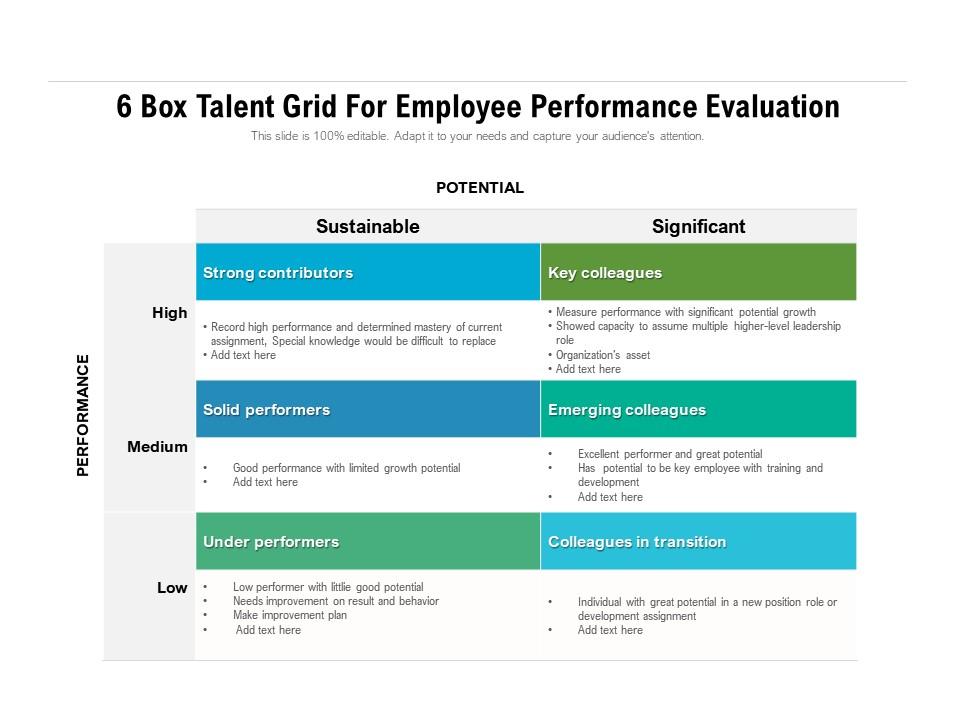
6 box talent grid for employee performance evaluation

6 box talent grid for employee performance evaluation
Slide 1 of 2
Favourites Favourites

Try Before you Buy Download Free Sample Product

Audience Impress Your
Audience
Editable 100%
Editable
Time Save Hours
of Time
The Biggest Sale is ending soon in
0
0
:
0
0
:
0
0
Presenting this set of slides with name 6 Box Talent Grid For Employee Performance Evaluation. The topics discussed in these slides are Performers, Sustainable, Strong Contributors, Medium, Emerging Colleagues. This is a completely editable PowerPoint presentation and is available for immediate download. Download now and impress your audience.

FAQs for 6 box talent grid for

So basically you've got five main pieces: getting the right people in the door, helping them grow once they're there, tracking how they're doing, planning who's next in line, and - this is huge - actually keeping your good people around. Most places totally bomb at retention, honestly. Map out clear career paths so folks know what's possible for them. Regular feedback is clutch too. I'd start by looking at what you already have in each area, then tackle your biggest problems first. Oh, and don't underestimate how much people just want to know where they stand.

Honestly, performance reviews don't tell you everything - watch for people who jump on new projects without being asked and actually make others around them better. I'd create talent pools and give them stretch assignments, maybe rotate them through different departments. Companies mess this up all the time by never telling high performers they're valued or where they could go next. That's how you lose good people. Have real career conversations with individual development plans. Don't just hope they'll figure it out on their own - you gotta be intentional about developing talent.

Honestly, employee engagement is like the secret sauce for everything else. Your engaged people stick around longer and actually want to grow with you. They become walking advertisements too - referring their friends and talking up your company culture without you even asking. Short bursts work better here. If engagement sucks though? You're basically pouring money down the drain hiring people who'll bounce in six months. Survey them regularly, but here's the thing - don't just collect feedback and ignore it. That's actually worse than doing nothing at all.

Honestly, tech can save you so much time on the boring HR stuff. AI handles resume screening now, which is a godsend. Chatbots can field basic candidate questions too. Learning management systems beat those death-by-PowerPoint training sessions any day - trust me on that one. Analytics platforms track engagement and spot who might quit before they actually do. The data side is where it gets really interesting though. You'll finally see which job boards actually work and which managers are losing good people left and right. I'd start with just an applicant tracking system and expand from there.

Honestly, just pick the stuff that actually matters for your whole talent pipeline. Retention rates and time-to-fill are huge - they hit your budget directly. Internal promotions show if people can grow there, and performance ratings give you the basics. Engagement surveys are useful but good luck getting everyone to fill them out, lol. Learning participation rates matter too if you're investing in development. Don't go crazy tracking everything though. Like 5-6 solid metrics max that tie to your business goals. Start with retention and hiring speed since those'll show results fastest.

Oh man, remote onboarding is tricky! First month should have tons of check-ins scheduled. Pair them with someone who isn't their boss - way less intimidating. Create that 30-60-90 day roadmap so they're not wandering around clueless about expectations. Yeah, the tech setup matters, but honestly? Social connections make the real difference. Virtual coffee chats with teammates are clutch. Tell them exactly who handles what questions - saves everyone headaches later. Here's the big one though: write everything down. All your processes, team weirdness, those random unspoken rules. They can't just pick up on company culture through Slack, you know?

Look, you can't just slap diversity onto the end of your hiring process and call it a day. Write job descriptions that don't scare people off. Source from different talent pools. Track your promotion processes because bias creeps in everywhere - seriously, it's wild how it happens. Mentorship programs help too, but make sure they're actually reaching diverse employees, not just the people who already have connections. Oh, and hold your managers accountable with real metrics, not just "we'll do better" promises. Otherwise you're just spinning your wheels.

Pay them well, obviously. But honestly? Most people quit bad managers, not bad jobs. Do regular one-on-ones - I know you're swamped but that's when you'll lose your best people. Give them real projects they can own, not just busy work. Map out clear promotion paths too. Here's what most companies screw up though - they wait for exit interviews instead of asking their top performers "what would make you think about leaving?" while they're still happy. Your leadership team needs to actually recognize talent instead of just talking about it. Oh, and let people have some control over how they work.

Look, continuous learning is what makes or breaks talent management. Your best people will bounce if they can't grow - skills get stale so fast now it's crazy. I'd start by just asking your team what they actually want to learn, then figure out how to make it happen systematically. Can't be random training here and there. You're basically showing people they have a real future with you when you invest in their development. Otherwise they'll find someone who will. Make sense?

Honestly, just be real about it. Show actual employee stories on your careers page - not that polished corporate BS that makes everyone cringe. Your workplace better match what you're advertising though, because Glassdoor will call you out fast. I learned that the hard way at my last company. Make your job posts, interviews, and first-day experience align with whatever vibe you're putting out there. Short sentences work. Longer ones that actually flow naturally work too. Quick thing to try: spend this week checking where your messaging feels fake compared to what actually happens day-to-day.

Look, EI matters way more than people think for managing talent. You'll spot the right hires faster when you can actually read people during interviews. Your feedback lands better too - there's a huge difference between just telling someone what they did wrong versus understanding how they're receiving it. Honestly, I've seen so many good people quit because their manager was just completely oblivious to team dynamics. When your team feels psychologically safe, they'll actually be straight with you about problems instead of letting things fester. Try really focusing during your next one-on-one - you'd be surprised how much you pick up.

Honestly, finding good people is the hardest part right now. Everyone's jumping jobs constantly - it's insane how bad retention has gotten. Then you've got this whole skills mismatch thing where what you need doesn't exist in the talent pool. Internal drama around promotions doesn't help either. Oh, and don't get me started on leadership development - people leave before they can grow into senior roles. My advice? Figure out what actually matters to your current team first. That's probably your only shot at keeping anyone around these days.

Honestly, feedback culture is a game-changer for talent management. You'll spot your stars and problem areas months before annual reviews roll around. People actually start caring about their growth instead of just showing up. The retention boost alone is worth it - nobody likes feeling invisible at work. Your succession planning gets way easier too since you're constantly seeing who's crushing it and who needs help. Oh, and train your managers first on how to give decent feedback. That's really where it all starts. Skip that step and you're basically setting everyone up to fail from day one.

Honestly, I'd start by figuring out who could potentially fill your key roles - and I mean ALL of them, not just the fancy executive spots. The frontline positions matter too. Get those high-potential people some stretch assignments and mentoring opportunities. Here's the thing though - a lot of companies keep succession planning hush-hush, but that's actually counterproductive. People want to know there's a path forward. Document everything instead of just keeping it in your head (trust me on this). Review it regularly because career goals shift. Oh, and definitely loop HR in to make it systematic.

Here's the thing - talent management and culture are totally connected. The people you hire literally become your culture over time. If you keep promoting the same type of person, that's what your whole company starts to look like (obvious but people miss this all the time). Your culture also determines who even wants to work for you in the first place. I've seen companies try to change their culture while still hiring the exact same personality types - doesn't work. You've got to match your hiring and promotion choices with whatever culture you're actually trying to build.

Ratings and Reviews

0% of 100
Review Form
Write a review
Most Relevant Reviews

No Reviews