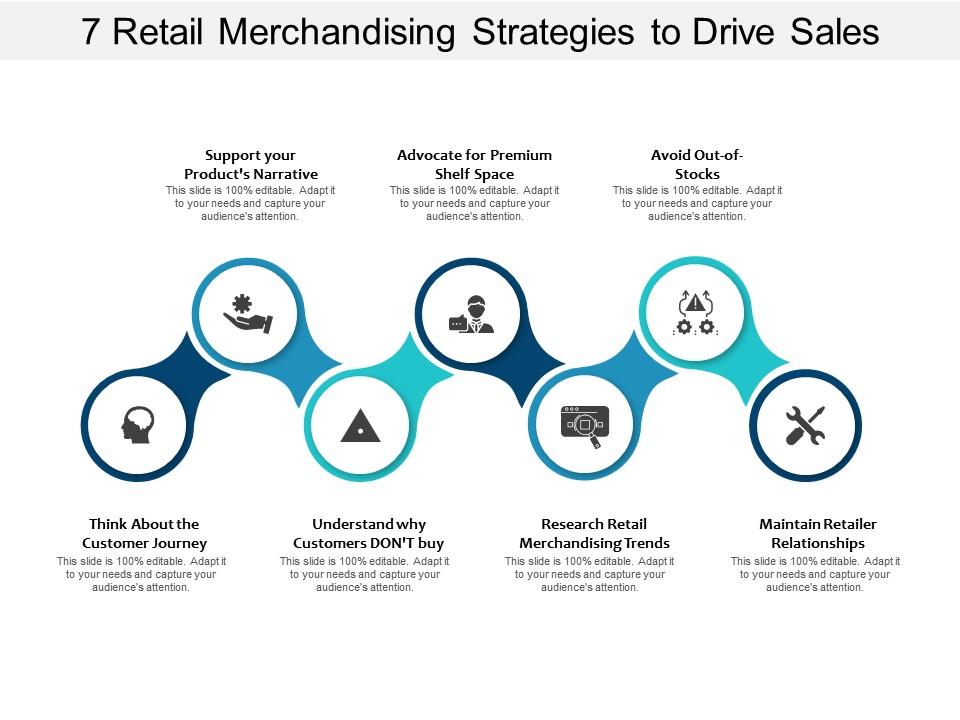
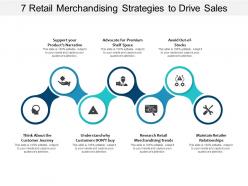
7 retail merchandising strategies to drive sales
Try Before you Buy Download Free Sample Product
Audience
Editable
of Time
Drive home the importance of ensuring cleanliness with our 7 Retail Merchandising Strategies To Drive Sales. Be an advocate of good hygiene.
People who downloaded this PowerPoint presentation also viewed the following :
7 retail merchandising strategies to drive sales with all 5 slides:
Campaign for good hygiene with our 7 Retail Merchandising Strategies To Drive Sales. Convince folks to make cleanliness a habit.
FAQs for 7 retail merchandising strategies
Definitely try sensory stuff first - strategic lighting makes such a difference. Warm spots on featured products, maybe some colored LEDs for vibe. QR codes are pretty easy to add for product details, and AR try-ons are getting cheaper. Cross-merchandising unexpected combos really boosts sales too. The stores I actually enjoy shopping at always nail seasonal storytelling - like, they make you feel something beyond just "buy this." Digital price tags and smart mirrors aren't as expensive as they used to be either. I'd start small with one or two things and see what actually gets people engaging in your specific space.
Start planning seasonal stuff 6-8 weeks out - yeah, I know it feels crazy early but trust me on this one. Bundle themed products together and stick seasonal displays right by your entrance where people can't miss them. Halloween candy in August is still absurd to me, but people actually buy it so whatever works. During holidays, cross-merchandise like crazy - cranberry sauce next to the turkey, batteries with toys in December. Make sure your staff knows what promotions you're running so they can mention them to customers. Oh, and definitely track what works each year because you'll forget otherwise and end up repeating mistakes.
Think of visual merchandising as your brand's personality showing up physically in your store. Good lighting, smart product placement, consistent displays - all that stuff helps customers recognize your vibe instantly. People develop this weird muscle memory for brands they connect with, and honestly, that's where the loyalty kicks in. They'll walk into your space and just *know* it feels right for them. The trick is being super intentional with every visual choice. Done right, customers can spot your brand from across a crowded mall without even seeing your logo.
Honestly, stick those screens where people naturally look - entrances, endcaps, anywhere with foot traffic. The cool thing is you can swap out content instantly instead of reprinting signs every other day (which gets expensive fast). I'd focus on stuff that creates urgency, like flash sales or "while supplies last" type deals. Also works great for pushing related items based on what section people are browsing. Keep switching up the content though - stale messaging kills engagement. Maybe start with just one or two spots first? See what actually moves the needle before going crazy with more screens.
Okay so first thing - put your popular stuff toward the back so people have to walk past everything else. I learned this trick from grocery stores and it actually works. Make your entrance pop with seasonal displays or whatever's on sale. Wide aisles where there's lots of foot traffic, obviously. Put impulse stuff right by checkout and group things that go together - like chips and salsa next to each other. Eye level equals buy level for your best margin items. Start by just watching how customers move through your space right now. You'll spot the dead zones pretty quick.
You basically put stuff together that makes sense - like chips next to salsa or phone cases by the phones. Honestly works like magic once you get the hang of it. Customers see one thing, then suddenly realize they need the other too. I've seen stores boost their sales by 15-30% just from smart product pairing. The trick is thinking like your customer - what's their next logical purchase? Map out which items naturally complement each other in your store, then experiment with different spots. Sometimes it's trial and error but when you nail it, people's carts get way fuller without them even realizing.
Sales per square foot is your bread and butter - track that religiously. Also watch inventory turnover and conversion rates. Gross margin by category matters too since it shows which displays actually make you money. I'd definitely look at average transaction value and units per transaction to see if customers are buying more because of your layout. Dwell time in different sections is interesting data, plus basket analysis shows what products pair well. Monthly tracking works best - you'll spot the winners fast and figure out what's just eating up floor space for no good reason.
Oh man, merchandising gets so tricky when you're dealing with different cultures. Like, red means good luck in China but screams "danger" everywhere else - totally changes your whole color strategy. You've gotta think about religious stuff too, plus how people actually shop in that region. Store layouts that work here might feel completely wrong there. Seasonal timing gets weird too since holidays are all different. Honestly, I'd probably just find some local people who actually know what they're doing instead of trying to figure it out myself. The research part sounds exhausting but you'll mess up badly without it.
Honestly, sustainable displays are huge right now - people actually trust brands more when they see eco-friendly stuff. Shoppers get excited supporting retailers who care about the environment, which is kinda cool to see. Everyone's way more climate-conscious these days, so it's become this massive differentiator. But here's the thing - you can't fake it. Customers smell greenwashing instantly, so those bamboo fixtures better be backed up by real sustainable practices. I'd say start with just one eco element per display and grow from there. Works way better than going overboard immediately.
Honestly, storytelling displays are such a game changer. Instead of just dumping products on shelves, create little scenes that show how stuff works together - like a "cozy morning" setup with skincare, coffee mugs, and soft sweaters. Your signs should hit people in the feels too, not just list boring specs. I've noticed stores that nail seasonal stories really make customers picture themselves actually using the products. Short bursts work better than long descriptions. The whole point is making shoppers *feel* something instead of just browsing mindlessly. Start with one display and see what clicks with your customers.
Honestly, data analytics is a game changer because you're finally seeing what customers actually do instead of guessing. Like, you can track which items fly off eye-level shelves versus the bottom ones, see how people move through your space, figure out which products sell better together. The numbers don't lie, which is refreshing after years of going with your gut. You'll spot seasonal trends and what different age groups want - stuff that's easy to miss otherwise. Oh, and start small with your bestselling products first. Way less overwhelming that way.
Mobile tech totally changes how merchandising works. Your customers can scan QR codes for product details or use AR to see how that couch looks in their living room - which is honestly pretty wild when you see it in action. You'll get real-time inventory updates, your staff can help customers way better with instant product info, and location-based promotions actually work. Skip-the-line mobile payments are huge too. I'd start simple though - maybe just QR codes that link to product videos or basic mobile checkout. Don't overthink it at first.
Online, you can track literally everything people do and suggest products based on their browsing. Super powerful for cross-selling. Physical stores are totally different though - you've got to nail the visual stuff and product placement. The checkout area is gold for impulse buys, btw. But honestly? Most successful brands are doing both now. Like having people buy online then pick up in-store, or creating experiences you can't get digitally. For your website, A/B test those product pages constantly and invest in good recommendation tech. In-store, think about how people actually move through the space.
Honestly, impulse buys should be part of your whole store layout, not just thrown in randomly. Check out where people naturally slow down - checkout lines, store entrances, those endcap displays. That's your goldmine right there. Nobody walks in planning to grab a candy bar, but boom, there it is while they're waiting to pay. Smart move is auditing your current setup first. Find 3-4 spots where customers pause or linger, then test some small displays there. Your seasonal stuff should play into this too - like those mini sunscreens near summer displays, you know? Customer flow patterns tell you everything.
Honestly, AI personalization is everywhere right now - stores are using real-time data to show you exactly what you'd want. Sustainability stuff needs to be super visible too because people actually care about that now (and they'll check those labels!). Interactive elements are pretty much expected - AR try-ons, QR codes for styling tips, that whole thing. Oh, and anything that looks good on Instagram is gold. Experiential displays that make people want to take photos? Yes please. I'd just pick one or two things to test first though - don't go crazy with a total overhaul right away.
No Reviews