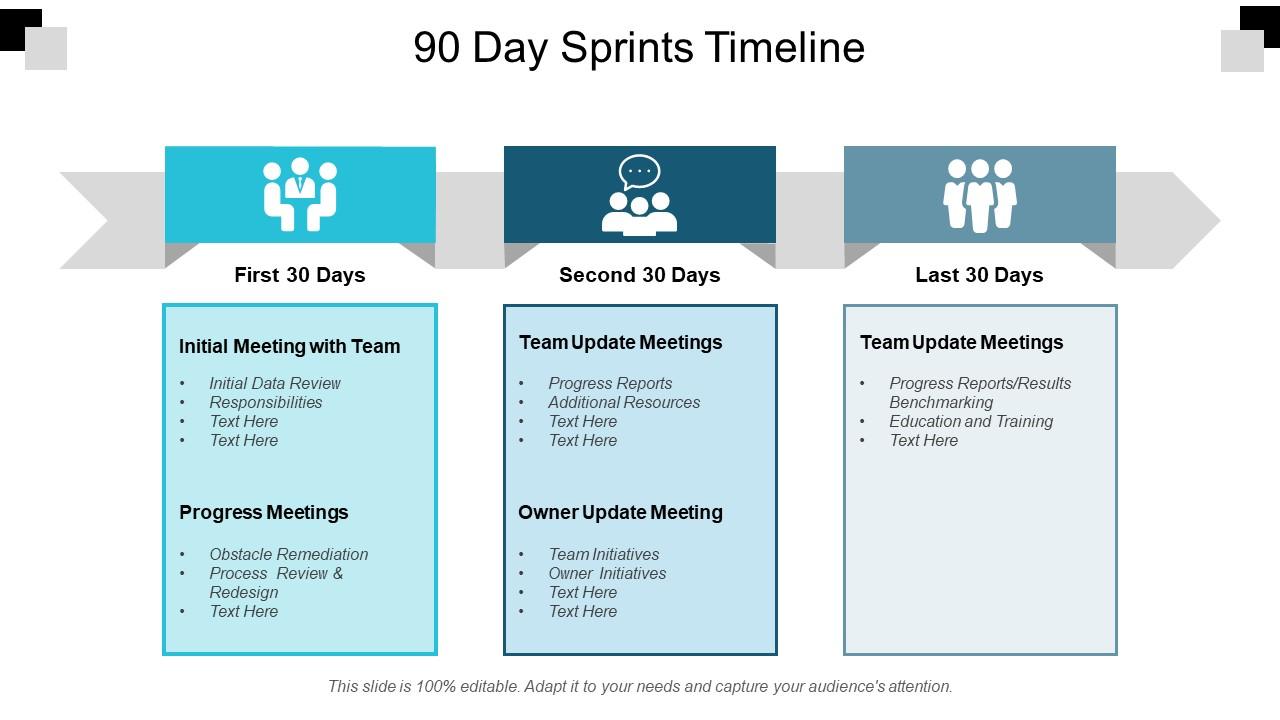
Chronologie des sprints de 90 jours

Slide 1 of 5
Favourites Favourites

Try Before you Buy Download Free Sample Product

Audience Impress Your
Audience
Editable 100%
Editable
Time Save Hours
of Time
The Biggest Sale is ending soon in
0
0
:
0
0
:
0
0

Caractéristiques de ces diapositives de présentation PowerPoint :

Il s'agit d'un processus en trois étapes. Les étapes de ce processus sont la chronologie de 90 jours, la feuille de route de 90 jours, la chronologie de 3 mois, la chronologie trimestrielle, la chronologie du trimestre.

FAQs for 90

So the four main things are: people matter more than rigid processes, actually working software beats endless documentation, collaborating with customers trumps strict contracts, and adapting to change instead of blindly following plans. It's way less bureaucratic than traditional methods - you talk directly with your team and customers, ship working stuff regularly, and pivot when things change. Honestly, the iterative approach where you get constant feedback is probably the biggest game-changer. Try applying this mindset in your next sprint and you'll see what I mean.

So basically, waterfall is like the old school way - you do requirements, then design, then build, then test, all in order. Agile chops everything into these 2-4 week chunks where you're constantly shipping little working pieces. Honestly? Agile's way better if you don't know exactly what you want upfront (which, let's be real, nobody ever does). You can show people actual stuff early and pivot when they inevitably change their minds. Waterfall assumes you've got it all figured out from day one - good luck with that lol.

Honestly, most people jump into Scrum first - it's got clear structure with those sprint cycles and daily standups. Way easier to learn than the others. Kanban's more of a visual flow thing, you know? Just moving cards across boards. SAFe is what big companies use when they have like 50 teams and need to coordinate everything (total overkill for smaller groups though). There's also Lean and XP floating around, but nobody really talks about them much anymore. My advice? Start with Scrum, get comfortable with it, then maybe experiment later once you've got the basics down.

Honestly, just focus on what brings the most value and impact. Rank your user stories by business value, customer impact, and any tech dependencies - whatever gives you the biggest return. Your product owner should lead this but the whole team needs input during sprint planning. Try MoSCoW method (Must have, Should have, Could have, Won't have) or just go with high/medium/low if you want something simpler. Don't get too caught up in perfect systems though. Things move fast in Agile, so review priorities every sprint. Oh and definitely keep stakeholders in the loop - you don't want to be making decisions in isolation.

Dude, stakeholder engagement literally makes or breaks Agile projects. Get them involved throughout the whole thing - demos, feedback sessions, backlog prioritization. Not just the kickoff meeting where everyone's excited and then they vanish into thin air (happens way too often, trust me). The magic happens when you've got that constant feedback loop going. Short touchpoints work better than marathon meetings. Listen to what they're actually saying because their input shapes your next sprint. I've watched so many teams build perfect solutions to the wrong problems because they lost touch with stakeholders halfway through. Don't be that team.

Honestly, Agile's biggest win is just getting people to actually talk to each other. Daily standups are clutch - everyone shares what they're doing and if they're stuck on anything. No more guessing what's happening with other teams. Those short sprints keep you checking in constantly instead of disappearing for months at a time. And retrospectives? Total game-changer. You actually get to call out communication problems before they blow up. I'd say start with just the daily standups if you're testing it out - though fair warning, some people hate meetings, but these are like 10 minutes max.

Honestly, start with velocity - just track how many story points you're knocking out each sprint. Sprint burndown charts help too. Customer satisfaction is huge though, because who cares if you're shipping fast if users hate what you built? I'd also watch your cycle time and how often you're actually hitting sprint goals. Oh, and defect rates after release - nobody wants to be the team constantly putting out fires. Pick maybe 3-4 metrics max. I've seen teams get totally buried trying to track everything. Focus on velocity and sprint goals first, then add whatever your stakeholders won't stop asking about.

Honestly, communication is everything here. Tell your team WHY you're switching and what they'll get out of it. Get them involved in planning this thing from the start - nobody likes having changes shoved at them. Training matters way more than most people think. Don't just dump them into sprints and hope for the best (I've watched that disaster movie before). When concerns come up, tackle them head-on. Quick wins help build momentum too. Here's the thing though - if leadership isn't actually walking the walk with agile principles, forget it. Your team will see right through that. Be patient with the learning curve because there will definitely be some rough patches.

Honestly? Coordination gets absolutely brutal when you're juggling multiple teams. Dependencies turn into a tangled mess and communication falls apart fast. Plus you'll hit major cultural pushback - some departments just hate change, especially the old-school ones. Getting leadership on board is make-or-break but good luck with that. Oh, and scaling things like daily standups becomes this weird logistical puzzle nobody warns you about. My take: pilot with a couple small teams first. Don't go crazy trying to flip everything at once. Get your bosses aligned before you even think about company-wide rollouts. Coaching is expensive but you can't skip it.

Oh totally! Agile isn't just for tech nerds - I've actually seen marketing teams crush it with campaign launches. The whole thing is basically just breaking work into 1-2 week chunks and getting feedback constantly. Do daily check-ins with your team, wrap up each sprint with a "what worked/what sucked" meeting, and always tackle the highest-value stuff first. Don't get married to your original plan though - the magic happens when you pivot based on what you're learning. I'd honestly just pick one project to test it out first and see how it goes.

Jira's probably your safest pick - solid reporting and handles complex stuff well. Trello's dead simple though, sometimes I actually prefer it when things get too cluttered elsewhere. If you're already using Microsoft stuff, Azure DevOps makes sense. Oh and for planning sessions, Miro's clutch for the whole virtual sticky note thing. Linear's been popping up more lately as like a cleaner Jira alternative. Honestly just grab free trials of 2-3 and see what doesn't annoy your team after a week.

So with Agile, you're basically baking risk management into everything you already do. Short sprints catch problems early when they're way cheaper to fix. During sprint planning, just throw in a quick "what could go wrong here?" conversation - works better than you'd think. Those daily standups and retrospectives naturally surface issues too. Your cross-functional team helps since everyone's looking at things differently. The frequent demos are clutch for catching scope creep or client expectation mismatches before things get messy. It stops being this separate checklist item and just becomes part of how you work.

So there are basically three main roles you need to think about. Product Owner handles what gets built - they're managing the backlog and deciding priorities. Development Team does the actual building and figures out how long stuff takes. Then there's the Scrum Master who's more like a coach (definitely not a boss though). They run the meetings, clear roadblocks, help everyone get better at this whole thing. Honestly, someone's probably already doing bits of these jobs on your team without realizing it. Just figure out who that is first.

Honestly, the biggest thing is mixing up your retro formats - that start-stop-continue thing gets old quick. You need people to feel safe calling out real problems, not just surface-level stuff. Here's what actually works: cap yourself at 1-2 action items max that you can knock out next sprint. I swear, most retros become whining sessions with zero follow-up. Try silent brainstorming or dot voting so it's not just the same three people talking every time. Oh, and always check if you actually did what you said last time - otherwise you're just going through the motions.

Honestly, Agile is amazing for keeping customers happy and building better stuff. You're not waiting months to show people what you made - every sprint they see working features and can tell you if you're on track. Way fewer nasty surprises at the end! Testing happens constantly, so bugs get squashed early instead of piling up. Customers actually feel like part of the process, which they love. Sprint reviews with stakeholders are seriously worth it - I can't stress that enough. The whole feedback loop thing just works.

Ratings and Reviews

0% of 100
Review Form
Write a review
Most Relevant Reviews

No Reviews