


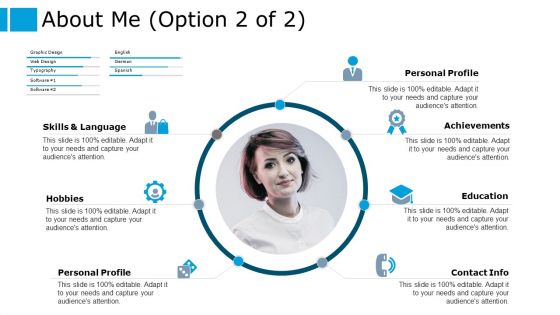
About me personal profile ppt powerpoint presentation outline graphic tips





Try Before you Buy Download Free Sample Product
 Impress Your
 Audience
 100%
100% Editable
 Save Hours
 of Time


Bring about all round agreement with our About Me Personal Profile Ppt Powerpoint Presentation Outline Graphic Tips. It helps arrive at amicable conclusions.
People who downloaded this PowerPoint presentation also viewed the following :
About me personal profile ppt powerpoint presentation outline graphic tips with all 5 slides:
Our About Me Personal Profile Ppt Powerpoint Presentation Outline Graphic Tips will never desert you. They will be there behind you all the way.

FAQs for About me personal profile ppt powerpoint presentation
Honestly, you need three main things. First, ditch the boring "I'm passionate about" opener - everyone says that crap. Start with something actually memorable about you. Then throw in real examples with actual numbers if you can swing it. Like "increased sales by 30%" not just "helped with sales." The tricky part is weaving it all together into one story about where you've been and where you're going. I always stumble over the opening myself - it's weirdly the hardest part! Oh and definitely practice saying it out loud beforehand. You don't want to sound like you're reciting a script.
Honestly, it's all about reading the room. When you're networking, talk about what you want and where you're headed. Job interviews? Focus on skills that actually match what they need. I learned this the hard way after bombing a few pitches by going on forever - keep LinkedIn detailed but make elevator pitches short and sweet. Research who you're talking to first so you know what'll click with them. I always keep three versions ready: formal, casual networking, and a super quick 30-second one. Practice switching between them until it doesn't feel weird anymore.
Your profile's visual design matters way more than you'd think. People judge it instantly - before reading a single word. I've watched great profiles get completely overlooked just because they looked messy or unprofessional. Clean layouts make all the difference. Stick with consistent fonts and colors that actually match your vibe or industry. Strong visuals also help guide someone's eye to your biggest wins instead of letting them get lost in text blocks. Honestly, even a simple template works if you're consistent with it across everything. Don't overthink it, but don't wing it either.
Think of your profile like a mini story arc - where you started, some turning point that changed everything, then where you landed. Don't just say "managed teams." Try something like "After watching this promising project totally crash because nobody talked to each other, I created a framework that..." Way more memorable than bullet points, honestly. People eat up specific details and real outcomes. Oh, and each story should connect back to what you'll bring to the table. Keep it tight though - you're not writing a novel here.
Definitely go with a solid professional headshot as your main photo. Your graphics and charts should actually back up what you're saying - I can't tell you how many times I've sat through presentations with random stock photos that make zero sense. Also make sure everything looks sharp on different screens since you never know if you'll be presenting on a laptop or projector. Stick to colors that work together, and honestly? Test it out on a video call first. Nothing's worse than realizing your carefully chosen images look like garbage when you're mid-presentation.
Don't just throw numbers around - give the whole story. Like instead of "I increased sales by 40%," say something like "Led a team push that boosted quarterly sales by 40%, helping us crush our targets even when the market was rough." Way better, right? Always explain the why behind your wins and mention your team when it makes sense. Shows you're not just about yourself. Oh and frame everything as problems you solved rather than... well, basically just showing off. People can smell ego from a mile away. Use real metrics but make them mean something.
Honestly, I'd just go with Canva or Adobe Express - they're super easy and have way better templates than the usual boring slideshow stuff. PowerPoint works fine if that's what you know, but the designs feel kinda outdated now. Prezi's cool for the swooshy animations, though sometimes it's more distracting than helpful (depends on your audience I guess). Don't stress too much about picking the "perfect" tool. Better to use something simple that you can actually figure out than fight with complicated features. Focus on telling your story well - that matters way more than fancy transitions.
Honestly, just pick one platform and get good at it first - spreading yourself everywhere is exhausting. Use keywords in your bio that your people actually search for. Post regularly (doesn't have to be daily, but be consistent). The algorithm thing is confusing but don't stress about it too much right now. What really works is engaging with other people's stuff genuinely, not just liking everything. Cross-post to other platforms once you've got a rhythm going. Always tell people what to do next - like "check my bio" or whatever. Oh and share helpful content, not just selfies and random thoughts about your day. People follow accounts that give them something useful.
Ugh, don't make it a novel first of all. Keep it short and relevant to who you're talking to. The worst thing is when people just rattle off job titles - actually talk about what you accomplished instead. Also stop saying "just" or "only" when describing your wins! It makes you sound insecure. Nobody cares about your personal life unless it's actually relevant to the conversation. Oh, and definitely practice saying it out loud beforehand. Trust me on this one - you'll sound way more natural instead of like you're reciting your LinkedIn profile word for word.
Honestly, most profiles are boring as hell without this stuff. When you share what actually matters to you - sustainability, mentorship, whatever - you attract way better opportunities. People want to know what drives you beyond just "marketing manager" or whatever your title is. It gives them a real sense of whether they'd actually want to work with you. Like, I skip right past generic profiles but stop when someone mentions they're passionate about something specific. Just make sure you're not bullshitting - your values should match how you actually show up at work.
Honestly, start by practicing in front of a mirror - yeah it feels super awkward but it actually helps with eye contact. Record yourself on your phone too so you can catch all those "ums" and weird pauses. Don't memorize some script word-for-word; just tell your story like you're talking to someone normally. People can smell fake from a mile away. Time yourself so you don't ramble. Have a friend listen and tell you if anything sounds confusing. Stand up straight and use your hands naturally when you talk. Oh, and prepare like 2-3 solid examples that show what you're good at instead of just rattling off a bunch of skills.
Dude, you gotta stay consistent across everything. Same headshot on LinkedIn, your website, Twitter - wherever. I made this mistake where I had totally different photos everywhere and potential clients were so confused. Your colors and messaging should match too, otherwise it's like different people are running your accounts (which looks super unprofessional). People need to recognize you instantly, no matter where they find you. That's how you build trust. Honestly, most people overthink this - just pick one good headshot and use it everywhere, then make sure your bios sound like the same person wrote them.
Honestly, the best way to tell is just watching people's faces during Q&A - you'll know if you bombed or killed it. But for actual data, track LinkedIn connection requests afterward and see who asks for your contact info. Interview requests are obviously huge wins. I always make a quick spreadsheet (yeah I know, nerdy) to log responses for like two weeks after - that's when most stuff happens anyway. Oh and if you included any call-to-action, time how fast people respond. Sometimes collaboration opportunities pop up weeks later from these things, so don't write it off too quickly if it seems quiet at first.
Ask around after you present - coworkers, mentors, whoever will give you straight feedback. Don't just say "how'd I do?" Ask stuff like "what actually stuck with you?" or "where did you lose interest?" People get way more honest with specific questions. Look for patterns too. If multiple people say you rushed through your wins, then yeah, slow it down next time. Honestly, I think most people skip this step and wonder why they're not improving. Each time you present is basically practice for the next one. Just pick one thing from the feedback and work on that - don't try to fix everything at once.
Honestly, people are so over the polished, perfect profiles now. Everyone wants authenticity - show your actual journey, the messy parts, what really drives you. Video is everywhere too (I get it if you hate being on camera though). Skip the boring buzzwords and focus on what makes you different. Your personality matters just as much as your skills these days. Oh, and get some recommendations or case studies up there - social proof is clutch. Basically, stop sounding like a corporate press release. Let people see who you actually are and they'll connect with you way more.
No Reviews