

Achievement with road map powerpoint layout





Try Before you Buy Download Free Sample Product
 Impress Your
Audience
 100%
Editable
 Save Hours
of Time


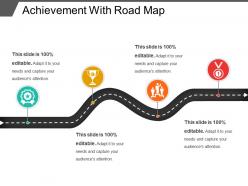
Introducing the Achievement With Road Map PowerPoint Layout. Get this PowerPoint slide to depict your audience the milestones you have achieved so far. Showcase the greatest achievement of the last year using this readily available PPT template. Mapping out the journey with this professionally designed roadmap PPT slide will be beneficial, as it will provide a path for accomplishing projects. Elucidate the profits of past years and revise the strategies of the year in which the firm made maximum profits. You can also add suitable icons in this professionally designed PPT layout. It depicts the path your company has followed. The template can be used to guide your audience how your organization was able to overcome the hurdles in the way of success. Our designers have designed this template for your convenience, so click on the download button now and avail the benefits.
People who downloaded this PowerPoint presentation also viewed the following :
Achievement with road map powerpoint layout with all 5 slides:
Give greater attention to critical details with our Achievement With Road Map Powerpoint Layout. You will acquire the desired emphasis.


FAQs for Achievement with road
**INPUT**: What key milestones should be included in an effective achievement roadmap? **OUTPUT**: Effective achievement roadmaps include goal definition, resource allocation, timeline establishment, progress checkpoints, and stakeholder alignment milestones. These strategic markers streamline project execution by enabling clear accountability, facilitating timely course corrections, and ensuring consistent momentum, with many organizations finding that structured milestone frameworks ultimately deliver faster project completion and enhanced team performance. **Word count: 54 words**
Visual presentation templates enhance achievement roadmap clarity by providing structured layouts, consistent formatting, timeline visualizations, milestone markers, and progress tracking elements. These templates streamline complex information through color coding, hierarchical organization, and visual flow patterns, enabling teams to quickly identify dependencies, celebrate wins, and maintain strategic focus, ultimately delivering improved project communication and stakeholder alignment.
Stakeholder feedback plays a critical role in refining achievement roadmaps by identifying blind spots, validating assumptions, ensuring alignment with organizational priorities, and uncovering resource constraints or opportunities. This collaborative input enables leaders to adjust timelines, reallocate resources, and enhance strategic clarity, with many organizations finding that regular stakeholder engagement ultimately delivers more realistic milestones and stronger buy-in across teams.
**INPUT**: How do you prioritize objectives when mapping out an achievement timeline? **OUTPUT**: Prioritizing objectives involves assessing impact potential, resource requirements, timeline dependencies, and strategic alignment with long-term goals. Organizations typically use frameworks like impact-effort matrices and milestone sequencing, with many finding that front-loading foundational objectives while maintaining parallel quick-wins ultimately delivers sustained momentum and competitive advantage. *[Word count: 50]*
Common pitfalls include setting unrealistic timelines, lacking specific measurable milestones, insufficient resource allocation, poor stakeholder communication, and failing to build in regular review cycles. These planning oversights can derail progress significantly, with many organizations finding that overly ambitious targets without adequate checkpoints ultimately undermine team motivation and strategic execution, leading to abandoned initiatives.
Adjusting an achievement roadmap requires flexible milestone restructuring, alternative pathway identification, resource reallocation, and stakeholder communication protocols. Organizations can pivot by reassessing timelines, incorporating contingency plans, and leveraging adaptive project management methodologies, with many companies finding that regular roadmap reviews and scenario planning ultimately deliver greater resilience and sustained competitive advantage.
Achievement roadmap metrics include milestone completion rates, timeline adherence, resource utilization efficiency, quality indicators, and stakeholder satisfaction scores. These measurement tools enhance project visibility by tracking deliverable progress, identifying bottlenecks early, and enabling data-driven adjustments, with many organizations finding that comprehensive metrics ultimately streamline decision-making and accelerate goal achievement across departments.
Diversity and inclusion can be integrated through targeted recruitment goals, inclusive leadership development programs, equitable performance metrics, mentorship initiatives, and cultural competency training milestones. These strategic elements enhance innovation, broaden talent pools, and improve decision-making across organizations, with many companies finding that diverse teams deliver stronger financial performance and competitive advantage in increasingly global markets.
**INPUT**: What tools and software are best suited for designing achievement roadmaps? **OUTPUT**: Achievement roadmap design tools include Microsoft Visio, Lucidchart, Miro, Asana, and Monday.com, each offering specialized features for visual planning and progress tracking. These platforms streamline goal visualization, milestone mapping, and team collaboration, with many organizations finding that integrated project management tools like Trello and Smartsheet deliver enhanced accountability and measurable progress outcomes. **Word count: 54 words**
Team collaboration during roadmap creation can be fostered through structured brainstorming sessions, cross-functional workshops, regular feedback loops, and shared digital platforms that enable real-time input. These collaborative approaches streamline decision-making by incorporating diverse perspectives, reducing silos, and ensuring stakeholder buy-in, with many organizations finding that inclusive roadmap development ultimately delivers stronger strategic alignment and faster implementation.
Goal alignment significantly enhances achievement roadmap success by ensuring all team members work toward unified objectives, eliminating conflicting priorities, and maximizing resource efficiency across departments. When organizations achieve strategic alignment, teams coordinate efforts more effectively, reduce duplicated work, and accelerate milestone completion, with many companies finding that aligned roadmaps deliver measurable results faster than fragmented approaches.
Achievement roadmaps should be reviewed quarterly for strategic alignment and updated monthly for tactical adjustments, with major milestone assessments occurring bi-annually. Many organizations find that this balanced approach enables teams to maintain momentum while adapting to market changes, resource shifts, and emerging opportunities, ultimately delivering sustained progress and competitive advantage.
Best practices for presenting achievement roadmaps include clear milestone visualization, timeline alignment with business objectives, stakeholder-specific messaging, risk mitigation strategies, and progress tracking mechanisms. Through strategic presentation formats, organizations streamline communication across departments, enhance transparency in project delivery, and build stakeholder confidence, with many finding that regular roadmap reviews ultimately deliver stronger buy-in and accelerated decision-making processes.
Storytelling elements enhance achievement roadmaps through narrative arcs, character development, conflict resolution frameworks, and emotional engagement strategies. By presenting milestones as story chapters, featuring team members as protagonists overcoming challenges, and creating compelling visual narratives, organizations transform dry progress reports into inspiring journeys, ultimately delivering stronger stakeholder buy-in and clearer strategic direction.
Visualizing long-term and short-term goals in an achievement roadmap enhances strategic clarity, improves resource allocation, maintains team motivation, and enables better progress tracking across different timeframes. This dual approach streamlines decision-making by connecting immediate actions to broader objectives, with many organizations finding that teams stay more focused and aligned, ultimately delivering faster milestone achievement and sustained competitive advantage.
-
Unique design & color.
-
Easily Understandable slides.