

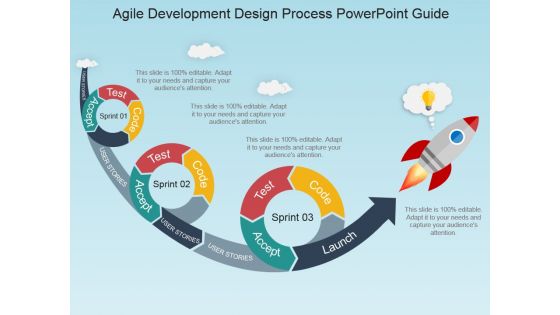
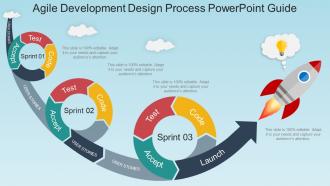
Agile development design process powerpoint guide





Try Before you Buy Download Free Sample Product
 Impress Your
 Audience
 100%
100% Editable
 Save Hours
 of Time


Agile development is an iterative software development process used by project teams. To adjust projects, self-organized, cross-functional teams continually examine conditions and user demands. Scrum teams are continually working to enhance the quality of sprints with short-term deliverables. They demonstrate Agile development in action. Development and UX professionals differ in many areas, particularly in how they envision consumers' demands. To effectively implement Agile development in a business, management must establish the ideal climate in which UX, development, and other stakeholders can interact freely and have continual discussion throughout a project.SlideTeam’s agile PowerPoint templates can help you visualize your project plan and keep everyone on track. Our team has created a library of beautiful, easy-to-edit templates that will help you get up to speed quickly with the agile development design process. Simply download our templates now and get started on creating an amazing presentation for your next meeting.
People who downloaded this PowerPoint presentation also viewed the following :
Agile development design process powerpoint guide with all 5 slides:
Use our Agile Development Design Process Powerpoint Guide to effectively help you save your valuable time. They are readymade to fit into any presentation structure.


FAQs for Agile development design
Okay so Agile is basically about putting people first instead of getting stuck in rigid processes. You work in these short sprints - like 2-3 weeks - and constantly get feedback from users. Way better than those nightmare waterfall projects that drag on forever, honestly. The whole thing focuses on delivering actual working features regularly rather than drowning in documentation. When requirements change (and they always do), you can pivot quickly instead of being locked into some detailed plan from months ago. Your team collaborates super closely with customers throughout. It's designed around embracing uncertainty and building what people actually need.
Honestly, daily standups are a game changer - everyone just quickly shares what they're doing so nothing falls through the cracks. Sprint planning gets the whole team on the same page about priorities, and retrospectives let you figure out what's actually working. The best part? You're shipping working stuff every few weeks instead of disappearing for months and then finding out you built the wrong thing. No more of that "working in isolation" nonsense where someone's coding away while everyone else has moved on. Start with just the daily check-ins if you're testing the waters - I swear you'll catch so many small issues before they blow up.
So the main ones are Scrum, Kanban, and Lean. Scrum's got those structured sprints with daily standups - think of it as training wheels but in a helpful way. Kanban's more visual, you move tasks across boards and limit how much work you're juggling at once. Then there's Lean which is all about cutting waste and getting value out fast. Most teams don't stick to just one though - they kinda franken-framework it together. If you're starting fresh with agile, I'd go Scrum first. Way easier to wrap your head around. Then just adapt whatever clicks for your team.
Honestly, remote Scrum is all about over-communicating since you can't just walk over to someone's desk. I'd grab Jira or Trello for sprint tracking - whatever your team's already comfortable with. Daily standups over video actually work better sometimes because people stay more focused (weird, I know). Set up Slack channels for each sprint and push people to drop updates throughout the day. Oh, and start with shorter sprints at first while everyone gets used to the rhythm. Once you hit your groove, you can stretch them out. The async communication thing takes practice but it's honestly a game-changer once you nail it.
So I'd definitely track both delivery stuff and how your team's actually doing. Velocity and cycle time are solid basics - just don't get weird about hitting exact numbers every sprint. Team happiness surveys matter way more than people think. Also track if you're completing those retrospective action items (we always forget about those lol). Customer feedback and adoption rates tell you if you're building garbage or not. Sprint goals, defect rates, that kind of thing. Honestly though? Pick like 3-4 metrics that actually address whatever's broken right now instead of drowning in data.
Honestly, the whole point of agile is that you're not waiting months to realize you screwed something up. Each sprint ends with a retrospective where your team talks through what went well and what sucked. Then you actually change things for next time - which sounds obvious but you'd be surprised how many teams skip this part. Short iterations mean you're getting feedback constantly and can pivot when needed. My advice? Don't treat retrospectives like some checkbox exercise. Actually schedule them and follow through on what you decide to fix.
Honestly, the hardest part is getting people to let go of waterfall thinking. Everyone's so used to having everything mapped out from day one. Your teams won't know how to self-organize at first - that takes practice. Managers will panic about losing control, which is kinda funny because they usually gain better visibility. Leadership needs to buy into prioritizing working code over endless docs. Oh, and good luck with clients who want fixed timelines for everything. Start small with a pilot project to show it actually works. Budget like 6-12 months for the transition and definitely invest in proper training upfront.
Honestly, just start with business value - what's gonna make the biggest difference for users and revenue? Your product owner should be your best friend here since they actually know what the market wants. MoSCoW method works great (Must have, Should have, etc.) or just do story point rankings. But here's the thing - don't stress too much about getting it perfect because priorities change constantly anyway. We do backlog refinement sessions regularly, and I swear we end up reshuffling half the stuff every few sprints. Stay flexible and check your rankings every couple weeks. That's really it.
Honestly, customer feedback is like the GPS for your whole Agile process. Without it, you're just building stuff and hoping people want it - which never ends well. Get feedback constantly through demos, user tests, whatever works. Each sprint is your chance to pivot based on what users actually tell you. I always tell teams to start collecting feedback super early, even on sketchy prototypes. Yeah, it feels awkward showing unfinished work, but catching problems early beats spending months on the wrong thing. Use that feedback to decide what's worth building next sprint.
So agile ceremonies are basically just regular check-ins that actually work. Stand-ups catch problems before they blow up. Retros are where the real magic happens - you can finally say what's driving you crazy without being weird about it. Sprint planning keeps everyone rowing in the same direction, which honestly saves so much headache later. The face-to-face time builds trust too, and people start speaking up when stuff goes sideways instead of suffering in silence. Oh, and rotate who runs these things - gives everyone skin in the game and prevents one person from dominating every meeting.
Honestly, just start with Jira for sprints and user stories - everyone uses it for a reason. Slack keeps your team talking (way better than endless email chains). For code stuff, you can't go wrong with Git plus GitHub or GitLab. Confluence is solid for docs, though we both know half the team won't read them anyway. If Jira feels like overkill, Trello's kanban boards are dead simple. Oh, and grab something like FunRetro for retrospectives - makes those meetings way less painful. My advice? Pick one project tool and one chat platform first. You can always add more later when you figure out what's missing.
Honestly, I'd check out SAFe, LeSS, or the Spotify model first - they're built for exactly this situation. SAFe can feel pretty heavy-handed (I've seen teams complain about all the ceremonies), but it definitely works for big companies. LeSS is way cleaner if you don't want tons of overhead. The tricky part is managing dependencies without slowing everyone down. Figure out which teams actually need to work together closely, then pick whatever framework fits your company's vibe. Oh, and make sure all the teams are actually rowing in the same direction business-wise. That sounds obvious but you'd be surprised how often it doesn't happen.
Honestly, Agile saves your sanity when requirements keep shifting. Short sprints mean you can adjust fast without derailing everything. Those feedback loops catch changes early - way better than finding out at the end when fixing stuff costs a fortune. Your backlog gets reshuffled every sprint anyway, so new priorities can jump ahead of whatever seemed important last month. The mindset shift is huge though. Instead of seeing changes as annoying scope creep, treat them like useful course corrections. It's just how projects actually work in the real world, you know?
Honestly, agile is great for this because your team can mess up without it being a disaster. Short sprints let you test crazy ideas quickly - if something sucks, you're only out a couple weeks, not months. Daily standups are where the magic happens though. People start throwing out "what if we tried..." ideas during sprint planning, and that's when you get the good stuff. Just make sure everyone knows that smart failures are actually wins, not something to hide from. Oh, and try setting aside like 20% of each sprint for pure experimentation. Works way better than you'd think.
Honestly, just stick to 2 hours max per week of sprint - any longer and people's brains turn to mush. Get your backlog refined beforehand because sitting through story estimation during planning is actual torture. Review your sprint goal first, then let the team pull what they can actually handle based on velocity. Break down tasks together and call out any blockers early. Here's the thing though - don't let stakeholders pressure you into overcommitting. I've seen that backfire so many times. Wrap up by confirming what "done" means for each story. Saves headaches later.
-
Awesomely designed templates, Easy to understand.
-
Much better than the original! Thanks for the quick turnaround.
-
Commendable slides with attractive designs. Extremely pleased with the fact that they are easy to modify. Great work!
-
Easily Editable.
-
Excellent design and quick turnaround.
-
Top Quality presentations that are easily editable.