


Agiles Produktlebenszyklus-Managementsystem PowerPoint-Präsentationsfolien
Agiles Produktlebenszyklusmanagement umfasst alle Produktaspekte von der Konzeption bis zur Entsorgung während des gesamten Prozesses. Der Hauptzweck dieses Decks ist die Optimierung des Produktlebenszyklusprozesses. Hier ist eine effizient gestaltete Vorlage für das Agile Product Lifecycle Management System, die die Herausforderungen aufzeigt, denen sich Produktführer gegenübersehen, und Produktmetriken mit wichtigen Wettbewerbern vergleicht. Es deckt auch den geschätzten Marktanteil des Produktlebenszyklusmanagements ab und spricht über innovative Technologien. Dieses Deck enthält Informationen über die Möglichkeiten zur Verwaltung des Produktlebenszyklusprozesses. Es enthält Schritte, Produktmanagementrollen und wesentliche Strategien zur Bewertung der vergleichenden Bewertung von Software für das agile Lebenszyklusmanagement. Das Deck stellt einen strategischen Zeitplan dar, um Kosten, Fähigkeiten, die für den Softwareentwicklungs-Lebenszyklusprozess erforderlich sind, usw. zu reduzieren. Es bietet einen Einblick in Metriken zur Messung des Produkterfolgs und der Managementprioritäten. Es zeigt auch die Kosten, die mit der Verwaltung agiler Produktlebenszyklusphasen verbunden sind, und die Auswirkungen von Initiativen auf die Gesamtleistung des Produkts. Schließlich enthält dieses Deck ein Dashboard und Metriken, die KPIs darstellen, um die agile Produktleistung zu messen. Erhalten Sie jetzt Zugriff auf diese aufschlussreiche Vorlage.



































-

- Google Slides is a new FREE Presentation software from Google.
- All our content is 100% compatible with Google Slides.
- Just download our designs, and upload them to Google Slides and they will work automatically.
- Amaze your audience with SlideTeam and Google Slides.
-

Want Changes to This PPT Slide? Check out our Presentation Design Services
-

- WideScreen Aspect ratio is becoming a very popular format. When you download this product, the downloaded ZIP will contain this product in both standard and widescreen format.
-

- Some older products that we have may only be in standard format, but they can easily be converted to widescreen.
- To do this, please open the SlideTeam product in Powerpoint, and go to
- Design ( On the top bar) -> Page Setup -> and select "On-screen Show (16:9)” in the drop down for "Slides Sized for".
- The slide or theme will change to widescreen, and all graphics will adjust automatically. You can similarly convert our content to any other desired screen aspect ratio.
Compatible With Google Slides

Get This In WideScreen
You must be logged in to download this presentation.


Do you want to remove this product from your favourites?
Merkmale dieser PowerPoint-Präsentationsfolien :
Stellen Sie dieses vollständige Deck Ihren Teammitgliedern und anderen Mitarbeitern zur Verfügung. Umgeben von stilisierten Folien, die verschiedene Konzepte präsentieren, sind diese Powerpoint-Präsentationsfolien für das Agile Product Lifecycle Management System das beste Tool, das Sie verwenden können. Personalisieren Sie den Inhalt und die Grafiken, um ihn einzigartig und zum Nachdenken anzuregen. Alle achtundfünfzig Folien können bearbeitet und geändert werden, Sie können sie also gerne an Ihre Geschäftsumgebung anpassen. Die Schriftart, Farbe und andere Komponenten sind ebenfalls in einem bearbeitbaren Format erhältlich, was dieses PPT-Design zur besten Wahl für Ihre nächste Präsentation macht. Also, jetzt herunterladen.

People who downloaded this PowerPoint presentation also viewed the following :
Inhalt dieser Powerpoint-Präsentation
Folie 1 : Diese Folie zeigt den Titel, z. B. „Agiles Product Lifecycle Management System“ und Ihren Firmennamen.
Folie 2 : Diese Folie präsentiert die Agenda.
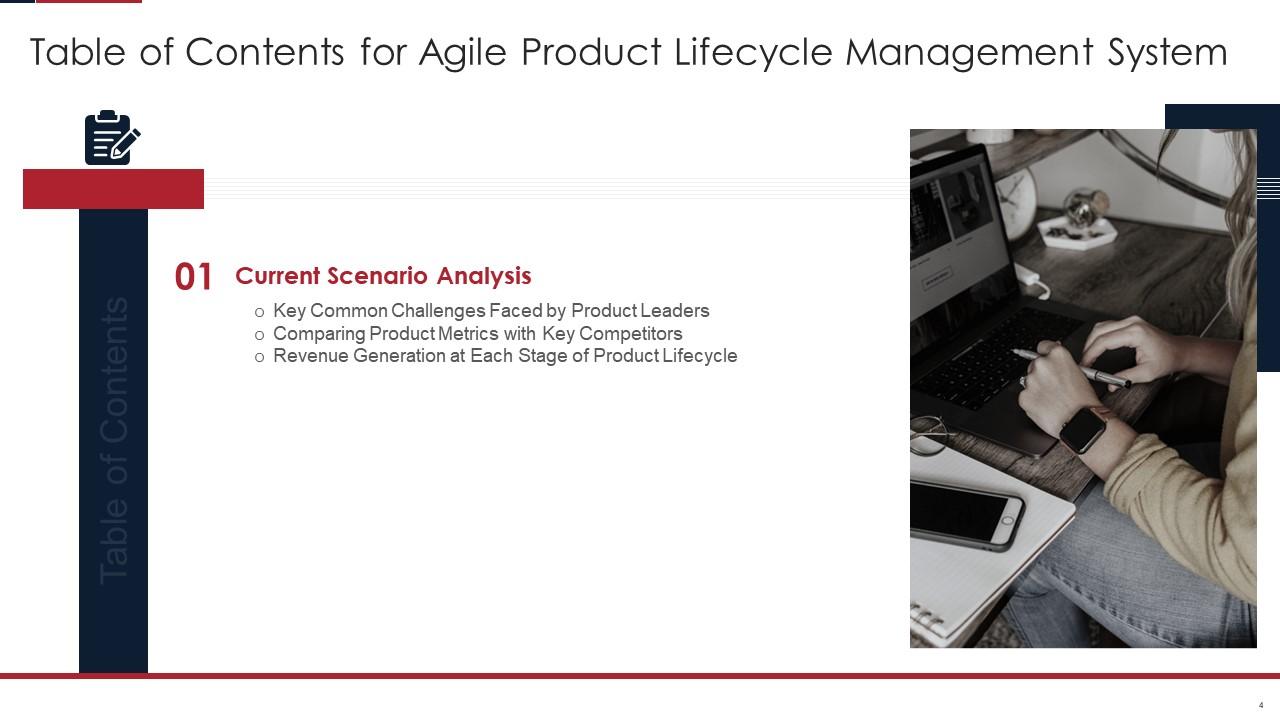
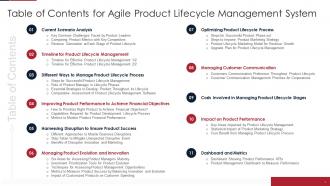
Folie 3 : Diese Folie zeigt das Inhaltsverzeichnis.
Folie 4 : Diese Folie zeigt Titel für drei Themen, die als nächstes in der Vorlage behandelt werden sollen.
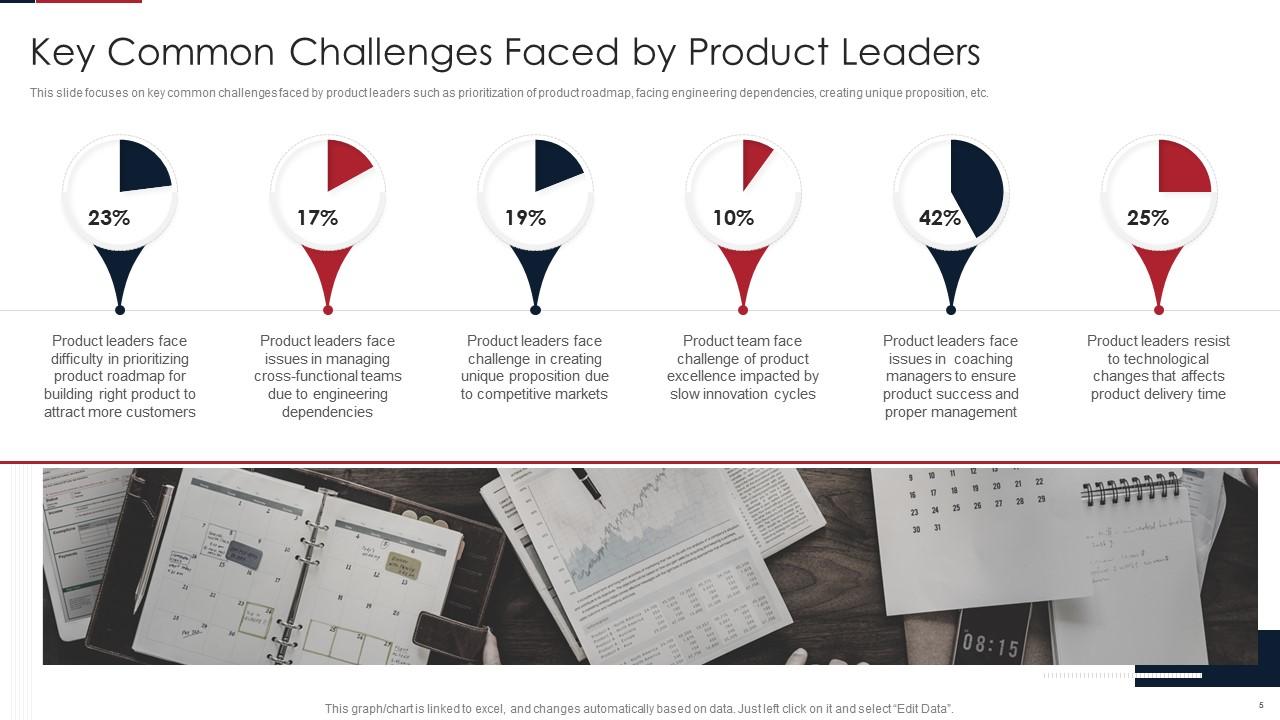
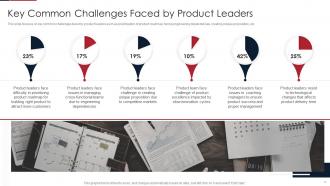
Folie 5 : Diese Folie konzentriert sich auf die wichtigsten gemeinsamen Herausforderungen, mit denen Produktführer konfrontiert sind, wie z. B. die Priorisierung der Produkt-Roadmap usw.
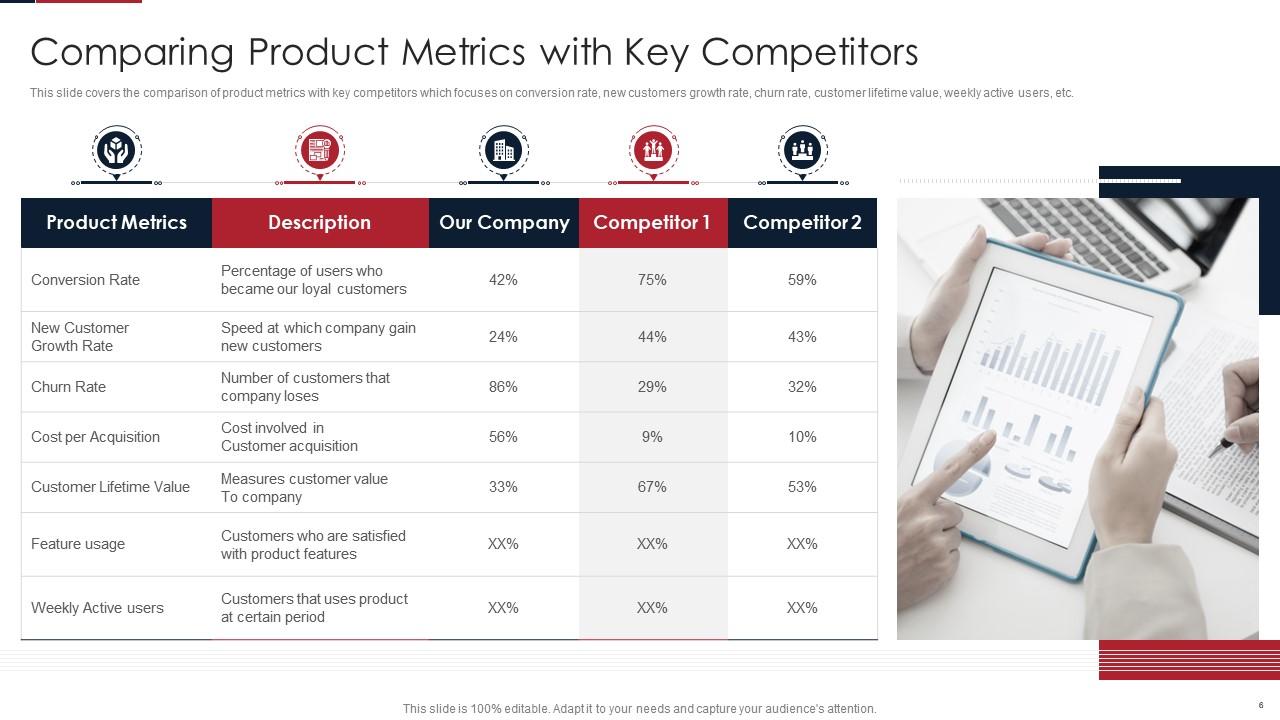
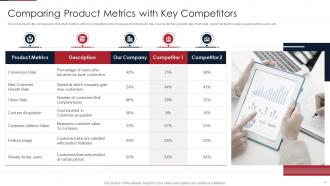
Folie 6 : Diese Folie behandelt den Vergleich von Produktmetriken mit wichtigen Wettbewerbern, der sich auf die Konversionsrate, die Wachstumsrate neuer Kunden usw. konzentriert.
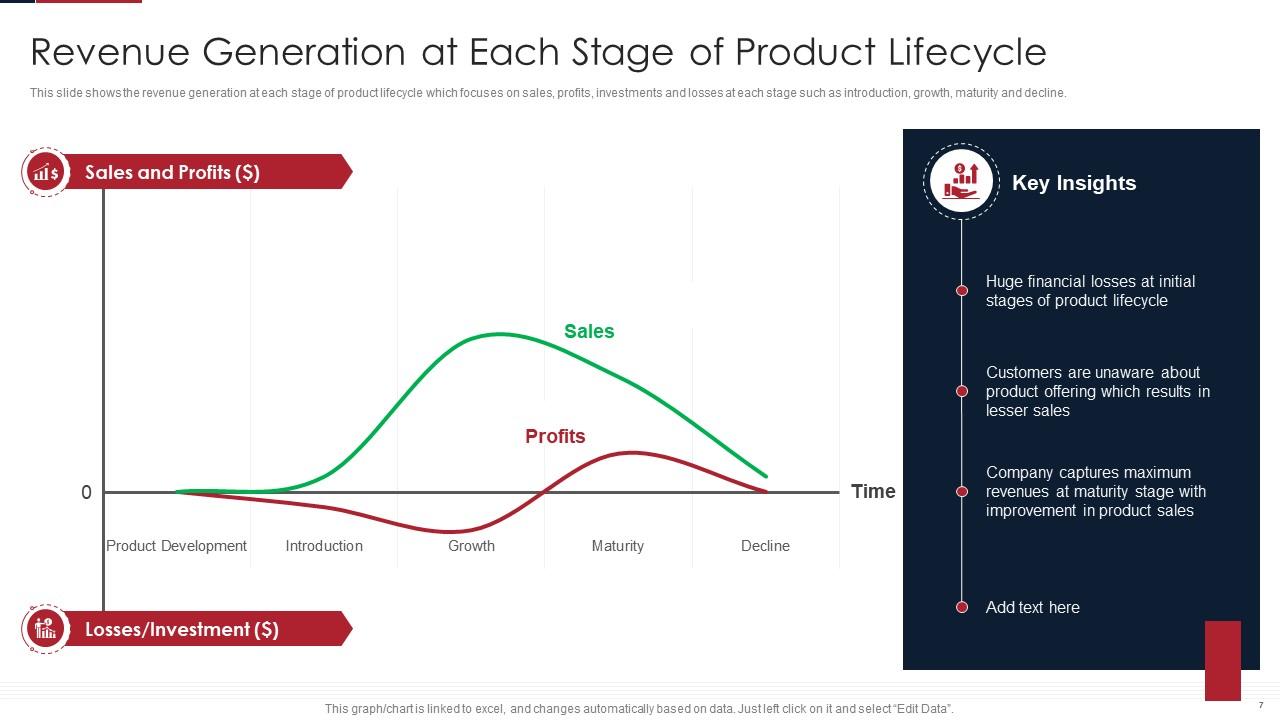
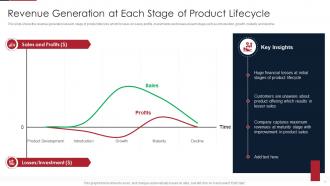
Folie 7 : Diese Folie zeigt die Umsatzgenerierung in jeder Phase des Produktlebenszyklus, die sich auf Verkäufe, Gewinne usw. konzentriert.
Folie 8 : Diese Folie zeigt Titel für zwei Themen, die als nächstes in der Vorlage behandelt werden sollen.
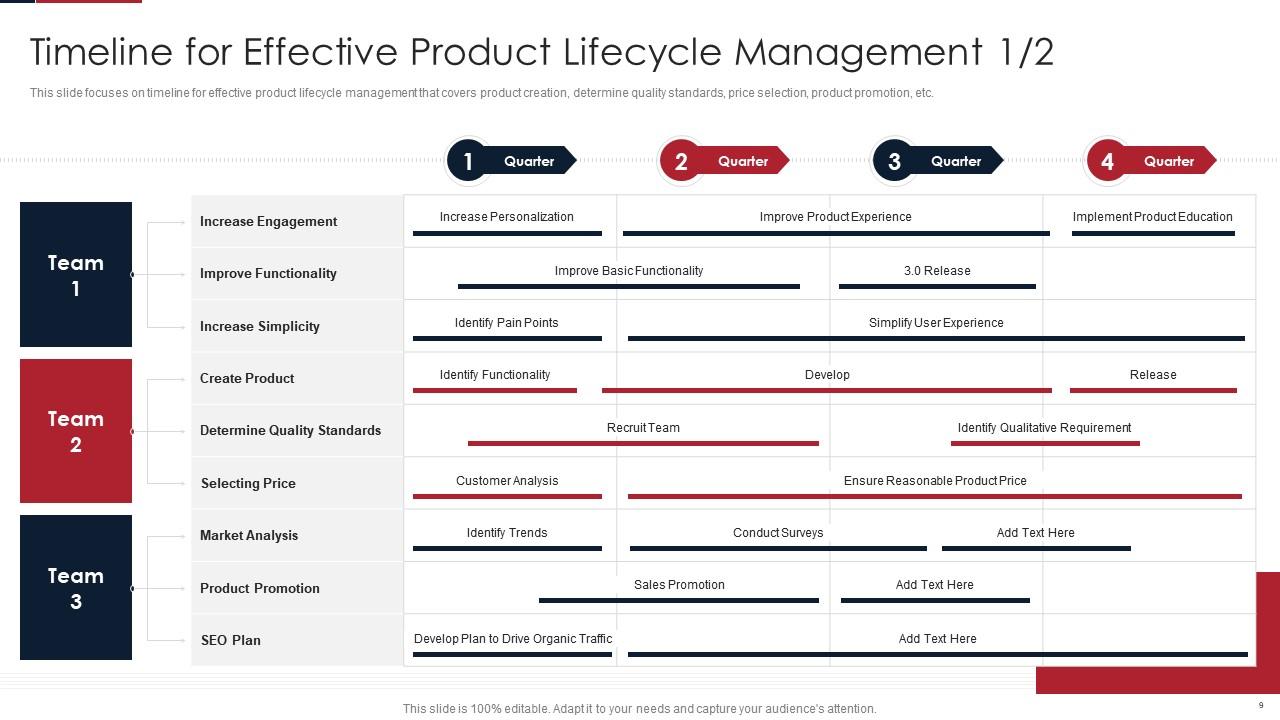
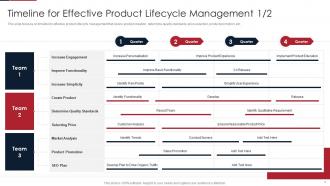
Folie 9 : Diese Folie konzentriert sich auf den Zeitplan für ein effektives Produktlebenszyklusmanagement, das die Produkterstellung abdeckt, Qualitätsstandards festlegt usw.
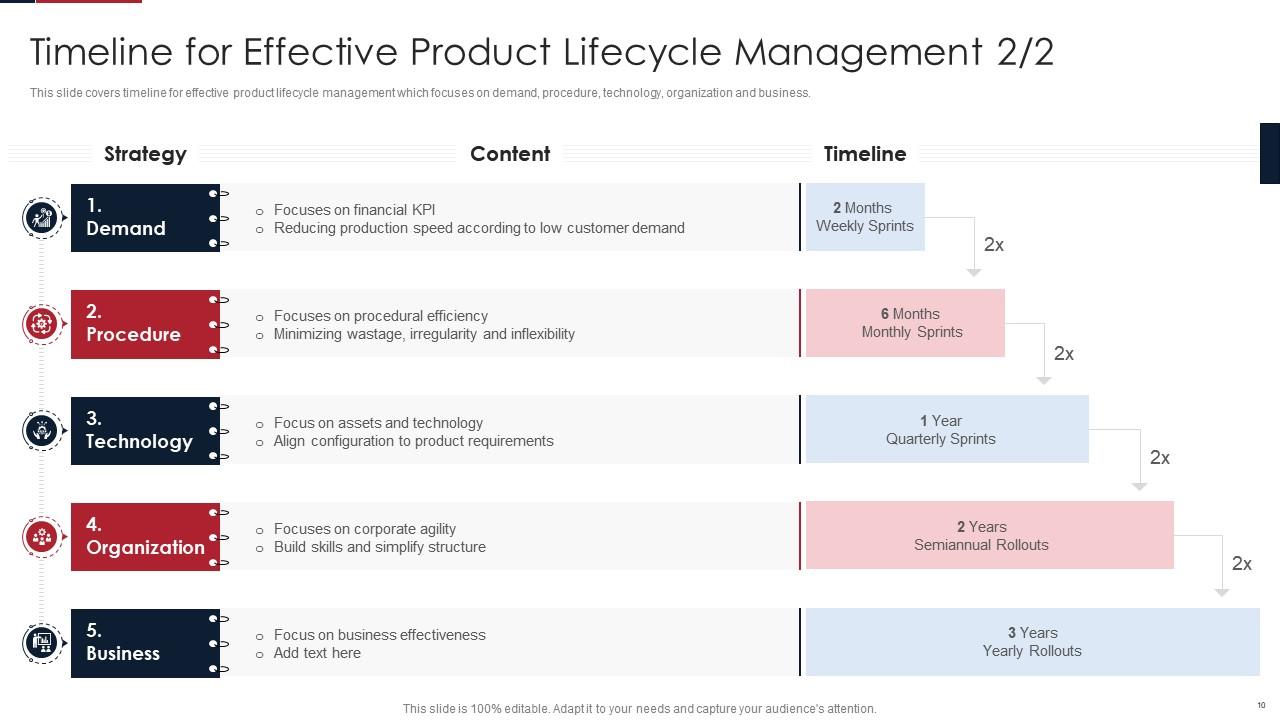
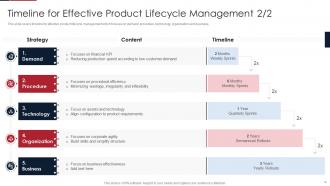
Folie 10 : Diese Folie behandelt den Zeitplan für ein effektives Produktlebenszyklusmanagement, das sich auf Nachfrage, Verfahren, Technologie, Organisation und Geschäft konzentriert.
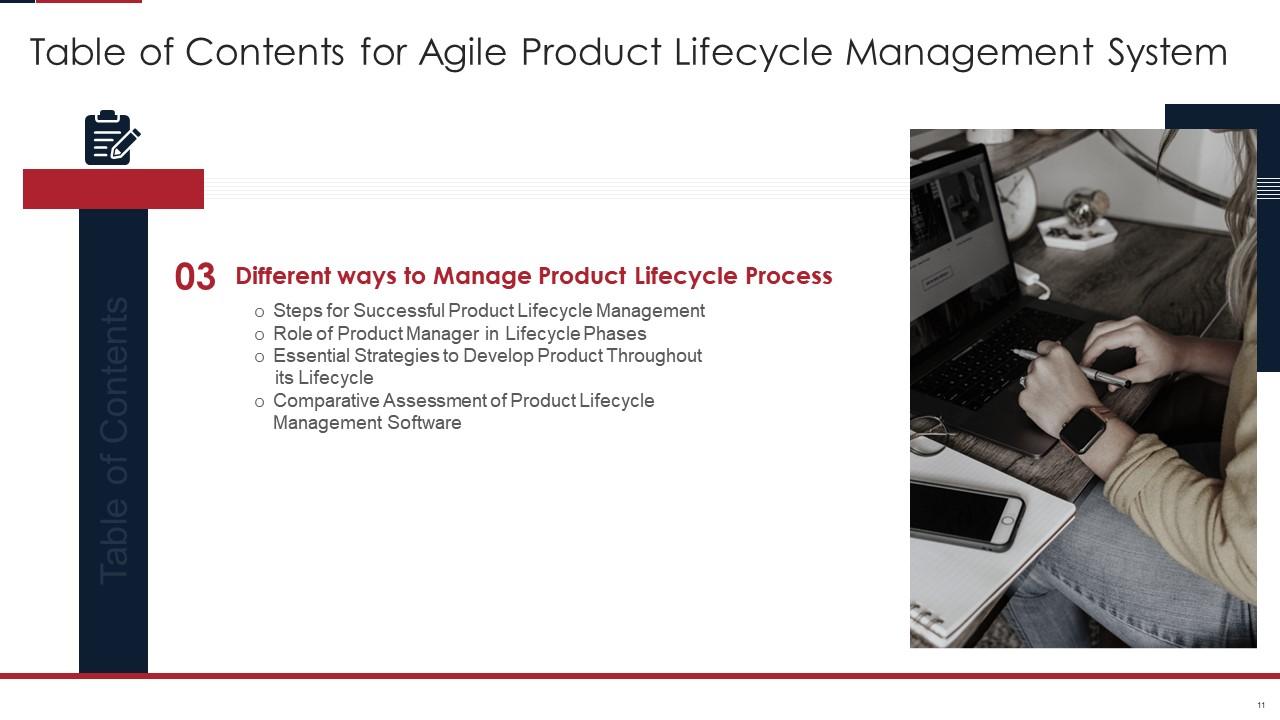
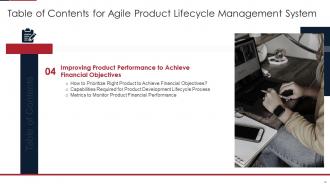
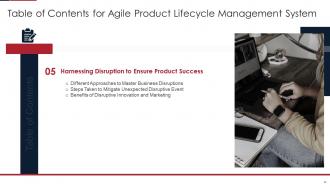
Folie 11 : Diese Folie zeigt Titel für vier Themen, die als nächstes in der Vorlage behandelt werden sollen.
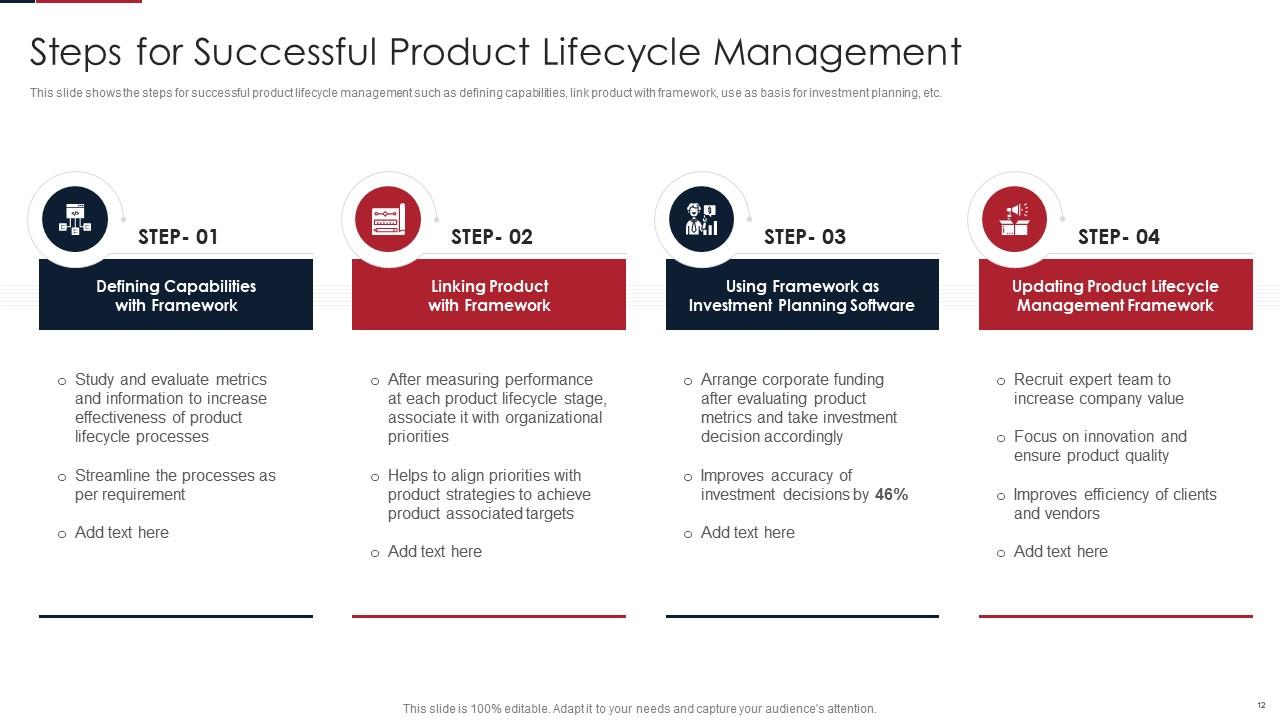
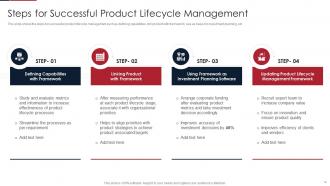
Folie 12 : Diese Folie zeigt die Schritte für ein erfolgreiches Produktlebenszyklusmanagement, wie z. B. das Definieren von Fähigkeiten, das Verknüpfen von Produkt mit Framework usw.
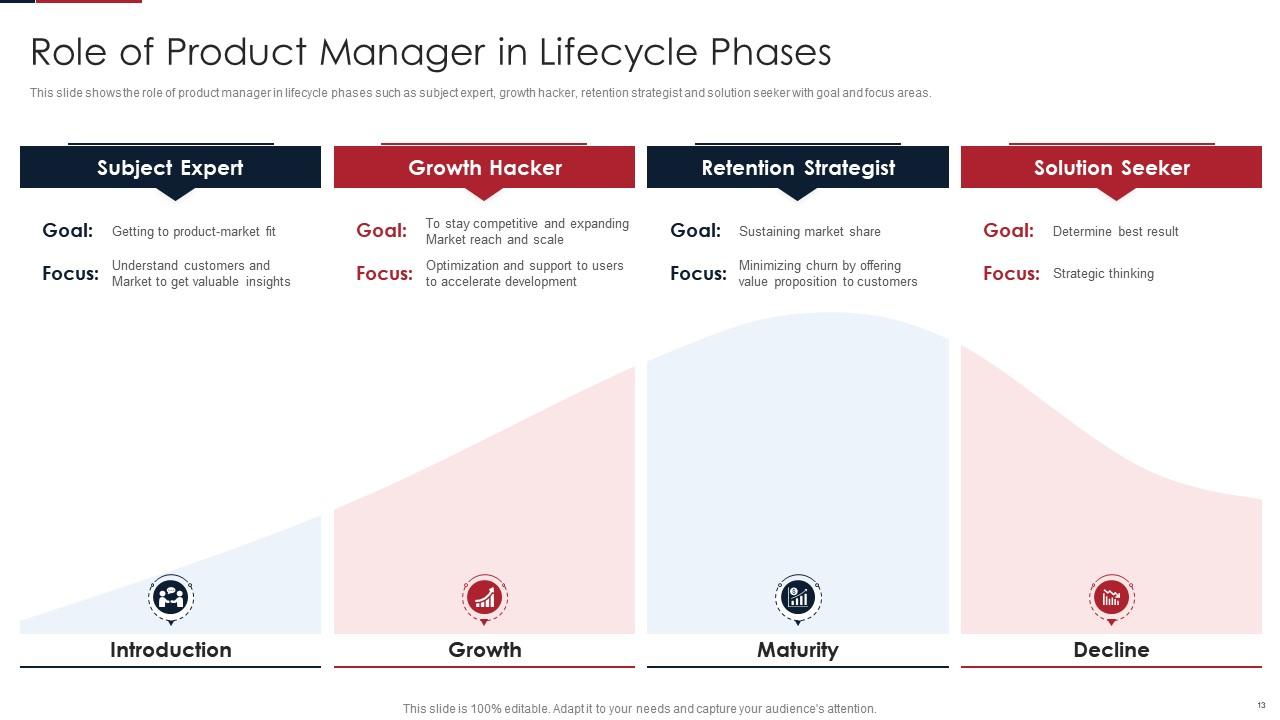
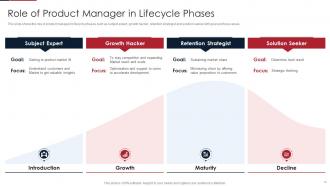
Folie 13 : Diese Folie zeigt die Rolle des Produktmanagers in Lebenszyklusphasen wie Fachexperte, Wachstumshacker usw.
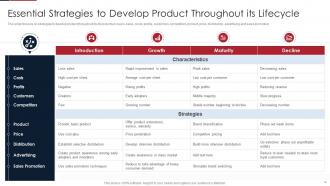
Folie 14 : Diese Folie konzentriert sich auf Strategien zur Produktentwicklung während ihres gesamten Lebenszyklus, der Umsatz, Kosten, Gewinne, Kunden, Wettbewerber usw. umfasst.
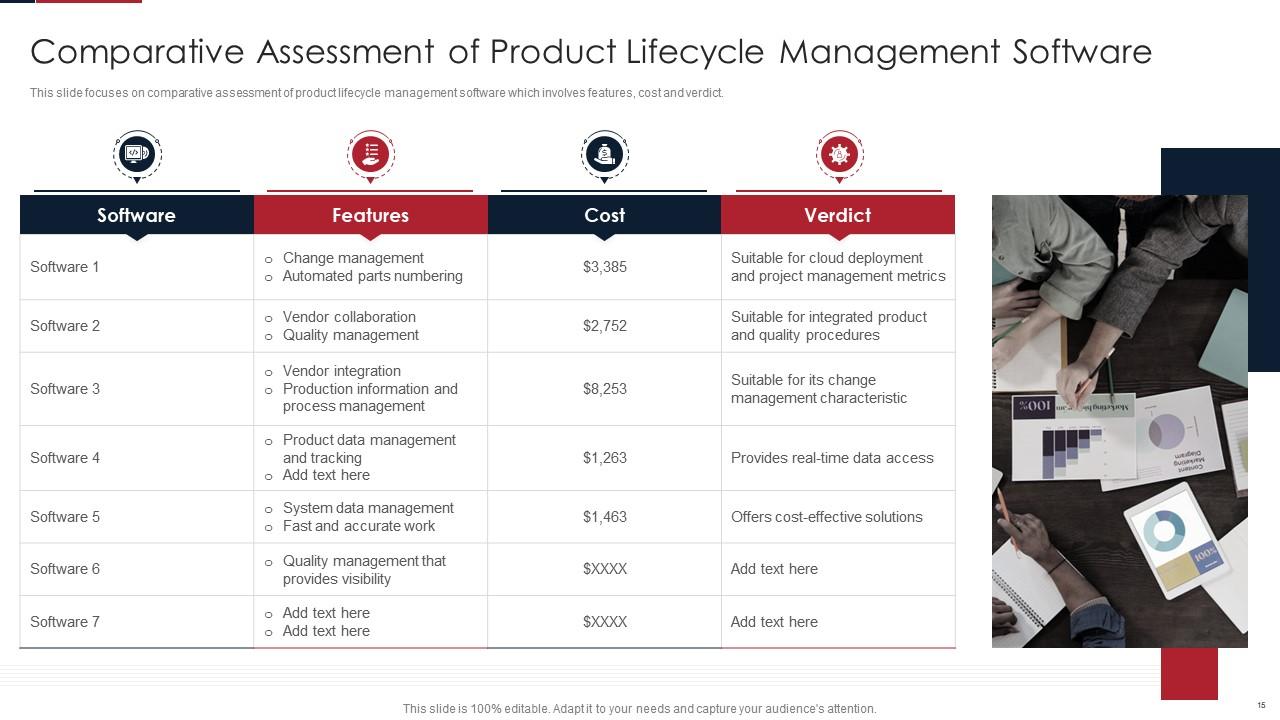
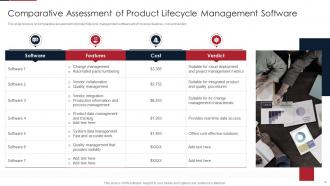
Folie 15 : Diese Folie konzentriert sich auf die vergleichende Bewertung von Produktlebenszyklus-Management-Software, die Funktionen, Kosten und Beurteilung umfasst.
Folie 16 : Diese Folie zeigt Titel für drei Themen, die als nächstes in der Vorlage behandelt werden sollen.
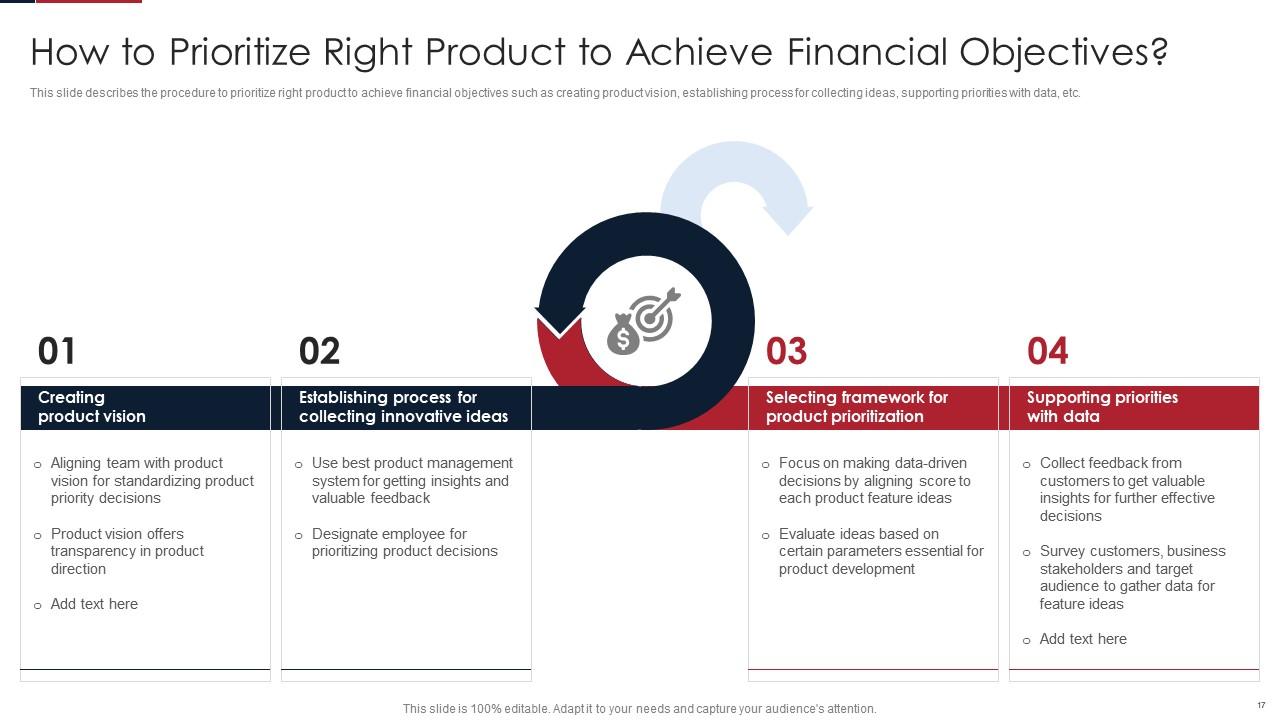
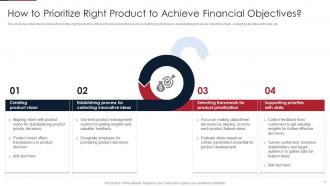
Folie 17 : Diese Folie beschreibt das Verfahren zur Priorisierung des richtigen Produkts, um finanzielle Ziele wie die Erstellung einer Produktvision usw. zu erreichen.
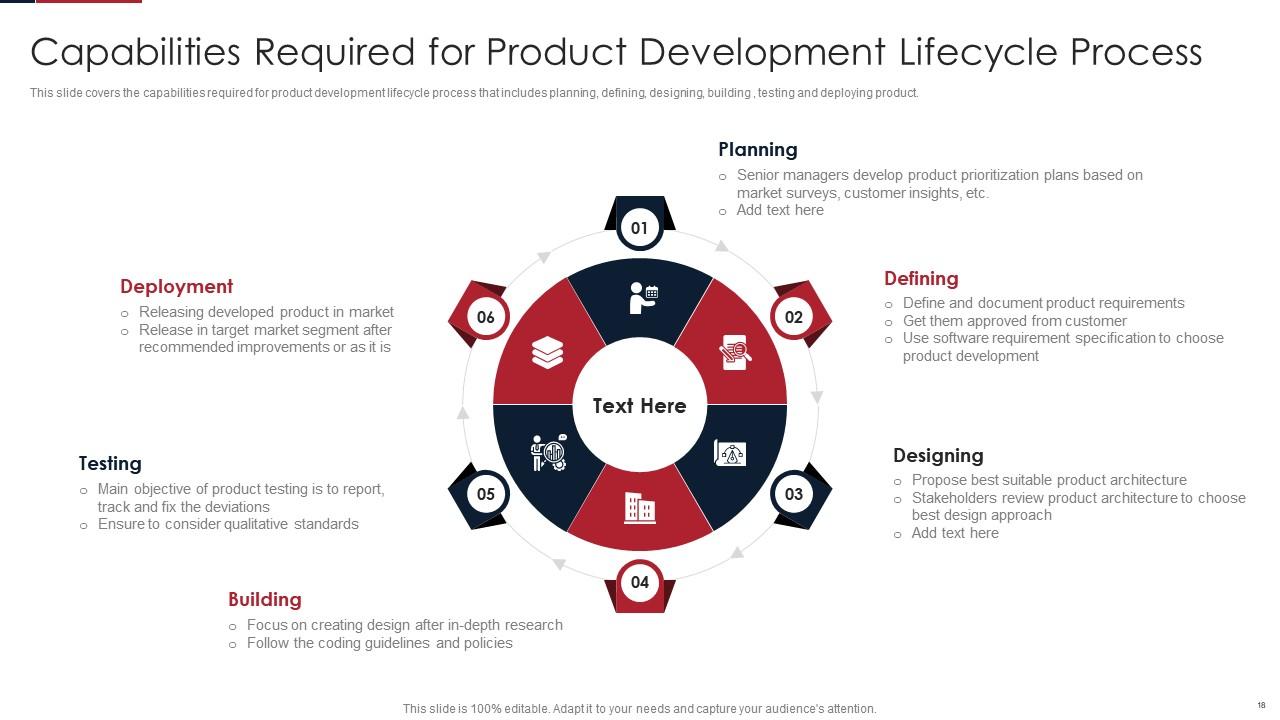
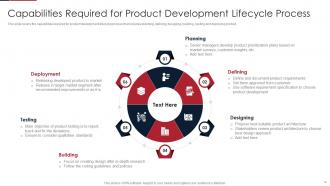
Folie 18 : Diese Folie deckt die Fähigkeiten ab, die für den Produktentwicklungslebenszyklusprozess erforderlich sind, der Planung, Definition, Design usw. umfasst.
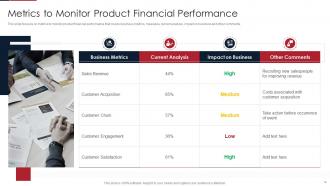
Folie 19 : Diese Folie konzentriert sich auf Metriken zur Überwachung der finanziellen Leistung von Produkten, die Geschäftsmetriken, Maßnahmen, aktuelle Analysen usw. umfassen.
Folie 20 : Diese Folie zeigt Titel für drei Themen, die als nächstes in der Vorlage behandelt werden sollen.
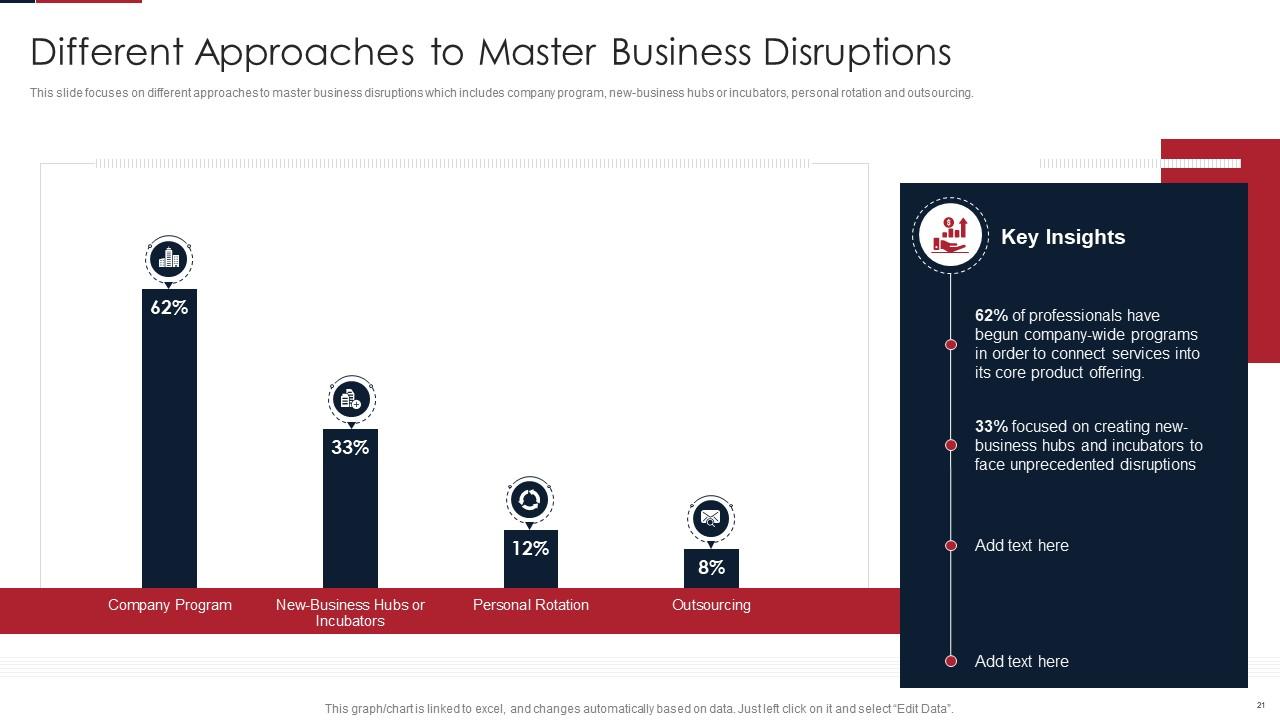
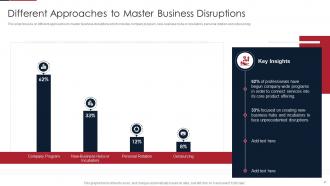
Folie 21 : Diese Folie konzentriert sich auf verschiedene Ansätze zur Bewältigung von Geschäftsunterbrechungen, darunter Unternehmensprogramme, New-Business-Hubs oder Inkubatoren usw.
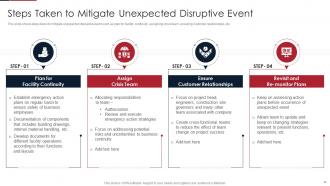
Folie 22 : Diese Folie zeigt Schritte, die unternommen wurden, um unerwartete Störereignisse abzumildern, wie z.
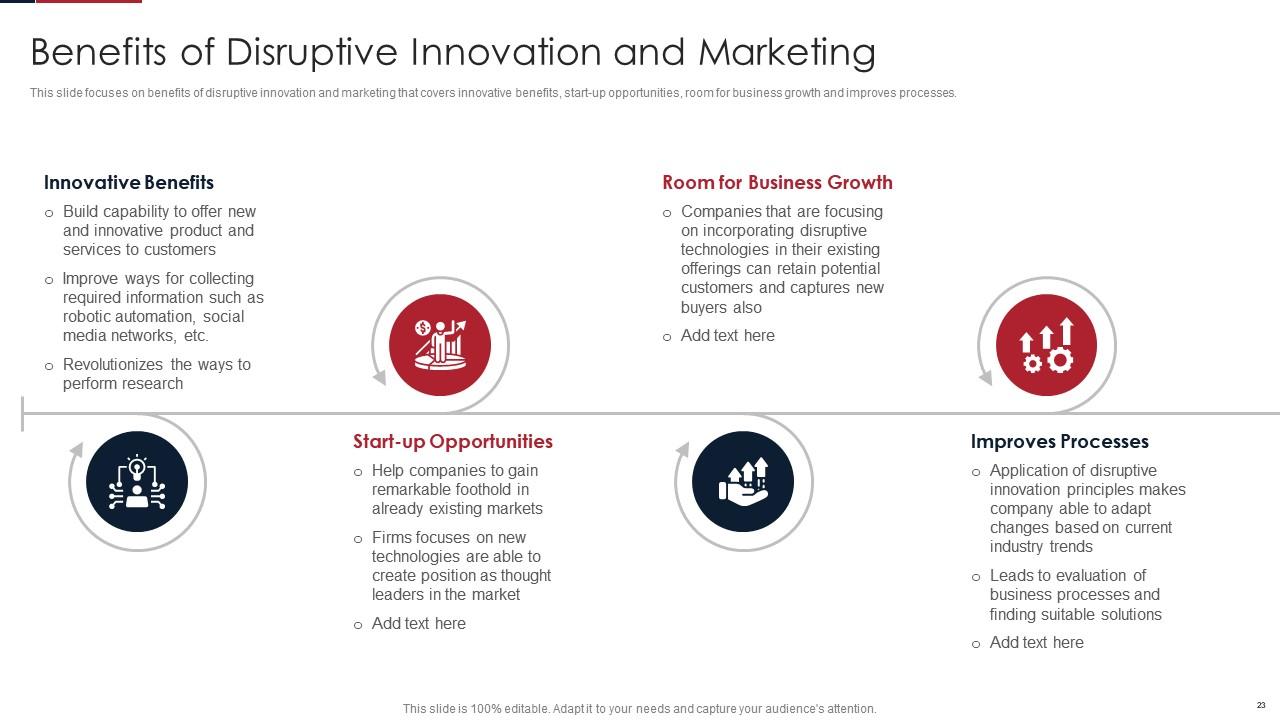
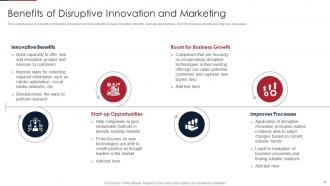
Folie 23 : Diese Folie konzentriert sich auf die Vorteile von disruptiven Innovationen und Marketing, das innovative Vorteile, Start-up-Möglichkeiten usw. abdeckt.
Folie 24 : Diese Folie zeigt Titel für fünf Themen, die als nächstes in der Vorlage behandelt werden sollen.
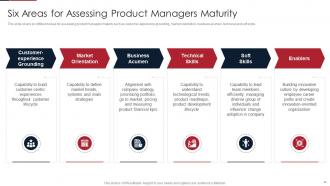
Folie 25 : Diese Folie behandelt sechs verschiedene Bereiche zur Beurteilung der Reife von Produktmanagern, wie z. B. Kundenerfahrung, Marktorientierung usw.
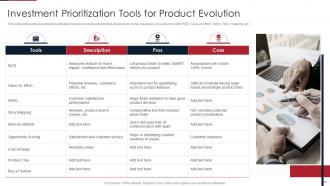
Folie 26 : Diese Folie stellt Tools zur Priorisierung von Investitionen für die Produktentwicklung dar, die den Namen der Tools, Maßnahmen, Vor- und Nachteile mit RICE usw. zeigt.
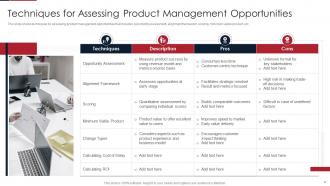
Folie 27 : Diese Folie zeigt Techniken zur Bewertung von Möglichkeiten im Produktmanagement, einschließlich Chancenbewertung, Ausrichtungsrahmen usw.
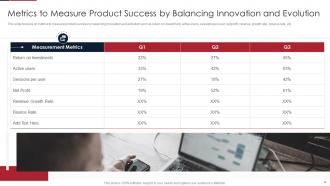
Folie 28 : Diese Folie konzentriert sich auf Metriken zur Messung des Produkterfolgs durch Abwägen von Innovation und Weiterentwicklung, z. B. Kapitalrendite, aktive Benutzer usw.
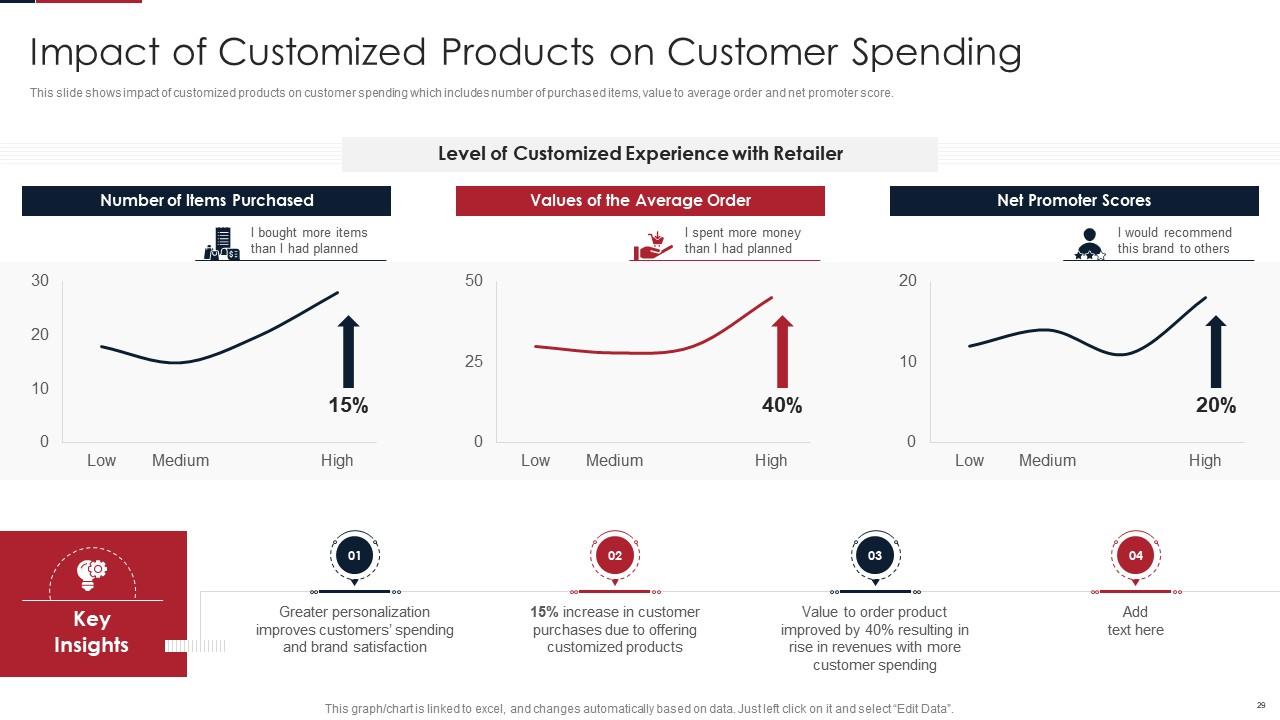
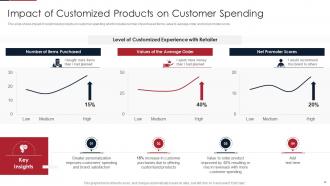
Folie 29 : Diese Folie zeigt die Auswirkungen von kundenspezifischen Produkten auf die Kundenausgaben, einschließlich der Anzahl der gekauften Artikel usw.
Folie 30 : Diese Folie zeigt Titel für vier Themen, die als nächstes in der Vorlage behandelt werden sollen.
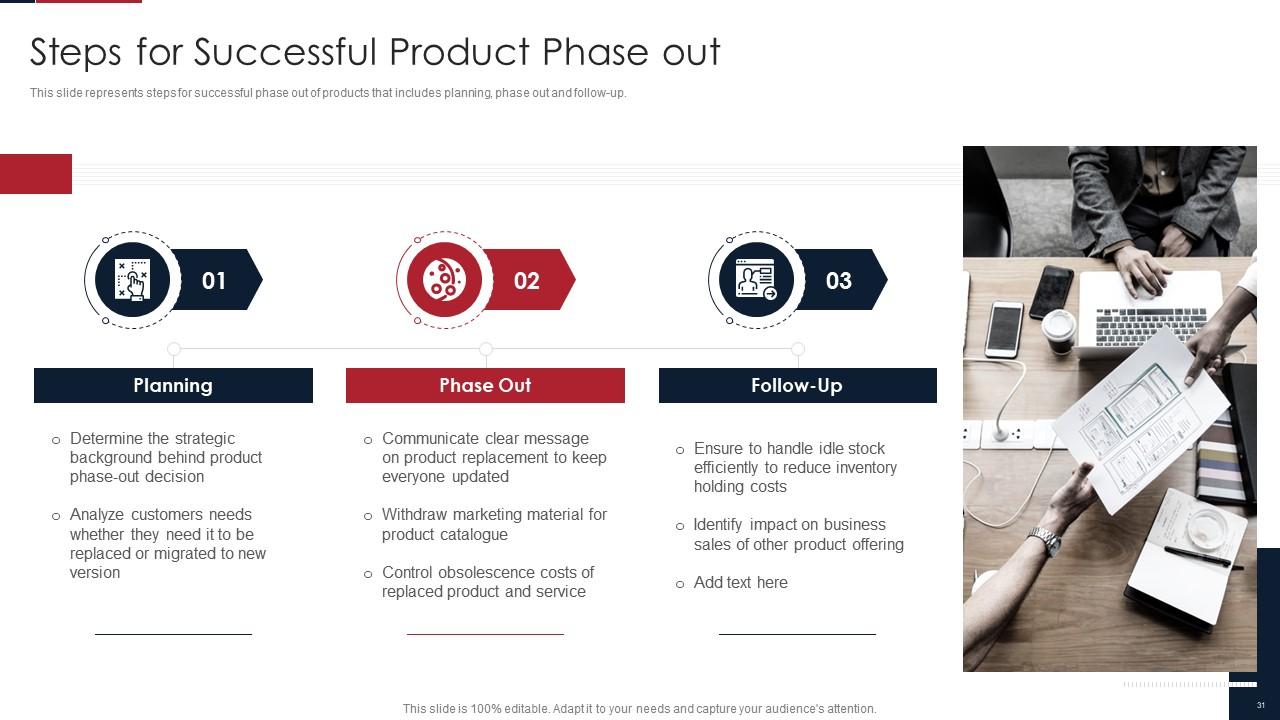
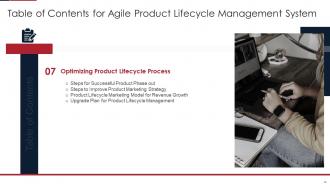
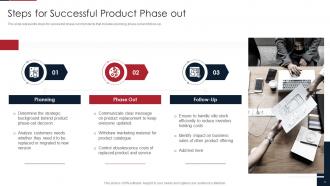
Folie 31 : Diese Folie stellt die Schritte für ein erfolgreiches Auslaufen von Produkten dar, einschließlich Planung, Auslauf und Nachverfolgung.
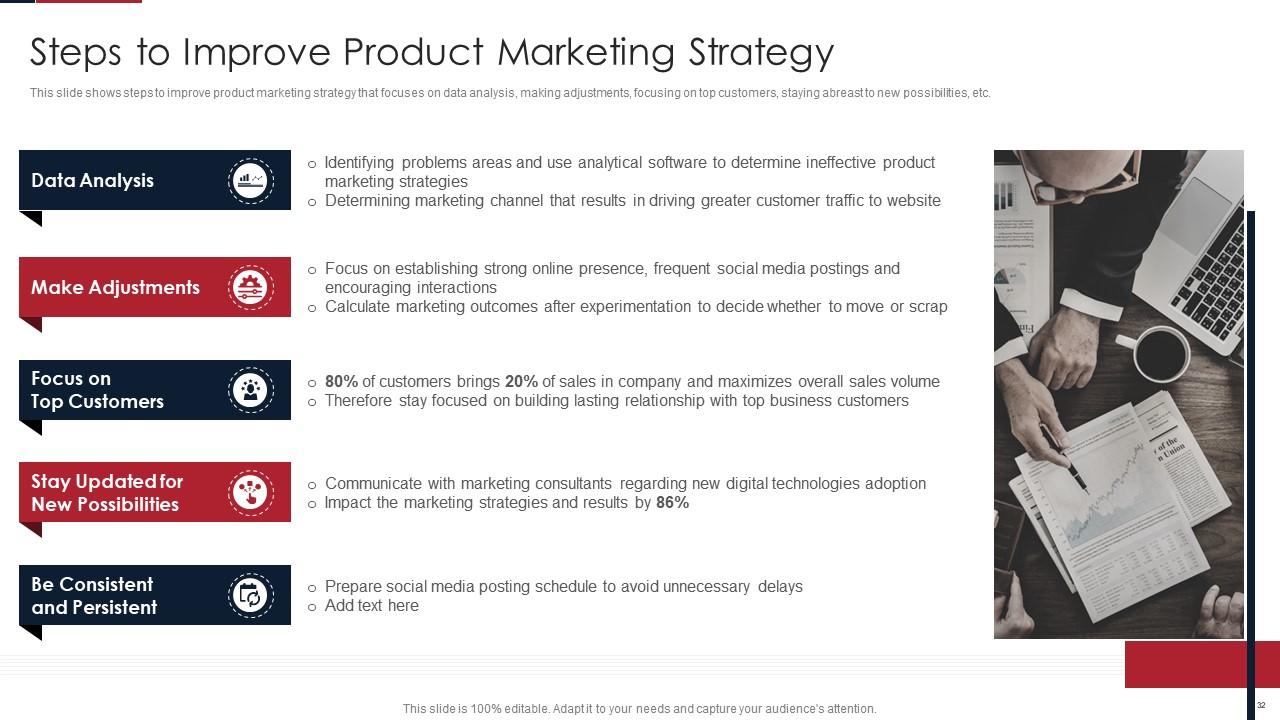
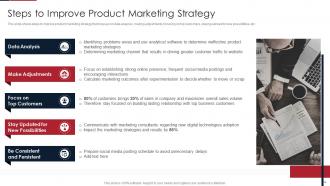
Folie 32 : Diese Folie zeigt Schritte zur Verbesserung der Produktmarketingstrategie, die sich auf Datenanalyse, Anpassungen, Konzentration auf Top-Kunden usw. konzentriert.
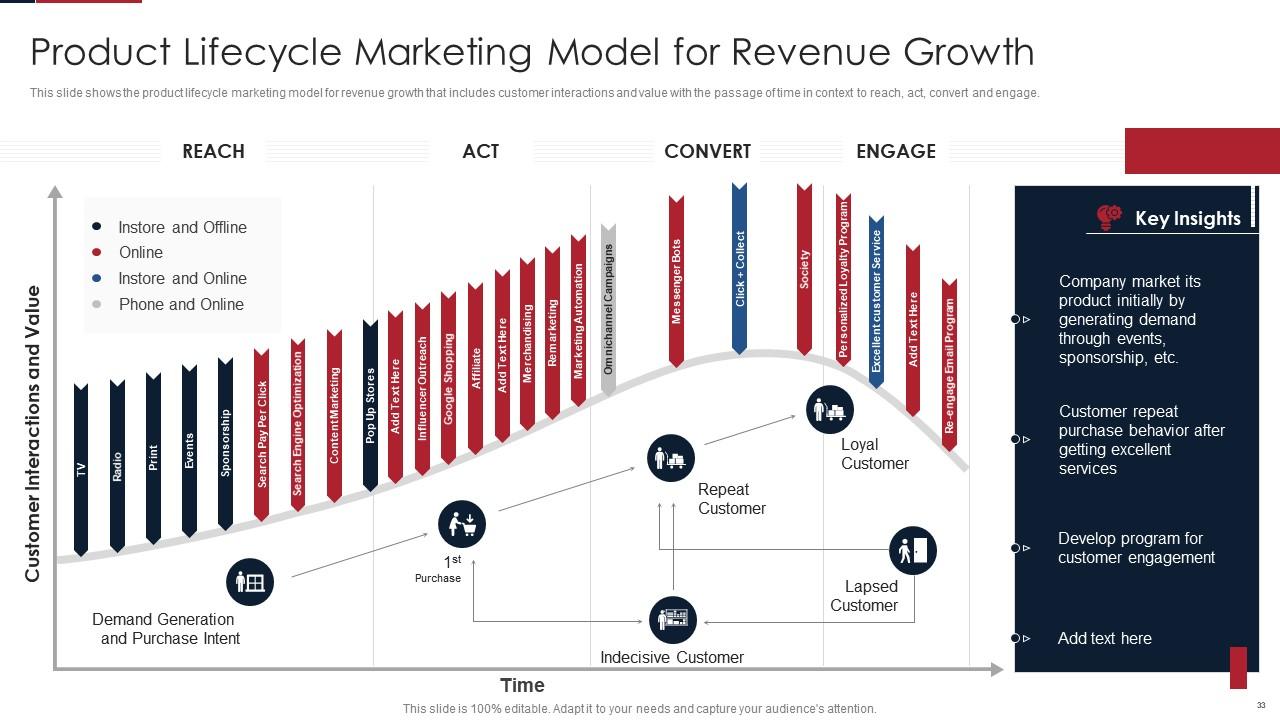
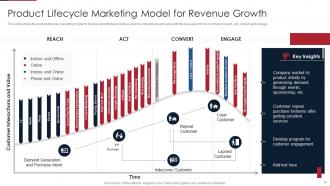
Folie 33 : Diese Folie zeigt das Produktlebenszyklus-Marketingmodell für Umsatzwachstum, das Kundeninteraktionen und -wert umfasst.
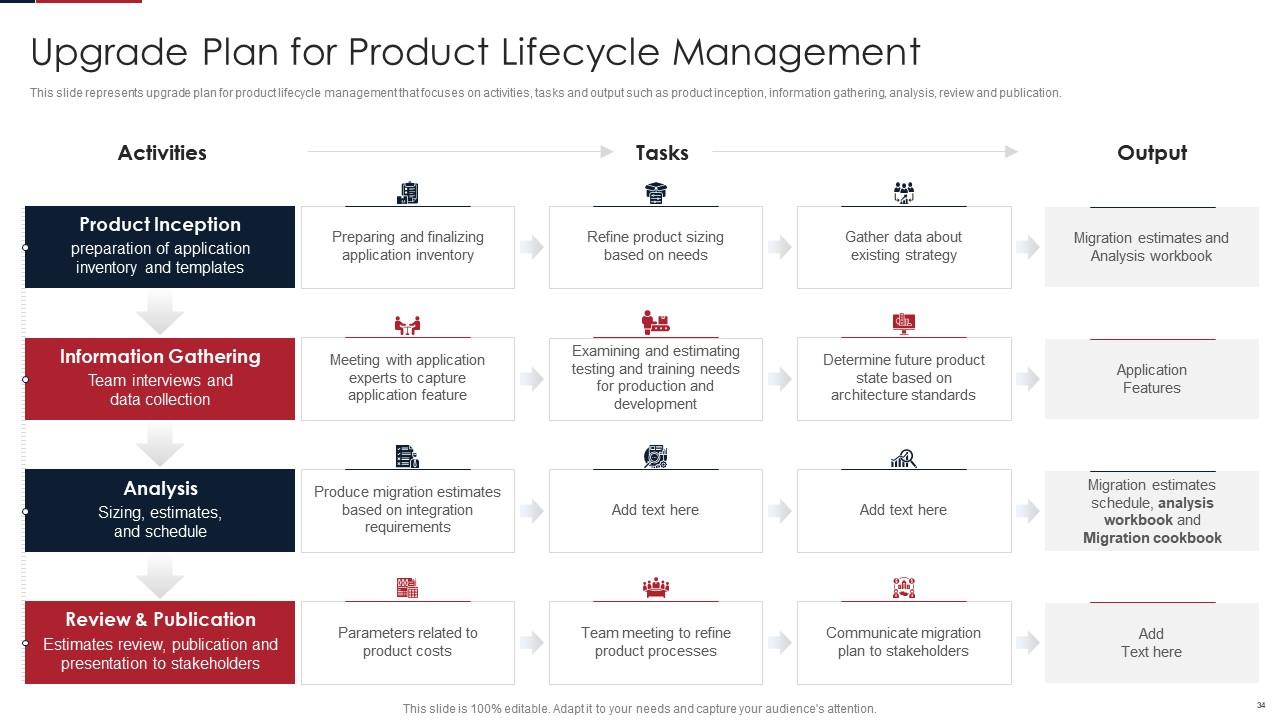
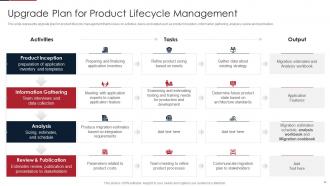
Folie 34 : Diese Folie stellt einen Upgrade-Plan für das Produktlebenszyklusmanagement dar, der sich auf Aktivitäten, Aufgaben und Ergebnisse wie Produkteinführung usw. konzentriert.
Folie 35 : Diese Folie zeigt Titel für zwei Themen, die als nächstes in der Vorlage behandelt werden sollen.
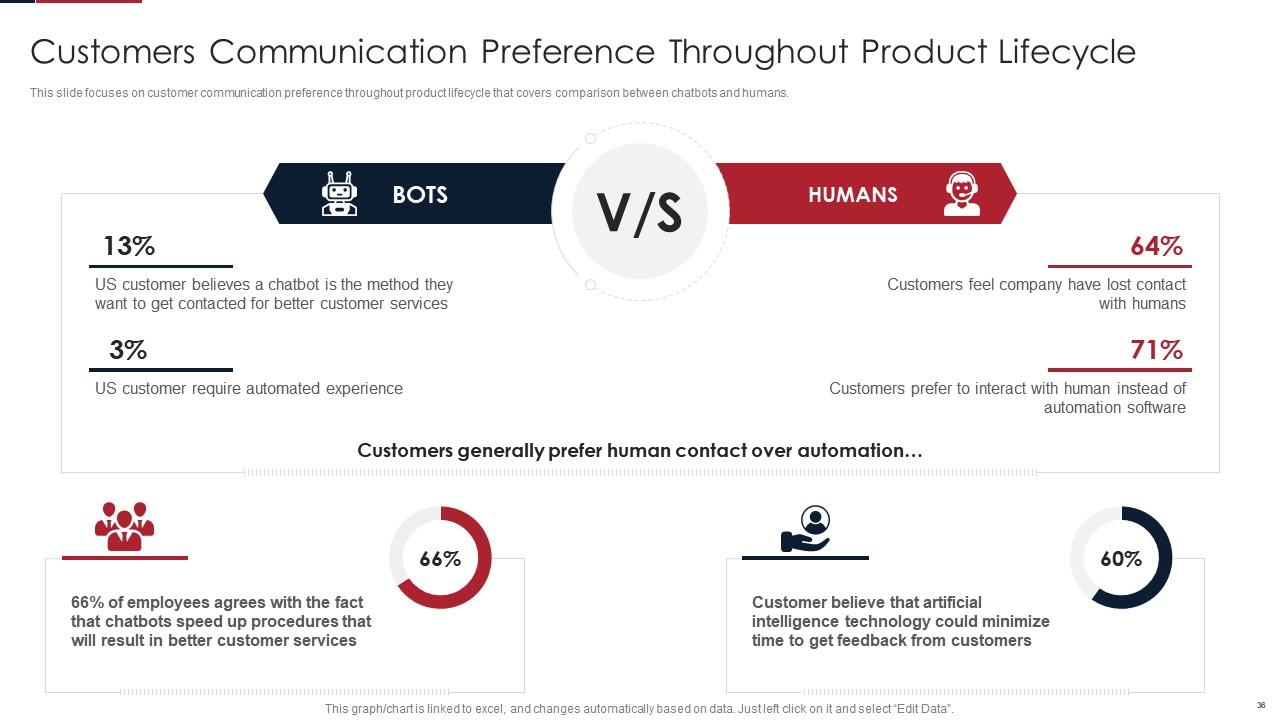
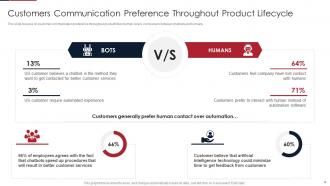
Folie 36 : Diese Folie konzentriert sich auf die Präferenzen der Kundenkommunikation während des gesamten Produktlebenszyklus, die den Vergleich zwischen Chatbots und Menschen abdeckt.
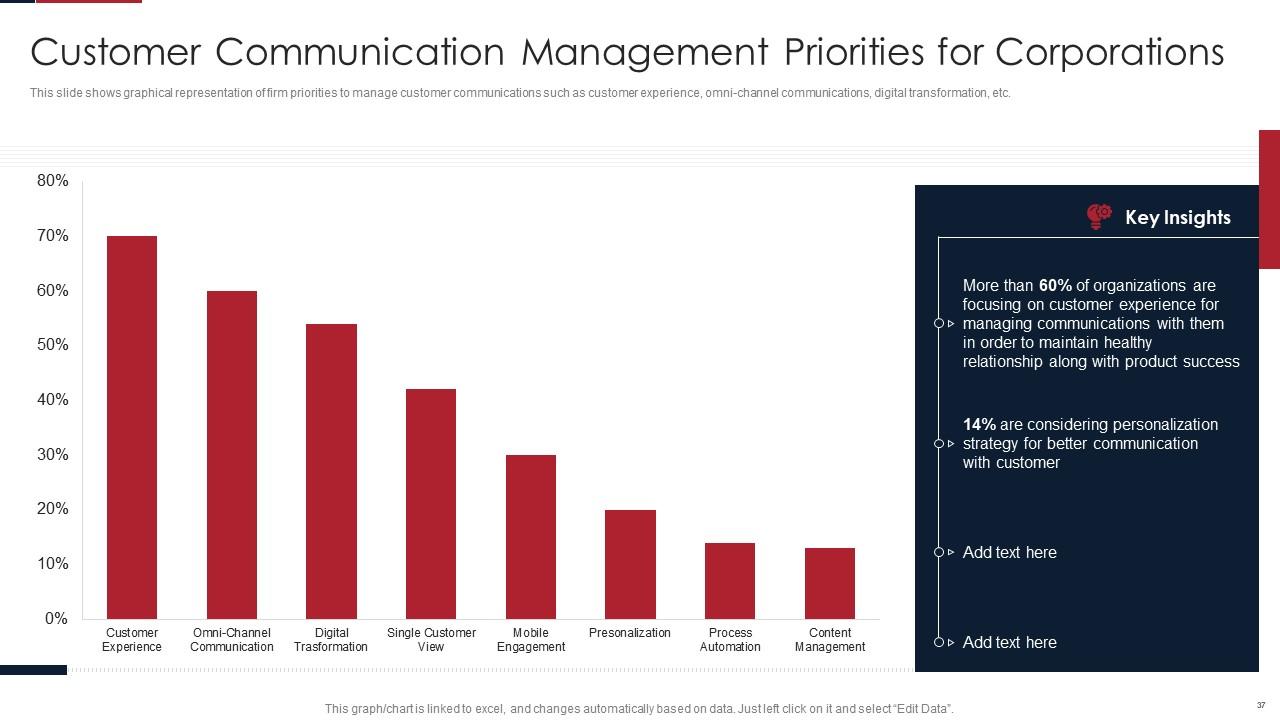
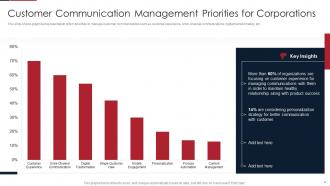
Folie 37 : Diese Folie zeigt eine grafische Darstellung fester Prioritäten zur Verwaltung der Kundenkommunikation wie Kundenerfahrung usw.
Folie 38 : Diese Folie zeigt den Titel für ein Thema, das als nächstes in der Vorlage behandelt werden soll.
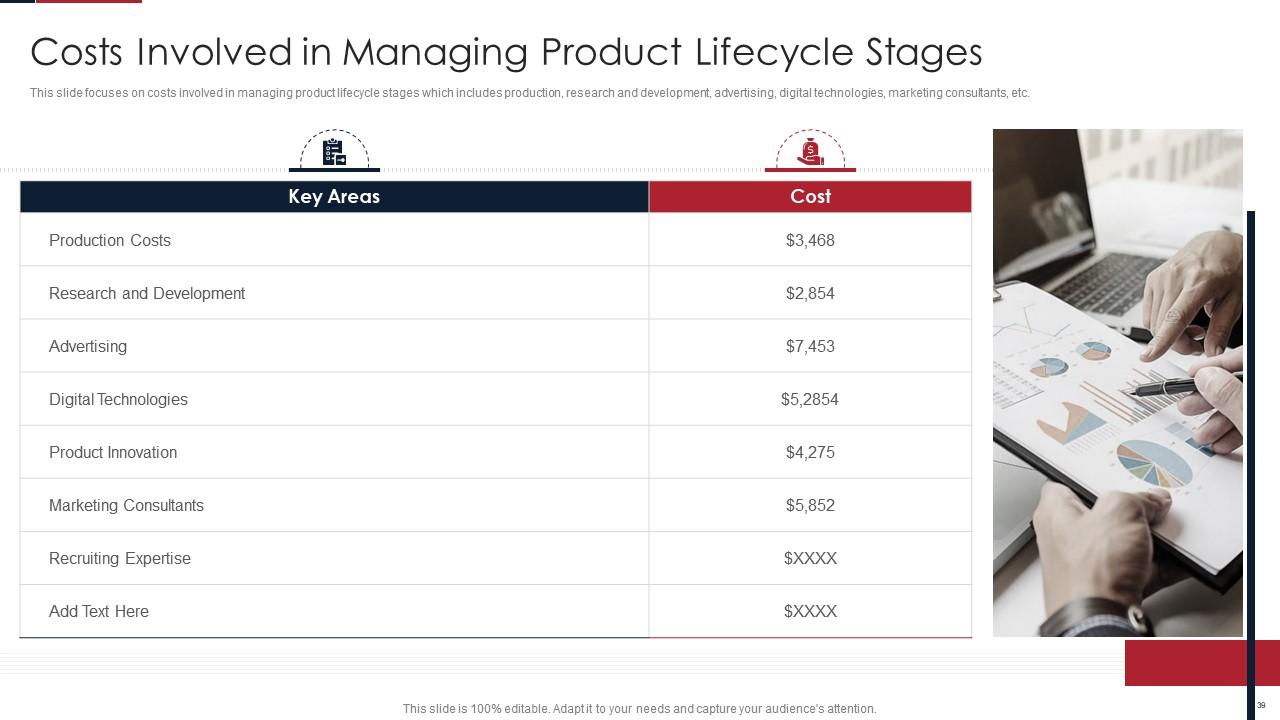
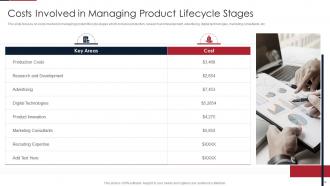
Folie 39 : Diese Folie konzentriert sich auf die Kosten, die mit der Verwaltung der Phasen des Produktlebenszyklus verbunden sind, einschließlich Produktion, Forschung und Entwicklung usw.
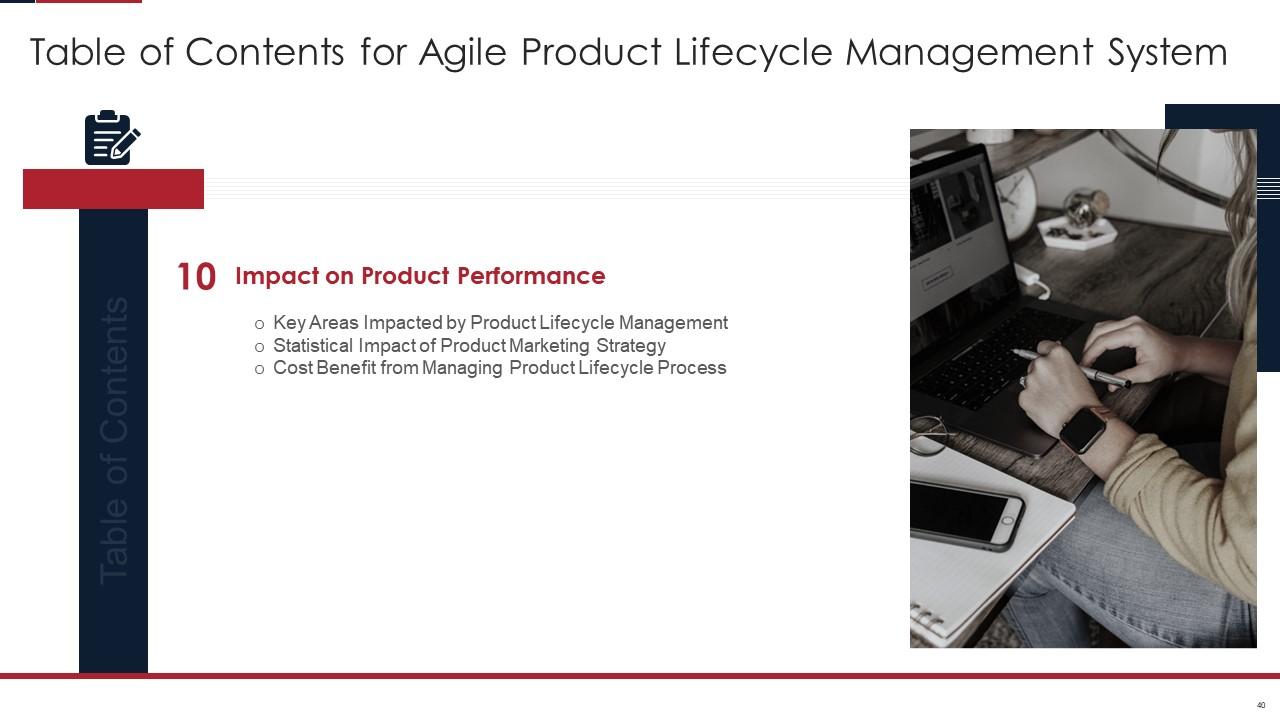
Folie 40 : Diese Folie zeigt Titel für drei Themen, die als nächstes in der Vorlage behandelt werden sollen.
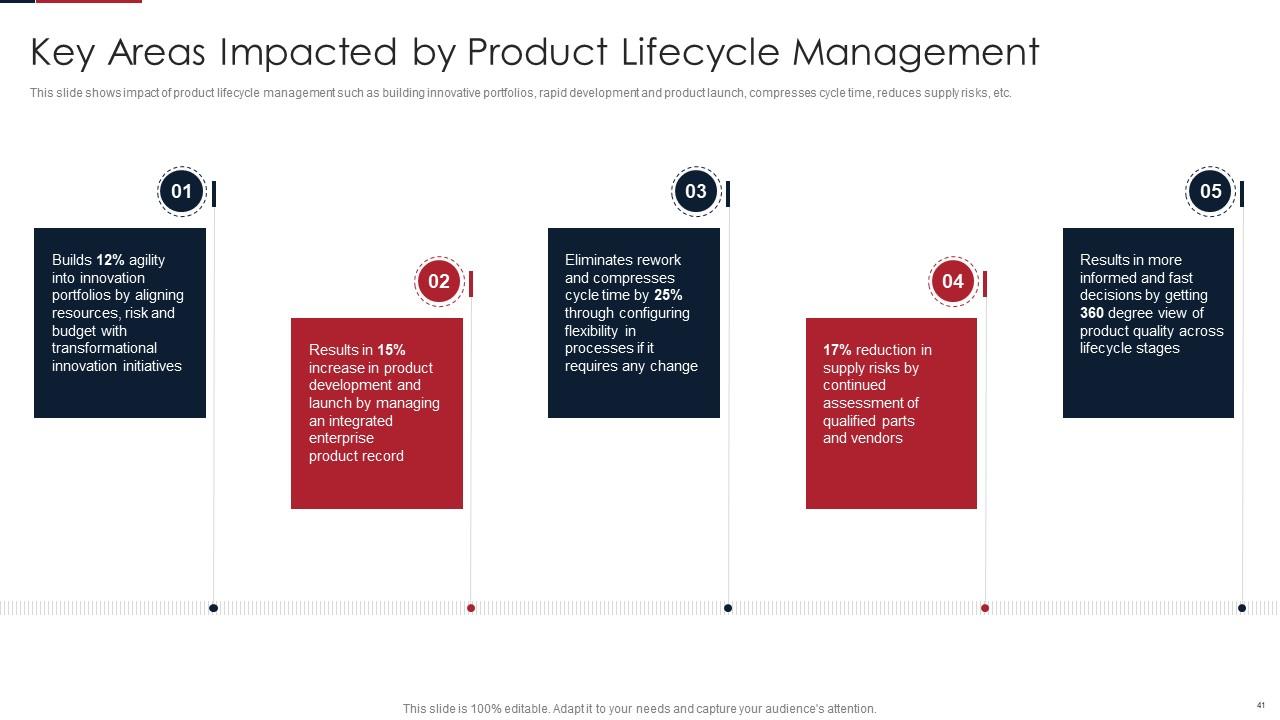
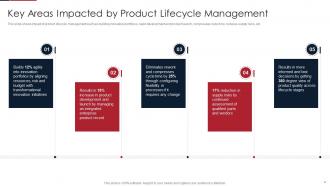
Folie 41 : Diese Folie zeigt die Auswirkungen des Produktlebenszyklusmanagements wie den Aufbau innovativer Portfolios, schnelle Entwicklung und Produkteinführung usw.
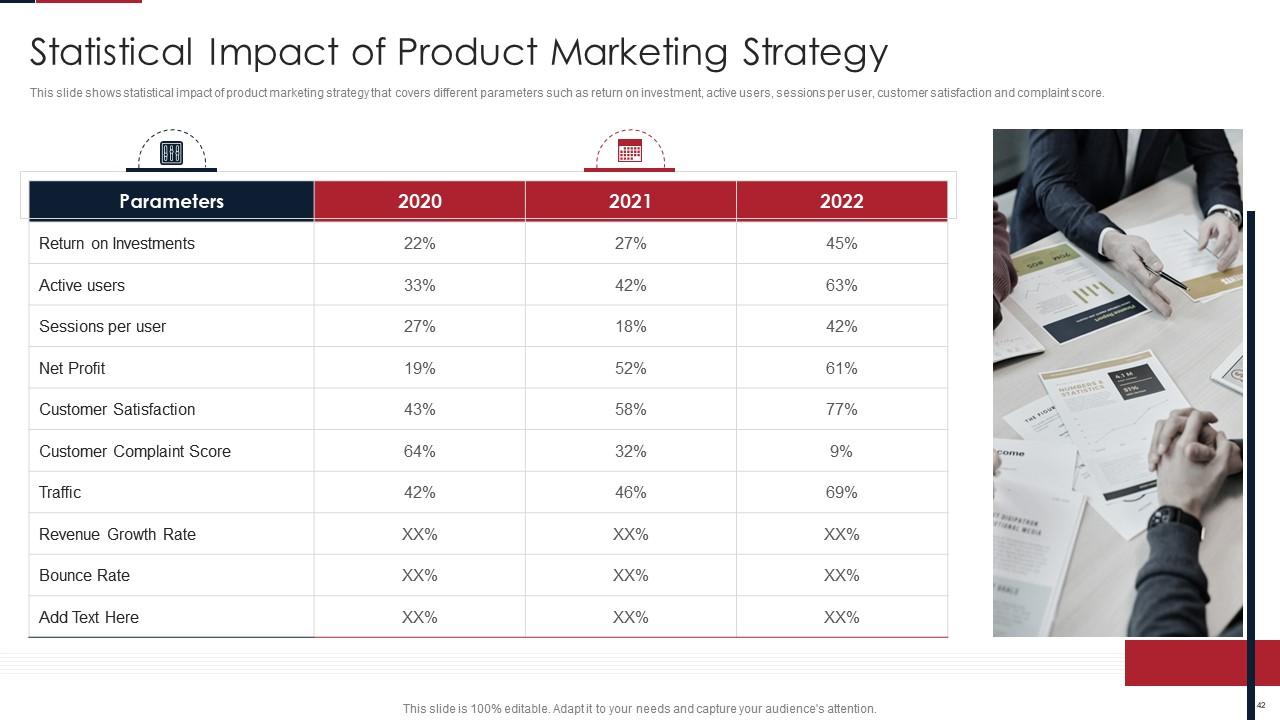
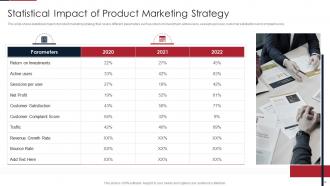
Folie 42 : Diese Folie zeigt die statistischen Auswirkungen der Produktmarketingstrategie, die verschiedene Parameter wie Return on Investment usw. abdeckt.
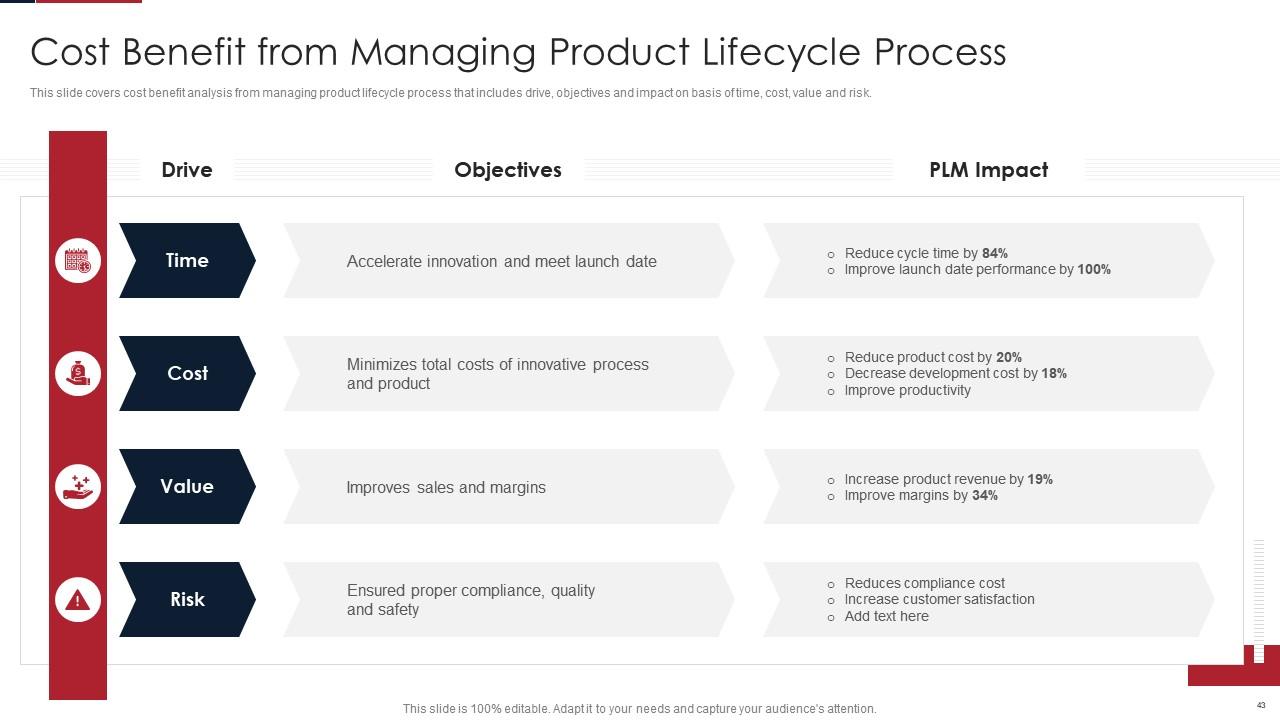
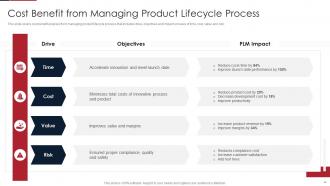
Folie 43 : Diese Folie behandelt die Kosten-Nutzen-Analyse aus der Verwaltung des Produktlebenszyklusprozesses, die Antrieb, Ziele und Auswirkungen auf Zeitbasis usw. umfasst.
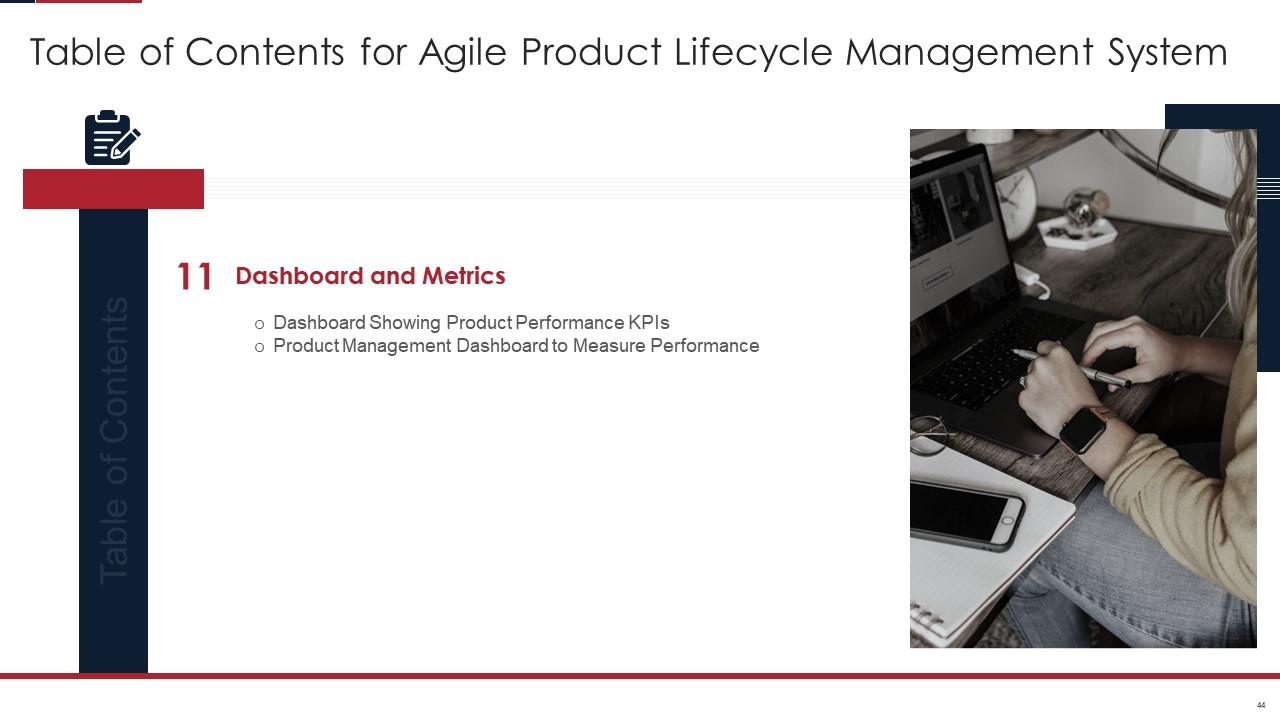
Folie 44 : Diese Folie zeigt Titel für zwei Themen, die als nächstes in der Vorlage behandelt werden sollen.
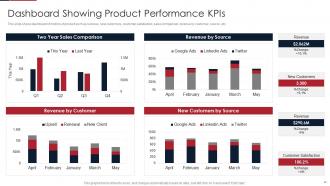
Folie 45 : Diese Folie zeigt ein Dashboard mit Produktkennzahlen wie Umsatz, Neukunden, Kundenzufriedenheit, Verkaufsvergleich usw.
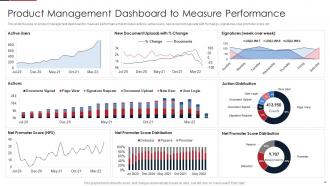
Folie 46 : Diese Folie konzentriert sich auf das Produktmanagement-Dashboard, um die Leistung zu messen, die Aktionen, aktive Benutzer usw. umfasst.
Folie 47 : Dies ist die Symbolfolie.
Folie 48 : Diese Folie enthält Titel für zusätzliche Folien.
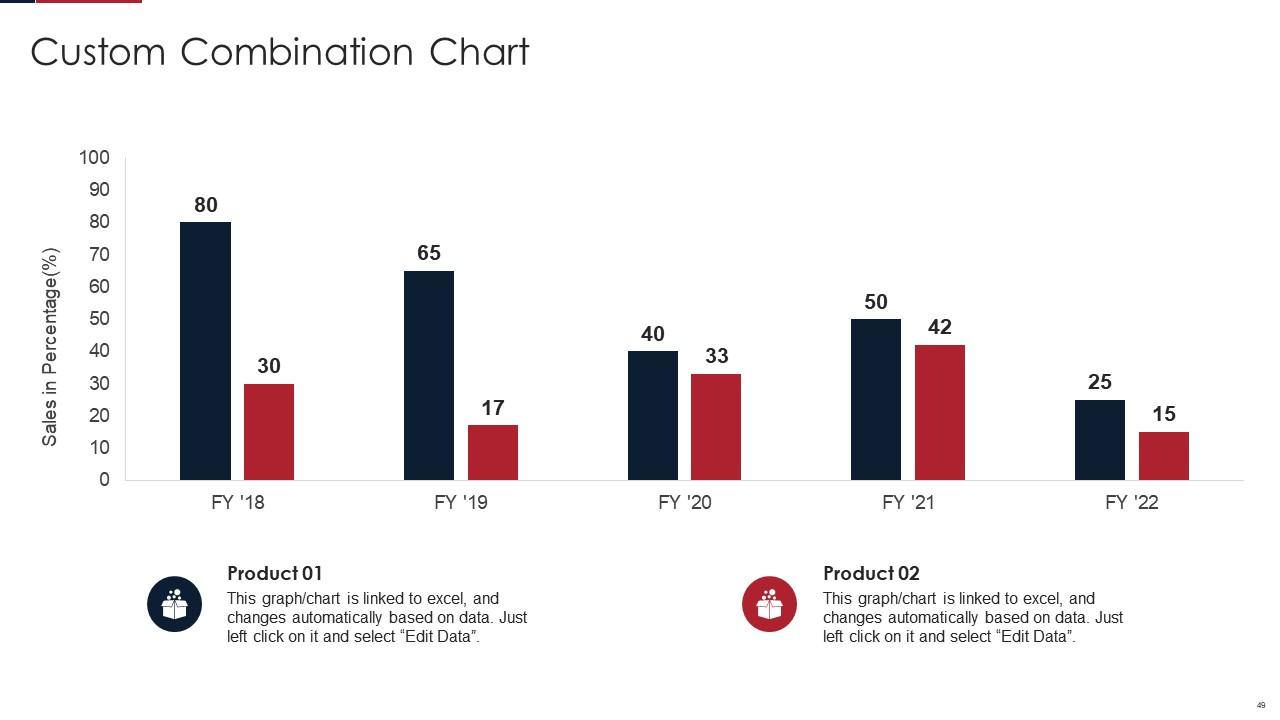
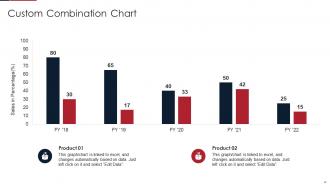
Folie 49 : Diese Folie zeigt ein benutzerdefiniertes Kombinationsdiagramm für die jährlichen Verkäufe für verschiedene Produkte. Die Diagramme sind mit Excel verknüpft.
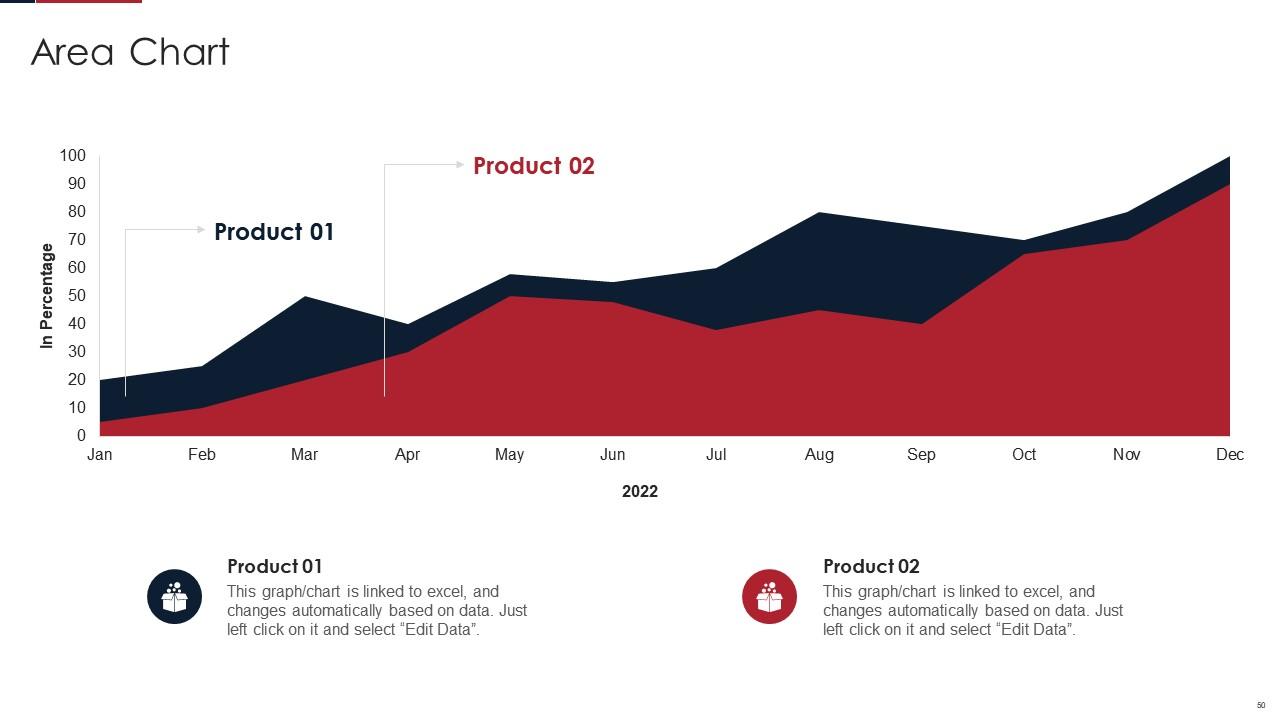
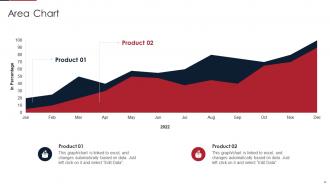
Folie 50 : Diese Folie zeigt monatliche Flächendiagramme für verschiedene Produkte. Die Diagramme sind mit Excel verknüpft.
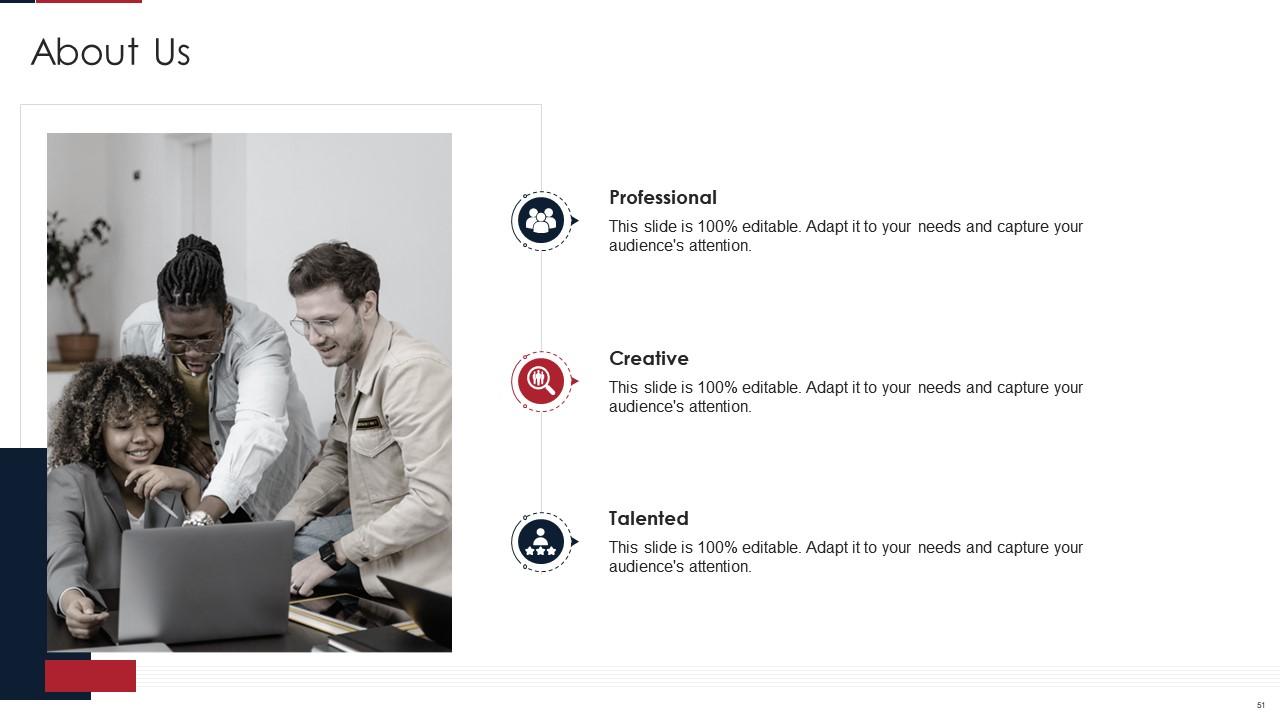
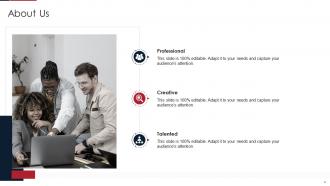
Folie 51 : Diese Folie zeigt Ihr Unternehmen, Ihre Zielgruppe und die Werte Ihrer Kunden.
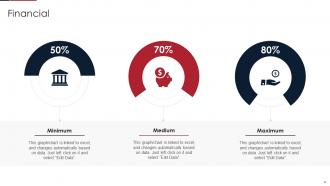
Folie 52 : Diese Folie zeigt Finanzdaten.
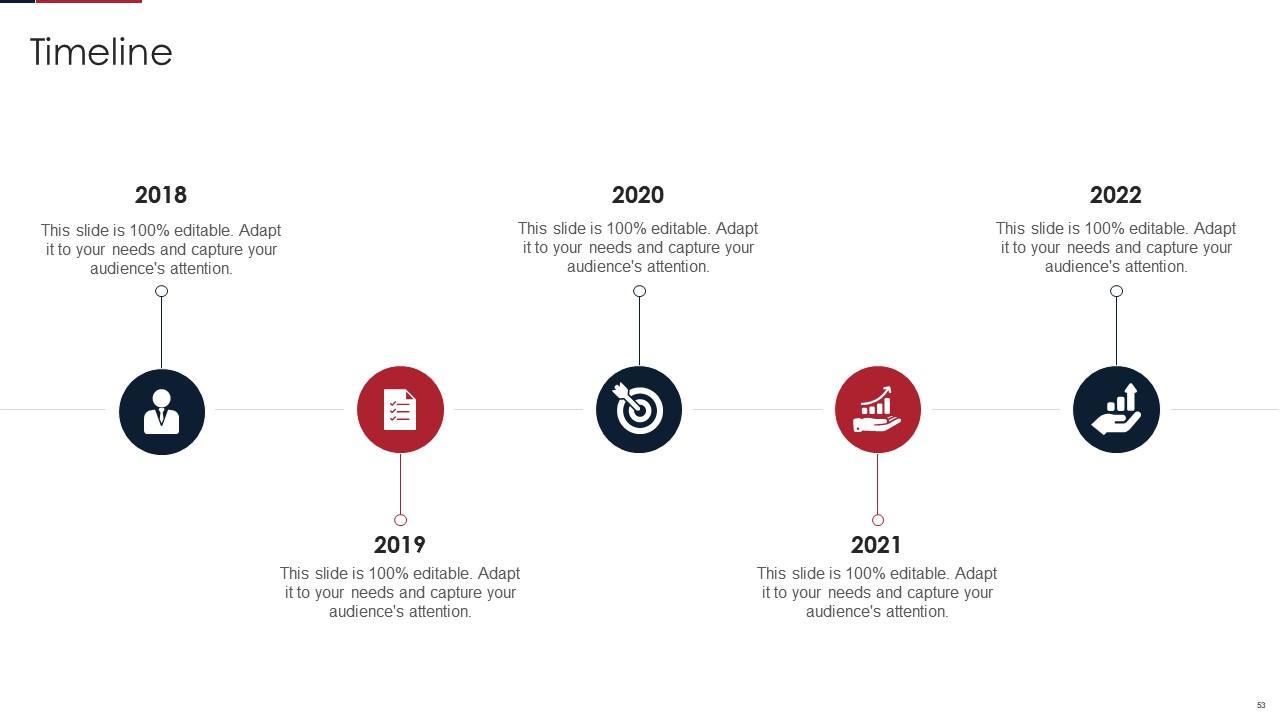
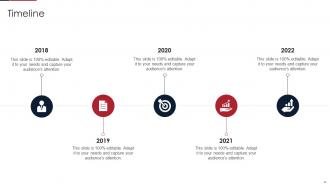
Folie 53 : Diese Folie zeigt die jährliche Zeitleiste.
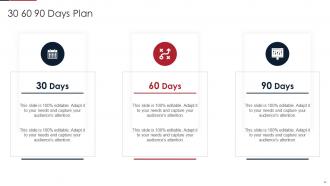
Folie 54 : Diese Folie zeigt einen 30-60-90-Tage-Plan für Projekte.
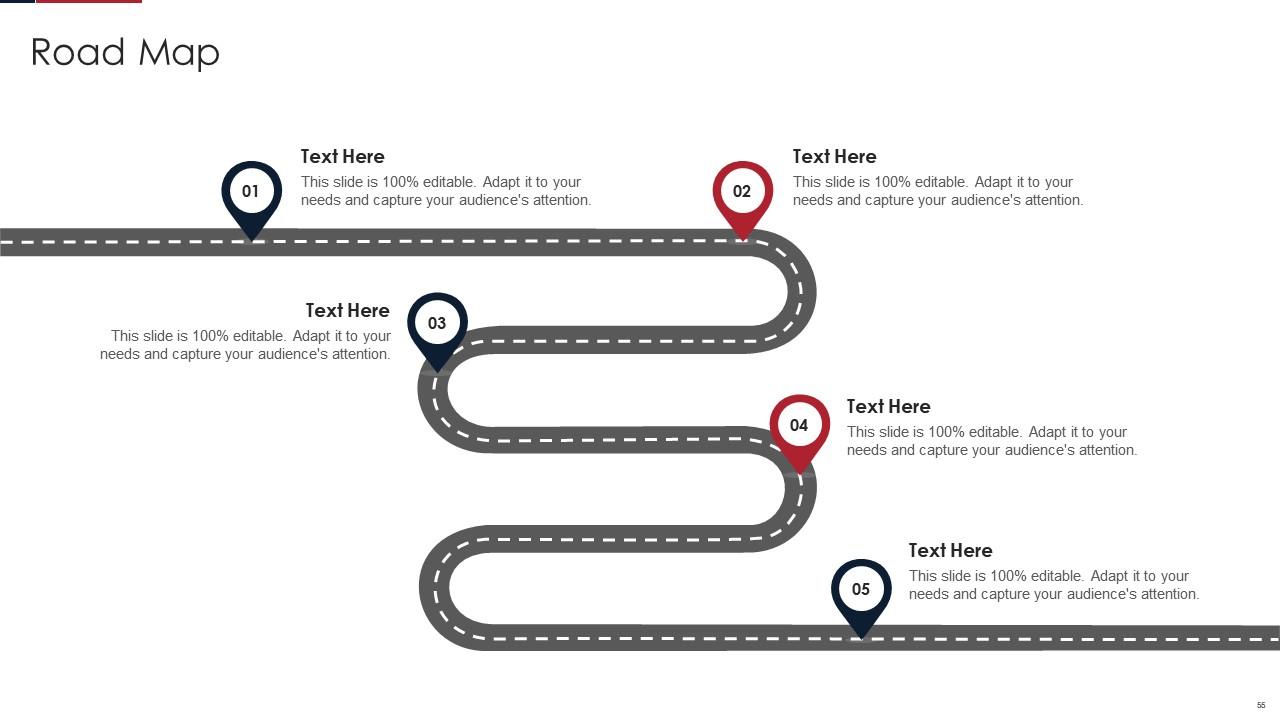
Folie 55 : Diese Folie zeigt die Roadmap.
Folie 56 : Diese Folie zeigt eine Lupe.
Folie 57 : Diese Folie zeigt Posts für frühere Erfahrungen von Kunden.
Folie 58 : Dies ist eine Dankesfolie und enthält Kontaktdaten des Unternehmens wie Büroadresse, Telefonnummer usw.
Agile Product Lifecycle Management System Powerpoint-Präsentationsfolien mit allen 63 Folien:
Verwenden Sie unsere Powerpoint-Präsentationsfolien für das agile Produktlebenszyklus-Managementsystem, um Ihnen effektiv dabei zu helfen, wertvolle Zeit zu sparen. Sie sind gebrauchsfertig und passen in jede Präsentationsstruktur.
-
Great designs, Easily Editable.
-
Unique research projects to present in meeting.
-
Nice and innovative design.
