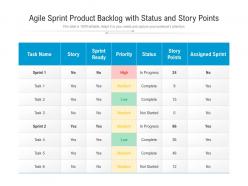
Agile sprint product backlog with status and story points

Agile sprint product backlog with status and story points
Slide 1 of 2
Favourites Favourites

Try Before you Buy Download Free Sample Product

Audience Impress Your
Audience
Editable 100%
Editable
Time Save Hours
of Time
The Biggest Sale is ending soon in
0
0
:
0
0
:
0
0
Presenting this set of slides with name Agile Sprint Product Backlog With Status And Story Points. The topics discussed in these slides are Task Name, Story, Sprint Ready, Priority, Status, Story Points, Assigned Sprint, High, Medium, Low. This is a completely editable PowerPoint presentation and is available for immediate download. Download now and impress your audience.

FAQs for Agile sprint product backlog with status

You need user stories from the customer's view, plus clear acceptance criteria for each item. Priority rankings based on business value are crucial too. Story points work well for effort estimates. Mix in features, bugs, and technical debt - but honestly, the biggest mistake I see is backlogs becoming random wish lists instead of tying back to actual product goals. Keep yours groomed regularly. Make sure your top items have enough detail so the team can jump right in. I'd start by checking what you've got now against these basics.

Honestly, don't treat your backlog like it's carved in stone. I'd check in weekly at minimum, but the teams that really get it are constantly adjusting when new stuff comes up. Sprint planning's an obvious time, retrospectives too. But also whenever stakeholders drop feedback or - you know how it is - priorities suddenly change overnight. Quick tangent: I swear some PMs think backlogs maintain themselves lol. Anyway, try blocking out 30 minutes each week just for grooming. Keep things prioritized and current. Your backlog should match what you actually understand about the product right now, not what you thought six months ago.

Dude, prioritization is what keeps your backlog from turning into a hot mess. Without it, you're basically just throwing random features into a pile and hoping for the best. Work with your product owner to rank stuff by business value and user impact - the good stuff goes up top, everything else can wait. Dependencies matter too, obviously. I've watched teams completely fall apart when they skip this step. Oh, and don't forget effort required when you're deciding what's worth doing. You'll want to revisit priorities after each sprint since you'll have fresh insights that might change everything.

Think of user stories as bite-sized chunks that describe what people actually want from your product. They follow a simple format - "As a customer, I want to save items to a wishlist so I can buy them later." Nothing fancy. Your backlog is just a prioritized list of these stories, ranked by business value and impact. During sprint planning, the team grabs a few to work on. I always tell people to keep them small enough to finish in one sprint but detailed enough so developers aren't guessing what you meant. Makes life way easier for everyone involved.

For backlog prioritization, MoSCoW is your best friend - just bucket everything into Must have, Should have, Could have, Won't have. Value vs Effort matrices are clutch for finding quick wins. If you're feeling fancy, the Kano model digs into customer satisfaction but honestly it gets pretty nerdy. Weighted scoring works when you need to juggle multiple factors like business value and risk. Oh, and don't overthink dependencies at first - they'll make your head spin. Start with MoSCoW since it's dead simple, then level up once your team gets the hang of it.

Get your stakeholders into those backlog refinement meetings - yeah they're boring but you need them there to hash out priorities and requirements. User feedback is gold for spotting new features or bugs you missed. Have them write user stories too, since they actually know what users want (sometimes better than we do, tbh). Business value should drive how you prioritize stuff together. Oh and set up regular check-ins so you're not always scrambling reactively when they dump new requests on you. Makes the whole process way smoother.

So basically, your product backlog is like every single thing you want to build - features, bug fixes, improvements, all ranked by priority. Sprint backlog? Way smaller scope. Just what your team's actually gonna tackle in the next 1-4 weeks. I always think of it like meal planning - product backlog is every recipe you've ever bookmarked, sprint backlog is what you're cooking this week. During sprint planning, you grab stuff from the big list based on what your team can realistically handle. Don't go crazy and overcommit though. Been there, done that, learned the hard way.

Get everything into one shared tool - Jira, Azure DevOps, whatever works for your team. Even a Google sheet beats having stuff scattered everywhere. Seriously, emails and sticky notes are backlog killers. Hold regular refinement meetings where everyone can actually see and discuss priorities together. Make sure people can access it (sounds obvious but you'd be surprised how often permissions get messed up). I'd start by figuring out where all your backlog items are hiding right now, then consolidate them this week. One source of truth beats ten half-updated lists every time.

So you'll want to watch a few things. Velocity consistency shows if your team delivers predictably. Backlog size matters too - are stories piling up faster than you're finishing them? Story aging is huge - nothing worse than finding 6-month-old tickets nobody remembers writing. Check if your items actually have proper acceptance criteria and estimates. Priority churn is another red flag. If you're constantly moving stuff around at the top, your product direction probably needs work. Honestly though? Don't track everything - pick 2-3 that fit your situation and review them during sprint planning. That's plenty.

Okay so during your grooming sessions, just axe stuff that's clearly dead weight. I treat it like cleaning out my garage - if I haven't touched it in months, it's probably garbage. Low-priority things that might still matter? Stick them in a "maybe later" pile or honestly just delete them. Here's my test: ask your team "would we actually build this in 6 months?" If everyone's like "uh, probably not," then bye. Try doing monthly cleanups or your backlog turns into this sad cemetery of random ideas nobody remembers suggesting.

For bigger teams, Jira and Azure DevOps are solid choices - Linear's pretty nice too. Smaller projects? Trello or Asana work great. But honestly, I've watched teams waste entire weeks arguing over which tool to use instead of actually building stuff. Pick whatever plays nice with your current setup and makes it easy to prioritize and track your stories. Starting out? Even a basic spreadsheet does the job. The best tool is whichever one your team will actually stick with, not the fanciest one with a million features nobody uses.

Honestly, a good backlog is like having everyone on the same page without those weird standups where nobody knows what they're doing. Your devs and testers won't be guessing what you actually want when stories have clear acceptance criteria written out. Keep it prioritized and clean it up regularly - otherwise you'll just waste time explaining scope instead of building stuff. Oh, and definitely update it after sprint reviews or you'll lose momentum fast. It's basically your team's cheat sheet for staying focused on what matters.

Honestly, treat your backlog like spring cleaning - go through it weekly or every other week and be brutal about what stays. Cap it at maybe 2-3 sprints max, otherwise it gets overwhelming fast. Break down those huge epics before they turn into monsters nobody wants to touch. And here's the thing - if something's been sitting there for months untouched, just delete it. Seriously. I used to feel guilty about this, but if it hasn't been important enough to prioritize by now, it probably never will be. Keep your acceptance criteria tight so stories don't balloon into these vague, impossible tasks.

Your product backlog basically just soaks up all those scope changes - think of it as your project's living to-do list. New requirements? Toss them in as user stories. Scope getting cut? Remove stuff or bump it down the priority list. Honestly, this is where Agile actually shines compared to old-school project management where scope changes made everyone panic. Your product owner needs to stay on top of backlog grooming sessions (ugh, I know, another meeting) but it's worth it. Regular reviews mean you won't be caught off guard when - not if - things change.

So you're basically babysitting the backlog all day - adding stuff, cutting dead weight, shuffling priorities around based on what stakeholders are screaming about. Each story needs to be crystal clear so devs can actually estimate it without pulling their hair out. Honestly, some days it feels like herding cats. Stay tight with your team though - regular check-ins with both the business folks and developers will save your sanity. Otherwise you'll end up building features nobody wants while missing the stuff that actually moves the needle.

Ratings and Reviews

0% of 100
Review Form
Write a review
Most Relevant Reviews

No Reviews