


Diapositivas de presentación de Powerpoint de valores y principios ágiles
Los procesos ágiles promueven el desarrollo sostenible y aprovechan el cambio para la ventaja competitiva de los clientes. Estos principios acortan los ciclos de desarrollo para cambiar rápidamente a bajo costo. El manifiesto ágil comprende cuatro valores fundamentales y principios de apoyo que conducen al desarrollo de software. Aquí se tratan los cuatro valores del manifiesto ágil, como las personas y las interacciones sobre los procesos y las herramientas, el software funcional sobre la documentación completa, la colaboración del cliente sobre la negociación de contratos y la respuesta al cambio sobre el siguiente plan. Consulte nuestra plantilla de principios y valores ágiles diseñada profesionalmente que lo ayudará a procesar las decisiones de aplazamiento. Las metodologías de movimiento ágil incluyen la satisfacción del cliente con la entrega continua, la adaptación a los requisitos cambiantes, la entrega frecuente de software en funcionamiento, la colaboración entre las partes interesadas, el apoyo, la confianza y la motivación de las personas, lo que permite interacciones cara a cara, la medición del progreso del software, el proceso ágil para respaldar el desarrollo constante, el diseño mejora la agilidad, la simplicidad, la autoorganización de los equipos, las reflexiones periódicas para ser más efectivos, se ha descrito en esta plantilla junto con las formas en que se puede realizar dentro de la organización. Descargue la plantilla 100 por ciento editable y obtenga acceso ahora.





-

- Google Slides is a new FREE Presentation software from Google.
- All our content is 100% compatible with Google Slides.
- Just download our designs, and upload them to Google Slides and they will work automatically.
- Amaze your audience with SlideTeam and Google Slides.
-

Want Changes to This PPT Slide? Check out our Presentation Design Services
-

- WideScreen Aspect ratio is becoming a very popular format. When you download this product, the downloaded ZIP will contain this product in both standard and widescreen format.
-

- Some older products that we have may only be in standard format, but they can easily be converted to widescreen.
- To do this, please open the SlideTeam product in Powerpoint, and go to
- Design ( On the top bar) -> Page Setup -> and select "On-screen Show (16:9)” in the drop down for "Slides Sized for".
- The slide or theme will change to widescreen, and all graphics will adjust automatically. You can similarly convert our content to any other desired screen aspect ratio.
Compatible With Google Slides

Get This In WideScreen
You must be logged in to download this presentation.


Do you want to remove this product from your favourites?
Características de estas diapositivas de presentación de PowerPoint:
cautive a su audiencia con estas diapositivas de presentación de Powerpoint sobre principios y valores ágiles. Aumente el umbral de su presentación implementando esta plantilla bien diseñada. Actúa como una gran herramienta de comunicación debido a su contenido bien investigado. También contiene íconos estilizados, gráficos, imágenes, etc., que lo convierten en un captador de atención inmediato. Con treinta y cuatro diapositivas, esta plataforma completa es todo lo que necesita para llamar la atención. Todas las diapositivas y su contenido se pueden modificar para adaptarse a su entorno comercial único. No solo eso, también se pueden modificar otros componentes y gráficos para agregar toques personales a este conjunto prefabricado.

People who downloaded this PowerPoint presentation also viewed the following :
Contenido de esta presentación de Powerpoint
Diapositiva 1 : Esta diapositiva presenta los valores y principios ágiles. Indique el nombre de su empresa y comience.
Diapositiva 2 : Esta diapositiva muestra la Agenda de valores y principios ágiles.
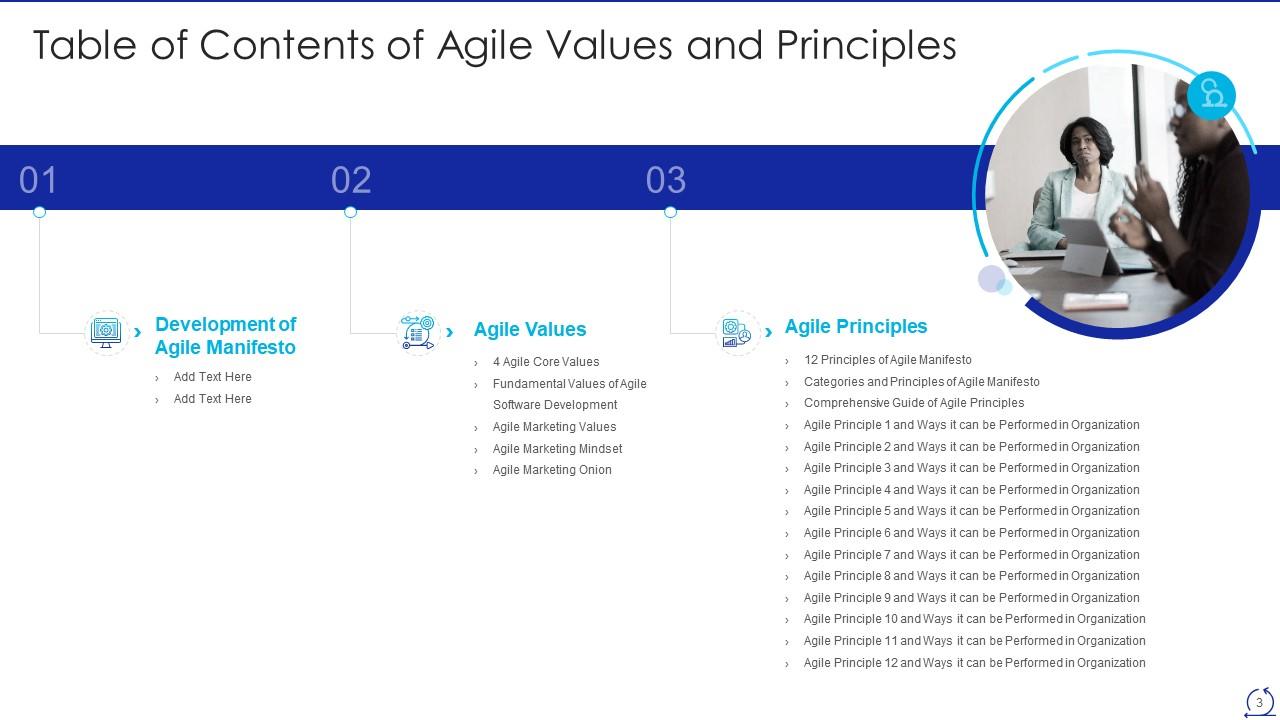
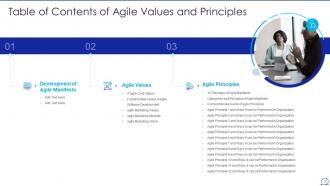
Diapositiva 3 : Esta diapositiva presenta el índice de valores y principios ágiles.
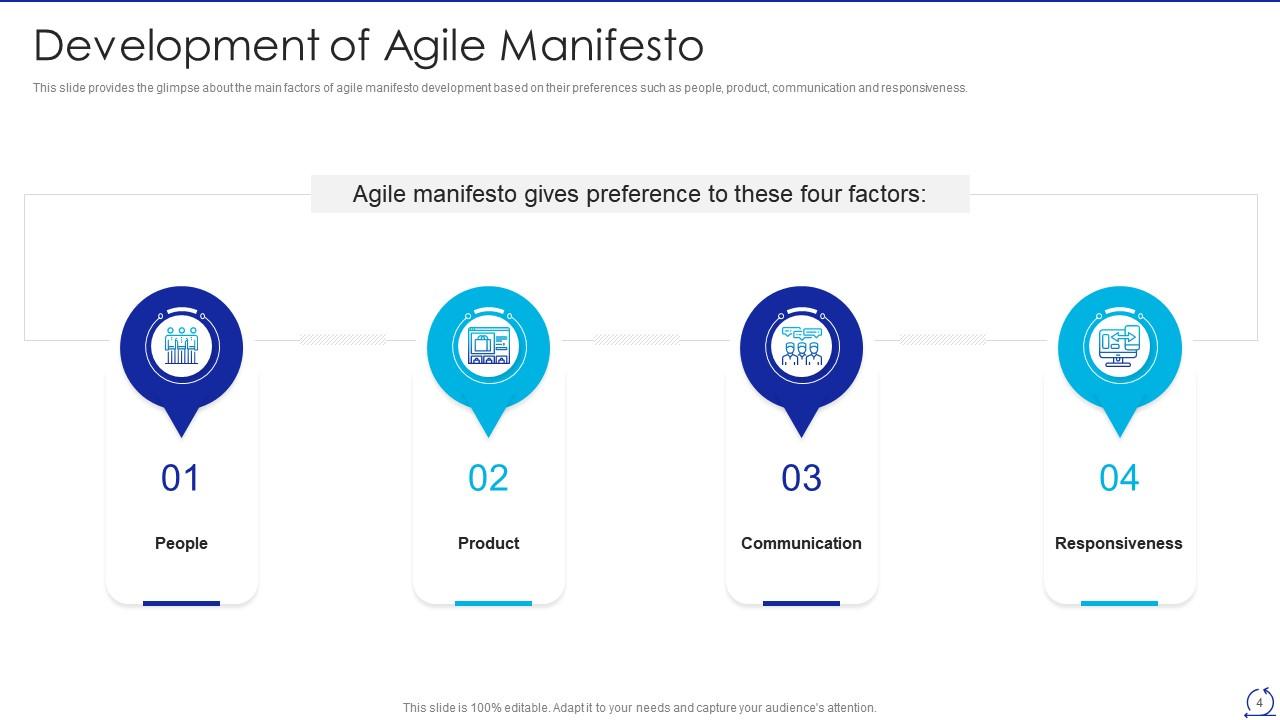
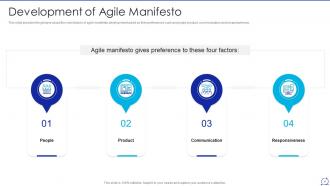
Diapositiva 4 : Esta diapositiva muestra los factores principales del desarrollo ágil de manifiestos en función de sus preferencias, como personas, productos, comunicación y capacidad de respuesta.
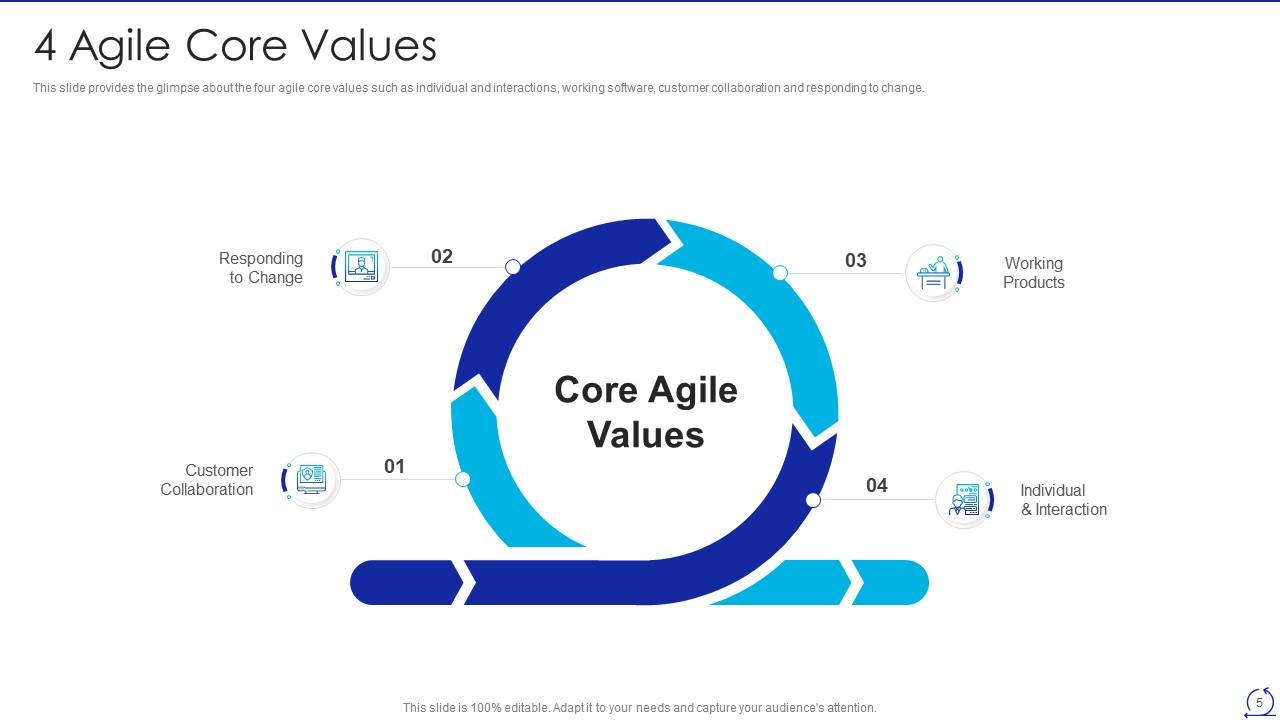
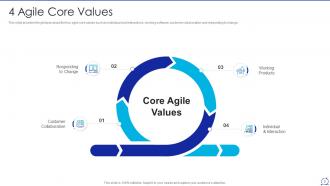
Diapositiva 5 : esta diapositiva muestra cuatro valores centrales ágiles, como las interacciones individuales, el software funcional, la colaboración con el cliente y la respuesta al cambio.
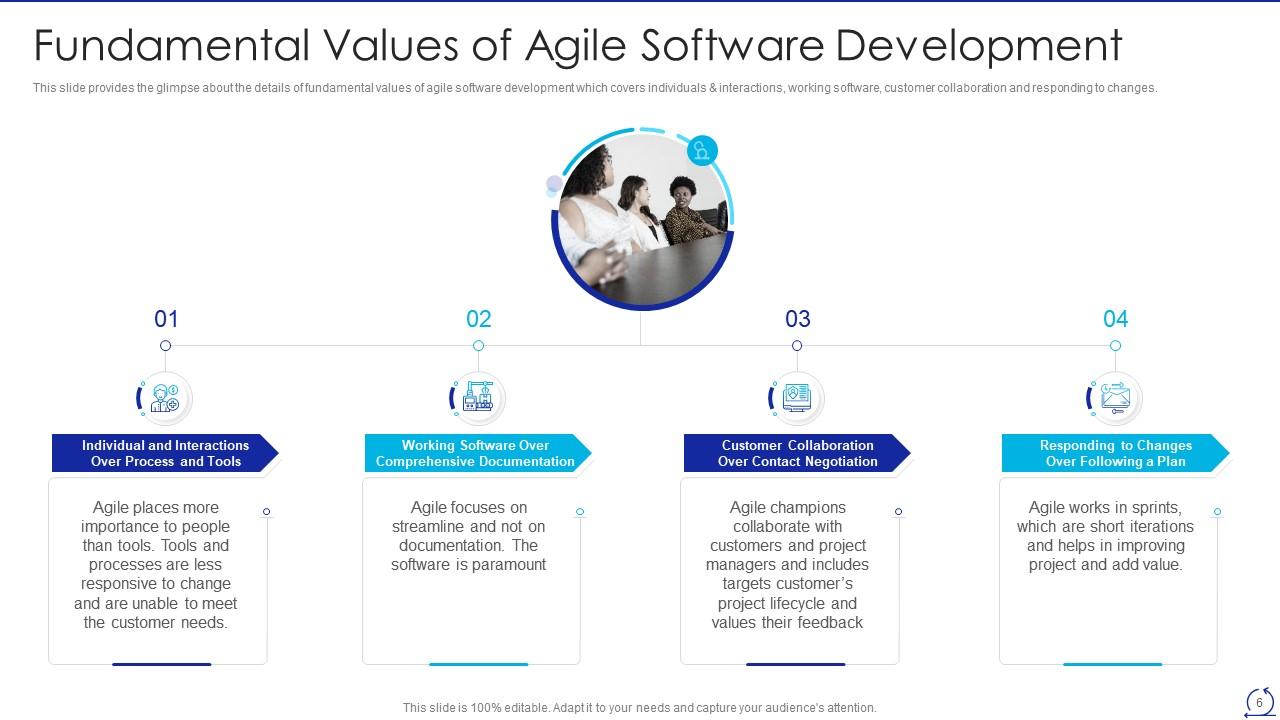
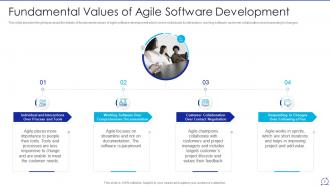
Diapositiva 6 : esta diapositiva representa los valores fundamentales del desarrollo ágil de software.
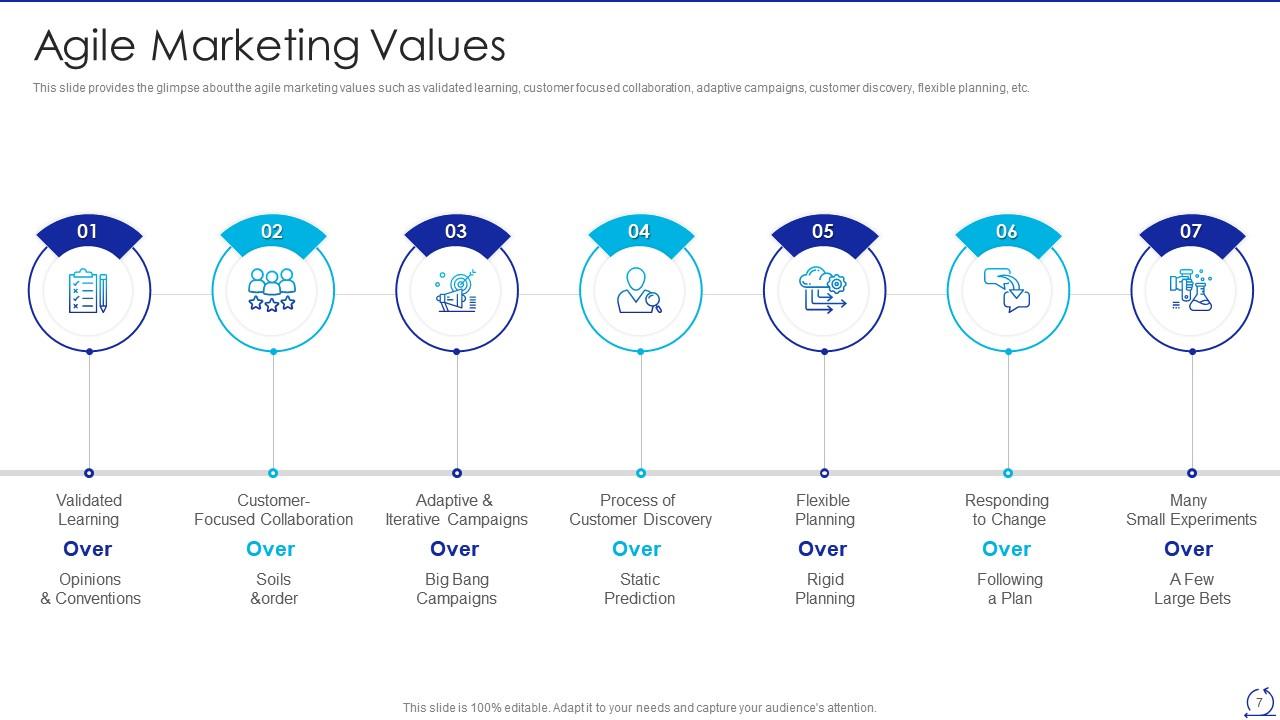
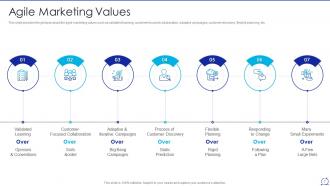
Diapositiva 7 : esta diapositiva muestra los valores de marketing ágil, como el aprendizaje validado, la colaboración centrada en el cliente, las campañas adaptables, el descubrimiento de clientes, la planificación flexible, etc.
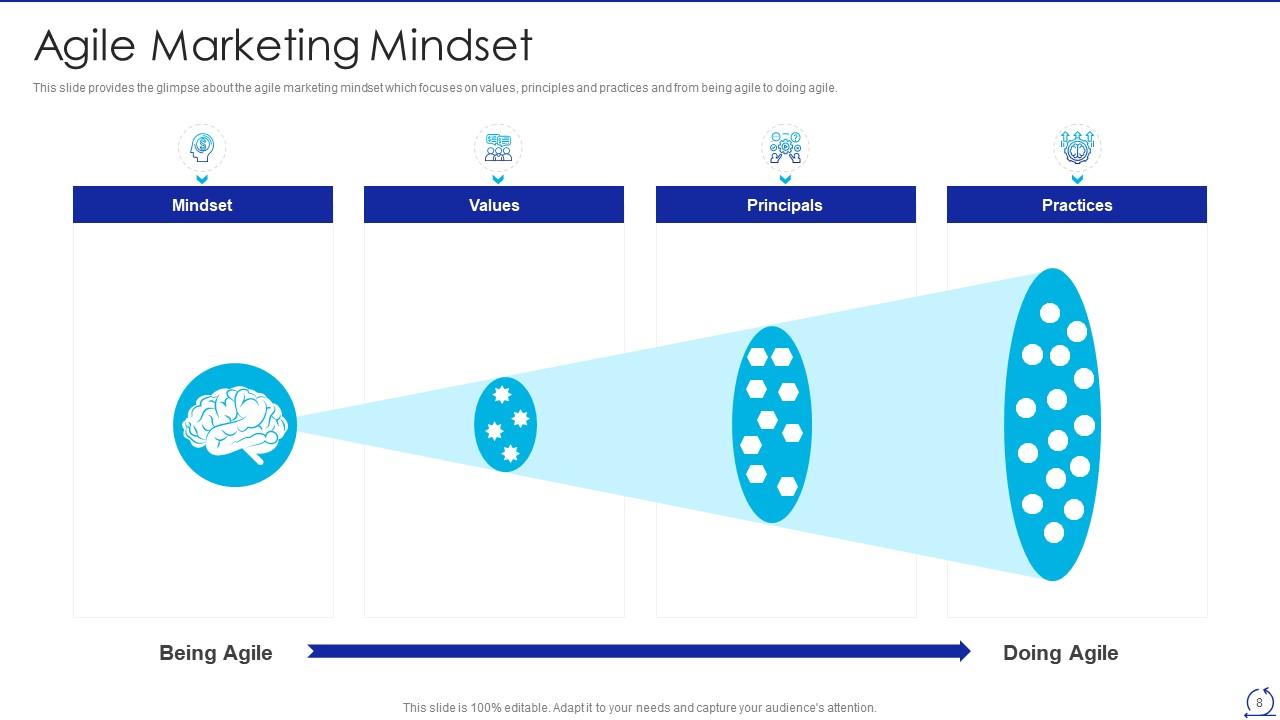
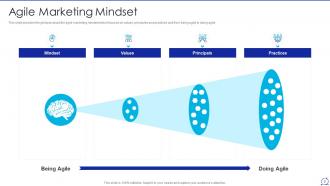
Diapositiva 8 : Esta diapositiva presenta una mentalidad de marketing ágil que se enfoca en valores, principios y prácticas y de ser ágil a hacer ágil.
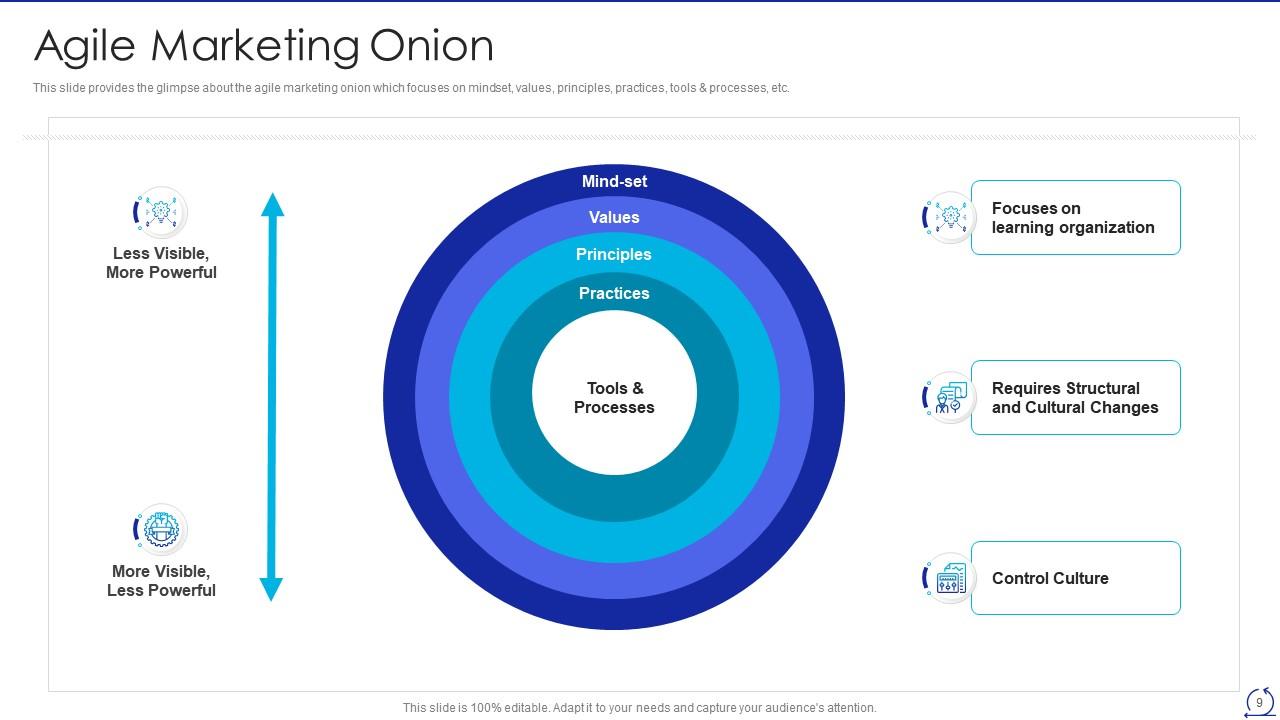
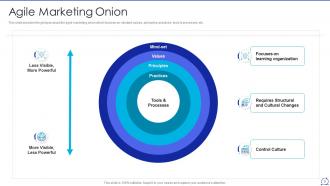
Diapositiva 9 : esta diapositiva muestra una cebolla de marketing ágil que se centra en la mentalidad, los valores, los principios, las prácticas, las herramientas y los procesos, etc.
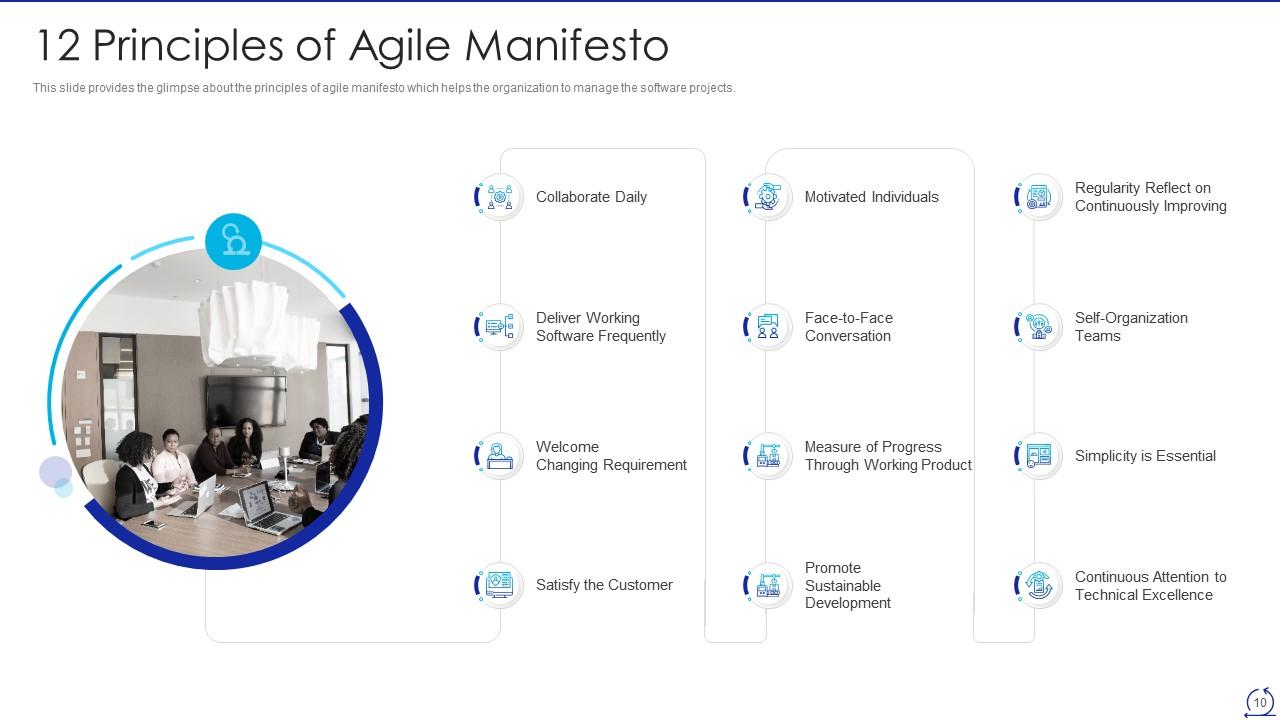
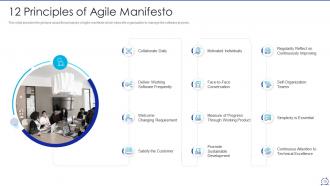
Diapositiva 10 : esta diapositiva muestra los principios del manifiesto ágil que ayuda a la organización a administrar los proyectos de software.
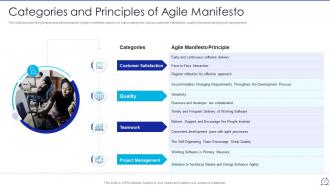
Diapositiva 11 : esta diapositiva representa los principios del manifiesto ágil basado en 4 categorías principales, como la satisfacción del cliente, la calidad, el trabajo en equipo y la gestión de proyectos.
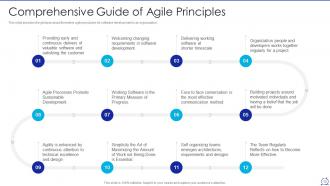
Diapositiva 12 : Esta diapositiva muestra la Guía completa de principios ágiles.
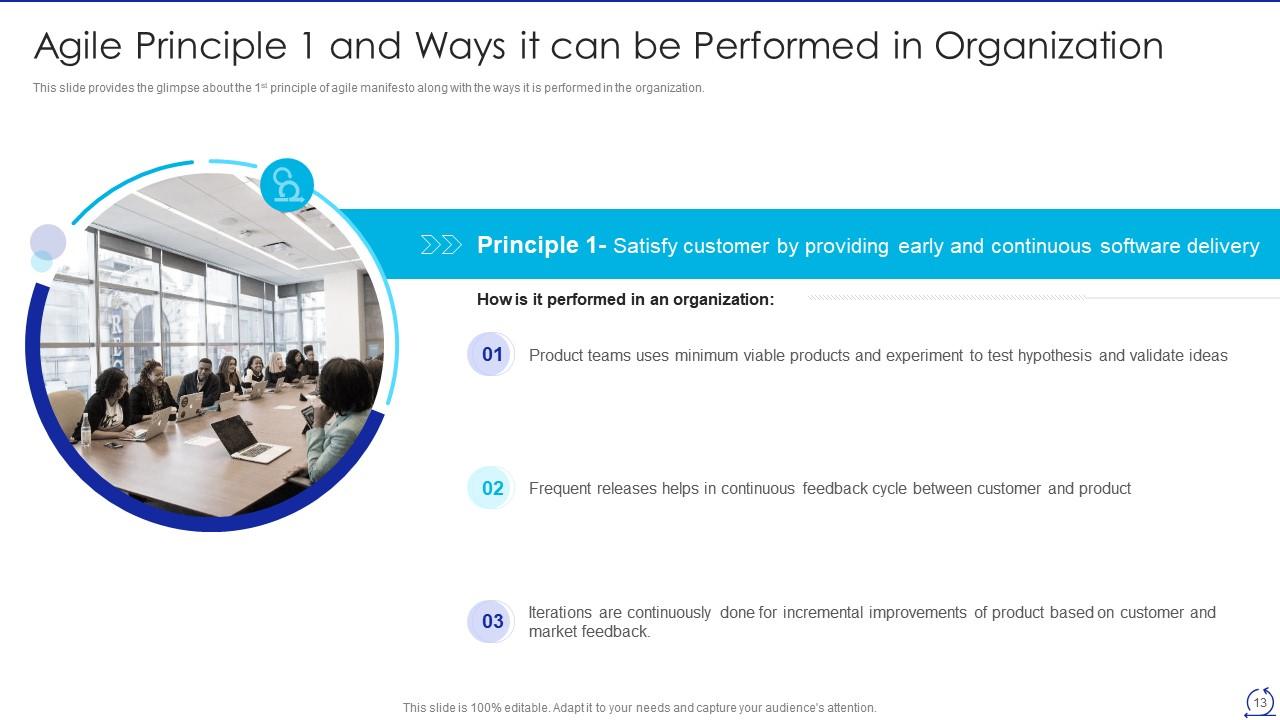
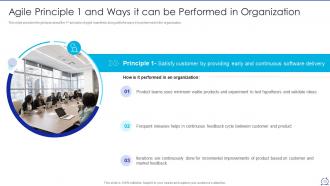
Diapositiva 13 : Esta diapositiva presenta el primer principio del manifiesto ágil junto con las formas en que se lleva a cabo en la organización.
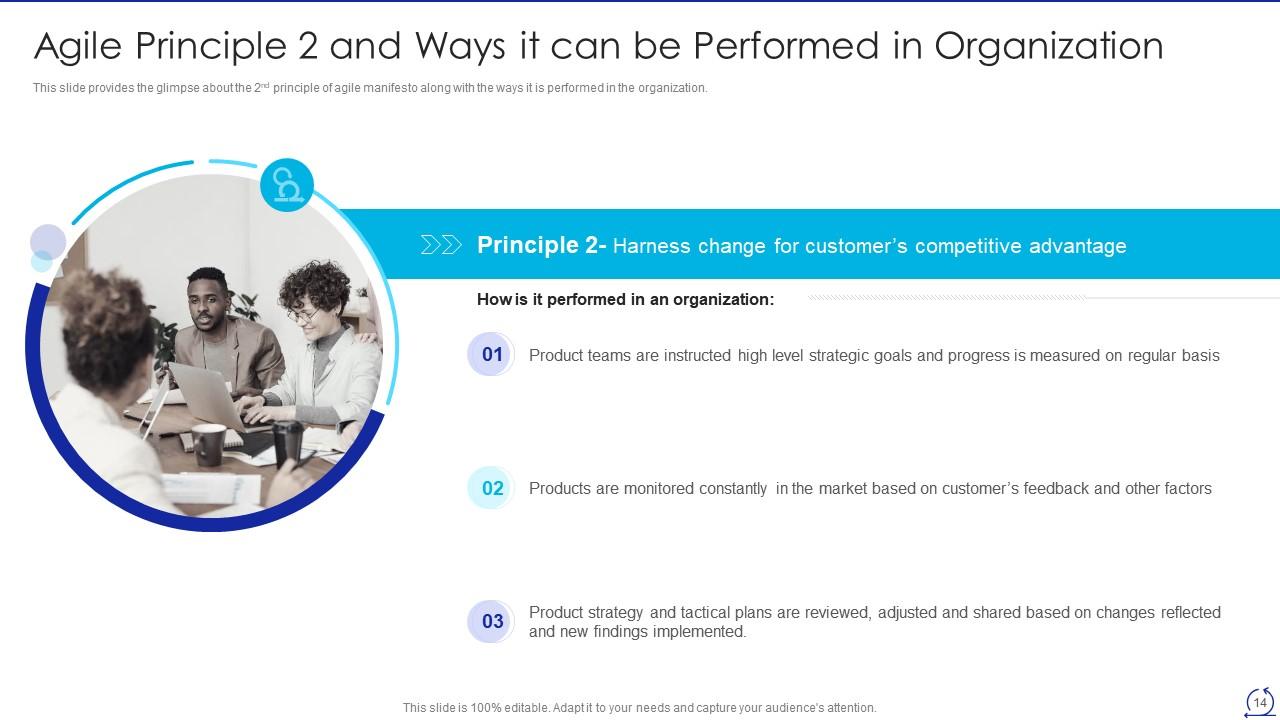
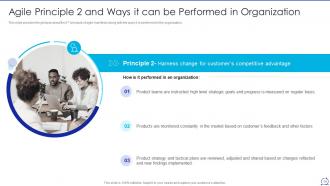
Diapositiva 14 : Esta diapositiva muestra el segundo principio del manifiesto ágil junto con las formas en que se lleva a cabo en la organización.
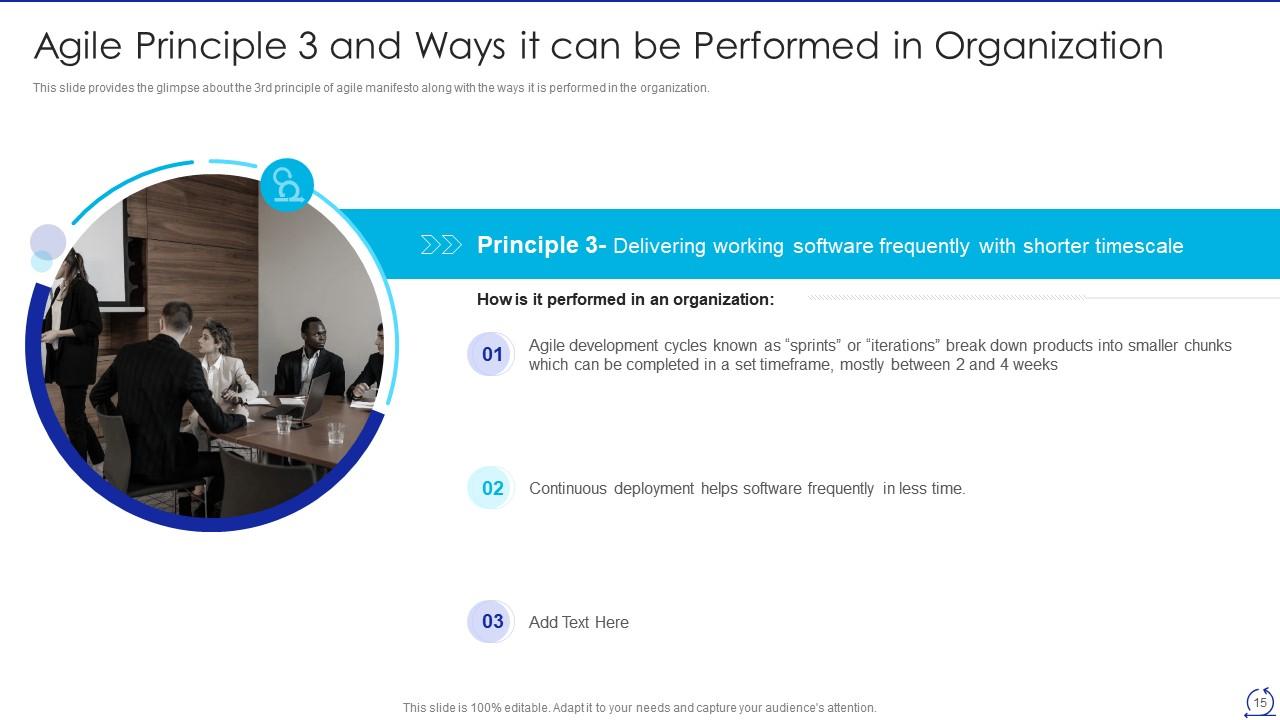
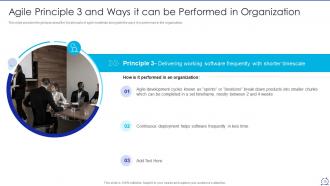
Diapositiva 15 : Esta diapositiva muestra el Principio 3: entregar software que funcione con frecuencia en un plazo más corto.
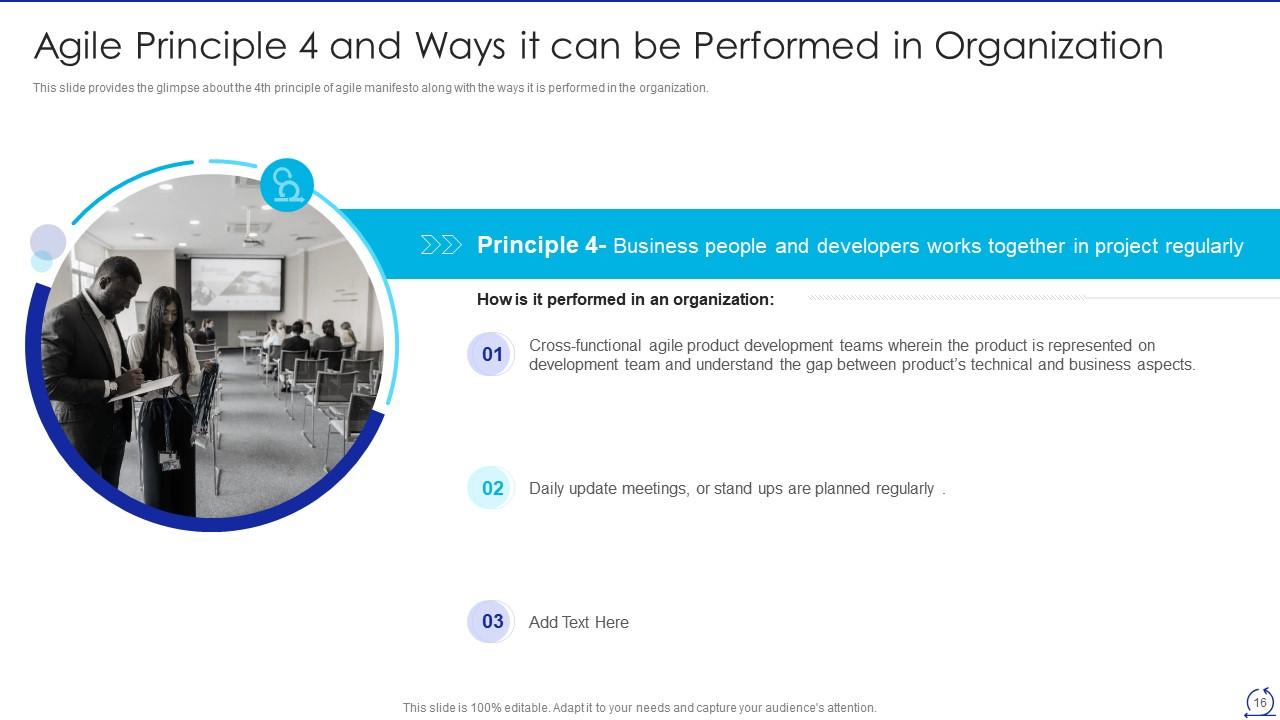
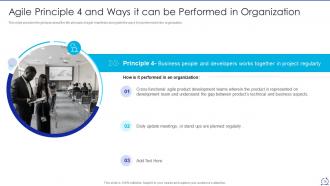
Diapositiva 16 : Esta diapositiva representa el Principio 4: los empresarios y los desarrolladores trabajan juntos en un proyecto con regularidad.
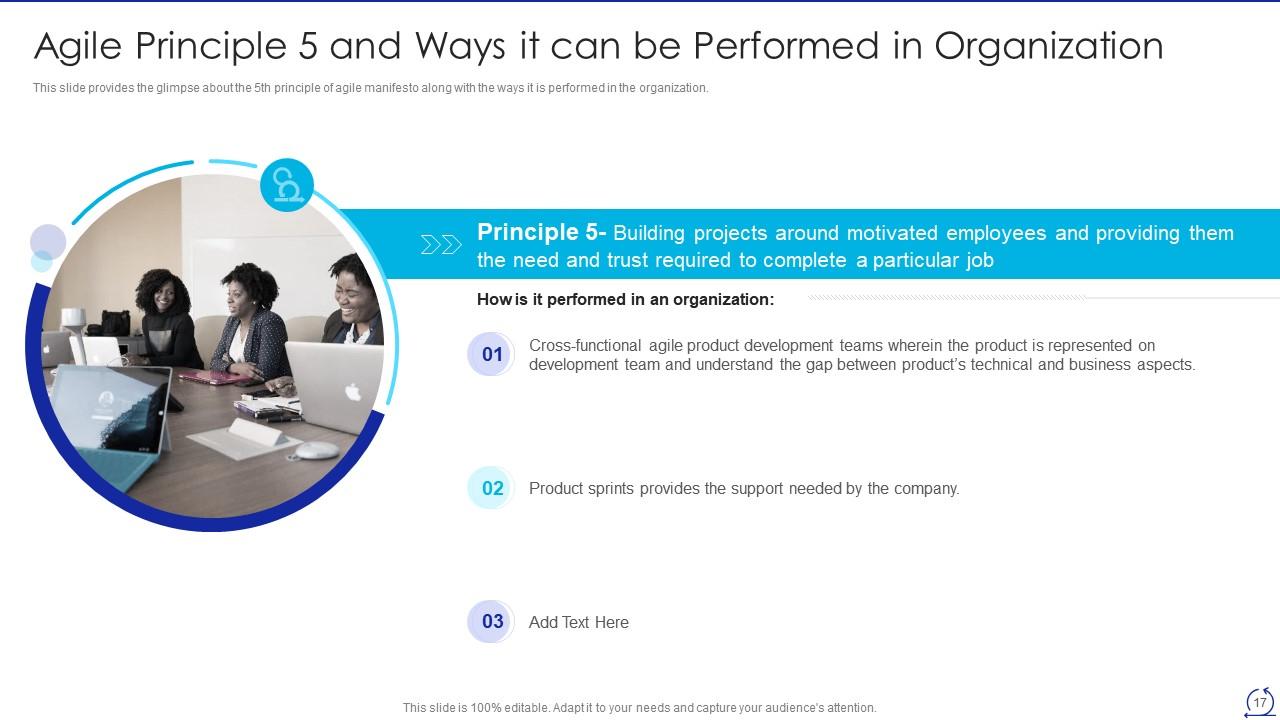
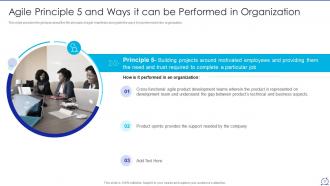
Diapositiva 17 : Esta diapositiva muestra el Principio 5: Desarrollar proyectos en torno a empleados motivados y brindarles la necesidad y la confianza necesarias para completar un trabajo en particular.
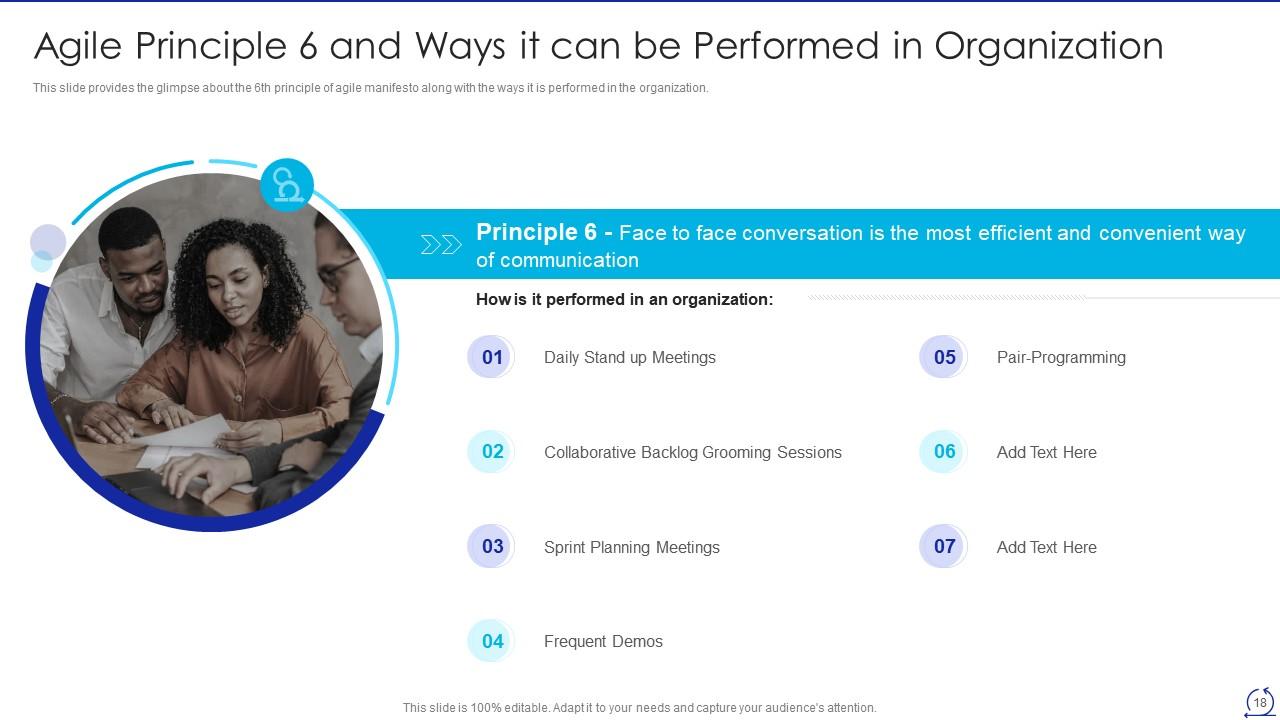
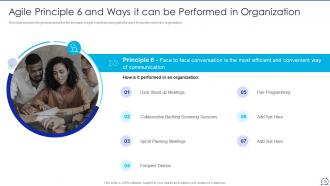
Diapositiva 18 : Esta diapositiva presenta el sexto principio del manifiesto ágil junto con las formas en que se lleva a cabo en la organización.
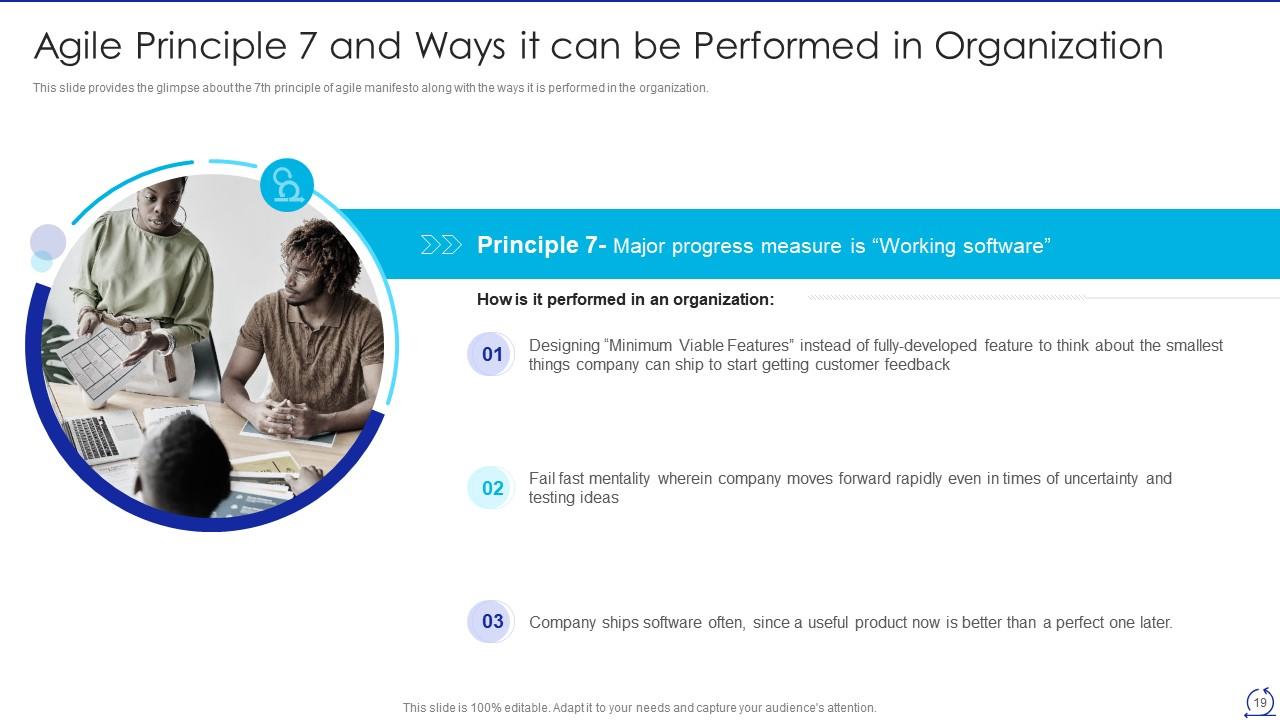
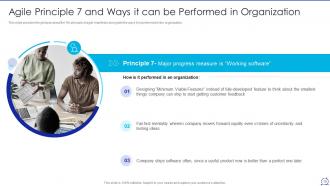
Diapositiva 19 : Esta diapositiva muestra el Principio 7: la principal medida de progreso es el "software funcional".
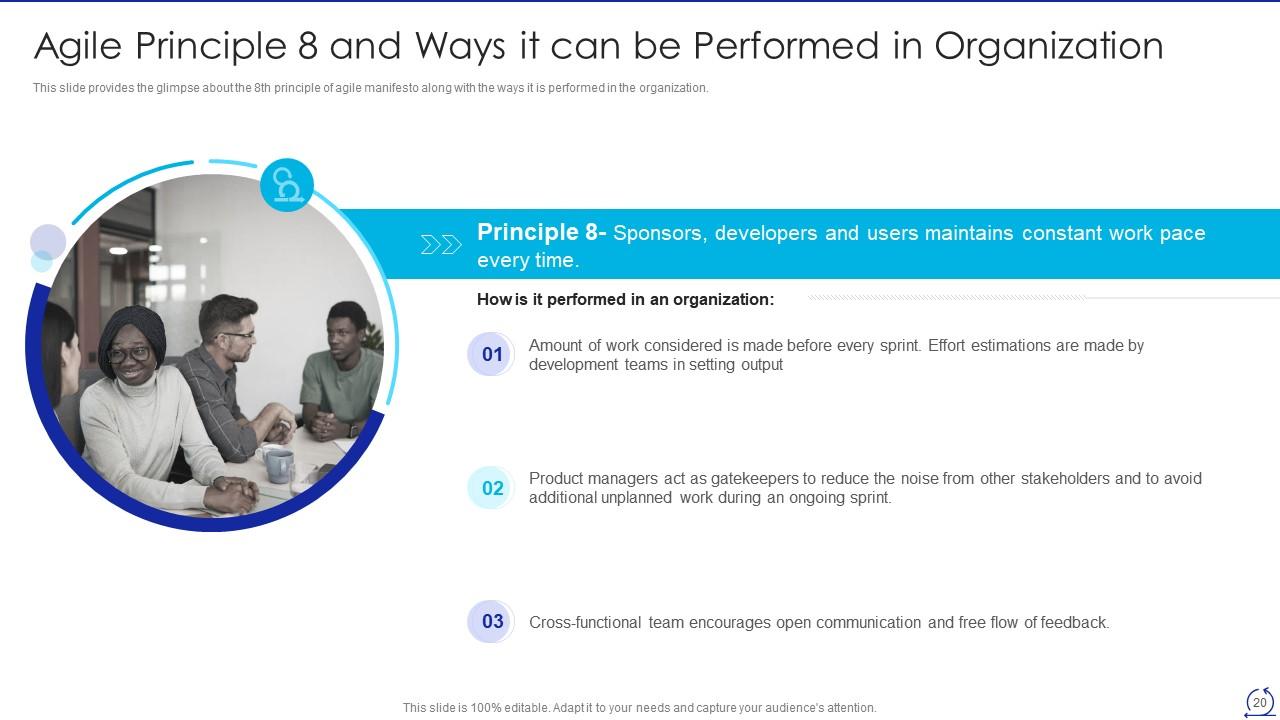
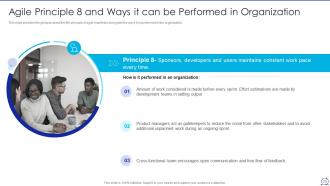
Diapositiva 20 : esta diapositiva muestra el Principio 8: los patrocinadores, desarrolladores y usuarios mantienen un ritmo de trabajo constante en todo momento.
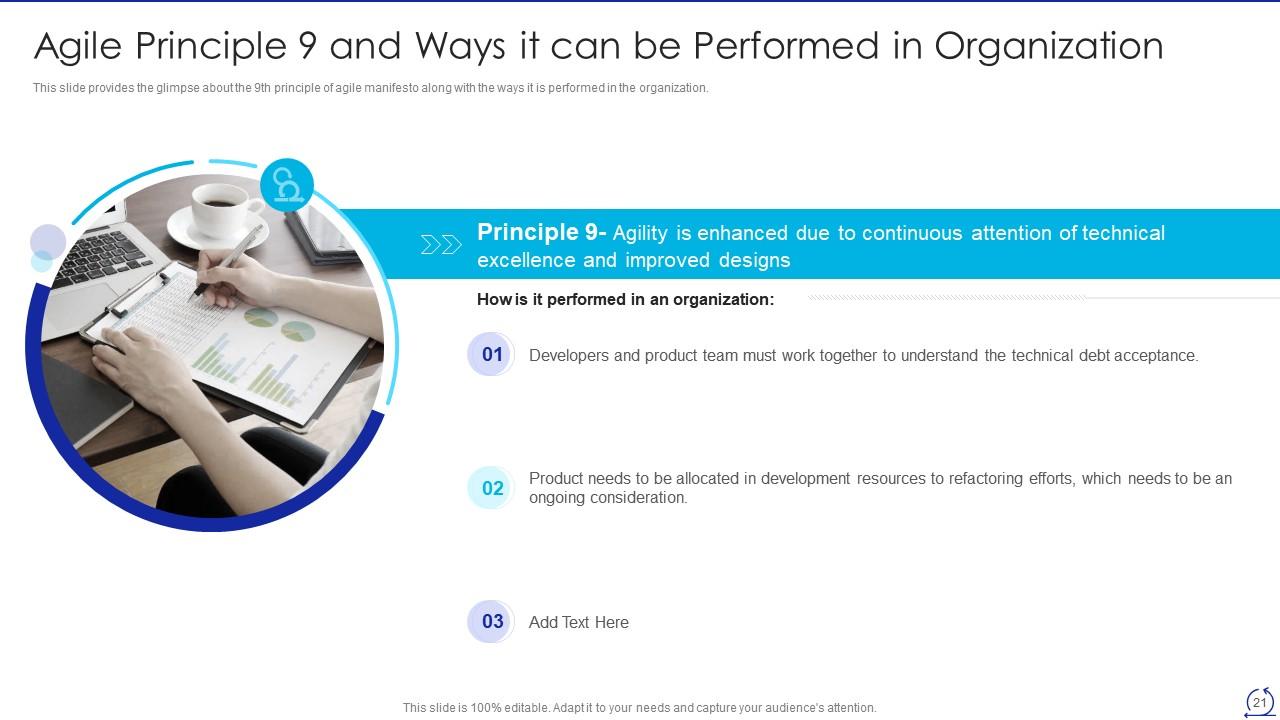
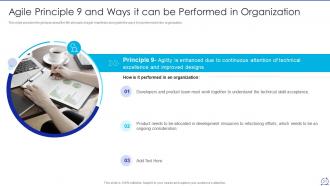
Diapositiva 21 : Esta diapositiva representa el Principio 9: la agilidad se mejora debido a la atención continua de la excelencia técnica y los diseños mejorados.
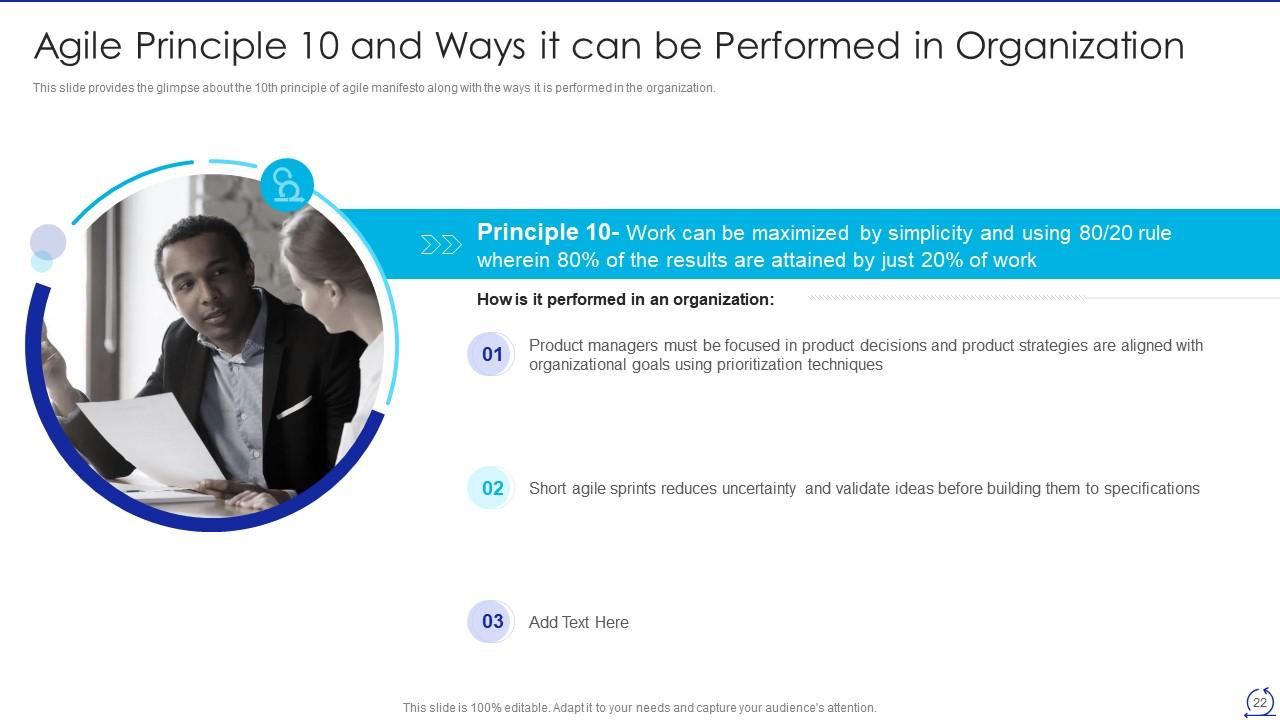
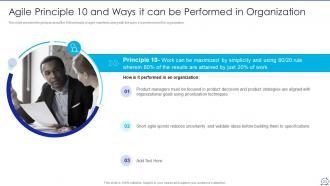
Diapositiva 22 : Esta diapositiva muestra el Principio 10: el trabajo se puede maximizar mediante la simplicidad y el uso de la regla 80/20, en la que el 80 % de los resultados se obtienen con solo el 20 % del trabajo.
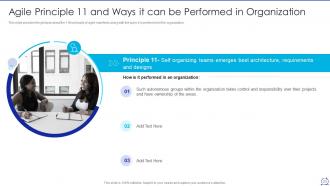
Diapositiva 23 : Esta diapositiva presenta el Principio 11: los equipos autoorganizados emergen con la mejor arquitectura, requisitos y diseños.
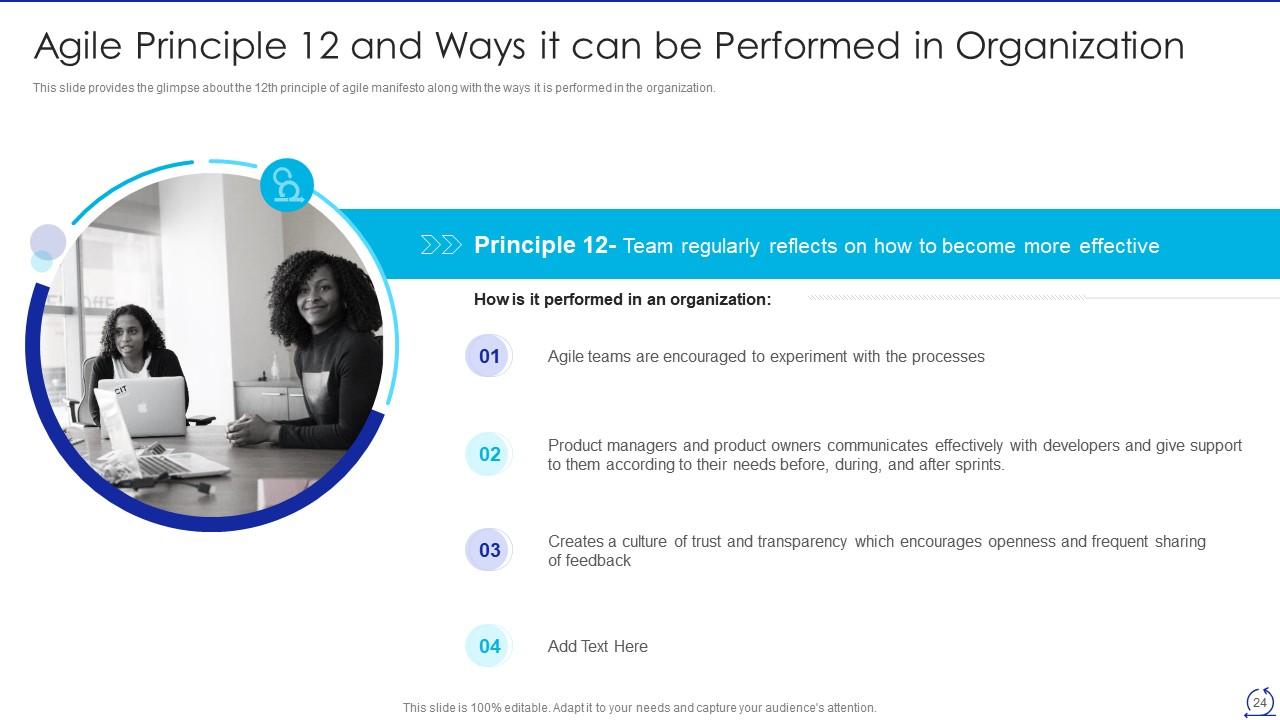
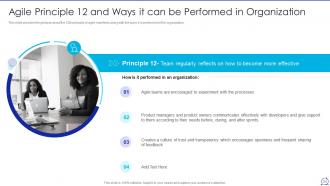
Diapositiva 24 : Esta diapositiva muestra el Principio 12: el equipo reflexiona regularmente sobre cómo ser más eficaz.
Diapositiva 25 : esta diapositiva muestra iconos de valores y principios ágiles.
Diapositiva 26 : esta diapositiva se titula Diapositivas adicionales para avanzar.
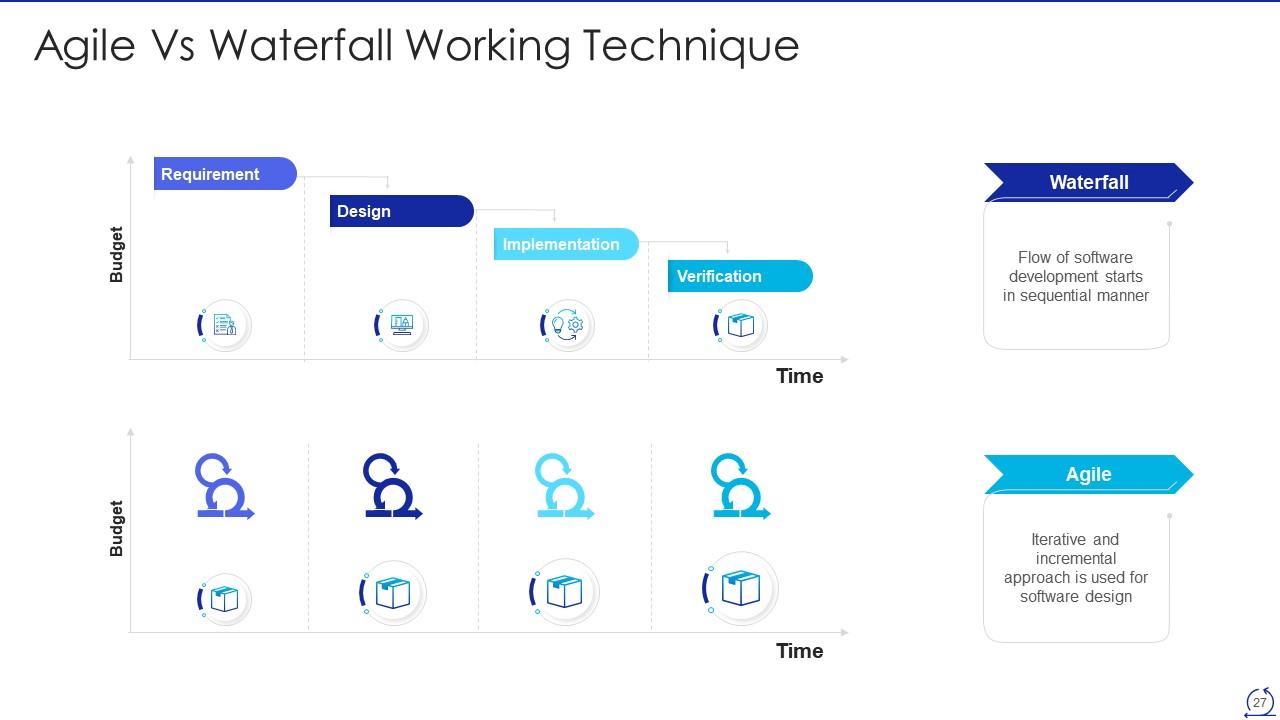
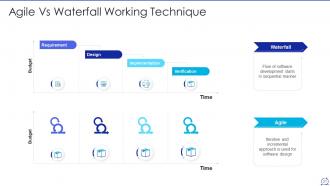
Diapositiva 27 : Esta diapositiva muestra la técnica de trabajo Agile Vs Waterfall.
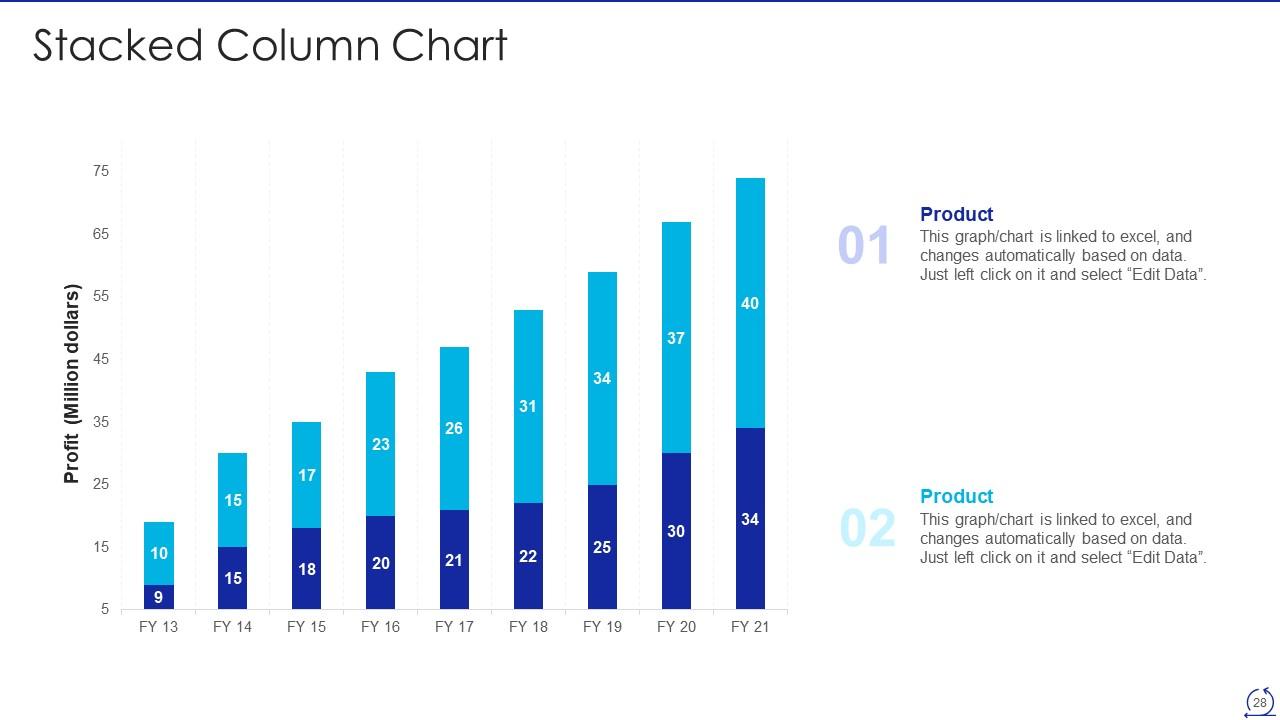
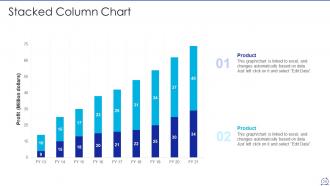
Diapositiva 28 : Esta diapositiva presenta un gráfico de columnas apiladas con una comparación de dos productos.
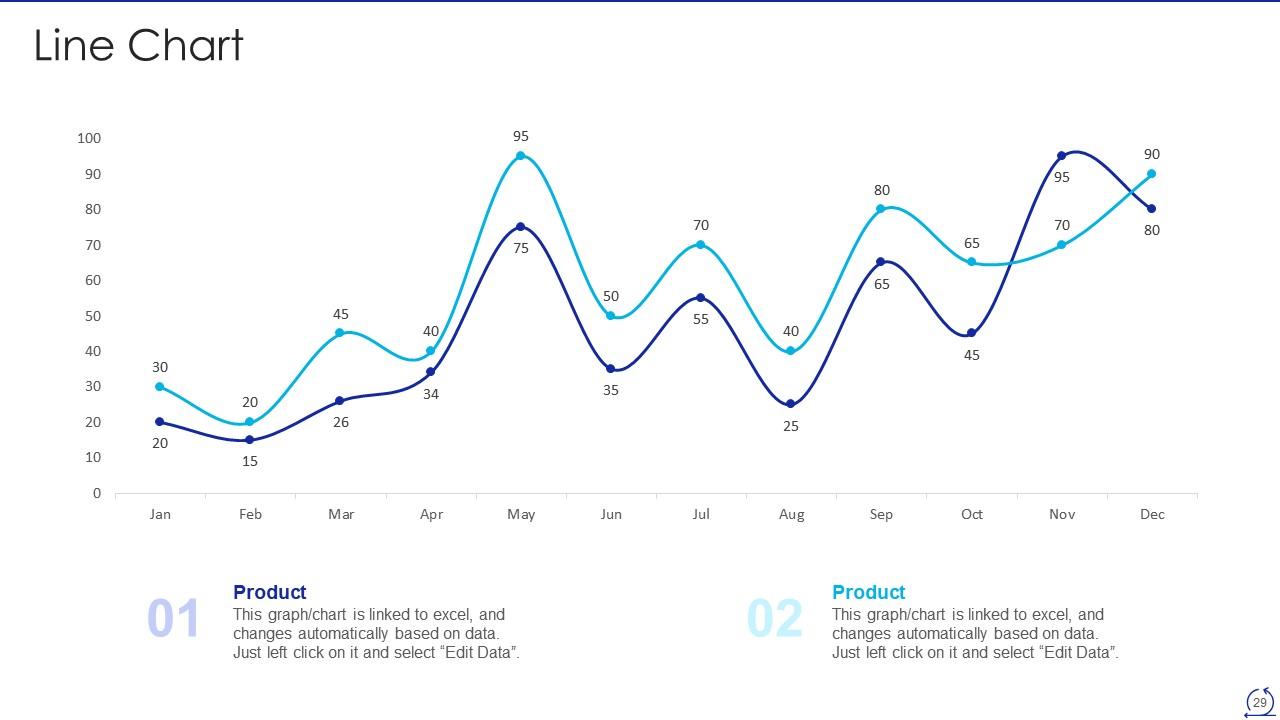
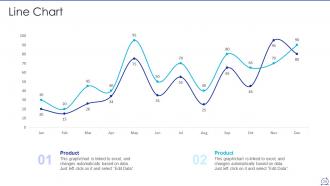
Diapositiva 29 : Esta diapositiva muestra un gráfico de líneas con una comparación de dos productos.
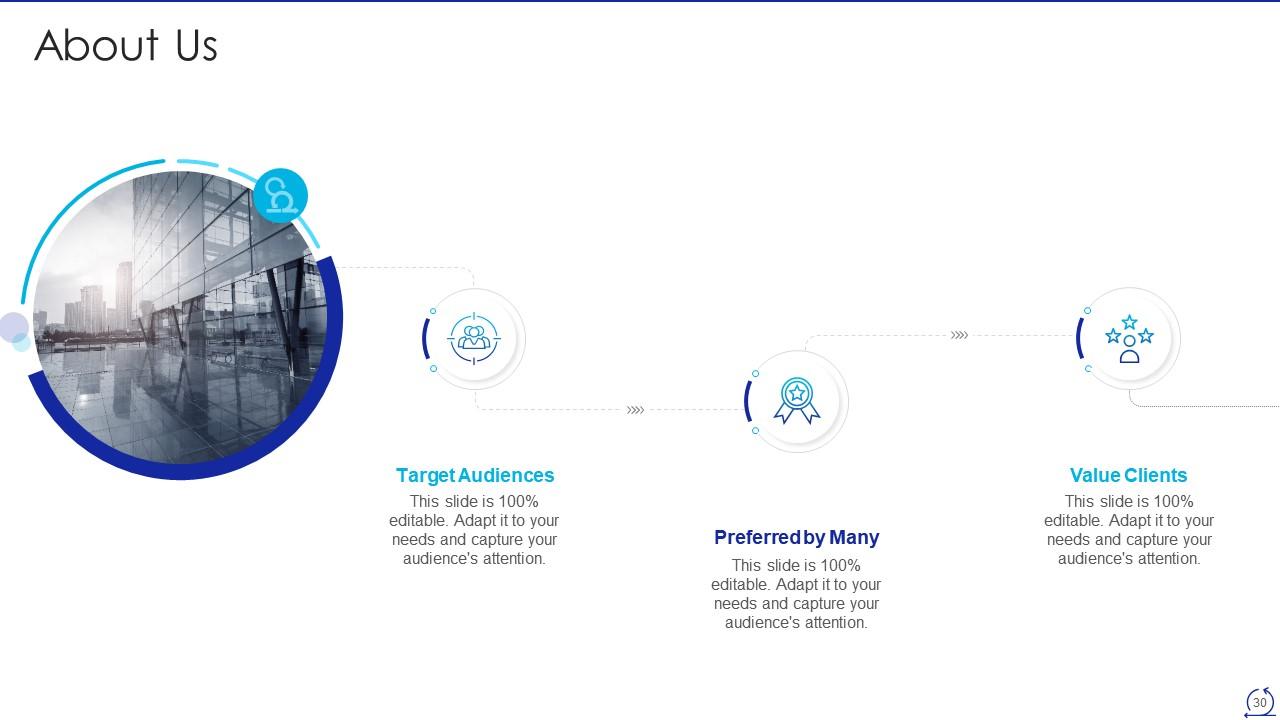
Diapositiva 30 : Esta es la diapositiva Acerca de nosotros para mostrar las especificaciones de la empresa, etc.
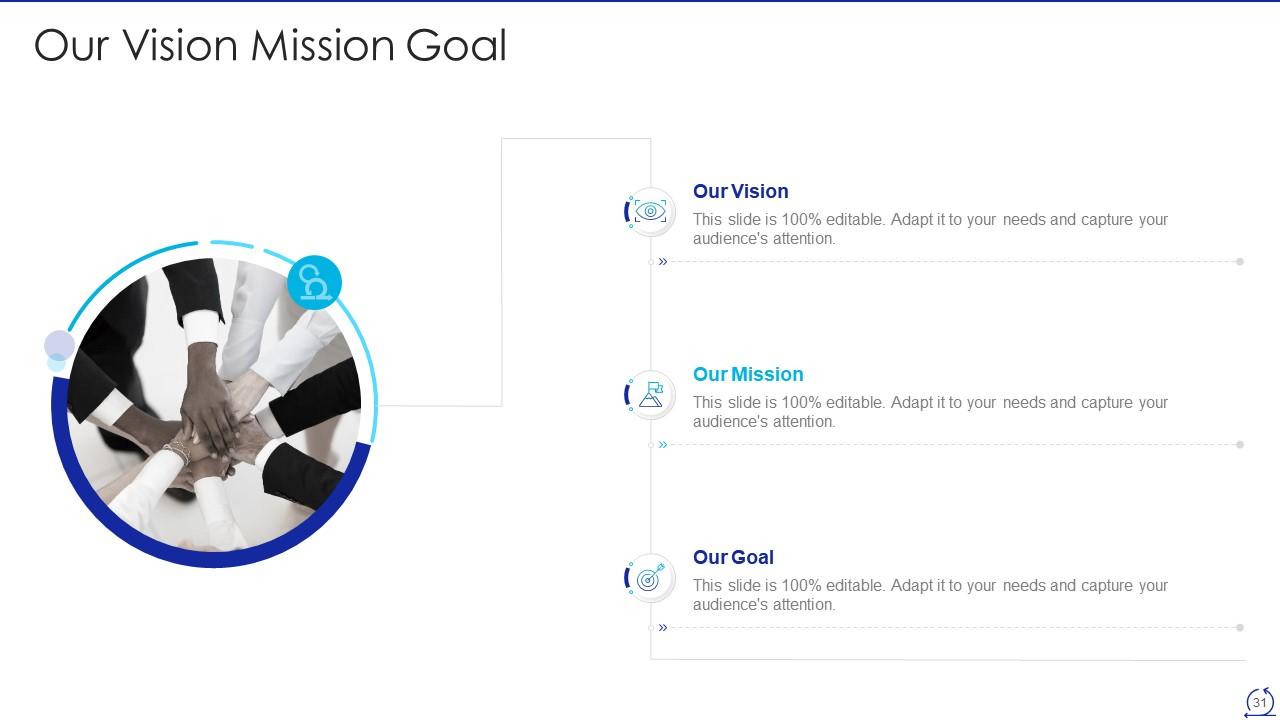
Diapositiva 31 : Esta es la diapositiva Nuestra misión con imágenes y texto relacionados.
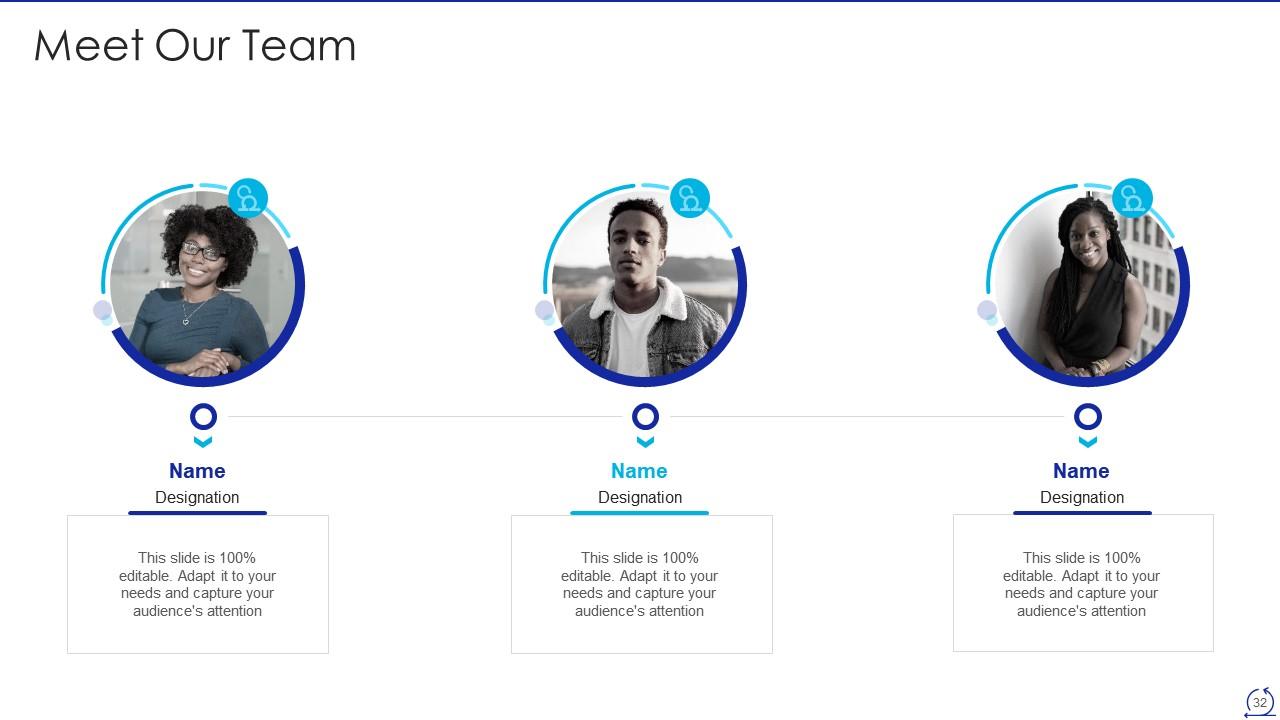
Diapositiva 32 : Esta es la diapositiva Nuestro equipo con nombres y designación.
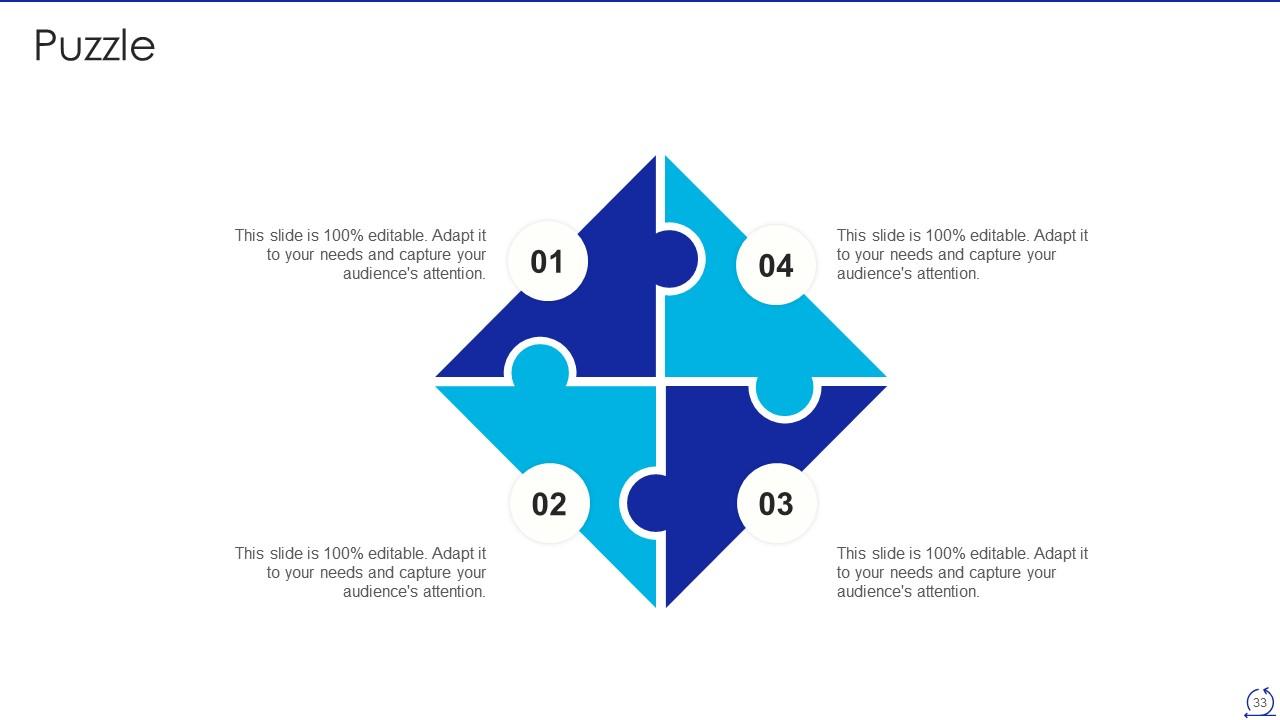
Diapositiva 33 : Esta diapositiva presenta Puzzle con íconos y texto relacionados.
Diapositiva 34 : Esta es una diapositiva de agradecimiento con dirección, números de contacto y dirección de correo electrónico.
Valores y principios ágiles Diapositivas de presentación de Powerpoint con las 34 diapositivas:
Utilice nuestras diapositivas de presentación de Powerpoint de valores y principios ágiles para ayudarlo de manera efectiva a ahorrar su valioso tiempo. Están listos para encajar en cualquier estructura de presentación.
-
Helpful product design for delivering presentation.
-
Great designs, Easily Editable.
-
Very unique and reliable designs.
