


KI-Transformations-Playbook Powerpoint-Präsentationsfolien
Eine erfolgreiche KI-Transformation erfordert ein bewährtes Playbook, das Lösungen an geschäftlichen Engpässen ausrichtet. Unser KI-Transformations-Playbook schlägt eine Reihe von Phasen vor, um Unternehmen bei der Implementierung von KI in ihren Betrieb zu unterstützen. Hier ist eine effizient gestaltete Playbook-Vorlage für die KI-Transformation, mit der Unternehmen ihre Geschäftsabläufe durch KI transformieren können. Die Präsentation beginnt mit Folien mit dem Titel Pilotprojekt-Leinwand, die Unternehmen dabei unterstützen, einen detaillierten Überblick über das KI-Transformationsprojekt und Einzelheiten zu den Bereichen zu geben, in denen es die größten Auswirkungen haben wird, und die Fähigkeiten, die für den Projekterfolg erforderlich sind. Der Abschnitt Identifizierung und Verständnis der KI-Eignung umfasst fünf Phasen, die Unternehmen dabei unterstützen, die KI-Eignung effektiv zu bestimmen und die Lösung in ihren Betrieb zu integrieren. Schließlich unterstützt die KPI-Dashboard-Folie Unternehmen bei der Verfolgung der gesamten Geschäftsleistung nach der Integration von KI-Lösungen. Buchen Sie eine kostenlose Demo bei unserem Forschungsteam und passen Sie diese zu 100 % bearbeitbare Playbook-Vorlage an Ihre Anforderungen an.






















-

- Google Slides is a new FREE Presentation software from Google.
- All our content is 100% compatible with Google Slides.
- Just download our designs, and upload them to Google Slides and they will work automatically.
- Amaze your audience with SlideTeam and Google Slides.
-

Want Changes to This PPT Slide? Check out our Presentation Design Services
-

- WideScreen Aspect ratio is becoming a very popular format. When you download this product, the downloaded ZIP will contain this product in both standard and widescreen format.
-

- Some older products that we have may only be in standard format, but they can easily be converted to widescreen.
- To do this, please open the SlideTeam product in Powerpoint, and go to
- Design ( On the top bar) -> Page Setup -> and select "On-screen Show (16:9)” in the drop down for "Slides Sized for".
- The slide or theme will change to widescreen, and all graphics will adjust automatically. You can similarly convert our content to any other desired screen aspect ratio.
Compatible With Google Slides

Get This In WideScreen
You must be logged in to download this presentation.


Do you want to remove this product from your favourites?
Merkmale dieser PowerPoint-Präsentationsfolien:
Dieses vollständige Deck deckt verschiedene Themen ab und hebt wichtige Konzepte hervor. Es verfügt über PPT-Folien, die Ihren geschäftlichen Anforderungen gerecht werden. Diese vollständige Deck-Präsentation betont die Powerpoint-Präsentationsfolien des KI-Transformations-Playbooks und enthält Vorlagen mit professionellen Hintergrundbildern und relevanten Inhalten. Dieses Deck besteht aus insgesamt 46 Folien. Unsere Designer haben anpassbare Vorlagen erstellt und dabei Ihre Bequemlichkeit im Auge behalten. Sie können die Farbe, den Text und die Schriftgröße ganz einfach bearbeiten. Darüber hinaus können Sie bei Bedarf Inhalte hinzufügen oder löschen. Erhalten Sie Zugriff auf diese vollständig bearbeitbare vollständige Präsentation, indem Sie unten auf die Download-Schaltfläche klicken.

People who downloaded this PowerPoint presentation also viewed the following :
Inhalt dieser Powerpoint-Präsentation
Folie 1 : Diese Folie stellt das AI Transformation Playbook vor. Geben Sie Ihren Firmennamen an und beginnen Sie.
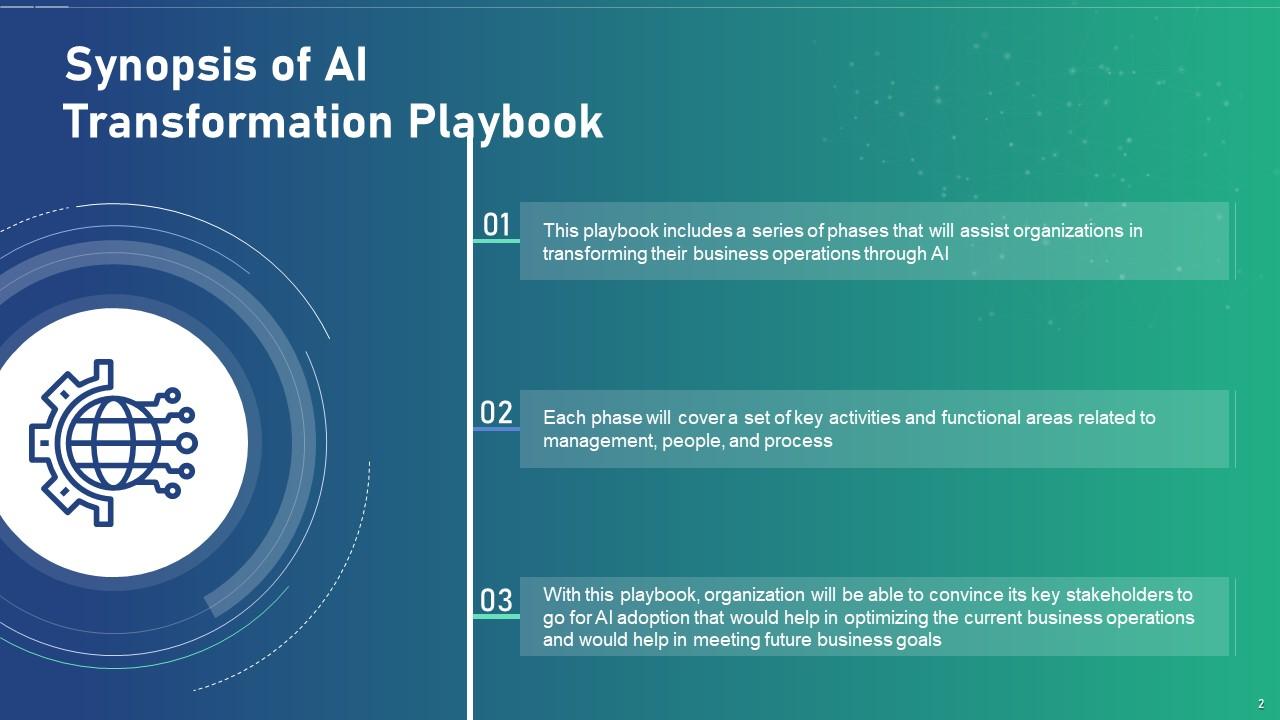
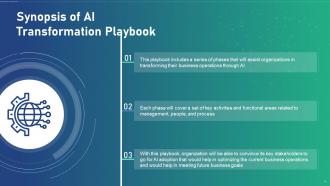
Folie 2 : Diese Folie zeigt die Zusammenfassung des KI-Transformations-Playbooks.
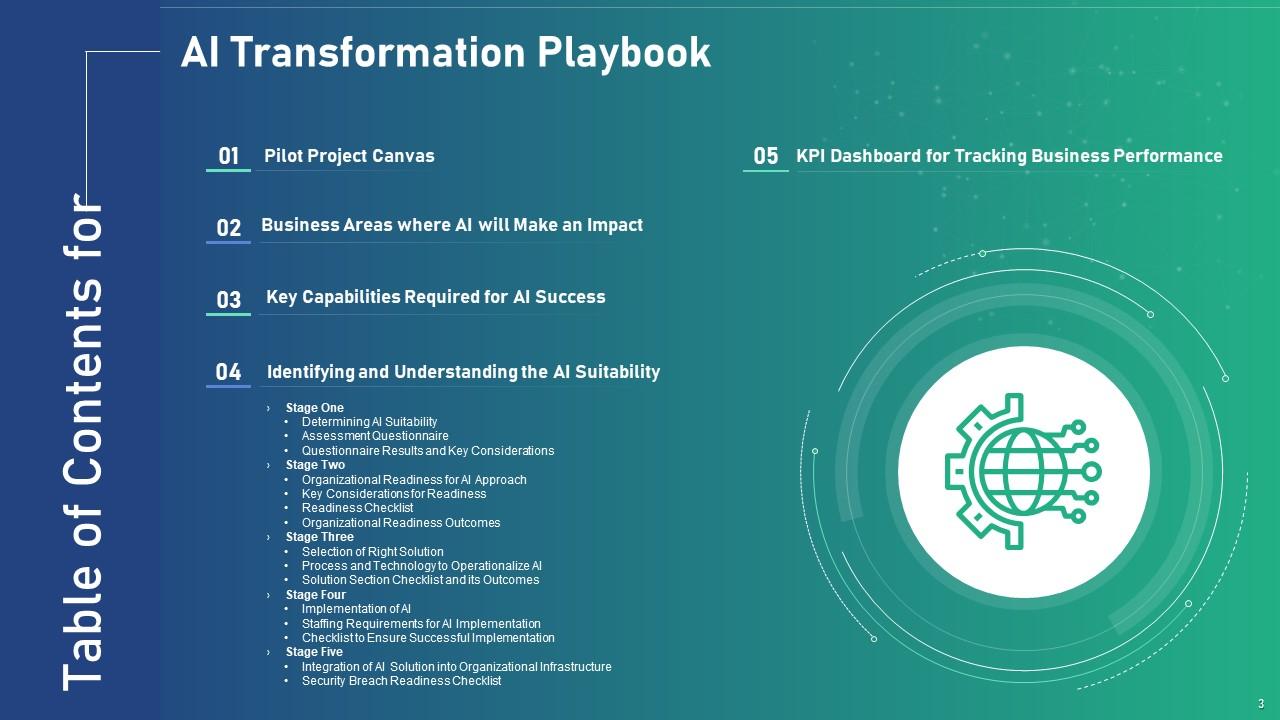
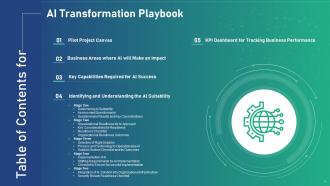
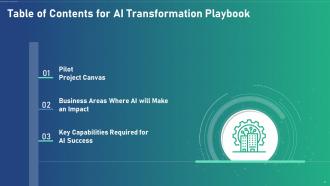
Folie 3 : Diese Folie zeigt das Inhaltsverzeichnis für die Präsentation.
Folie 4 : Diese Folie hebt Titel für Themen hervor, die als nächstes in der Vorlage behandelt werden sollen.
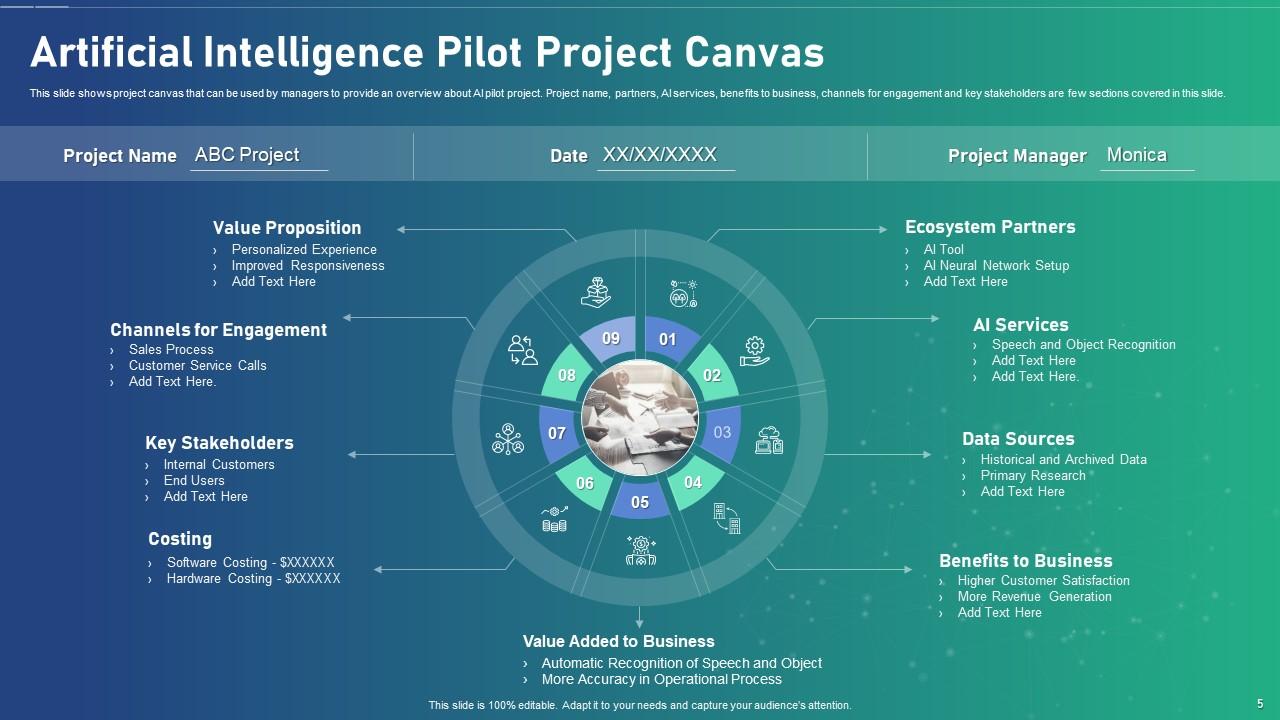
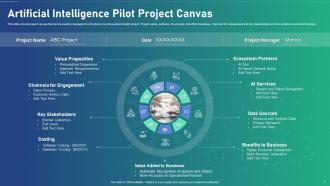
Folie 5 : Diese Folie zeigt die Pilotprojekt-Leinwand für künstliche Intelligenz.
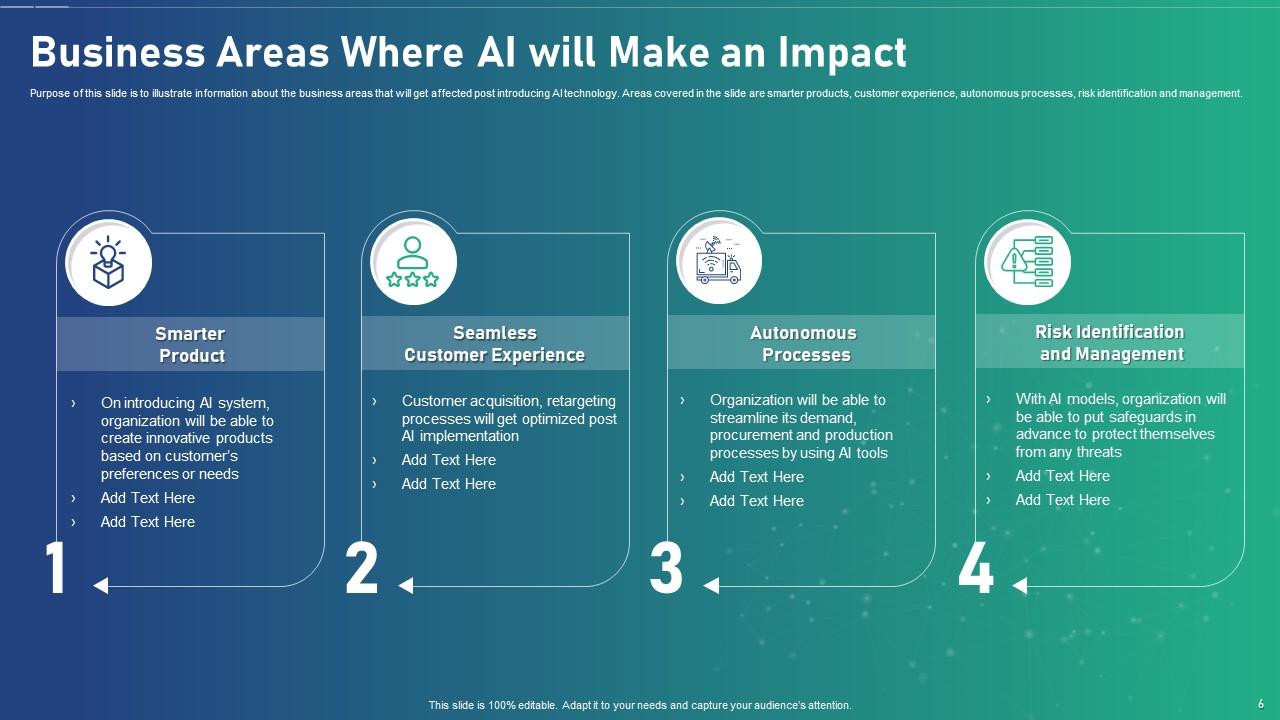
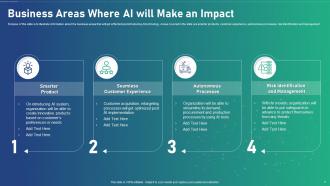
Folie 6 : Diese Folie stellt Geschäftsbereiche dar, in denen KI einen Einfluss haben wird.
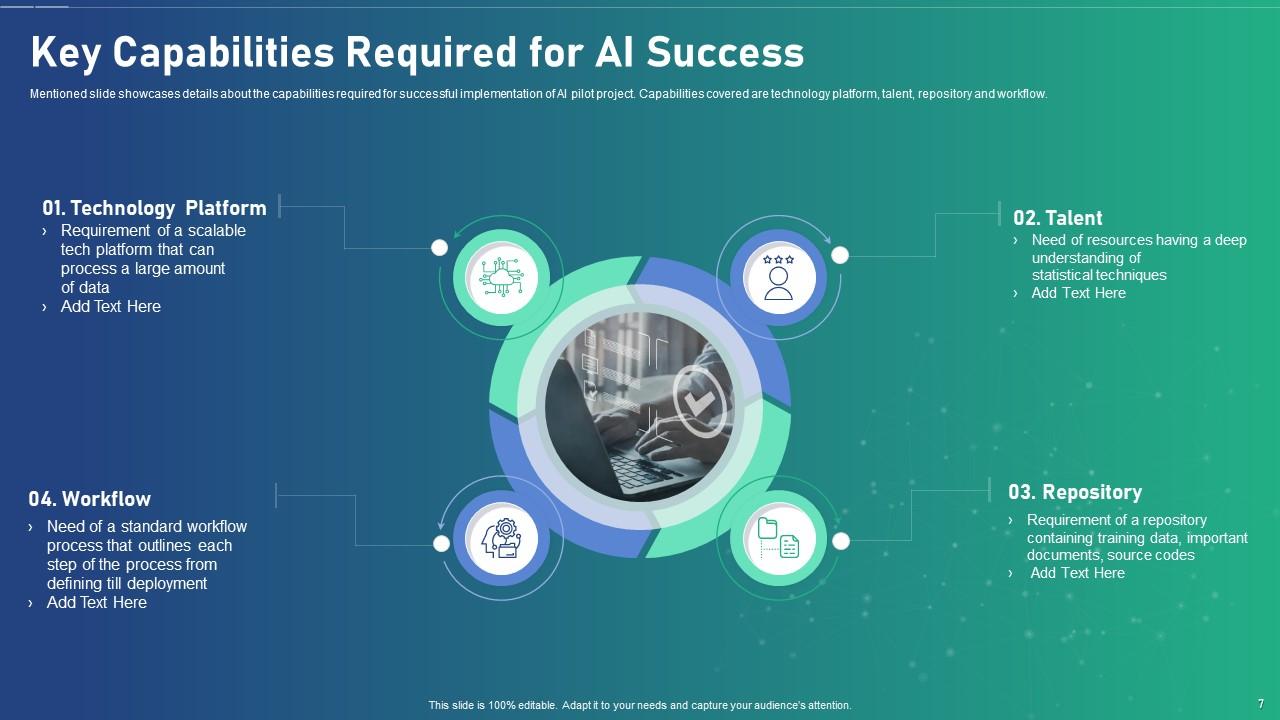
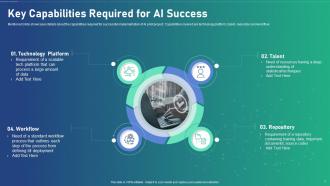
Folie 7 : Diese Folie zeigt Schlüsselfunktionen, die für den KI-Erfolg erforderlich sind.
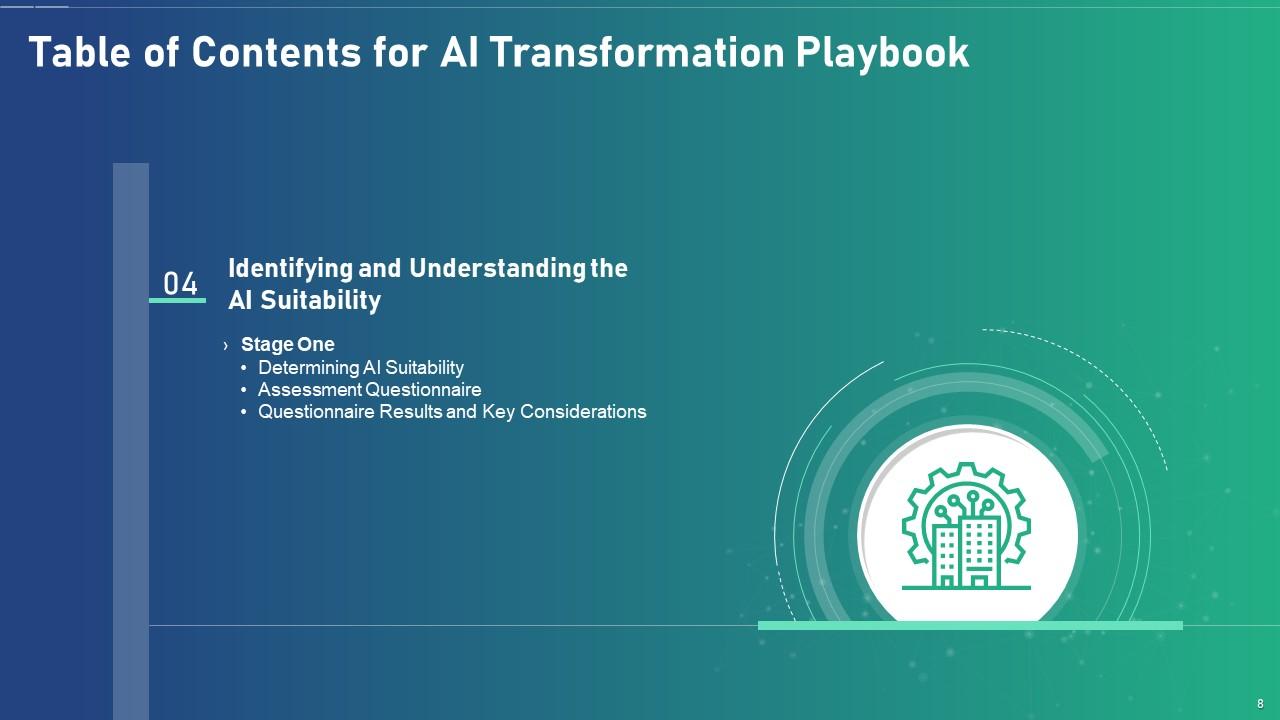
Folie 8 : Diese Folie hebt Titel für Themen hervor, die als nächstes in der Vorlage behandelt werden sollen.
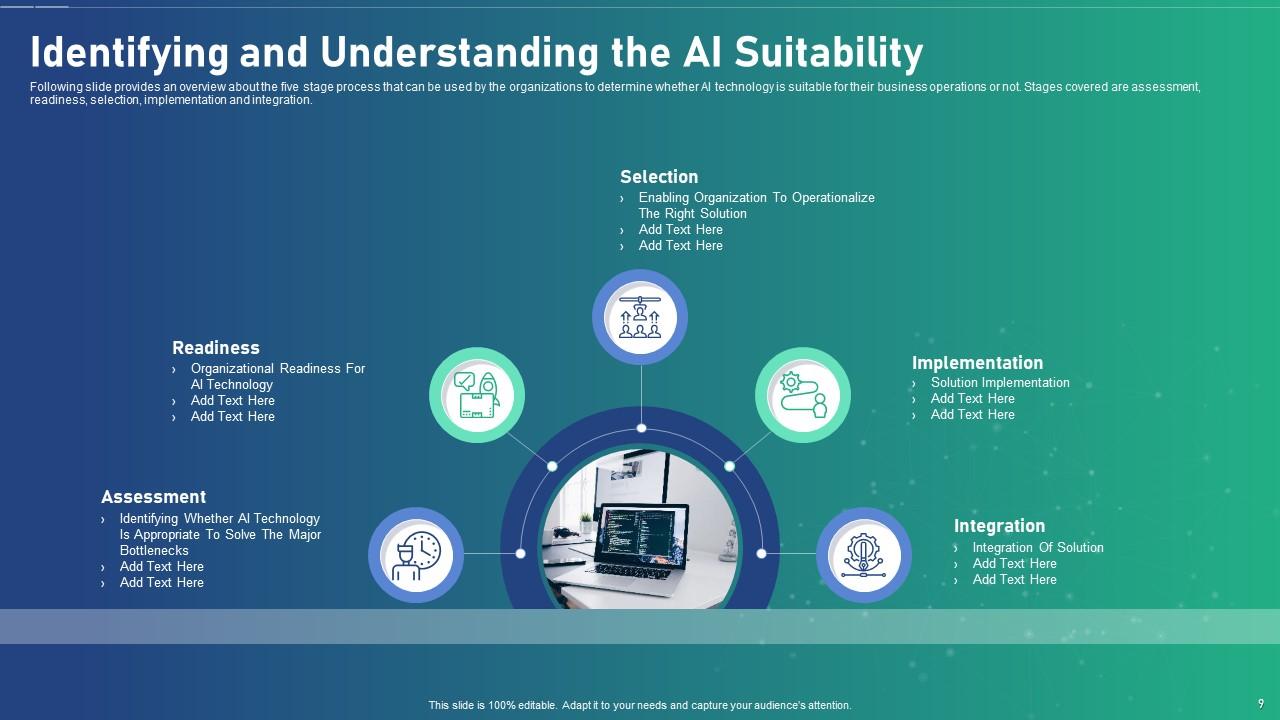
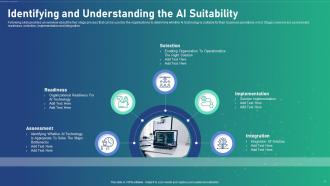
Folie 9 : Diese Folie zeigt das Erkennen und Verstehen der KI-Eignung.
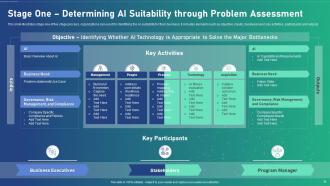
Folie 10 : Diese Folie veranschaulicht Phase eins von fünf Phasen des Prozesses, Organisationen können sie zur Identifizierung der KI-Eignung verwenden.
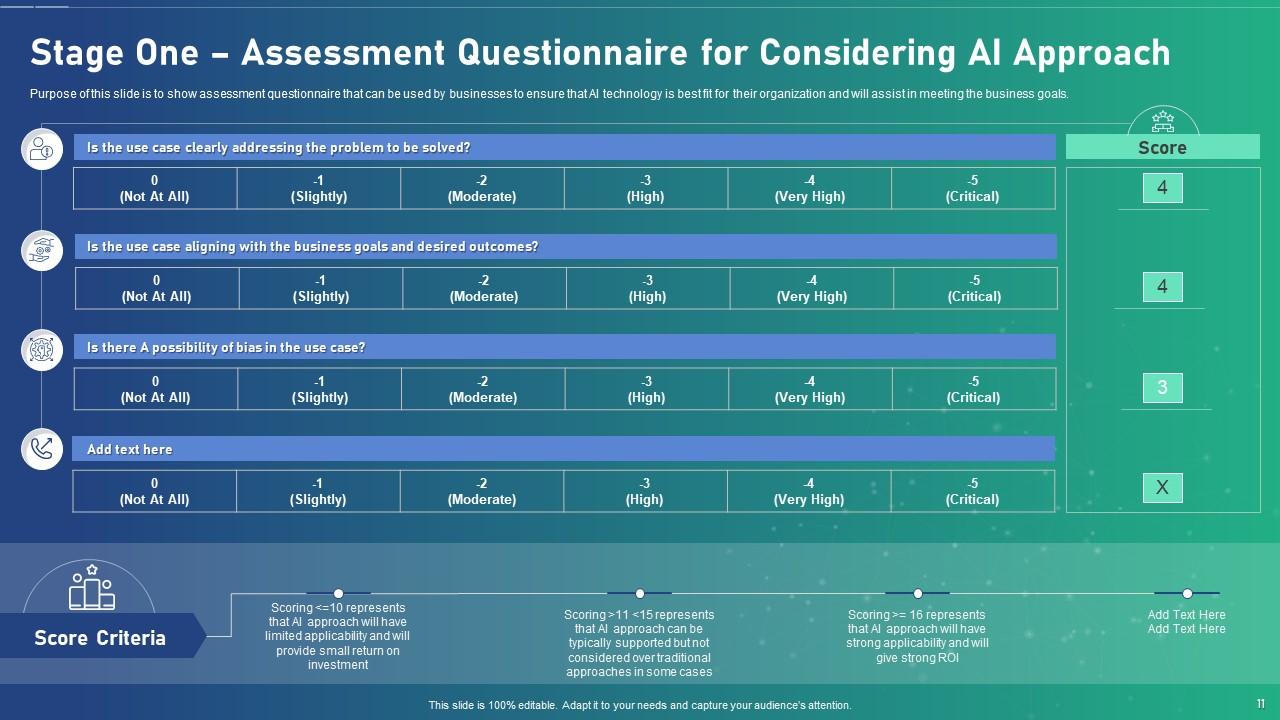
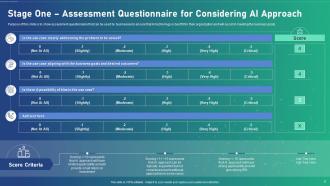
Folie 11 : Diese Folie zeigt den Bewertungsfragebogen zur Berücksichtigung des KI-Ansatzes.
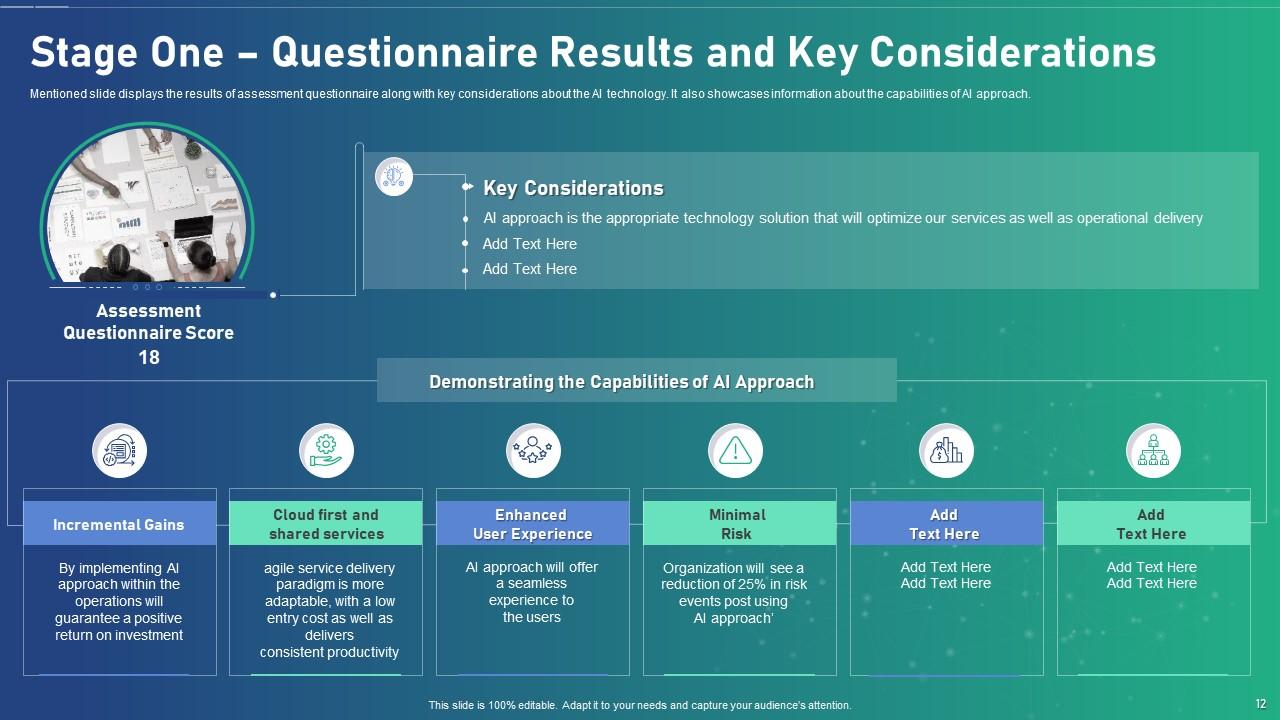
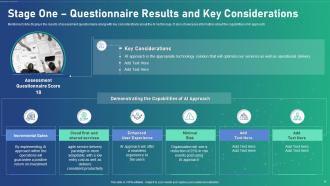
Folie 12 : Diese Folie präsentiert die Ergebnisse des Fragebogens und wichtige Überlegungen.
Folie 13 : Diese Folie hebt Titel für Themen hervor, die als nächstes in der Vorlage behandelt werden sollen.
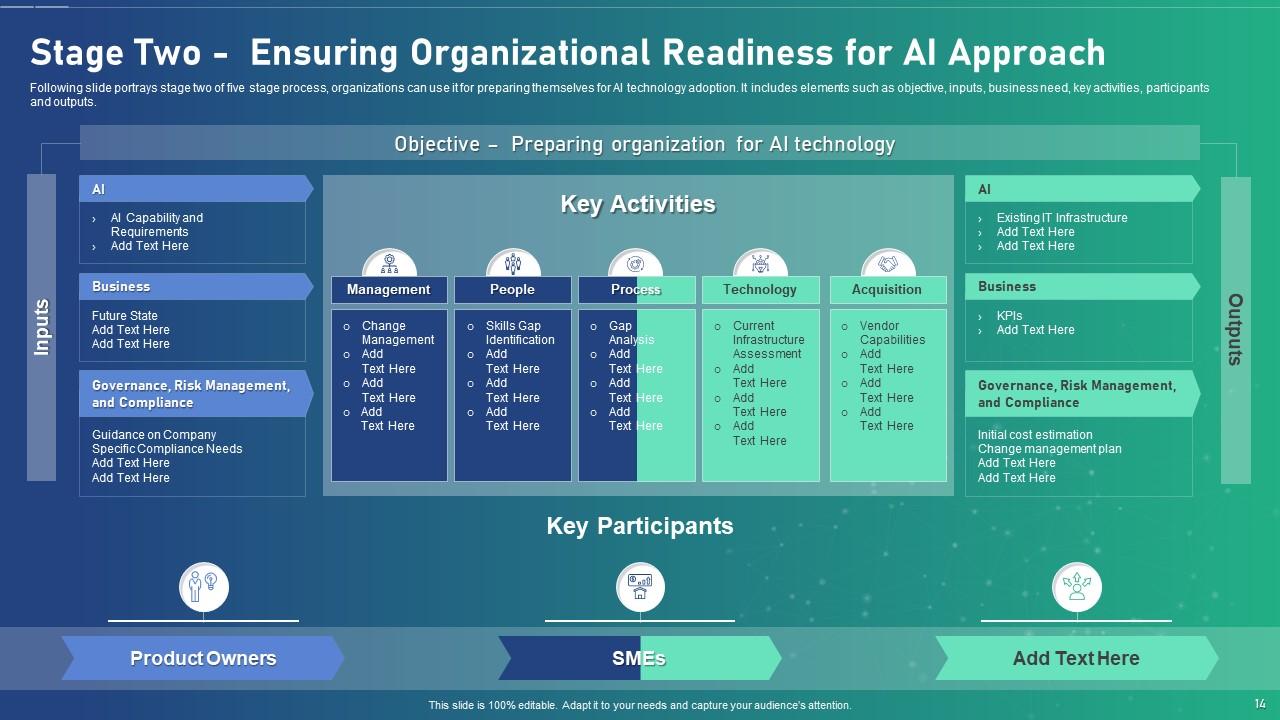
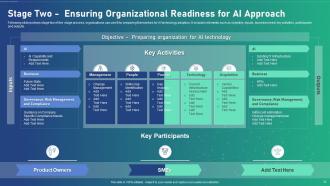
Folie 14 : Diese Folie zeigt die Sicherstellung der organisatorischen Bereitschaft für den KI-Ansatz.
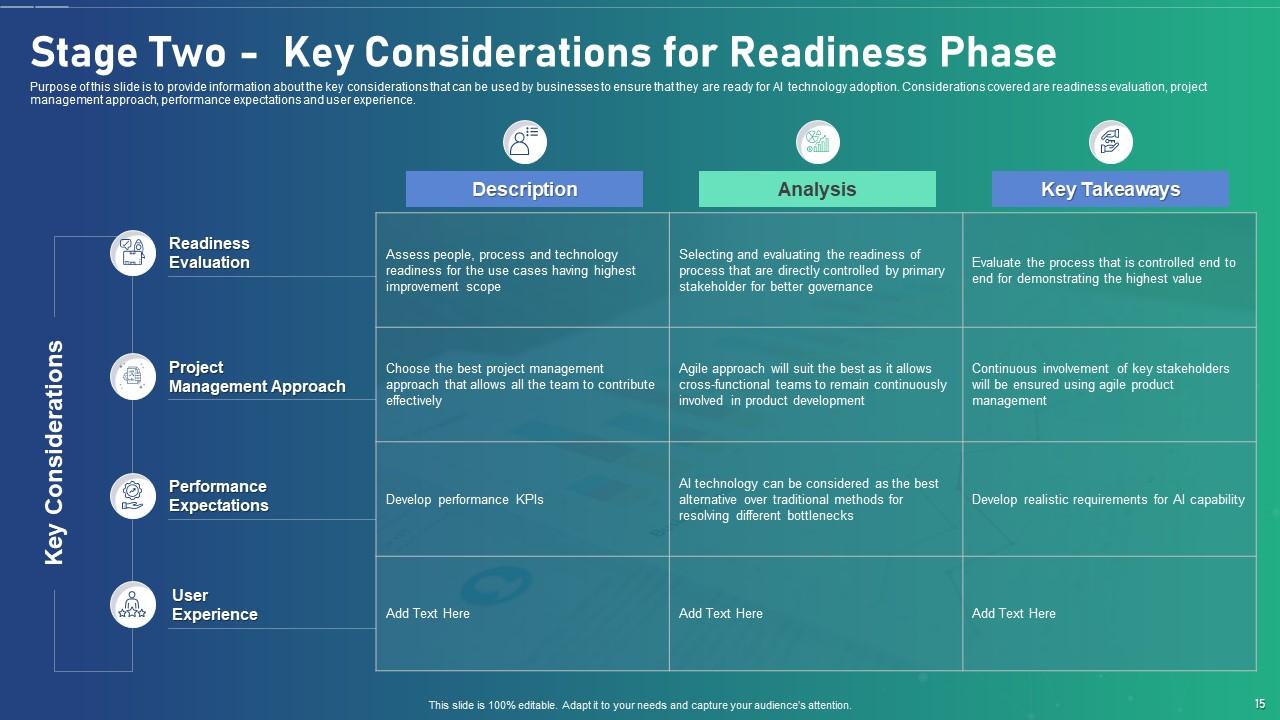
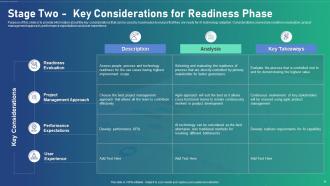
Folie 15 : Diese Folie stellt wichtige Überlegungen dar, die von Unternehmen genutzt werden können, um sicherzustellen, dass sie für die Einführung von KI-Technologie bereit sind.
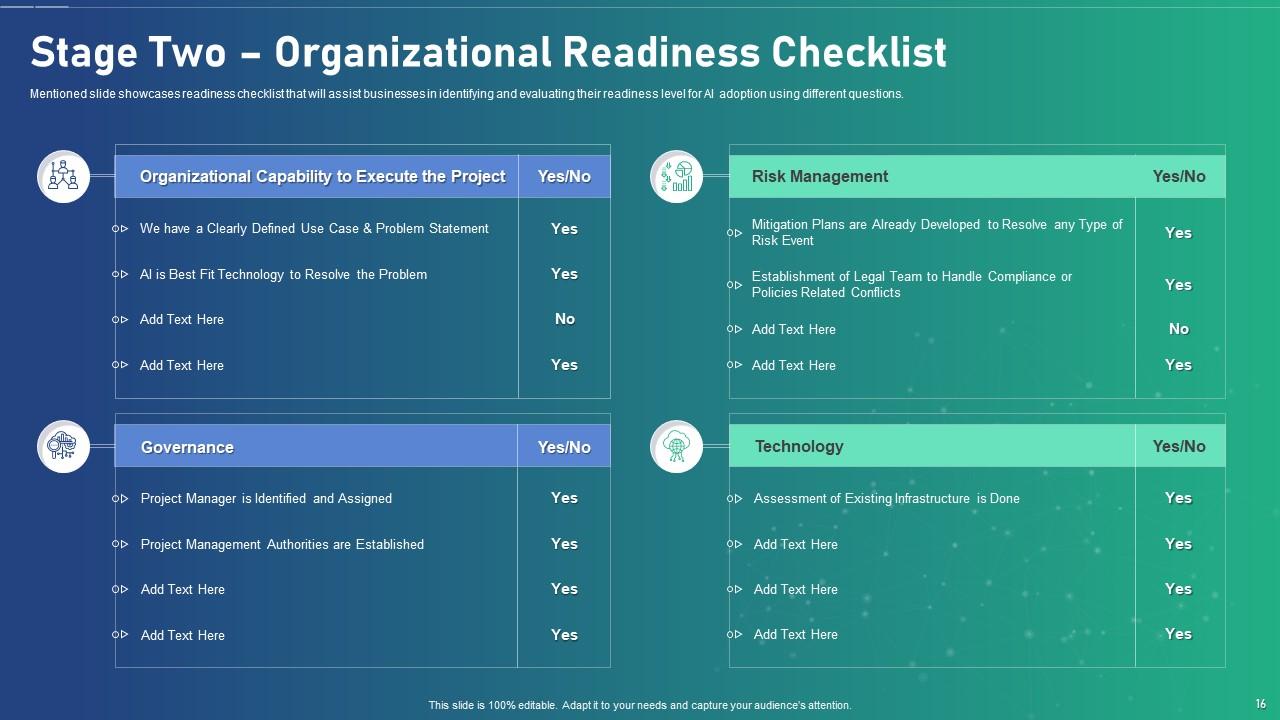
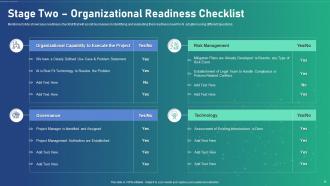
Folie 16 : Diese Folie zeigt eine Checkliste, die Unternehmen dabei unterstützt, ihre Bereitschaft zu identifizieren und zu bewerten.
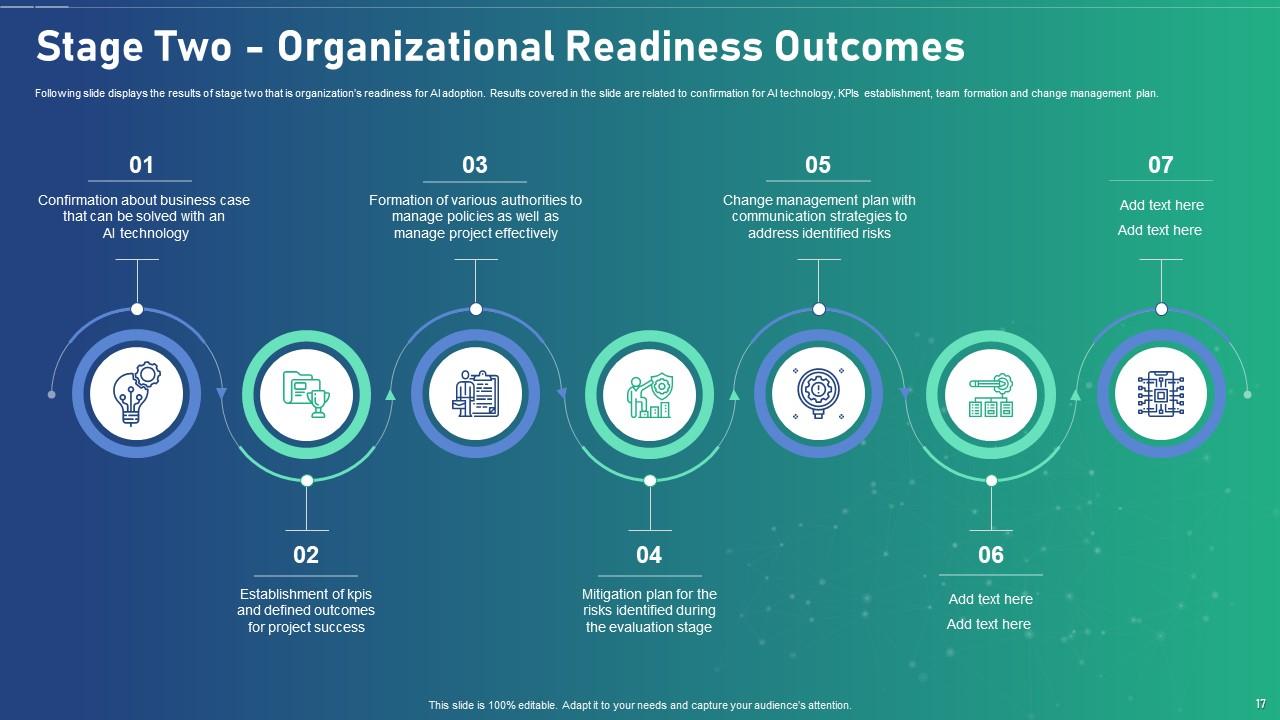
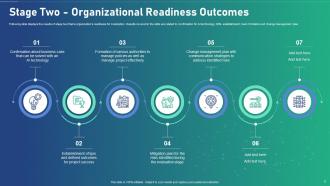
Folie 17 : Diese Folie zeigt die Ergebnisse der zweiten Phase, dh der Bereitschaft der Organisation für die Einführung von KI.
Folie 18 : Diese Folie hebt Titel für Themen hervor, die als nächstes in der Vorlage behandelt werden sollen.
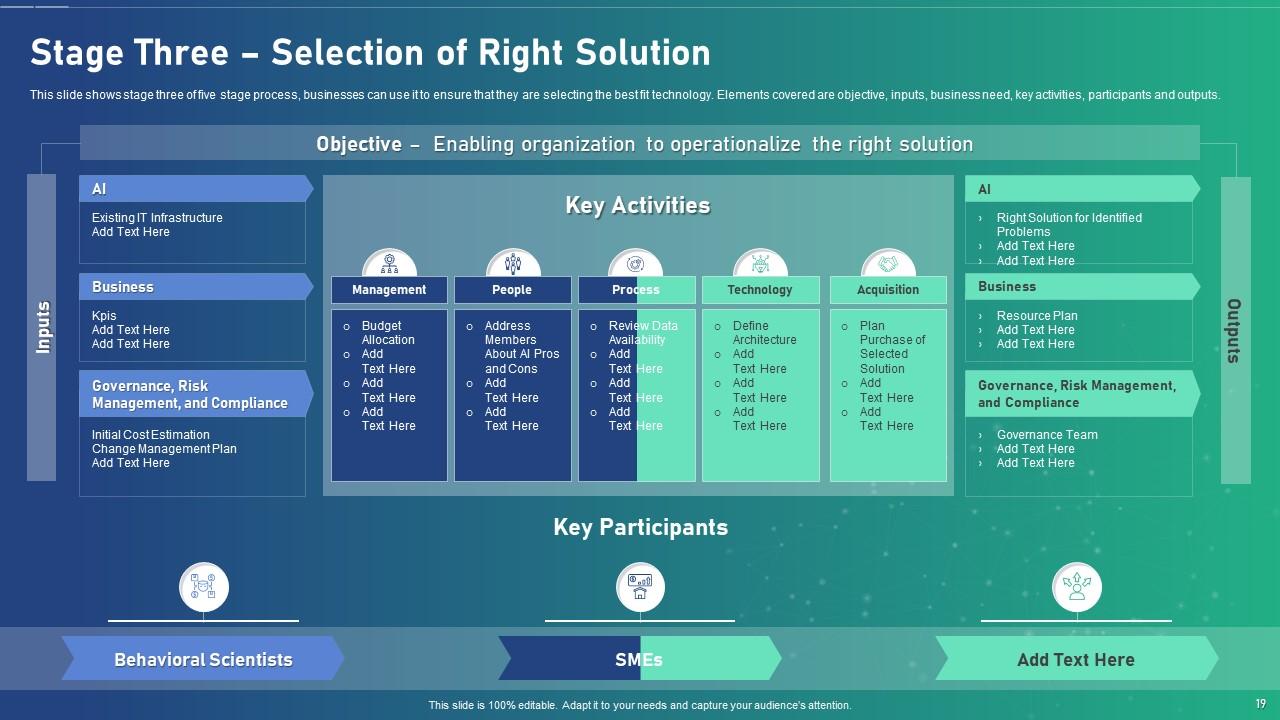
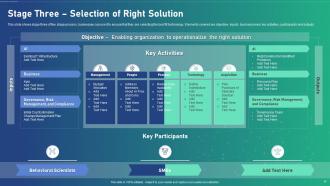
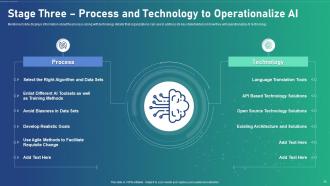
Folie 19 : Diese Folie stellt drei von fünf Phasen des Prozesses vor, die Unternehmen nutzen können, um sicherzustellen, dass sie die am besten geeignete Technologie auswählen.
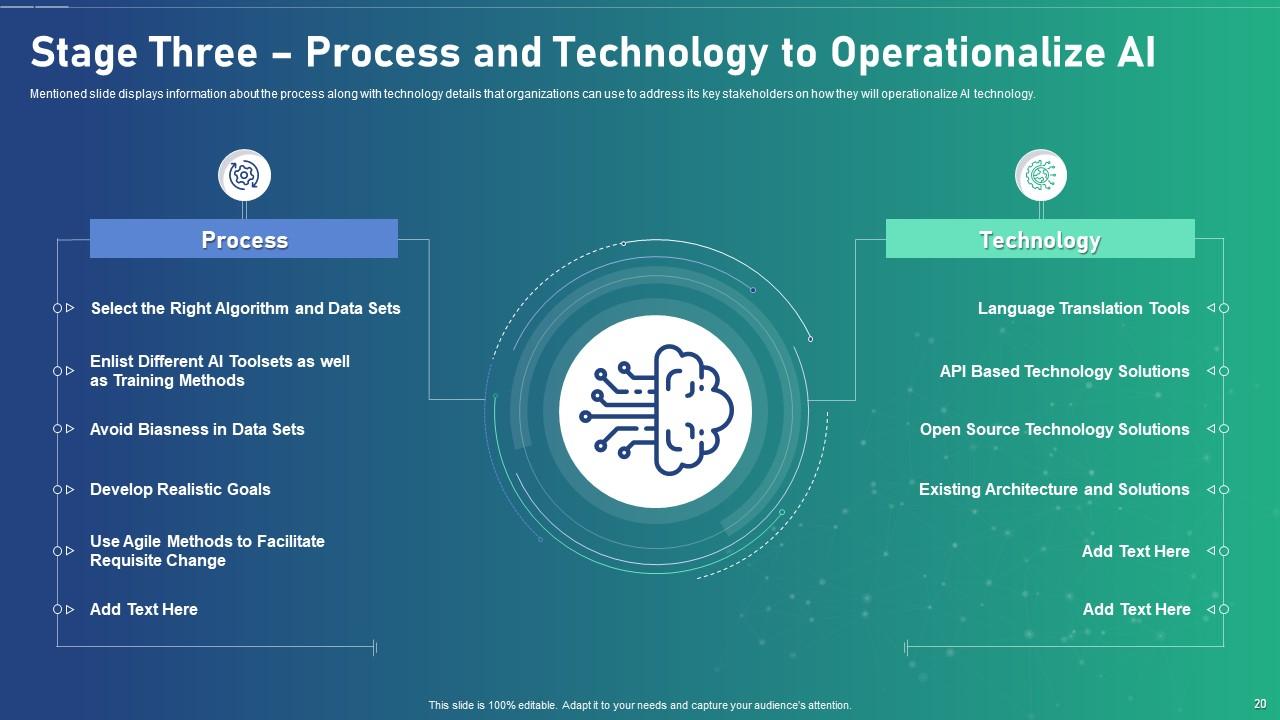
Folie 20 : Diese Folie zeigt Informationen über den Prozess zusammen mit Technologiedetails, die Organisationen verwenden können.
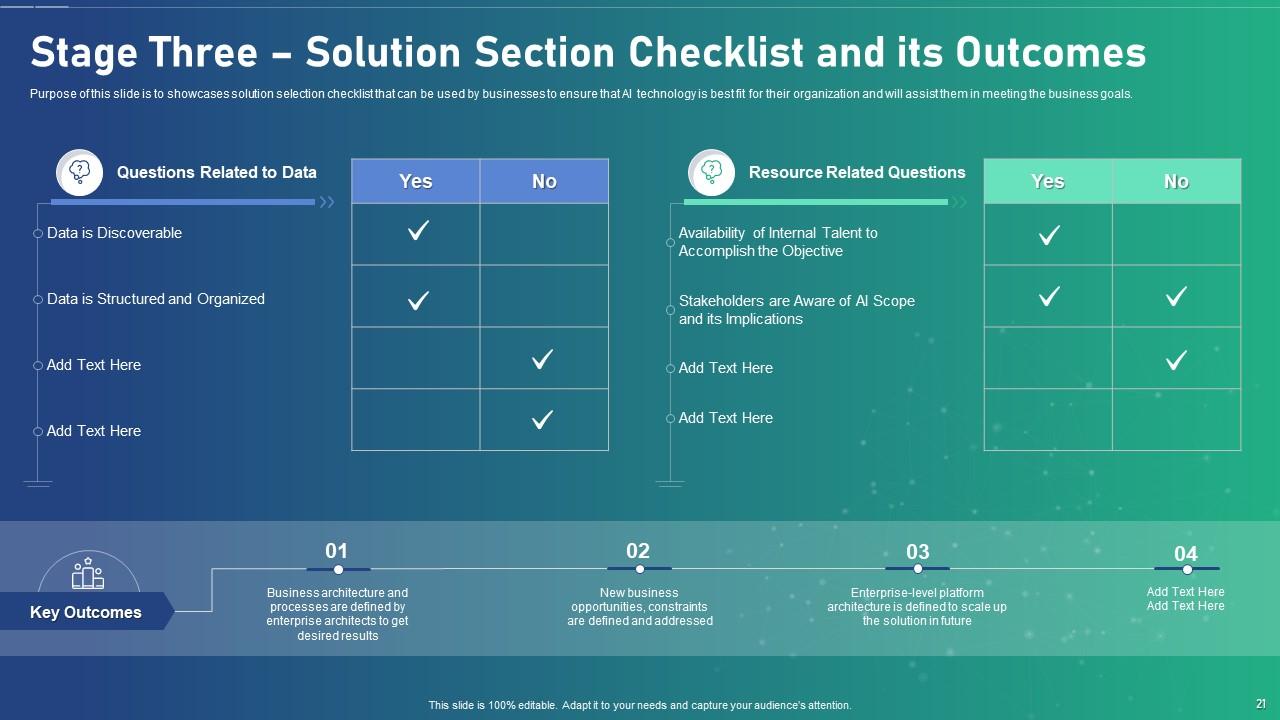
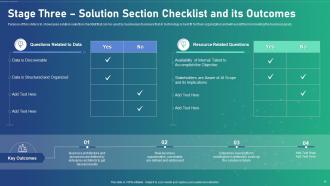
Folie 21 : Diese Folie stellt die Lösungsabschnitt-Checkliste und ihre Ergebnisse dar.
Folie 22 : Diese Folie hebt Titel für Themen hervor, die als nächstes in der Vorlage behandelt werden sollen.
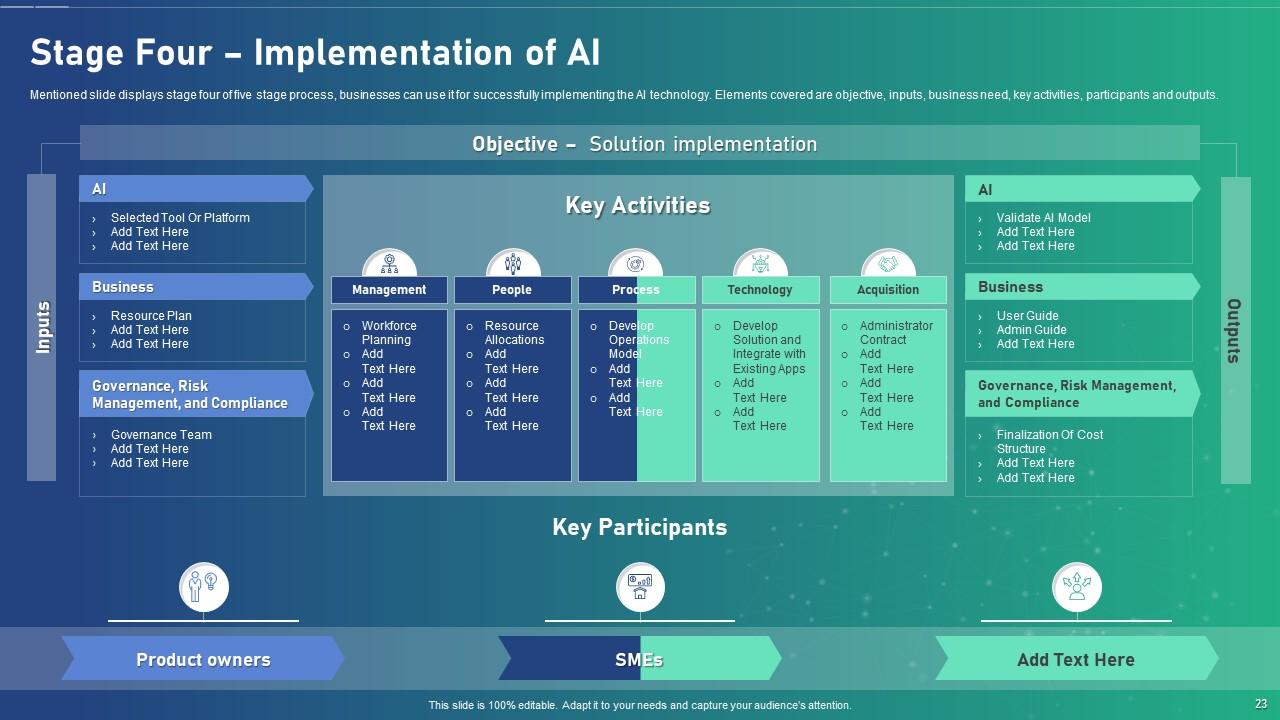
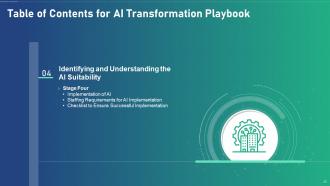
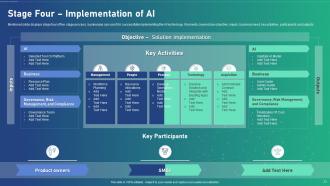
Folie 23 : Diese Folie zeigt die vierte von fünf Phasen des Prozesses, die Unternehmen für die erfolgreiche Implementierung der KI-Technologie nutzen können.
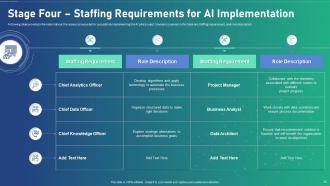
Folie 24 : Diese Folie zeigt den Personalbedarf für die KI-Implementierung.
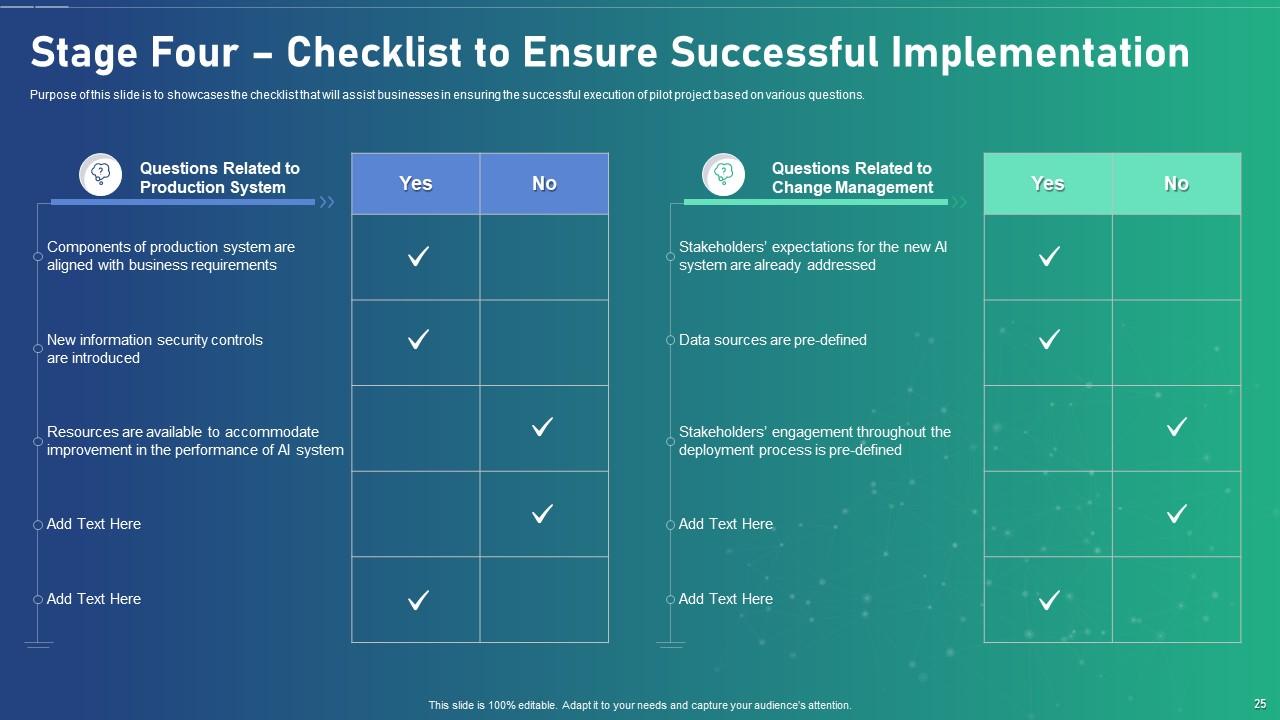
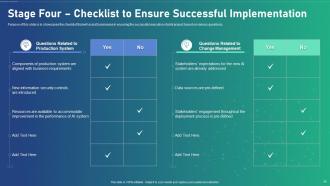
Folie 25 : Diese Folie enthält eine Checkliste zur Gewährleistung einer erfolgreichen Implementierung.
Folie 26 : Diese Folie hebt Titel für Themen hervor, die als nächstes in der Vorlage behandelt werden sollen.
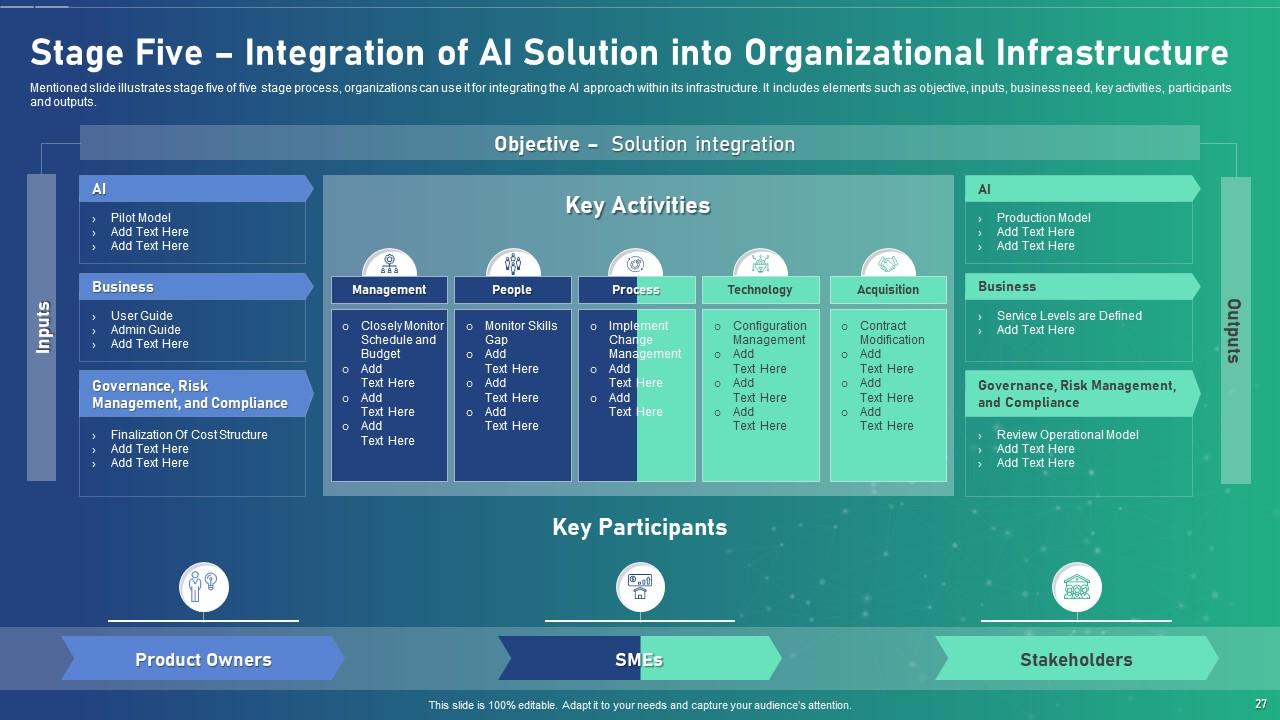
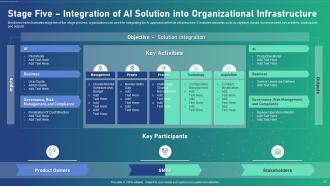
Folie 27 : Diese Folie zeigt die Integration der KI-Lösung in die organisatorische Infrastruktur.
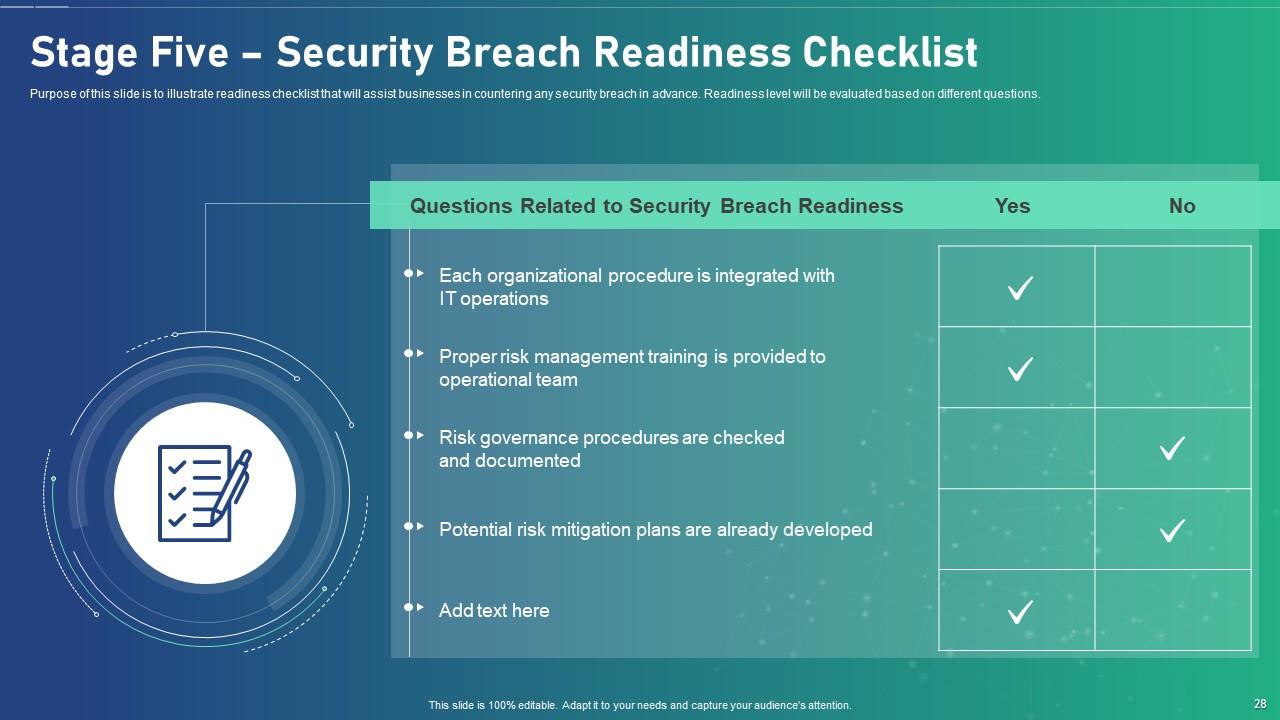
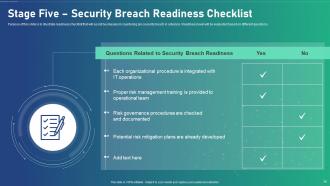
Folie 28 : Diese Folie stellt eine Bereitschaftscheckliste dar, die Unternehmen dabei unterstützt, Sicherheitsverletzungen entgegenzuwirken.
Folie 29 : Diese Folie hebt Titel für Themen hervor, die als nächstes in der Vorlage behandelt werden sollen.
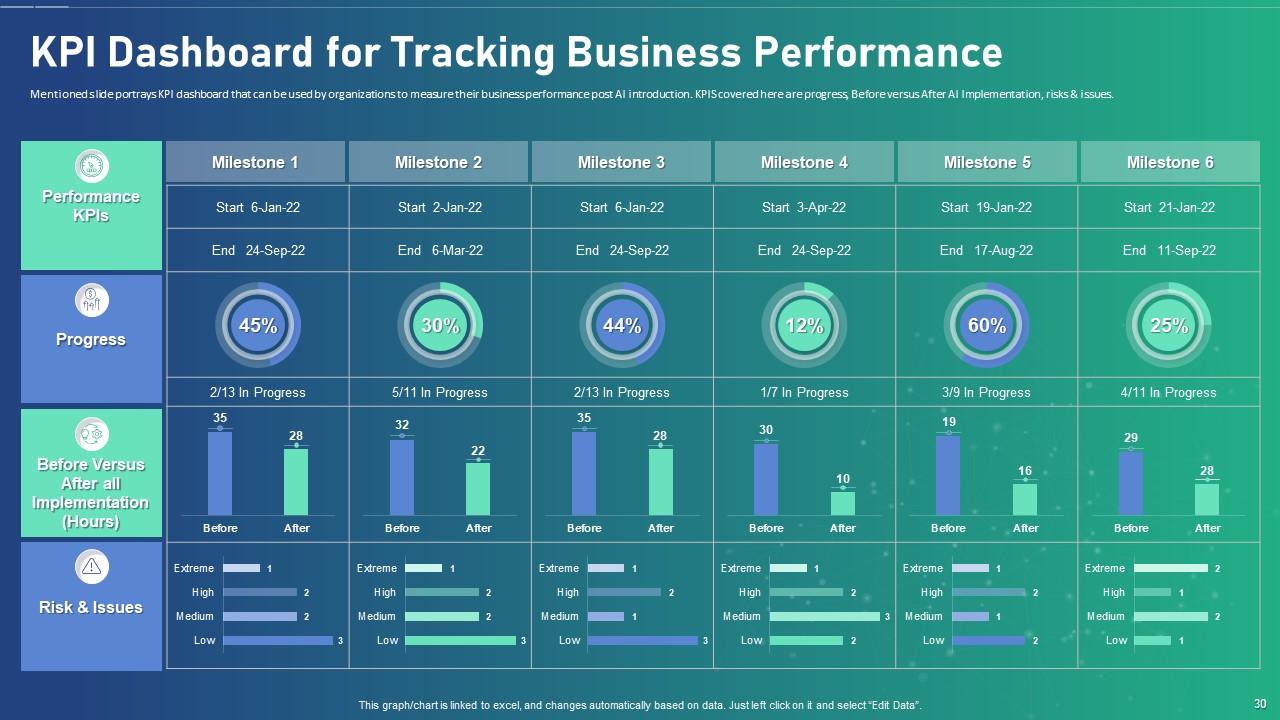
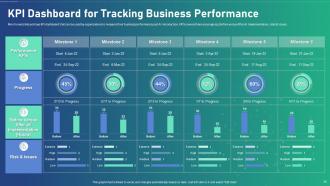
Folie 30 : Diese Folie zeigt das KPI-Dashboard zur Verfolgung der Geschäftsleistung.
Folie 31 : Diese Folie zeigt Symbole für das KI-Transformations-Playbook.
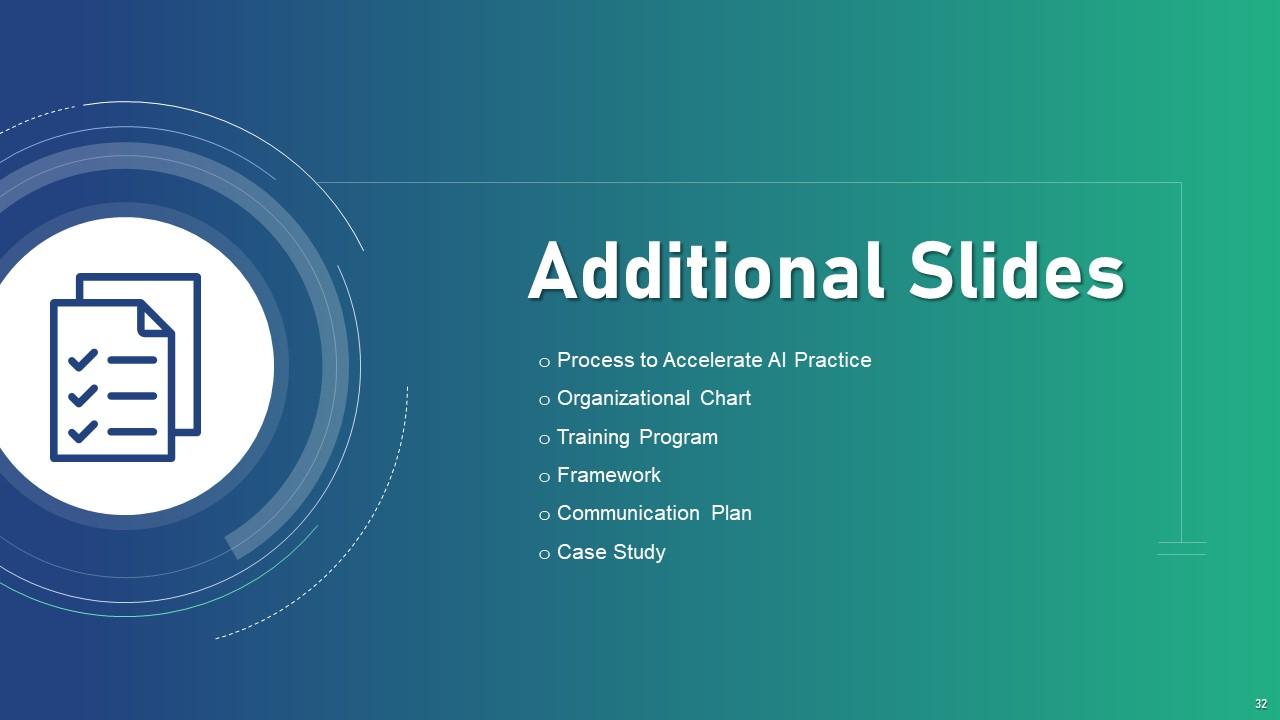
Folie 32 : Diese Folie trägt den Titel „Zusätzliche Folien“, um voranzukommen.
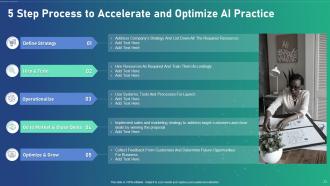
Folie 33 : Diese Folie stellt den 5-Schritte-Prozess zur Beschleunigung und Optimierung der KI-Praxis dar.
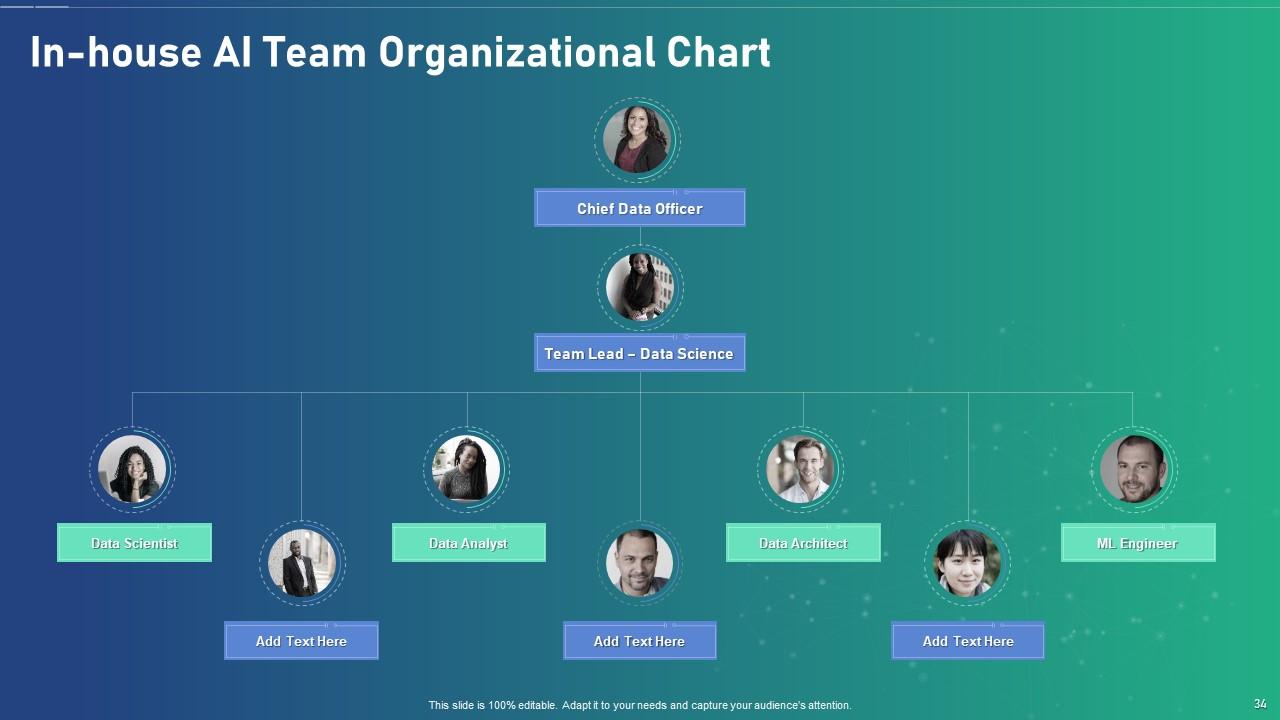
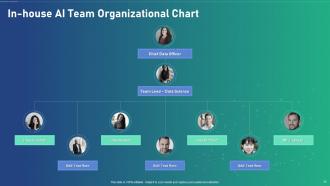
Folie 34 : Diese Folie zeigt das Organigramm des internen KI-Teams.
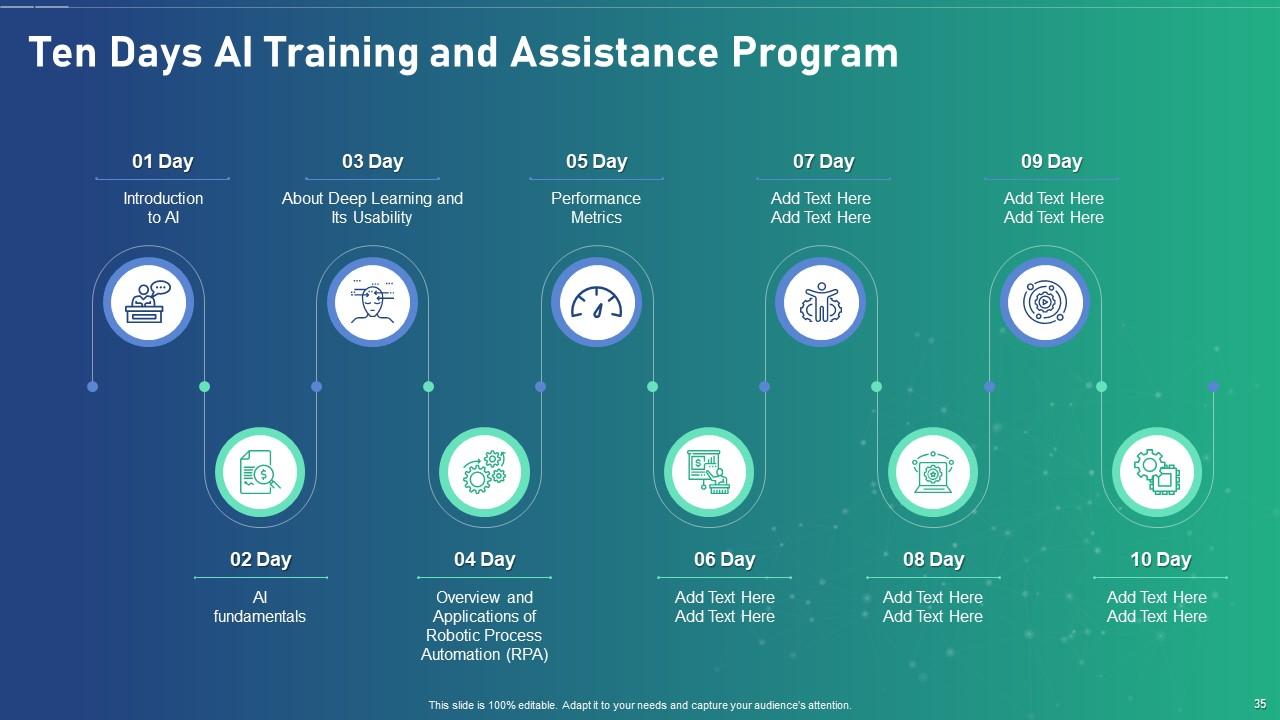
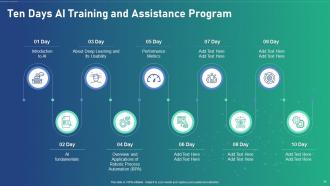
Folie 35 : Diese Folie zeigt das zehntägige KI-Schulungs- und Unterstützungsprogramm.
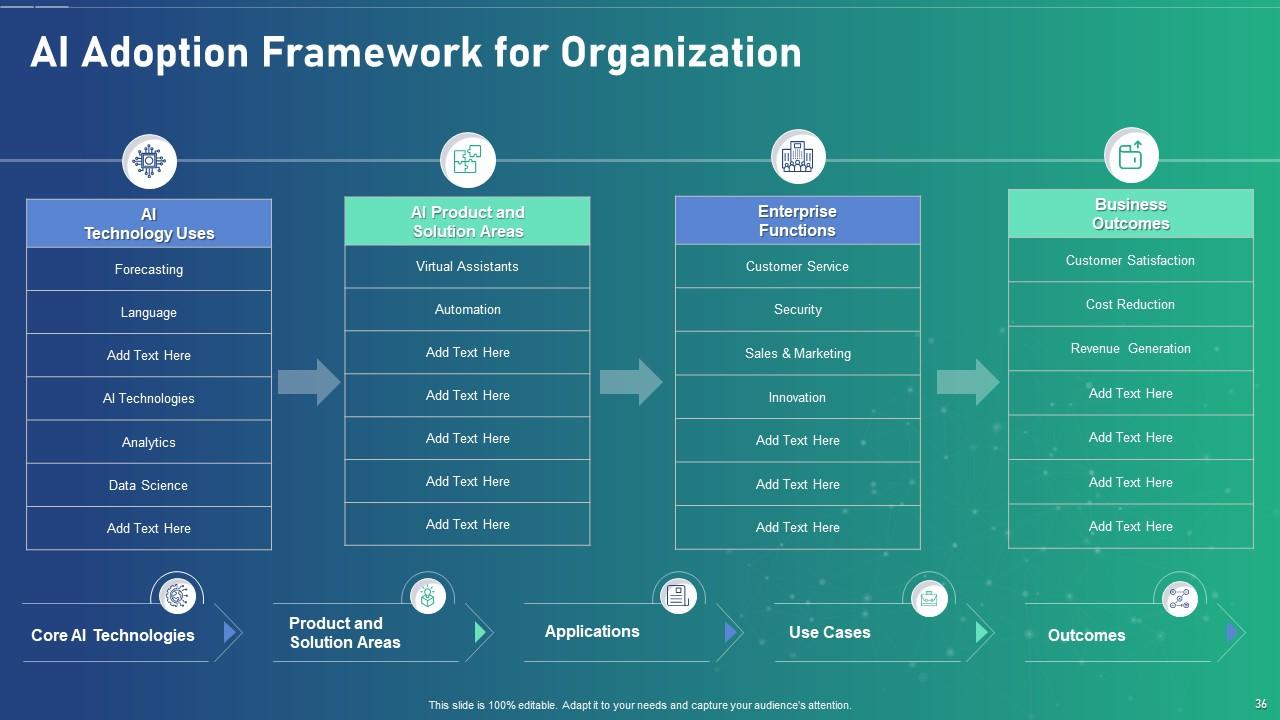
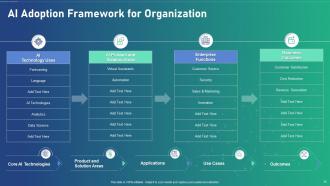
Folie 36 : Diese Folie präsentiert das AI Adoption Framework für Organisationen.
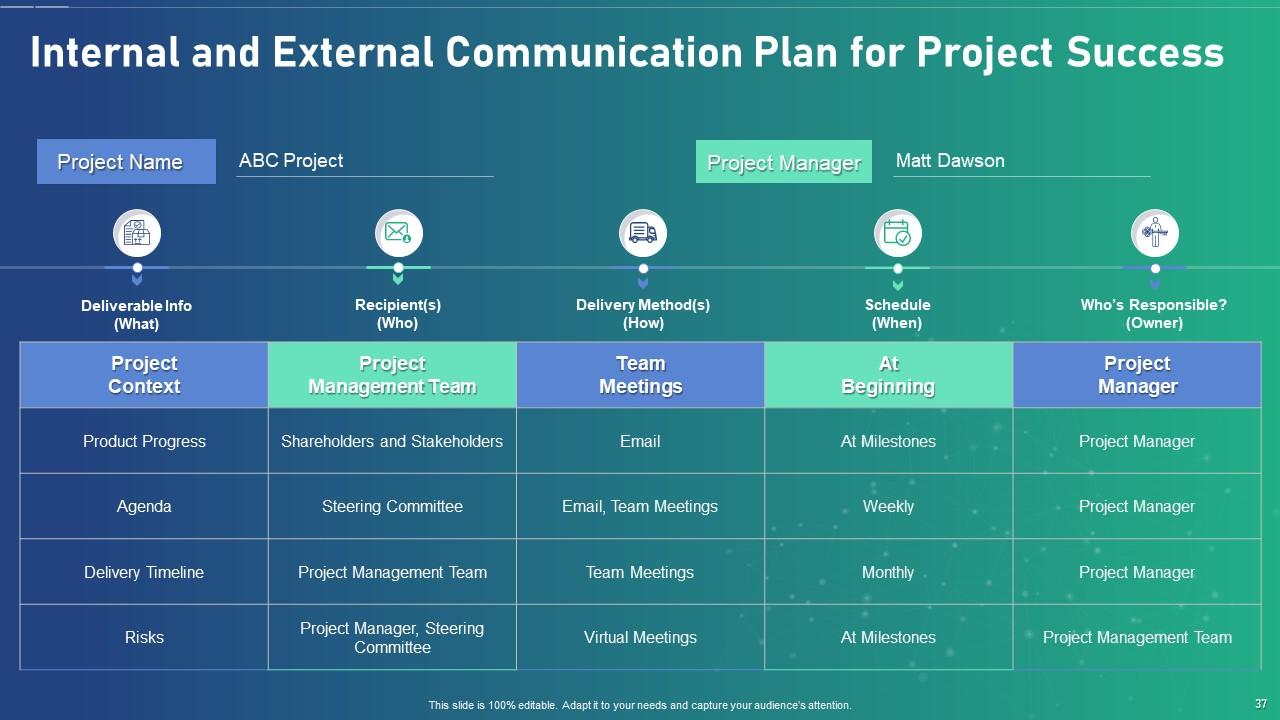
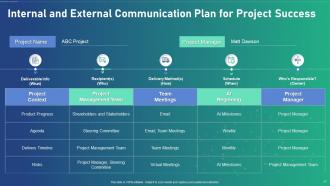
Folie 37 : Diese Folie zeigt den internen und externen Kommunikationsplan für den Projekterfolg.
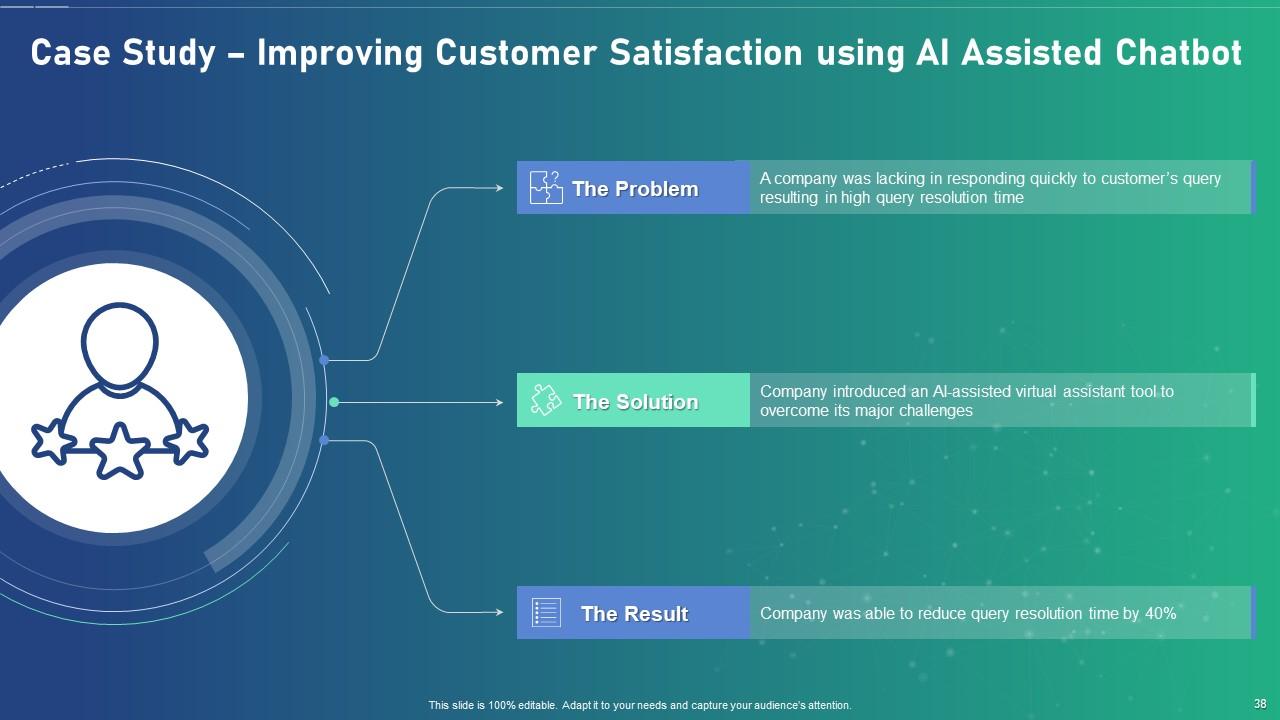
Folie 38 : Diese Folie zeigt die Verbesserung der Kundenzufriedenheit mit einem KI-unterstützten Chatbot.
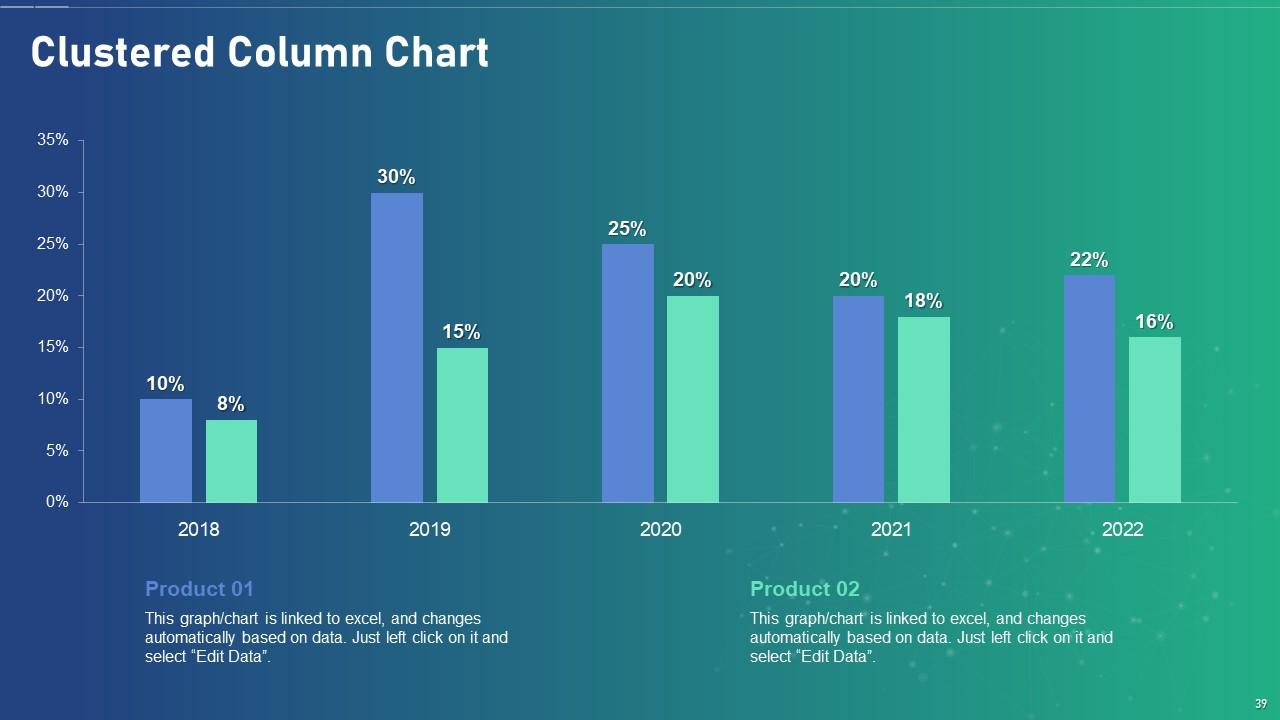
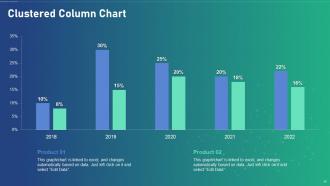
Folie 39 : Diese Folie bietet ein gruppiertes Säulendiagramm mit zwei Produktvergleichen.
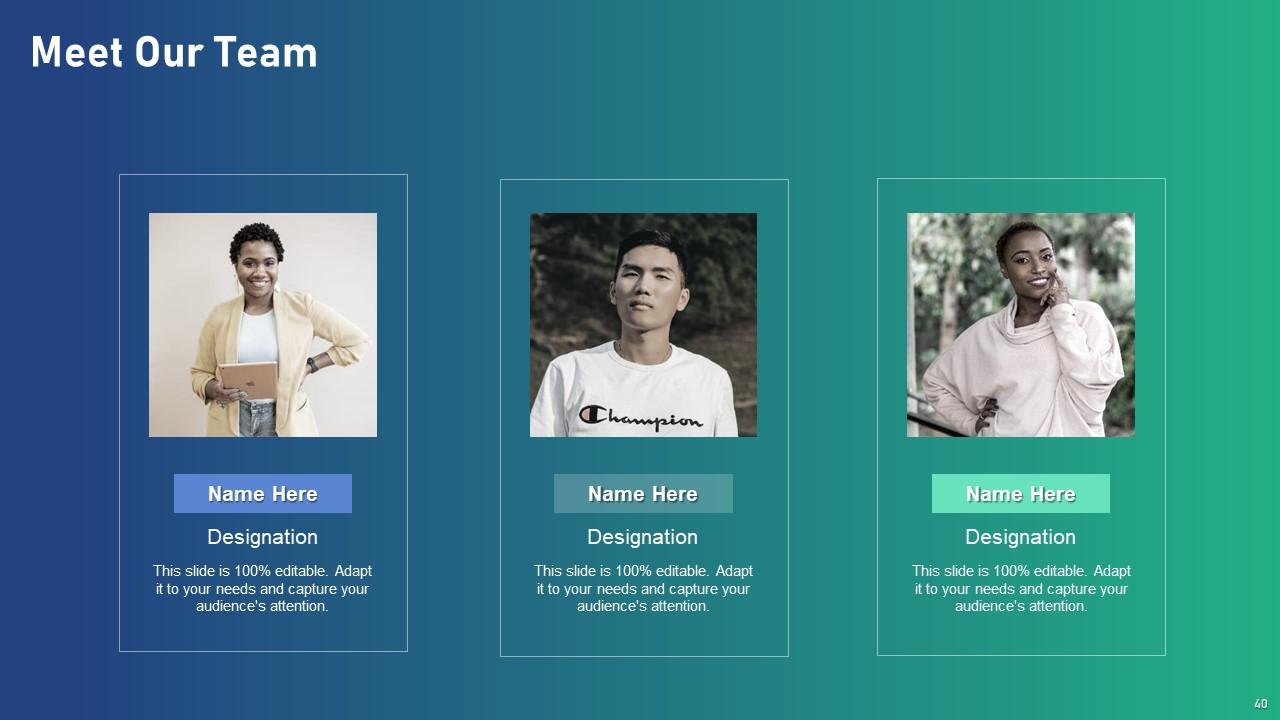
Folie 40 : Dies ist die Folie „Unser Team“ mit Namen und Bezeichnung.
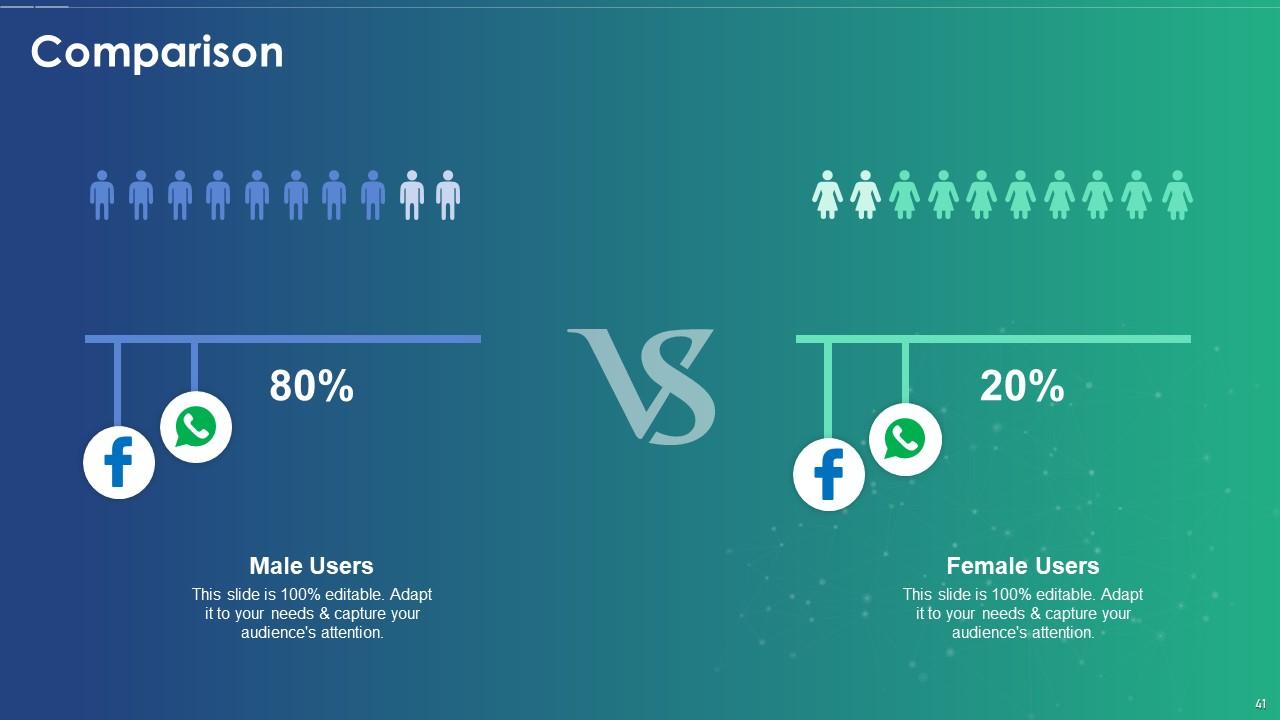
Folie 41 : Dies ist eine Vergleichsfolie zum Vergleich zwischen Waren, Unternehmen usw.
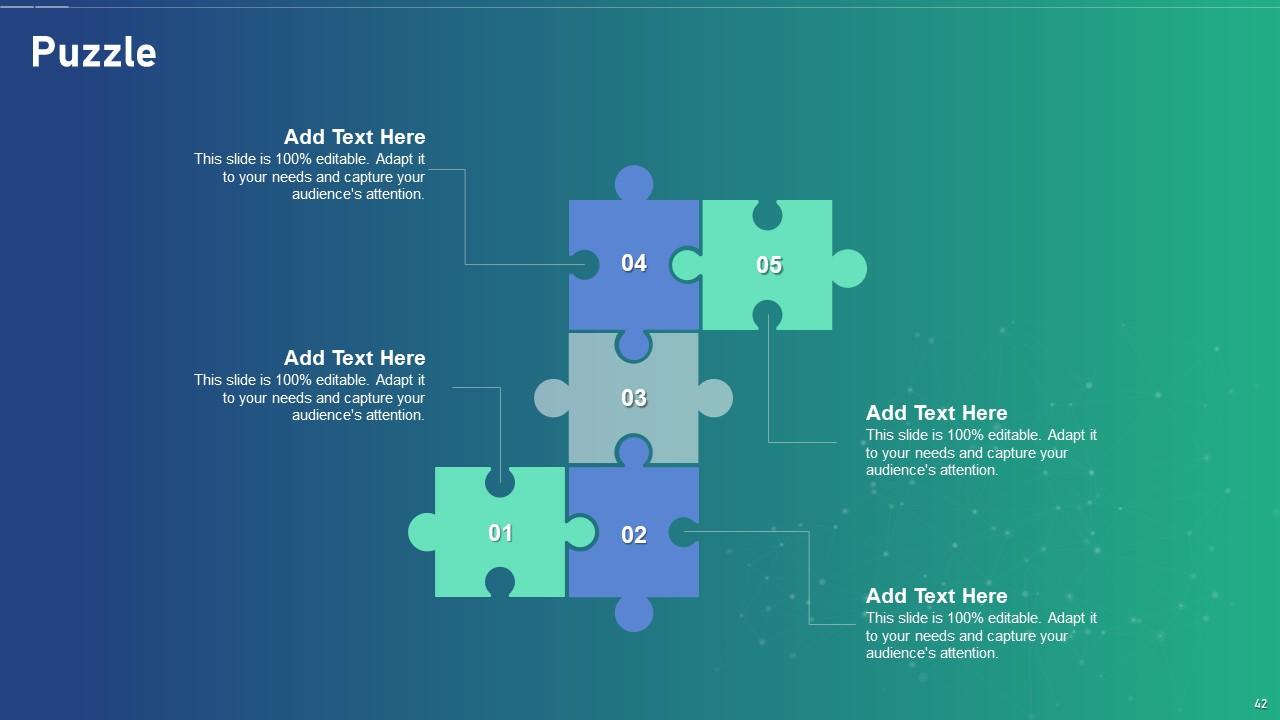
Folie 42 : Diese Folie enthält ein Puzzle mit zugehörigen Symbolen und Text.
Folie 43 : Diese Folie zeigt Haftnotizen. Posten Sie hier Ihre wichtigen Notizen.
Folie 44 : Diese Folie zeigt ein Venn-Diagramm mit Textfeldern.
Folie 45 : Dies ist unsere Zielfolie. Geben Sie hier Ihre Ziele an.
Folie 46 : Dies ist eine Dankeschön-Folie mit Adresse, Kontaktnummern und E-Mail-Adresse.
AI Transformation Playbook Powerpoint-Präsentationsfolien mit allen 51 Folien:
Verwenden Sie unsere Powerpoint-Präsentationsfolien für das KI-Transformations-Playbook, um effektiv dabei zu helfen, wertvolle Zeit zu sparen. Sie sind gebrauchsfertig und passen in jede Präsentationsstruktur.
-
Excellent design and quick turnaround.
-
Excellent template with unique design.
