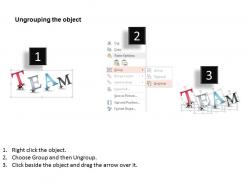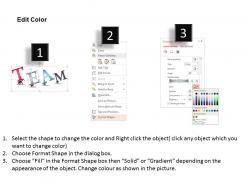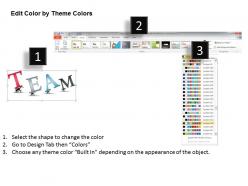
Al team text on ant back for teamwork powerpoint template

Rating:
80%
Al team text on ant back for teamwork powerpoint template
Slide 1 of 5
Favourites Favourites

Try Before you Buy Download Free Sample Product

Audience Impress Your
Audience
Editable 100%
Editable
Time Save Hours
of Time
The Biggest Sale is ending soon in
0
0
:
0
0
:
0
0
Rating:
80%
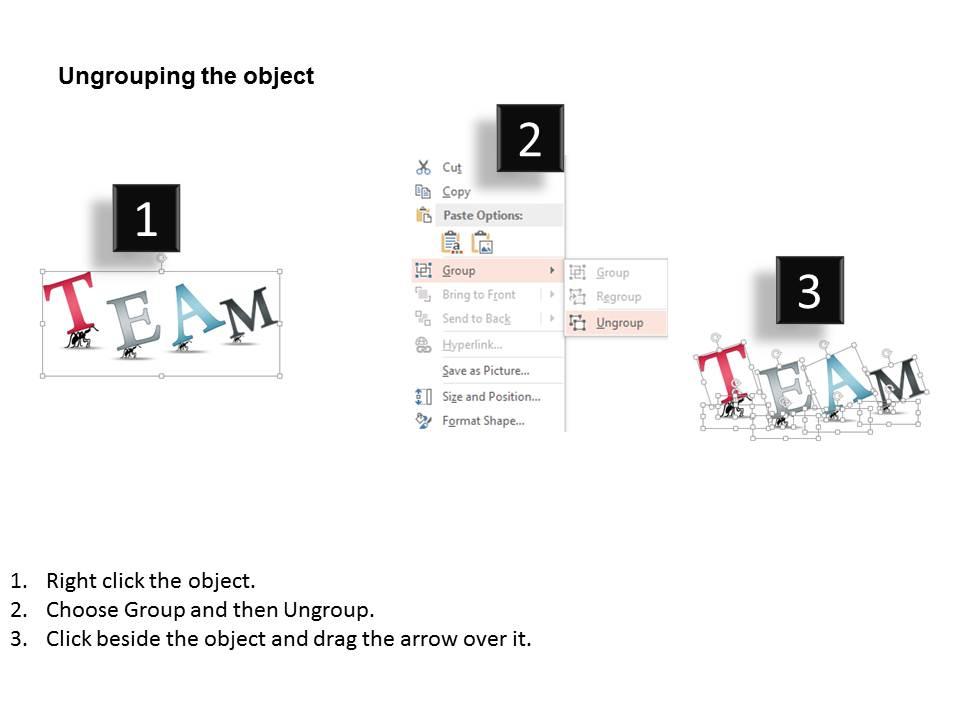
The slides are framed in a high-resolution quality to cater you the best picture quality. Do the limitless customization of placement, colours and size to give it a desired outlook. Download the slide in multiple file formats like JPEG and PDF and enjoy its smooth run in Google Slides. Make use of complete guide offered, to introduce the personalisation in its frame.

People who downloaded this PowerPoint presentation also viewed the following :

FAQs for Al team text on ant back for

Effective teamwork characteristics include clear communication, defined roles and responsibilities, mutual trust, shared goals, and collaborative problem-solving. These elements streamline project execution by reducing conflicts, accelerating decision-making, and leveraging diverse skills, with organizations across industries finding that strong teamwork ultimately delivers improved productivity and enhanced competitive advantage.

Diverse skill sets enable innovative problem-solving by combining different perspectives, technical expertise, creative approaches, and analytical methods within collaborative frameworks. Teams with varied backgrounds—spanning engineering, design, marketing, and finance—can tackle complex challenges from multiple angles simultaneously, identifying unique solutions that homogeneous groups might overlook, ultimately delivering breakthrough innovations and competitive advantages.

Team dynamics significantly influence project productivity through communication effectiveness, role clarity, conflict resolution approaches, collaborative decision-making processes, and mutual accountability systems. When teams establish clear workflows, leverage diverse skill sets, and maintain open feedback channels, they streamline task execution, minimize delays, and enhance quality outcomes, ultimately delivering projects faster while reducing resource waste and improving stakeholder satisfaction.

Communication serves as the foundation of collaborative teamwork by enabling clear goal alignment, transparent information sharing, active listening, and constructive feedback exchanges. Through regular check-ins and open dialogue channels, teams streamline decision-making processes, minimize misunderstandings, and enhance problem-solving capabilities, ultimately delivering improved project outcomes and stronger workplace relationships across diverse organizational settings.

Technology improves remote teamwork through collaboration platforms, video conferencing, project management tools, real-time document sharing, and communication apps. These solutions streamline coordination by enabling instant messaging, virtual meetings, and centralized task tracking, with many distributed teams finding that integrated platforms enhance productivity, reduce miscommunication, and ultimately deliver stronger project outcomes.

Leaders can implement conflict resolution strategies including active listening sessions, mediation techniques, establishing clear communication protocols, creating neutral discussion spaces, and focusing on shared goals rather than individual positions. These approaches streamline team dynamics by addressing root causes early, encouraging collaborative problem-solving, and maintaining productivity, with many organizations finding that proactive conflict management ultimately delivers stronger team cohesion and improved performance outcomes.

Trust among team members significantly enhances collaboration by encouraging open communication, promoting knowledge sharing, and reducing interpersonal conflicts. In high-performing organizations, teams with strong trust foundations demonstrate faster decision-making processes, more effective problem-solving capabilities, and greater willingness to support colleagues during challenging projects, ultimately delivering improved productivity and stronger business outcomes.

Common barriers to effective teamwork include poor communication, conflicting personalities, unclear roles and responsibilities, lack of trust, and misaligned goals or priorities. These challenges can be overcome by establishing clear communication protocols, defining specific team member responsibilities, implementing regular feedback sessions, and creating structured team-building activities, with many organizations finding that consistent leadership guidance and transparent goal-setting ultimately deliver improved collaboration and enhanced project outcomes.

Regular feedback loops enhance team collaboration by creating transparent communication channels, identifying improvement opportunities early, and fostering accountability among members. Through structured check-ins and peer reviews, teams in organizations like consulting firms and healthcare systems streamline project coordination, minimize misunderstandings, and build trust, ultimately delivering higher performance and employee satisfaction.

Defining clear roles and responsibilities eliminates confusion, prevents task overlap, enhances accountability, and streamlines workflow coordination within teams. This strategic approach enables organizations to maximize productivity, reduce conflicts, and deliver projects more efficiently, with many companies finding that well-defined team structures ultimately accelerate decision-making and improve overall performance outcomes.

Teams can measure their effectiveness through goal completion rates, milestone tracking, quality metrics, stakeholder feedback, and team satisfaction surveys. Organizations across industries, from healthcare systems to financial services, increasingly use balanced scorecards combining quantitative outcomes with qualitative assessments, ultimately delivering enhanced accountability, improved performance transparency, and stronger competitive advantage through data-driven team optimization.

Methods to foster team cohesion include regular team-building activities, collaborative project assignments, cross-functional workshops, open communication channels, and shared goal-setting sessions. These approaches streamline relationship-building by encouraging mutual understanding, breaking down departmental silos, and creating shared experiences, with many organizations finding that strategic team cohesion ultimately delivers improved productivity and enhanced workplace satisfaction.

A team's culture significantly influences performance by establishing shared values, communication norms, collaboration standards, and accountability mechanisms that drive collective success. Positive cultures enhance productivity, reduce conflicts, and improve retention, with many organizations finding that teams with strong cultural alignment deliver faster project completion, higher innovation rates, and greater employee engagement, ultimately creating sustainable competitive advantages.

Recognition and rewards significantly enhance team motivation by fostering engagement, building confidence, improving retention, and creating positive workplace culture. These approaches drive team success by encouraging consistent high performance, strengthening collaboration, and aligning individual contributions with organizational goals, with many companies finding that strategic recognition programs ultimately deliver increased productivity, reduced turnover, and sustained competitive advantage.

Teams adapt to changing circumstances through flexible communication channels, cross-functional skill development, transparent information sharing, and establishing clear contingency protocols. During challenges, resilient teams leverage diverse perspectives for creative problem-solving, maintain regular check-ins to address concerns quickly, and focus on shared goals rather than individual setbacks, ultimately strengthening collaboration and delivering sustained performance.

Ratings and Reviews

80% of 100
Write a review
Most Relevant Reviews
  1. 80%

    by Darron Hunter

    Easy to edit slides with easy to understand instructions.
  2. 80%

    by Joseph Torres

    Great product with effective design. Helped a lot in our corporate presentations. Easy to edit and stunning visuals.

2 Item(s)

per page: