


Annual Brand Promotion Plan Branding CD V
Our Annual Brand Promotion Plan template serves as a comprehensive roadmap for marketers to effectively implement brand marketing strategies and drive business growth. It encompasses vital elements such as market statistics, comparative assessments, and an annual timeline for brand marketing, ensuring a well-structured approach. Additionally, this brand promotion presentation covers crucial aspects like market segmentation, products offered, financial goals, brand value forecast, and a SWOT analysis to define clear marketing objectives and scope. Moreover, our marketing mix deck provides insights into brand positioning, target audience segmentation, and a well-crafted brand positioning statement to effectively communicate the brands value proposition. The marketing mix, comprising product, place, price, and promotion strategies, is also showcased to enhance customer engagement and boost sales. Furthermore, the brand positioning template offers customer retention plans, sales techniques, and impactful marketing campaigns to ensure long-term customer loyalty. Lastly, the post-implementation impact of brand marketing and essential dashboards provide key metrics to measure marketing success. Download this customizable template now to create a powerful and effective annual brand promotion plan.
Our Annual Brand Promotion Plan template serves as a comprehensive roadmap for marketers to effectively implement brand mar..























-

- Google Slides is a new FREE Presentation software from Google.
- All our content is 100% compatible with Google Slides.
- Just download our designs, and upload them to Google Slides and they will work automatically.
- Amaze your audience with SlideTeam and Google Slides.
-

Want Changes to This PPT Slide? Check out our Presentation Design Services
-

- WideScreen Aspect ratio is becoming a very popular format. When you download this product, the downloaded ZIP will contain this product in both standard and widescreen format.
-

- Some older products that we have may only be in standard format, but they can easily be converted to widescreen.
- To do this, please open the SlideTeam product in Powerpoint, and go to
- Design ( On the top bar) -> Page Setup -> and select "On-screen Show (16:9)” in the drop down for "Slides Sized for".
- The slide or theme will change to widescreen, and all graphics will adjust automatically. You can similarly convert our content to any other desired screen aspect ratio.
Compatible With Google Slides

Get This In WideScreen
You must be logged in to download this presentation.


Do you want to remove this product from your favourites?
PowerPoint presentation slides
Deliver this complete deck to your team members and other collaborators. Encompassed with stylized slides presenting various concepts, this Annual Brand Promotion Plan Branding CD V is the best tool you can utilize. Personalize its content and graphics to make it unique and thought-provoking. All the thirty nine slides are editable and modifiable, so feel free to adjust them to your business setting. The font, color, and other components also come in an editable format making this PPT design the best choice for your next presentation. So, download now.

People who downloaded this PowerPoint presentation also viewed the following :
Content of this Powerpoint Presentation
Slide 1: This slide introduces Annual Brand Promotion Plan. Commence by stating Your Company Name.
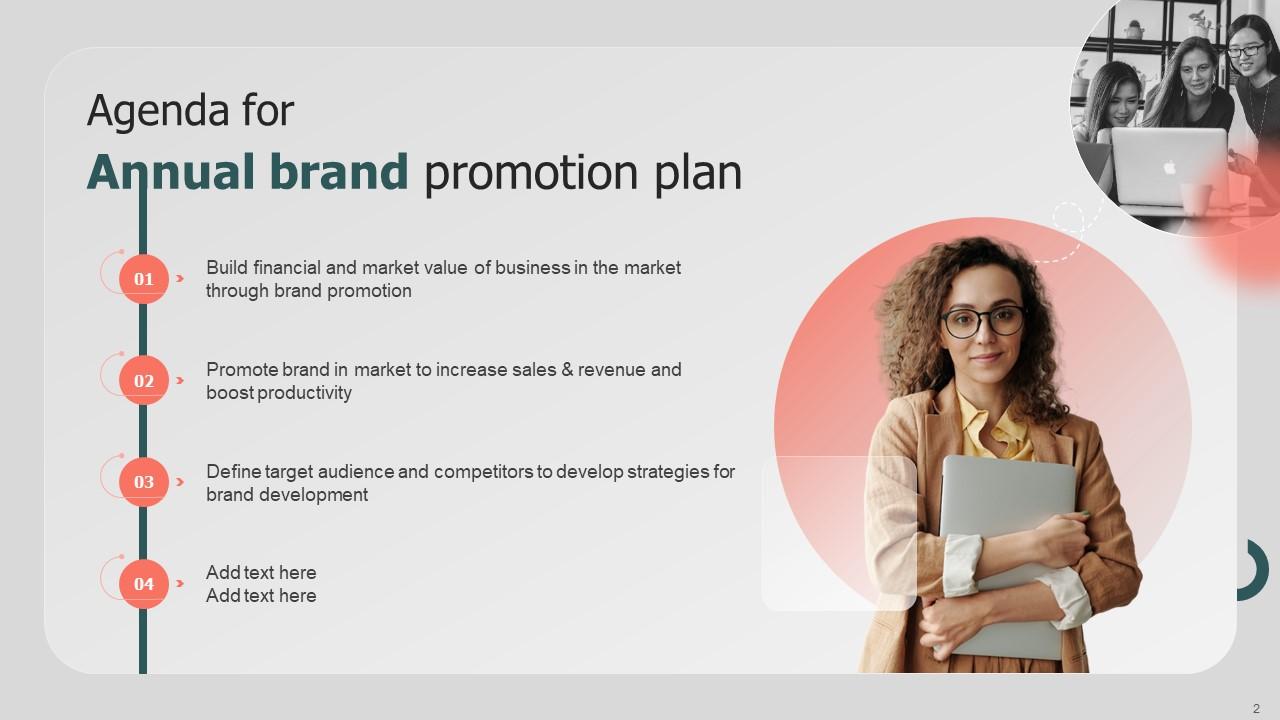
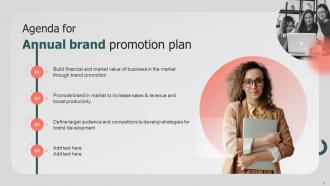
Slide 2: This slide depicts the Agenda of the presentation.
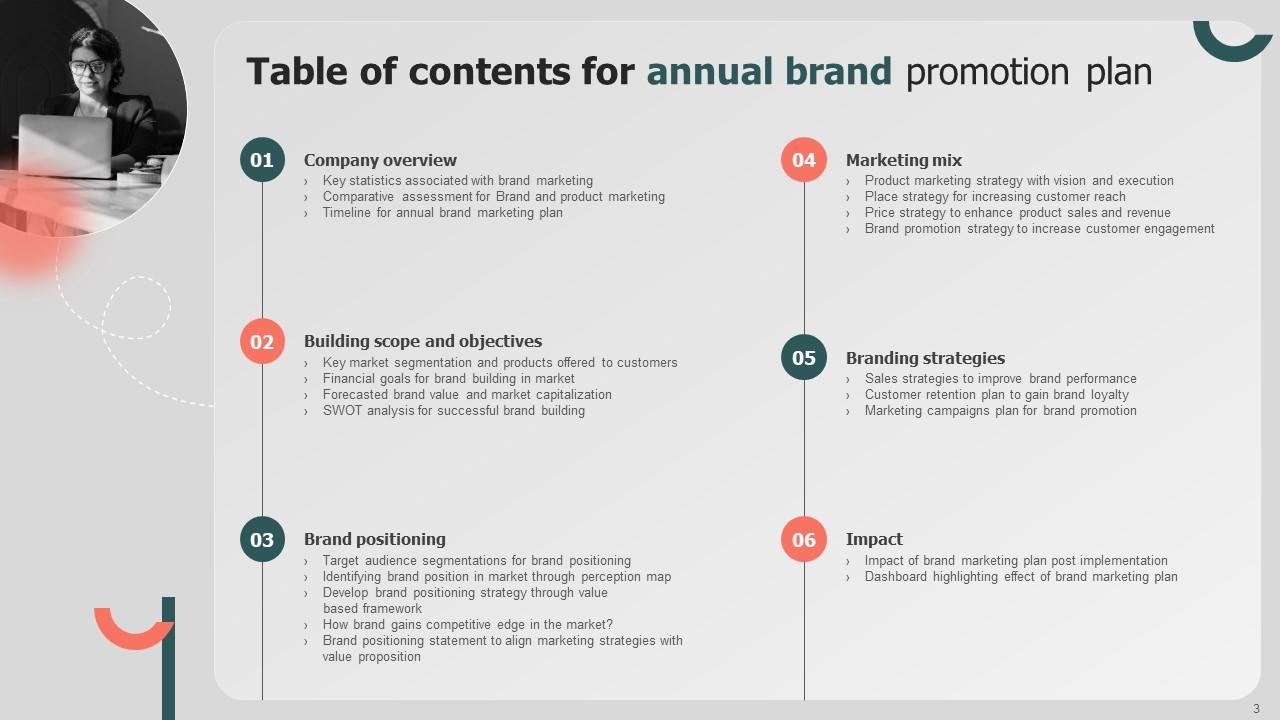
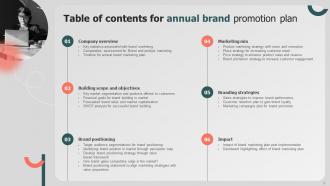
Slide 3: This slide incorporates the Table of contents.
Slide 4: This slide highlights the Title for the Topics to be discussed further.
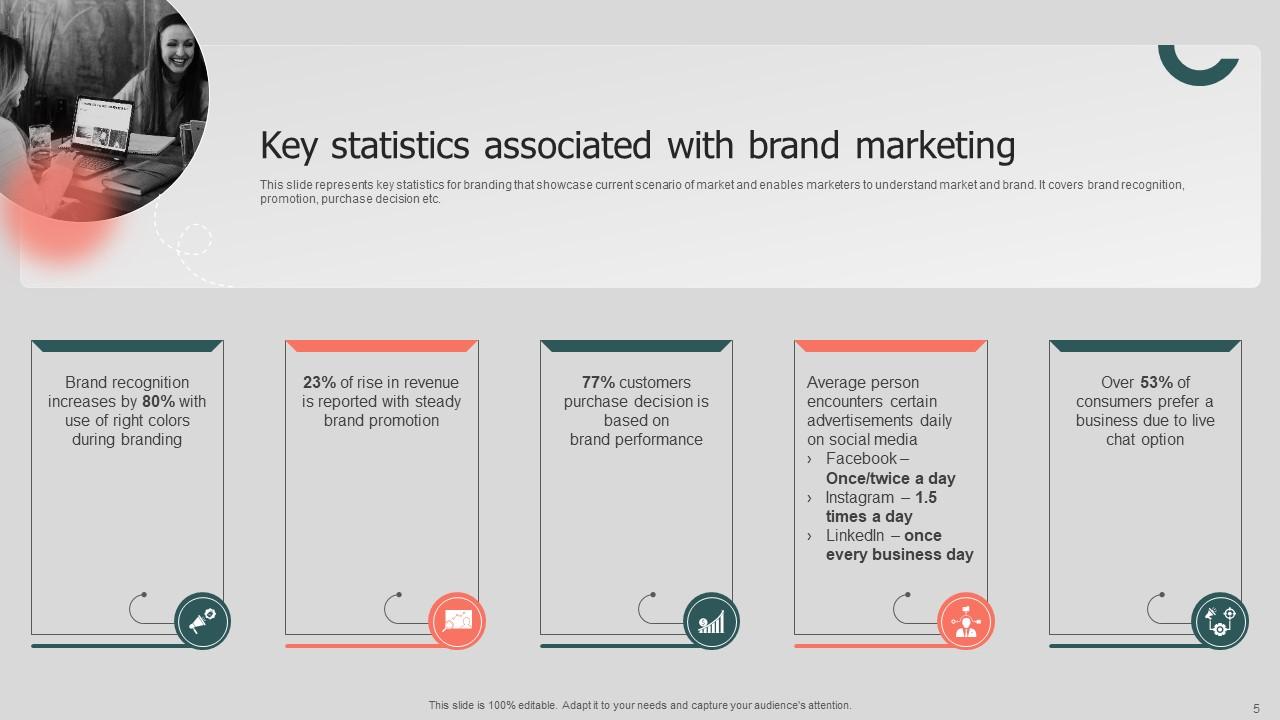
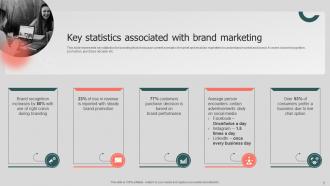
Slide 5: This slide represents key statistics for branding that showcase current scenario of market and enables marketers to understand market and brand.
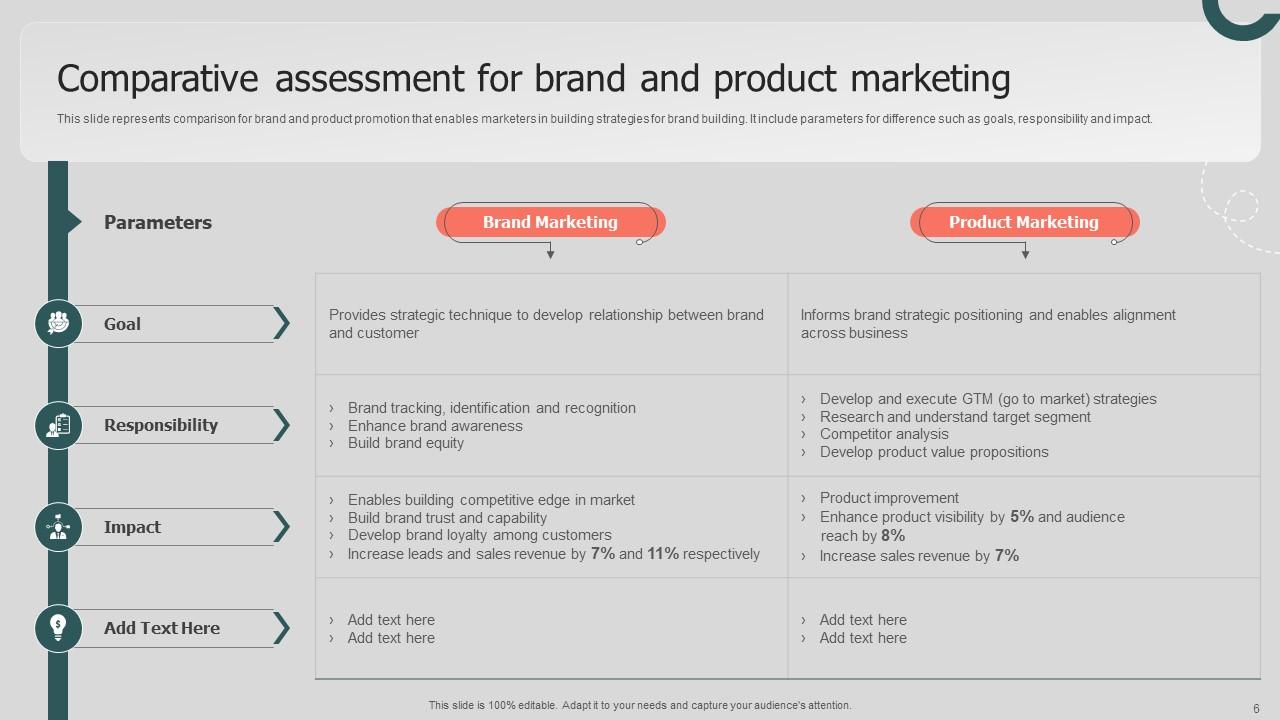
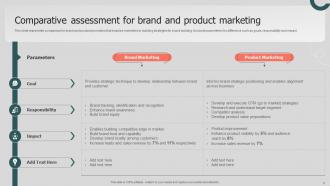
Slide 6: This slide showcases the comparison for brand and product promotion that enables marketers in building strategies for brand building.
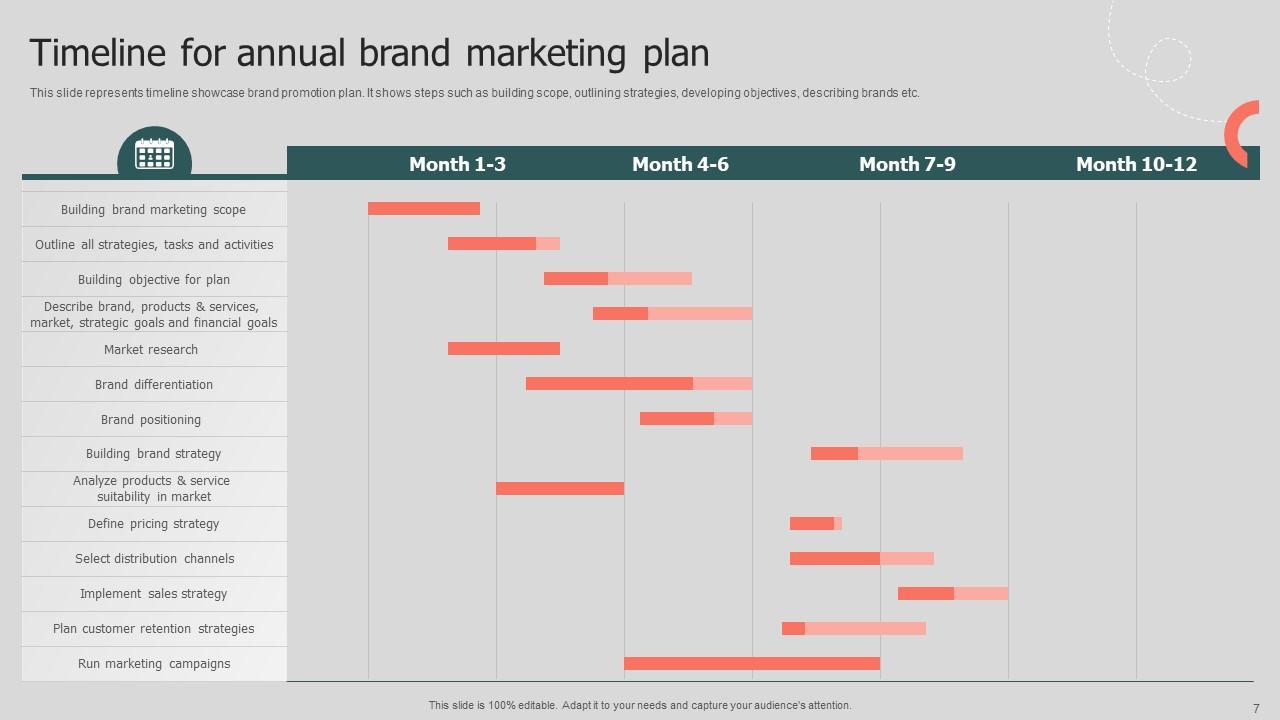
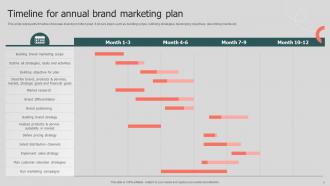
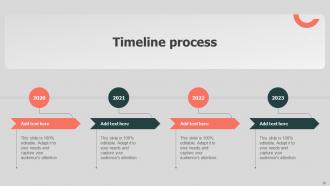
Slide 7: This slide displays the timeline showcase brand promotion plan.
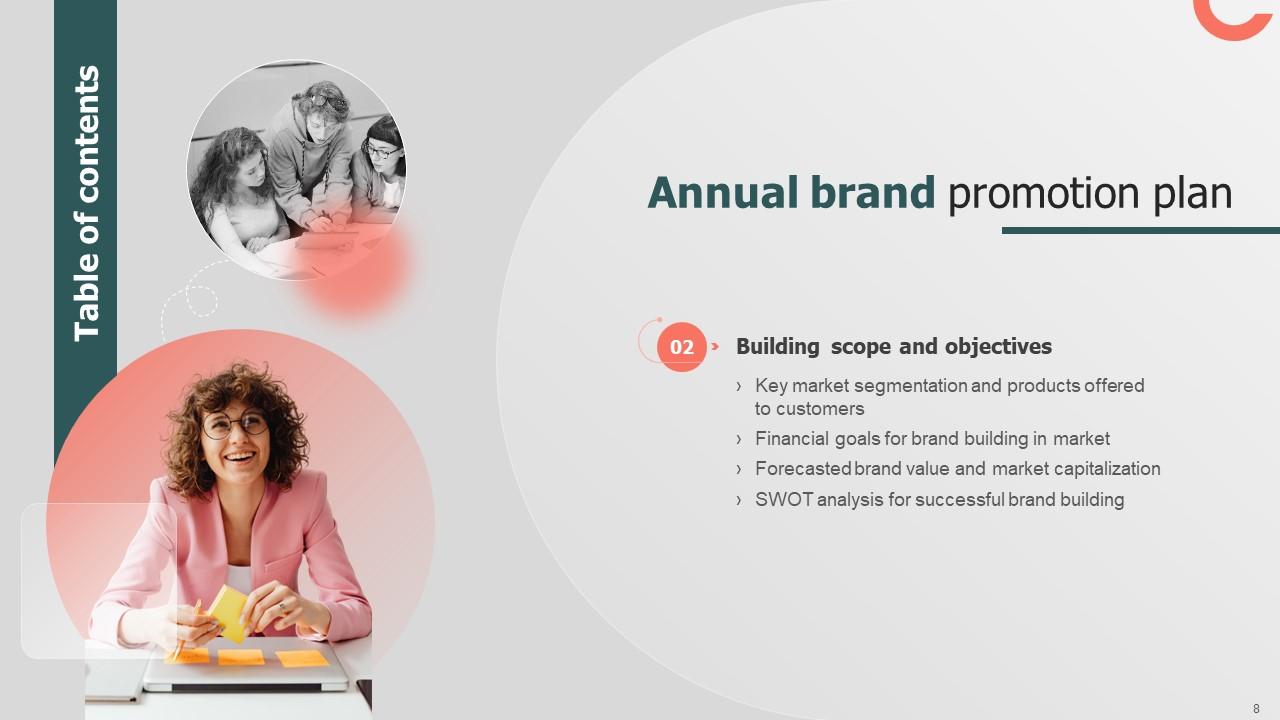
Slide 8: This slide mentions the Heading for the Components to be covered in the following template.
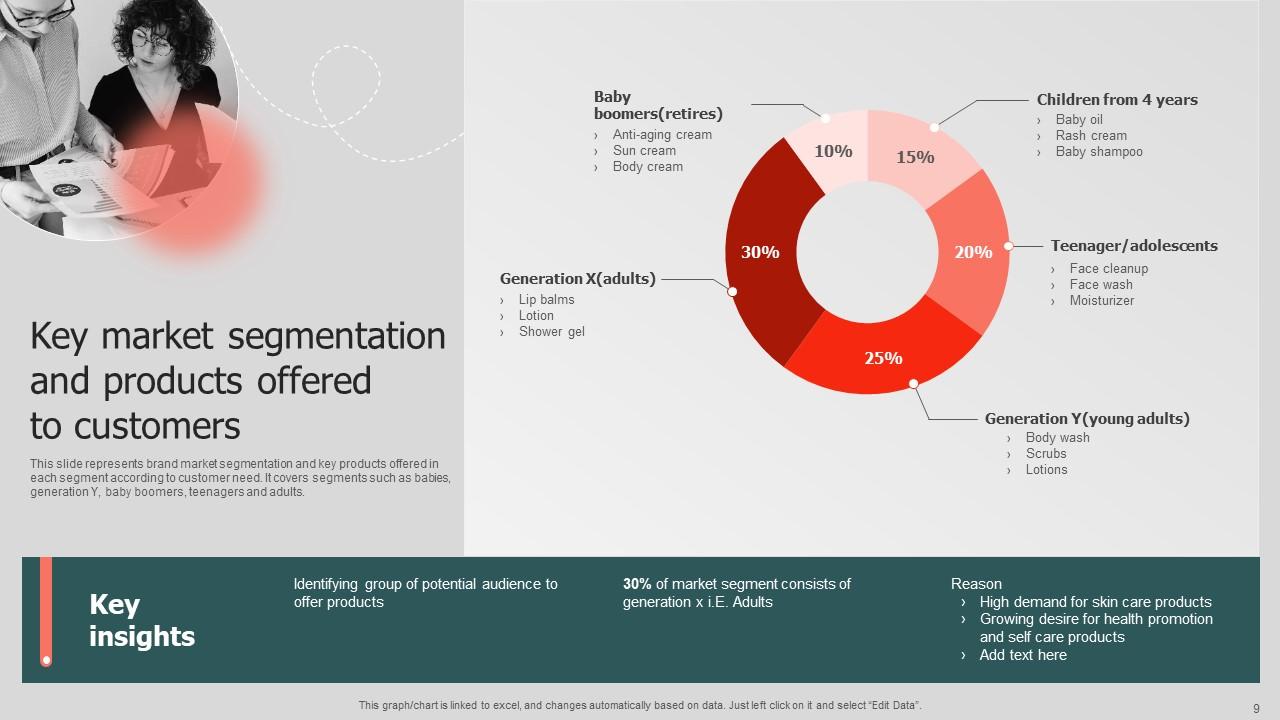
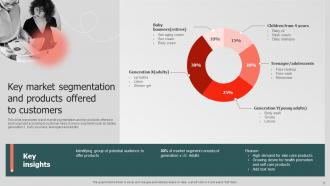
Slide 9: This slide deals with Identifying group of potential audience to offer products.
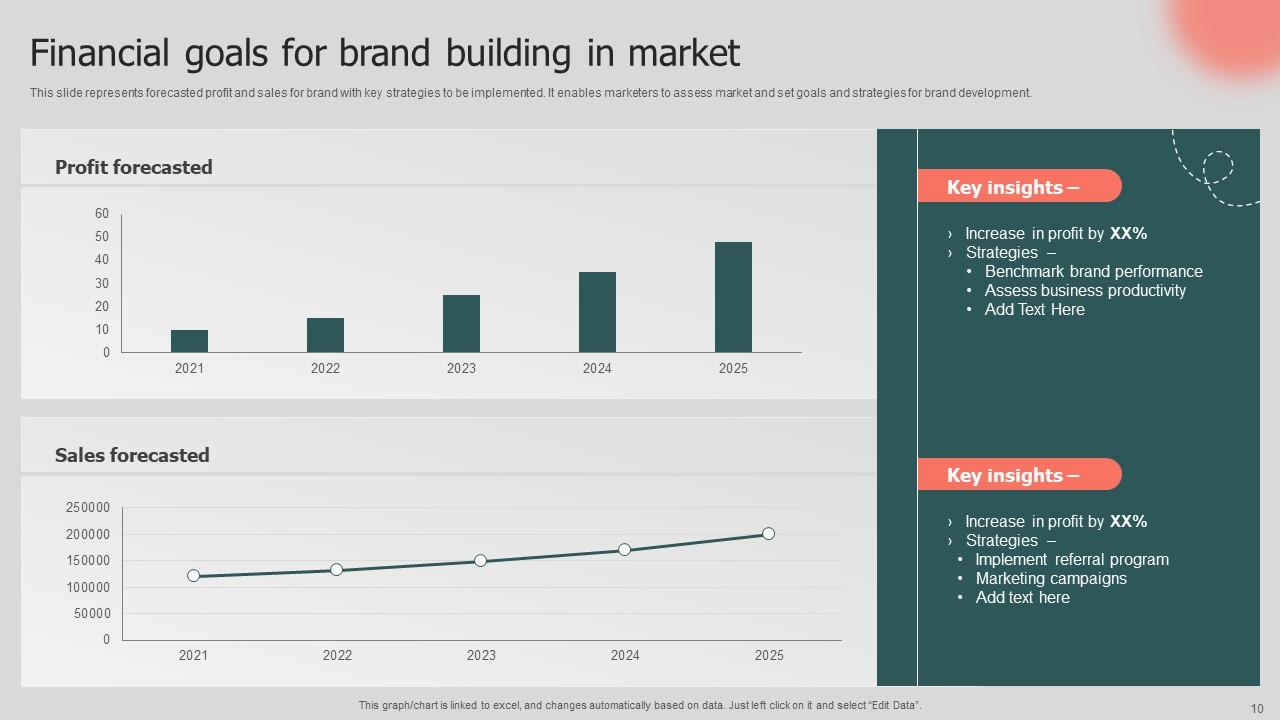
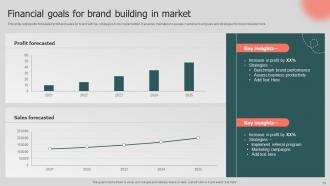
Slide 10: This slide focuses on the Financial goals for brand building in market.
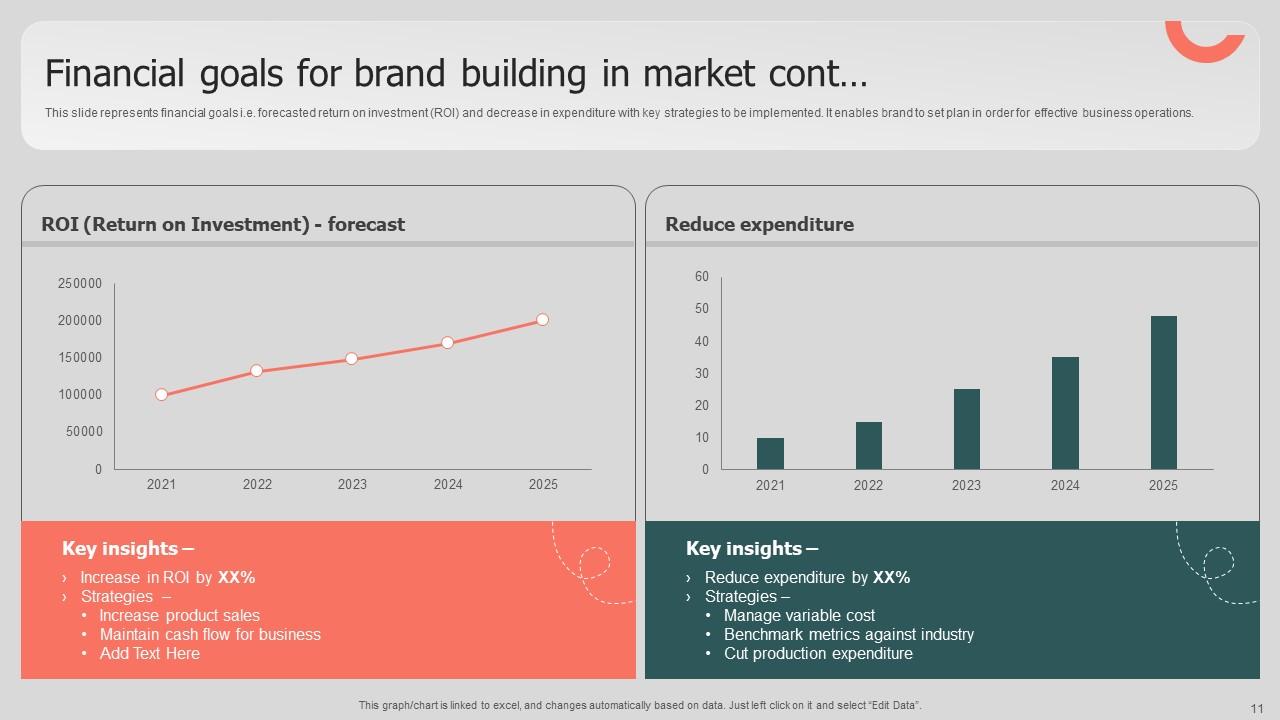
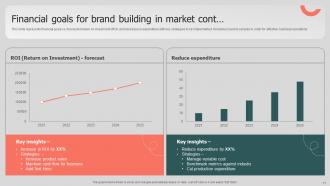
Slide 11: This is yet another slide continuing the Financial goals for brand building.
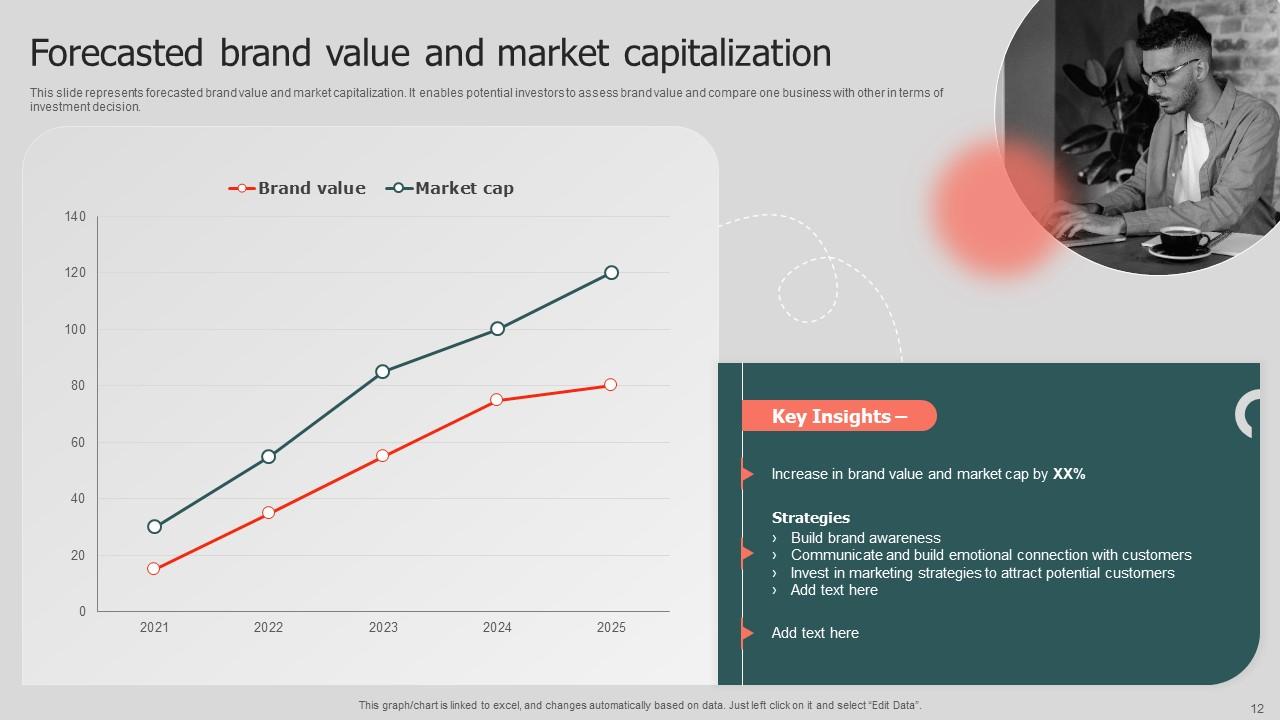
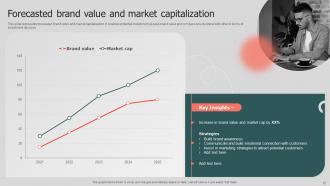
Slide 12: This slide elucidates the forecasted brand value and market capitalization.
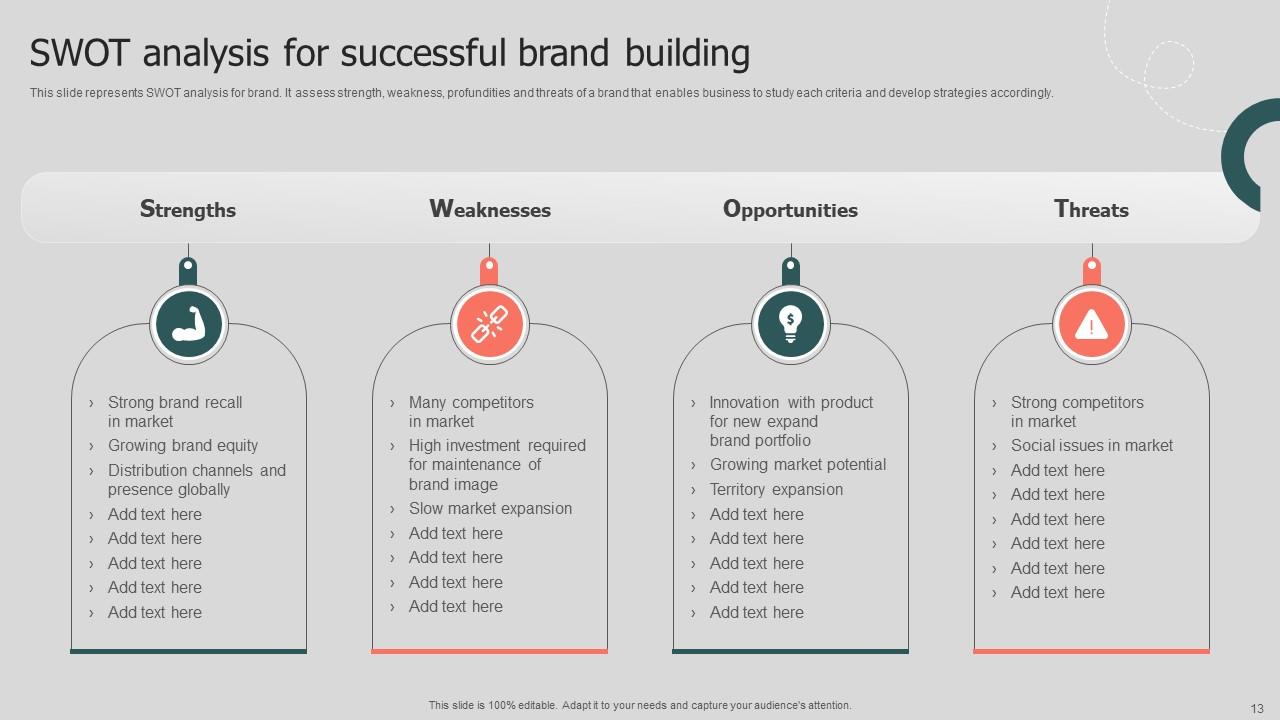
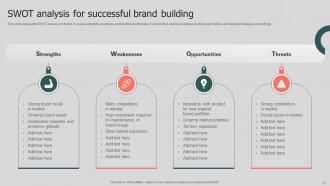
Slide 13: This slide reveals the SWOT analysis for successful brand building.
Slide 14: This slide depicts the Title for the Ideas to be discussed further.
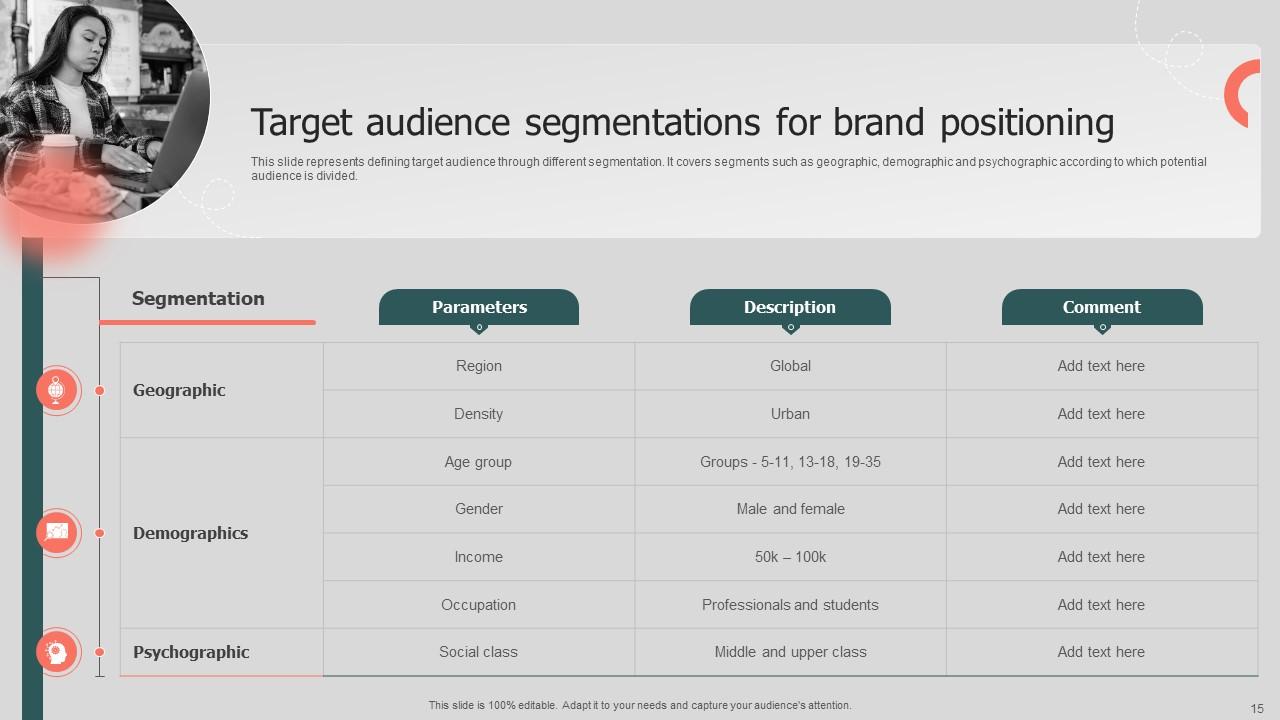
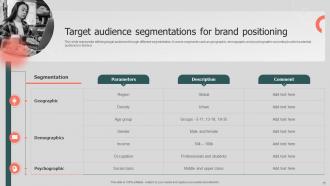
Slide 15: This slide represents defining target audience through different segmentation.
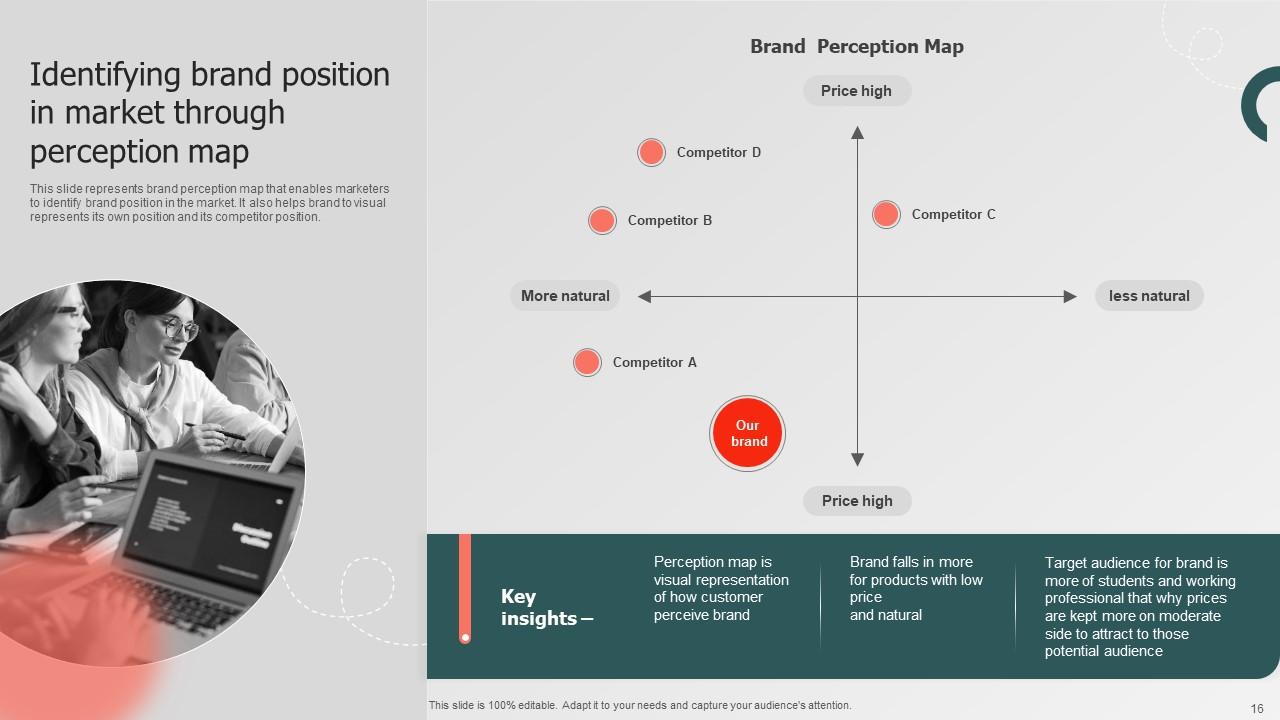
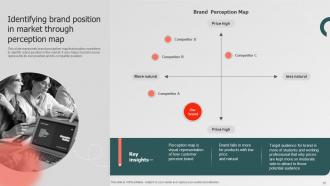
Slide 16: This slide focuses on Identifying brand position in market through perception map.
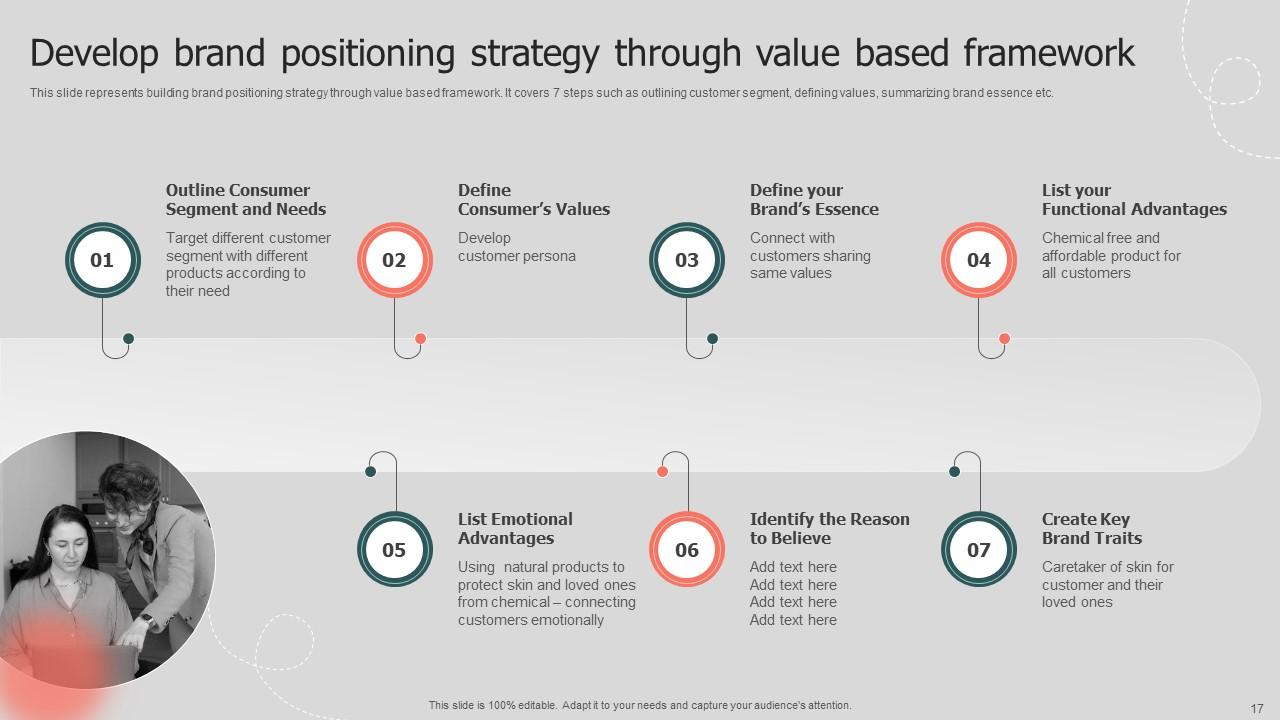
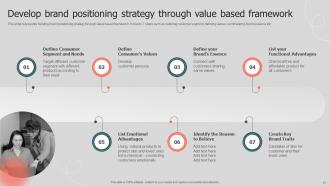
Slide 17: This slide incorporates building brand positioning strategy through value based framework.
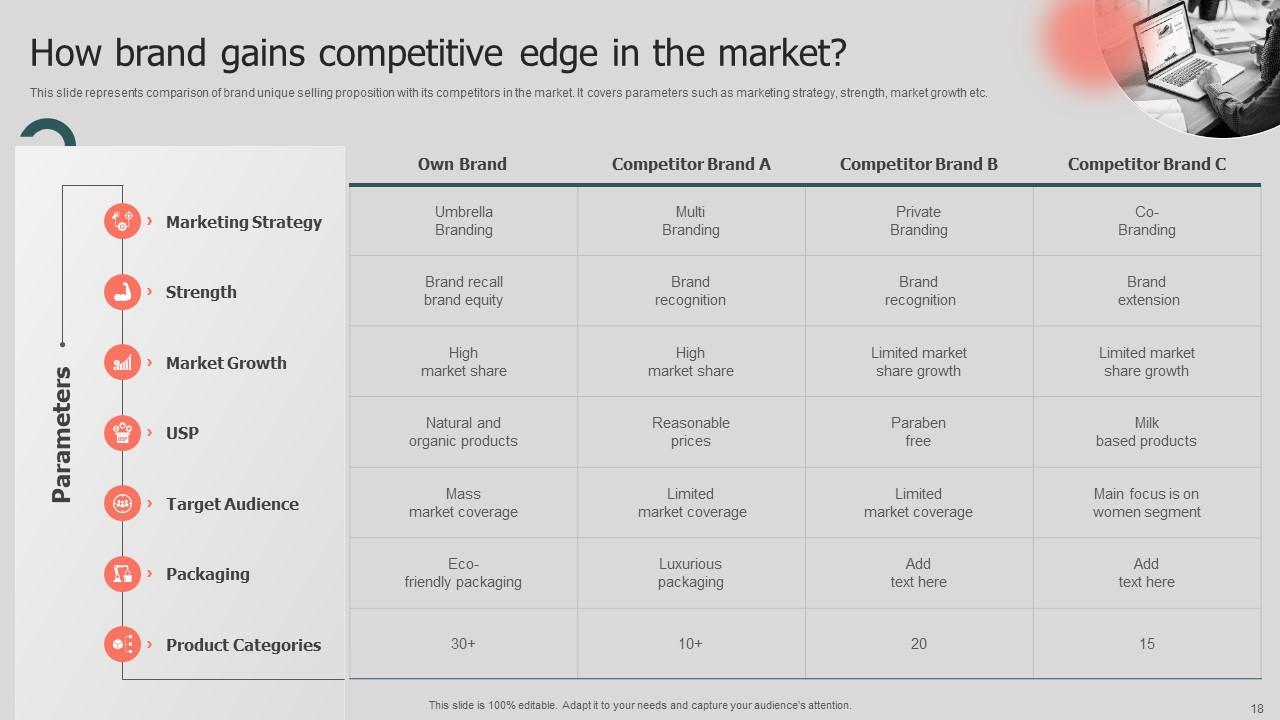
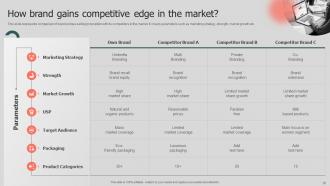
Slide 18: This slide showcases the comparison of brand unique selling proposition with its competitors in the market.
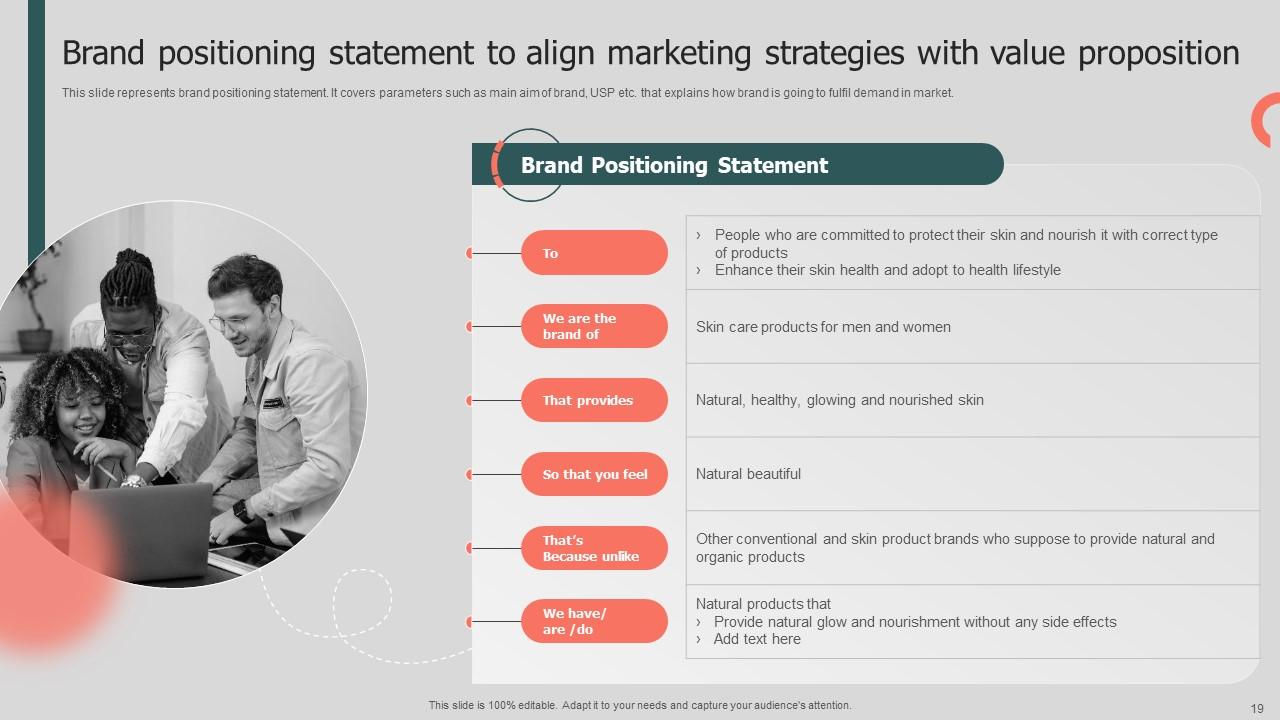
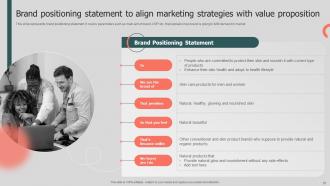
Slide 19: This slide displays the brand positioning statement.
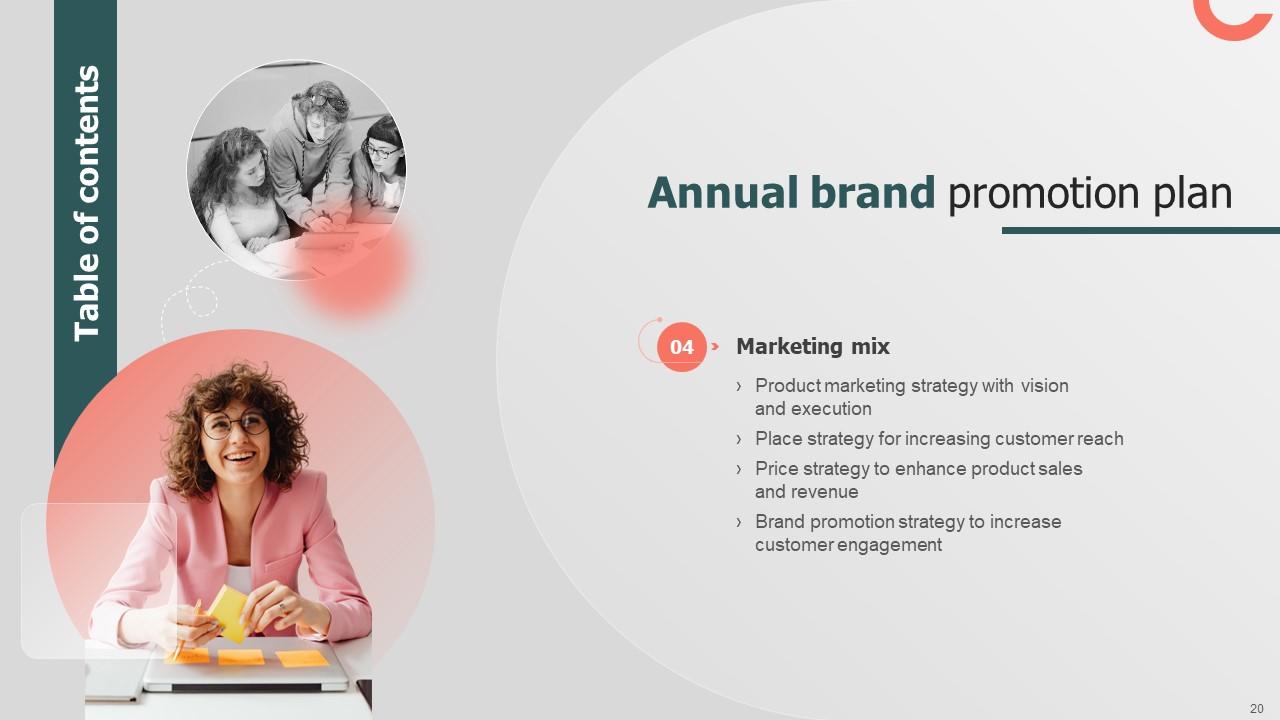
Slide 20: This slide indicates the Title for the Components to be discussed further.
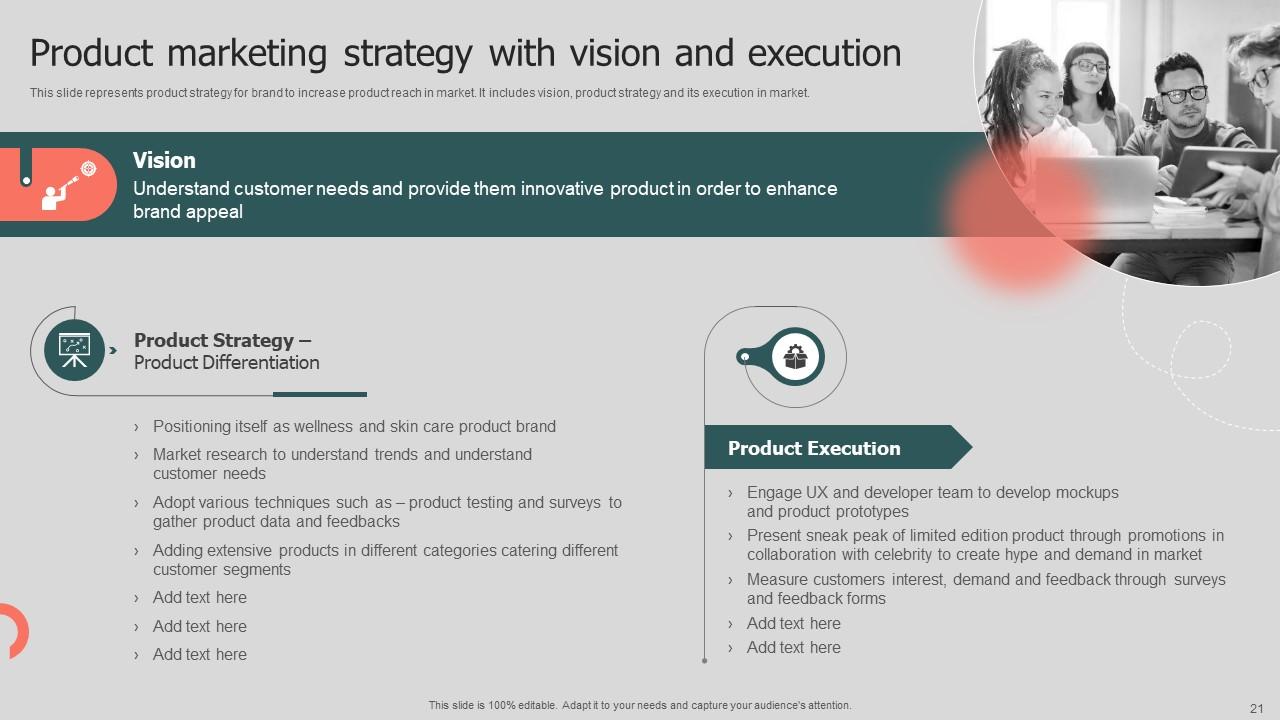
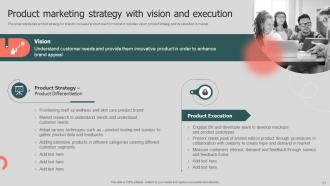
Slide 21: This slide reveals the product strategy for brand to increase product reach in market.
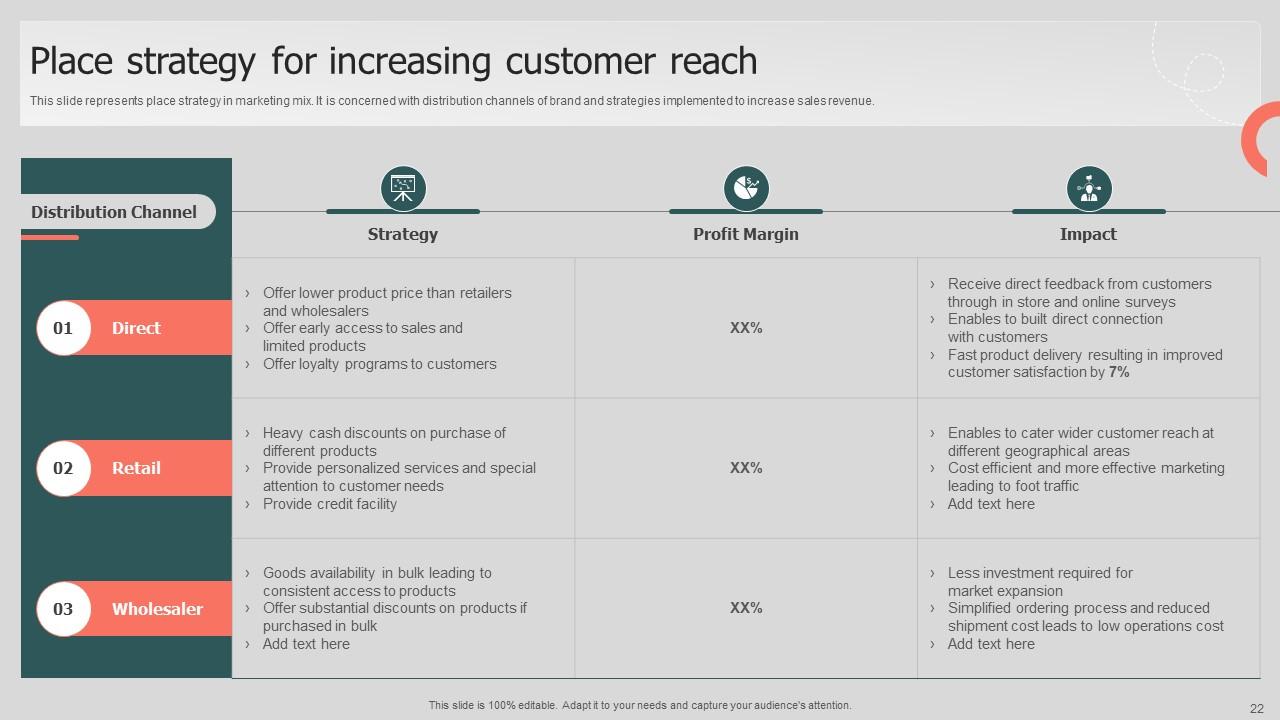
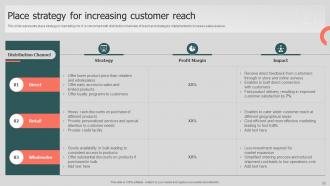
Slide 22: This slide highlights the place strategy in marketing mix.
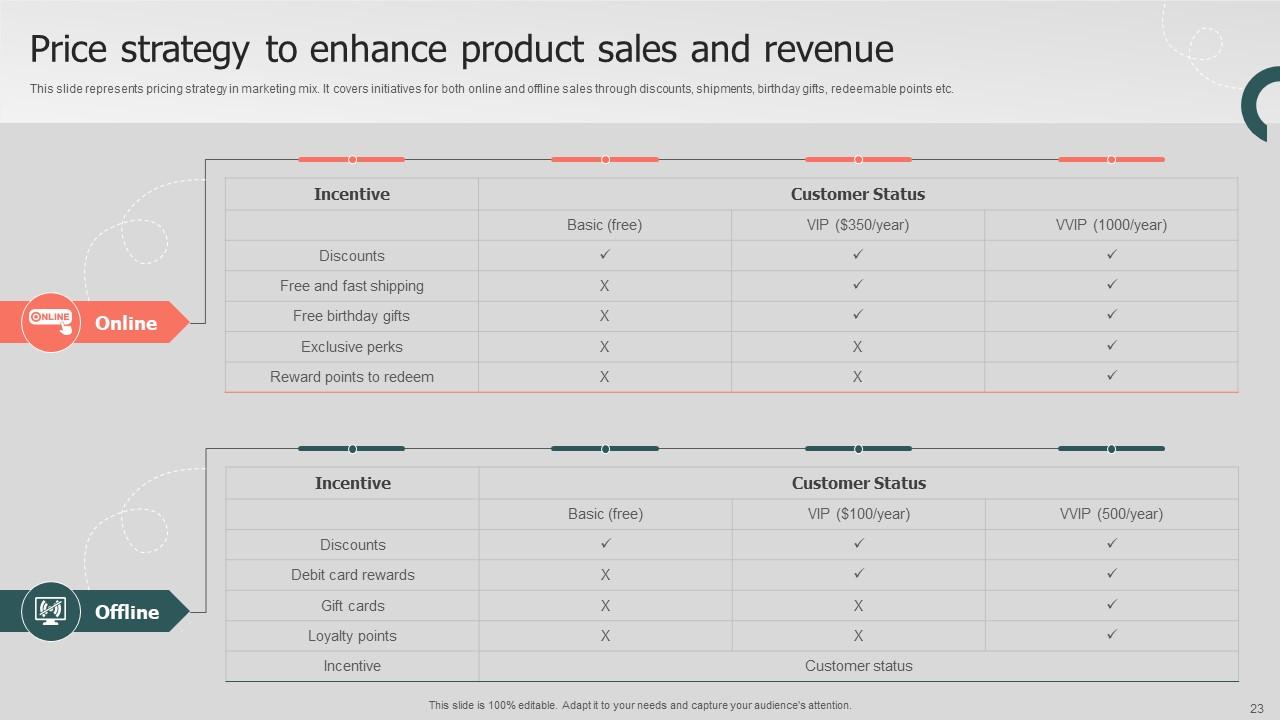
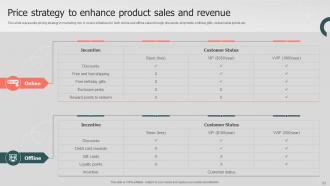
Slide 23: This slide represents pricing strategy in marketing mix.
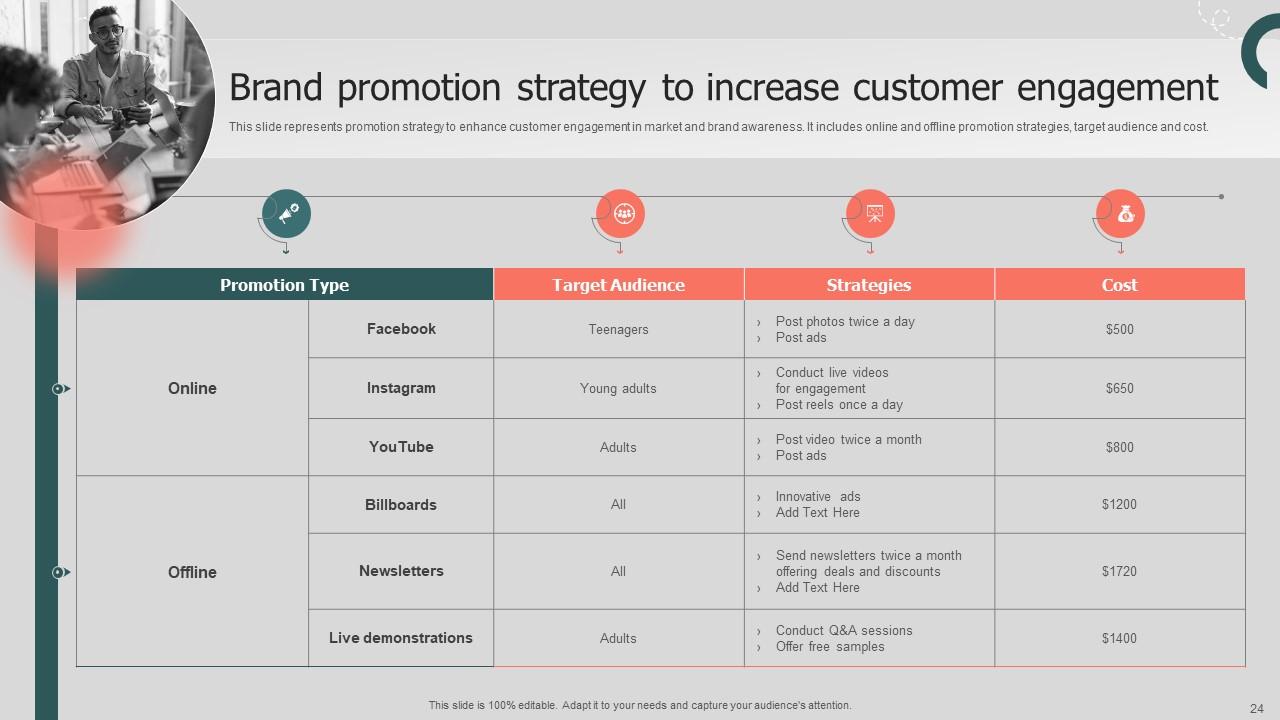
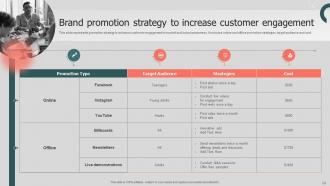
Slide 24: This slide talks about the Brand promotion strategy to increase customer engagement.
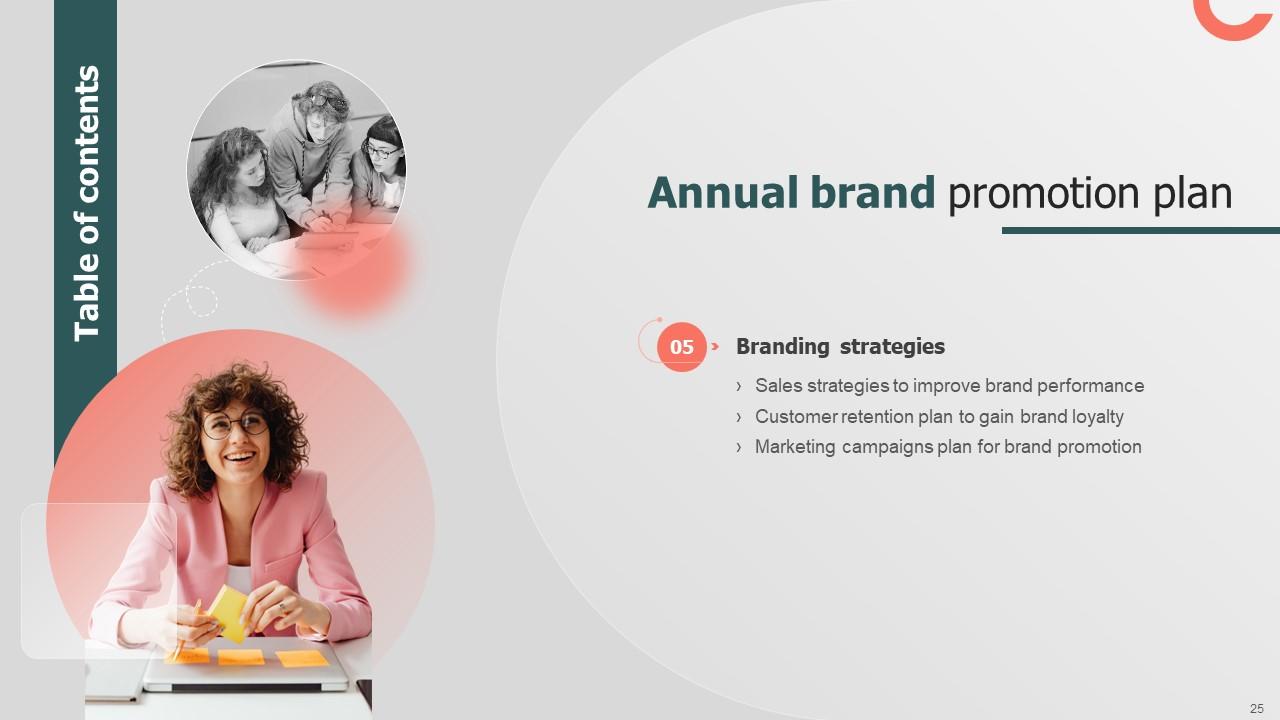
Slide 25: This slide incorporates the Heading for the Topics to be covered in the forth-coming template.
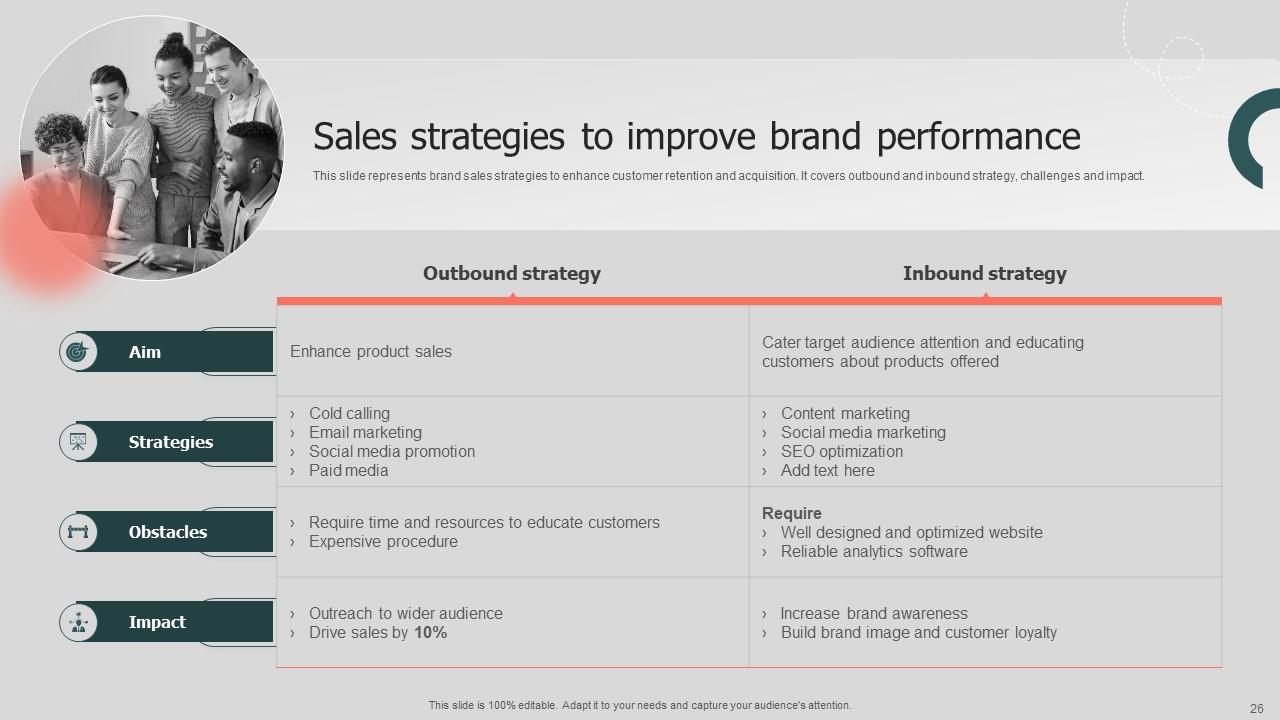
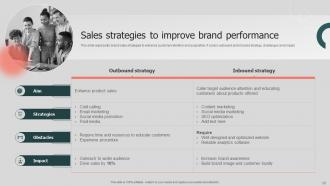
Slide 26: This slide states the brand sales strategies to enhance customer retention and acquisition.
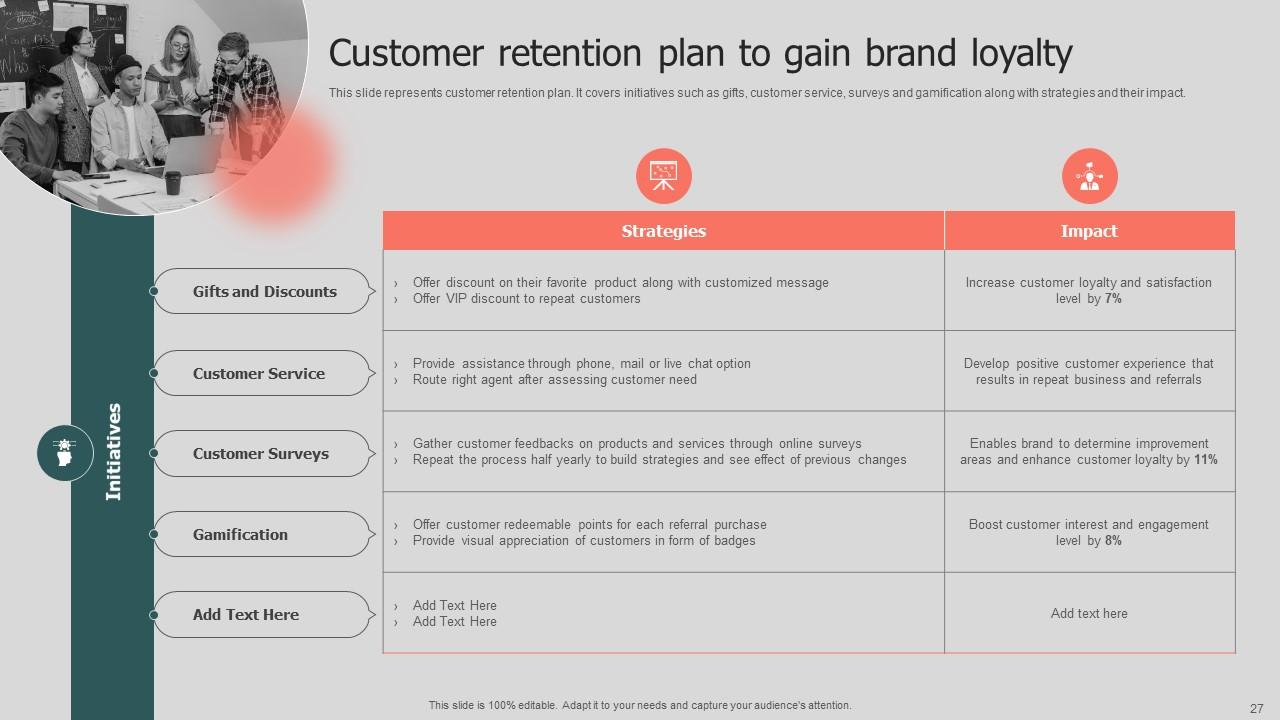
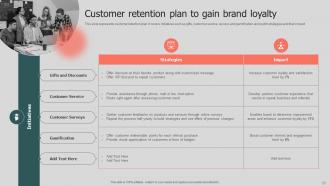
Slide 27: This slide covers the customer retention plan.
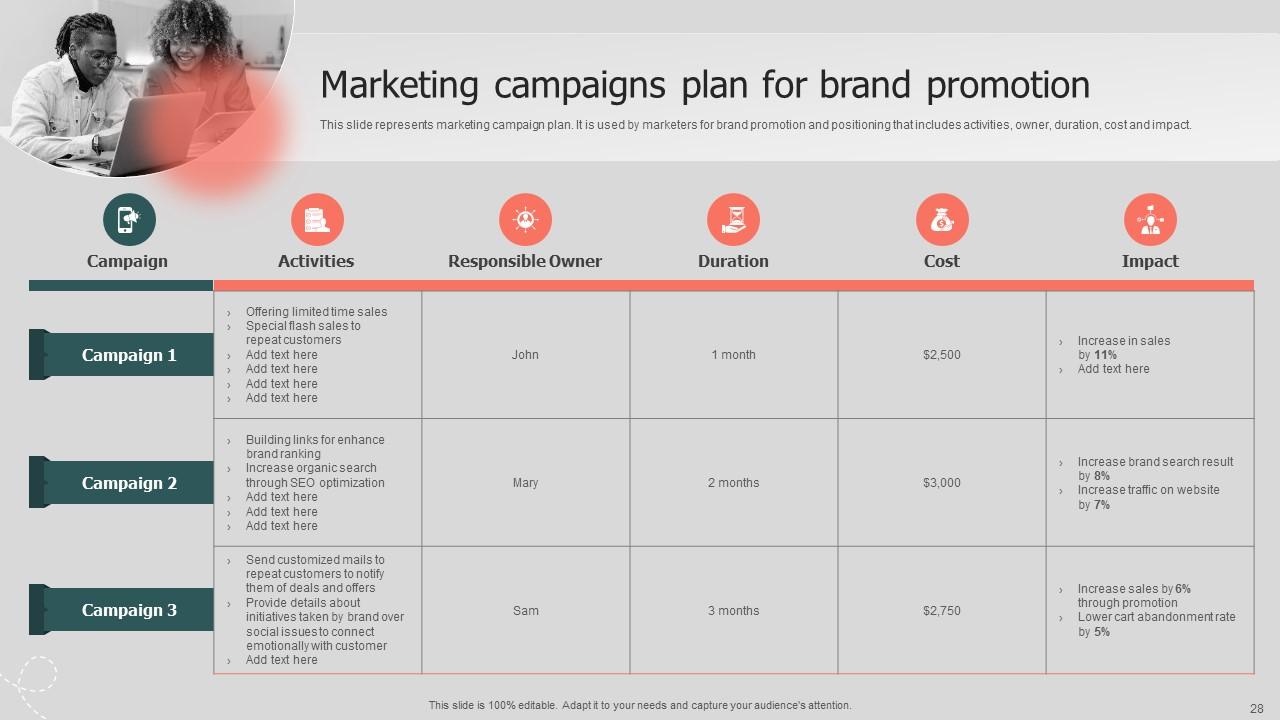
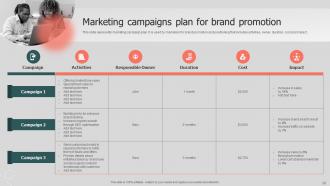
Slide 28: This slide represents marketing campaign plan.
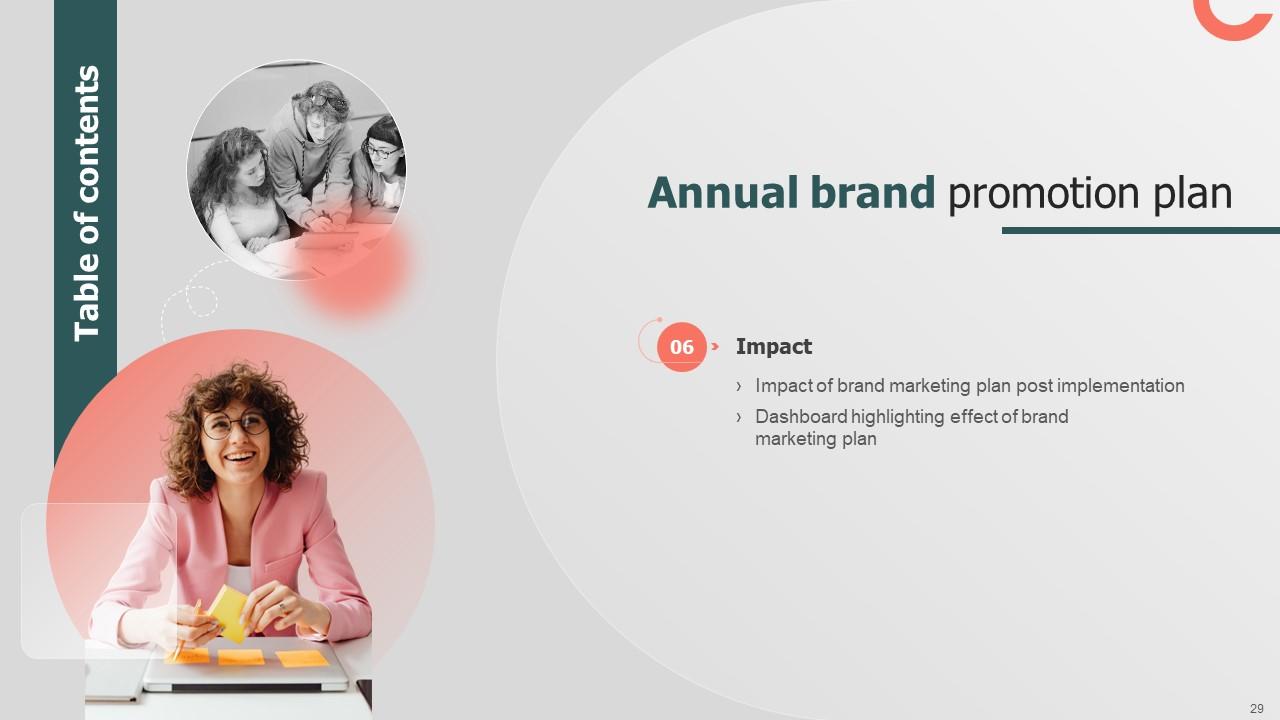
Slide 29: This slide mentions the Title for the Topics to be discussed in the next template.
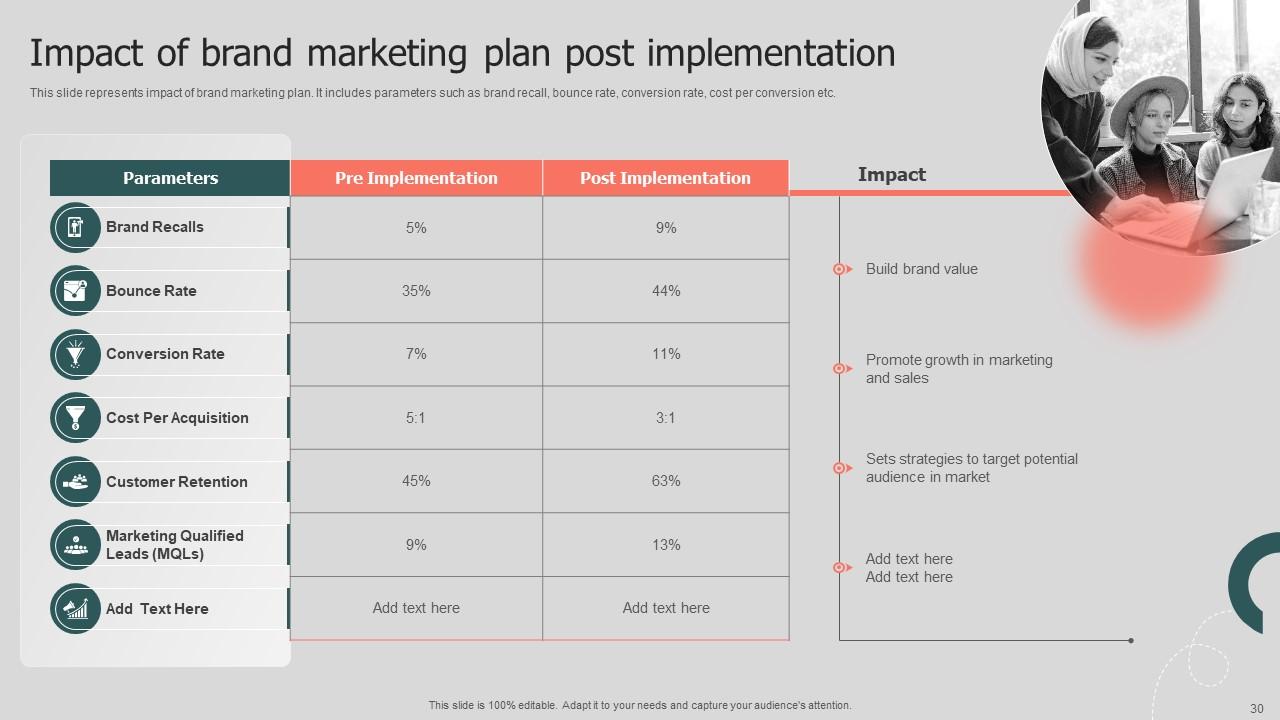
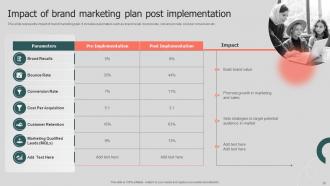
Slide 30: This slide highlights the Impact of brand marketing plan post implementation.
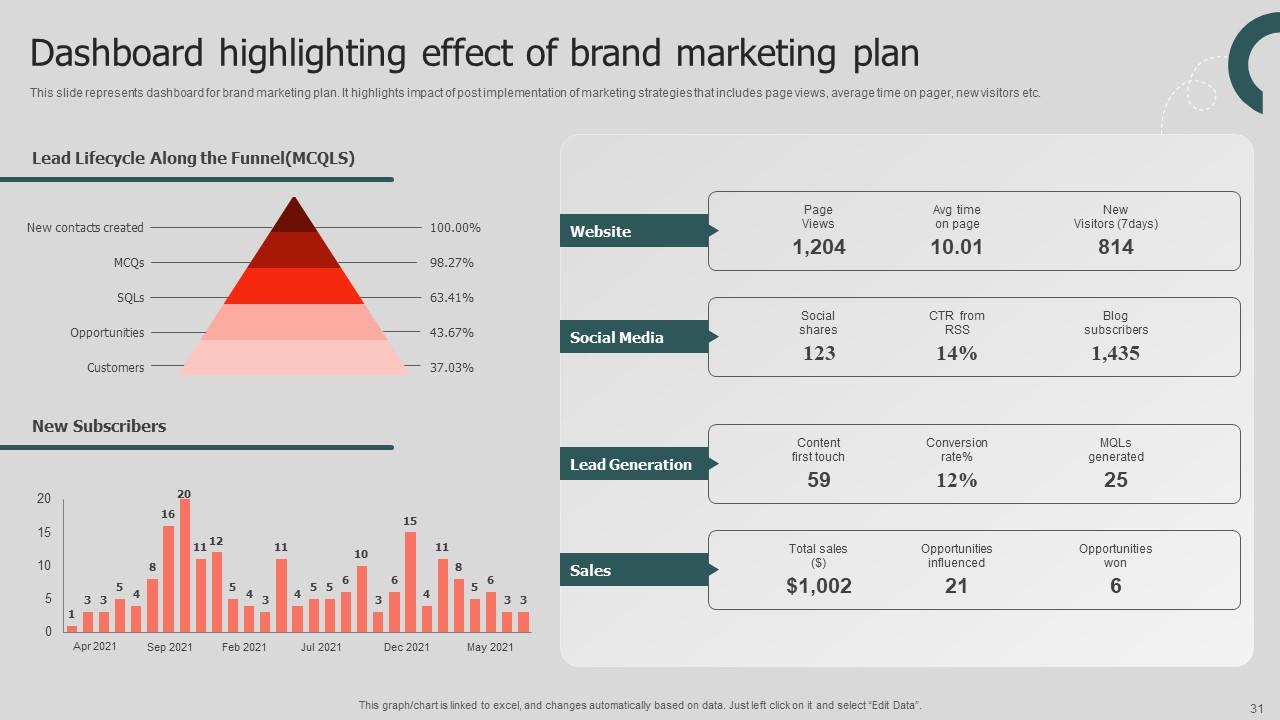
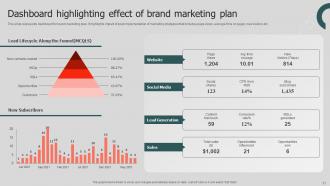
Slide 31: This slide shows the Dashboard highlighting effect of brand marketing plan.
Slide 32: This is the Icons slide containing all the Icons used in the plan.
Slide 33: This slide is used for depicting some Additional information.
Slide 34: This is Our target slide. State your organizational targets here.
Slide 35: This slide reveals the firm's mission, vision, and goal.
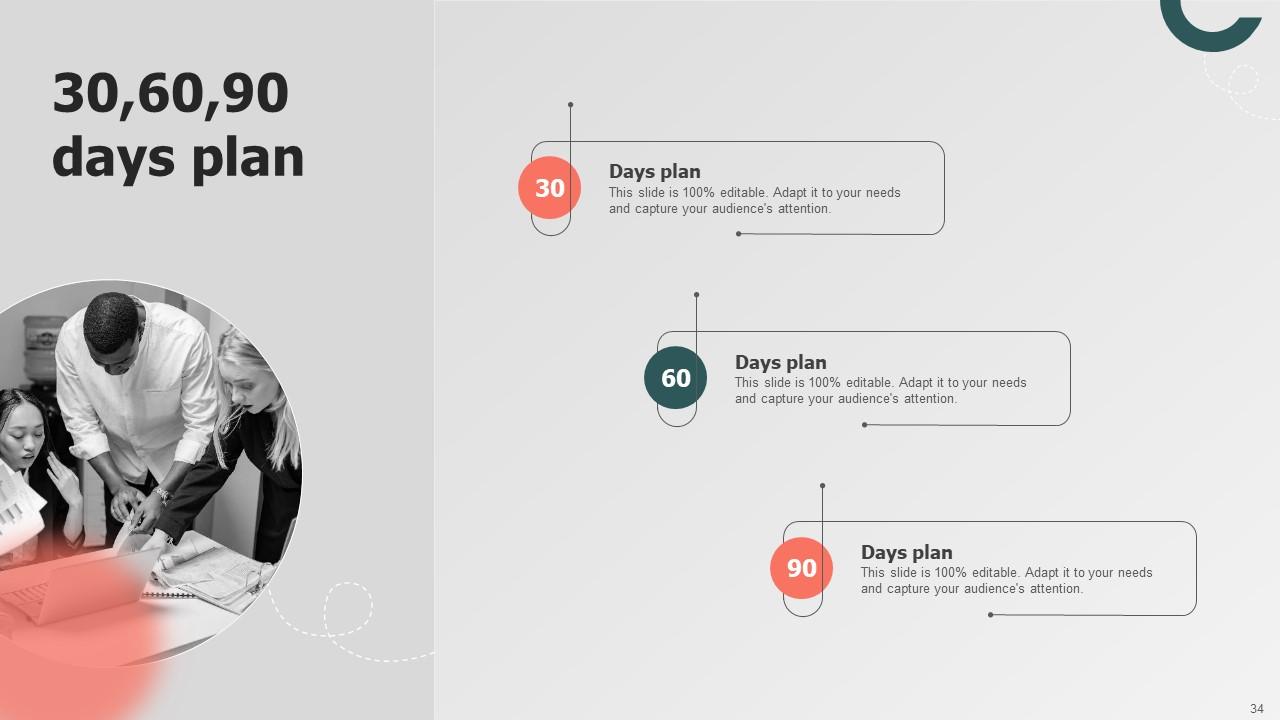
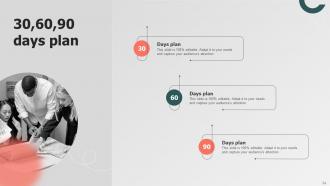
Slide 36: This is the 30 60 90 days plan slide for effective planning.
Slide 37: This is the About us slide for stating the information related to the company.
Slide 38: This slide displays the Clustered column.
Slide 39: This is Our team slide. List the information related to your team members here.
Slide 40: This is the Venn diagram slide.
Slide 41: This slide elucidates information related to the Financial topic.
Slide 42: This slide mentions the Location of the firm across the globe.
Slide 43: This is the Idea generation slide for encouraging fresh ideas.
Slide 44: This is the Puzzle slide with related imagery.
Slide 45: This slide incorporates the Comapny Timeline.
Slide 46: This is Our goal slide. State your firm's goals here.
Slide 47: This slide presents the Company Roadmap.
Slide 48: This is the Thank You slide for acknowledgement.
Annual Brand Promotion Plan Branding CD V with all 44 slides:
Use our Annual Brand Promotion Plan Branding CD V to effectively help you save your valuable time. They are readymade to fit into any presentation structure.
-
Best way of representation of the topic.
-
Best Representation of topics, really appreciable.
