Anthem Swot Analysis 2018
Try Before you Buy Download Free Sample Product
Audience
Editable
of Time
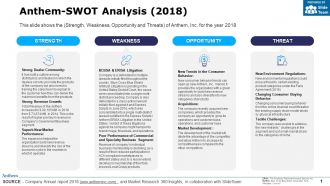
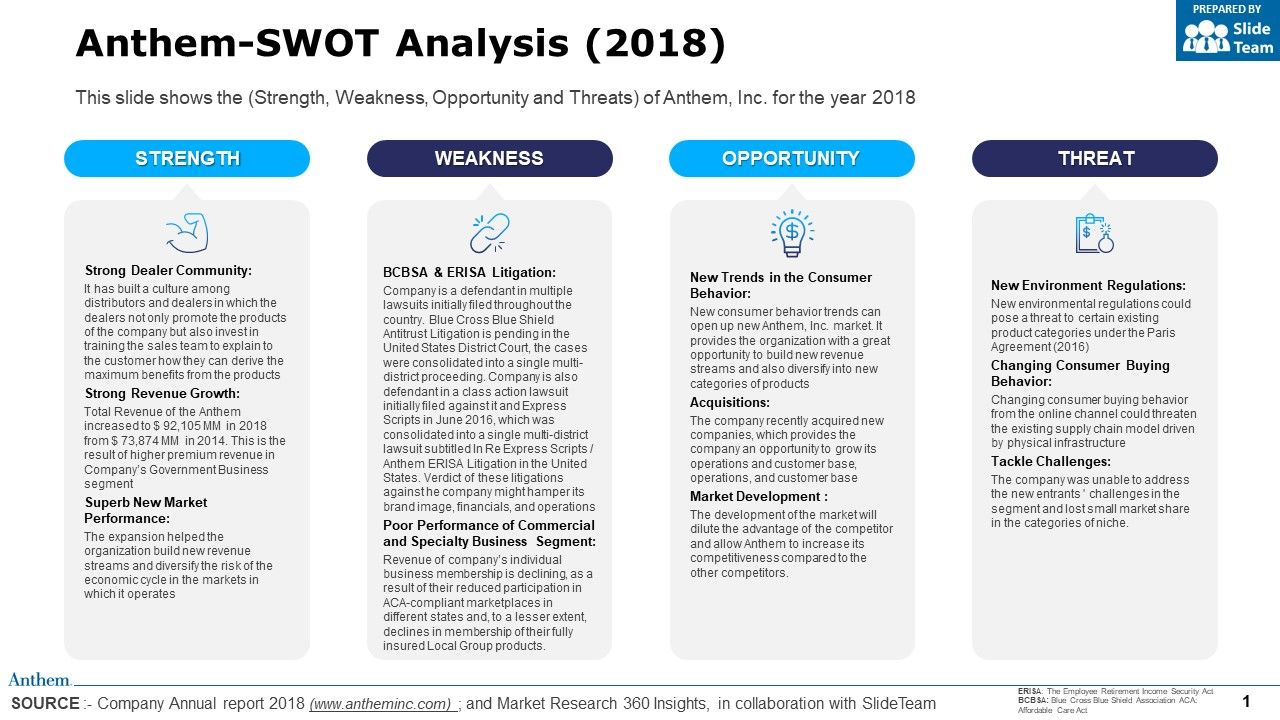
Cette diapositive montre la force, les faiblesses, les opportunités et les menaces d'Anthem Inc. pour l'année 2018.
Caractéristiques de ces diapositives de présentation PowerPoint :
Les informations présentées dans cette diapositive ont été recherchées par notre équipe d'analystes commerciaux professionnels . Cela fait partie de notre sélection de produits Profils d'entreprise, et vous aurez besoin d'un compte payant pour télécharger le rapport réel avec des données et des sources précises. Le rapport téléchargé sera dans Powerpoint et contiendra les diapositives modifiables réelles avec les données et les sources réelles pour chaque donnée. Cette diapositive montre la force, les faiblesses, les opportunités et les menaces d'Anthem Inc. pour l'année 2018. Téléchargez-la immédiatement et utilisez-la pour votre entreprise.
People who downloaded this PowerPoint presentation also viewed the following :
Anthem Swot Analysis 2018 avec les 2 diapositives :
Luttez contre les conditions inhumaines avec notre Anthem Swot Analysis 2018. Créez une infrastructure pour une existence saine.
FAQs for Anthem
So Anthem was basically dominating in 2018 - huge scale, operating in tons of states as one of the biggest health insurers around. Their business model covered everything from individual plans to Medicaid programs, which was smart diversification. Financially they were killing it with steady revenue growth and really tight cost management. What made them special though was that massive size gave them crazy negotiating power with hospitals and drug companies. Like, when you're that big, you can basically dictate better rates which obviously helped their bottom line. Claims processing was efficient too - they had their operations down to a science by then.
Anthem was crushing it back in 2018 - they're the second biggest health insurer here. Basically dominated 14 states and were benefiting from ACA expansion (even though politics around that was a total shitshow). Their size meant they could strong-arm providers on pricing and keep costs down per member. What really made them solid was diversifying into Medicaid and Medicare Advantage. Government contracts = steady money, which is huge in healthcare. Oh and if you're looking at competitors, definitely check their state coverage and how much government business they've got. That mix matters way more than people think.
So Anthem was basically hemorrhaging market share to competitors who had way better apps and customer service - classic healthcare company move, right? Their whole tech setup was ancient compared to everyone else. Medical costs were crushing their profits while other companies figured out how to control expenses. That 2015 data breach still had customers spooked three years later, which honestly makes sense. Oh and competitors were just more nimble overall. When you're looking at their strategy, definitely check how they tried fixing the tech problems and rebuilding trust afterward.
So Anthem crushed it with efficiency in 2018 - they cleaned up their medical management and tech stuff, cutting admin costs by 2% which is honestly huge for a company that size. Better margins meant they could actually reinvest in member services too. Their medical loss ratio kept improving all year (boring metric but tells you a lot). If you're looking at competitive stuff, this is where they really beat other insurers. Cost management was their thing that year. Oh and it definitely helped their overall positioning against the other big players.
Anthem was really betting big on Medicare Advantage in 2018 - makes sense with all those boomers hitting 65. They also wanted to grab more Medicaid contracts in states expanding under ACA. Digital health stuff was on their radar too, plus specialty pharmacy programs. The Medicare play seemed like their smartest move honestly, since it's just guaranteed growth with demographics. Oh, and they were eyeing clinical programs expansion. Check out their Q4 2018 earnings call if you want the real details - that's where they usually spill everything.
So basically, 2018 regulatory chaos totally freaked Anthem out. They couldn't rely on individual plans anymore with all the ACA instability happening. Smart move honestly - they pivoted hard into Medicaid and Medicare Advantage instead. Technology became their new obsession too, pouring money into data analytics to actually help members stay healthier. They also started hunting for partnerships with pharmacy companies and healthcare providers. It's pretty wild how much of their current strategy you can trace back to that one crazy year of regulatory uncertainty.
So 2018 was rough for Anthem - they got hit from everywhere. UnitedHealth and Aetna were going hard after their Medicare and individual market customers. Then Amazon started making noise about healthcare (which honestly freaked everyone out). Regional players were undercutting their prices too. The Amazon thing was probably more hype than substance at the time, but still. You can see how all this pressure pushed Anthem toward their whole digital transformation thing they're doing now. They basically had to integrate vertically to survive.
So Anthem went pretty hard on digital stuff in 2018. They launched these mobile apps where members could actually manage their benefits and find doctors without calling anyone - thank god, because their wait times were brutal. The AI chatbots were solid too, plus they expanded telehealth way before it was trendy. Pretty smart move honestly. They also got into predictive analytics to spot high-risk members early instead of just waiting for problems. The whole thing was basically shifting from "wait till something breaks" to being proactive about member care.
Yeah, Anthem actually crushed it with employee satisfaction in 2018. Happy workers meant way better customer service - makes sense, right? They used that good morale to cut down on turnover costs and keep things running smooth during a crazy competitive year in healthcare. Their workforce was so engaged it helped them nail their big initiatives, especially the digital stuff and member programs. Honestly, it's pretty smart how they tied internal culture directly to performance metrics. If you're studying their approach, that connection between employee happiness and results is worth digging into.
Oh yeah, Anthem went all-out in 2018 to stop losing customers. They dumped tons of money into fixing their apps and making claims way less of a headache. Also expanded their doctor networks so people had more options nearby. The whole thing was basically identifying why customers were bailing and throwing resources at those problems. Better customer service training, personalized health stuff - honestly felt like they were scrambling to fix everything at once, which probably wasn't cheap. But their retention numbers did improve, so I guess it worked? Focus on how they used tech to solve the stuff that was actually annoying people.
So Anthem went all-in on tech partnerships in 2018. They doubled down on their IBM Watson thing for AI health insights, plus teamed up with CVS to bake pharmacy stuff right into the member experience. Pretty smart move honestly. They also grabbed deals with telehealth platforms and digital health startups - everyone was scrambling to catch up with the digital wave back then. The whole strategy was about moving past just being an insurer into actual health management. Worth noting how this put them head-to-head with UnitedHealth, who was doing similar plays at the time.
Anthem did pretty well in 2018 compared to other big insurers. Revenue growth beat out Humana and Cigna, plus they kept decent profit margins even with all the industry chaos that year. Membership numbers looked solid too - that's always reassuring in healthcare. UnitedHealth still crushed everyone though, no surprise there. If you're comparing against them, I'd look at how they snag new members and handle medical cost ratios. Those two things seem to be where they really shine. Honestly, UnitedHealth's just in a league of their own when it comes to market share.
So back in 2018, Anthem went all-in on digital stuff - they launched the Sydney Care app and pumped up their telehealth game. Pretty smart move honestly, since everyone was glued to their phones anyway. They rolled out personalized wellness programs too, plus expanded this InnovateHealth platform they had going. The whole point was meeting people where they're at instead of forcing the old-school doctor visit routine. Oh, and they got heavy into predictive analytics - like, using data to catch problems before they blow up. Basically their way of competing with all those flashy health tech startups.
So Anthem was dealing with crazy healthcare costs in 2018, right? They went hard on value-based care deals and basically strong-armed providers into better rates. Prevention became their thing - way smarter than waiting for people to get sick and expensive. Their InnovateHealth platform got bigger, plus they used data to spot high-risk members early. Oh, and they automated a ton of admin stuff to cut costs. The really clever part though? How they balanced what members pay versus what providers get paid. That's honestly where they nailed it. Worth looking into if you're studying their approach.
Yeah, M&A was huge for Anthem in 2018, just not how they planned. That $54 billion Cigna deal got completely shut down by regulators - such a mess. So they had to totally flip their strategy and focus on smaller acquisitions plus organic growth instead of going for the big mega-merger. Really changed how they stack up against UnitedHealth too. Plus all that freed-up capital went toward tech investments and expanding regionally. Honestly, if you're looking at their current strategy, this regulatory smackdown basically made them way more cautious about acquisitions going forward.
No Reviews