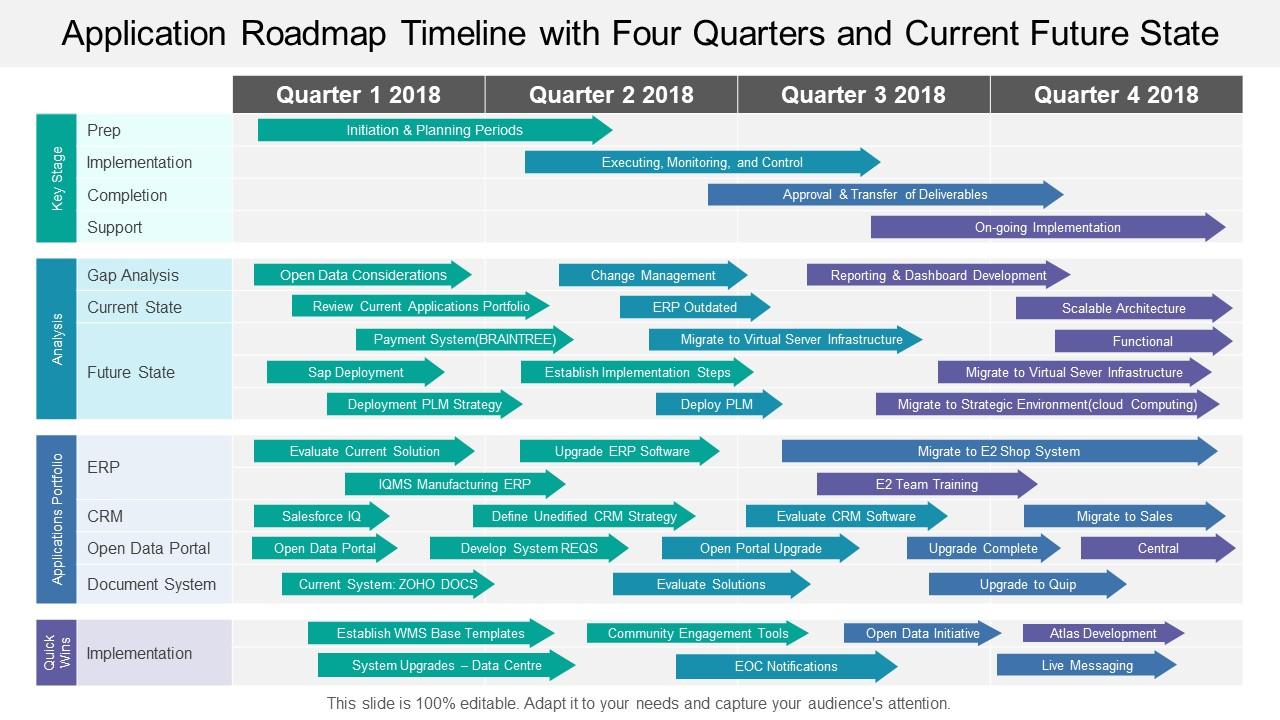
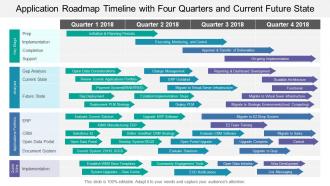
Calendrier de la feuille de route de l'application avec quatre trimestres et état futur actuel

Rating:
90%
Slide 1 of 5
Favourites Favourites

Try Before you Buy Download Free Sample Product

Audience Impress Your
Audience
Editable 100%
Editable
Time Save Hours
of Time
The Biggest Sale is ending soon in
0
0
:
0
0
:
0
0
Rating:
90%

Caractéristiques de ces diapositives de présentation PowerPoint :

Présentation de cet ensemble de diapositives avec le nom - Chronologie de la feuille de route de l'application avec quatre trimestres et état futur actuel. Il s'agit d'un processus en quatre étapes. Les étapes de ce processus sont la chronologie de la feuille de route de l'application, le processus linéaire de l'application, le diagramme de Gantt de l'application.

FAQs for Application roadmap timeline with four quarters and

Hey! So for your roadmap, start with project kickoff and nailing down requirements first. Then design completion, dev sprints, testing rounds, and deployment. Always build in extra time - I learned this the hard way when everything went to hell on my last project. Include stakeholder check-ins and user acceptance testing too. Integration points with other systems are crucial if you have them. Post-launch stuff matters - monitoring and tweaks based on real user feedback. Be realistic with timelines and flag dependencies upfront. Nothing's worse than getting blindsided by blockers you could've seen coming.

So I usually look at three things: user impact, business value, and how hard it'll be to build. Start by digging into customer feedback and usage data - that's your goldmine for what people actually want. Business goals matter too, especially anything tied to revenue. Loop your devs in early though, because I've seen too many "simple" features turn into months-long projects. What works for me is scoring each feature 1-10 on all three factors, then multiplying those numbers. Highest scores win, but you'll still need to shuffle things around based on dependencies and what your team can actually handle.

So market research is basically your roadmap's best friend - it shows you what users actually want and when they want it. You'll figure out which features are urgent versus the ones that can chill on the backburner. Honestly, the seasonal stuff is wild too. Like productivity apps tank during summer because everyone's mentally checked out. Survey your current users first about their biggest headaches and what timeline they're expecting. That way you're not scrambling to build features nobody's even asking for yet. The data helps you set deadlines that actually make sense.

Get everyone together weekly or monthly - doesn't matter if it's Zoom or in person. Set up some shared doc where engineering, product, design can all see what's blocking what and when stuff's actually due. Honestly, the number of times I've watched roadmaps crash because marketing heard about delays from someone's lunch conversation instead of the actual dev team is ridiculous. Sprint reviews work great for this, or at least do it monthly if weekly feels like overkill. Skip the quarterly-only planning thing though. Just schedule something next week and get those communication lines actually working.

Honestly, you need to track two main buckets here. First is the execution stuff - are you actually hitting your milestones and staying on timeline? Resource utilization matters too. Then there's the real impact: user adoption, performance gains, whatever KPIs you're supposed to move (revenue, efficiency, etc). Pick maybe 3-5 metrics that your stakeholders actually care about - don't go overboard with tracking everything under the sun. Monthly dashboard works well. Share it openly with the team so everyone knows where things stand. That transparency piece is huge.

Honestly, monthly reviews work best but quarterly is the bare minimum. I've watched too many roadmaps just sit there for half a year while everything changes around them - total nightmare when people start asking what happened. How often you check depends on your pace though. Fast-moving teams usually need those monthly touchpoints. Some folks do light monthly check-ins then go deeper each quarter, which isn't bad either. Just put it on the damn calendar so it actually gets done. Oh and always bring updated timelines plus any roadblocks that could mess things up.

Honestly, **Roadmunk** or **ProductPlan** are your best bet if you want something made specifically for roadmaps - the timeline stuff just works better. **Monday.com** is pretty flexible though, and **Notion** too (I'm basically addicted to Notion at this point, not gonna lie). Your team already in **Jira**? Their roadmap feature isn't bad and saves you from juggling multiple tools. **Miro** works well when you're still in that messy brainstorming phase and don't know what you want yet. But here's the thing - just use whatever your team's already comfortable with. Getting people to actually use it matters way more than having the "perfect" tool.

User feedback literally becomes your roadmap GPS - it shows when you're heading in the wrong direction. Testing often reveals stuff that'll make you go "oh crap, users hate this core feature we spent months on." When that happens, you've gotta shuffle priorities fast, sometimes putting shiny new features on hold to fix the basics. Honestly the worst part? How often our internal assumptions are just... wrong. Build in regular checkpoints where user insights can actually change your sprint plans. Don't just collect feedback - let it move things around. Otherwise you're just building features for yourself, which never ends well.

Honestly, timeline optimism kills most projects - I've done it a million times. You think something takes 2 weeks, it takes 4. Feature creep is another nightmare; resist the urge to pack everything into one release. Oh, and loop your dev team into planning EARLY because they actually know how stuff works (shocking concept, right?). Testing always takes longer than expected too. I basically add 25% padding to everything now, cut features aggressively, and do quick weekly check-ins. Saves so much stress later.

Honestly, roadmaps are lifesavers for cutting down on those annoying "where are we with project X?" meetings. You just point to the timeline and boom - everyone knows what's happening when. They're great for showing dependencies too, like when someone wants to rush feature A but it'll totally mess up features B and C. I mean, priorities always shift anyway, but at least you can visually show the domino effect instead of just saying "yeah, it'll be delayed." Just keep the thing updated (easier said than done, I know) and actually use it in every check-in. Game changer for managing expectations.

Honestly, try the 70-30 split - spend most of your time on big picture stuff, save about 30% for urgent fixes and tech debt. I made this mistake where I spent like 6 months just firefighting everything and got nowhere with actual progress. Such a waste of time. Set up different sections in your roadmap so people can see both types of work clearly. Oh, and batch those quick fixes together instead of doing them randomly throughout the sprint. You should probably start measuring this next time around - you'll be surprised where your hours actually go.

Oh yeah, external stuff can totally derail your timeline. When new tech drops, you might have to rebuild entire features or integrate completely different systems. Regulatory changes are even worse - suddenly you're adding compliance work nobody planned for. GDPR was brutal, I watched projects get pushed back months because of that nightmare. Build in buffer time from day one, trust me on this. Stay on top of industry news too, and check in with your legal team regularly. Way better to catch these curveballs early than panic later.

So agile basically saves your ass when everything changes - which it always does. You can actually adapt instead of being stuck with some ancient plan nobody cares about anymore. I'd set up quarterly reviews where you sit down with the team and figure out what's working. Stakeholders love being in the loop too, way better than surprising them at the end. Your roadmap becomes this living thing that grows with your product. Way less stressful than the old "set it and forget it" approach, trust me.

Honestly, quarterly reviews are the sweet spot - monthly if your team moves crazy fast. Your roadmap needs to be flexible, not set in concrete. Here's what works: keep the next quarter or two pretty detailed and locked down, but everything beyond that should stay loose. Stakeholders hate surprises, so this gives them clarity without boxing you in. Oh, and always leave buffer time for random urgent stuff that'll definitely come up. Technical debt has a way of sneaking up on you. Set up those review meetings now while you're thinking about it!

Dude, you absolutely need that vision and goals figured out first - trust me on this one. Otherwise your timeline becomes this chaotic mess where everyone's constantly changing direction. I've watched teams redo the same work like 3 times because nobody knew what they were actually building toward. Your vision keeps everyone on the same page about what "done" looks like. Goals help you figure out which features to build when, and honestly, give you way better time estimates. Just write your main vision in one sentence, then maybe 3-5 specific goals you can actually measure. Do this before you even open whatever timeline tool you're using.

Ratings and Reviews

90% of 100
Review Form
Write a review
Most Relevant Reviews
  1. 80%

    by Donovan Cunningham

    Out of the box and creative design.
  2. 100%

    by Davis Mason

    Great designs, really helpful.

2 Item(s)

per page: