Ashridge fit matrix powerpoint presentation slide template
Try Before you Buy Download Free Sample Product
Audience
Editable
of Time
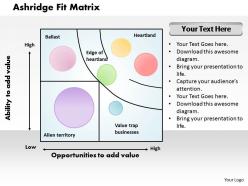
Let your audience gain knowledge about matrix by using ashridge fit matrix PowerPoint presentation slide. This professionally designed portfolio design has been crafted in the matrix form providing the valuable information that can be shared with the audience. Not many people have heard about this ashridge fit matrix concept and with the use of this presentation template you can make them aware of what it is and how it makes difference for the end user. Ashridge portfolio matrix is used to measure the attractiveness of potential acquisition target or existing trade to the parent. This matrix has two variable as per which the attractiveness of commerce is to be judged. The colorful PPT design is designed for the business people as they can inform their team about this crucial information and make them understand its importance in today’s corporate. This presentation template is flexible as you are free to modify and deliver it as required. Go ahead and download this valuable design.Use our Ashridge Fit Matrix Powerpoint Presentation Slide Template like bricks and mortar. Build a strong structure for your thoughts.
People who downloaded this PowerPoint presentation also viewed the following :
Ashridge fit matrix powerpoint presentation slide template with all 5 slides:
Get your thoughts to be on form. Our Ashridge Fit Matrix Powerpoint Presentation Slide Template will fit in well with them.
FAQs for Ashridge fit matrix powerpoint
So the Ashridge Fit Matrix breaks down into four parts: does it match your mission, can you actually pull it off well, will it help your business units, and are you genuinely adding value? Pretty straightforward stuff. Honestly, it's just a structured way to figure out if you should be doing something or not. Most companies skip this step and regret it later. You map out potential projects or acquisitions against these four questions to see if they make sense strategically. Perfect for when you're thinking about new ventures, buying other companies, or - and this is where it gets interesting - questioning whether your current business lines still fit.
So the Ashridge Fit Matrix is basically a grid where you map your business units against two things: how well they match your company's core skills, and whether your corporate center actually adds any real value to them. Plot everything out visually - honestly kind of brutal when you see it all laid out like that. Business units where there's poor fit or you're not adding value? Prime candidates for selling off or major changes. The magic happens where your corporate strengths really align with what those units need. Perfect tool for portfolio decisions when you need data backing up those tough calls instead of just going with your gut.
So the Ashridge Matrix is pretty different - it's all about whether your company actually helps its business units or just gets in the way. Most other tools just ask "is this a profitable market?" But this one's like "are we the right parent company for this business?" It compares what each business unit needs to improve against what your corporate team is actually good at. Way more honest than other frameworks, tbh. If there's no fit, you should probably sell that unit to someone who can actually help it grow. Makes the whole "which businesses should we keep" decision way clearer.
So you gotta look at how their company actually operates vs what yours does - like leadership styles, how decisions get made, communication vibes, all that day-to-day stuff. Their website's "values" page is basically useless tbh, everyone says the same generic crap. Do interviews, watch how people interact, maybe some surveys to get the real picture. The whole point is catching major culture clashes before they blow up your integration. Some friction's normal, but you don't want to discover halfway through that they're super hierarchical while you're all flat and collaborative.
Look, the Ashridge Fit Matrix is basically your reality check before you blow millions on a terrible acquisition. Sure, the numbers might look amazing, but this thing makes you ask two key questions: does this deal actually make strategic sense, and - honestly the bigger one - can these two company cultures survive being mashed together? I've seen so many "perfect on paper" deals turn into absolute disasters because nobody thought about whether the teams could actually work together. Cultural fit is huge. Use this matrix right at the start of your evaluation process. It'll save you from wasting months on due diligence for something that was doomed from day one.
Yeah totally! Just adapt it for your situation. Map out your startup's strengths and goals first, then score each opportunity you're considering against those. Perfect for avoiding that "ooh shiny new idea" trap we all fall into. The fit criteria shift to stuff like your resources, what you're actually good at, and market timing - way more relevant than corporate synergy BS. Honestly might be more valuable for startups since you're always deciding what to focus on next. I used something similar when I was constantly second-guessing our product direction. Keeps you grounded.
So the Ashridge Fit Matrix is basically plotting your business units on two axes - how well you get each business and how much value you're actually bringing to the table. Honestly, most leadership teams think they're adding way more value than they actually are. Once you map everything out, it becomes pretty obvious which businesses you should double down on, which ones to sell off, and where you need to totally change your approach. The visual aspect makes those awkward "why do we even own this?" conversations way easier. I'd start with a portfolio audit next quarter - might surprise you what you find.
You can't really do the Ashridge fit assessment without stakeholder analysis first - it's like trying to cook without knowing what's in your fridge. Map out your main players: customers, employees, suppliers, investors, maybe 8-10 total. Then rate how engaged they are with each business unit. This feeds directly into your "feel" dimension and shows if there's real strategic alignment. Honestly, most people think this step is too obvious so they skip it. Big mistake. You'll miss key relationships that way. The stakeholder piece is what tells you if people actually give a damn about your business unit or just tolerate it.
So the Ashridge Fit Matrix is basically a reality check for your business. Plot each unit or activity to see where your competencies actually match what creates value - honestly, the mismatches are usually pretty obvious once you map it out. Poor fits mean you're either burning cash or missing easy wins. Focus on the biggest gaps first since those give quick results. Could be divesting stuff that doesn't work, building better capabilities, or just restructuring. I'd start by being brutally honest about your current portfolio - no point sugarcoating it when you're trying to figure out what's broken.
So you'll want to watch three main things with the Ashridge Matrix. First, are your business units actually performing better after you apply what the matrix tells you? Like, are you making more money where you thought you would? Then track if you're capturing those value opportunities between units - the synergy stuff. Resource efficiency is the third one - basically whether you're putting money and attention in the right spots based on your analysis. Oh, and definitely measure everything before you start implementing changes. Otherwise you won't know if it's working. I'd check in quarterly to see if your moves are paying off.
Dude, the Ashridge Fit Matrix basically shows that when your strategy and culture actually mesh well together, performance goes through the roof. It's like having a rowing team where everyone's actually rowing in sync instead of chaos. Misalignment just creates this annoying internal friction - wastes money, confuses your people about what really matters, and honestly? Your results suffer big time. But nail that alignment and you'll see way faster execution, people actually give a damn, plus you get ahead of competitors. My advice? Check how well yours fit together pretty regularly and fix gaps before they wreck everything.
Honestly, the hardest part is getting real data about what your company actually does well and how much you help your subsidiaries. Everyone's way too optimistic about both things! Different managers will look at the same division and give totally different ratings - it's so subjective. Then once you map everything out, good luck having those conversations about selling off units. Nobody wants to hear their baby should go. I'd definitely get someone outside to double-check your ratings though, saves you from some brutal surprises later.
So the Ashridge Fit Matrix is basically your roadmap for figuring out who's gonna fight you on changes and who'll actually help. Plot your teams based on how well they fit the culture and how they're performing - boom, you've got your allies and troublemakers mapped out. Honestly saves so much headache later. Each quadrant needs different tactics, so forget the blanket approach that never works anyway. I'd start with your key people first. Then you can plan targeted moves - maybe extra training here, different messaging there, or even swapping out leadership if things are really messy. Way smarter than just hoping for the best.
Yeah definitely! You'll just need to adjust it for your situation. Focus on mission alignment instead of just money stuff - like how your programs create social impact together. Your "heartland" becomes the activities that hit your core purpose while using what you're already good at. Also think about all your stakeholders - donors, the people you help, community impact, not just profits. Honestly, it's pretty perfect for stopping mission creep, which happens way too often in nonprofits. Keeps you focused on your strengths instead of trying to do everything.
GE under Jack Welch is the classic case - they dumped any business where they couldn't be
-
Editable templates with innovative design and color combination.
-
Use of icon with content is very relateable, informative and appealing.