Assigning Employee Engagement Activities With Efficient Talent Acquisition And Management

Rating:
90%
Assigning Employee Engagement Activities With Efficient Talent Acquisition And Management Assigning Employee Engagement Activities With Efficient Talent Acquisition And Management
Slide 1 of 9
Favourites Favourites

Try Before you Buy Download Free Sample Product

Audience Impress Your
Audience
Editable 100%
Editable
Time Save Hours
of Time
The Biggest Sale is ending soon in
0
0
:
0
0
:
0
0
AI-Ready
Upload this template to AI and ask it to make any changes to content or color
100% editable Powerpoint Template for AI-assisted presentations. Finish your work in less time. Download Prompt Kit ​
Works with
Microsoft PowerPoint
Microsoft 365
Claude for PowerPoint
ChatGPT
Google Slides
Microsoft Copilot
Rating:
90%
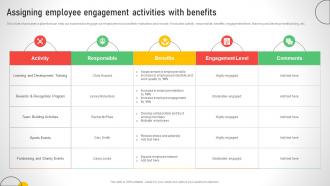
This slide showcases a plan that can help our business to engage our employees to boost their motivation and morale. It includes activity, responsible, benefits, engagement level, learning and development training, etc. Deliver an outstanding presentation on the topic using this Assigning Employee Engagement Activities With Efficient Talent Acquisition And Management. Dispense information and present a thorough explanation of Employee, Engagement, Activities using the slides given. This template can be altered and personalized to fit your needs. It is also available for immediate download. So grab it now.

FAQs for Assigning Employee Engagement Activities With Efficient Talent

Key indicators of employee engagement include retention rates, productivity metrics, participation in voluntary initiatives, feedback survey scores, and absenteeism patterns. These measurements work together by providing comprehensive insights into workforce satisfaction, motivation levels, and organizational commitment, with many companies finding that engaged employees deliver higher performance, reduced turnover costs, and ultimately stronger competitive advantage.

Effective communication influences employee engagement by fostering transparency, building trust, and ensuring employees understand their roles and organizational goals. Through regular feedback, open dialogue, and clear messaging, companies enhance job satisfaction, reduce turnover, and boost productivity, with many organizations finding that engaged employees deliver significantly better customer experiences and business outcomes.

Leadership drives engagement culture through clear communication, recognition programs, professional development opportunities, and transparent decision-making processes. Effective leaders model engaged behaviors while empowering teams with autonomy and meaningful work, with many organizations finding that leaders who actively listen, provide regular feedback, and align individual goals with company vision ultimately deliver higher retention rates and enhanced productivity.

Organizations measure employee engagement's impact on productivity through performance metrics, output tracking, quality assessments, absenteeism rates, and customer satisfaction scores. By analyzing these data points alongside engagement surveys, companies can identify correlations between engaged teams and improved efficiency, with many finding that highly engaged employees deliver 23% higher profitability and significantly reduced turnover costs.

**INPUT**: What strategies can be employed to enhance remote employee engagement? **OUTPUT**: Effective remote engagement strategies include regular virtual check-ins, flexible work arrangements, digital collaboration tools, recognition programs, and professional development opportunities. These approaches enhance connection by fostering communication, maintaining work-life balance, and creating growth pathways, with many organizations finding that structured virtual team-building and transparent goal-setting ultimately deliver higher productivity and employee satisfaction.

Employee recognition significantly boosts engagement and satisfaction by making employees feel valued, appreciated, and motivated to excel in their roles. Through consistent acknowledgment programs, personalized feedback, and public celebrations of achievements, organizations across sectors like healthcare, retail, and financial services enhance retention rates, improve productivity, and foster stronger workplace cultures, ultimately delivering competitive advantage through higher employee loyalty.

Common barriers to employee engagement include lack of recognition, poor communication, limited career development opportunities, inadequate work-life balance, and insufficient feedback from leadership. Organizations overcome these challenges by implementing regular recognition programs, establishing transparent communication channels, creating clear advancement pathways, and fostering flexible work arrangements, with many companies finding that addressing these barriers simultaneously leads to significantly higher retention rates and improved productivity across all departments.

Employee engagement improves retention rates by creating emotional connections to work, providing meaningful career development opportunities, recognizing achievements consistently, and fostering collaborative workplace cultures. Through strategic engagement initiatives, organizations streamline talent management while delivering enhanced job satisfaction, reduced turnover costs, and stronger team performance, with many companies finding that engaged employees become long-term advocates.

Feedback mechanisms promote engagement by creating transparent communication channels, recognizing achievements, identifying development opportunities, and fostering trust between management and employees. Through regular surveys, one-on-ones, and performance reviews, organizations streamline employee development, enhance job satisfaction, and reduce turnover, with many companies finding that consistent feedback ultimately delivers improved productivity and stronger workplace culture.

Workplace environment significantly impacts employee engagement by influencing productivity, job satisfaction, morale, and retention rates through physical comfort, collaborative spaces, and supportive culture. Organizations with well-designed offices, flexible work arrangements, and positive atmospheres see higher performance levels, reduced turnover, and enhanced creativity, with many companies finding that strategic environmental investments ultimately deliver competitive advantage and improved business outcomes.

Diverse teams significantly enhance employee engagement by fostering innovative thinking, improving problem-solving capabilities, and creating more inclusive workplace cultures. Through varied perspectives and experiences, organizations streamline decision-making processes, reduce groupthink, and ultimately deliver higher creativity and job satisfaction, with many companies finding that diverse teams outperform homogeneous groups consistently.

Initiatives that promote collaboration include cross-functional project teams, collaborative workspaces, team-building activities, peer mentoring programs, and shared goal-setting sessions. These approaches enhance engagement by breaking down silos, fostering communication, and creating accountability partnerships, with many organizations finding that collaborative environments ultimately deliver higher productivity, improved innovation, and stronger employee retention rates.

Training and development opportunities significantly enhance employee engagement by demonstrating organizational investment in career growth, building job-relevant skills, and creating clear advancement pathways. These programs boost retention, productivity, and job satisfaction, with many organizations finding that employees who receive regular development opportunities are 67% more likely to stay long-term, ultimately delivering competitive advantage through enhanced workforce capability.

Employee wellness significantly enhances engagement by improving physical health, reducing stress, supporting mental wellbeing, and fostering work-life balance. Companies implementing comprehensive wellness programs, from healthcare benefits to fitness initiatives and mental health resources, find that employees demonstrate higher productivity, reduced absenteeism, and stronger organizational commitment, ultimately delivering improved retention rates and competitive advantage.

Organizations leverage technology to improve employee engagement through digital collaboration platforms, mobile communication apps, AI-powered feedback systems, gamification tools, and personalized learning management systems. These technologies streamline workplace interactions, enable real-time recognition and development opportunities, and create more flexible work environments, with many companies finding that strategic technology integration ultimately delivers higher productivity, reduced turnover, and enhanced employee satisfaction across diverse teams.

Ratings and Reviews

90% of 100
Review Form
Write a review
Most Relevant Reviews
  1. 80%

    by Daniel Mcdonald

    Wow! The design and quality of templates on SlideTeam are simply the best. 
  2. 100%

    by Chase Howard

    Great templates that you can use in your next keynote or conference. They are perfect for quick and visually-engaging delivery. 

2 Item(s)

per page: