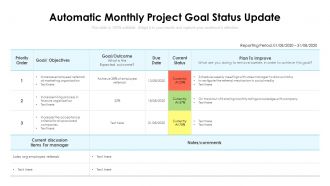
Mise à jour mensuelle automatique du statut des objectifs du projet
Try Before you Buy Download Free Sample Product
Audience
Editable
of Time
Donnez aux gens une bonne dose de plaisir avec notre mise à jour mensuelle automatique de l'état des objectifs du projet. Cela aide à susciter l'enthousiasme.
Caractéristiques de ces diapositives de présentation PowerPoint :
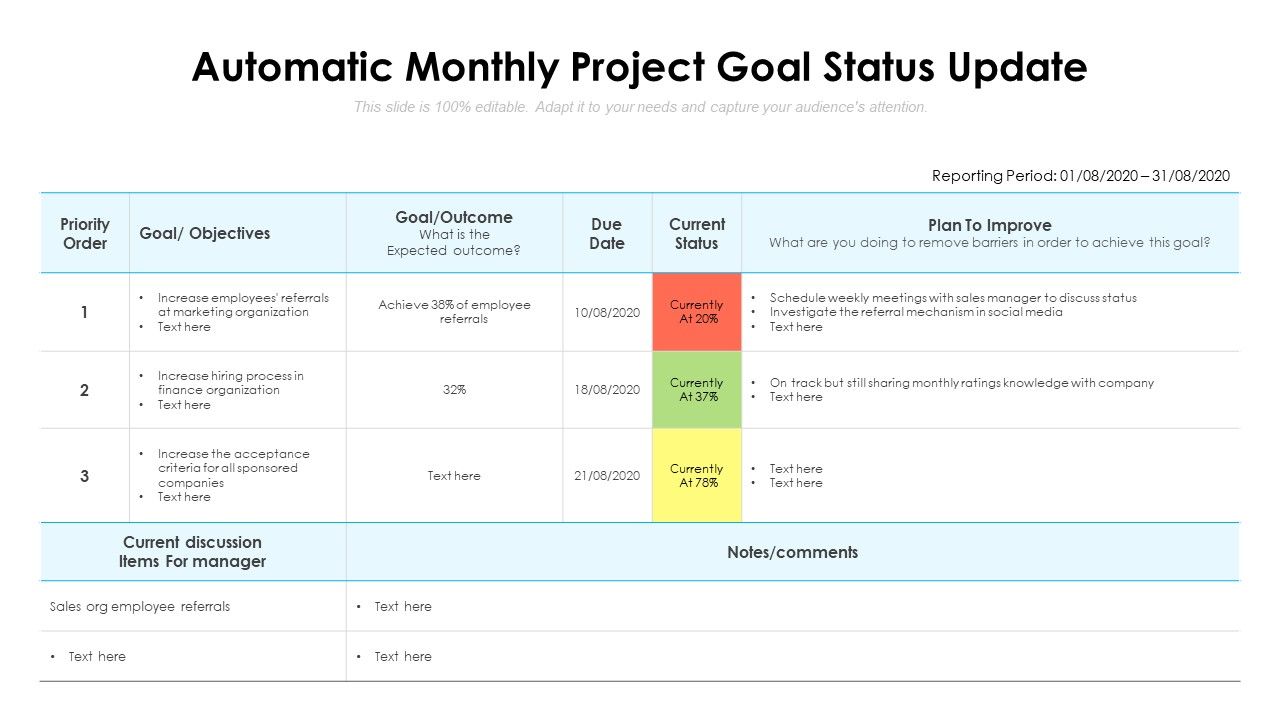
Présentation de cet ensemble de diapositives avec le nom Mise à jour automatique de l'état des objectifs du projet. Les sujets abordés dans ces diapositives sont l'ordre de priorité, le but, les objectifs, le résultat, la date d'échéance, l'état actuel, le plan d'amélioration. Il s'agit d'une présentation PowerPoint entièrement modifiable et disponible en téléchargement immédiat. Téléchargez maintenant et impressionnez votre public.
People who downloaded this PowerPoint presentation also viewed the following :
Mise à jour automatique de l'état des objectifs du projet mensuel avec les 2 diapositives :
Injectez une nouvelle saveur avec notre mise à jour mensuelle automatique de l'état des objectifs du projet. Capacité d'affichage à être entreprenant.
FAQs for Automatic monthly project
Okay so honestly, most projects fail because people skip the basics. Get everyone to agree on what you're actually building first - in writing, because people have terrible memories. Communication kills more projects than bad code ever will, so do regular check-ins even when they feel annoying. Timeline-wise, whatever you think it'll take, add 30%. Things will go wrong, so have backup plans ready. Oh and resource allocation - make sure you actually have the right people available when you need them. The scope creep thing is real though, so refer back to that original document like it's your project bible.
Honestly, just talk to everyone way more than you think you need to. Figure out upfront how each person wants updates - some love detailed emails, others want quick calls or just dashboard links. Your team probably needs daily check-ins, sponsors weekly stuff, executives monthly reports. I always put the biggest issues right at the top and give realistic timelines (learned that one the hard way). Short sentences work great for urgent stuff. Radio silence will kill you faster than over-communicating ever will. Stick to whatever schedule you promise them or they'll start bugging you constantly.
Look, risk management is basically being paranoid in the most productive way possible. You spot problems before they happen during planning, figure out how bad they'd be, then make backup plans. Throughout the project you're watching for those red flags and pivoting when needed. Trust me, skipping this step turns tiny hiccups into total disasters. I learned that one the hard way! Build it into your regular meetings - just make a list of what could go sideways, then rank everything by how likely it is and how much it'd hurt. Way better than scrambling later.
Honestly, the biggest win with Agile is catching problems super early. You're testing stuff every couple weeks instead of building for months just to find out you built the wrong thing entirely. Stakeholders actually stay interested because they see real progress happening. Plus - and this might sound obvious but whatever - you won't end up in that awful spot where you deliver exactly what they asked for but it's completely useless in practice. I'd say start with 2-week sprints and get something working in front of actual users as fast as possible. Those quick feedback loops will save you so much headache later.
Okay so for project management, I'd go with Asana, Monday.com, or Trello - they're all solid for tracking tasks and keeping your team organized. Slack is a lifesaver for communication, way better than drowning in emails. You'll need Google Workspace or Office 365 too for sharing docs and stuff. Oh, and Toggl's great if you want to track time for budgets. Honestly though? The biggest mistake is switching tools every few months when something gets slightly annoying. Just pick one PM platform and commit to it, even if it's not perfect.
Honestly, timelines and budgets are just the surface stuff. What really matters? Whether you actually fixed the problem you set out to solve. Check if people are using your solution and if they're happy with it. I always look back at those original business goals - did we boost revenue, make things run smoother, improve customer experience? Quality counts too, obviously. But here's the real test: would your stakeholders want to work with you again? Is anyone still using what you built six months down the road? Those are the metrics that'll tell you if you actually succeeded.
Daily standups over video are a lifesaver, trust me on this one. Get everyone using Asana or Trello so you can actually see who's doing what. Timezone stuff is honestly the worst part - I swear it never gets easier - but async communication helps a ton. Document literally everything in shared spaces. Be super clear about deadlines because people interpret "soon" very differently when working remote. Oh, and don't forget the virtual coffee chats or whatever. Your team needs that connection. Most important thing though? Focus on what gets done, not whether someone's online at 2pm.
Dude, stakeholder engagement will literally save your ass on projects. Figure out who matters early - anyone with influence or skin in the game. Don't just loop them in at the start and end, that's where people mess up. Keep talking to them regularly throughout the whole thing. I swear, half the projects I've seen crash and burn could've been saved if someone just kept the right people informed. When stakeholders feel heard, they'll actually help you when shit hits the fan instead of throwing you under the bus. Map everyone out first, then decide how often each person needs updates.
Honestly, you NEED a change control process right from the start. Document everything in writing - those "quick coffee chat" requests will kill you. Before agreeing to anything, figure out how it impacts your timeline and budget. Get approval from stakeholders for big changes and tell them exactly how it'll mess with the original plan. I've watched so many projects crash because someone thought they were being nice by saying "yeah sure, we can squeeze that in." Update your docs right after you approve stuff. Oh, and set expectations early so people aren't shocked when you can't just add random things.
Honestly, emotional intelligence is gonna be your best friend here. Work on really listening during meetings and picking up on team vibes when things get tense. Bad managers actually taught me more than the good ones - weird but true! Give your people room to make decisions instead of micromanaging everything. Don't try to shield them from project problems either; transparency builds trust. Oh, and definitely do regular one-on-ones. It's amazing what you'll learn about what actually drives each person on your team.
Ugh, team drama is the worst. First thing - actually listen to everyone before you try fixing anything. I know it sounds obvious but most people skip this part. Get them talking in a neutral space where you're just facilitating, not picking sides. People genuinely need to vent sometimes, so let them. Here's what works: dig into what they actually need, not just what they're complaining about. Those are usually different things. Do some group problem-solving sessions too. But seriously, don't let this stuff sit and get weird for weeks - tackle it early before everyone starts avoiding each other in the hallway.
Honestly, diverse teams are kinda messy at first. You've got people who are super blunt mixed with others who hint at everything - it's confusing until you crack the code. Different time zones suck, and some cultures are way more hierarchical than others. But once everyone figures out how to communicate (like, actually setting ground rules instead of hoping for the best), these teams usually crush it. Multiple perspectives just hit different when you're solving problems. Oh, and don't wait too long to establish those communication norms - learned that one the hard way.
Look at how complex the project is and what your team's actually good at. Buffer time is huge - I can't stress this enough, stuff ALWAYS takes way longer than expected. Check if you're waiting on other teams or outside vendors too. Past that, think about current workload and whether you're using familiar tech or learning as you go. Cost-wise, don't just count salaries - tools and infrastructure add up fast. Oh and risks that could totally derail things. Honestly? Estimate everything, then tack on 20% because something weird will definitely happen.
Honestly, think of lessons learned as your cheat sheet for future projects. Document what bombed and what actually worked - but here's the thing most people mess up: they write it down then never look at it again! Keep everything searchable so you can pull it up fast during planning. I use a basic spreadsheet (nothing fancy needed). Watch for patterns too - if the same stuff keeps going wrong across projects, you've probably got a bigger process issue. Oh, and start tracking this stuff now even if your current project isn't done yet.
Yeah, certs can help your career for sure. PMP's still the big one everyone knows, but Agile/Scrum stuff is really popular now. They show you're serious and give you solid foundational knowledge - useful for promotions and salary talks. Just don't become one of those people who collects certificates like Pokemon cards, you know? I've worked with managers who had tons of certs but couldn't actually run a project to save their lives. The sweet spot is pairing cert knowledge with real experience. Pick one that fits your industry first, then actually use what you learn.
No Reviews