B2b marketing sales funnel with awareness and purchase factor

B2b marketing sales funnel with awareness and purchase factor
Slide 1 of 5
Favourites Favourites

Try Before you Buy Download Free Sample Product

Audience Impress Your
Audience
Editable 100%
Editable
Time Save Hours
of Time
The Biggest Sale is ending soon in
0
0
:
0
0
:
0
0
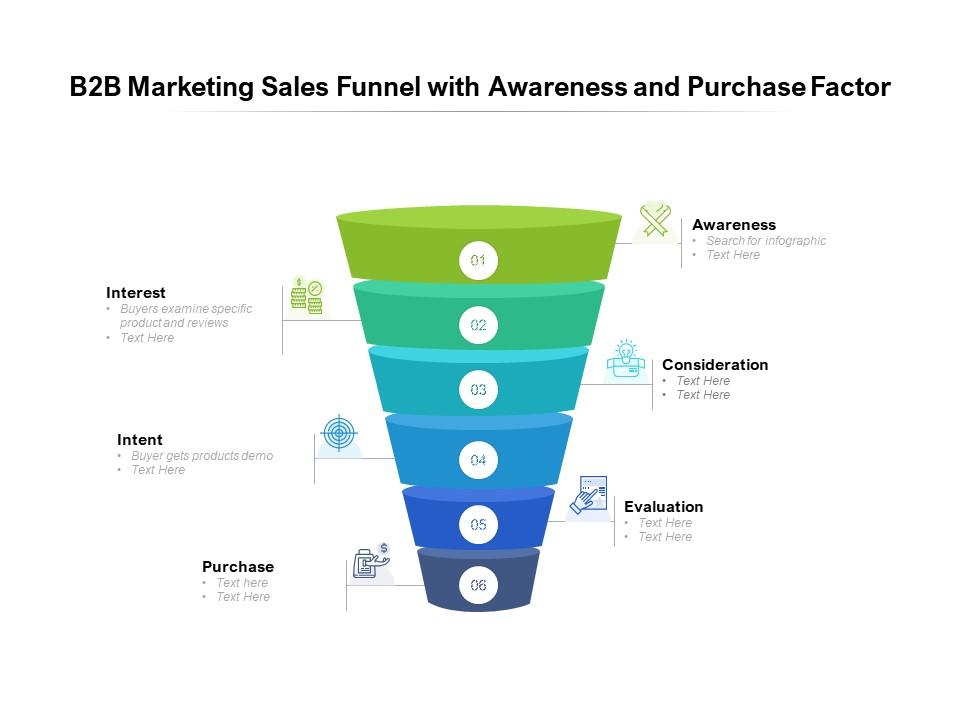
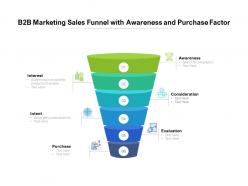
Presenting this set of slides with name B2B Marketing Sales Funnel With Awareness And Purchase Factor. This is a six stage process. The stages in this process are B2B Sales, Sales Strategy, Marketing. This is a completely editable PowerPoint presentation and is available for immediate download. Download now and impress your audience.

FAQs for B2b marketing sales funnel with awareness

B2B marketing sales funnels include awareness, interest, consideration, intent, evaluation, and purchase stages, with longer decision cycles and multiple stakeholders compared to B2C funnels. These stages differ through extended nurturing periods, committee-based purchasing decisions, and higher-value transactions, with many organizations finding that B2B requires more educational content and relationship-building throughout the process.

Businesses effectively identify their ideal customer profile by analyzing existing high-value clients, conducting market research, defining specific demographics and firmographics, and mapping customer pain points. Through data analytics and CRM insights, companies can segment prospects by industry, company size, and buying behavior, while leveraging account-based marketing strategies, ultimately delivering more personalized outreach and higher conversion rates.

Content marketing guides prospects through each funnel stage by delivering targeted educational resources, case studies, whitepapers, and solution-focused materials that address specific pain points and decision criteria. Through strategic content distribution, B2B organizations build trust, demonstrate expertise, and accelerate buyer journeys, with many companies finding that personalized content nurtures leads more effectively, ultimately delivering higher conversion rates and shorter sales cycles.

Businesses can optimize lead generation by implementing content marketing strategies, leveraging social media engagement, utilizing SEO-driven approaches, developing targeted advertising campaigns, and creating valuable educational resources. These methods streamline prospect identification and engagement, with many organizations finding that strategic combination of inbound and outbound tactics delivers higher-quality leads, enhanced conversion rates, and ultimately sustainable competitive advantage in increasingly crowded markets.

B2B marketers should track lead generation rates, conversion percentages between stages, cost per lead, lead quality scores, and customer acquisition costs throughout their sales funnel. These metrics enable organizations to identify bottlenecks, optimize resource allocation, and enhance overall pipeline performance, with many companies finding that comprehensive tracking ultimately delivers improved forecasting accuracy and significantly higher revenue conversion rates.

Personalization improves B2B conversion rates through targeted content at awareness stages, customized demos during consideration, and tailored proposals in decision phases. Sales teams implement dynamic email sequences, industry-specific case studies, and role-based messaging, with many organizations finding that personalized approaches deliver 20-30% higher engagement and significantly faster deal closure rates.

Essential B2B sales funnel management tools include CRM systems, marketing automation platforms, lead scoring software, analytics dashboards, and email marketing solutions. These technologies streamline prospect tracking, automate nurturing sequences, and provide real-time visibility into conversion metrics, with many organizations finding that integrated platforms deliver faster lead qualification and significantly improved sales team efficiency.

Account-based marketing transforms the B2B sales funnel by targeting specific high-value accounts with personalized campaigns, focusing resources on qualified prospects rather than broad lead generation. This strategic approach streamlines the funnel by aligning marketing and sales teams around priority accounts, ultimately delivering higher conversion rates, shorter sales cycles, and increased deal sizes for organizations.

Common B2B sales funnel challenges include lengthy decision cycles, multiple stakeholder involvement, content alignment issues, lead nurturing gaps, and inadequate sales-marketing coordination. These obstacles often result in prospect stagnation and revenue leakage, with many organizations finding that streamlined processes, targeted content strategies, and enhanced cross-team collaboration ultimately deliver faster conversions and improved funnel efficiency.

Sales and marketing alignment improves B2B funnel effectiveness by creating consistent messaging, streamlined lead handoffs, and shared performance metrics throughout the buyer journey. This strategic collaboration enables organizations to reduce lead qualification time, increase conversion rates, and deliver seamless customer experiences, with many companies finding that aligned teams generate higher revenue growth and shorter sales cycles.

Companies should implement lead scoring systems, establish clear handoff protocols between marketing and sales teams, maintain consistent follow-up communication, and utilize CRM integration for seamless data tracking. Through automated nurturing sequences and personalized outreach strategies, organizations across industries like software and manufacturing streamline their conversion processes, ultimately delivering higher close rates and improved customer acquisition efficiency.

Businesses can leverage social proof and testimonials by strategically placing customer success stories at awareness stages, detailed case studies during consideration phases, and specific ROI testimonials at decision points. Through platforms like LinkedIn and industry publications, companies streamline credibility-building, enhance trust with prospects, and accelerate deal closures, with many B2B organizations finding that authentic peer validation significantly shortens sales cycles.

Automation enhances B2B marketing sales funnel productivity by streamlining lead scoring, personalizing email sequences, automating follow-up communications, and managing customer data seamlessly across touchpoints. These technologies enable sales teams to focus on high-value prospects while reducing manual tasks, with many organizations finding that automated workflows accelerate conversion rates and deliver significantly improved resource allocation.

Innovative re-engagement tactics include personalized video outreach, interactive content like calculators or assessments, account-based marketing campaigns, webinar invitations, and strategic social selling approaches. These methods work by delivering targeted value, addressing specific pain points, and creating multiple touchpoints, with many B2B organizations finding that combining digital personalization with direct outreach ultimately revives stalled prospects and accelerates conversions.

Follow-up communication is critical in B2B sales funnels, as it nurtures relationships, builds trust, and guides prospects through longer decision cycles. Strategic approaches include personalized email sequences, value-driven content sharing, and timely phone outreach, with many organizations finding that consistent, educational follow-ups significantly increase conversion rates and accelerate deal closure.

Ratings and Reviews

0% of 100
Review Form
Write a review
Most Relevant Reviews

No Reviews