Backwards design unit plan template ppt powerpoint presentation outline example cpb

Rating:
100%
Backwards design unit plan template ppt powerpoint presentation outline example cpb
Slide 1 of 2
Favourites Favourites

Try Before you Buy Download Free Sample Product

Audience Impress Your
Audience
Editable 100%
Editable
Time Save Hours
of Time
The Biggest Sale is ending soon in
0
0
:
0
0
:
0
0
Rating:
100%
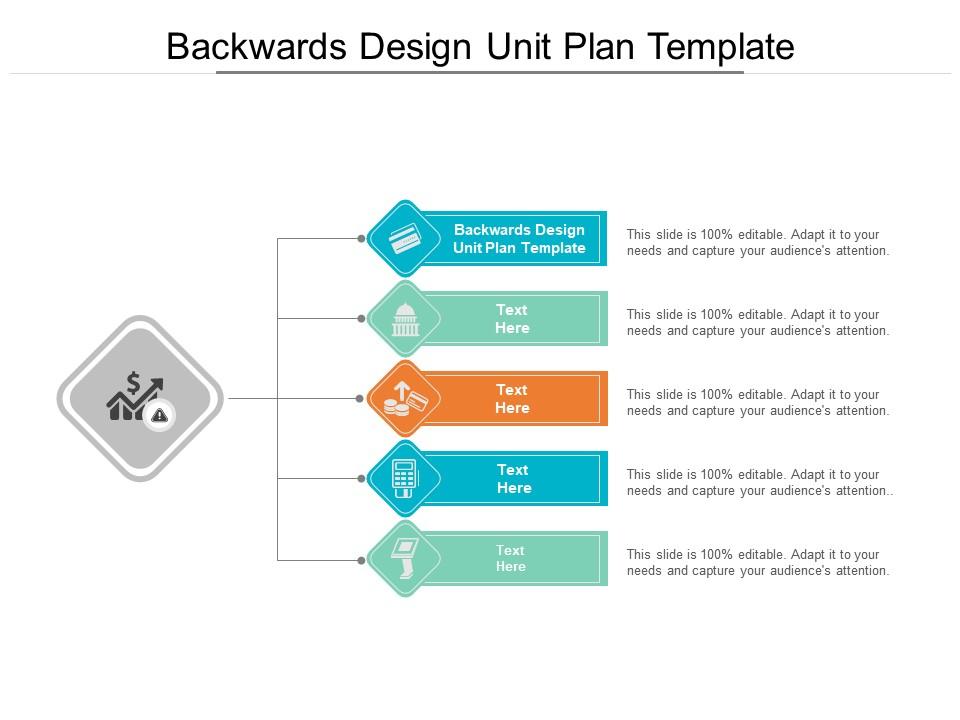
Presenting our Backwards Design Unit Plan Template Ppt Powerpoint Presentation Outline Example Cpb PowerPoint template design. This PowerPoint slide showcases five stages. It is useful to share insightful information on Backwards Design Unit Plan Template This PPT slide can be easily accessed in standard screen and widescreen aspect ratios. It is also available in various formats like PDF, PNG, and JPG. Not only this, the PowerPoint slideshow is completely editable and you can effortlessly modify the font size, font type, and shapes according to your wish. Our PPT layout is compatible with Google Slides as well, so download and edit it as per your knowledge.

People who downloaded this PowerPoint presentation also viewed the following :

FAQs for Backwards design unit plan template ppt powerpoint presentation

Key components of a backwards design unit plan template include desired learning outcomes, assessment criteria, learning activities, essential questions, and resource allocation strategies. These elements work together by establishing clear objectives first, designing appropriate evaluations second, and creating instructional activities last, with many educators finding that this approach streamlines curriculum development while ensuring alignment between goals and outcomes.

The backwards design framework enhances student learning outcomes by establishing clear learning goals first, creating targeted assessments that measure those goals, and developing instruction specifically designed to bridge gaps between current knowledge and desired competencies. Through this strategic approach, educators ensure curriculum alignment, eliminate irrelevant activities, and provide students with transparent expectations, ultimately delivering more focused instruction and measurable academic improvements across diverse learning environments.

Effective strategies include analyzing curriculum standards, conducting student needs assessments, reviewing assessment data, consulting with colleagues, and examining real-world applications of the content. These approaches streamline unit planning by ensuring alignment between standards and student requirements, with many educators finding that this comprehensive analysis ultimately delivers more targeted instruction and improved learning outcomes.

Backwards design differs from traditional lesson planning by starting with desired learning outcomes and assessments, then working backwards to create instruction, while traditional methods begin with content and activities. This approach ensures alignment between objectives, assessments, and teaching strategies, with many educators finding that it enhances student achievement, reduces curriculum gaps, and delivers more focused, measurable learning experiences.

Assessment serves as the foundation of backwards design, determining learning evidence before instruction planning, establishing clear success criteria, and guiding curriculum development. Through formative and summative evaluations, educators create targeted learning experiences that directly align with desired outcomes, while diagnostic assessments help identify student needs, ultimately ensuring instructional activities deliver measurable learning progress and academic achievement.

Educators align assessments with learning objectives by establishing clear performance criteria, designing formative and summative evaluations that directly measure stated outcomes, and creating rubrics that reflect specific skill demonstrations. Through backwards design methodology, teachers in K-12 schools and higher education institutions develop coherent assessment strategies that guide instruction, provide meaningful feedback, and ensure students achieve targeted competencies, ultimately delivering more focused learning experiences.

Starting with the end goal ensures alignment between objectives, assessments, and instructional activities, creating coherent learning experiences that maximize student achievement. This backwards design approach streamlines curriculum development by eliminating irrelevant content, enhances assessment validity, and enables educators to identify potential learning gaps early, with many schools finding that this method delivers improved student outcomes and more efficient resource allocation across diverse subject areas.

Teachers ensure flexible backwards design unit plans by establishing clear learning goals while building in multiple assessment options, varied instructional strategies, and alternative pathways to meet diverse student needs. This approach enables educators to adjust pacing, modify activities, and differentiate instruction throughout the unit, with many schools finding that backwards design's outcome-focused framework ultimately delivers more responsive teaching and improved student achievement.

Real-world applications for backwards design unit plans include case studies from specific industries, community problem-solving projects, internship simulations, civic engagement initiatives, and professional scenario analyses. These authentic experiences enable students to connect theoretical knowledge with practical implementation across sectors like healthcare, environmental science, and business management, ultimately delivering deeper learning outcomes and enhanced career readiness.

Technology enhances backwards design by providing digital assessment tools, interactive learning platforms, multimedia content creation, and real-time progress tracking systems. Through educational software and online resources, educators can streamline curriculum mapping, automate student feedback, and deliver personalized learning experiences, while enabling data-driven instruction adjustments that ultimately improve learning outcomes and instructional efficiency.

Common challenges educators face when implementing backwards design include difficulty identifying clear learning objectives, resistance to changing traditional planning methods, time constraints in curriculum development, and struggling to align assessments with desired outcomes. However, these obstacles can be overcome through collaborative planning sessions, professional development workshops, and using structured templates that guide the process, with many schools finding that systematic implementation ultimately streamlines lesson planning and enhances student achievement.

Backwards design supports differentiated instruction by establishing clear learning objectives first, then creating multiple pathways and assessment methods to reach those goals. This approach enables teachers to design varied instructional strategies, flexible grouping arrangements, and personalized learning experiences while maintaining consistent standards, with many educators finding that starting with end goals allows for more strategic accommodation of diverse learning styles, abilities, and interests.

Educational planning software like UbD Planner, curriculum mapping tools, assessment rubric generators, standards alignment databases, and collaborative platforms such as Google Workspace facilitate backwards design development. These resources streamline template creation by organizing learning objectives, aligning assessments with outcomes, and enabling educator collaboration, with many schools finding that integrated planning systems enhance curriculum coherence and instructional effectiveness.

Collaboration among educators enhances backwards design by bringing diverse subject expertise, varied teaching perspectives, and collective problem-solving to unit planning. When teachers work together, they create more comprehensive assessments, develop cross-curricular connections, and identify potential implementation challenges early, ultimately delivering stronger learning outcomes and more cohesive educational experiences for students.

Backwards design significantly enhances student motivation by establishing clear learning objectives and meaningful assessments that students understand from the beginning, creating purposeful learning experiences. When students see direct connections between activities and desired outcomes, they demonstrate increased engagement and ownership, with many educators finding that this transparency helps students track their progress more effectively, ultimately delivering higher achievement rates and sustained interest in learning.

Ratings and Reviews

100% of 100
Write a review
Most Relevant Reviews
  1. 100%

    by Cristobal West

    Design layout is very impressive.

1 Item

per page: