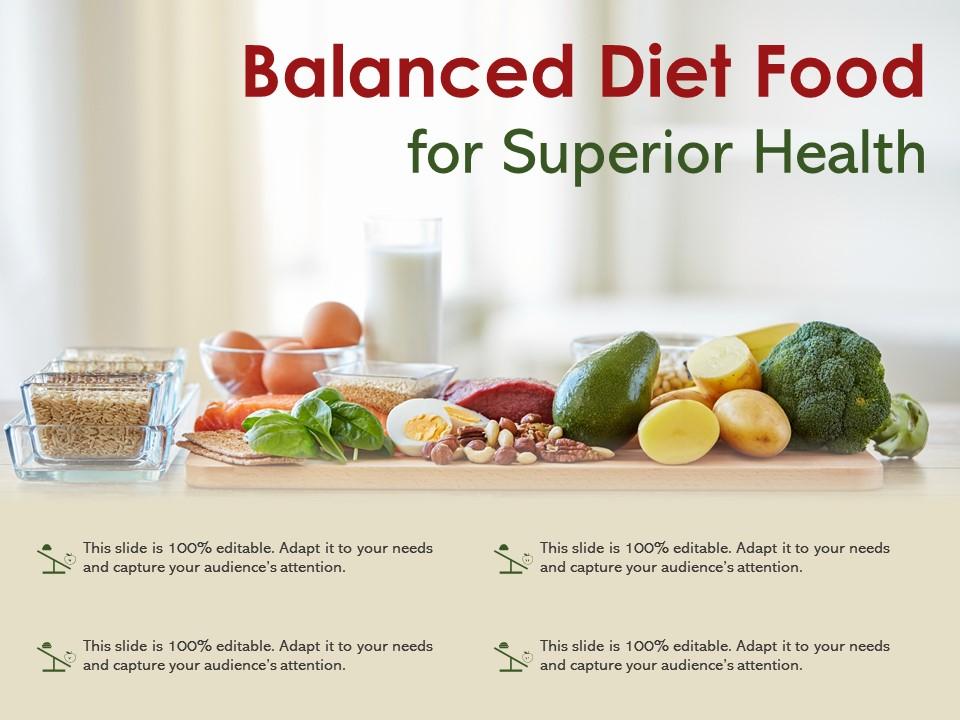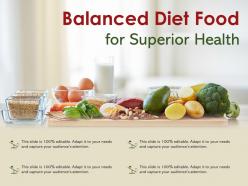
Balanced diet food for superior health

Balanced diet food for superior health
Slide 1 of 6
Favourites Favourites

Try Before you Buy Download Free Sample Product

Audience Impress Your
Audience
Editable 100%
Editable
Time Save Hours
of Time
The Biggest Sale is ending soon in
0
0
:
0
0
:
0
0
Presenting this set of slides with name Balanced Diet Food For Superior Health. The topics discussed in these slides are Health Food, Organic And Natural, Fitness, Diet. This is a completely editable PowerPoint presentation and is available for immediate download. Download now and impress your audience.

People who downloaded this PowerPoint presentation also viewed the following :

FAQs for Balanced diet food

Hey! So you'll want to get fruits and veggies on half your plate - that's the biggest thing. Then add whole grains, lean protein, and healthy fats. Oh, and dairy or whatever alternative you use. I totally used to avoid carbs like they were poison, but honestly your body runs on that stuff for energy. Just go for the complex ones instead of processed junk. Staying hydrated matters too, obviously. My trick is making sure I get at least one thing from each group per meal. Way less stressful than obsessing over every detail.

Ugh yes, portion sizes are so sneaky! You can eat all the "good" stuff but still mess up your goals if you're just eating mountains of it. Nuts, avocado, quinoa - they're healthy but super calorie-dense. Trust me, I found this out with my massive smoothie bowls that were probably like 800 calories each. It's not just what you eat, it's how much. Your body wants the right amount of nutrients, not crazy amounts. Honestly, try smaller plates for a week or actually measure stuff out. Really helps reset what feels "normal."

So macronutrients are just carbs, protein, and fats - the stuff your body needs tons of. Carbs give you energy (your brain's basically addicted to them, which explains a lot). Protein fixes your muscles after workouts and builds new tissue. Fats help with hormones and vitamin absorption, which sounds boring but it's actually pretty crucial. Don't cut any of them out completely though. The general split is like 45-65% carbs, 10-35% protein, 20-35% fats, but honestly it depends on how active you are. Maybe track what you're eating for a few days? That'll show you where you're at right now.

Oh totally! What you eat basically controls how your brain works. Like when I was surviving on just coffee and random takeout for weeks, I felt like complete garbage mentally. Your brain craves steady glucose plus omega-3s and B vitamins - without them you get that foggy, anxious feeling. Fatty fish is probably the best thing you can eat for this, but leafy greens and berries help too. Honestly just try sneaking one brain-healthy food into each meal. Give it a week and you'll probably notice the difference.

So the food pyramid is basically your cheat sheet for what to eat more vs less of. Bottom stuff like grains and veggies? Load up on those. Top tier fats and sweets? Not so much. Think of it as meal planning with bumpers at the bowling alley lol. Honestly though, that MyPlate thing they do now makes way more sense to me. Don't stress about nailing it every single meal - just look at your week overall and see if you're hitting those proportions. Make tweaks from there and you'll be good.

Honestly, eating more plants has been a game changer for me - way more energy and I feel fuller longer because of all the fiber. The antioxidants and vitamins are great for fighting inflammation too. My doctor actually mentioned how plant foods can lower your risk for heart disease and diabetes, which is pretty cool. They're naturally lower in calories and saturated fat than meat. Oh, and definitely mix up the colors on your plate - I got stuck in a spinach rut for like a month lol. Different colored fruits and veggies give you different nutrients, so variety is key.

Your cultural background totally changes what "balanced" even means. Mediterranean people load up on olive oil and fish. Asian diets? Rice and veggies with way less meat than we're used to. Some cultures don't even separate sweet and savory like we do - honestly blew my mind when I learned that. What we'd call "carb overload" is just normal healthy eating elsewhere. The whole food groups thing isn't universal either. So yeah, if you're helping someone with nutrition, ask about their food culture first. You'll actually get somewhere instead of fighting tradition.

Water's honestly more important than people think for getting the most out of your food. Your digestive system basically crawls without it, and all those vitamins you're taking? They can't even get where they need to go. I learned this the hard way when I was chronically dehydrated last year - felt awful. Your kidneys are working overtime to process protein waste too, so they're thirsty. The whole 8 glasses thing is fine, but I just check if my pee looks like apple juice (bad) or almost clear (good). Way easier than counting cups all day.

Dude, meal prep seriously changed my life! No more staring into the fridge at 7pm wondering what to eat. I used to spend like $15 on mediocre salads every day - such a waste. Here's what actually works: don't prep entire meals, just do components. Cook a big batch of rice, roast whatever veggies are on sale, grill some chicken. Then you can throw different combos together all week. Way less boring than eating the same exact thing five days straight. Start small though - maybe just prep two things this weekend and see how it feels.

Ugh, the whole "a calorie is a calorie" thing drives me nuts. Your body handles 100 calories of nuts totally different than candy - it's not just math. Everyone thinks counting alone = automatic weight loss, but hormones and meal timing actually matter a lot. Those app estimates are pretty sketchy too, especially restaurant stuff. I went through a phase where I was obsessed with tracking everything (exhausting). You don't need to count forever though. Learn what proper portions look like, pay attention when you're actually hungry. Once balanced eating clicks, you can probably toss the calculator and trust yourself more.

Yeah, so your body's needs totally change as you get older. Kids and teens basically eat everything in sight because they're growing like crazy and need tons of protein. But once you hit your 30s and 40s, it's more about maintaining energy and avoiding diseases - that's when I finally started caring about fiber lol. Older adults actually need fewer calories overall but way more calcium, vitamin D, and B12. Your body gets worse at absorbing stuff too, which honestly sucks. I'd focus on nutrient-packed foods instead of just counting calories, and don't be afraid of supplements if you need them.

Honestly, bulk buying is your friend here - beans, lentils, rice are dirt cheap and pack serious protein. Community gardens are amazing if you can find one near you (plus you meet cool people). Meal prep with whatever's in season saves tons of money. Food banks work way better when they teach people how to actually cook stuff, not just dump canned goods on them. Oh, and cooking classes using cheap ingredients? Game changer. I'd start with one local group and see how it goes. The key is keeping it simple and not overwhelming people who are already stressed about money.

Yeah, food allergies definitely make things harder - you're cutting out whole food groups that usually give you important nutrients. Take dairy allergies - suddenly you're missing out on calcium and B12. But it's not impossible, just takes more thought. I actually think fortified plant milks work pretty well, plus leafy greens and nuts help fill those gaps. The trick is replacing what you remove, not just avoiding stuff. Oh, and honestly? A dietitian who gets food restrictions is worth it - they'll map out exactly what works for your situation instead of you guessing.

Honestly, skipping balanced meals will catch up with you eventually. Heart disease, diabetes, obesity - all way more likely. Your immune system gets weaker too, so you'll get sick more often and take forever to bounce back. I swear my brain gets foggy when I eat like crap for days straight. Energy tanks, mood gets weird, the whole thing. Your bones need proper nutrients or they'll start getting brittle. Deficiencies pile up and create random health issues later. But here's the thing - even small changes help fast. More fruits, veggies, actual whole foods instead of processed junk.

Honestly, food tracking apps are pretty amazing for staying on track with eating. I use MyFitnessPal but Cronometer works too - they'll calculate all your calories and nutrients automatically. The barcode scanner thing is clutch, saves so much time. What really shocked me was seeing how much sugar I was actually eating without realizing it. Your fitness tracker can sync with these apps too, which is nice for balancing what you eat with workouts. Just pick one app though - I made the mistake of downloading like three different ones and ended up using none of them lol.

Ratings and Reviews

0% of 100
Review Form
Write a review
Most Relevant Reviews

No Reviews