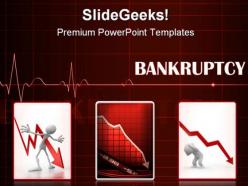
Bankruptcy finance business powerpoint backgrounds and templates 1210
Try Before you Buy Download Free Sample Product
Audience
Editable
of Time
Our Bankruptcy Finance Business PowerPoint Backgrounds And Templates 1210 provide the links in your chain of thought. Once intertwined they enhance the strength of your words.
People who downloaded this PowerPoint presentation also viewed the following :
Bankruptcy finance business powerpoint backgrounds and templates 1210 with all 3 slides:
You have got your hands on the cup. Lift it high with our Bankruptcy Finance Business PowerPoint Backgrounds And Templates 1210.
FAQs for Bankruptcy finance business powerpoint backgrounds
Key components include financial statements analysis, debt restructuring proposals, cash flow projections, asset valuations, and creditor negotiation strategies. These elements work together by demonstrating the company's current position, outlining viable recovery paths, and presenting realistic timelines for financial stabilization, with many distressed companies finding that comprehensive presentations significantly improve stakeholder confidence and restructuring success rates.
Visual aids enhance understanding of bankruptcy finance by simplifying intricate debt structures, cash flow analyses, and restructuring timelines through charts, graphs, and interactive dashboards. These tools enable stakeholders, creditors, and legal teams to quickly grasp asset valuations, payment priorities, and recovery scenarios, ultimately streamlining decision-making processes and facilitating more effective negotiations during complex restructuring proceedings.
Financial ratios serve as critical indicators for assessing bankruptcy risk, including debt-to-equity ratios, current ratios, interest coverage ratios, and cash flow metrics. These quantitative measures enable stakeholders to evaluate liquidity, leverage, and operational efficiency, with many financial institutions and investors finding that comprehensive ratio analysis ultimately delivers clearer risk assessment and more informed decision-making.
Slides can effectively communicate bankruptcy legal processes by using clear flowcharts, timeline visualizations, stakeholder mapping, process diagrams, and step-by-step breakdowns of court procedures. These visual tools streamline complex legal workflows by simplifying creditor hierarchies, asset liquidation sequences, and reorganization timelines, with many law firms and financial institutions finding that structured presentations enhance client understanding while reducing consultation time.
Key financial metrics for financial distress discussions include debt-to-equity ratios, current ratios, interest coverage ratios, cash flow statements, and working capital positions. These indicators enable stakeholders to assess liquidity challenges, debt sustainability, and operational viability, with many restructuring professionals finding that comprehensive metric analysis streamlines bankruptcy negotiations and enhances creditor confidence.
Case studies of past bankruptcies can be integrated through comparative analysis frameworks, timeline visualizations, financial ratio breakdowns, and decision-point mapping that highlight critical warning signs and recovery strategies. These presentation elements enable stakeholders to identify patterns across industries like retail, energy, and manufacturing, while demonstrating how early intervention measures, restructuring approaches, and stakeholder negotiations ultimately deliver more informed risk assessment and strategic decision-making capabilities.
Strategies include data visualization with clear charts, phased disclosure approaches, scenario-based projections, stakeholder-specific summaries, and transparent timeline presentations. These methods streamline complex financial realities by enhancing comprehension, building credibility, and maintaining stakeholder confidence, with many restructuring professionals finding that strategic presentation ultimately facilitates smoother negotiations and better outcomes.
Presenters can balance technical finance terms by defining complex concepts immediately upon introduction, using visual analogies that relate to everyday experiences, and incorporating clear infographics that translate numerical data into digestible formats. Through strategic layering of information, bankruptcy professionals can maintain technical accuracy while ensuring stakeholders, creditors, and court officials understand critical financial positions, ultimately facilitating more informed decision-making and smoother proceedings.
Creating compelling bankruptcy narratives requires clear problem identification, realistic turnaround strategies, detailed financial projections, stakeholder impact analysis, and transparent communication about challenges and opportunities. These presentations succeed by demonstrating operational viability, outlining specific cost reduction measures, and showcasing management's strategic vision, with many distressed companies finding that honest, data-driven storytelling ultimately builds credibility with investors and creditors.
Presenters can effectively manage audience questions by establishing clear Q&A protocols upfront, acknowledging complex financial concerns with empathy, and providing comprehensive yet accessible explanations of bankruptcy processes. During presentations, financial advisors and restructuring professionals should address stakeholder anxieties directly while deferring highly technical matters to follow-up sessions, ultimately building trust and ensuring all parties understand the strategic path forward through detailed post-presentation documentation.
Effective bankruptcy finance presentation templates include debt restructuring analyses, cash flow projections, asset valuation summaries, creditor communication frameworks, and stakeholder impact assessments. These structured approaches streamline complex financial narratives by organizing critical data, highlighting recovery scenarios, and presenting viable restructuring options, with many distressed companies finding that clear visual frameworks enhance creditor confidence and accelerate negotiation processes.
Data visualization techniques enhance financial presentations by transforming complex bankruptcy data into clear charts, graphs, infographics, trend lines, and interactive dashboards that audiences can quickly comprehend. These visual tools streamline communication of critical forecasts, debt restructuring scenarios, and recovery timelines, with many financial institutions and legal firms finding that visual presentations accelerate stakeholder decision-making and improve credibility during bankruptcy proceedings.
Common mistakes include oversimplifying complex financial data, failing to provide clear debt restructuring timelines, ignoring stakeholder-specific concerns, and presenting unrealistic recovery projections. These oversights can undermine credibility with creditors, investors, and legal teams, while comprehensive presentations that address liquidity challenges, asset valuations, and realistic turnaround strategies ultimately enhance negotiation positions and stakeholder confidence.
Presenters can tailor bankruptcy finance content by emphasizing creditor recovery rates and payment timelines, highlighting investor restructuring opportunities and asset valuations, and focusing on employee job security and benefit protections. Through strategic audience segmentation, financial institutions, private equity firms, and corporate teams receive targeted messaging that addresses their specific concerns, ultimately delivering clearer communication and stronger stakeholder buy-in during complex restructuring processes.
**INPUT**: What tools can be used to create dynamic and engaging bankruptcy finance presentations? **OUTPUT**: Tools for creating dynamic bankruptcy finance presentations include PowerPoint, Prezi, Canva, Tableau, and specialized financial modeling software like Excel with advanced charting capabilities. These platforms streamline complex financial data visualization through interactive dashboards, animated charts, and customizable templates, with many restructuring firms finding that visual storytelling enhances stakeholder comprehension and accelerates decision-making processes. [Word count: 58 words]
-
Awesomely designed templates, Easy to understand.
-
Informative presentations that are easily editable.