Blockchain Case Study On Real Estate Tokenization Training Ppt

Rating:
80%
Blockchain Case Study On Real Estate Tokenization Training Ppt
Slide 1 of 20
Favourites Favourites

Try Before you Buy Download Free Sample Product

Audience Impress Your
Audience
Editable 100%
Editable
Time Save Hours
of Time
The Biggest Sale is ending soon in
0
0
:
0
0
:
0
0
Rating:
80%
Presenting Blockchain Case Study on Real Estate Tokenization. This PPT presentation is thoroughly researched by the experts,and every slide consists of appropriate content. All slides are customizable. You can add or delete the content as per your need. Download this professionally designed business presentation,add your content,and present it with confidence.

Content of this Powerpoint Presentation

Slide 1

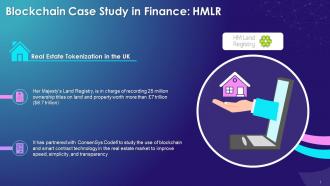
This slide discusses the implementation of blockchain technology in Her Majesty’s Land Registry (HMLR) for real estate tokenization in the UK.

Slide 2

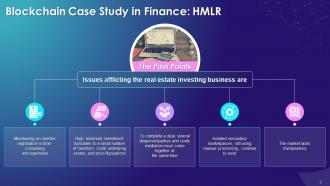
This slide lists the issues that the current real estate investing businesses continue to face. These issues include the process being time consuming, costly, lacking transparency and still using manual processing.

Slide 3

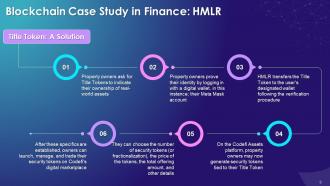
This slide illustrates the step-by-step process of Title Token HMLR has created to represent shares of a property.

Instructor’s Notes:

Investors that are signed in to Codefi Assets can view their portfolios, handle their real-estate holdings, access the security token options that are currently available, and engage in asset trading. Regulators may see high-level token data, such as real-time price and capitalization, as well as any active on-chain events.

Slide 4

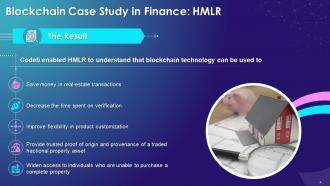
This slide demonstrates the results of implementation of blockchain technology in HMLR. Blockchain helps saving time and money, and provides transparency and provenance to the process.

FAQs for Blockchain Case Study On Real Estate

Tokenizing real estate assets using blockchain technology delivers fractional ownership opportunities, enhanced liquidity, reduced transaction costs, automated compliance through smart contracts, and global accessibility for investors. These innovations streamline property investment by eliminating traditional barriers, enabling 24/7 trading, and providing transparent ownership records, with many financial institutions finding that tokenization ultimately democratizes real estate markets while delivering faster transactions.

Blockchain improves real estate transparency by creating immutable transaction records, enabling real-time property history tracking, and providing decentralized verification systems that eliminate information asymmetries. Through smart contracts and distributed ledgers, financial institutions and property developers streamline due diligence processes, reduce fraud risks, and enhance investor confidence, ultimately delivering faster closings and lower transaction costs.

Real estate developers implementing tokenization face regulatory compliance complexities, high upfront technology costs, investor education requirements, and liquidity concerns for token holders. While these challenges present initial hurdles, many developers find that strategic partnerships with blockchain platforms, phased implementation approaches, and comprehensive investor relations ultimately deliver enhanced capital access, reduced transaction costs, and competitive positioning in an increasingly digital real estate landscape.

Blockchain tokenization increases real estate liquidity by converting property ownership into tradeable digital tokens, enabling fractional ownership, reducing minimum investment thresholds, and facilitating 24/7 global trading. Through smart contracts, investors can buy and sell property shares seamlessly without traditional lengthy processes, while property owners access capital faster, ultimately transforming illiquid assets into liquid investment opportunities.

Regulatory considerations for real estate tokenization include securities compliance, anti-money laundering requirements, investor accreditation verification, cross-jurisdictional legal frameworks, and property ownership transfer regulations. These compliance measures ensure legal legitimacy while enabling fractional ownership, with many financial institutions finding that proactive regulatory alignment streamlines token offerings and enhances investor confidence in tokenized property markets.

Investors can ensure securities law compliance by conducting thorough due diligence on token offerings, verifying proper regulatory registrations, and working with qualified legal advisors specializing in digital securities. Many institutional investors are partnering with compliant tokenization platforms that provide transparent documentation, automated compliance monitoring, and regulatory reporting, ultimately delivering greater confidence while navigating this increasingly regulated investment landscape.

Smart contracts automate key processes in real estate tokenization by executing ownership transfers, distributing rental income, enforcing compliance rules, and managing investor rights without intermediaries. These programmable agreements streamline property transactions, reduce administrative costs, and ensure transparent operations, with many real estate platforms finding that automated contract execution significantly accelerates deal completion and enhances investor confidence.

Tokenization revolutionizes property management by automating rent collection, maintenance requests, and tenant communications through smart contracts, while enabling fractional ownership structures that streamline decision-making processes. Through blockchain-based platforms, property managers can deliver transparent financial reporting, automated compliance tracking, and seamless tenant onboarding, with many real estate firms finding that tokenized properties reduce operational costs while enhancing tenant experiences.

Successful blockchain real estate tokenization includes Manhattan's St. Regis Aspen Resort, Singapore's commercial properties through PropTech platforms, and European residential developments via RealT. These projects demonstrate how tokenization enhances liquidity, reduces investment minimums, and enables global investor access, with many institutional investors finding that fractional ownership delivers diversified portfolios and streamlined transactions across international markets.

Tokenization democratizes real estate investment by fractionalizing high-value properties into affordable digital shares, eliminating traditional barriers like large minimum investments and geographic restrictions. Through blockchain platforms, retail investors can purchase tokens representing portions of commercial buildings or residential developments for hundreds rather than millions, while accessing global markets, enhanced liquidity, and diversified portfolios previously reserved for institutional investors.

Leading real estate tokenization platforms include Ethereum, Polygon, Tezos, Hyperledger Fabric, and Avalanche, each offering unique advantages for property digitization. These blockchain technologies streamline fractional ownership by enabling smart contracts, reducing transaction costs, and enhancing liquidity, with many real estate firms finding that tokenization delivers faster property transfers, broader investor access, and significantly improved market transparency.

Tokenization influences property valuations by enabling fractional ownership pricing, increasing market liquidity through smaller investment units, and providing real-time price discovery through digital trading platforms. This enhanced transparency and accessibility often reveals more accurate market values, with commercial real estate and luxury residential properties finding improved price efficiency and reduced valuation discrepancies through continuous market feedback.

Tokenized real estate investment risks include regulatory uncertainty, technology vulnerabilities, liquidity constraints, market volatility, and platform dependency concerns. While these challenges present considerations for investors, many financial institutions and property developers are finding that transparent blockchain protocols, regulatory compliance frameworks, and diversified token structures help mitigate risks while delivering enhanced accessibility and fractional ownership opportunities.

Tokenized real estate assets integrate into investment portfolios through digital wallets, traditional brokerage platforms, and specialized tokenization exchanges that treat them like securities. These blockchain-based assets enhance portfolio diversification by enabling fractional ownership of commercial properties, REITs, and international real estate markets, while providing greater liquidity and lower entry barriers than traditional property investments.

Future trends in blockchain real estate tokenization include increased institutional adoption, enhanced regulatory frameworks, cross-border investment platforms, AI-powered property valuation, and integration with IoT smart building systems. These developments streamline global property investment by reducing transaction costs, improving liquidity, and enabling fractional ownership at unprecedented scales, with many financial institutions finding that tokenized real estate delivers enhanced portfolio diversification and operational efficiency.

Ratings and Reviews

80% of 100
Review Form
Write a review
Most Relevant Reviews
  1. 80%

    by Li Stewart

    I downloaded some of the presentations for work. They were simple to modify and saved me a lot of time and effort.
  2. 80%

    by Desmond Garza

    I was mind-blown by the services that SlideTeam provided me. Thanks a ton!

2 Item(s)

per page: