


Blockchain For Trade Finance Real Time Tracking And Fraud Prevention BCT CD V
Our Blockchain For Trade Finance Real Time Tracking And Fraud Prevention BCT CD V are topically designed to provide an attractive backdrop to any subject. Use them to look like a presentation pro.


















































-

- Google Slides is a new FREE Presentation software from Google.
- All our content is 100% compatible with Google Slides.
- Just download our designs, and upload them to Google Slides and they will work automatically.
- Amaze your audience with SlideTeam and Google Slides.
-

Want Changes to This PPT Slide? Check out our Presentation Design Services
-

- WideScreen Aspect ratio is becoming a very popular format. When you download this product, the downloaded ZIP will contain this product in both standard and widescreen format.
-

- Some older products that we have may only be in standard format, but they can easily be converted to widescreen.
- To do this, please open the SlideTeam product in Powerpoint, and go to
- Design ( On the top bar) -> Page Setup -> and select "On-screen Show (16:9)” in the drop down for "Slides Sized for".
- The slide or theme will change to widescreen, and all graphics will adjust automatically. You can similarly convert our content to any other desired screen aspect ratio.
Compatible With Google Slides

Get This In WideScreen
You must be logged in to download this presentation.


Do you want to remove this product from your favourites?
PowerPoint presentation slides
Enthrall your audience with this Blockchain For Trade Finance Real Time Tracking And Fraud Prevention BCT CD V. Increase your presentation threshold by deploying this well-crafted template. It acts as a great communication tool due to its well-researched content. It also contains stylized icons, graphics, visuals etc, which make it an immediate attention-grabber. Comprising sixty nine slides, this complete deck is all you need to get noticed. All the slides and their content can be altered to suit your unique business setting. Not only that, other components and graphics can also be modified to add personal touches to this prefabricated set.

People who downloaded this PowerPoint presentation also viewed the following :
Content of this Powerpoint Presentation
Slide 1: This slide showcase title Blockchain for Trade Finance Real-Time Tracking and Fraud Prevention. State Your Company Name
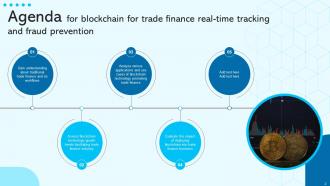
Slide 2: This slide shwcase title Agenda for blockchain for trade finance real-time tracking and fraud prevention
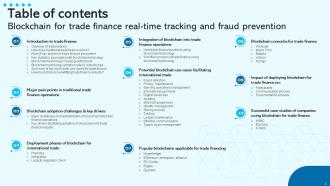
Slide 3: This slide exhibit Table of content.
Slide 4: This slide also shows Table of Content for the presentation.
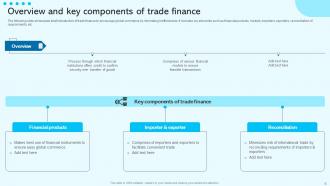
Slide 5: This slide showcases brief introduction of trade finance to encourage global commerce by minimizing inefficiencies.
Slide 6: This slide showcases how traditional trade finance operates to enable credit facilities and global growth trade. .
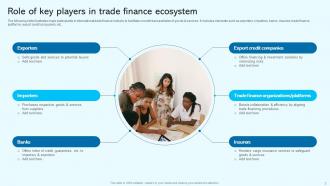
Slide 7: This slide illustrates major participants in international trade finance industry to facilitate smooth transportation of goods & services.
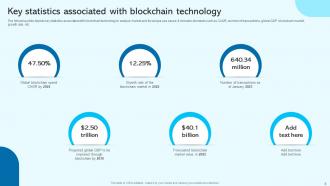
Slide 8: This slide depicts key statistics associated with blockchain technology to analyze market and its unique use cases.
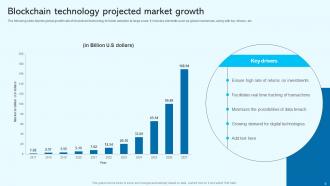
Slide 9: This slide depicts global growth rate of blockchain technology to foster adoption at large scale.
Slide 10: This slide depicts the percentage of industries embracing blockchain technology.
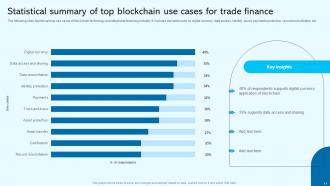
Slide 11: This slide depicts various use cases of blockchain technology assisting trade financing industry.
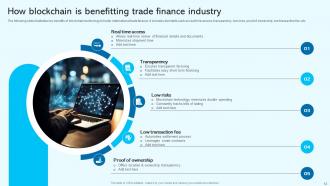
Slide 12: This slide illustrates key benefits of blockchain technology to foster international trade finance.
Slide 13: This slide also shows Table of Content for the presentation.
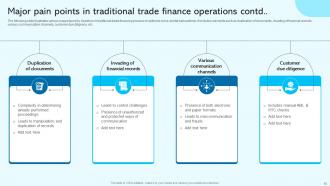
Slide 14: This slide illustrates various issues faced by investors in traditional trade financing process to optimize cross-border transactions.
Slide 15: The following slide illustrates various issues faced by investors in traditional trade financing process to optimize cross-border transactions.
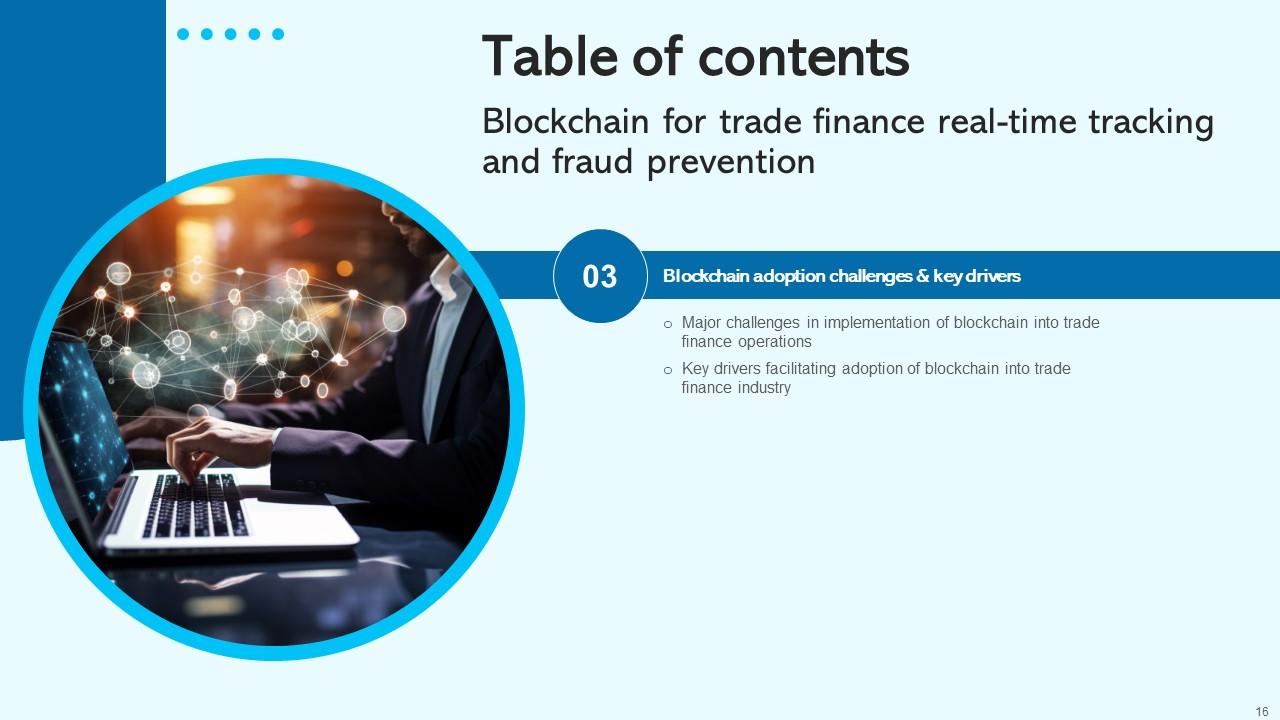
Slide 16: This slide also shows Table of Content for the presentation.
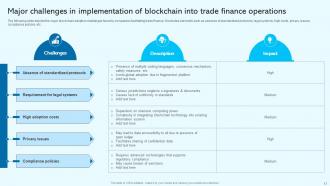
Slide 17: This slide depicts the major blockchain adoption challenges faced by companies facilitating trade finance.
Slide 18: This slide illustrates some factors encouraging high adoption of blockchain into trade finance industry.
Slide 19: This slide also shows Table of Content for the presentation.
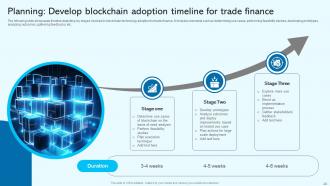
Slide 20: This slide showcases timeline depicting key stages involved in blockchain technology adoption for trade finance.
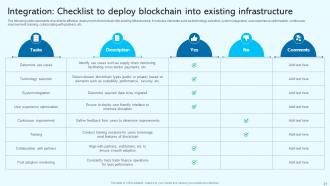
Slide 21: This slide represents checklist for effective deployment of blockchain into existing infrastructure.
Slide 22: This slide showcases main components of legal and regulatory framework for smooth blockchain adoption.
Slide 23: This slide also shows Table of Content for the presentation.
Slide 24: This slide depicts how blockchain based trade finance operates to leverage cryptocurrencies and smart contracts.
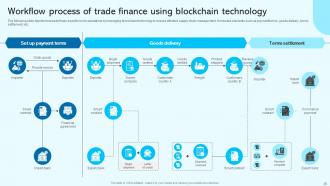
Slide 25: This slide depicts how trade finance performs its operations by leveraging blockchain technology to ensure effective supply chain management.
Slide 26: This slide also shows Table of Content for the presentation.
Slide 27: The following slide depicts how blockchain technology assists in fraud identification.
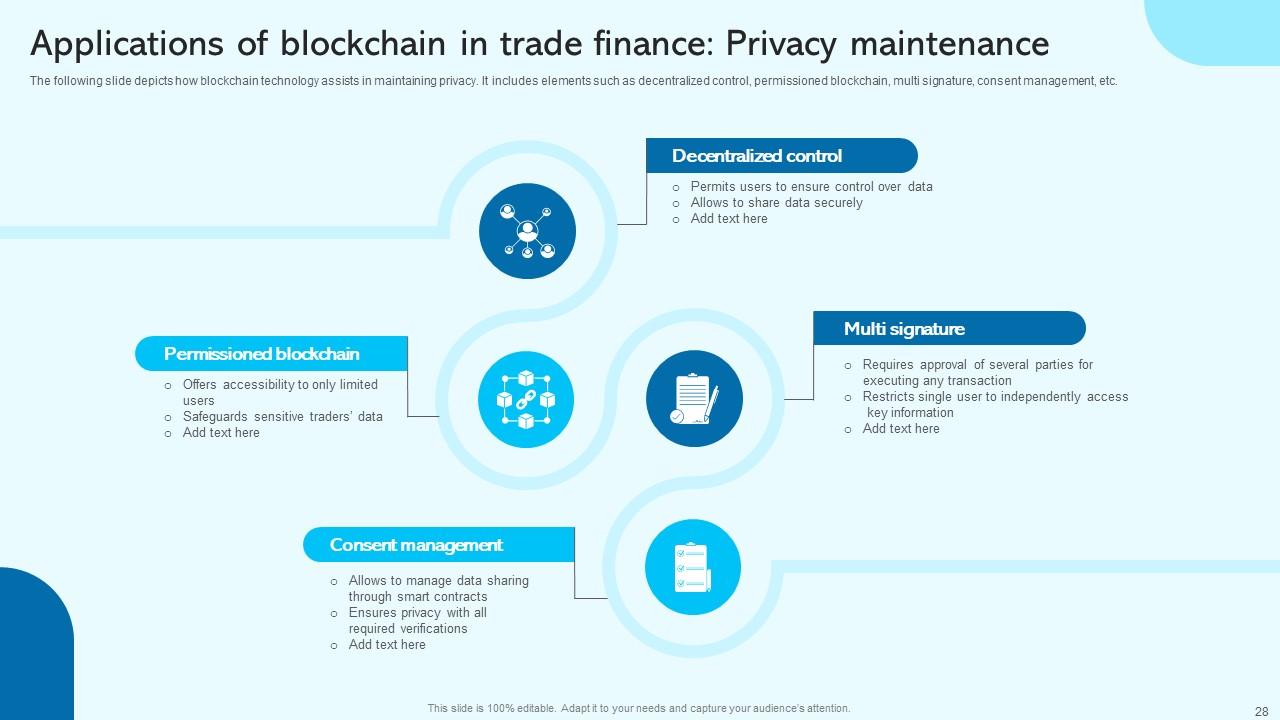
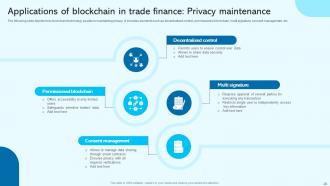
Slide 28: This slide depicts how blockchain technology assists in maintaining privacy.
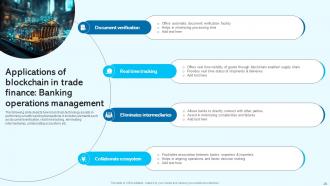
Slide 29: This slide depicts how blockchain technology assists in performing smooth banking transactions.
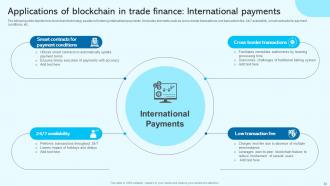
Slide 30: This slide depicts how blockchain technology assists in fostering international payments.
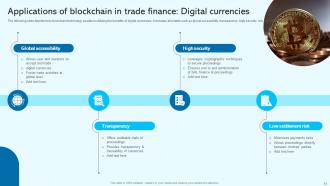
Slide 31: This slide depicts how blockchain technology assists in utilizing the benefits of digital currencies.
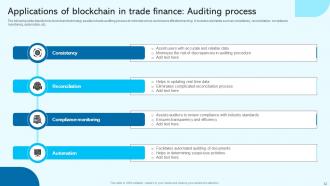
Slide 32: This slide depicts how blockchain technology assists in trade auditing process to minimize errors and ensure effective tracking.
Slide 33: This slide depicts how blockchain technology assists in minimizing trade expenses.
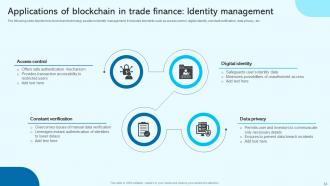
Slide 34: This slide depicts how blockchain technology assists in identity management.
Slide 35: This slide depicts how blockchain technology assists in storing and maintain records.
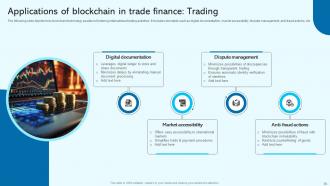
Slide 36: This slide depicts how blockchain technology assists in fostering international trading activities.
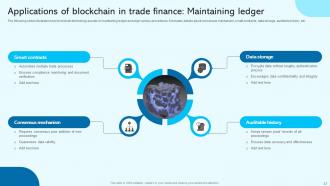
Slide 37: This slides illustrates how blockchain technology assists in maintaining ledger and align various procedures.
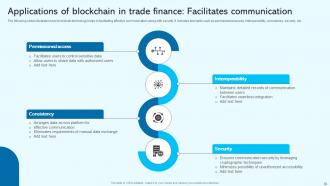
Slide 38: This slides illustrates how blockchain technology helps in facilitating effective communication along with security.
Slide 39: This slides illustrates how blockchain technology helps in smooth supply chain management.
Slide 40: This slide also shows Table of Content for the presentation.
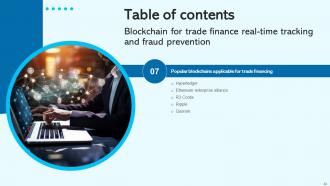
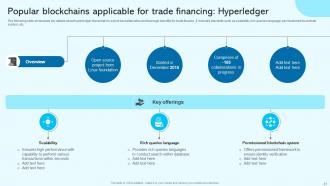
Slide 41: This slide showcases key details about hyperledger blockchain to select best alternative and leverage benefits for trade finance.
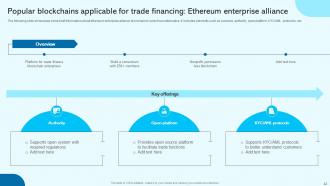
Slide 42: This slide showcases some brief information about ethereum enterprise alliance blockchain to select best alternative.
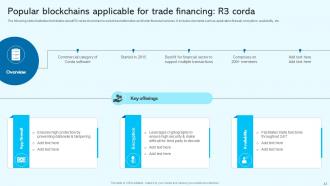
Slide 43: This slide illustrates brief details about R3 corda blockchain to select best alternative and foster financial services.
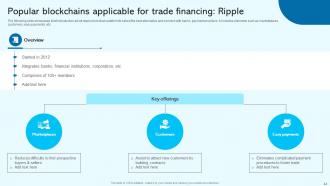
Slide 44: This slide showcases brief introduction about ripple blockchain platform to select the best alternative and connect with banks, payment providers.
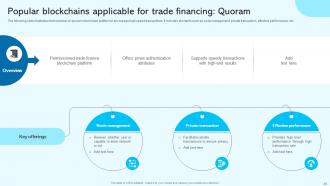
Slide 45: This slide illustrates brief overview of quoram blockchain platform to encourage high speed transactions.
Slide 46: This slide also shows Table of Content for the presentation.
Slide 47: This slide showcases some details about major WE.trade blockchain consortia to regulate proceedings.
Slide 48: This slide showcases some information about Marco polo blockchain consortium to build collaborative environment.
Slide 49: This slide illustrates brief overview of Batavia blockchain consortium to build network and organizations.
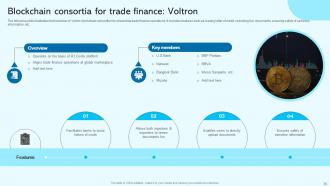
Slide 50: This slide illustrates brief overview of Votron blockchain consortium to streamline trade finance operations.
Slide 51: This slide illustrates brief overview of Komgo blockchain consortium to offer great environment for trade finance.
Slide 52: This slide also shows Table of Content for the presentation.
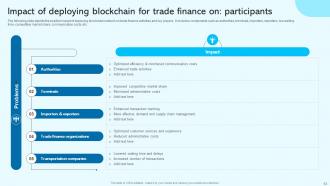
Slide 53: This slide depicts the positive impact of deploying blockchain network on trade finance activities and key players.
Slide 54: This slide depicts the positive impact of deploying blockchain network on trade finance communication activities.
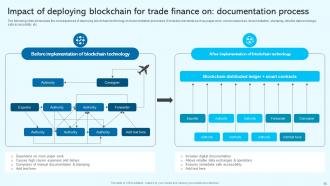
Slide 55: This slide showcases the consequences of deploying blockchain technology on documentation procedure.
Slide 56: This slide also shows Table of Content for the presentation.
Slide 57: This slide depicts how HSBC bank utilized blockchain technology for improving trade finance functions.
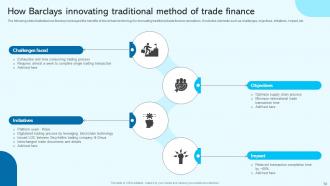
Slide 58: This slide illustrates how Barclays leveraged the benefits of blockchain technology for innovating traditional trade finance operations.
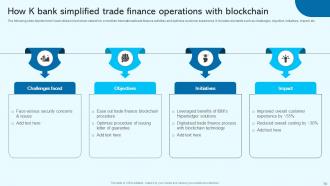
Slide 59: This slide depicts how K bank utilized blockchain network to smoothen international trade finance activities and optimize customer experience.
Slide 60: This slide showcase title Icons slide for blockchain for trade finance real-time tracking and fraud prevention
Slide 61: This slide is titled as Additional Slides for moving forward.
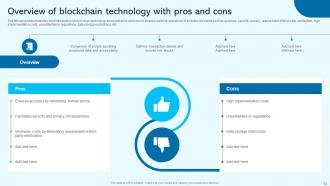
Slide 62: This slide illustrates brief introduction of blockchain technology along with pros and cons to ensure real time operations.
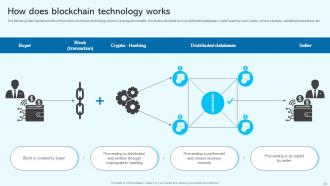
Slide 63: This slide depicts workflow of how does blockchain technology works to leverage its benefits.
Slide 64: This is Our Target slide. State your targets here.
Slide 65: This slide presents Roadmap with additional textboxes. It can be used to present different series of events.
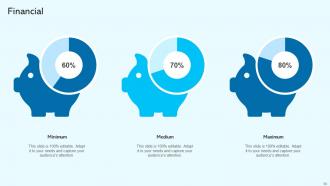
Slide 66: This is a financial slide. Show your finance related stuff here.
Slide 67: This slide shows Post It Notes for reminders and deadlines. Post your important notes here.
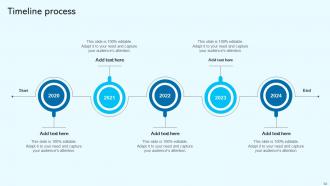
Slide 68: This is a Timeline slide. Show data related to time intervals here.
Slide 69: This is a Thank You slide with address, contact numbers and email address.
Blockchain For Trade Finance Real Time Tracking And Fraud Prevention BCT CD V with all 78 slides:
Use our Blockchain For Trade Finance Real Time Tracking And Fraud Prevention BCT CD V to effectively help you save your valuable time. They are readymade to fit into any presentation structure.
-
“As you have innovative ideas and they are all customizable, this saves a huge chunk of your time to prepare well-read presentations.”
-
“You have the structure in place that are easy to explore new opportunities.I will be recommending your services to other people.”
