


Blue Ocean Strategy CD
Blue Ocean ist eine Geschäftsstrategie, die Unternehmen hilft, neue Marktplätze für blaue Ozeane zu schaffen, anstatt in bestehenden roten Ozeanen zu konkurrieren. Holen Sie sich unsere aufschlussreiche Blue Ocean Strategy-Vorlage. Es basiert auf Prinzipien der Wertinnovation, die sich auf die Schaffung einzigartiger Wertversprechen konzentrieren. Dies geschieht durch die Kombination und Maximierung der Faktoren Wert und Differenzierung. Unser Blue Ocean Shift-Tool und Framework-Deck helfen Organisationen, den Wechsel von roten zu blauen Ozeanen zu verstehen und zu steuern. Die Strategie-Leinwand und die PMS-Karte visualisieren und analysieren die aktuelle Strategie einer Organisation. Die Buyer Utility Map und das Four Action Framework helfen dabei, Bereiche für Wertinnovationen zu identifizieren. Das ERRC-Raster und das Value Proposition Canvas helfen Unternehmen dabei, ihr einzigartiges Wertversprechen zu verstehen und zu artikulieren. Unsere Blaue-Ozean-Vorlage besteht weiterhin aus der Schöpfungssequenz, die die Schritte umreißt, die zur Schaffung eines blauen Ozeans erforderlich sind. Es präsentiert zusätzlich die Strategiemesse und ermöglicht Zusammenarbeit und Experimente. Darüber hinaus enthält unser Modul Blue Ocean Leadership Styles die Mind Map-Techniken für eine erfolgreiche Implementierung. Schließlich bewerten die Blue Ocean SWOT und die Blue Ocean Balanced Scorecard umfassend die Blue-Ocean-Strategie eines Unternehmens. Sofort zugreifen.


































-

- Google Slides is a new FREE Presentation software from Google.
- All our content is 100% compatible with Google Slides.
- Just download our designs, and upload them to Google Slides and they will work automatically.
- Amaze your audience with SlideTeam and Google Slides.
-

Want Changes to This PPT Slide? Check out our Presentation Design Services
-

- WideScreen Aspect ratio is becoming a very popular format. When you download this product, the downloaded ZIP will contain this product in both standard and widescreen format.
-

- Some older products that we have may only be in standard format, but they can easily be converted to widescreen.
- To do this, please open the SlideTeam product in Powerpoint, and go to
- Design ( On the top bar) -> Page Setup -> and select "On-screen Show (16:9)” in the drop down for "Slides Sized for".
- The slide or theme will change to widescreen, and all graphics will adjust automatically. You can similarly convert our content to any other desired screen aspect ratio.
Compatible With Google Slides

Get This In WideScreen
You must be logged in to download this presentation.


Do you want to remove this product from your favourites?
Merkmale dieser PowerPoint-Präsentationsfolien :
Stellen Sie dieses vollständige Deck Ihren Teammitgliedern und anderen Mitarbeitern zur Verfügung. Umgeben von stilisierten Folien, die verschiedene Konzepte vorstellen, ist diese Blue Ocean Strategy CD das beste Werkzeug, das Sie verwenden können. Personalisieren Sie den Inhalt und die Grafiken, um ihn einzigartig und zum Nachdenken anzuregen. Alle 65 Folien können bearbeitet und geändert werden, Sie können sie also gerne an Ihre Geschäftsumgebung anpassen. Die Schriftart, Farbe und andere Komponenten sind ebenfalls in einem bearbeitbaren Format erhältlich, was dieses PPT-Design zur besten Wahl für Ihre nächste Präsentation macht. Also, jetzt herunterladen.

People who downloaded this PowerPoint presentation also viewed the following :
Inhalt dieser Powerpoint-Präsentation
Folie 1 : Diese Folie stellt die Blue Ocean Strategy vor. Beginnen Sie mit der Angabe Ihres Firmennamens.
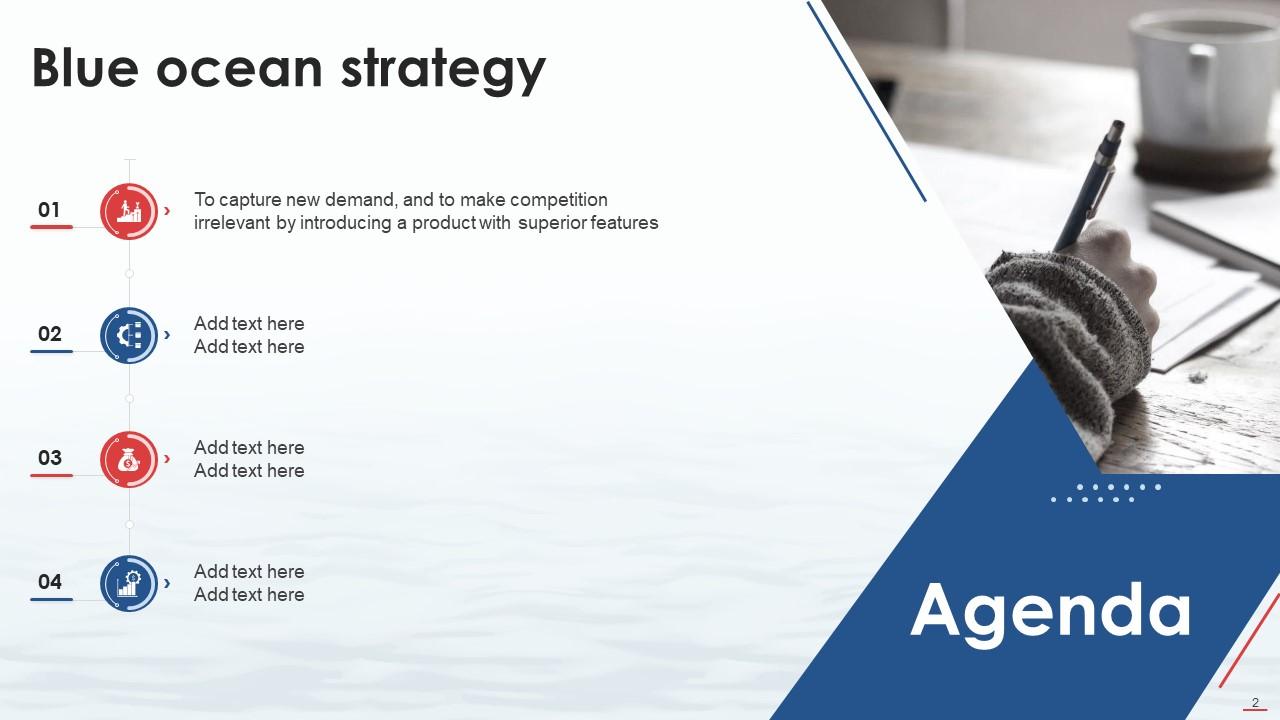
Folie 2 : Diese Folie zeigt die Agenda der Präsentation.
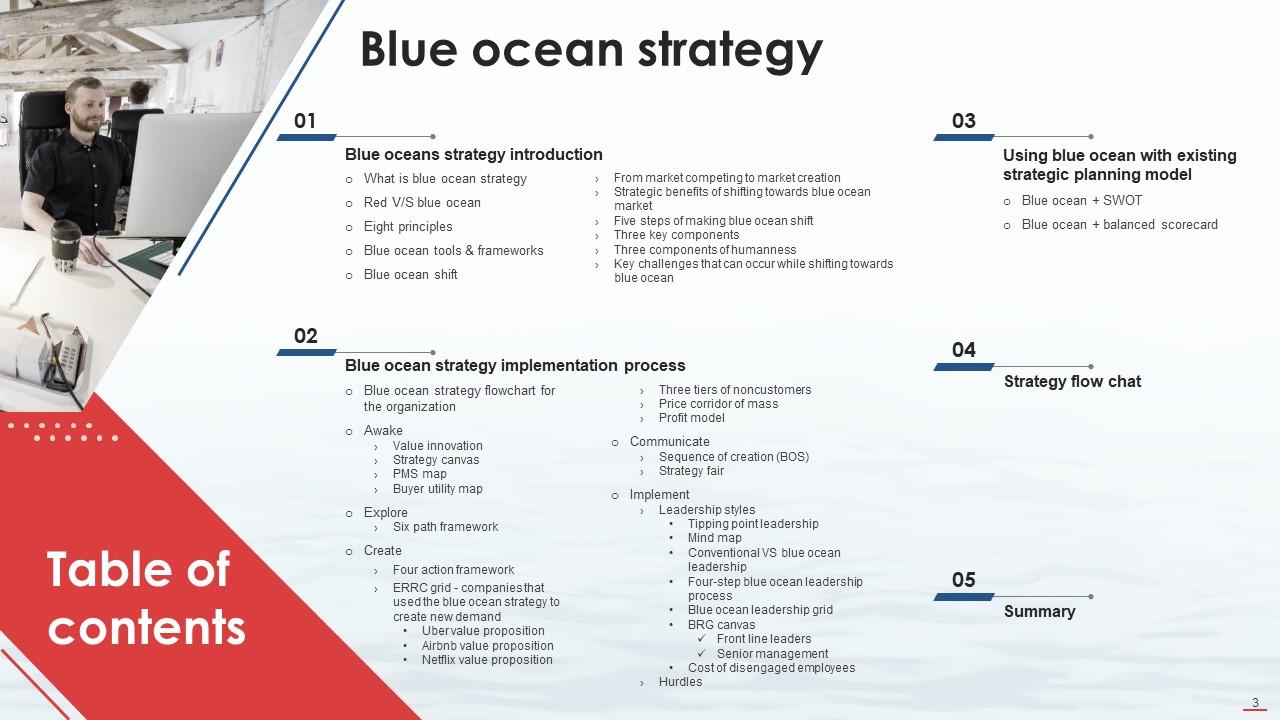
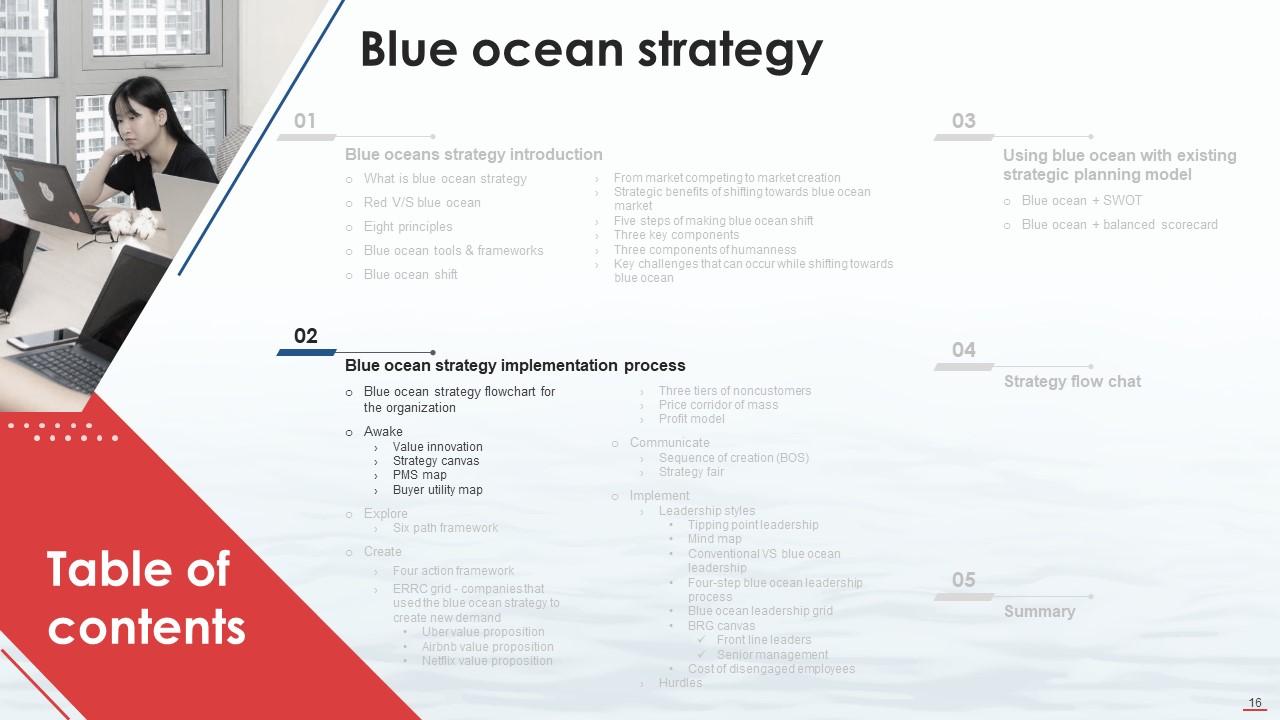
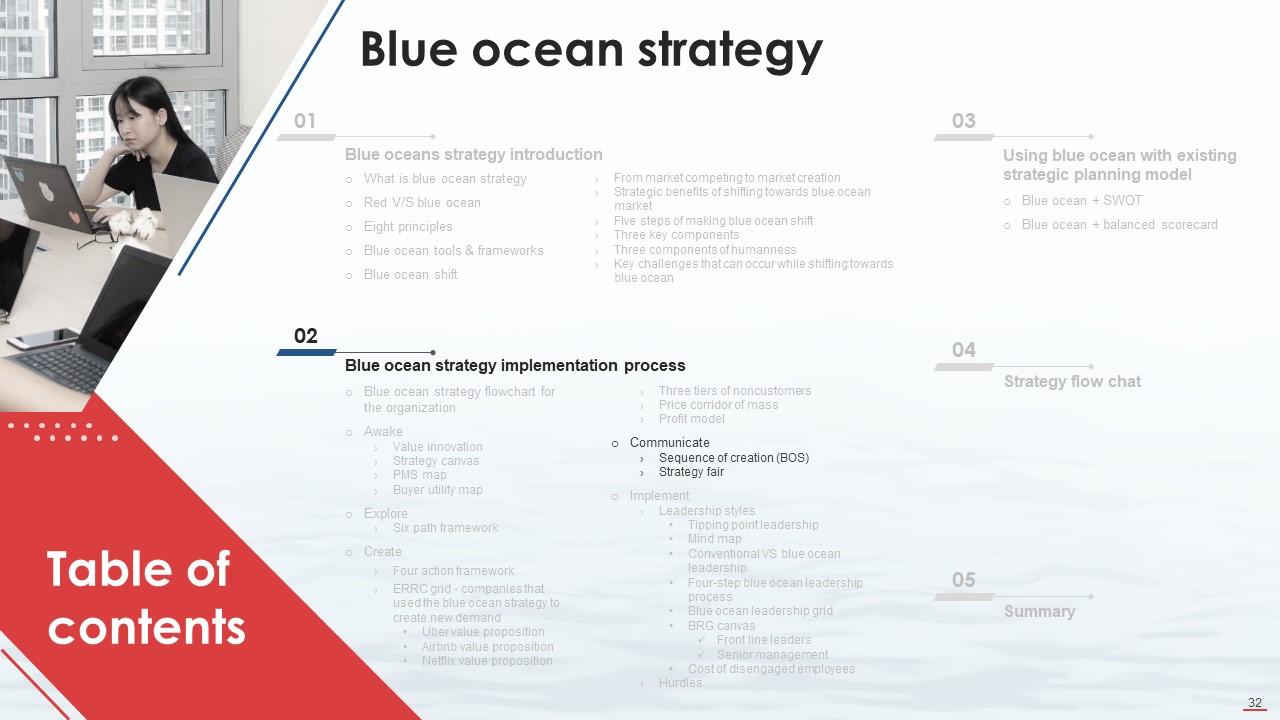
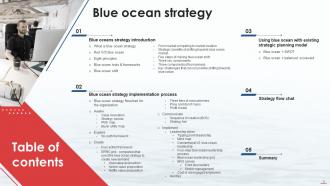
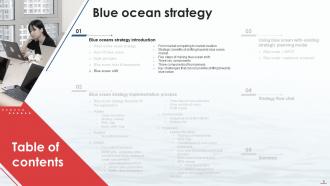
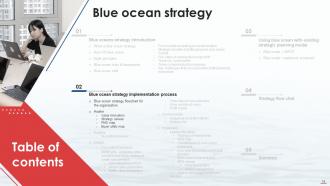
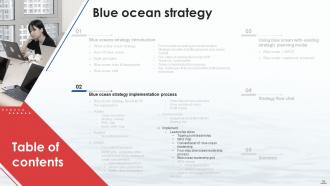
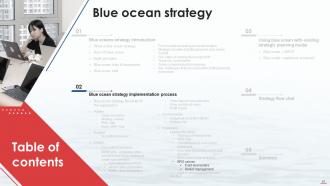
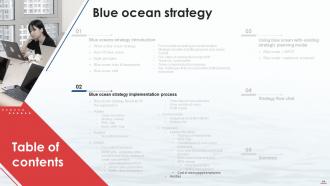
Folie 3 : Diese Folie erläutert das Inhaltsverzeichnis.
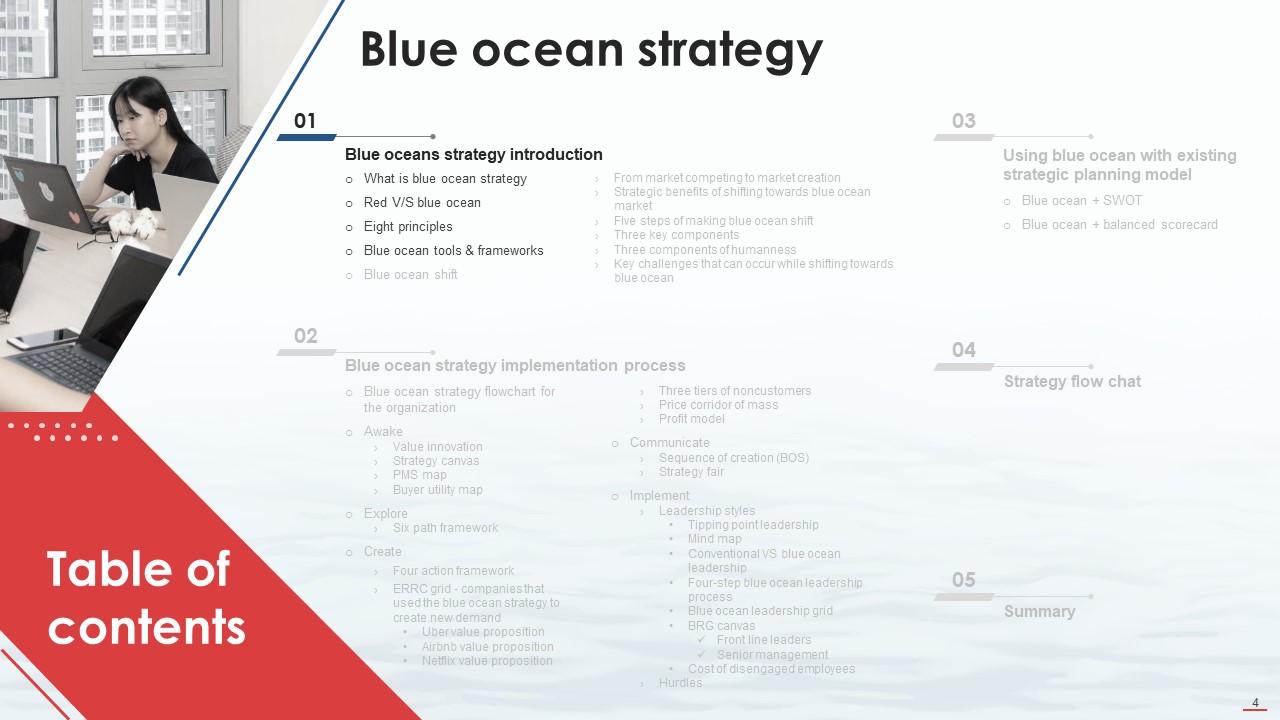
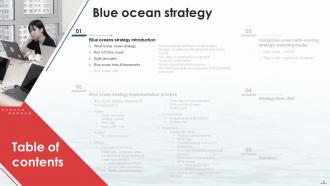
Folie 4 : Diese Folie hebt den Titel für die weiter zu behandelnden Themen hervor.
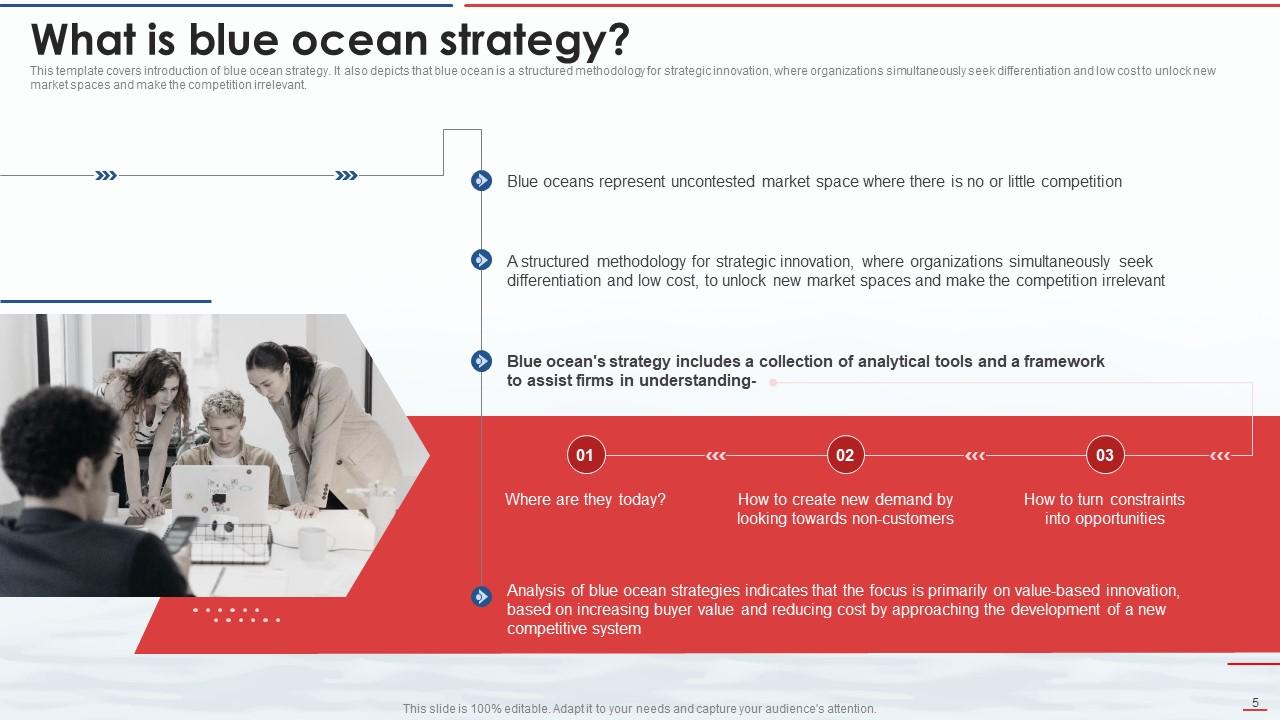
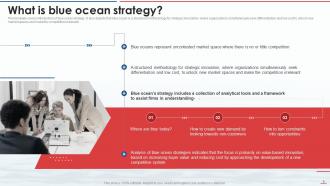
Folie 5 : Diese Vorlage behandelt die Einführung der Blue-Ocean-Strategie.
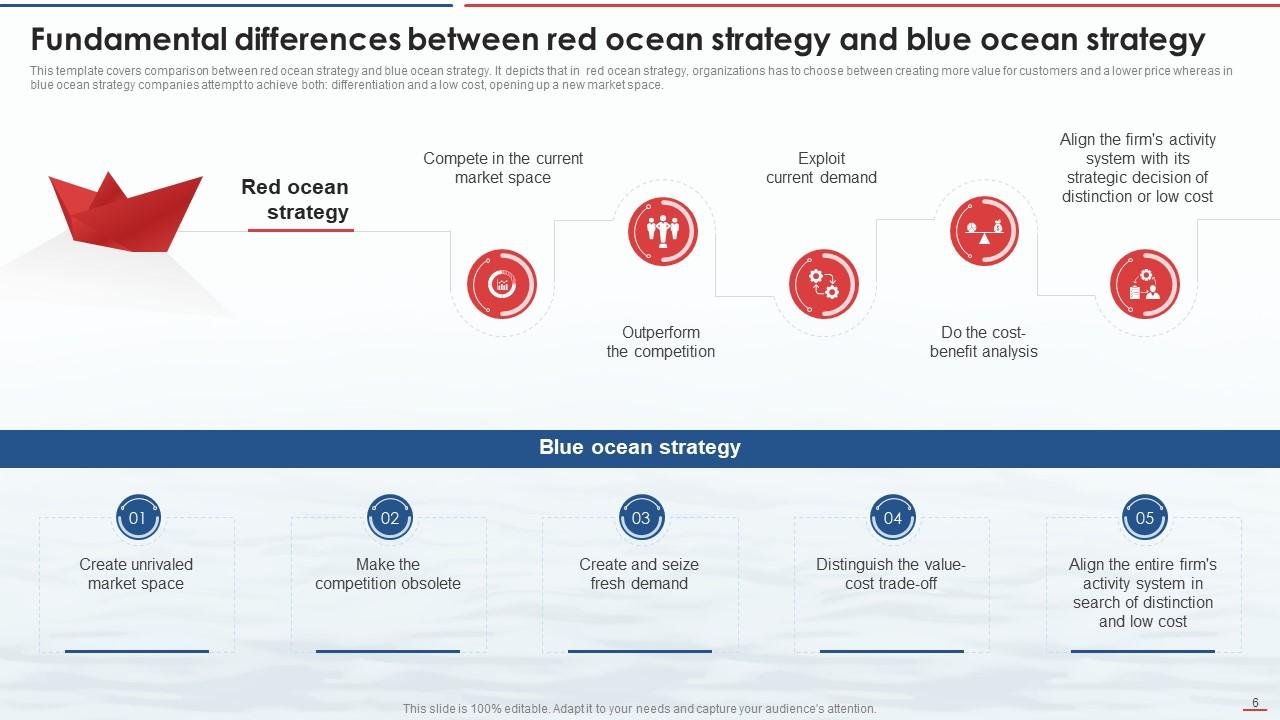
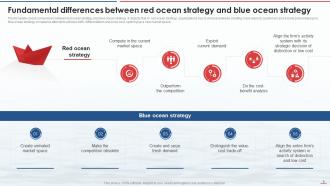
Folie 6 : Diese Vorlage zeigt den Vergleich zwischen der Red-Ocean-Strategie und der Blue-Ocean-Strategie.
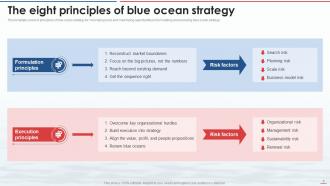
Folie 7 : Diese Vorlage umfasst 8 Prinzipien der Blue-Ocean-Strategie zur Minimierung von Risiken und Maximierung von Chancen.
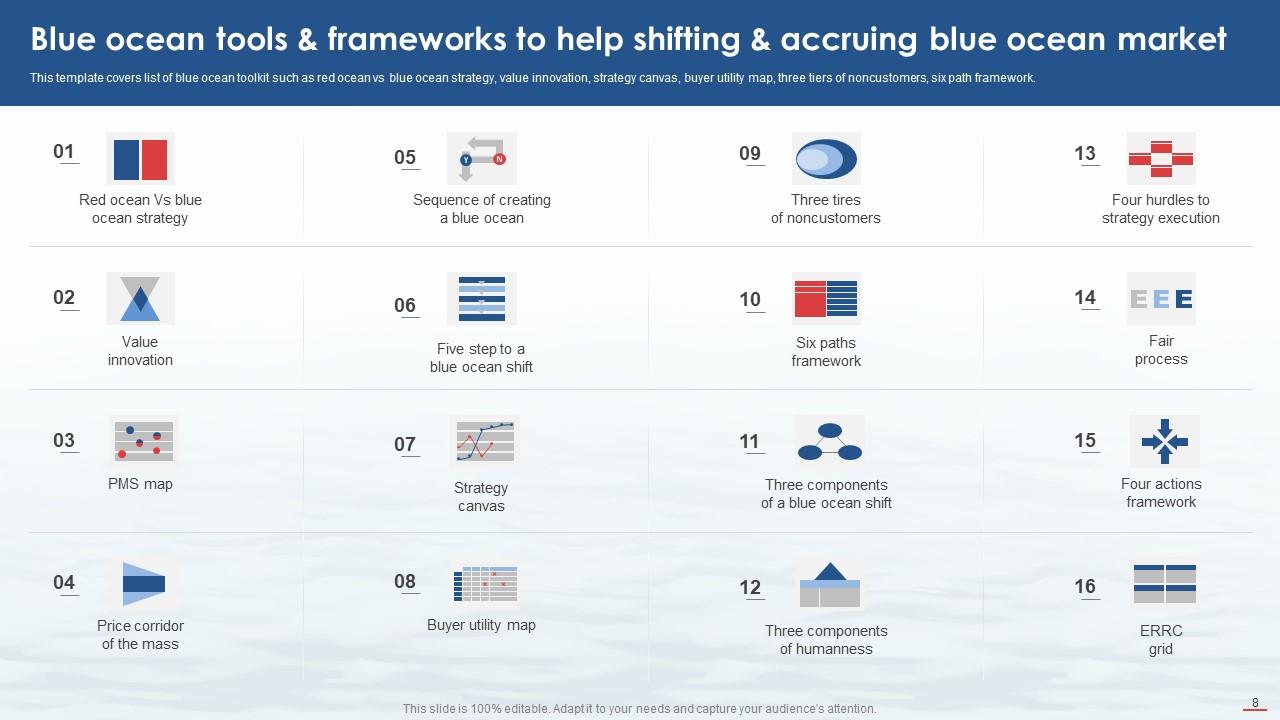
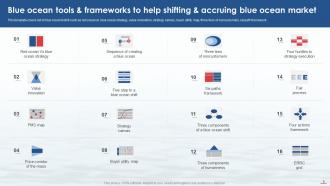
Folie 8 : Diese Vorlage enthält eine Liste von Blue-Ocean-Toolkits wie Red Ocean vs. Blue Ocean Strategy, Value Innovation, Strategy Canvas usw.
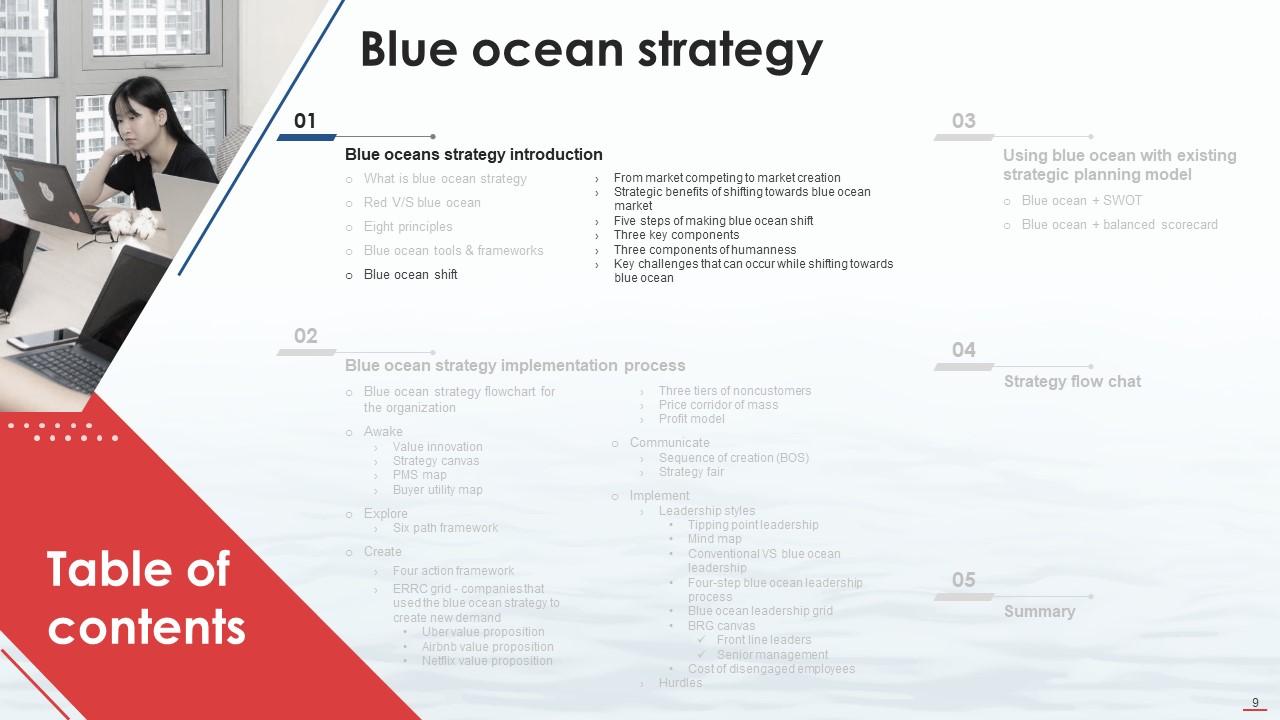
Folie 9 : Diese Folie enthält die Überschrift für die als nächstes zu diskutierenden Inhalte.
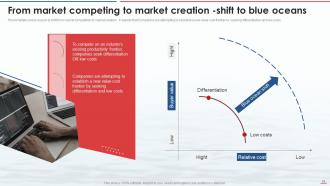
Folie 10 : Diese Vorlage zeigt den Grund für den Wechsel von Marktwettbewerb zu Marktschaffung.
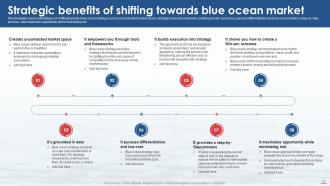
Folie 11 : Diese Folie zeigt die strategischen Vorteile der Umstellung auf den blauen Ozeanmarkt.
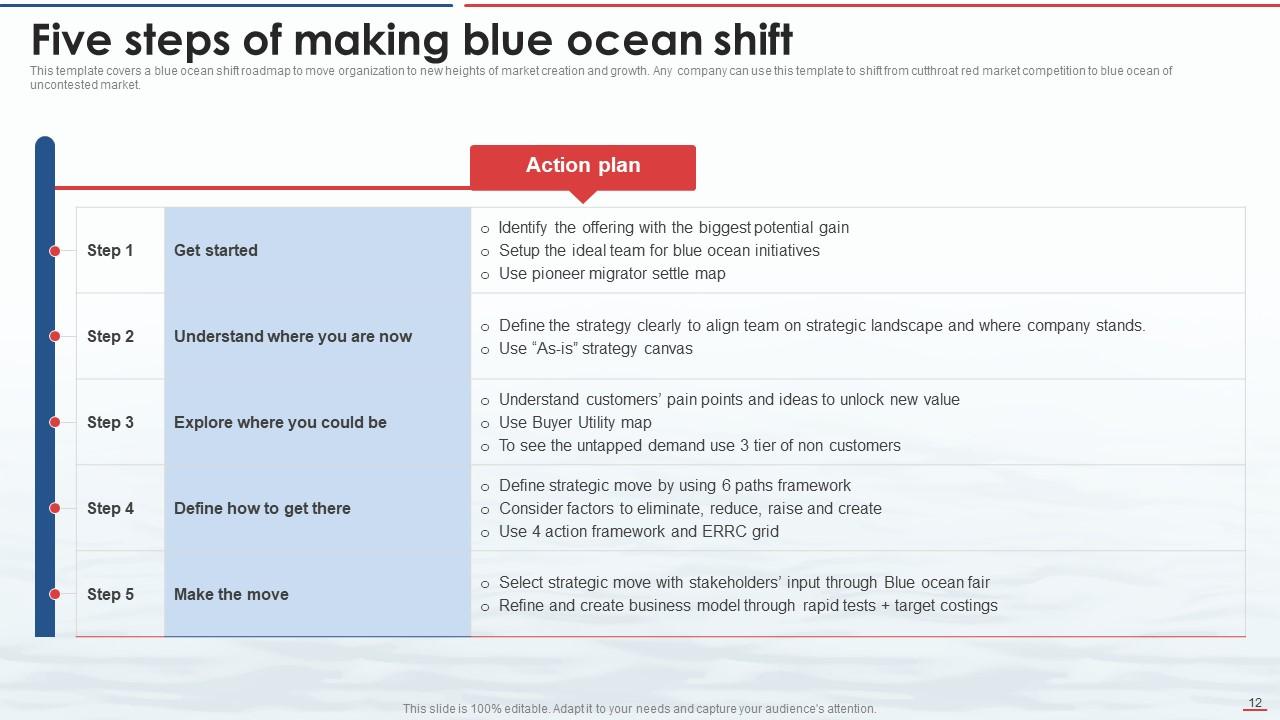
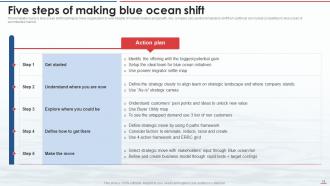
Folie 12 : Diese Folie listet die fünf Schritte auf, um den blauen Ozean zu verschieben.
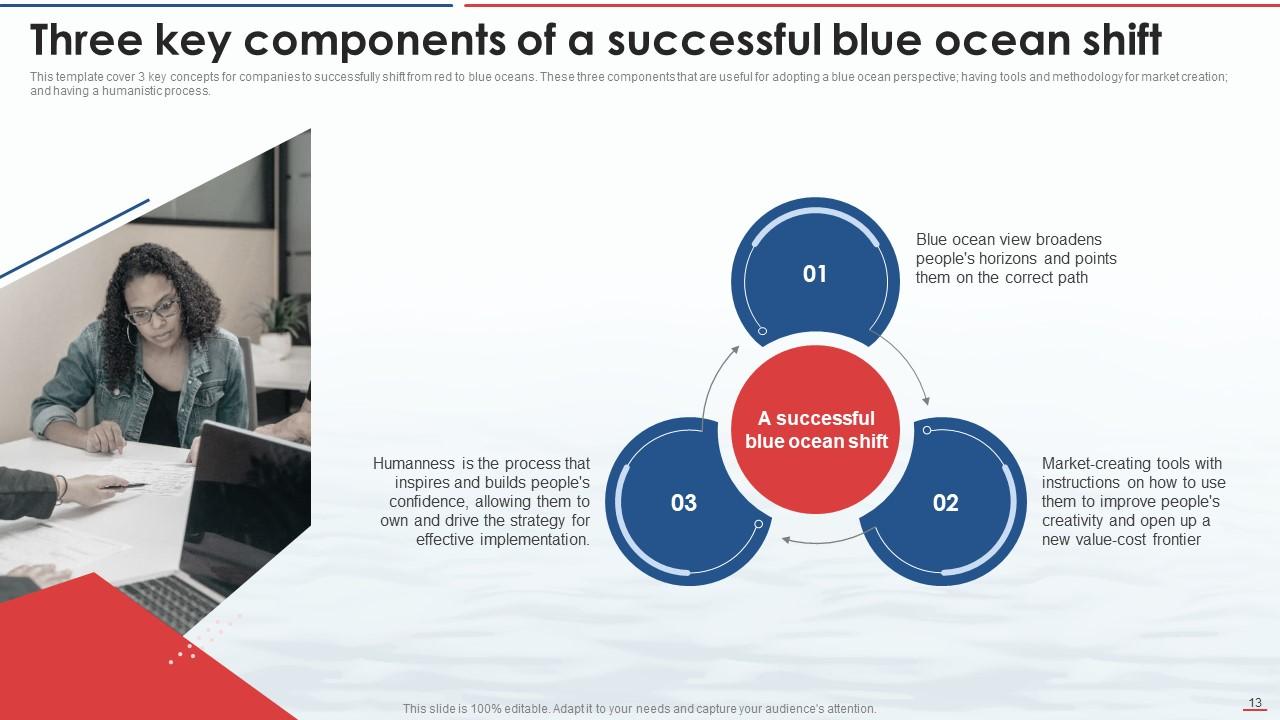
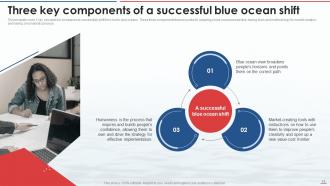
Folie 13 : Diese Folie hebt die drei Schlüsselkomponenten einer erfolgreichen Verschiebung des blauen Ozeans hervor.
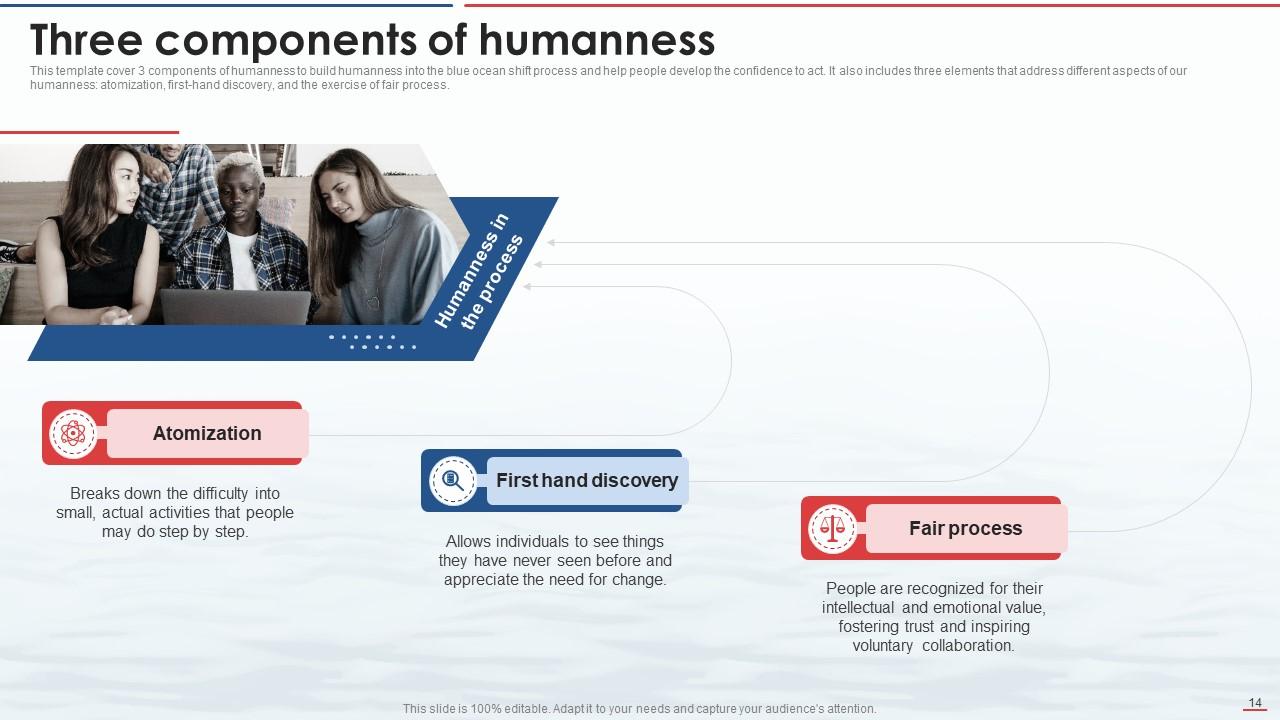
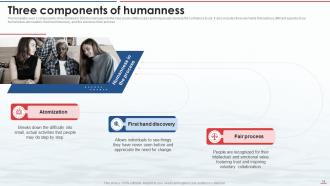
Folie 14 : Diese Folie erwähnt die drei Komponenten des Menschseins.
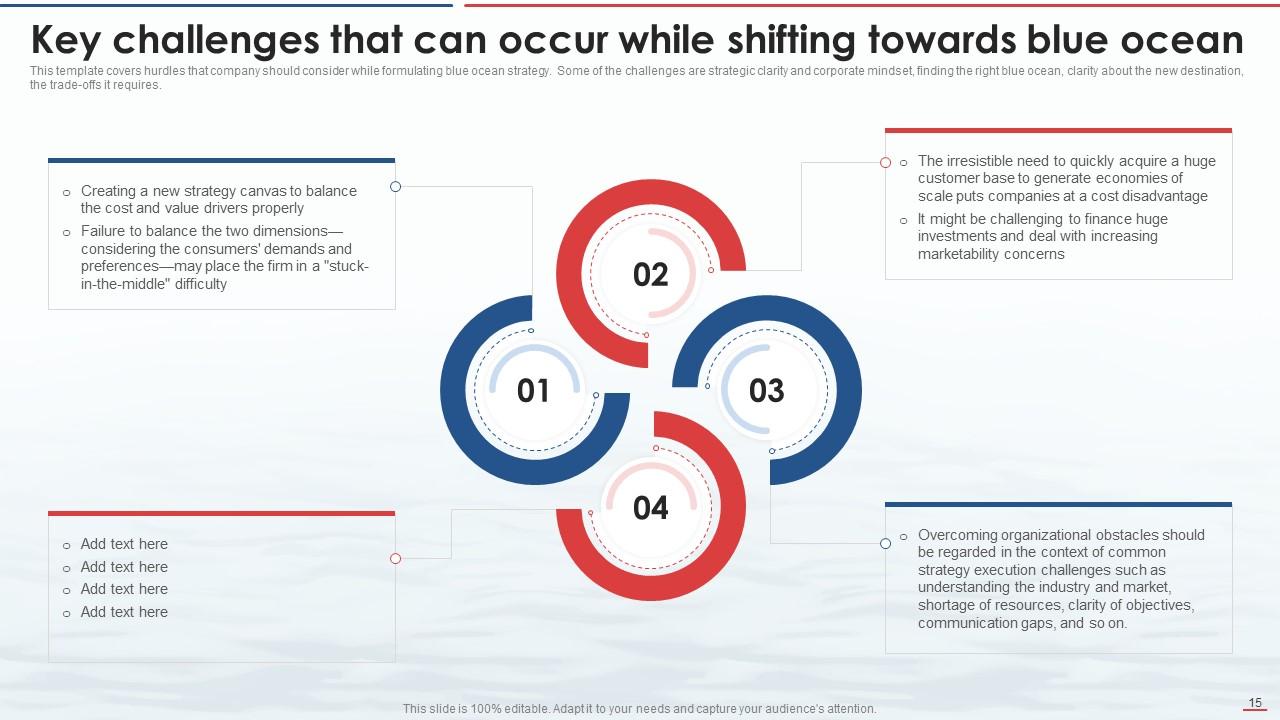
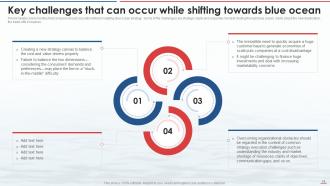
Folie 15 : Diese Folie konzentriert sich auf die wichtigsten Herausforderungen, die bei der Umstellung auf den blauen Ozean auftreten können.
Folie 16 : Diese Folie stellt den Titel für die Ideen dar, die in der kommenden Vorlage behandelt werden sollen.
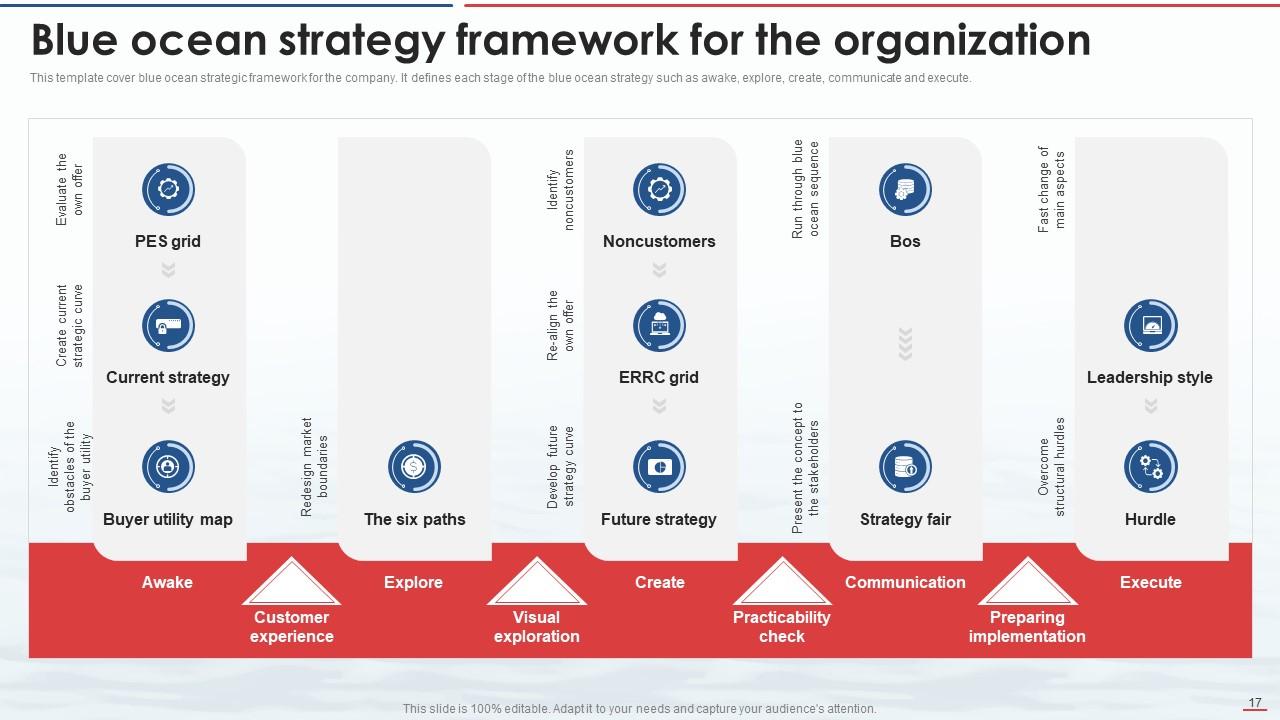
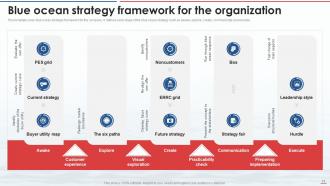
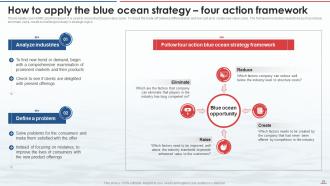
Folie 17 : Diese Vorlage deckt den strategischen Blue Ocean-Rahmen für das Unternehmen ab.
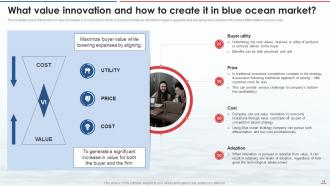
Folie 18 : Diese Folie unterstreicht die Kernwerte, Merkmale oder den Nutzen von Produkten oder Dienstleistungen, die dem Käufer geliefert werden.
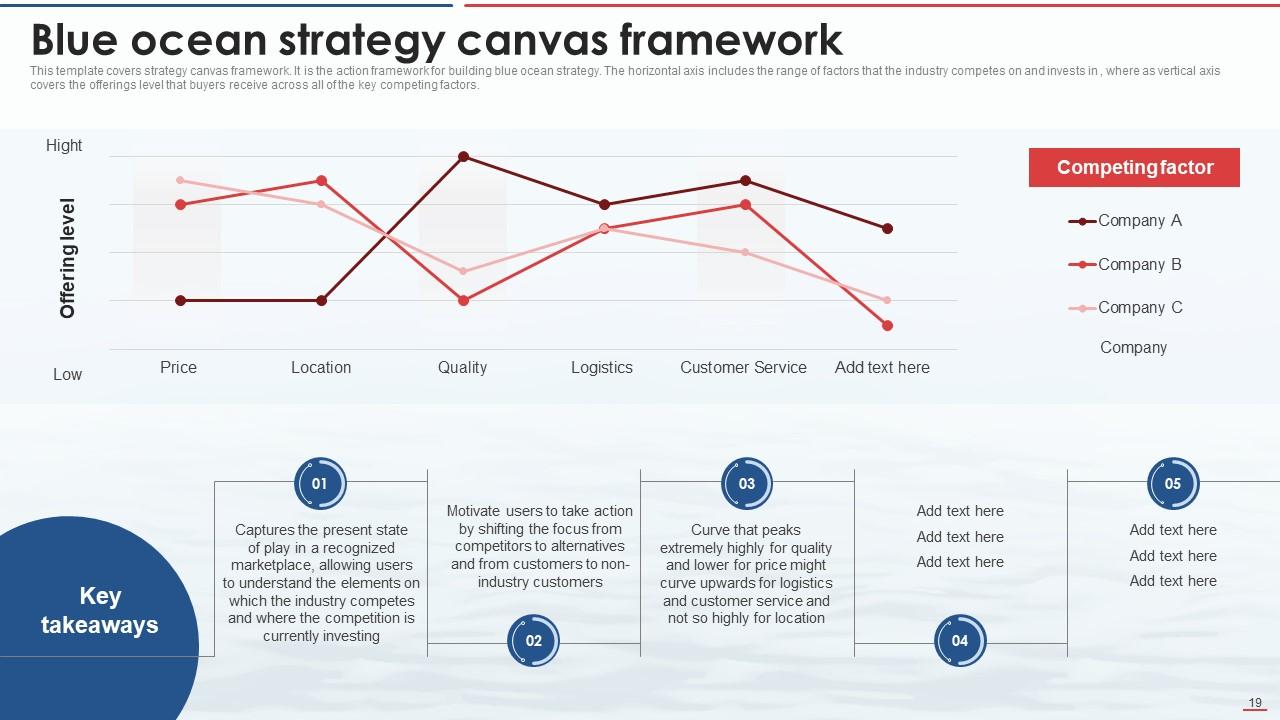
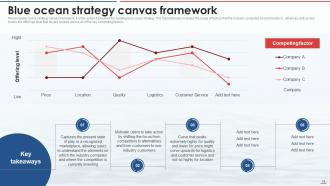
Folie 19 : Diese Vorlage zeigt das Strategie-Canvas-Framework.
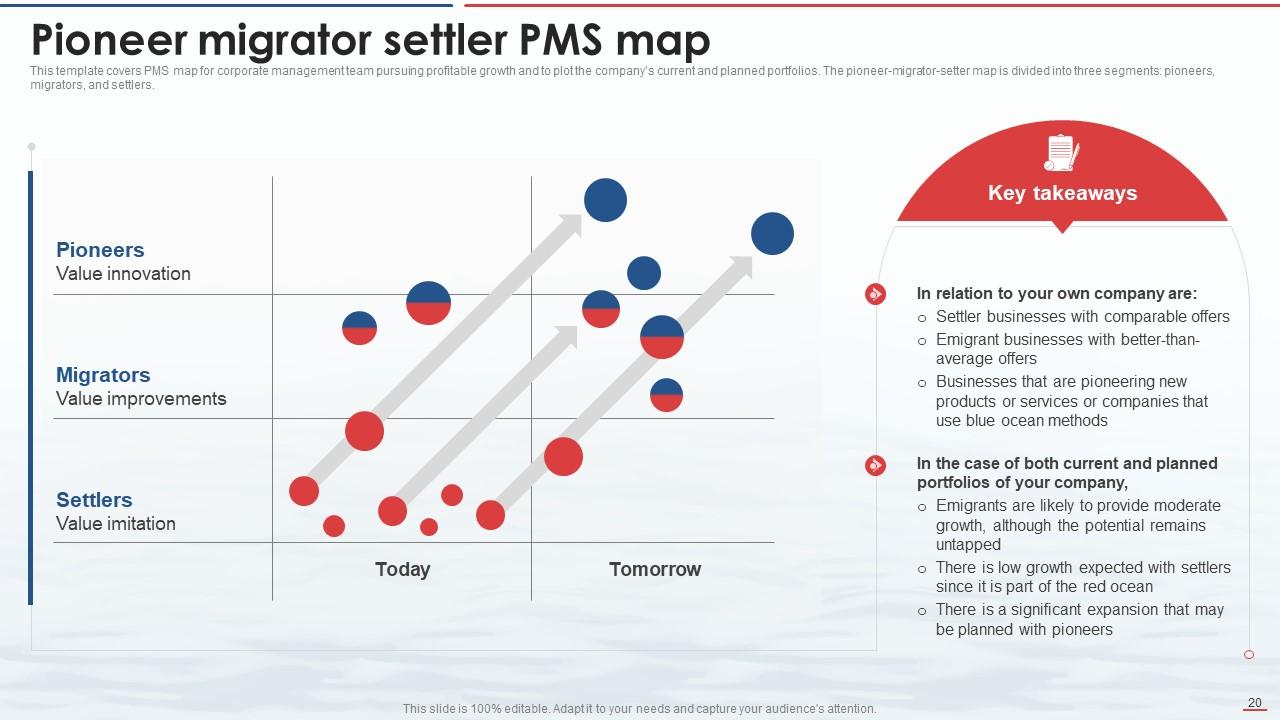
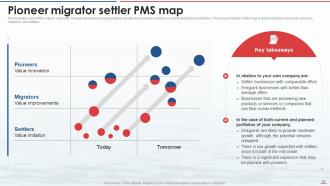
Folie 20 : Diese Vorlage veranschaulicht die PMS-Karte für das Unternehmensmanagementteam, das profitables Wachstum anstrebt, und um die aktuellen und geplanten Portfolios des Unternehmens darzustellen.
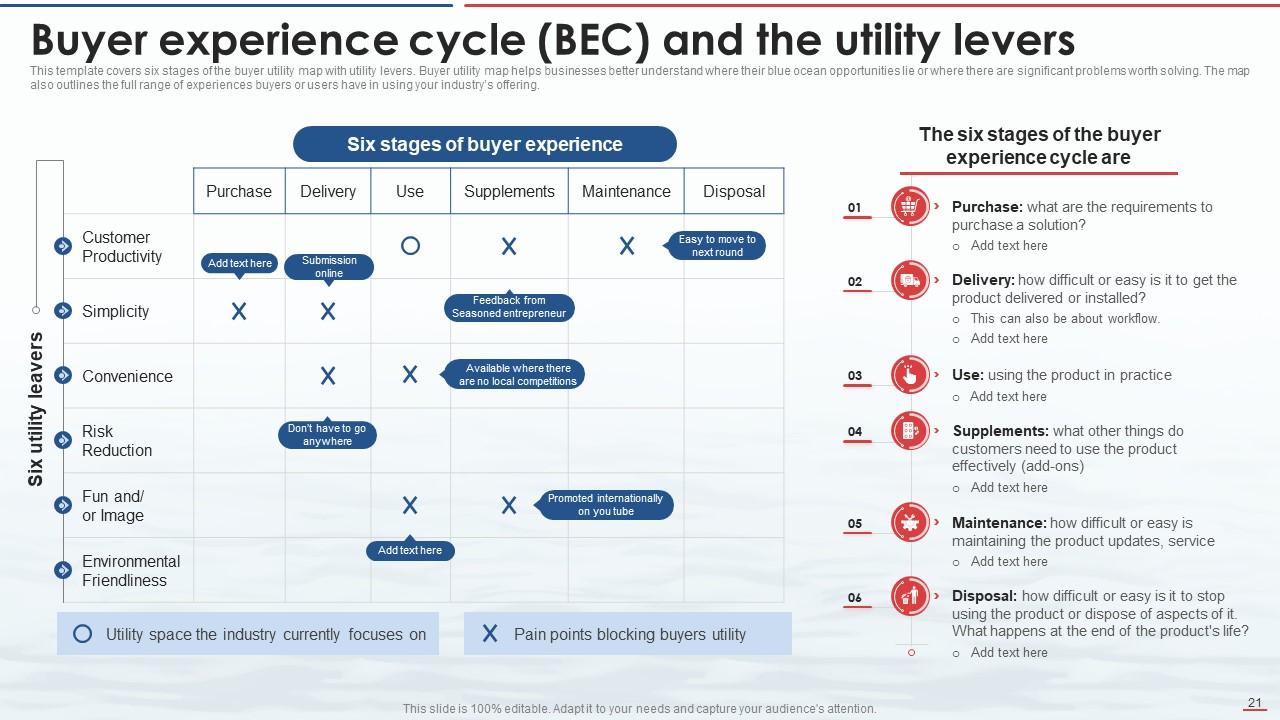
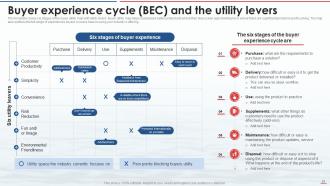
Folie 21 : Diese Vorlage enthält die sechs Phasen der Käufernutzenkarte mit Nutzenhebeln.
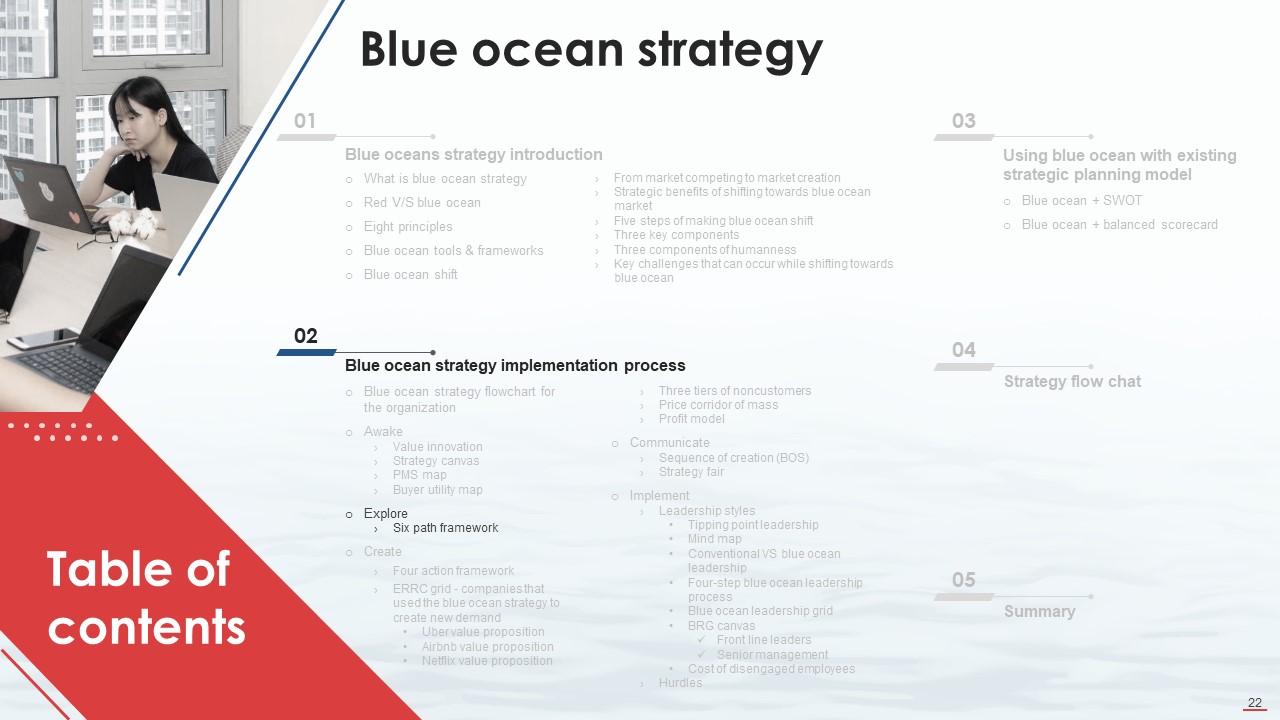
Folie 22 : Diese Folie zeigt die Überschrift für die als nächstes zu diskutierenden Ideen.
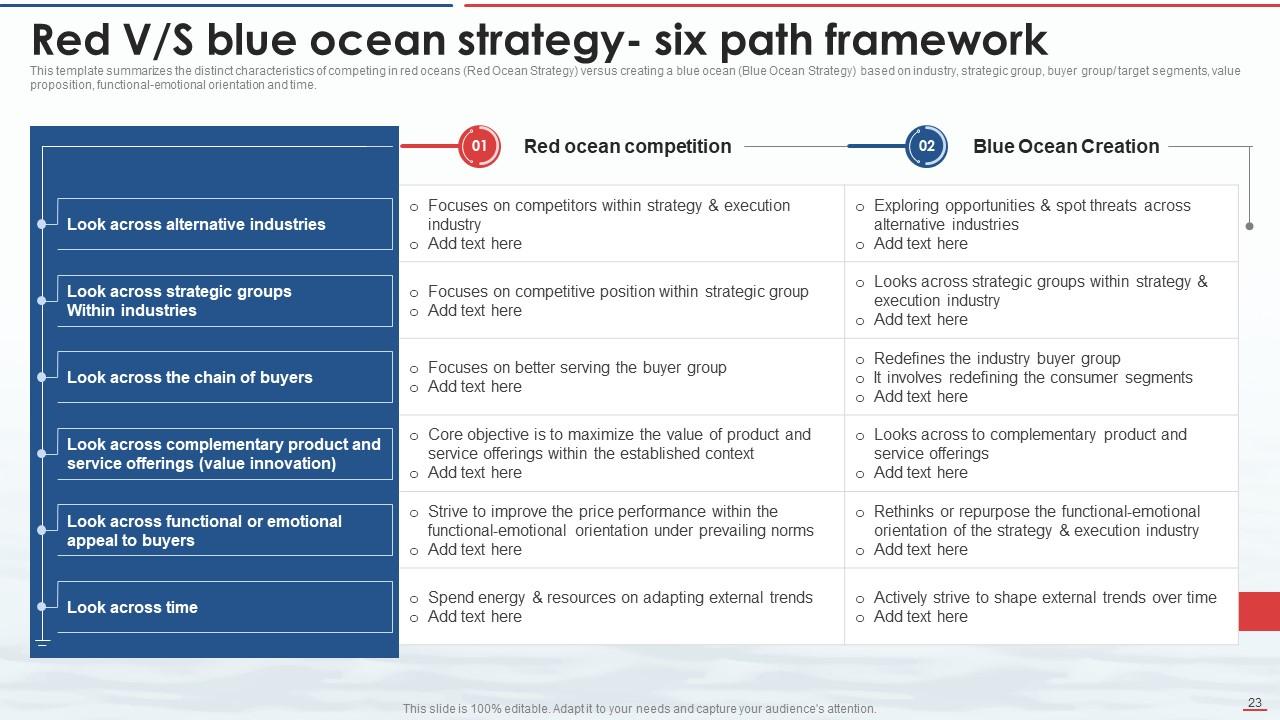
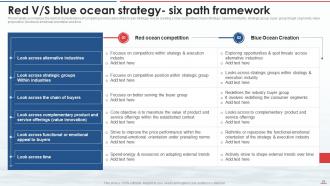
Folie 23 : Diese Vorlage fasst die unterschiedlichen Merkmale des Wettbewerbs in roten Ozeanen (Red Ocean Strategy) gegenüber der Schaffung eines blauen Ozeans (Blue Ocean Strategy) basierend auf Branche, strategischer Gruppe, Käufergruppe/Zielsegmenten usw. zusammen.
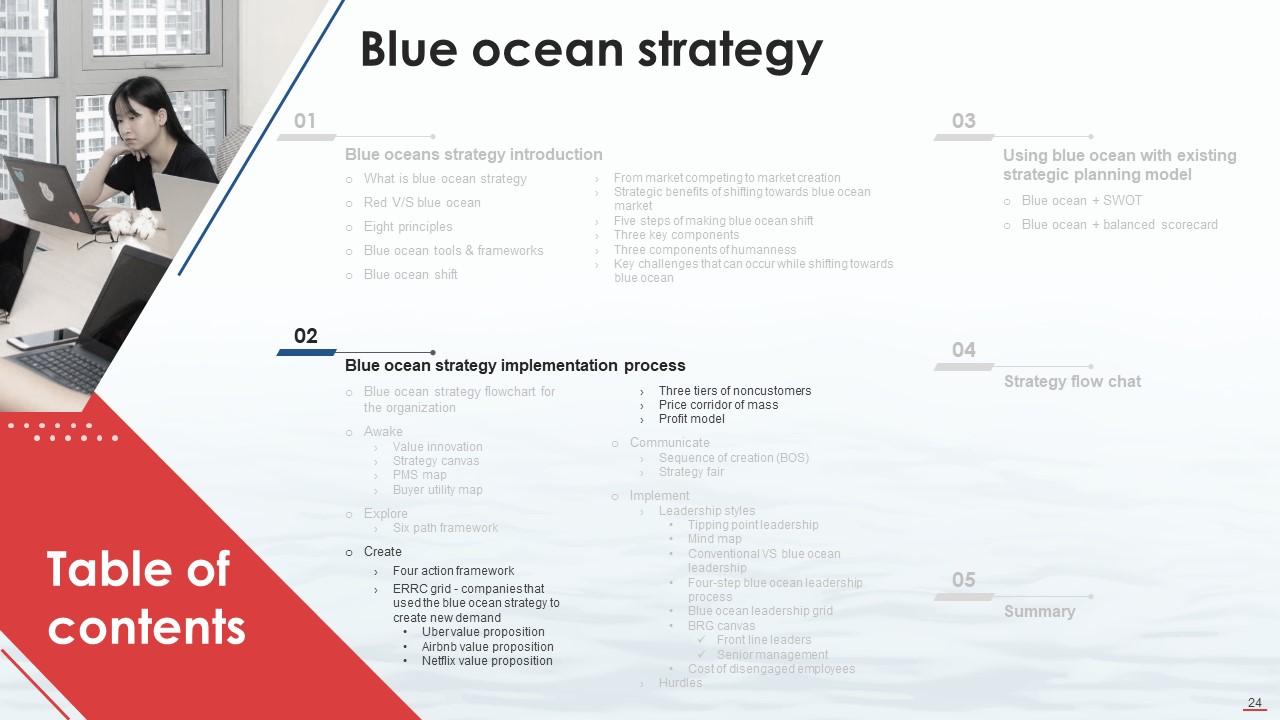
Folie 24 : Diese Folie hebt den Titel für die als nächstes zu besprechenden Komponenten hervor.
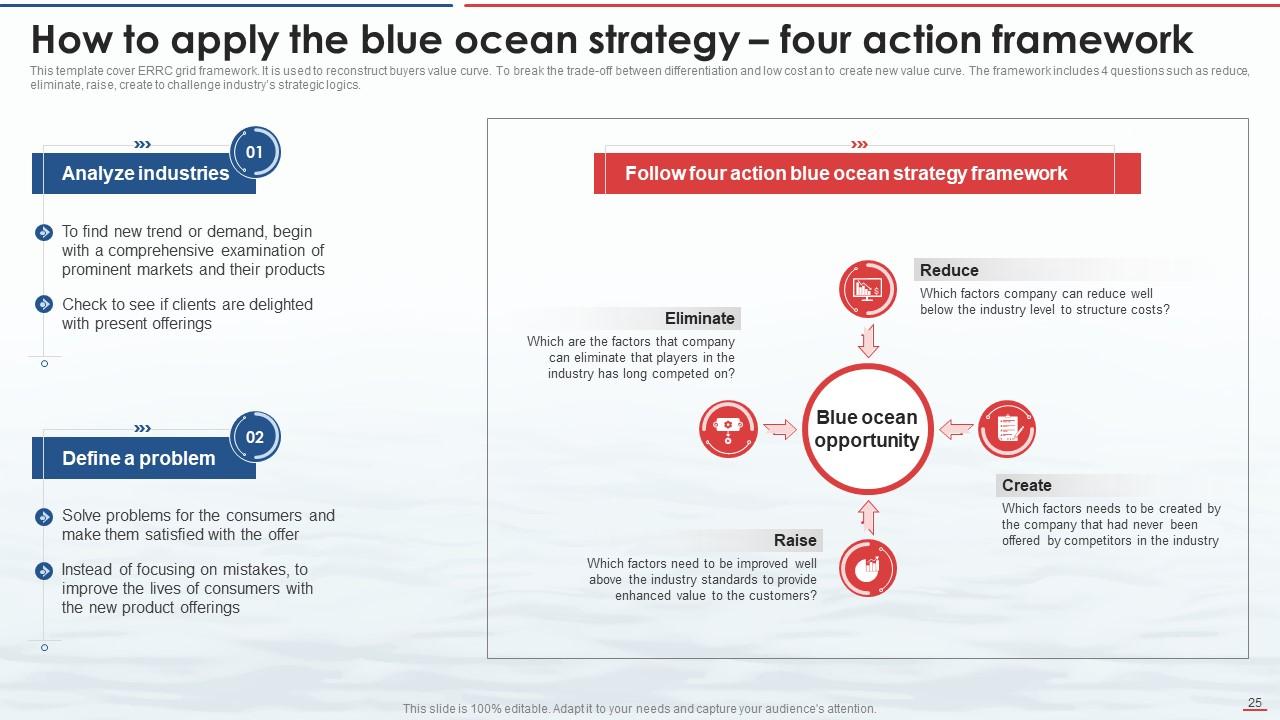
Folie 25 : Diese Vorlage veranschaulicht das ERRC-Grid-Framework.
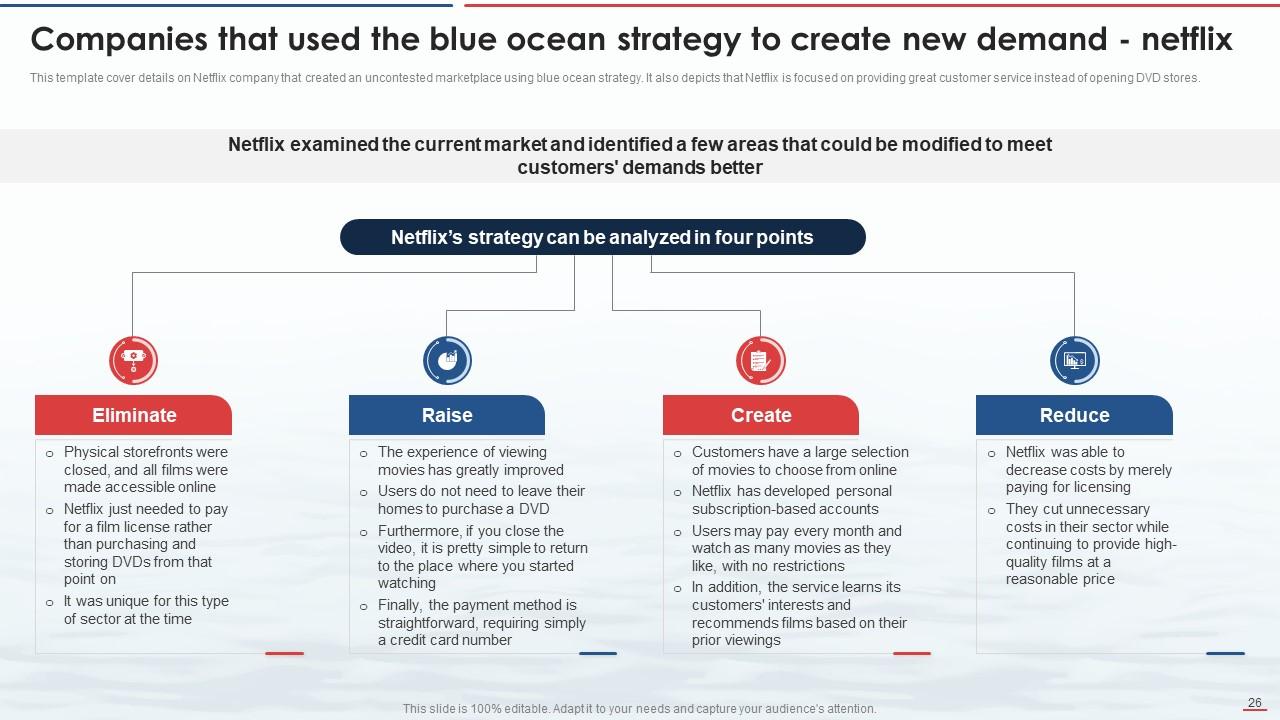
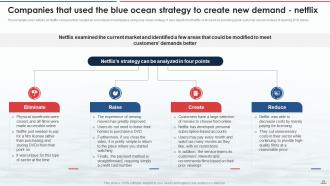
Folie 26 : Diese Vorlage zeigt Details zum Netflix-Unternehmen, das mithilfe der Blue-Ocean-Strategie einen unbestrittenen Marktplatz geschaffen hat.
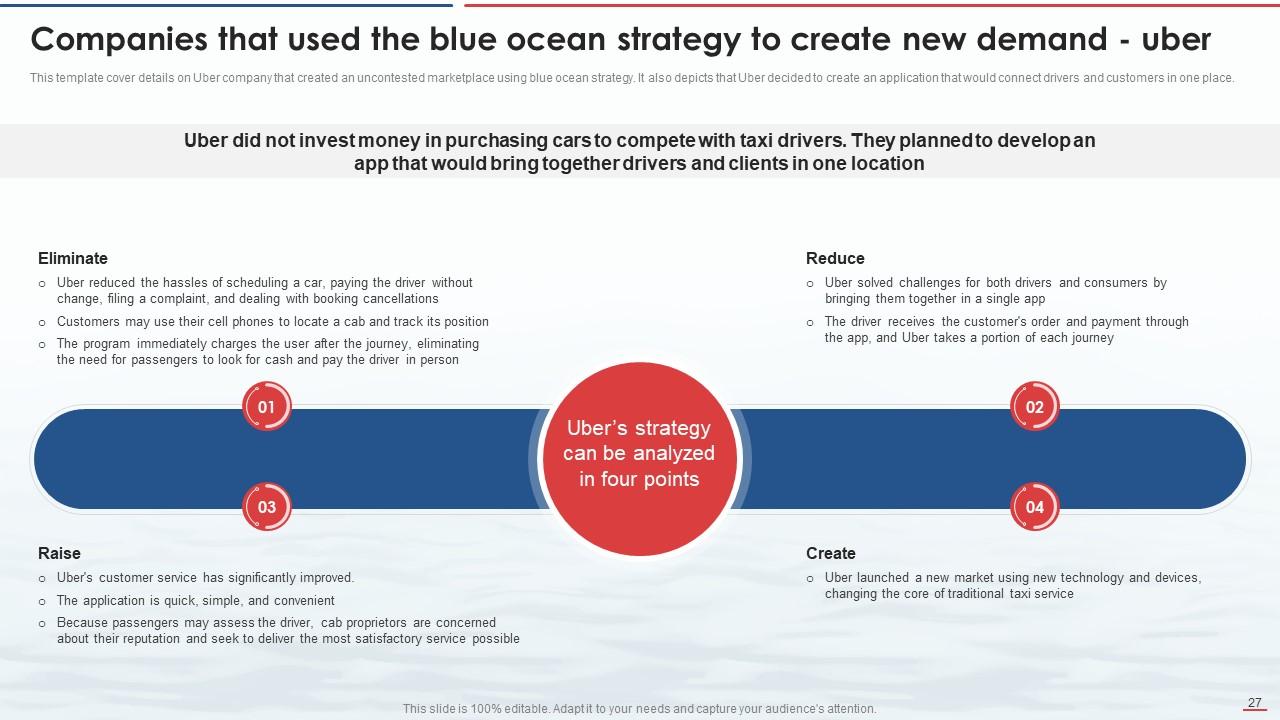
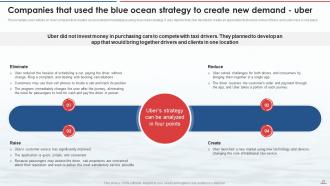
Folie 27 : Diese Vorlage beschreibt das Unternehmen Uber, das mit der Blue-Ocean-Strategie einen unbestrittenen Marktplatz geschaffen hat.
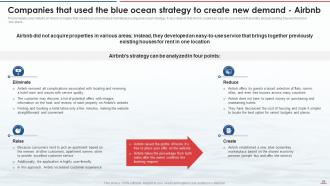
Folie 28 : Diese Vorlage enthält Details zu Airbnb-Unternehmen, die einen unbestrittenen Marktplatz mithilfe der Blue-Ocean-Strategie geschaffen haben.
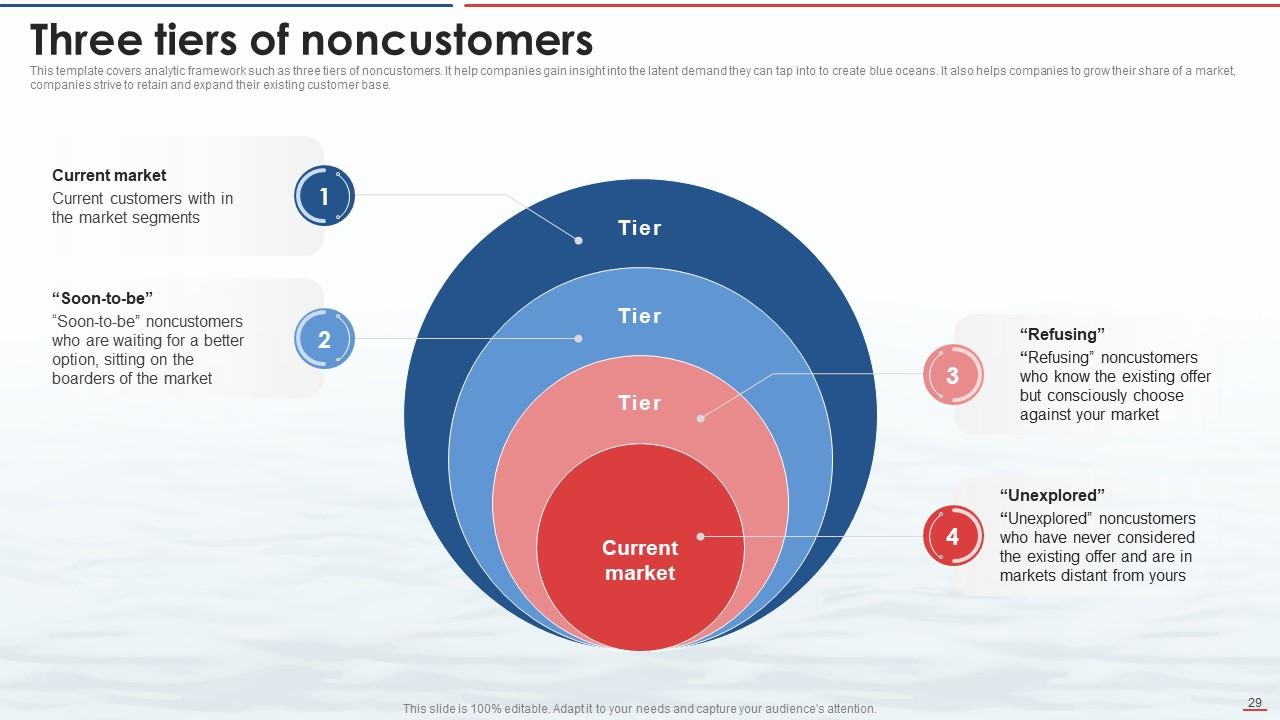
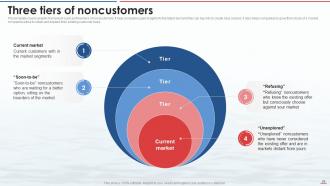
Folie 29 : Diese Vorlage stellt einen analytischen Rahmen dar, wie z. B. drei Stufen von Nichtkunden.
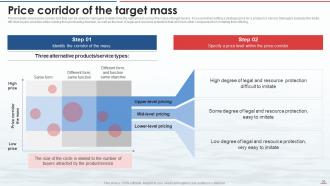
Folie 30 : Diese Vorlage konzentriert sich auf das Preiskorridor-Tool, das von Managern verwendet werden kann, um den richtigen Preis zu bestimmen, um die Masse der Zielkäufer freizuschalten.
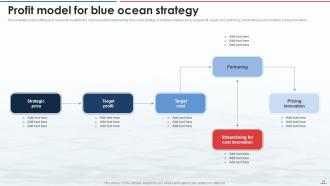
Folie 31 : Diese Vorlage zeigt das Gewinnmodell für die Blue-Ocean-Strategie.
Folie 32 : Diese Folie enthält die Überschrift für die als nächstes zu diskutierenden Themen.
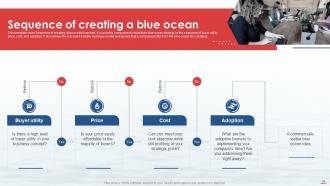
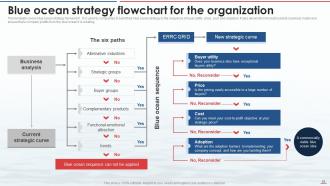
Folie 33 : Diese Vorlage gibt die Abfolge der Erstellung eines blauen Ozean-Flussdiagramms an.
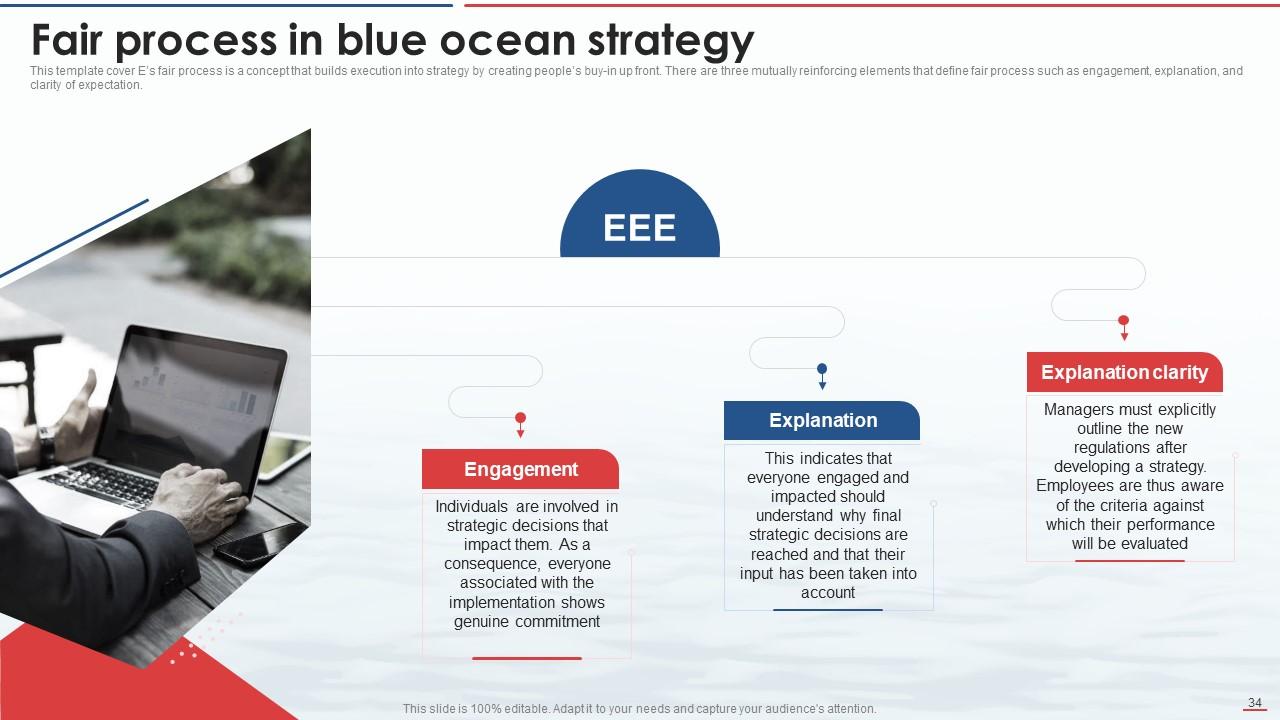
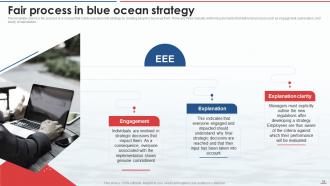
Folie 34 : Diese Vorlage zeigt, dass der faire Prozess von E ein Konzept ist, das die Umsetzung in die Strategie einbaut, indem es die Zustimmung der Mitarbeiter im Voraus schafft.
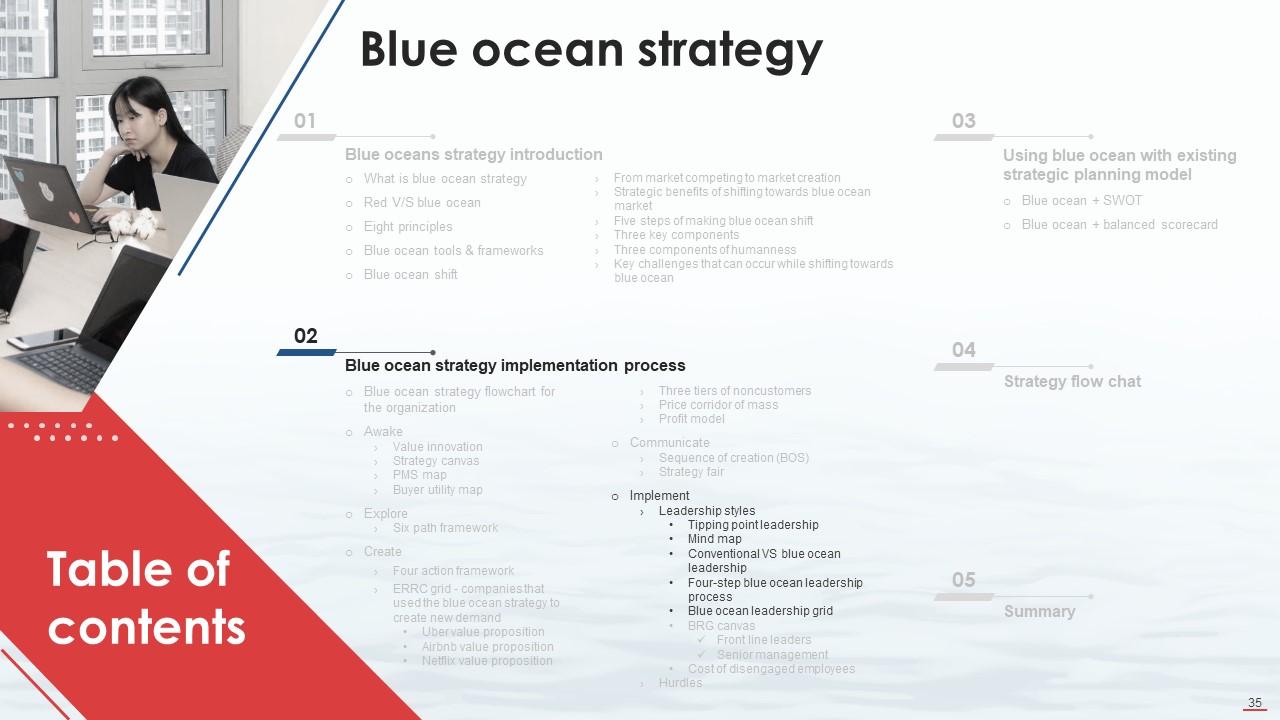
Folie 35 : Diese Folie zeigt den Titel für die weiter zu behandelnden Themen.
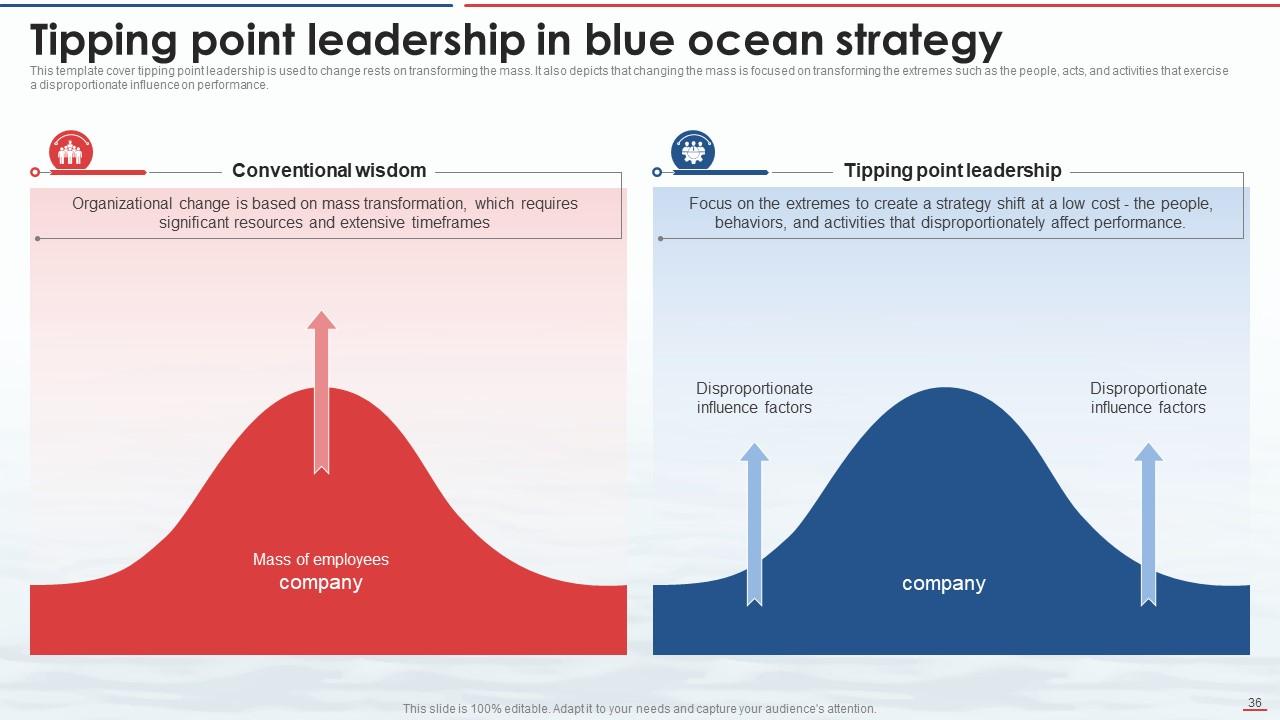
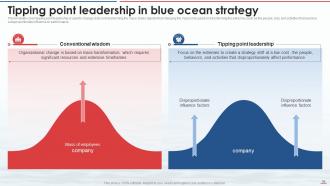
Folie 36 : Diese Vorlage befasst sich mit der Tipping-Point-Führung in der Blue-Ocean-Strategie.
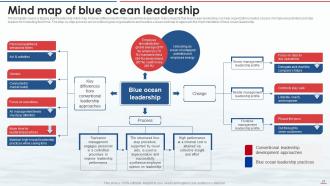
Folie 37 : Diese Vorlage umfasst eine Mindmap für Führung an einem Wendepunkt.
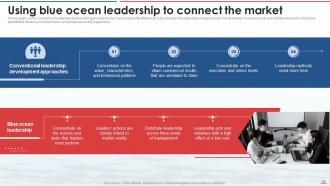
Folie 38 : Diese Folie konzentriert sich auf die Nutzung der Blue Ocean Leadership, um den Markt zu vernetzen.
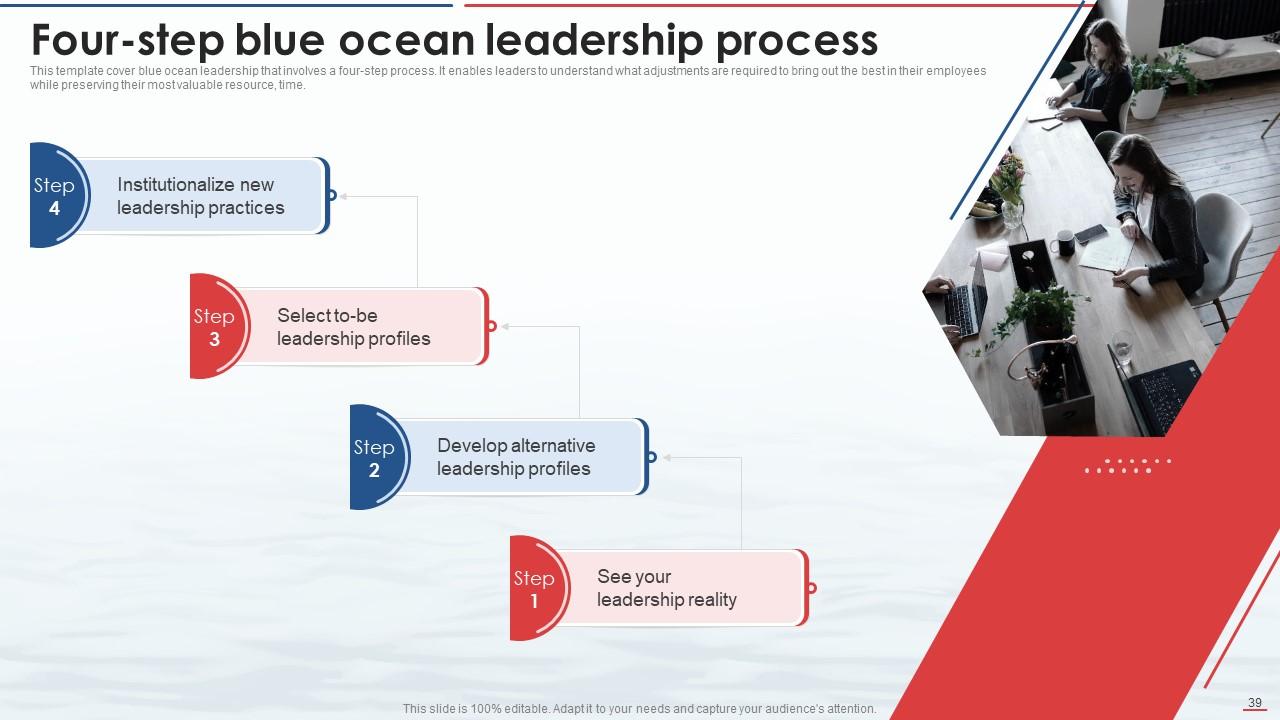
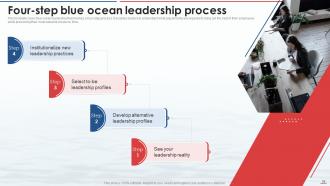
Folie 39 : Diese Vorlage beinhaltet Blue Ocean Leadership, das einen vierstufigen Prozess umfasst.
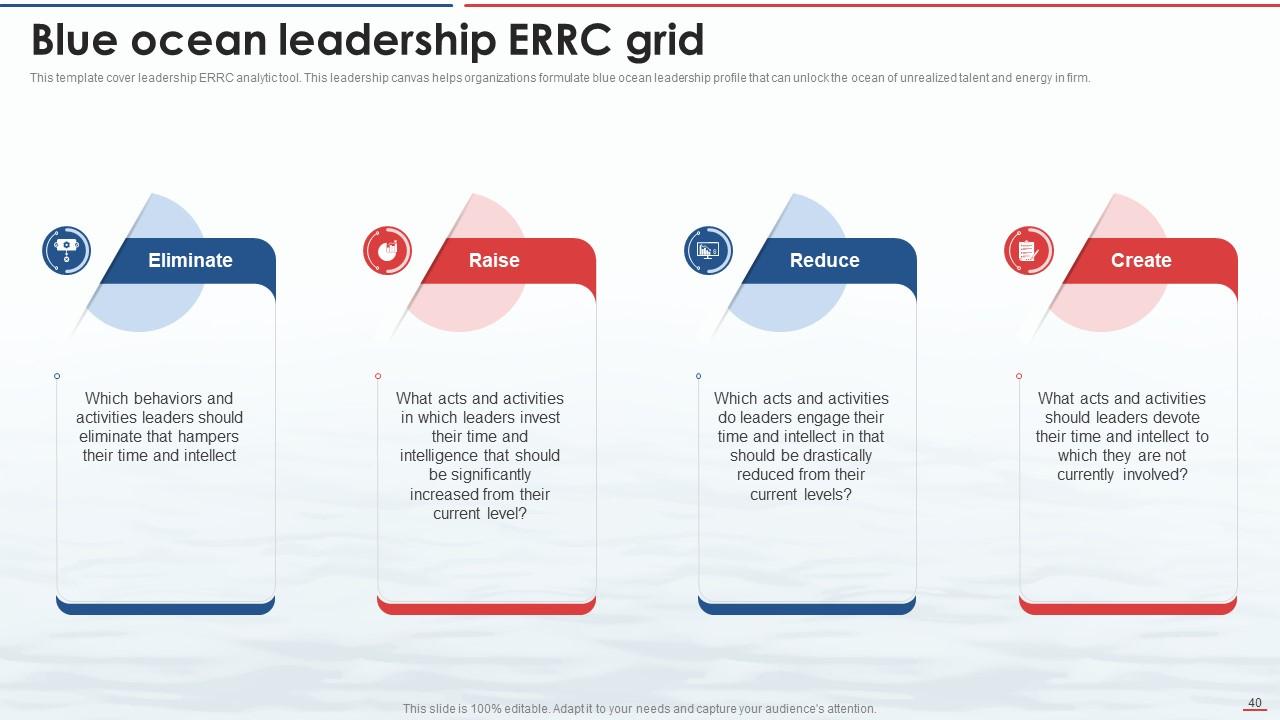
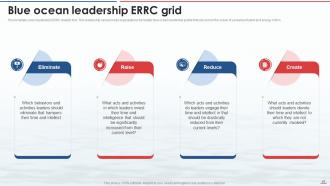
Folie 40 : Diese Vorlage zeigt das Führungs-ERRC-Analysetool.
Folie 41 : Diese Folie erläutert die Überschrift für die Komponenten, die in der folgenden Vorlage behandelt werden sollen.
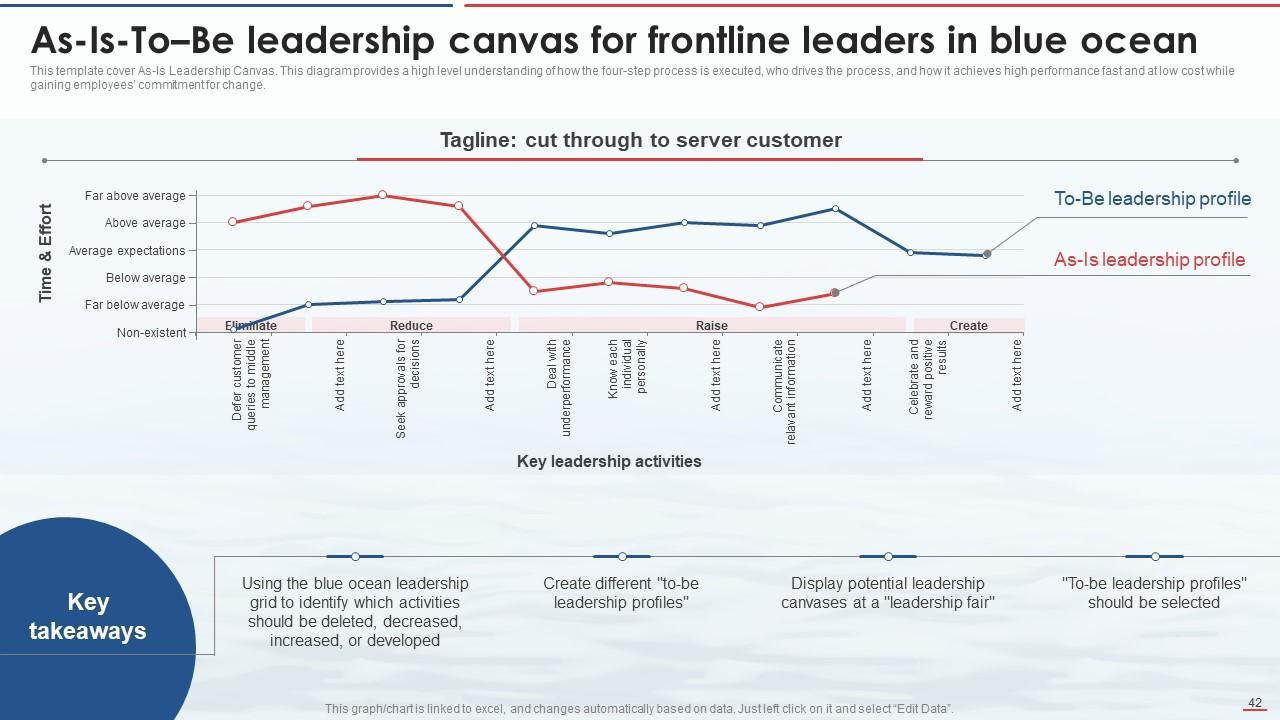
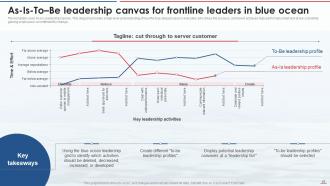
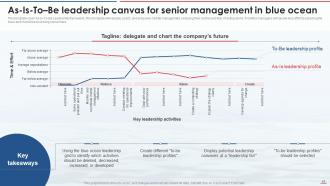
Folie 42 : Diese Vorlage enthält den As-Is-Leadership-Canvas.
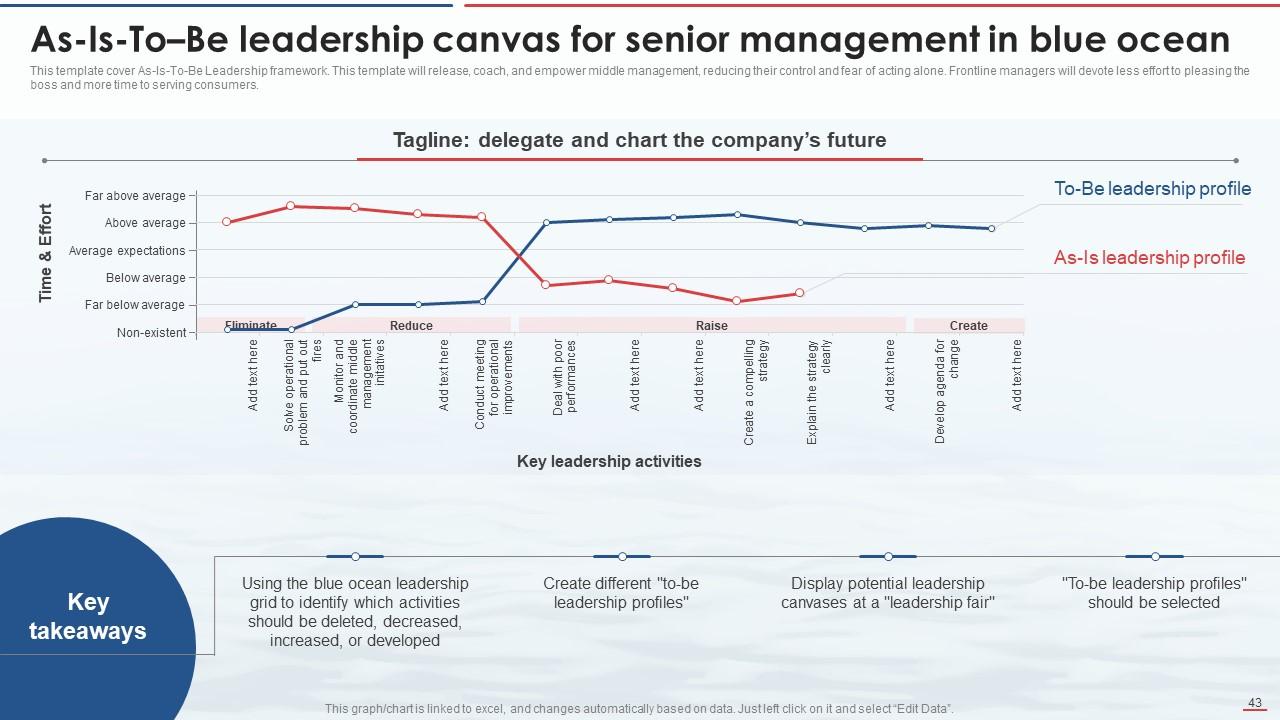
Folie 43 : Diese Folie veranschaulicht das As-is-to-be-Führungskonzept.
Folie 44 : Diese Folie zeigt den Titel für die als nächstes zu diskutierenden Themen.
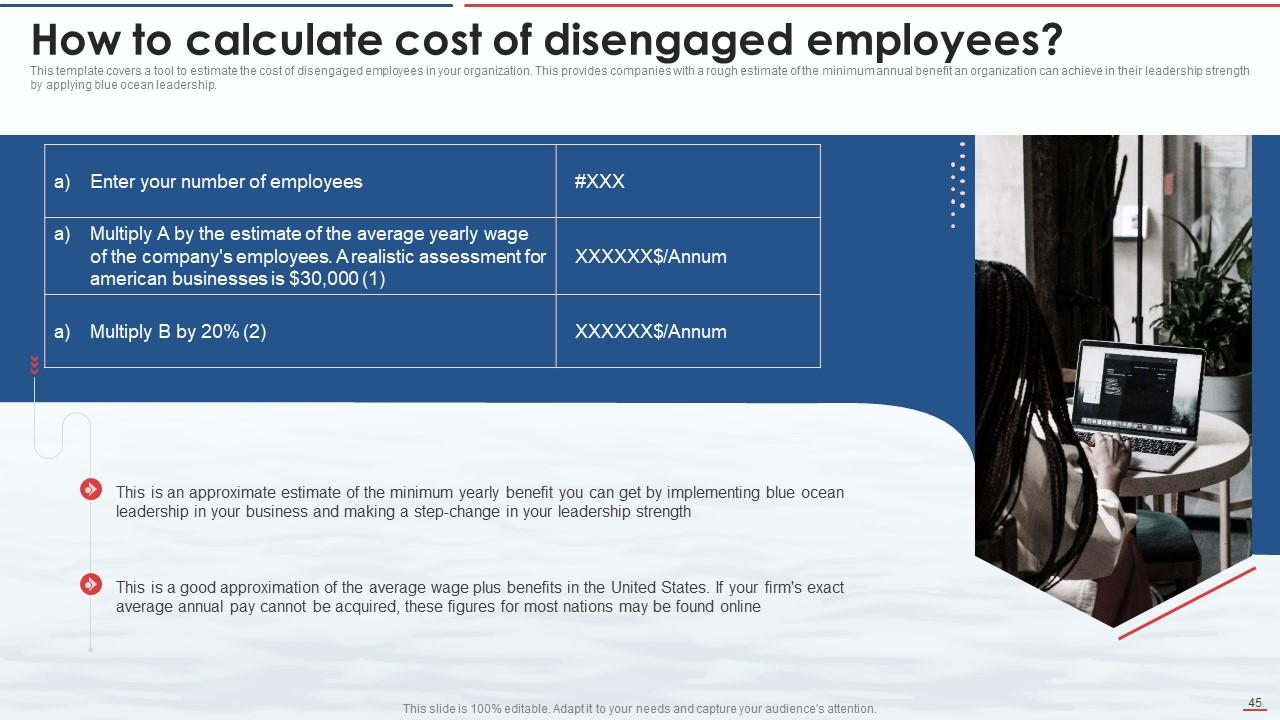
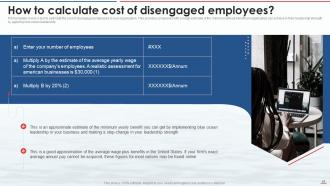
Folie 45 : Diese Vorlage erläutert ein Tool zur Schätzung der Kosten von nicht engagierten Mitarbeitern in Ihrer Organisation.
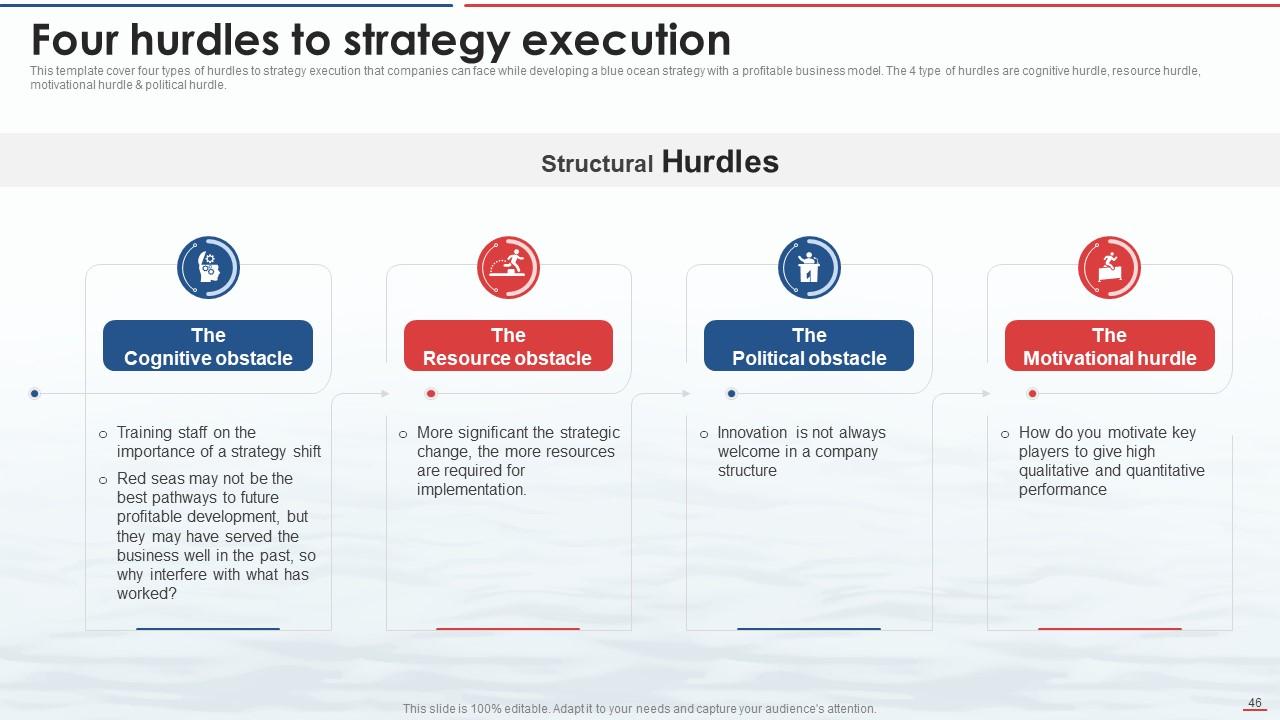
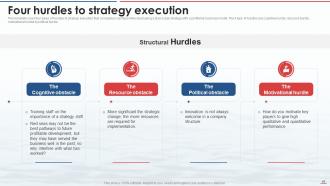
Folie 46 : Diese Folie konzentriert sich auf die vier Hürden für die Strategieumsetzung.
Folie 47 : Diese Folie hebt die Überschrift für die Ideen hervor, die in der bevorstehenden Vorlage behandelt werden sollen.
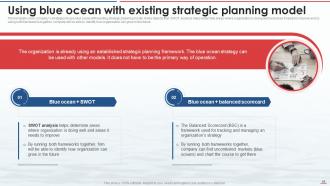
Folie 48 : Diese Folie befasst sich mit der Verwendung von Blue Ocean mit einem bestehenden strategischen Planungsmodell.
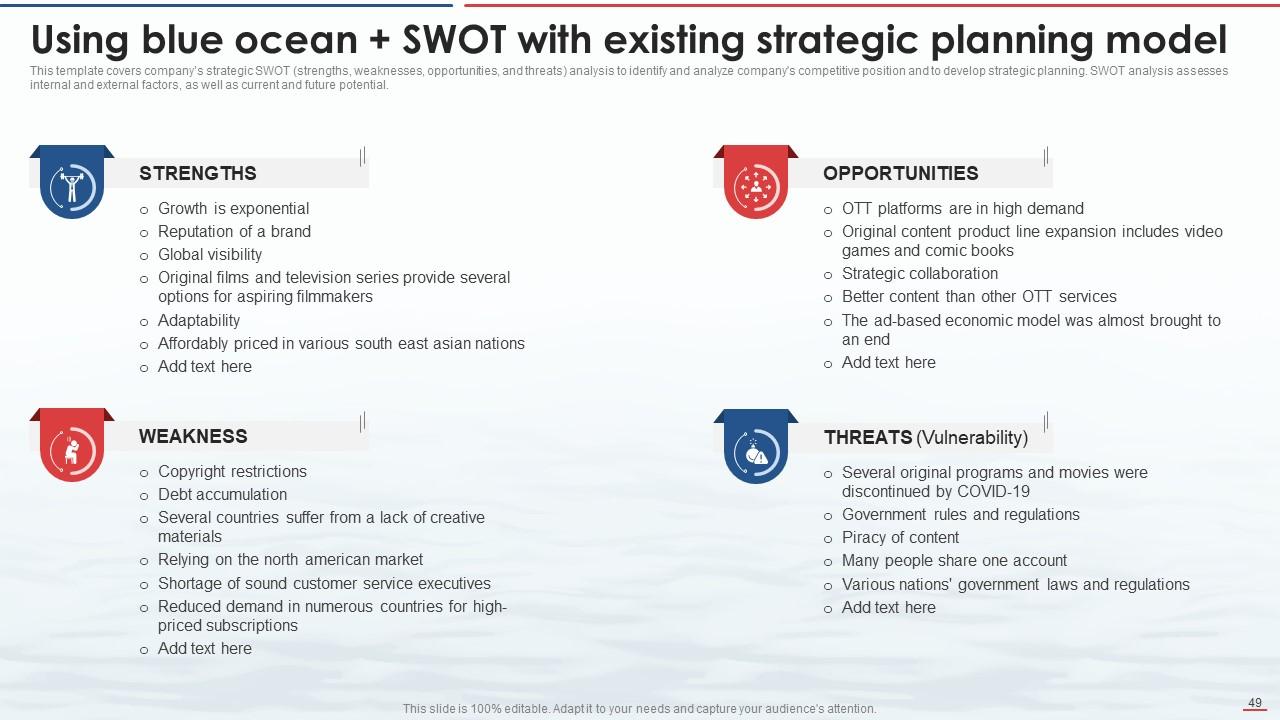
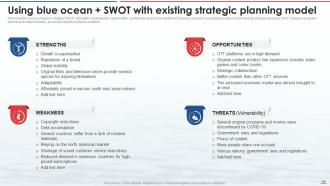
Folie 49 : Diese Vorlage umfasst die strategische SWOT-Analyse (Stärken, Schwächen, Chancen und Risiken) des Unternehmens, um die Wettbewerbsposition des Unternehmens zu identifizieren und zu analysieren und eine strategische Planung zu entwickeln.
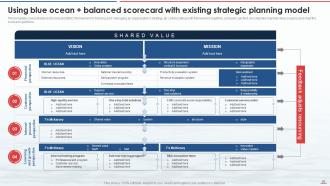
Folie 50 : Diese Folie enthält Informationen zur Verwendung von Blue Ocean + Balanced Scorecard mit einem bestehenden strategischen Planungsmodell.
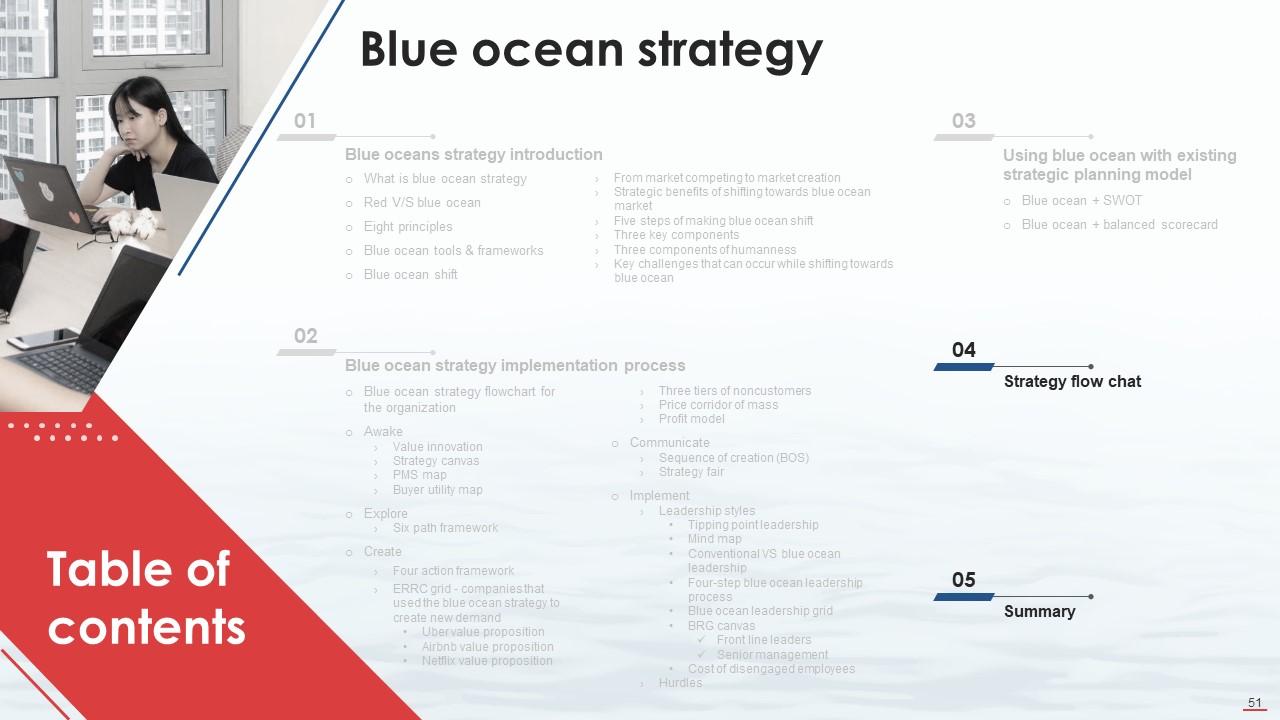
Folie 51 : Diese Folie enthält den Titel für die weiter zu diskutierenden Ideen.
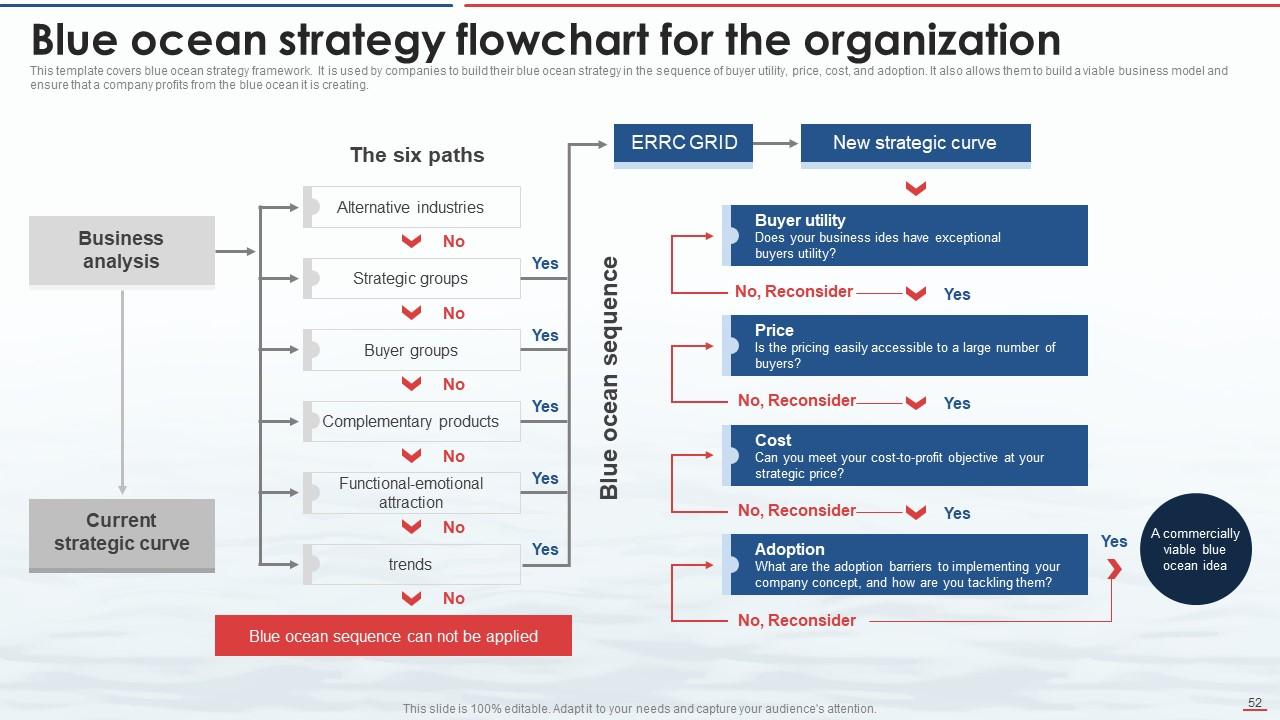
Folie 52 : Diese Folie veranschaulicht das Flussdiagramm der Blue-Ocean-Strategie für die Organisation.
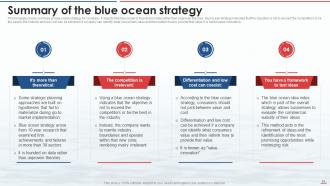
Folie 53 : Diese Vorlage enthält eine Zusammenfassung der Blue-Ocean-Strategie für das Unternehmen.
Folie 54 : Dies ist die Symbolfolie, die alle im Plan verwendeten Symbole enthält.
Folie 55 : Der Zweck dieser Folie ist es, einige zusätzliche Informationen darzustellen.
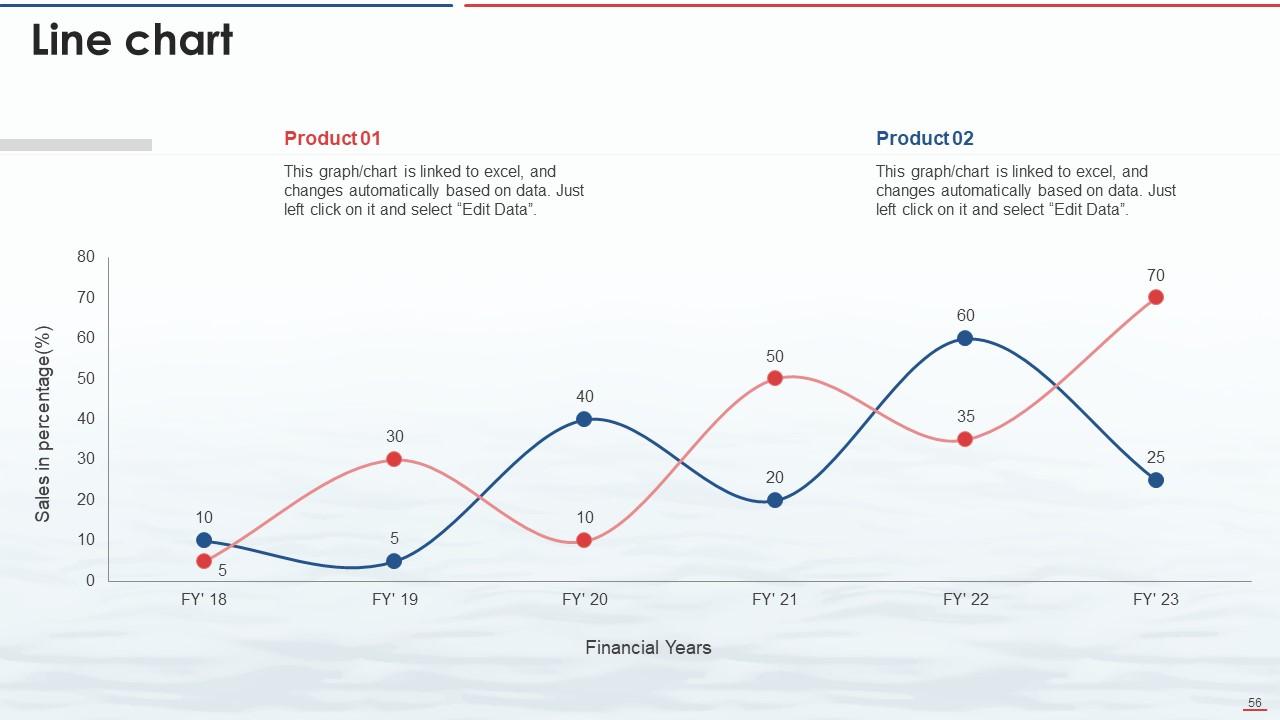
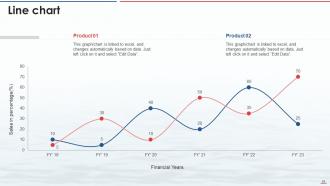
Folie 56 : Diese Folie zeigt das Liniendiagramm.
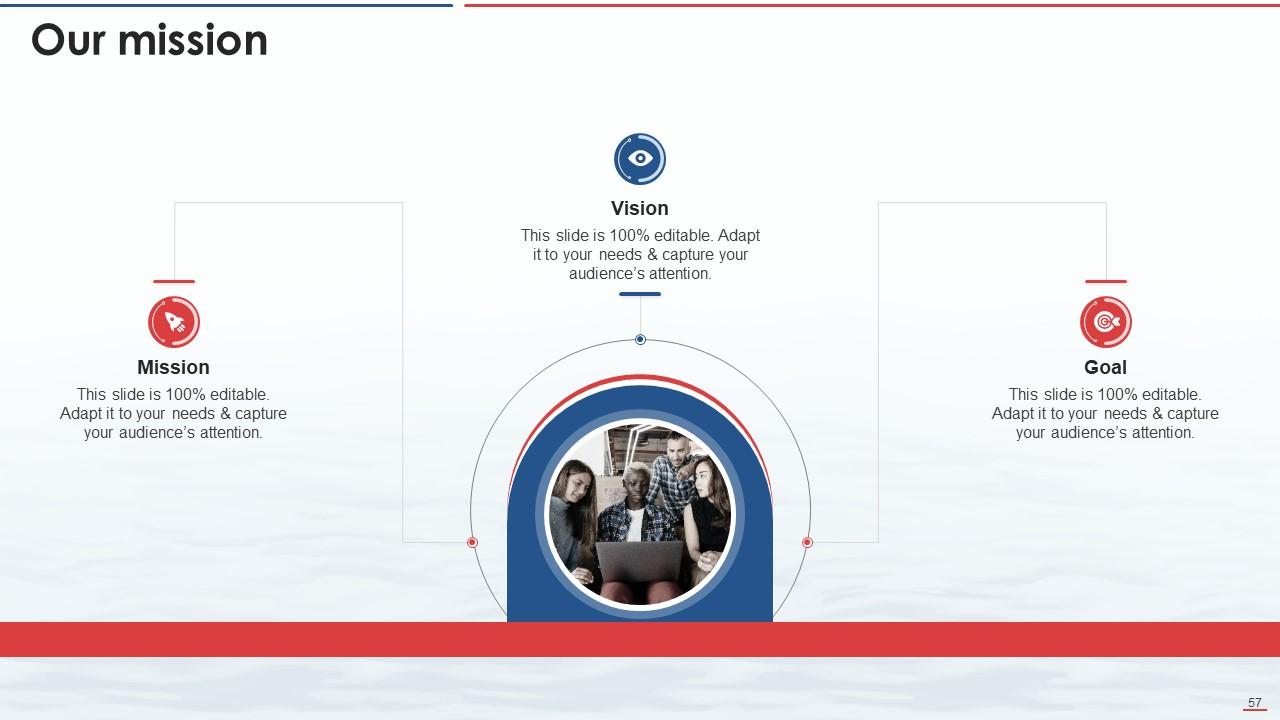
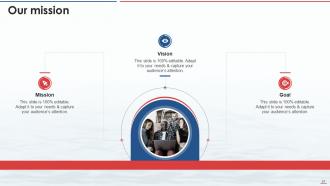
Folie 57 : Diese Vorlage hebt die Mission, Vision und Ziele des Unternehmens hervor.
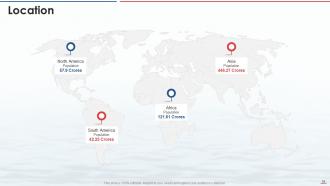
Folie 58 : Diese Folie repräsentiert den Standort der Organisation in Bezug auf die globale Präsenz.
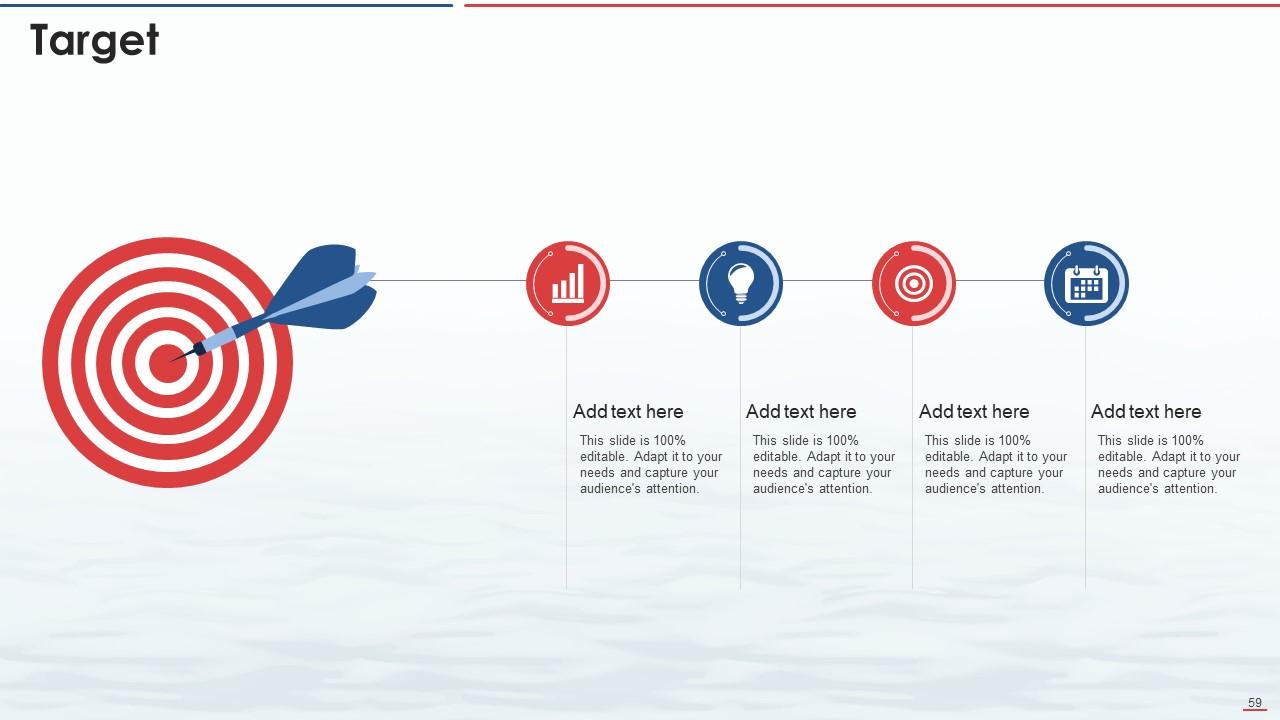
Folie 59 : Diese Folie zeigt die Unternehmensziele.
Folie 60 : Dies ist die Puzzle-Folie mit verwandten Bildern.
Folie 61 : Diese Folie erläutert die Zeitleiste der Organisation.
Folie 62 : Dies ist die Folie zur Ideengenerierung, um neue Ideen zu fördern.
Folie 63 : Diese Folie enthält die Haftnotizen für Erinnerungen und Fristen.
Folie 64 : Dies ist das Kreisdiagramm mit zugehörigen Bildern.
Folie 65 : Dies ist die Dankesfolie für die Bestätigung.
Blue Ocean Strategy CD mit allen 70 Folien:
Nutzen Sie unsere Blue Ocean Strategy CD, um Ihre wertvolle Zeit effektiv zu sparen. Sie sind gebrauchsfertig und passen in jede Präsentationsstruktur.
-
I am not the best at presentations but using SlideTeam’s PPT template made it easier for me. Thank you SlideTeam!
-
The pricing page of this website is very sorted. I felt no pain while buying the PPTs.
