

Brand Key Model For Ecommerce Business




Try Before you Buy Download Free Sample Product
 Impress Your
 Audience
 100%
100% Editable
 Save Hours
 of Time


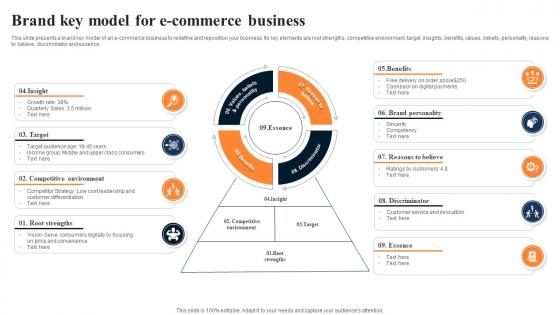
This slide presents a brand key model of an e commerce business to redefine and reposition your business. Its key elements are root strengths, competitive environment, target, insights, benefits, values, beliefs, personality, reasons to believe, discriminator and essence.
People who downloaded this PowerPoint presentation also viewed the following :
Brand Key Model For Ecommerce Business with all 6 slides:
Use our Brand Key Model For Ecommerce Business to effectively help you save your valuable time. They are readymade to fit into any presentation structure.





FAQs for Brand Key Model
A Brand Key is your brand's one-page cheat sheet - captures everything from target audience to core messaging in a format that actually makes sense. Your whole team can reference it instead of digging through random docs (been there). It keeps all your marketing decisions consistent across campaigns and content. Short sentences, long explanations - whatever you're working on stays on-brand. Usually includes your brand promise, personality, competitive positioning, and proof points. Honestly? Start by figuring out what makes you different from competitors. That's where the magic happens, and everything else falls into place from there.
So a Brand Key is basically your cheat sheet for understanding what actually makes your audience tick. It shows you their real motivations and pain points - not what you assume they care about. Pretty eye-opening honestly, especially when you realize how much emotion drives their decisions versus logic. The consumer insights part is gold because it explains the "why" behind everything they do. I always use mine as my reference point when I'm writing copy or planning campaigns. Keeps me from just throwing stuff at the wall and hoping it sticks, you know? Way better than guessing what resonates.
So Brand Keys have like five main parts - target audience, your competition, the benefits (functional stuff plus how people feel), proof points, and brand personality. Some companies add extra bits like brand essence but whatever. I'd start with figuring out your audience first since that drives everything else. The competitive part shows where you sit in the market, benefits are what you actually deliver, and personality is basically your brand's vibe. Oh and reasons to believe - that's just backing up your claims with actual proof so people don't think you're bullshitting them.
So Brand Key is way cleaner than other frameworks - just four things: target audience, competitive context, brand benefit, and reason to believe. Compare that to brand pyramids with like 8-10 layers (total headache territory). Fits on one page which is clutch for briefing agencies. Forces you to cut the fluff and focus on what actually makes people buy your stuff. I'm honestly a fan because it stops teams from going down random aspirational rabbit holes that don't move the needle. Map your current strategy against those four boxes - bet you'll spot some holes pretty quick.
Oh totally! Your Brand Key should change with the market, but don't go crazy with it. Core values and that fundamental DNA? Keep those steady. But messaging and positioning can definitely shift when you need them to. I'd update it maybe once a year or when something big happens in your space. Test stuff with your audience first though - learned that one the hard way lol. Some brands I've worked with completely flipped their communication but kept their identity solid. Just make sure you're actually responding to real data, not whatever trend is hot right now.
Your Brand Key is really about the feelings you create, not just features. Nobody cares about "reliable cloud storage" but they'll pay extra to "never lose precious memories again." That's the difference right there. You want to own a specific emotion in people's heads - the thing that makes them pick you even when your competitor has similar stuff. I always think the best brands make you feel something before you even think about price or specs. Focus on that gut reaction you want people to have. What feeling do you want to completely own?
Think of your Brand Key as your business compass - it should guide everything from website copy to phone conversations. Share it with anyone who talks to customers so they get what you're about. Most founders don't realize how game-changing this is when you're juggling a million things. Audit your current messaging against it and you'll spot inconsistencies everywhere (I always do). The real magic happens when it starts driving your daily choices instead of collecting dust in some folder. Don't let it become just another strategy doc nobody looks at.
Oh man, the biggest trap is being way too generic. Like "we're innovative and customer-focused" - ugh, literally every company says that crap. Pick ONE main target audience instead of trying to be everything to everyone. Also your emotional and functional benefits need to actually make sense together, not just sound nice separately. Write it out, then ask yourself - could this describe my biggest competitor? If the answer's yes, you're not done yet. It's annoying but you gotta keep tweaking until it actually sounds like YOUR brand, not some template.
Think of your visual identity as your Brand Key getting dressed - everything needs to match the vibe you promised. If your Brand Key says "approachable yet expert," then your colors and fonts better actually look that way, not some generic corporate nonsense. People should glance at your logo or website and immediately get what makes you different. Honestly, most brands mess this up by playing it too safe. Start by checking if your current visuals actually deliver on what your Brand Key claims. The benefits you've mapped out should be obvious just from looking at your stuff.
Oh totally, you've gotta revisit that thing regularly. Markets shift constantly and your competitors aren't just sitting around doing nothing, you know? I'd say check it at least once a year - maybe more if you're dropping new products or whatever. The competitive landscape probably looks different now than when you first mapped it out. Customer priorities change too. So audit what you have against fresh research and see if your differentiators still actually... differentiate. Honestly, brands that just set their Brand Key once and call it done? They're the ones that become irrelevant fast.
Dude, Nike's "Just Do It" is the textbook example - took them from being just a running shoe company to this whole athletic lifestyle thing. Massive success. Apple did something similar with "Think Different" and went from computers to... well, everything tech-related. I know these are super obvious examples but they actually work because the companies stuck to their Brand Key for literally everything they did. Oh, and you should probably dig into case studies from your actual industry instead of these big ones everyone knows about - way more useful for whatever you're trying to pull off.
So competitive analysis shows you where your brand can actually win vs where competitors are already killing it. Look at their Brand Keys to find gaps - maybe everyone's hammering "premium quality" but no one owns "accessibility" or "innovation." It's honestly like spotting the empty parking space everyone drove past! This insight shapes your differentiating belief and RTB. Fighting on their established turf is pointless. Instead, use that competitive landscape to carve out positioning customers care about but isn't being done well. Way smarter approach.
Honestly, just use whatever your team's already comfortable with - that matters way more than getting fancy. Miro's solid for remote whiteboarding, and Mural works too. Canva has brand templates but ugh, their interface feels so messy to me. You could try BrandSort if you want something more structured, or honestly? Just make a Google Doc template. The whole point is mapping out your functional benefits, emotional stuff, and personality traits in one spot where everyone can see it. Don't overthink the tool choice - I've seen great Brand Keys built in PowerPoint.
So basically, a Brand Key is like your brand's cheat sheet that everyone can reference. It's got all your voice, visuals, messaging, positioning - the whole thing in one place. Your marketing team won't be doing one thing while design goes completely rogue (honestly, I've seen brands that look like they have split personality disorder). Short posts, big campaigns, whatever - everything stays consistent. No more guessing games or awkward meetings where departments are like "wait, what are we even doing?" Just make sure everyone who works on brand stuff can actually access it.
Honestly, start with basic awareness surveys - do people even remember your brand messaging? Purchase intent matters more though. Check if customers are actually picking you over competitors. Social listening is where you'll find the real gold - how are people talking about your brand organically? Brand equity scores are solid if you've got research budget. I'd set up quarterly tracking because one-time snapshots don't tell you much. The magic happens when your messaging clicks consistently across all these different metrics. Oh, and don't sleep on review sentiment - that stuff's basically free market research.
-
Easy to use and customize templates. Helped me give a last minute presentation.
-
Spacious slides, just right to include text. SlideTeam has also helped us focus on the most important points that need to be highlighted for our clients.