


Brand repositioning presentation slides




Try Before you Buy Download Free Sample Product
 Impress Your
 Audience
 100%
100% Editable
 Save Hours
 of Time


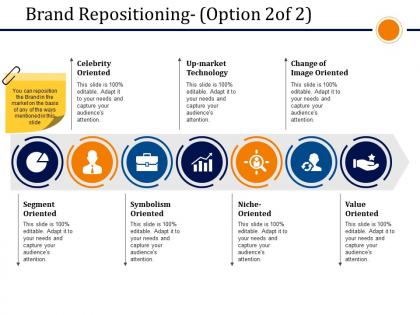
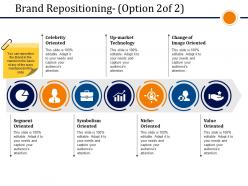
Target the right consumers with the help of this Brand Repositioning Presentation Slides PowerPoint template. This position altering PPT slide comprises various repositioning types like segment orientation, up-market technology, symbolism, niche orientation, and value orientation. Take advantage of this consumer targeting PPT slideshow to showcase reasons for brand repositioning like beating off competition, clarity, alignment, increasing the value of your company, etc. Take the assistance of this consumer targeting PPT visual to reveal the causes and effects of repositioning. Further, you can depict the need for position altering including adapting to ever-growing customer needs, meet the demand for various products, etc. As this layout is fully editable, customization is a simple task which further adds to your convenience. Utilize all marketing research, brand, company, and information on consumer behavior to reposition your brand in the most effective way. Download this amazing consumer targeting PPT infographic to influence your clients through innovative techniques like functional and experiential positioning.
People who downloaded this PowerPoint presentation also viewed the following :
Brand repositioning presentation slides with all 5 slides:
Discover avenues to invest with our Brand Repositioning Presentation Slides. Examine areas that grab your interest.
FAQs for Brand
Oof, there are a few dead giveaways. Market share tanking is the obvious one. But also when customers can't figure out what you actually do - that's brutal. Your sales team will start complaining they can't explain why you're different from competitors (major red flag). Sometimes you just feel it in your gut too - like your brand suddenly seems outdated. Industry shifts can leave you in the dust real quick. Oh, and if your audience has totally changed but you're still talking to them like it's 2019? Yeah, time for a refresh. I'd start by digging through customer feedback first - way more honest than internal opinions.
Market research is basically your GPS for repositioning - shows you where your brand sits now vs where you want to go. Start with a brand perception audit first. Dig into competitor analysis, customer interviews, and perception studies to spot the gaps. Here's the thing though - people lie in surveys all the time, so behavioral data is way more reliable. Check purchase patterns, brand associations, emotional connections. That stuff doesn't lie. This research helps you figure out what brand elements to keep vs change. Most importantly? You'll know if your repositioning idea will actually work before you blow your budget on it.
Look, consumer perception is basically everything here. You can't just flip a switch and tell people your brand means something totally different now – they've already got you figured out in their heads. Working with what they already think is so much easier than trying to completely change their minds (learned this the hard way lol). First thing? Survey your actual customers about how they really see your brand right now. Then find that realistic middle ground between where you are and where you want to be. The trick is making that jump feel believable to them.
Dude, whatever you do, don't go radio silent on your best customers. Be upfront about why you're making changes and what's in it for them specifically - none of that generic "we're evolving" BS. Get your loyalists involved early with surveys or something so they feel included instead of blindsided. Honestly, I've watched so many brands totally screw this up by keeping people in the dark. Keep delivering what they originally loved about you while you transition. Make it feel like they're getting an upgrade, not like you're abandoning what made them fall for your brand in the first place.
Honestly, you'll want to be everywhere your customers are - social, email, your website, all of it. First though, nail down the "why" story because people hate change without good reason. Your team needs to get it before anyone else since they're basically walking billboards for your brand. Then blast it out consistently for like 6-12 months minimum. I know that sounds forever but people are distracted and need to see stuff multiple times before it clicks. Oh and don't go overboard - there's definitely a line between helpful reminders and being that annoying company that won't shut up about their rebrand.
Look, competitor analysis and market trends are basically your cheat sheet for repositioning. Map out where competitors are planted first - you don't want to waste time fighting in overcrowded spaces. Trust me on that one. Then check if market trends actually support your new position. Will it matter in 2-3 years? Sometimes we get excited about ideas that are already yesterday's news. The magic happens when you find that empty spot that lines up with where things are headed. Oh, and do the competitor mapping first - makes spotting opportunities way easier.
Honestly? Don't try changing everything at once - that's how you lose your current customers before winning new ones. Test your new positioning with focus groups first, seriously. Your team needs to be on the same page too because mixed messages will kill you during this process. Oh, and actually listen to what your existing customers think about the change. I've watched companies just assume people will be thrilled with their "brilliant" new direction. Spoiler: they weren't. This stuff takes forever compared to what you'd expect - we're talking months, not weeks.
Your visuals are literally the first thing people notice about your rebrand. They instantly tell customers what you're about now. Like when Netflix went from red to black - that wasn't random, it screamed "we're premium now." Colors mess with people's emotions more than you'd think. Your logo change? That's announcing to everyone (including your own team) that things are different. If your new strategy says "sophisticated" but your design still looks basic, you're just confusing everyone. The psychology behind this stuff actually works though. Just start by comparing what your current look says vs. where you want to end up.
Oh yeah, storytelling is everything when you're repositioning. People need to feel emotionally connected to your "new" brand - not just hear about some feature updates. Why are you changing? Where's this all going? What's in it for them? Without that narrative, you basically look like you're just swapping logos randomly (or panicking, tbh). A good story gives meaning to all the tactical stuff you're doing. I'd honestly start with nailing down that core narrative first. Then make sure every single touchpoint echoes the same thread.
Honestly, social media is your best bet for repositioning. You get to control what people see and can reach them without any middleman BS. Start rolling out new messaging bit by bit - show off your updated values and explain why you're changing direction. The comments and reactions basically give you a never-ending focus group, which is pretty sweet. Your most loyal followers should hear about it first since they'll defend you when people get confused (and they will). Keep your visuals and messaging consistent across everything, and yeah... definitely respond to questions directly instead of letting rumors spread.
Start with brand perception stuff - surveys and social listening for awareness and sentiment. Sales numbers are tricky though, repositioning takes forever to actually move revenue (trust me on that one). Your NPS matters, plus track share of voice vs competitors. Website metrics like bounce rate tell you if messaging is landing. Customer acquisition cost shows if you're pulling in the right people, not just more people. Oh, and lifetime value too. Monthly dashboard works best so you catch problems early. Time on site is weirdly revealing about whether your repositioning actually resonates.
Dude, internal buy-in can totally make or break this whole thing. Your employees are basically walking billboards - if they don't get it or seem confused, customers pick up on that weird energy right away. I've watched companies completely bomb their repositioning because they forgot their own team existed. You want people authentically talking up the new direction in every interaction, not just going through the motions. Here's what works: start internal comms and training at least a month before going public. Maybe longer if your team's big. Trust me, it's worth the extra prep time.
You've got four solid ways to tackle this. **Competitive repositioning** means going head-to-head with the big player - show what makes you different. Or try **audience repositioning** - find customers everyone else is ignoring. **Benefit repositioning** is about highlighting different perks your product offers. Then there's **category repositioning** which is honestly the hardest but can be huge - you're basically carving out new territory. I'd go with whatever actually matches your strengths though. Don't just pick the flashy option because it sounds cool in meetings.
Don't pretend nothing happened - that's just awkward. Be upfront about the repositioning and explain what's actually in it for your existing customers. Skip the mass email blast thing and get personal with your messaging instead. Honestly, I'd start with your biggest fans first since they'll probably give you the most honest feedback. Give them some kind of exclusive access or content to show you still value them. The whole point is being real about the change while making it clear you're not abandoning what made them loyal in the first place. Their reactions will help you figure out how to approach everyone else.
Oh man, Netflix is the perfect example here. They went from mailing DVDs to streaming and basically changed everything about entertainment. Remember those Old Spice commercials with the shirtless guy? Genius move - they flipped from "your dad's boring deodorant" to something cool guys actually wanted. Apple did something similar, going from just computers to this whole lifestyle thing. But here's what I've learned watching companies try this - you've got to figure out what people actually care about first, not what you think they should want. Sometimes that means changing way more than just your ads. Like, your whole business model might need an overhaul. Start by listening to what your customers are telling you.
-
Editable templates with innovative design and color combination.
-
Easily Editable.