

Building A Sales Territory Plan SWOT Analysis Conducting By Sales Manager




Try Before you Buy Download Free Sample Product
 Impress Your
 Audience
 100%
100% Editable
 Save Hours
 of Time


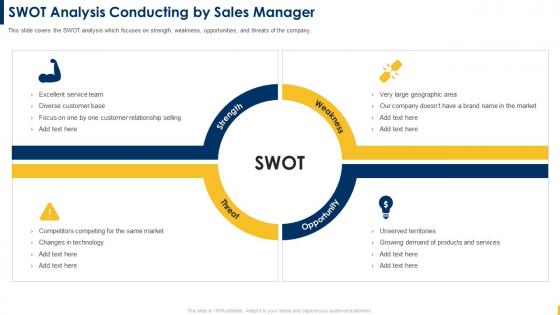
This slide covers the SWOT analysis which focuses on strength, weakness, opportunities, and threats of the company.
People who downloaded this PowerPoint presentation also viewed the following :
Building A Sales Territory Plan SWOT Analysis Conducting By Sales Manager with all 6 slides:
Use our Building A Sales Territory Plan SWOT Analysis Conducting By Sales Manager to effectively help you save your valuable time. They are readymade to fit into any presentation structure.





FAQs for Building A Sales Territory Plan SWOT Analysis Conducting
Honestly, territory planning changed everything for us. Your reps stop fighting over the same accounts and actually know who they're supposed to focus on. Performance tracking becomes way easier too - suddenly you can see which areas are killing it and which ones need help. The forecasting gets so much better because you're working with real market data instead of just guessing. Oh, and resource allocation? Night and day difference. Just map out where your current accounts are first - I bet you'll immediately see some weird gaps that make no sense. It's wild how obvious the problems become once you visualize it.
Honestly, SWOT analysis is like getting a real look at what you're actually working with in your territory. You'll figure out your strong points - maybe you've got solid relationships or own certain accounts - plus where you're weak compared to competitors. The opportunities and threats stuff? That's where it gets useful. Helps you decide which prospects are worth chasing and spot when markets are about to shift. Most people just focus on hitting their numbers and call it a day, but that's pretty shortsighted if you ask me. Map your findings to actual accounts and you'll stop wasting time on dead-end leads. Way better than just throwing darts at a board.
Start with your best customers - the ones who actually stick around and buy regularly. Those relationships are worth their weight in gold, honestly. Your product knowledge counts for a lot too, plus any niche expertise you've picked up over time. Geography helps if you're close to major clients or have solid distribution already set up. Don't overlook your personal connections either - industry contacts can be surprisingly valuable when you need them. Really though, just be brutally honest about what you're genuinely good at in this territory, then double down on those strengths.
Honestly, most territory plans crash because the data's garbage - like, they're still using customer info from 2019 or making weird assumptions about who buys what where. Sales reps not knowing how to actually work their territories is massive too. I've watched so many good plans die because nobody trained people properly. Then you've got the whole metrics problem where there's zero accountability. Oh, and companies love ignoring obvious stuff like seasonal changes or what competitors are doing in each area. Start by cleaning up your data first, then figure out if your team can actually handle it before you launch anything.
You've gotta map out what's going on in your territory that could boost sales. New businesses opening? Jump on it. Competitors leaving or hiking prices? Perfect timing for your pitch. Look for industry trends or regulatory stuff that helps your product too. Here's the thing though - most reps spot these opportunities but then do absolutely nothing with them. Don't be that person. If there's a new shopping center going up, get in there early with those retailers. Track this stuff monthly and build actual outreach campaigns around what you find. It's honestly the difference between hitting quota and missing it.
Honestly, there's a bunch of stuff that can totally blindside your territory numbers. Competitors might jump in or slash prices - that always sucks. Economic trouble means customers freeze budgets or push off buying decisions. Regulatory changes can screw things up too, plus tech disruptions that make your product look outdated. Watch for major customers merging or moving locations. Internal stuff hits hard too - losing your best sales people or getting budget cuts from corporate. I'd map this out every quarter and have backup plans ready, even though nobody really wants to do that paperwork.
Look, you really need solid data to back up your SWOT analysis. Pull your last 12 months of sales numbers first - that'll show you where your team's actually crushing it versus where you're bleeding conversions. Customer segmentation data is gold for spotting new opportunities you might've missed. Don't forget competitive analysis either, because those guys are definitely eyeing your territory. I always layer multiple data sources instead of just winging it on hunches (learned that the hard way). Historical trends tell you everything - seasonal patterns, how your customers' buying habits shifted, demographic changes. Trust me, the stories hiding in that data will surprise you.
So geographic segmentation is honestly a game changer - you can slice up your territory data and suddenly see patterns that were totally invisible before. Look for underperforming areas and spot those high-value prospect clusters. I've seen cases where someone's best customers were all weirdly close to major highways, which seems random but makes total sense for logistics. Map out your current customers first, then hunt for clusters and gaps. You'll figure out if your sales coverage actually matches where the real money sits instead of just random territory lines. Way better for resource allocation too.
Honestly, think of it as your radar for what's happening around you. Track who's entering your market and what they're pricing stuff at. I'm probably too obsessed with checking competitor LinkedIn pages, but whatever - it works! You'll spot potential problems before customers start jumping ship. The trick is doing this regularly, not just once. Set up some Google alerts and peek at their sites monthly. Oh, and pay attention to their new product launches too. When you know their game plan, you won't get blindsided by sudden moves.
Look, you've gotta build everything around what you're already good at. Got a team with sick product knowledge? Make every pitch feel like a consultation - way more powerful than just selling stuff. Strong relationships with customers? Those referrals are basically free money, so milk that hard. Train your reps to connect each strength directly to what prospects actually struggle with. Honestly, most companies overthink this part. Just make sure every conversation highlights why you're different. Map out your advantages and weave them into how you talk about value. Don't let prospects miss what makes you special.
Track your main stuff first - revenue growth, quota hits, and how fast you're nabbing new customers. Deal size and sales cycle length matter tons since they show if your territory setup actually works or you just got lucky. Pipeline velocity is where it gets interesting though - that's how quickly deals move through each territory's funnel. Customer retention and market penetration tell you about long-term health. Also watch activity metrics like calls per territory to catch execution problems. Honestly, a monthly dashboard comparing territories side-by-side saves so much headache when you're trying to figure out what's actually working.
Look at what your SWOT analysis is telling you about each territory. Got reps killing it in certain areas? Expand those territories or copy what they're doing somewhere else. Weak spots probably mean you need to split up those massive territories - some of them are just too big, honestly. New opportunities? Perfect chance to redraw boundaries around emerging markets or different customer types. When threats pop up, sometimes you gotta consolidate territories so your team can actually protect the important accounts. Don't just stick with that same old map from years ago.
Honestly, if your teams aren't talking, your territory strategy is toast. Set up weekly check-ins between sales, marketing, and customer success - the lead handoffs alone will thank you. Your reps sharing what's working in their patches? That's gold. I swear some of my best insights came from random conversations. Real-time dashboards help too so everyone can actually see what's happening. You'll spot market shifts way faster when people share intel instead of working in silos. Fewer accounts slip through cracks when everyone's on the same page.
Your reps probably get the SWOT theory but totally choke when they're actually on calls. What you really need is role-playing sessions where they practice using competitor weaknesses in real conversations. Show them how to flip territory threats into compelling talking points with prospects. Most sales training stops at understanding the analysis - that's the problem right there. Instead, have them build specific scripts based on their SWOT findings. Give concrete examples of weaving these insights into actual sales conversations and territory planning. It's all about making it tactical, not theoretical.
Biggest mistake? Being way too vague about everything. Don't just say "strong relationships" - actually explain what makes them worth anything. Also, people always forget about indirect competitors, which honestly can blindside you worse than the obvious ones. Get multiple perspectives from your territory because you're probably missing stuff. Oh, and please don't do that thing where you flip weaknesses into fake strengths. Nobody buys the "I work too hard" BS anymore. Just be brutally honest about what's really happening, not what you're hoping is happening.
-
Great quality slides in rapid time.
-
Nothing beats the well-formatted and professionally designed templates offered. Kudos to SlideTeam for their amazing collection of PPT slides.