


Building Collaborative Culture With Devops Methodology Powerpoint Presentation Slides
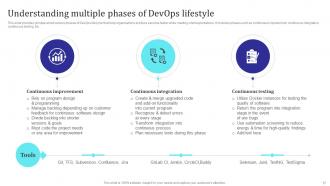
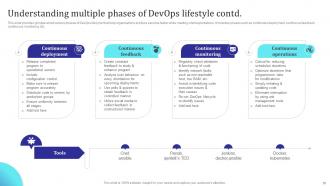
The DevOps lifecycle is a comprehensive approach to software development and operations that focuses on collaboration, automation, and continuous improvement. Implementing Building Collaborative Culture with DevOps Methodology deck covers DevOps overview, its lifecycle, core principles, evolution history, key statistics, and market analysis. The deck focuses on multiple functions of DevOps methodology plan, code, build, siloed development, release, deploy, operate, and monitor. It addresses various phases of DevOps framework including continuous improvement, continuous integration, continuous testing, continuous deployment, continuous feedback, continuous monitoring, and continuous operations with an overview, working process, and tools. The deck will cover slides about different phases of continuous improvement, levels of software testing, and types of feedback loops. It caters to slides about the DevOps team with roles and responsibilities, an organization chart, and RACI matrix. It includes an impact assessment of adopting the DevOps lifecycle. Download this now.
The DevOps lifecycle is a comprehensive approach to software development and operations that focuses on collaboration, auto..

















-

- Google Slides is a new FREE Presentation software from Google.
- All our content is 100% compatible with Google Slides.
- Just download our designs, and upload them to Google Slides and they will work automatically.
- Amaze your audience with SlideTeam and Google Slides.
-

Want Changes to This PPT Slide? Check out our Presentation Design Services
-

- WideScreen Aspect ratio is becoming a very popular format. When you download this product, the downloaded ZIP will contain this product in both standard and widescreen format.
-

- Some older products that we have may only be in standard format, but they can easily be converted to widescreen.
- To do this, please open the SlideTeam product in Powerpoint, and go to
- Design ( On the top bar) -> Page Setup -> and select "On-screen Show (16:9)” in the drop down for "Slides Sized for".
- The slide or theme will change to widescreen, and all graphics will adjust automatically. You can similarly convert our content to any other desired screen aspect ratio.
Compatible With Google Slides

Get This In WideScreen
You must be logged in to download this presentation.


Do you want to remove this product from your favourites?
PowerPoint presentation slides
Enthrall your audience with this Building Collaborative Culture With Devops Methodology Powerpoint Presentation Slides Increase your presentation threshold by deploying this well-crafted template. It acts as a great communication tool due to its well-researched content. It also contains stylized icons, graphics, visuals etc, which make it an immediate attention-grabber. Comprising seventy six slides, this complete deck is all you need to get noticed. All the slides and their content can be altered to suit your unique business setting. Not only that, other components and graphics can also be modified to add personal touches to this prefabricated set.

People who downloaded this PowerPoint presentation also viewed the following :
Content of this Powerpoint Presentation
Slide 1: This slide showcase title Building Collaborative Culture with DevOps Methodology.
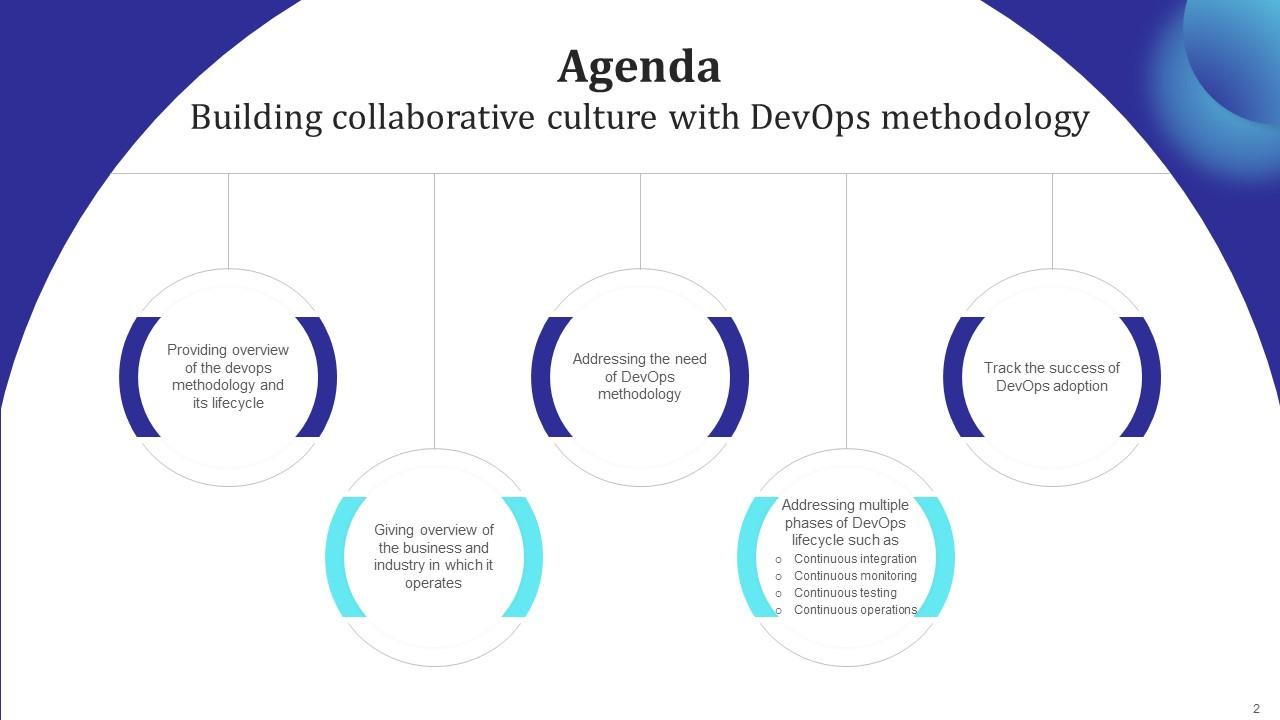
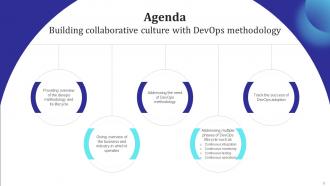
Slide 2: This slide showcase title AGENDA.
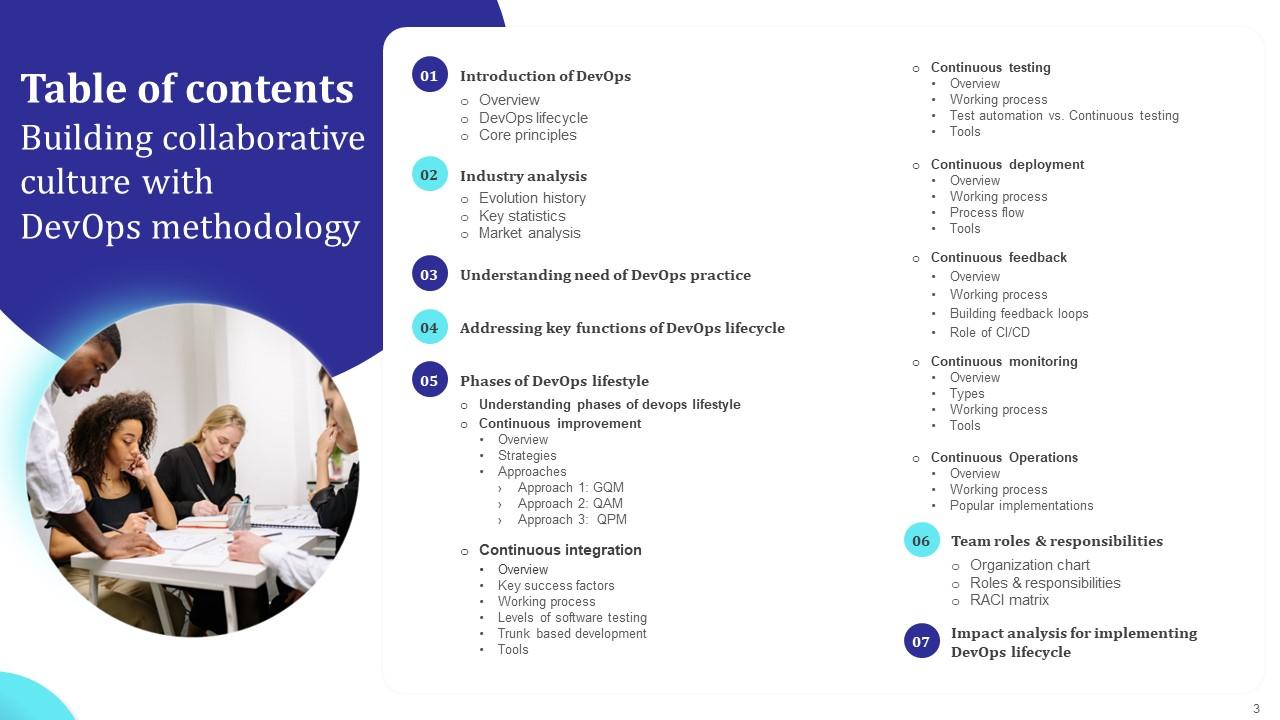
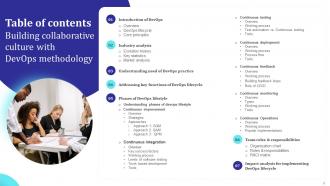
Slide 3: This slide exhibit table of content.
Slide 4: This slide exhibit table of content that is to be discuss further.
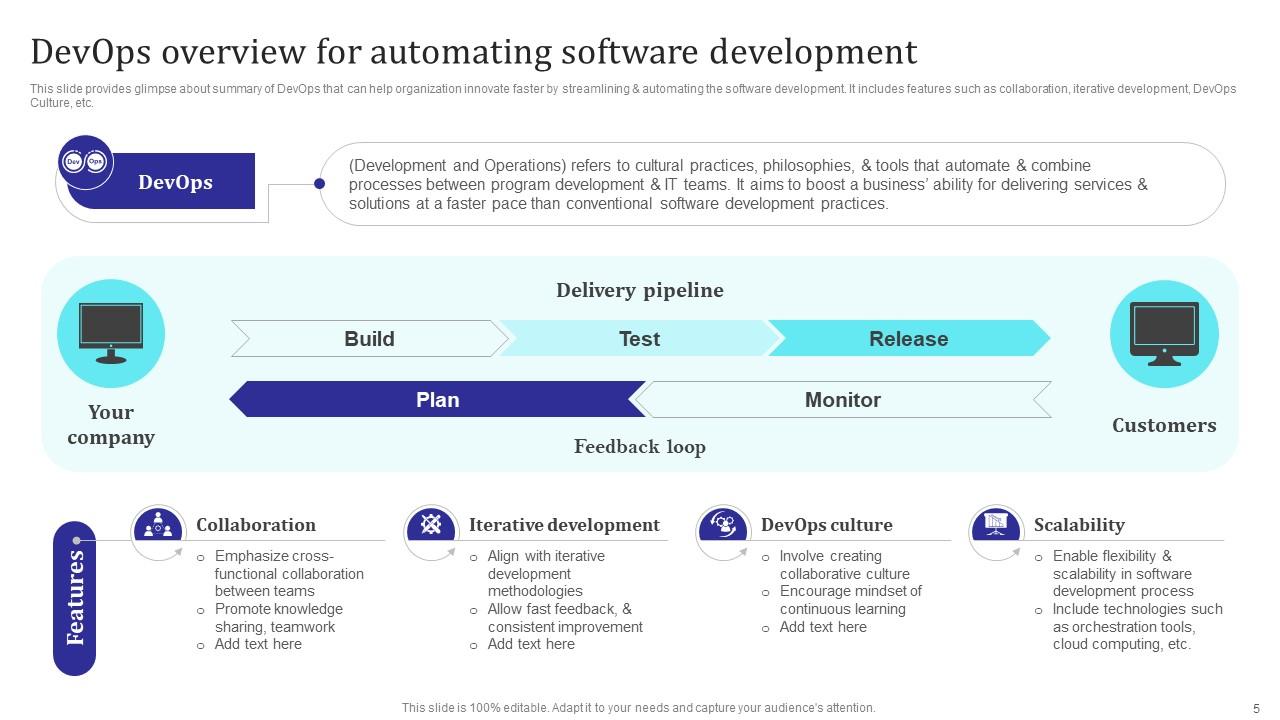
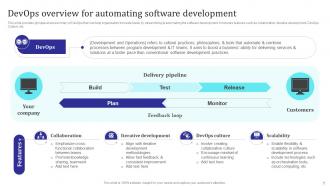
Slide 5: This slide provides glimpse about summary of DevOps that can help organization innovate faster by streamlining & automating the software development.
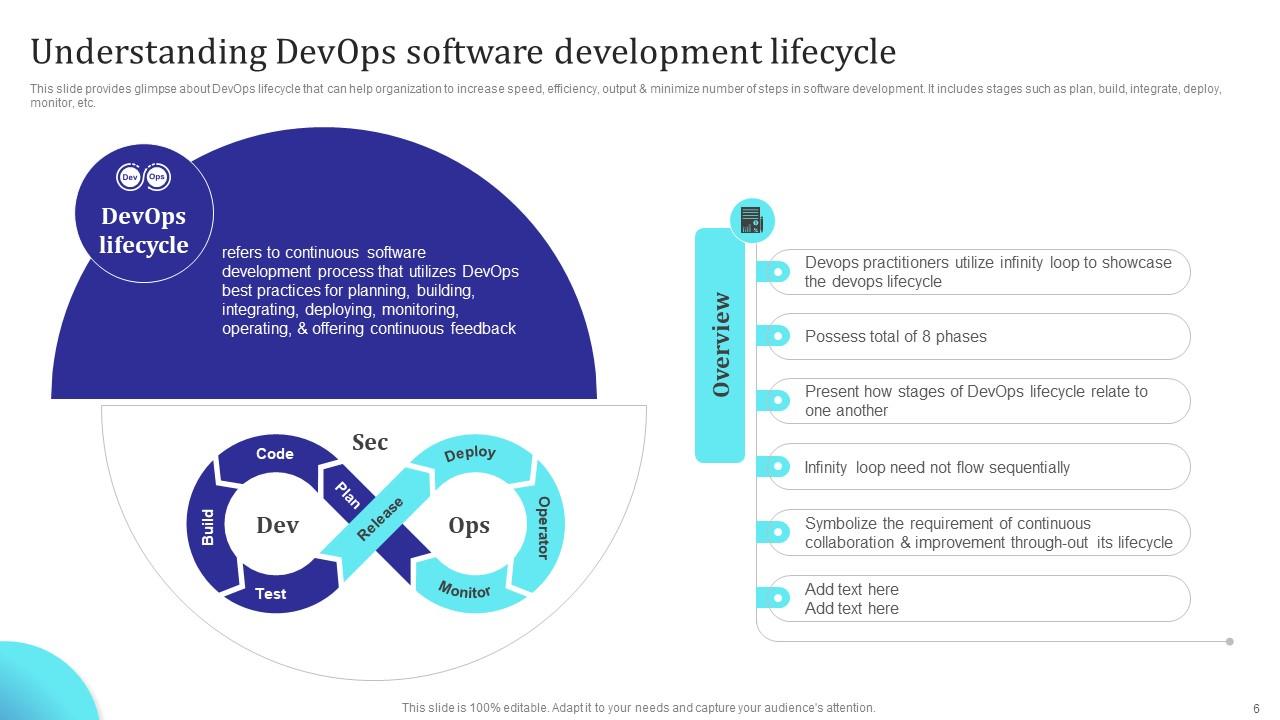
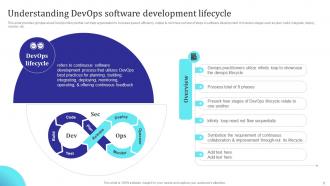
Slide 6: This slide provides glimpse about DevOps lifecycle that can help organization to increase speed, efficiency, output & minimize number of steps in software development.
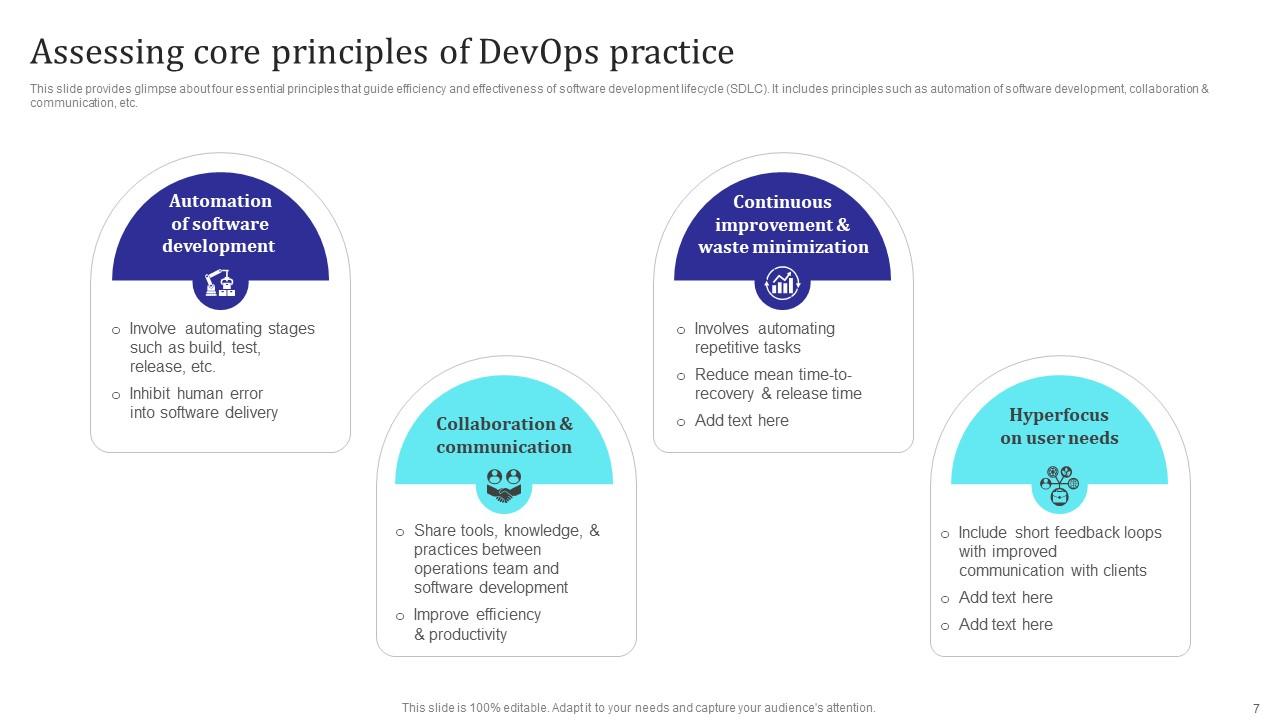
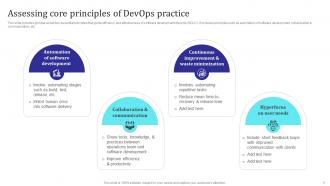
Slide 7: This slide provides glimpse about four essential principles that guide efficiency and effectiveness of software development lifecycle (SDLC).
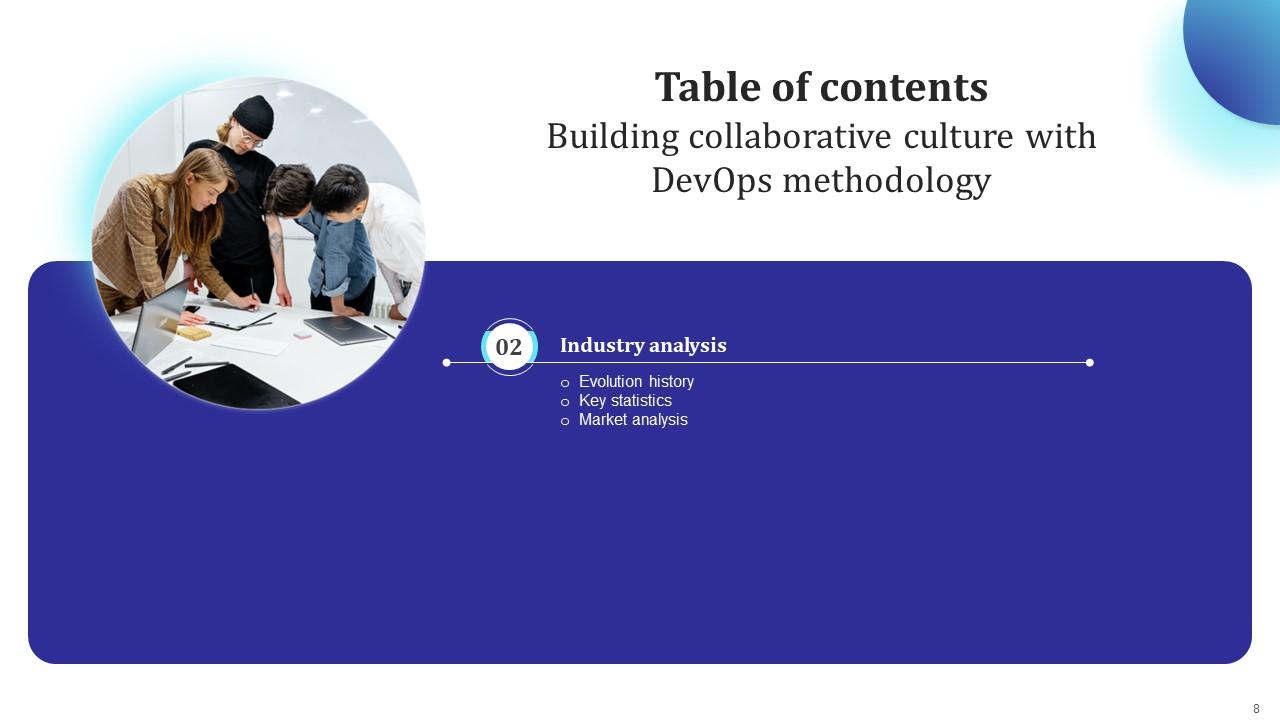
Slide 8: This slide exhibit table of content that is to be discuss further.
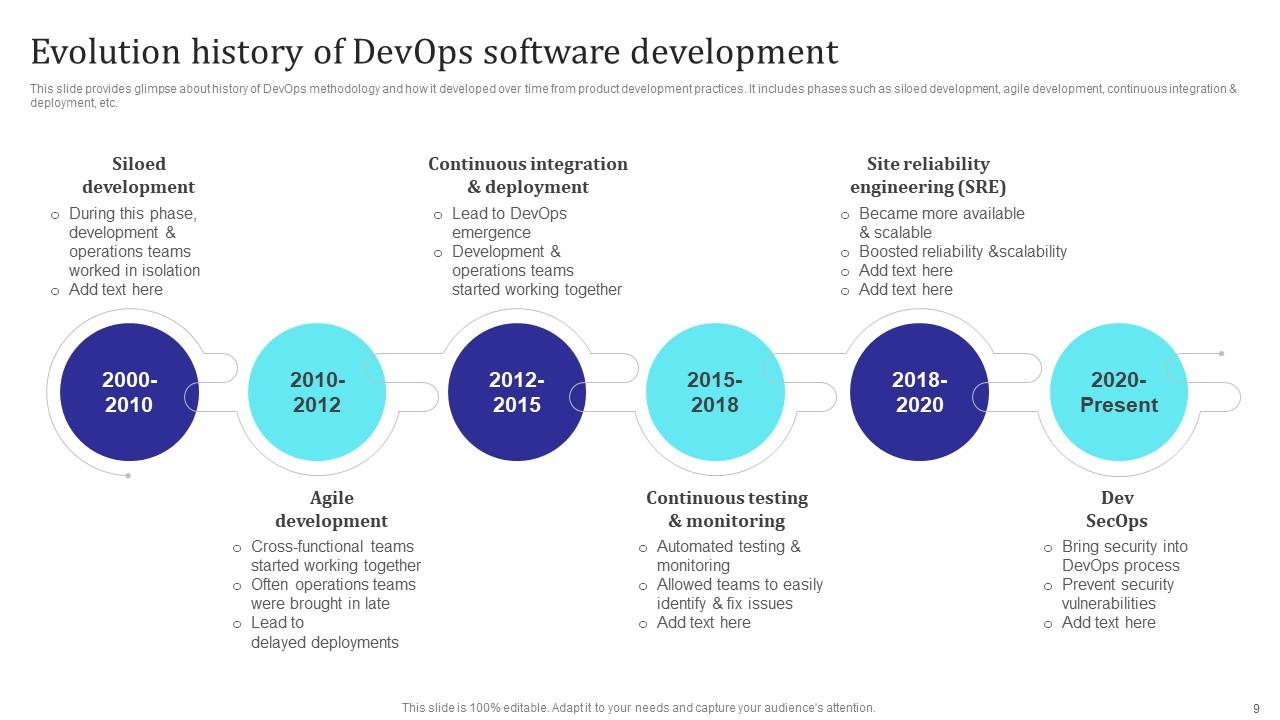
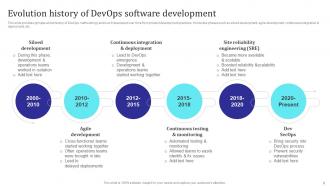
Slide 9: This slide provides glimpse about history of DevOps methodology and how it developed over time from product development practices.
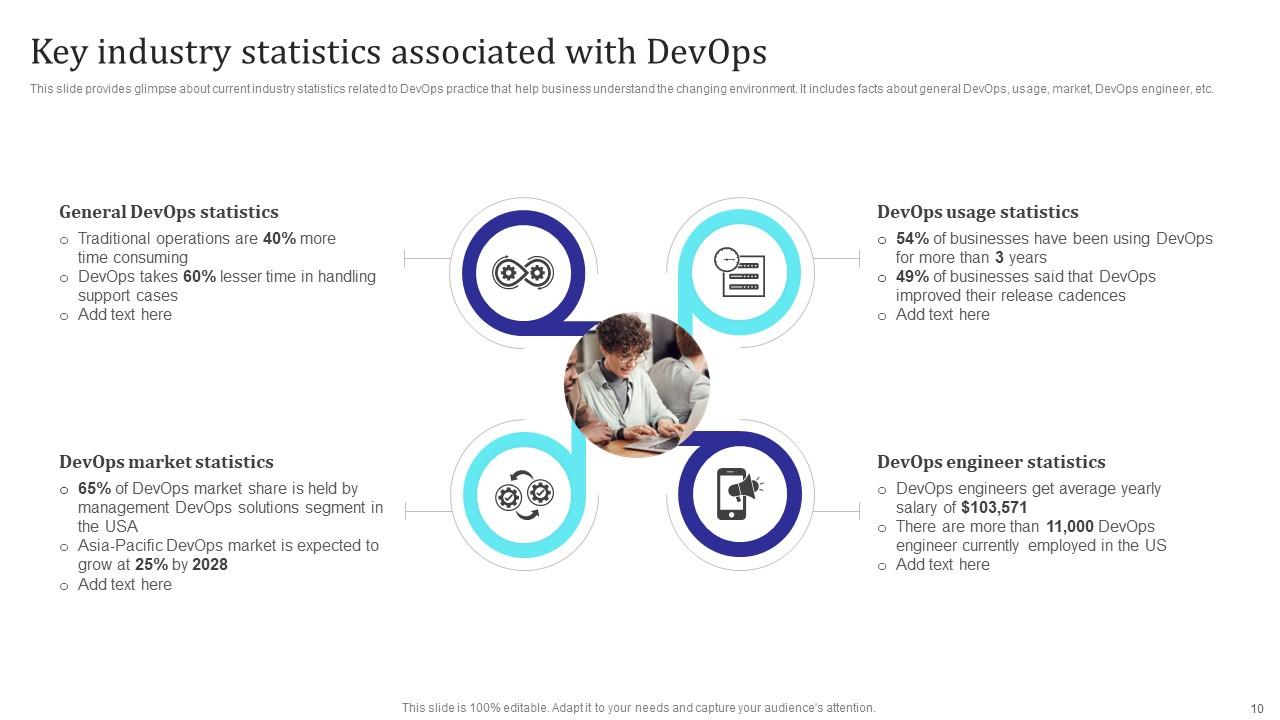
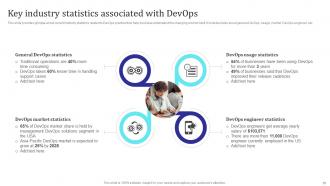
Slide 10: This slide provides glimpse about current industry statistics related to DevOps practice that help business understand the changing environment.
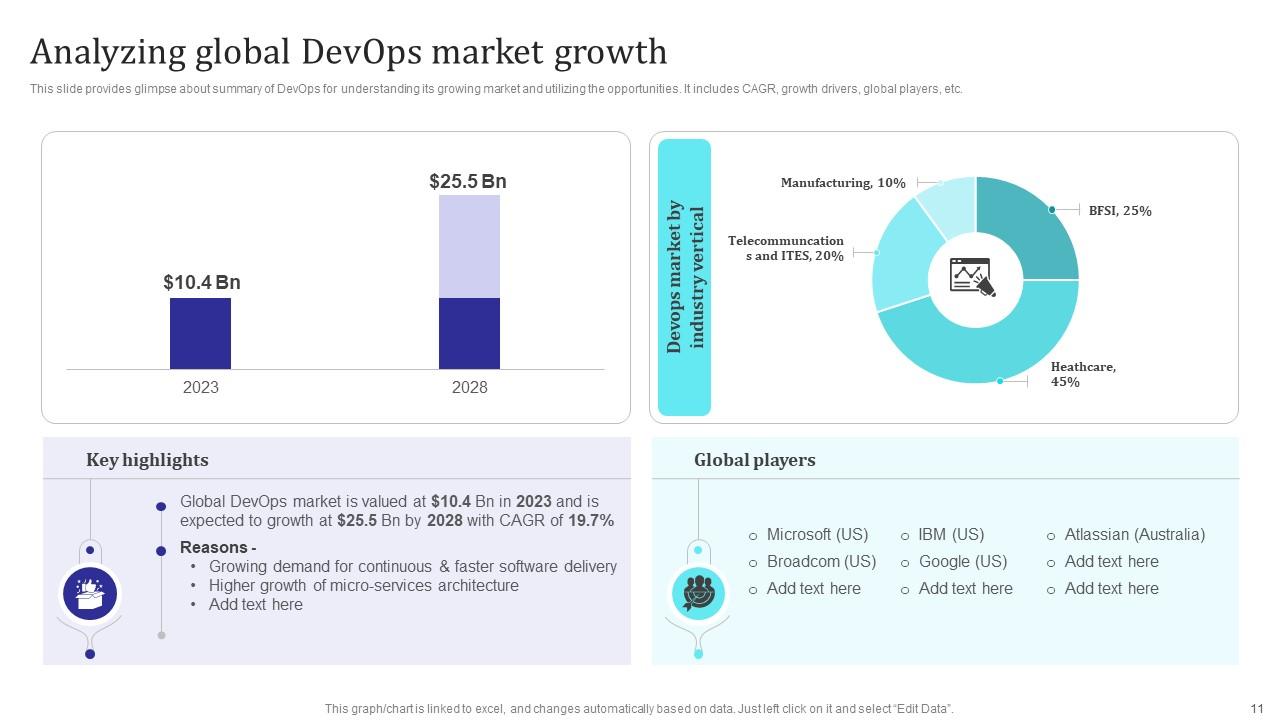
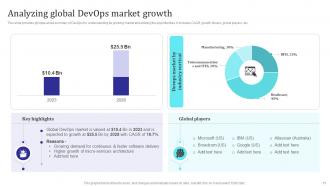
Slide 11: This slide provides glimpse about summary of DevOps for understanding its growing market and utilizing the opportunities.
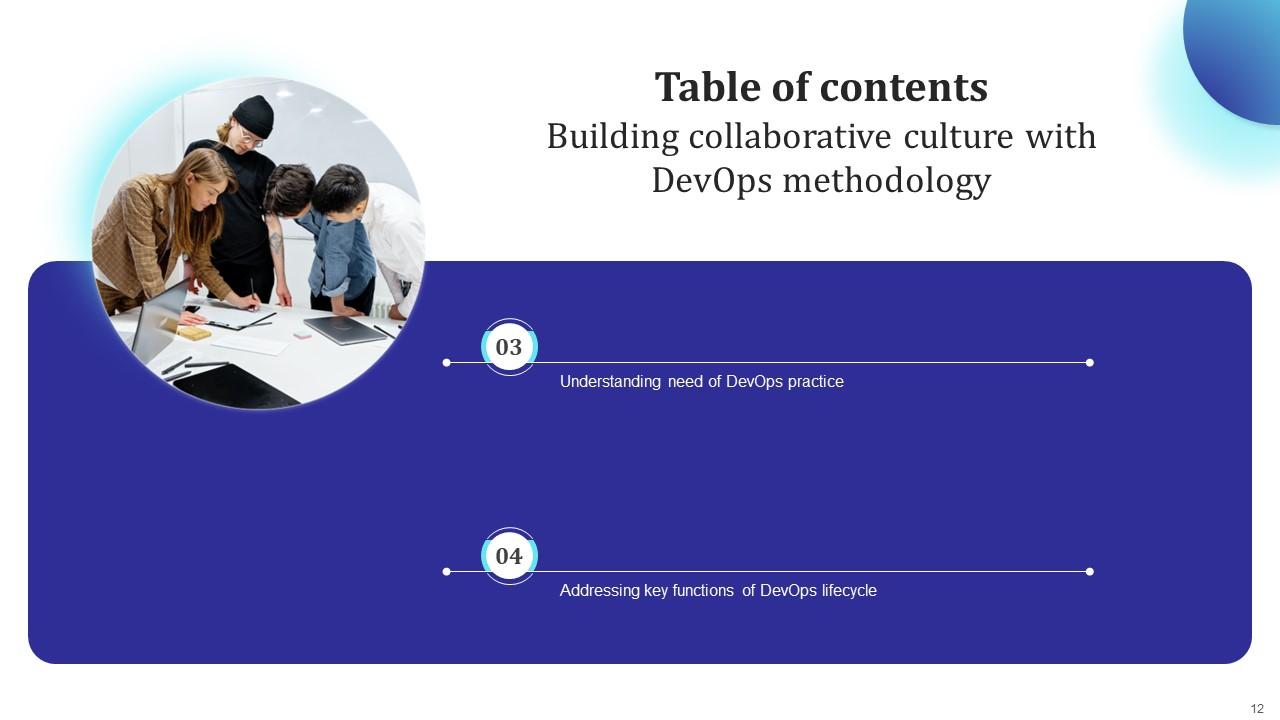
Slide 12: This slide exhibit table of content that is to be discuss further.
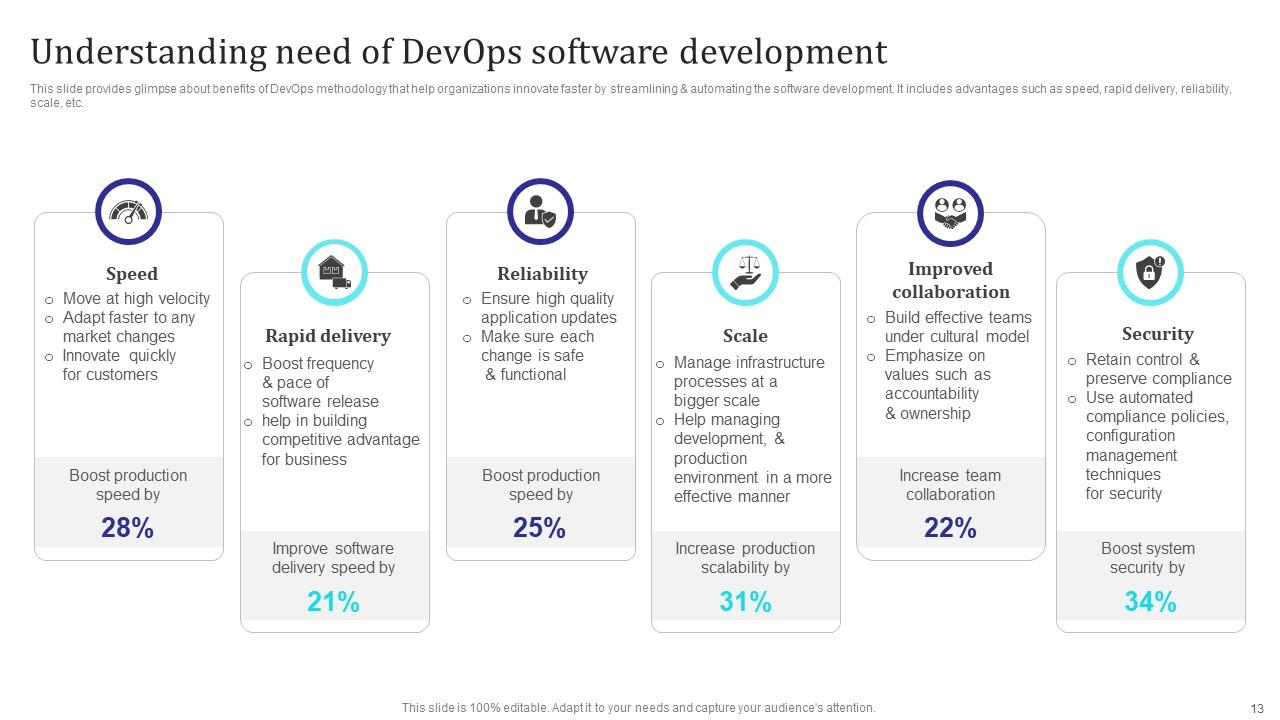
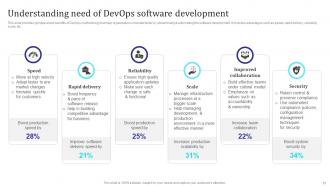
Slide 13: This slide provides glimpse about benefits of DevOps methodology that help organizations innovate faster by streamlining & automating the software development.
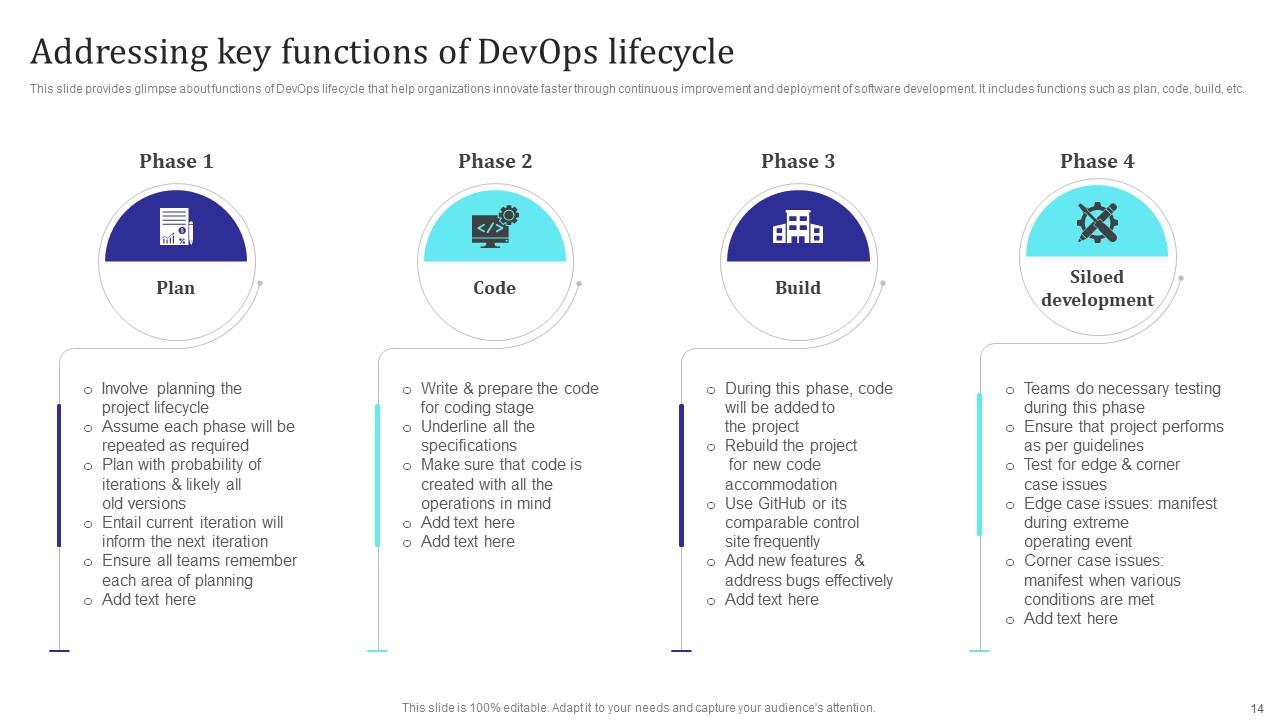
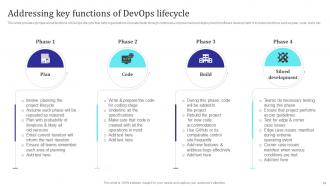
Slide 14: This slide provide glimpse about functions of DevOps lifecycle that help organizations innovate faster through continuous improvement and deployment of software.
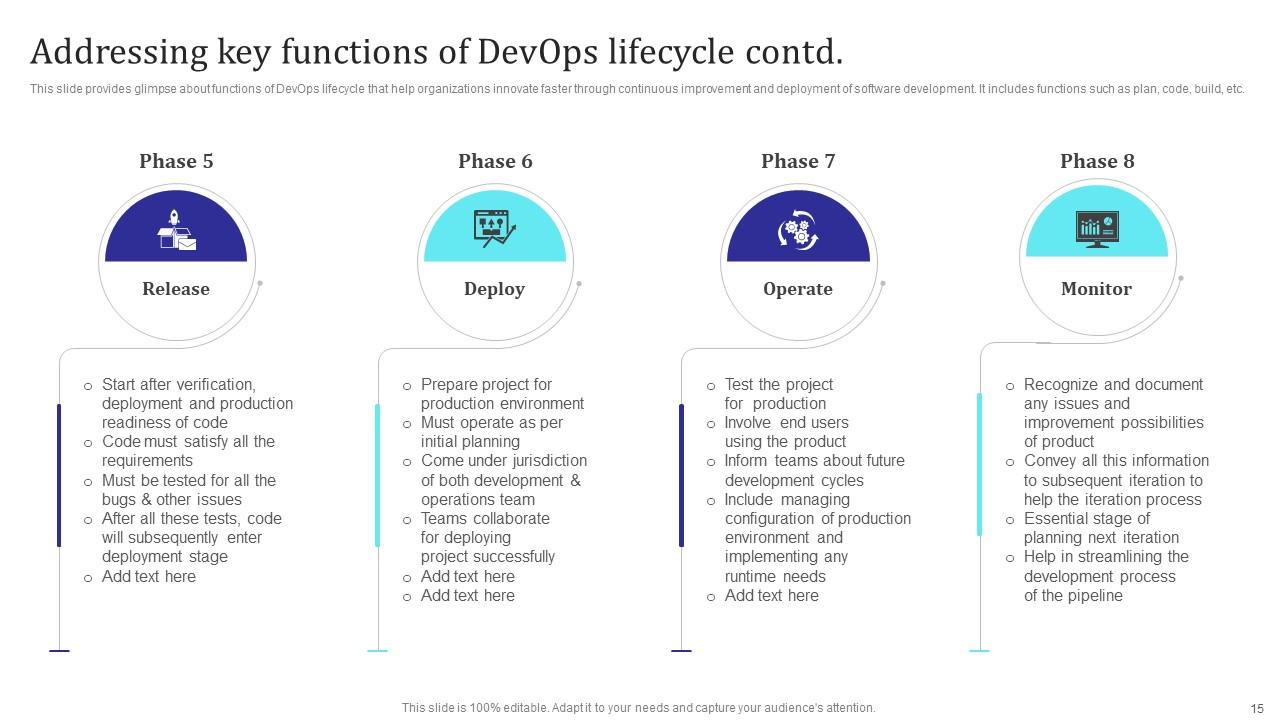
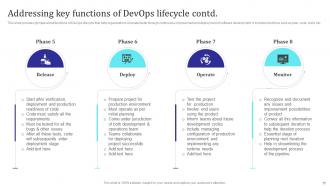
Slide 15: This slide provides glimpse about functions of DevOps lifecycle that help organizations innovate faster through continuous improvement and deployment of software.
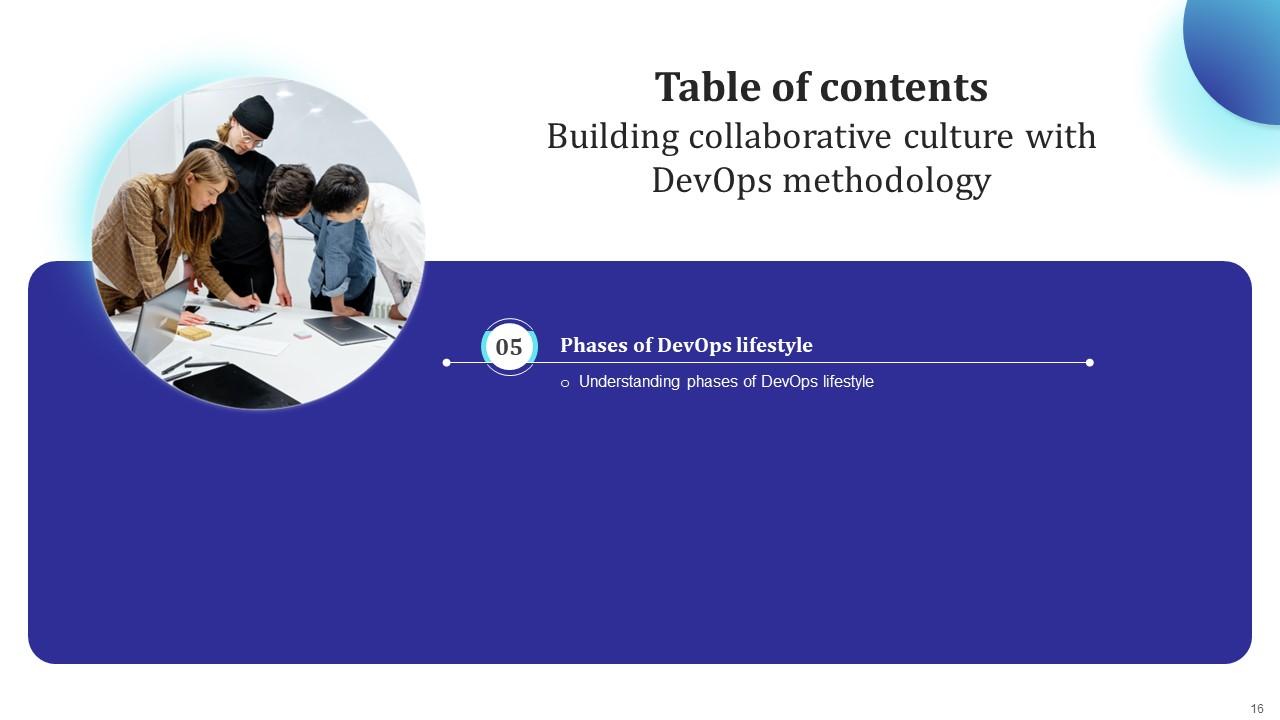
Slide 16: This slide exhibit table of content that is to be discuss further.
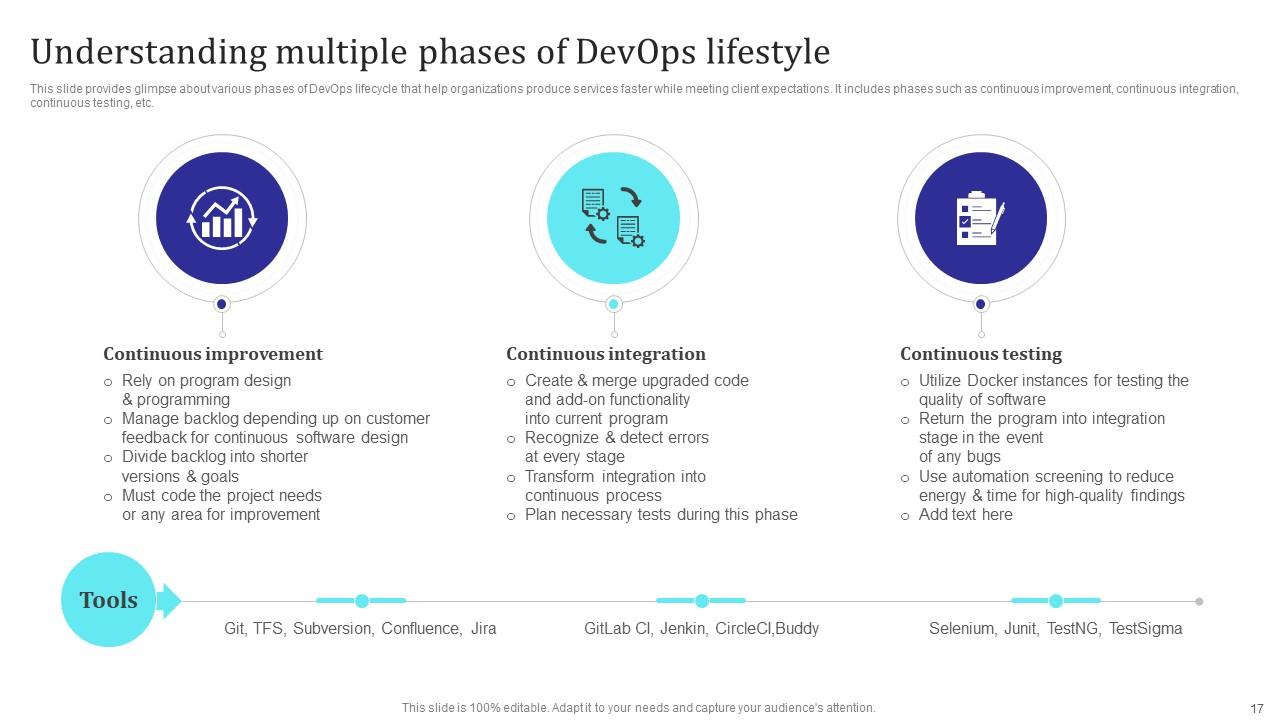
Slide 17: This slide provides glimpse about various phases of DevOps lifecycle that help organizations produce services faster while meeting client expectations.
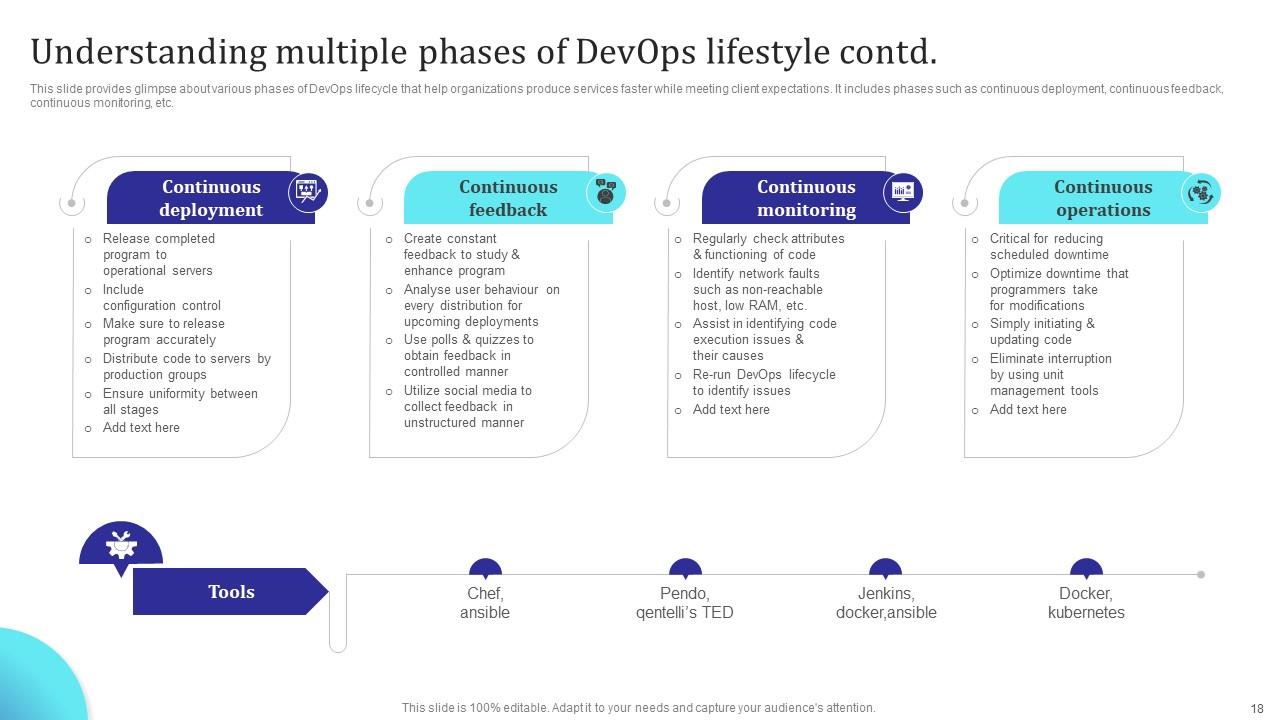
Slide 18: This slide provides glimpse about various phases of DevOps lifecycle that help organizations produce services faster while meeting client expectations.
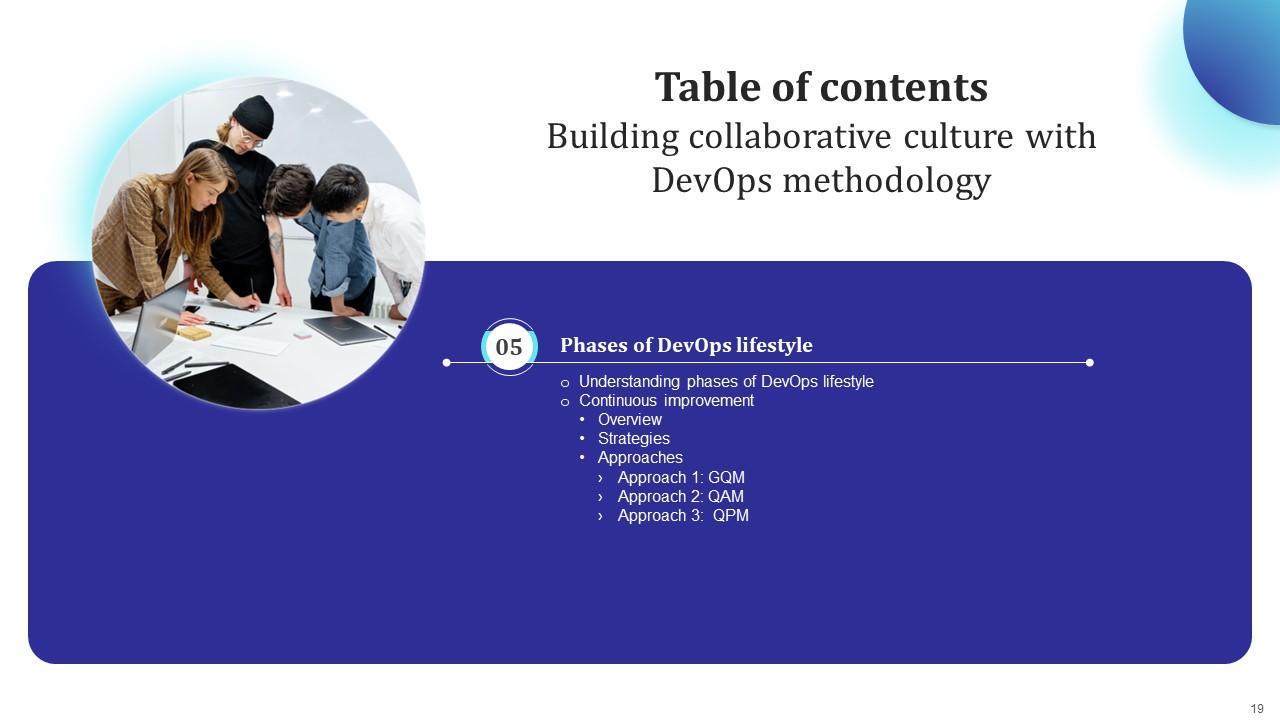
Slide 19: This slide exhibit table of content that is to be discuss further.
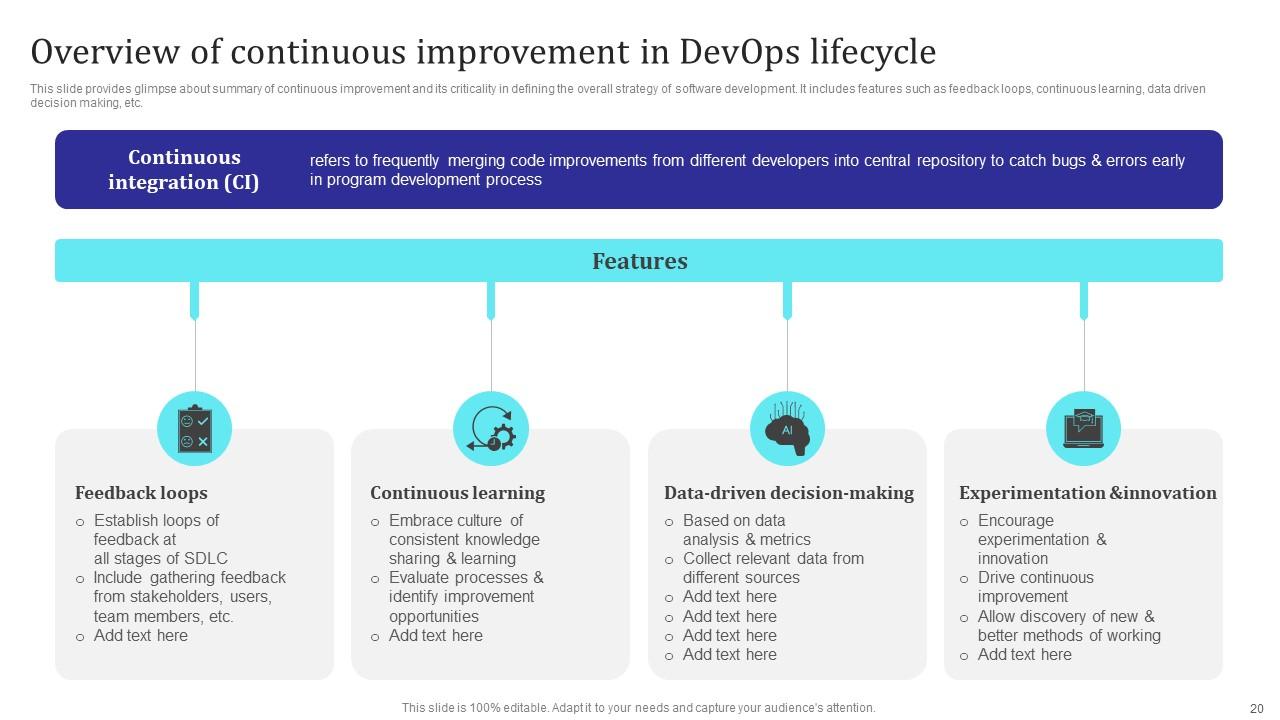
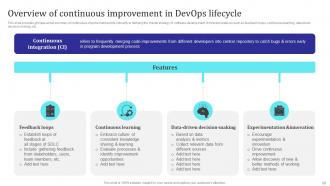
Slide 20: This slide provides glimpse about summary of continuous improvement and its criticality in defining the overall strategy of software development.
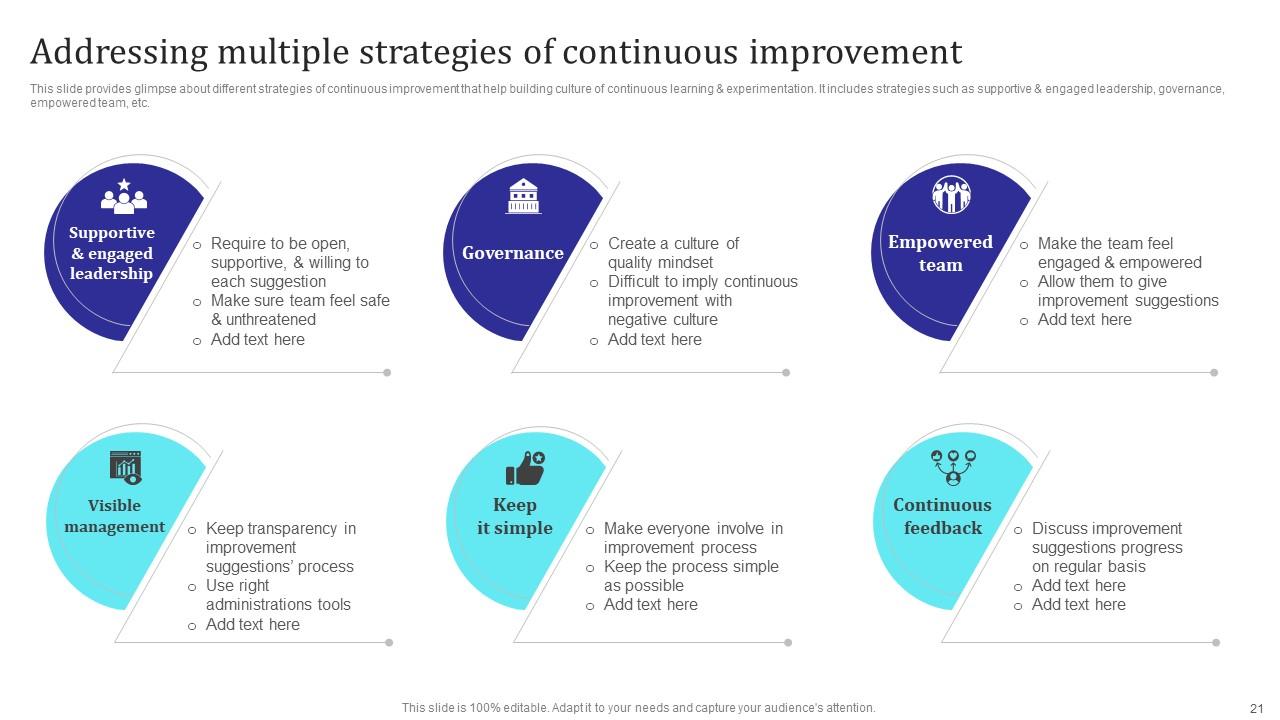
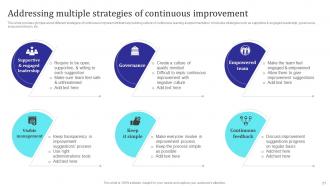
Slide 21: This slide provides glimpse about different strategies of continuous improvement that help building culture of continuous learning & experimentation.
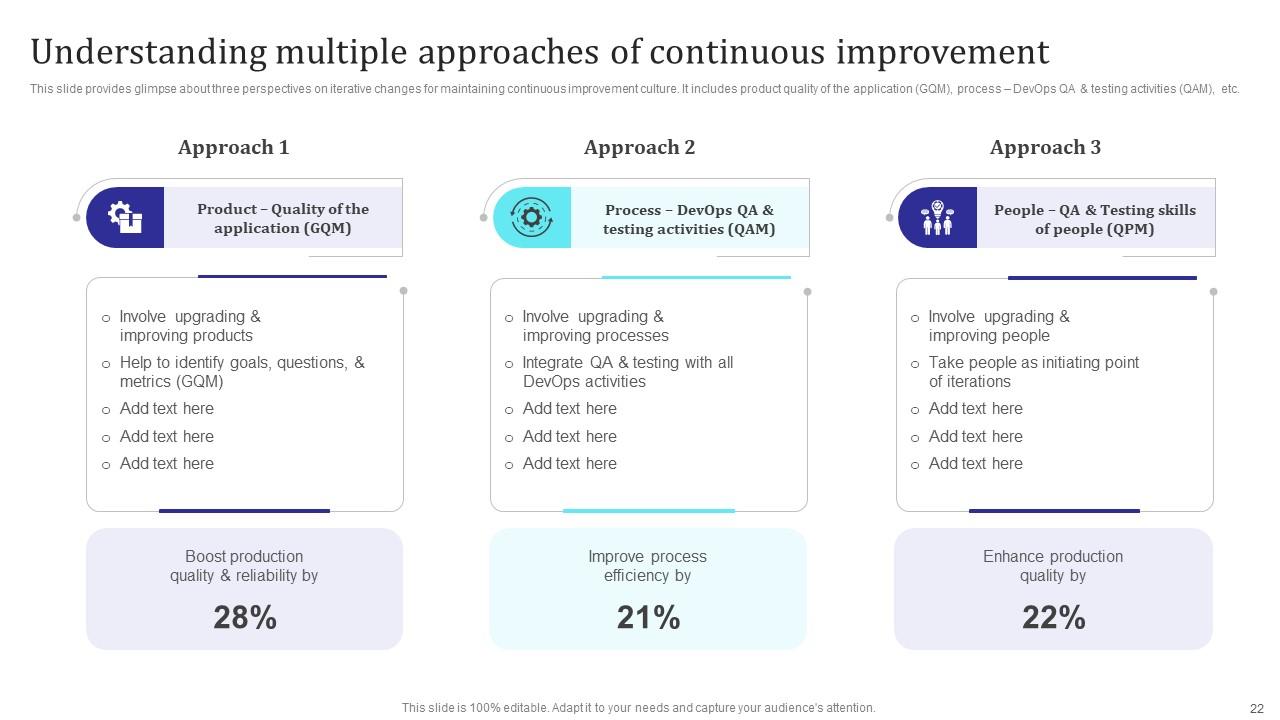
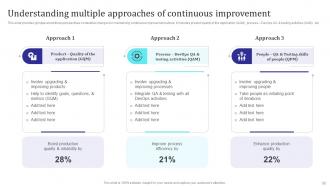
Slide 22: This slide provides glimpse about three perspectives on iterative changes for maintaining continuous improvement culture.
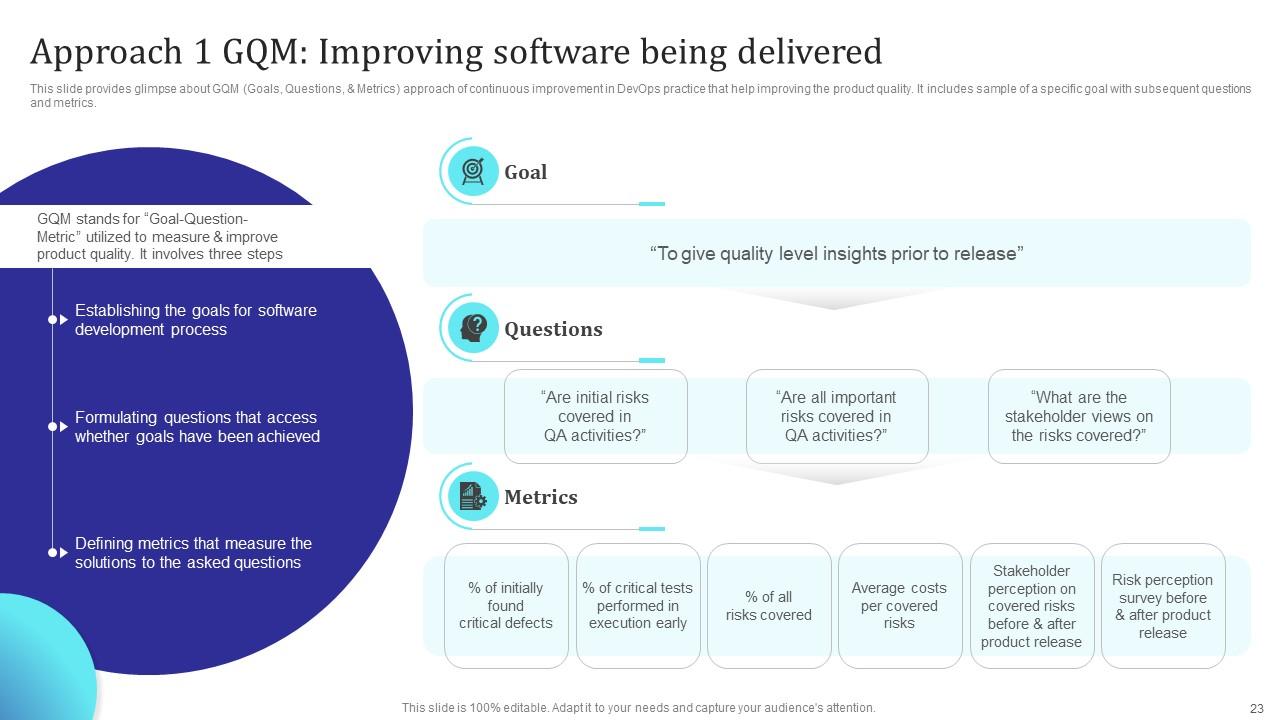
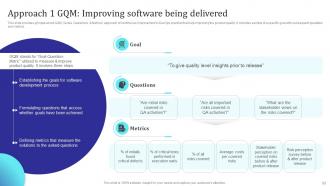
Slide 23: This slide provides glimpse about GQM (Goals, Questions, & Metrics) approach of continuous improvement in DevOps practice that help improving the product quality.
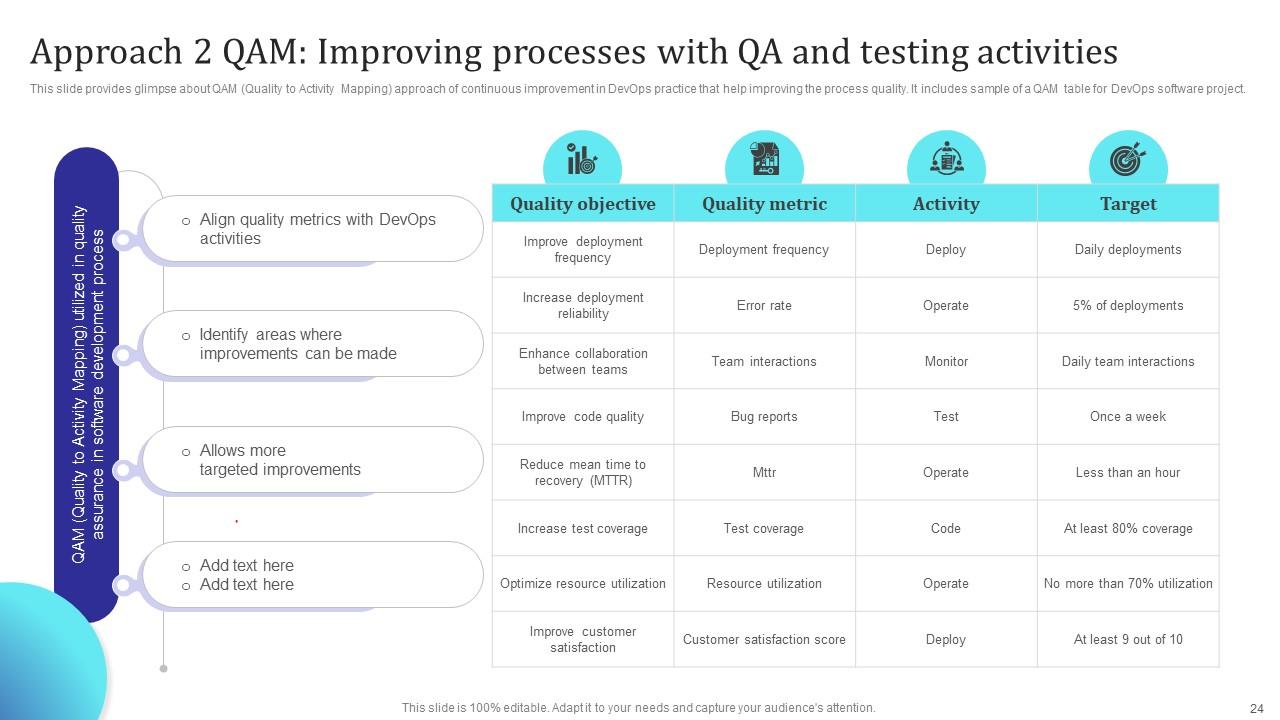
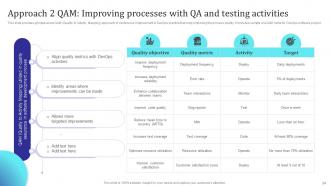
Slide 24: This slide provides glimpse about QAM (Quality to Activity Mapping) approach of continuous improvement in DevOps practice that help improving the process quality.
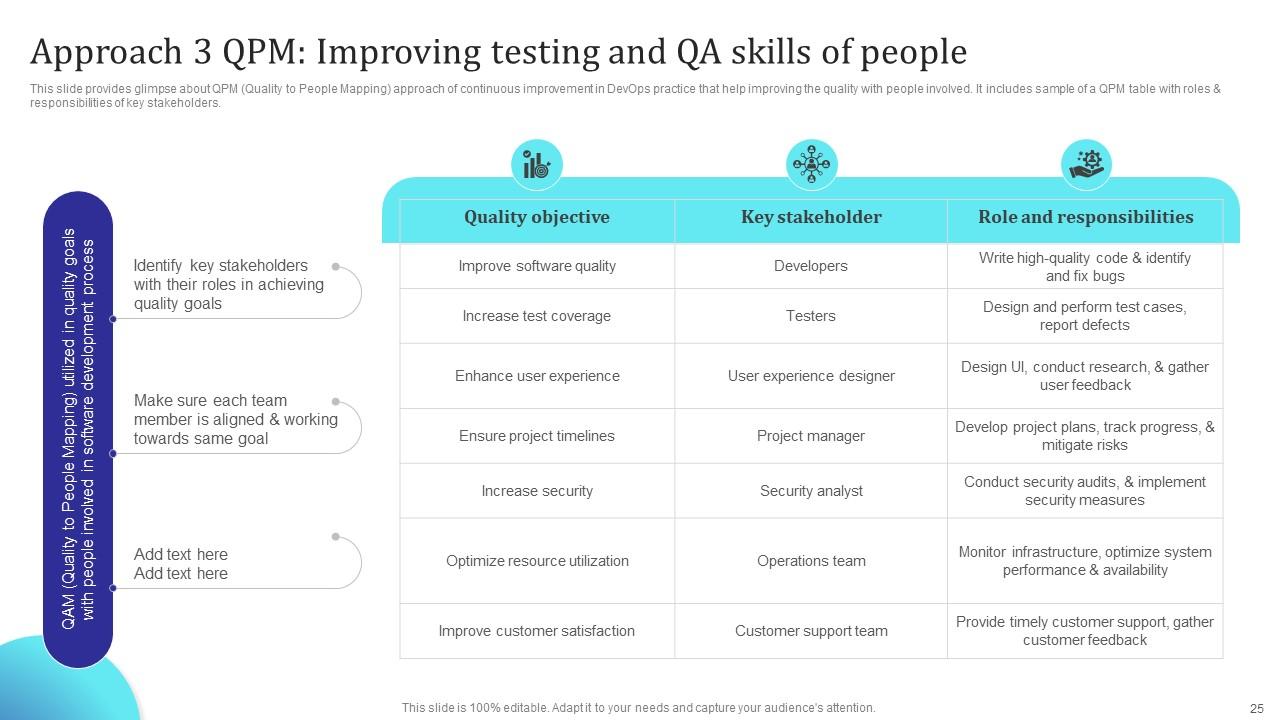
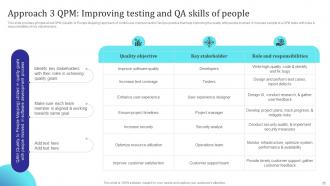
Slide 25: This slide provides glimpse about QPM approach of continuous improvement in DevOps practice that help improving the quality with people involved.
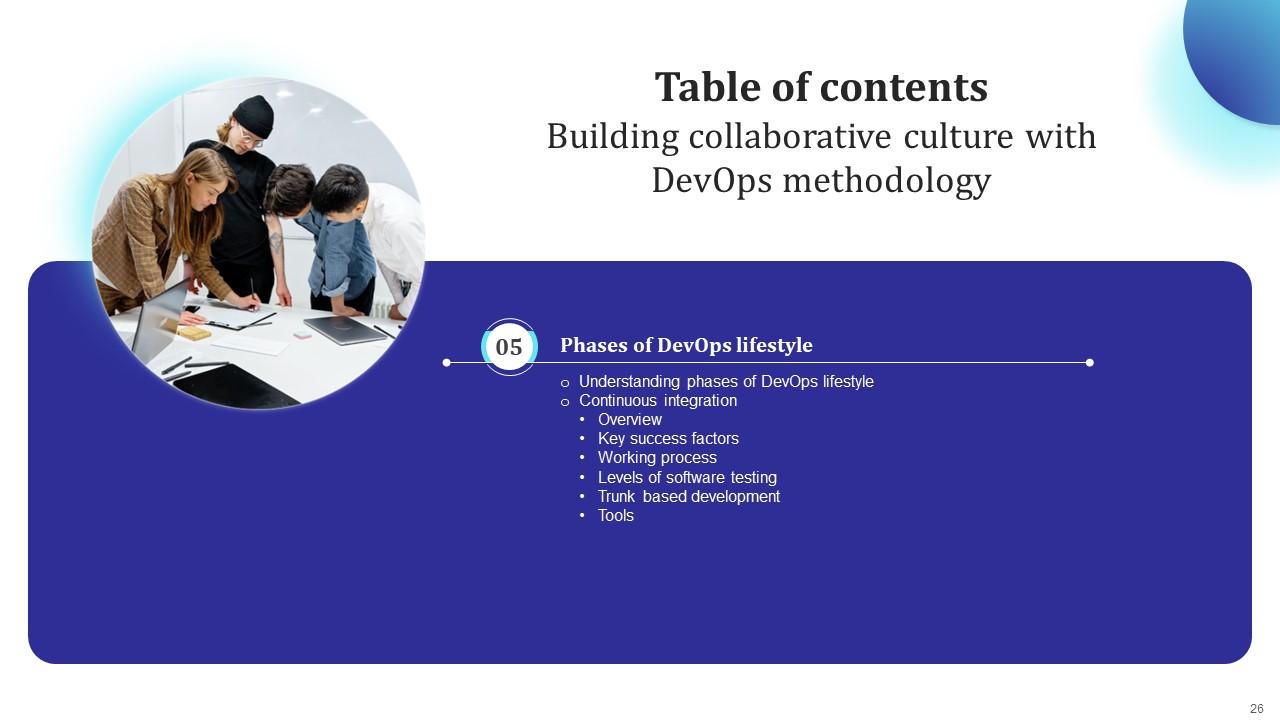
Slide 26: This slide exhibit table of content that is to be discuss further.
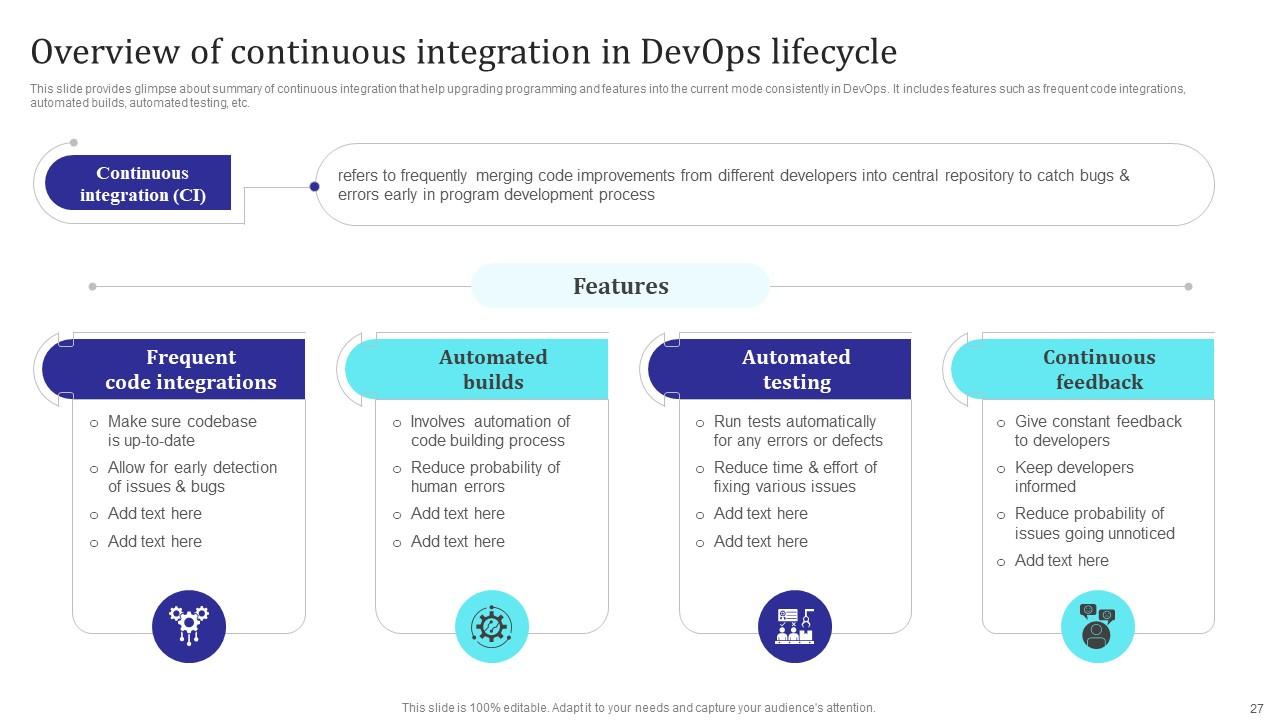
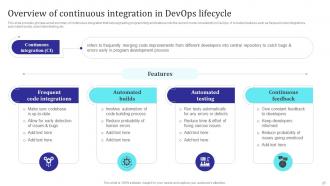
Slide 27: This slide provides glimpse about summary of continuous integration that help upgrading programming and features into the current mode consistently in DevOps.
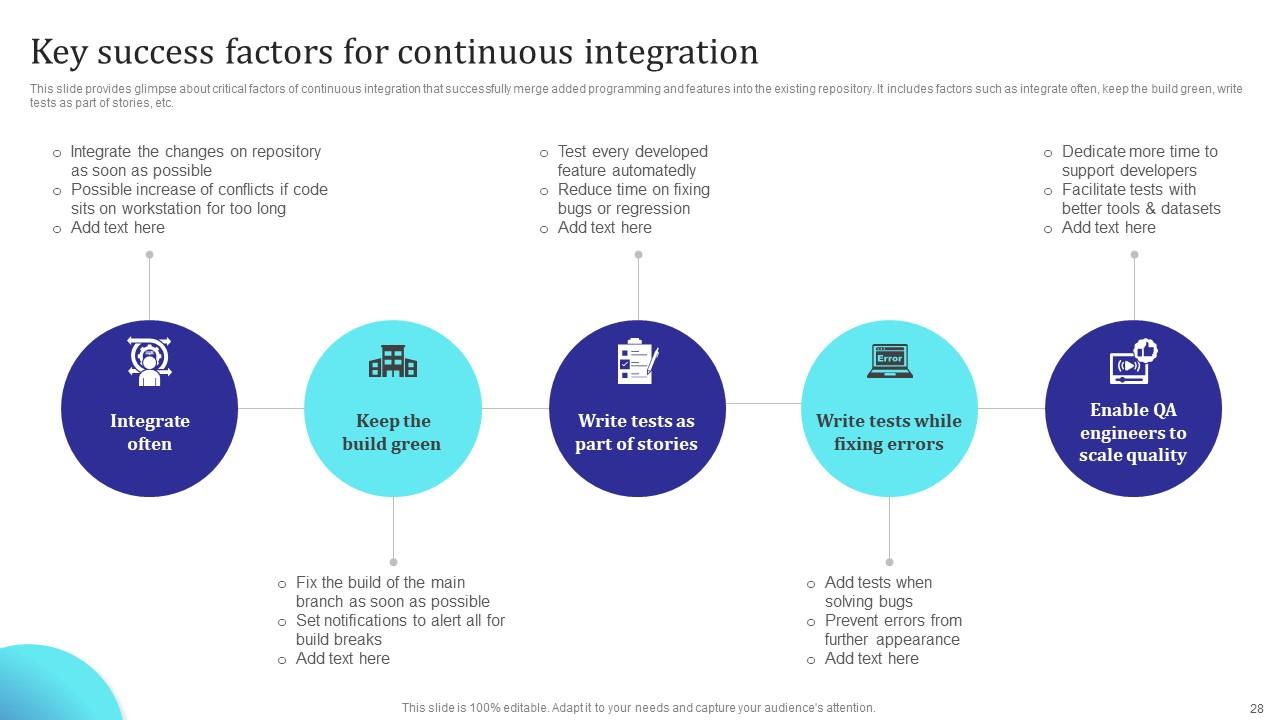
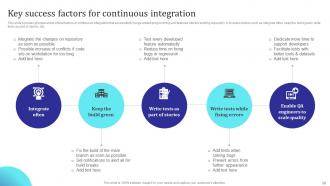
Slide 28: This slide provides glimpse about critical factors of continuous integration that successfully merge added programming and features into the existing repository.
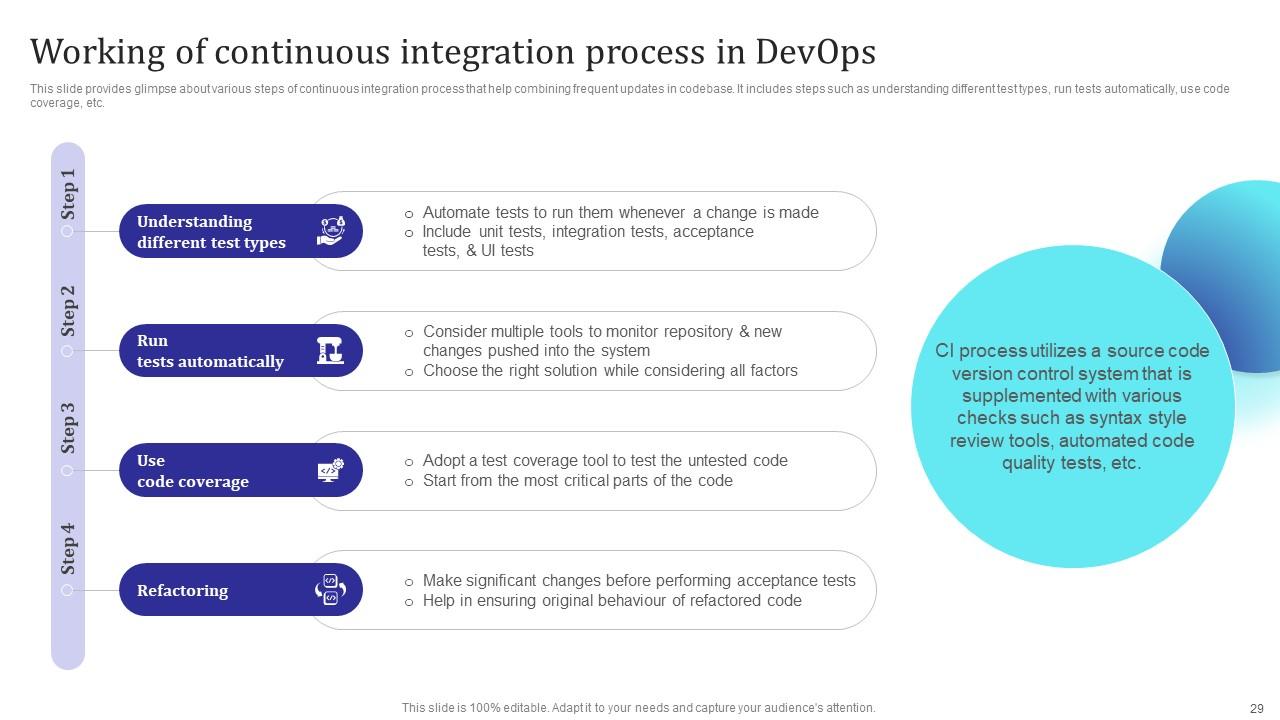
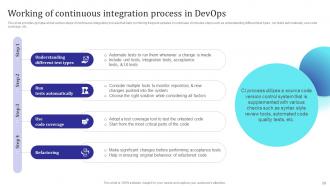
Slide 29: This slide provides glimpse about various steps of continuous integration process that help combining frequent updates in codebase.
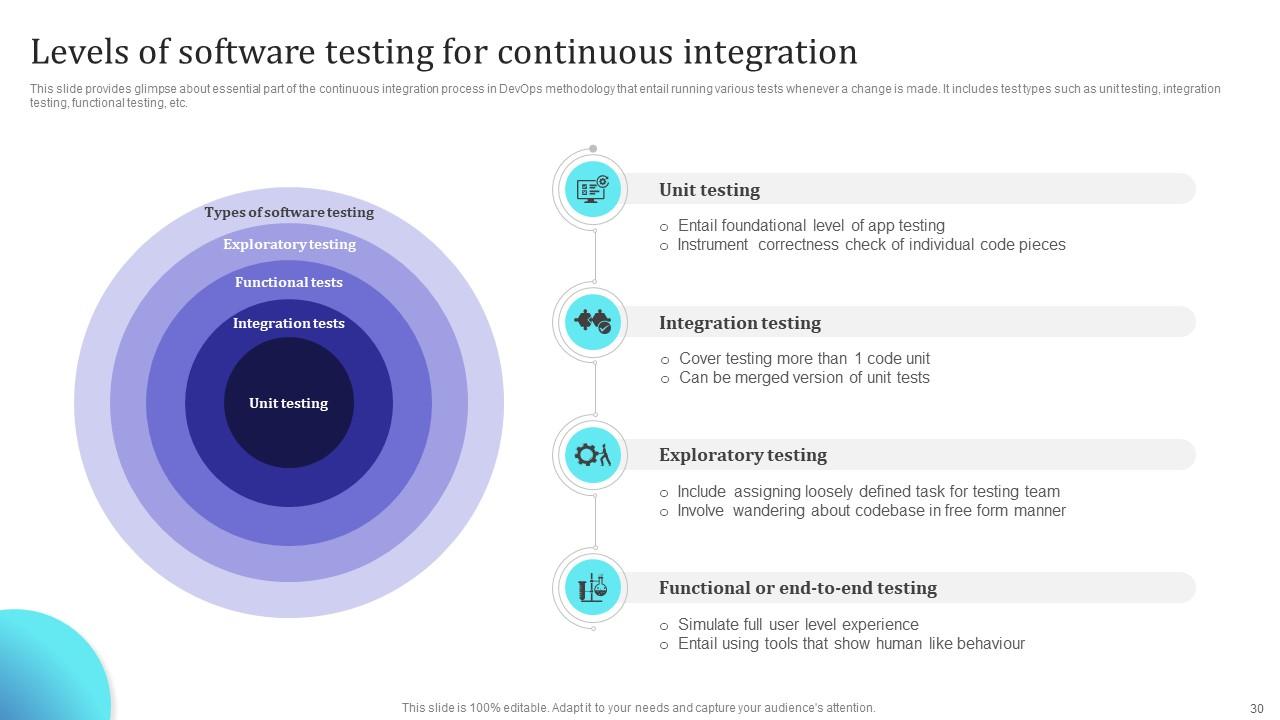
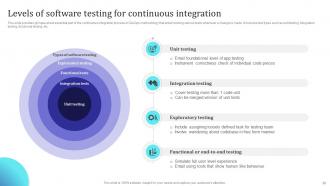
Slide 30: This slide provides glimpse about essential part of the continuous integration process in DevOps methodology.
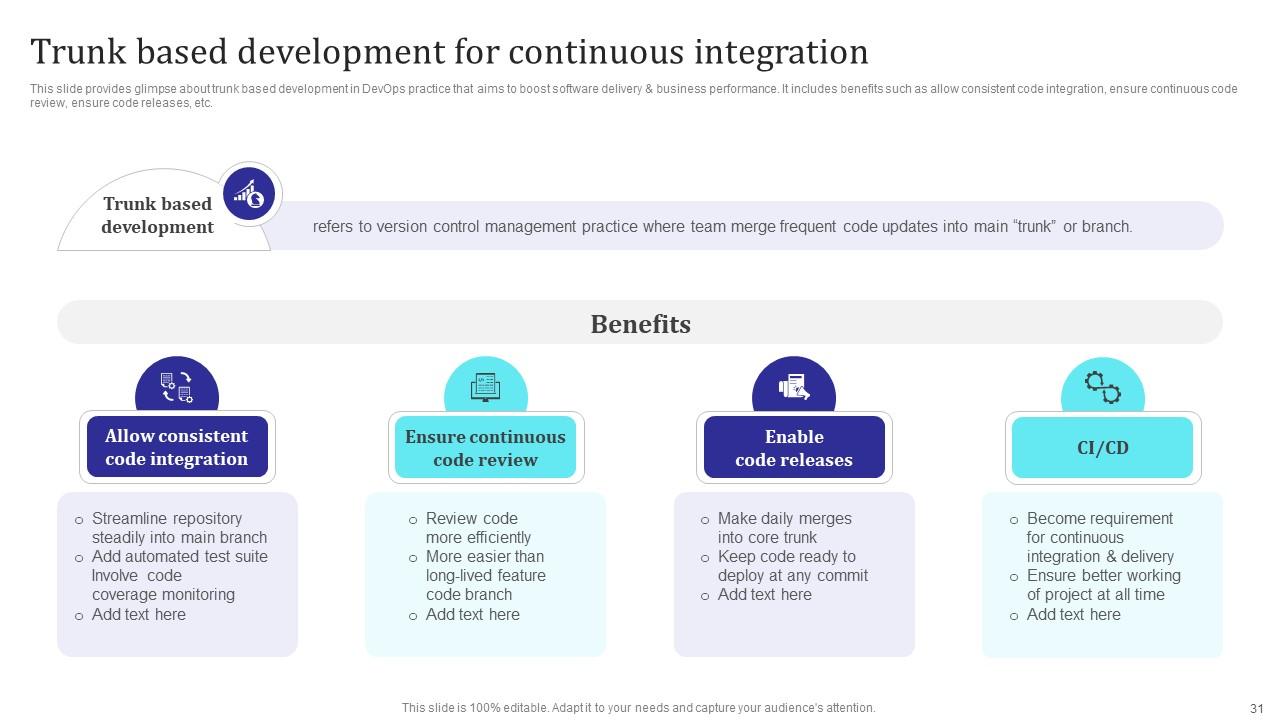
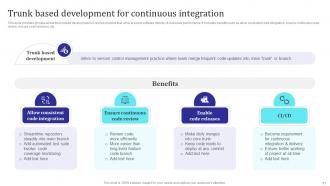
Slide 31: This slide provides glimpse about trunk based development in DevOps practice that aims to boost software delivery & business performance.
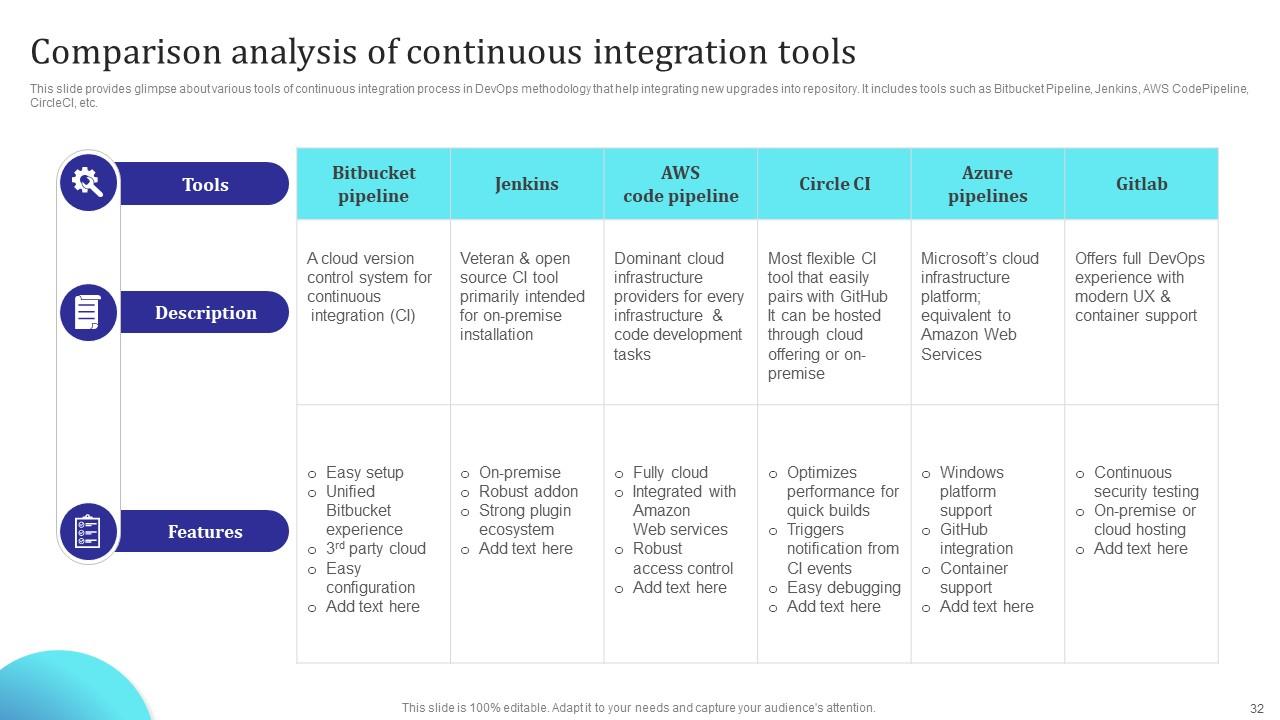
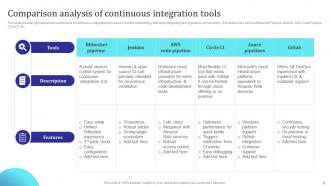
Slide 32: This slide provides glimpse about various tools of continuous integration process in DevOps methodology that help integrating new upgrades into repository.
Slide 33: This slide exhibit table of content that is to be discuss further.
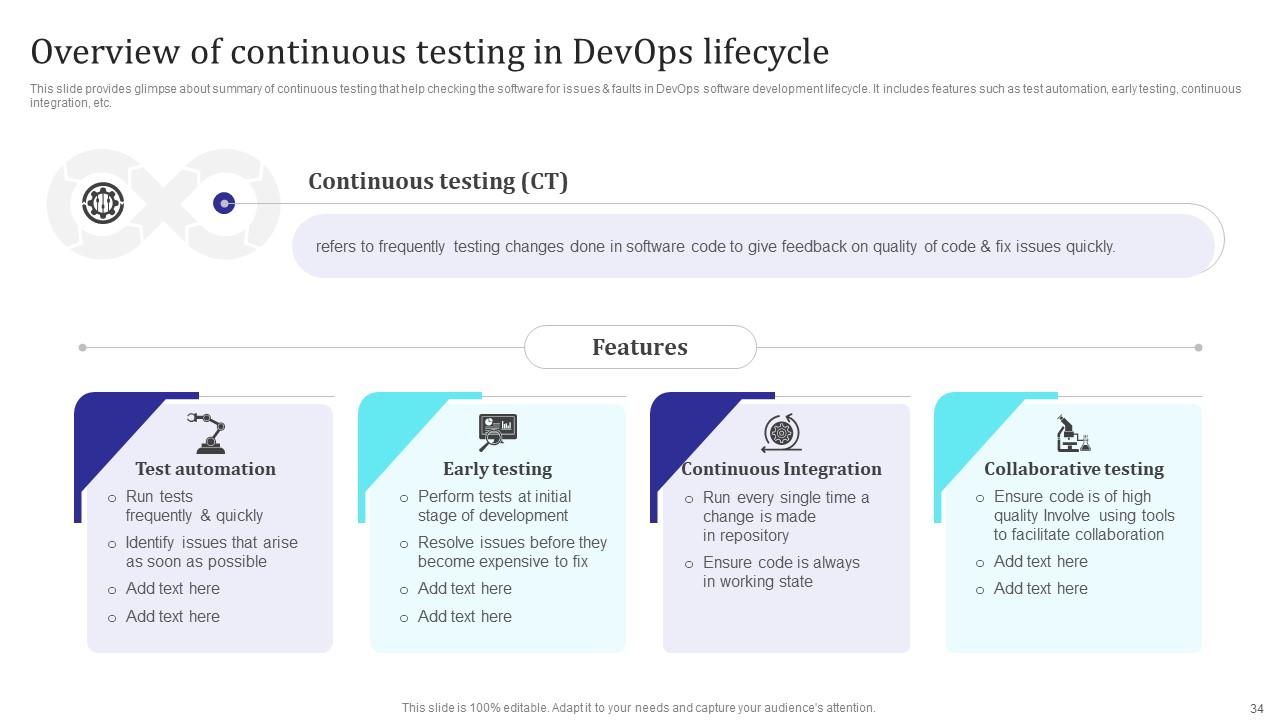
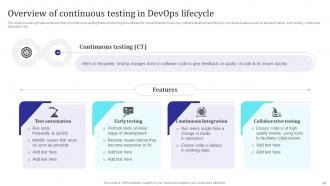
Slide 34: This slide provides glimpse about summary of continuous testing that help checking the software for issues & faults in DevOps software development lifecycle.
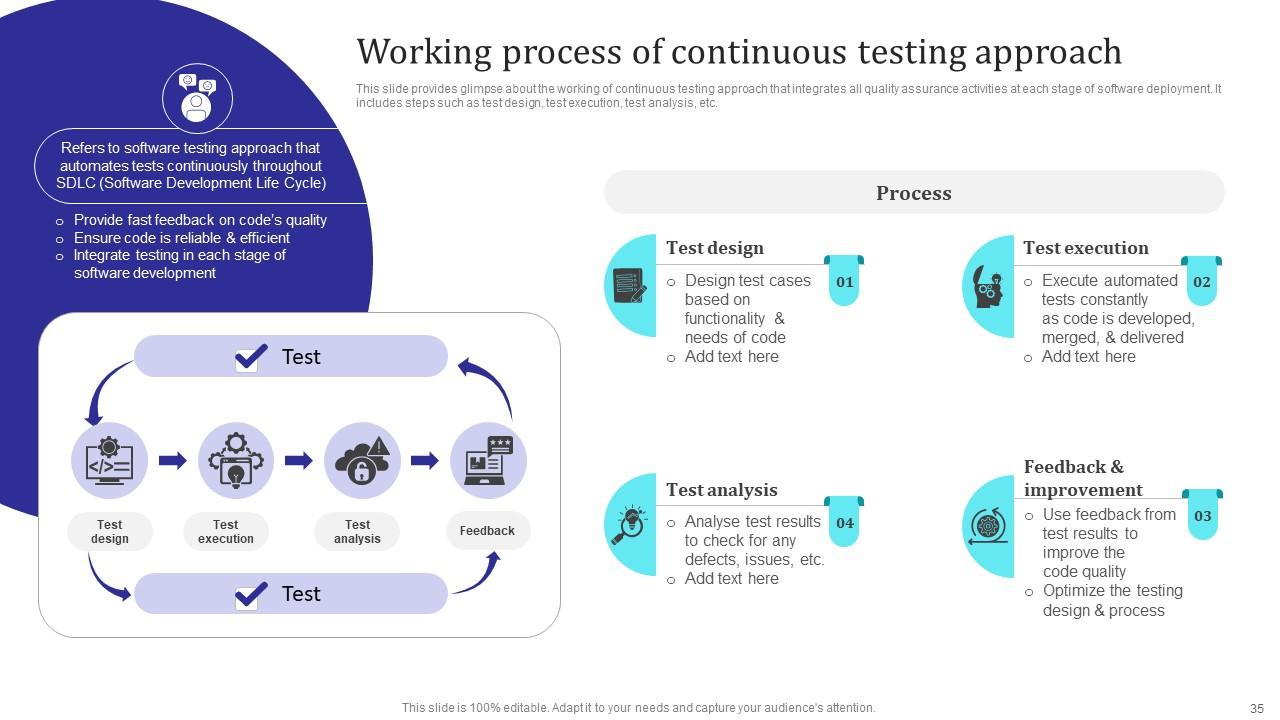
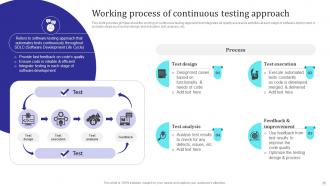
Slide 35: This slide provides glimpse about the working of continuous testing approach that integrates all quality assurance activities at each stage of software deployment.
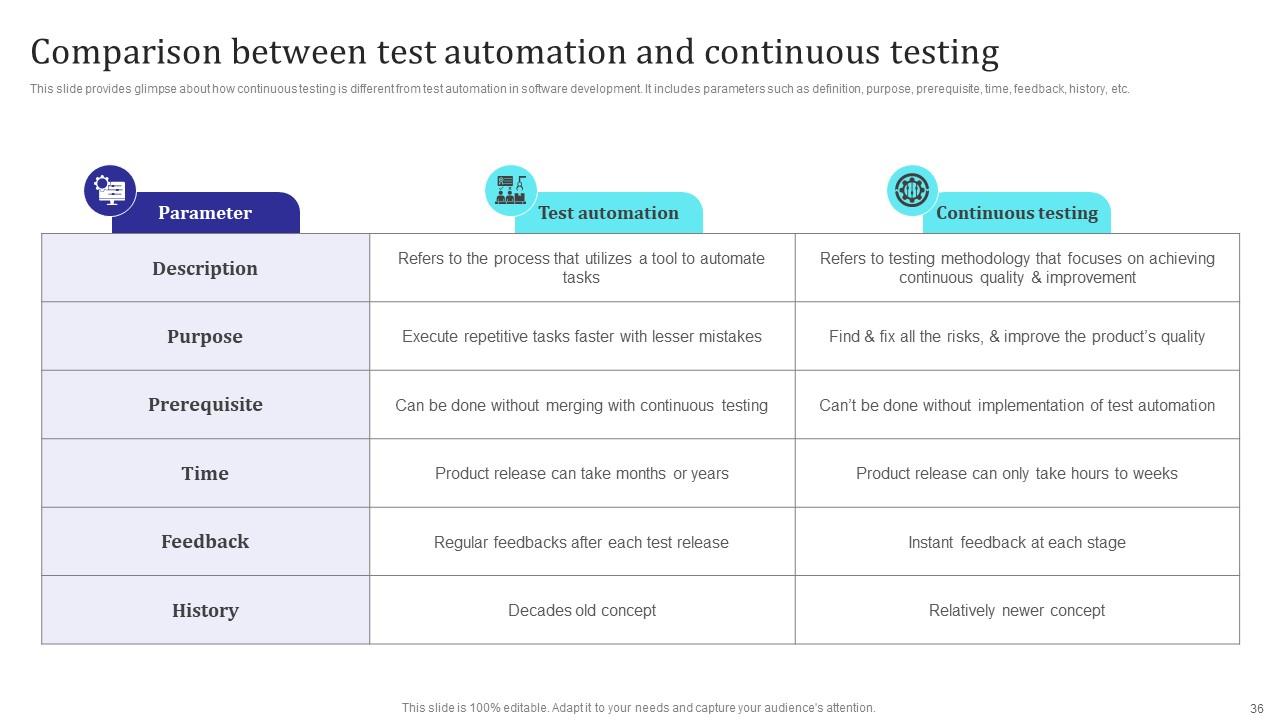
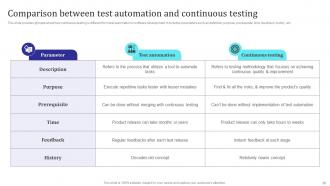
Slide 36: This slide provides glimpse about how continuous testing is different from test automation in software development.
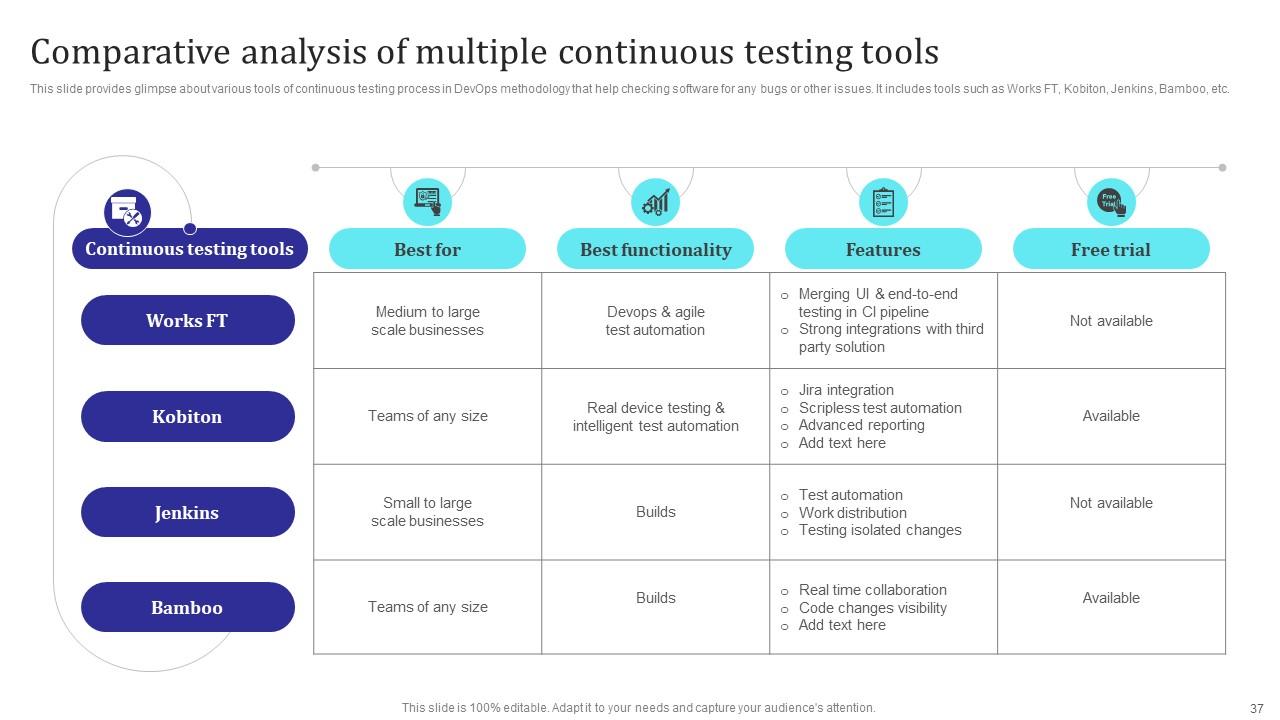
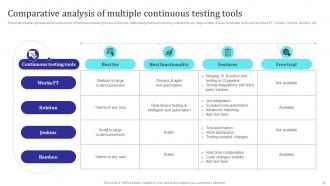
Slide 37: This slide provides glimpse about various tools of continuous testing process in DevOps methodology that help checking software for any bugs or other issues.
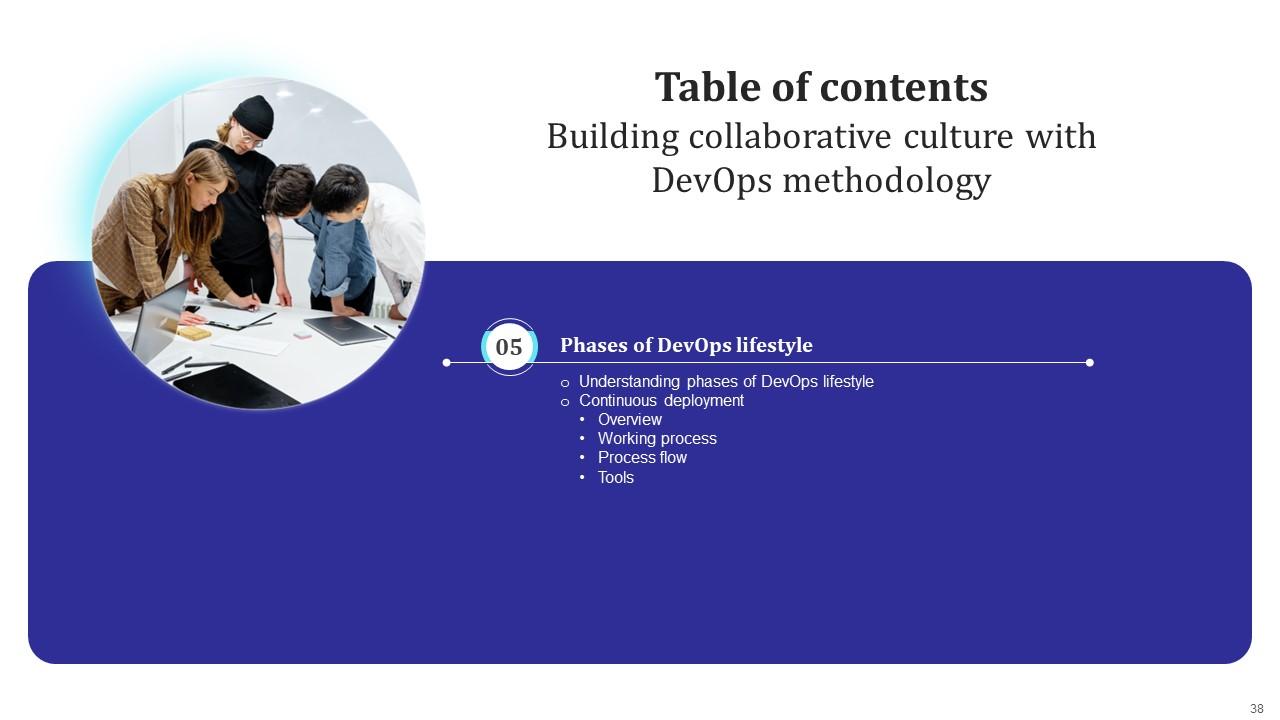
Slide 38: This slide exhibit table of content that is to be discuss further.
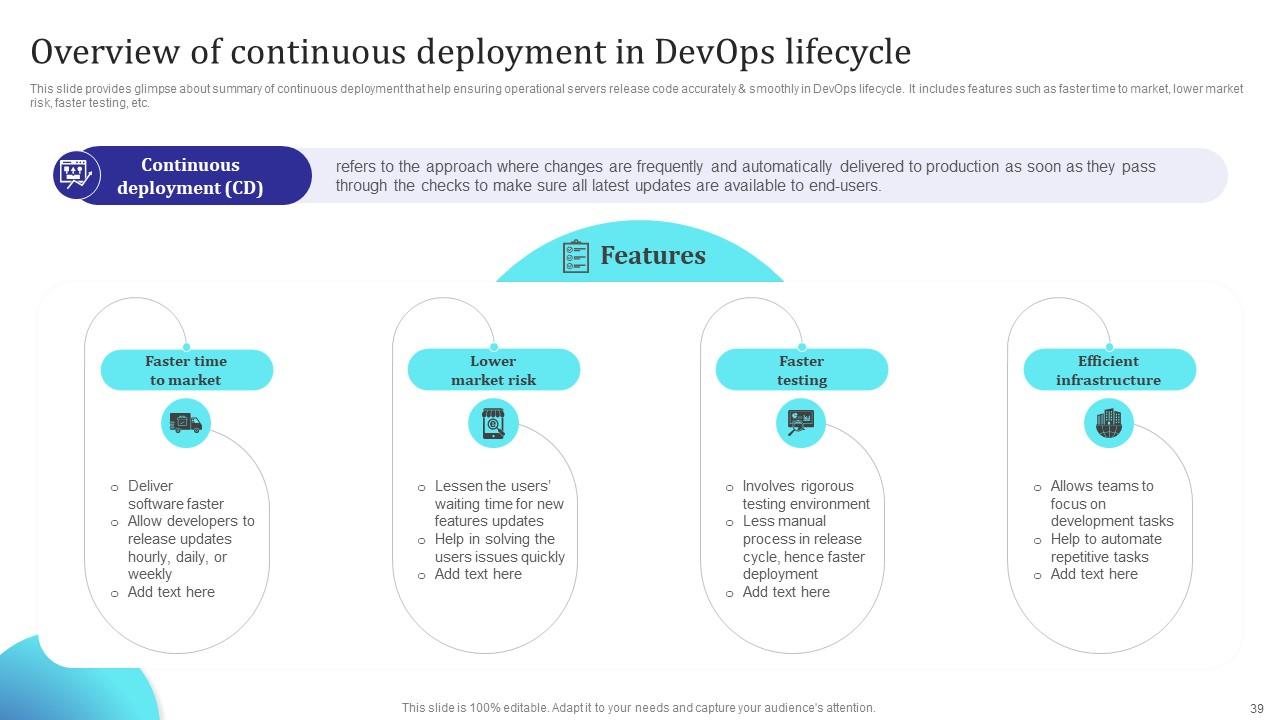
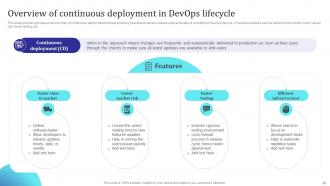
Slide 39: This slide provides glimpse about summary of continuous deployment that help ensuring operational servers release code accurately & smoothly in DevOps lifecycle.
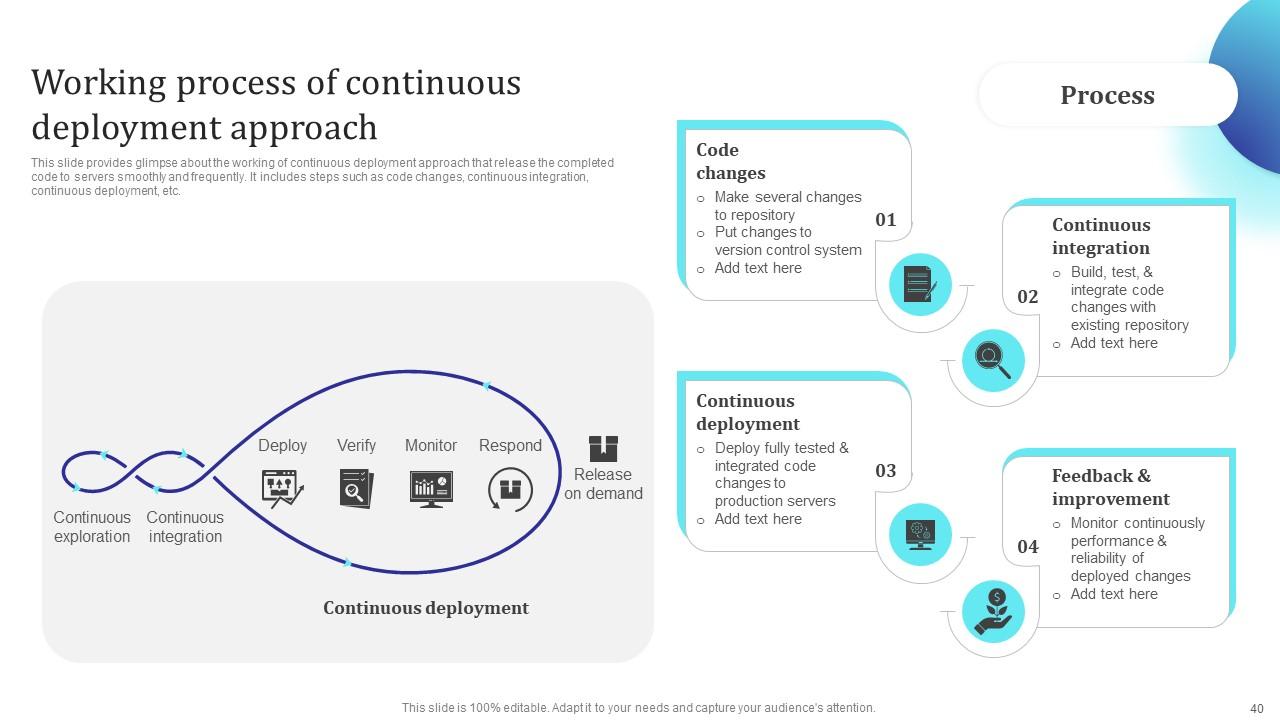
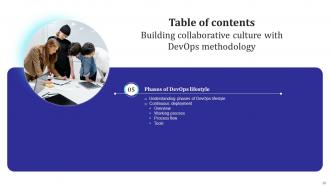
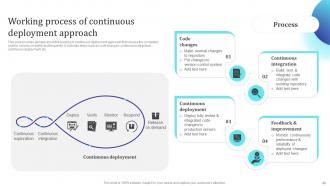
Slide 40: This slide provides glimpse about the working of continuous deployment approach that release the completed code to servers smoothly and frequently.
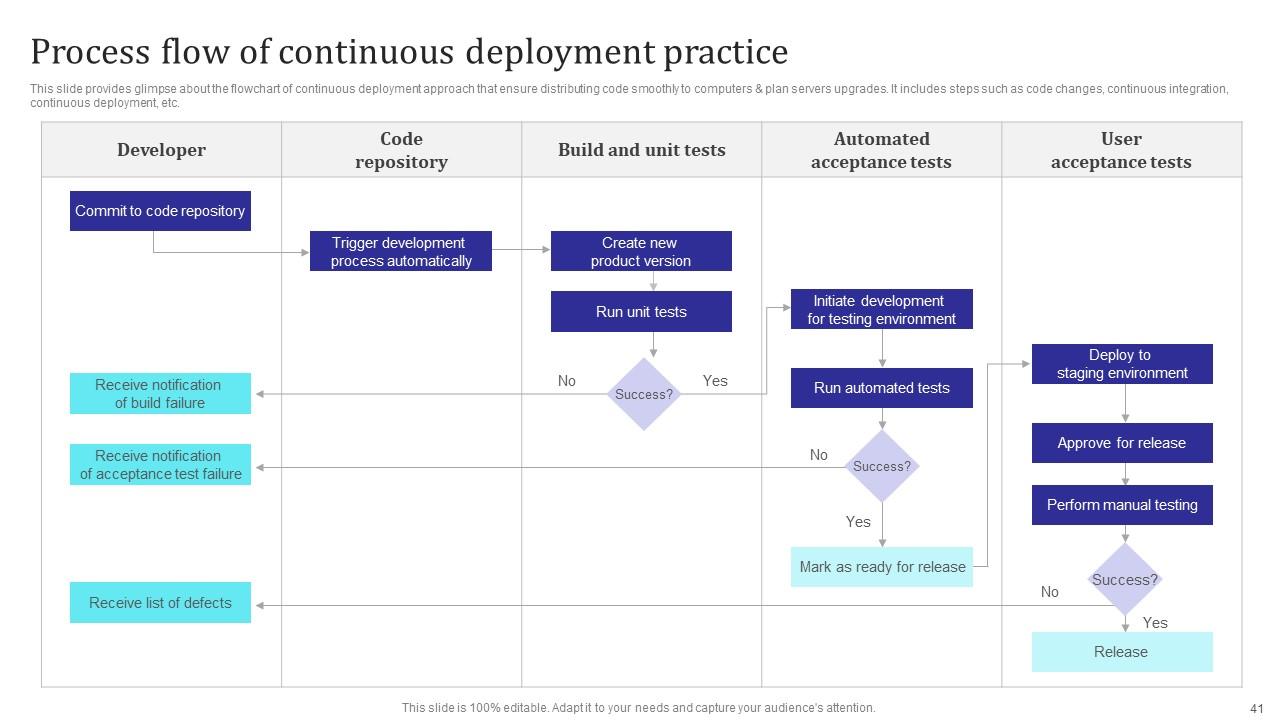
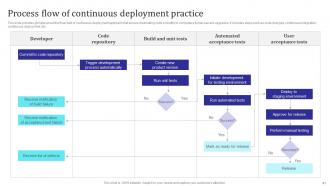
Slide 41: This slide provides glimpse about the flowchart of continuous deployment approach that ensure distributing code smoothly to computers & plan servers upgrades.
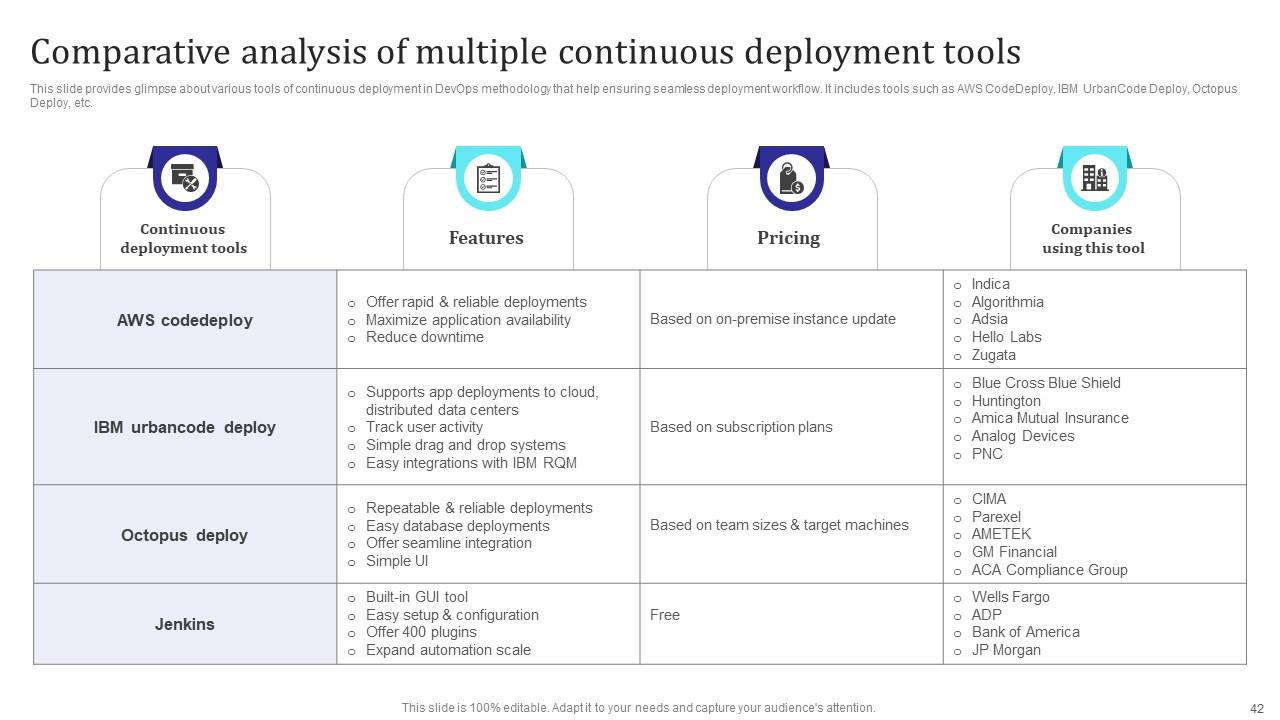
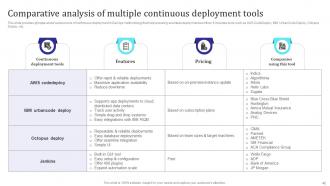
Slide 42: This slide provides glimpse about various tools of continuous deployment in DevOps methodology that help ensuring seamless deployment workflow.
Slide 43: This slide exhibit table of content that is to be discuss further.
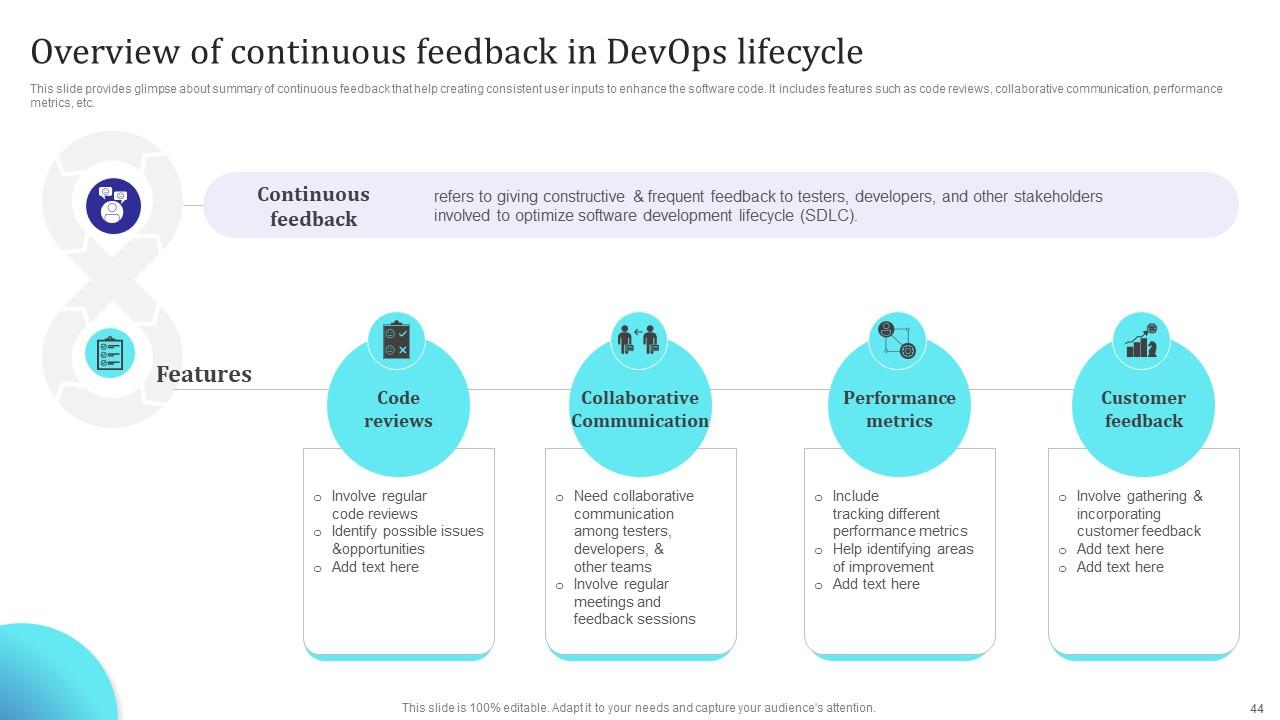
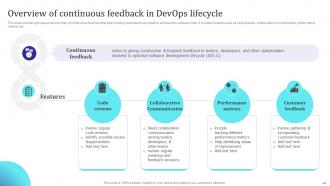
Slide 44: This slide provides glimpse about summary of continuous feedback that help creating consistent user inputs to enhance the software code.
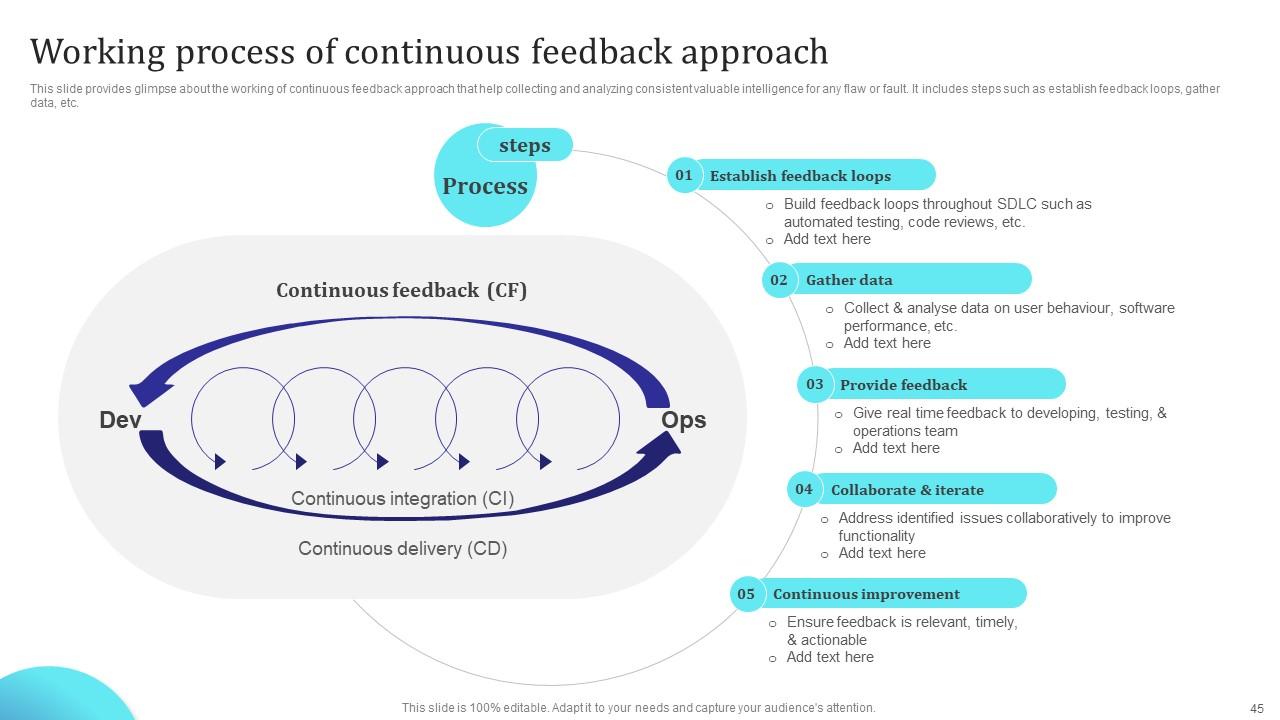
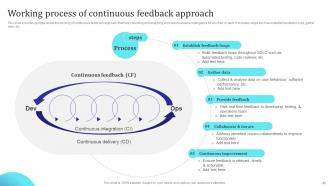
Slide 45: This slide provides glimpse the working of continuous feedback approach that help collecting and analyzing consistent valuable intelligence for any flaw or fault.
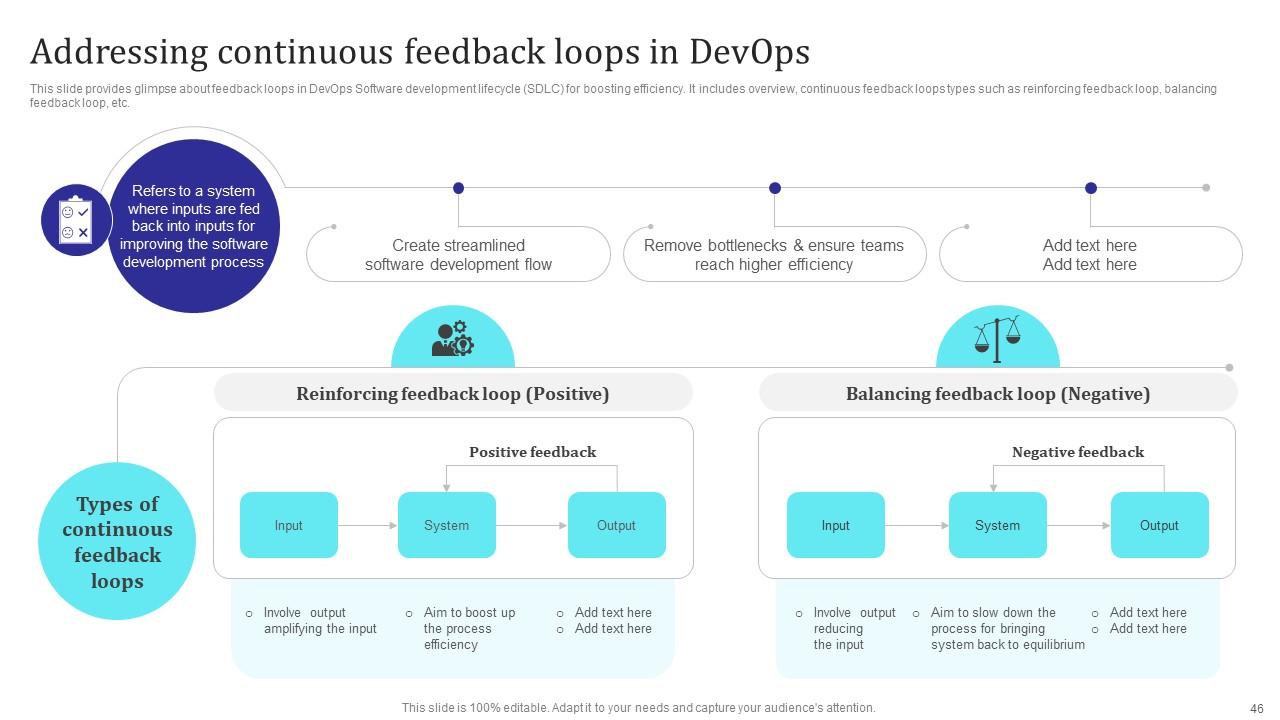
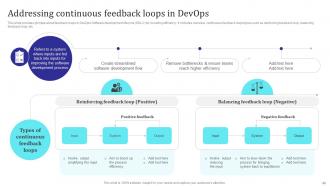
Slide 46: This slide provides glimpse about feedback loops in DevOps Software development lifecycle (SDLC) for boosting efficiency.
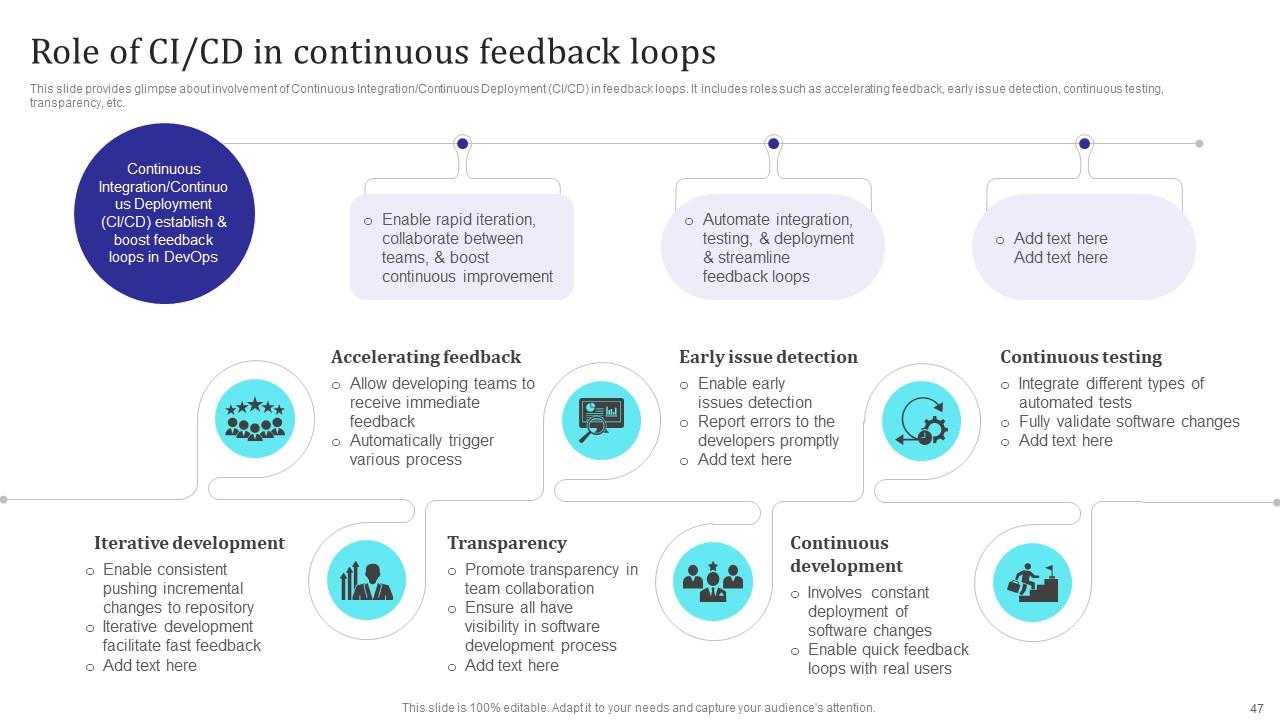
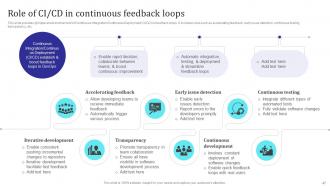
Slide 47: This slide provides glimpse about involvement of Continuous Integration/Continuous Deployment (CI/CD) in feedback loops.
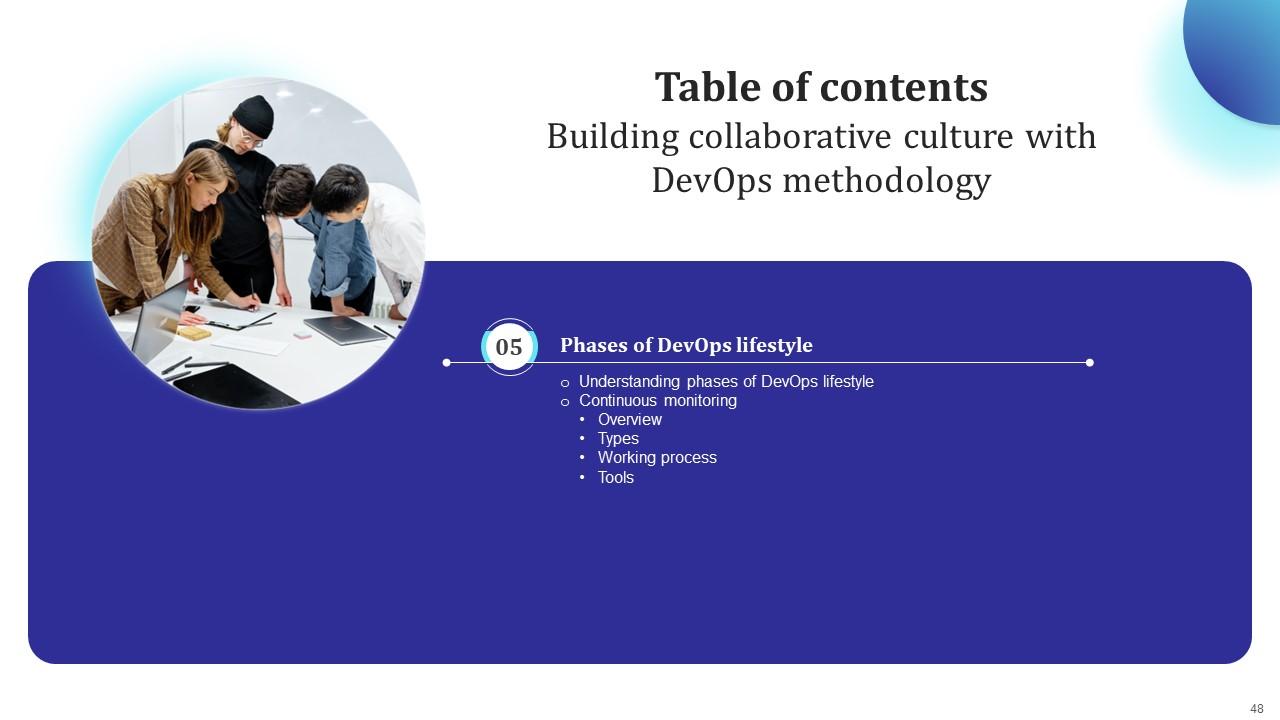
Slide 48: This slide exhibit table of content that is to be discuss further.
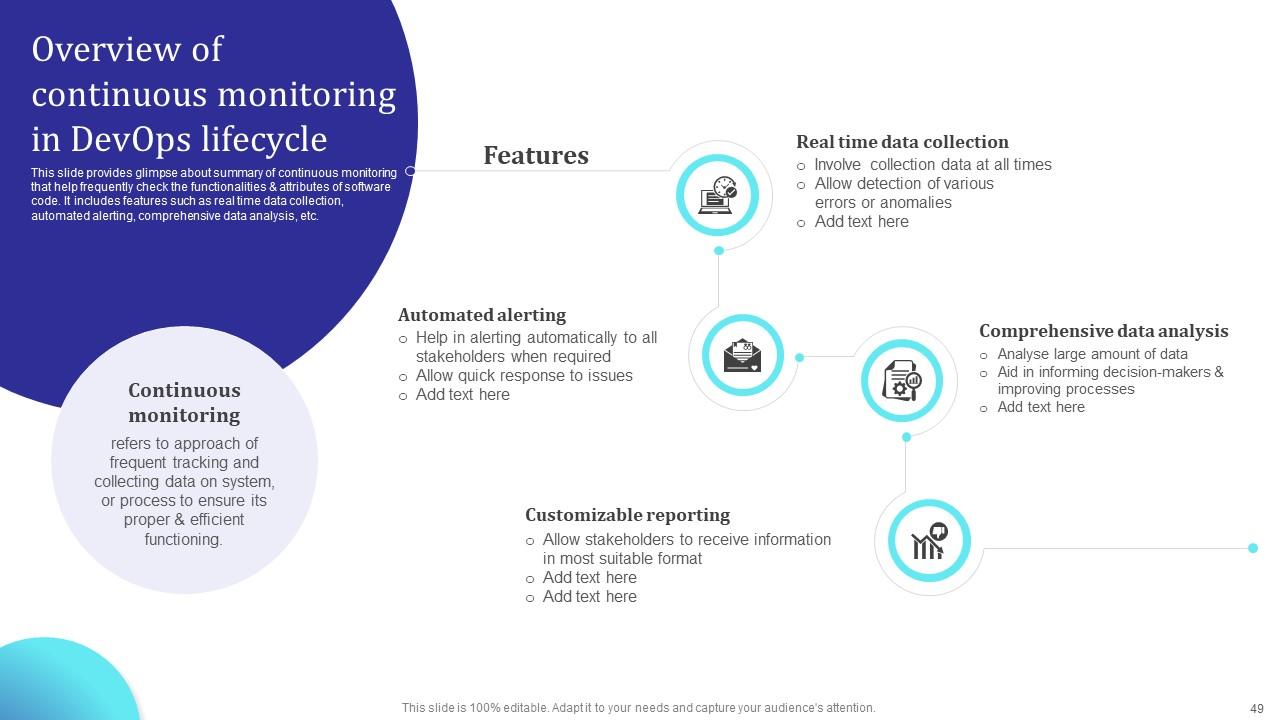
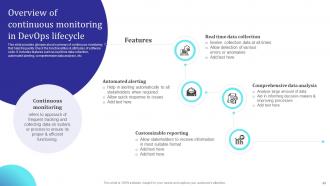
Slide 49: This slide provides glimpse about summary of continuous monitoring that help frequently check the functionalities & attributes of software code.
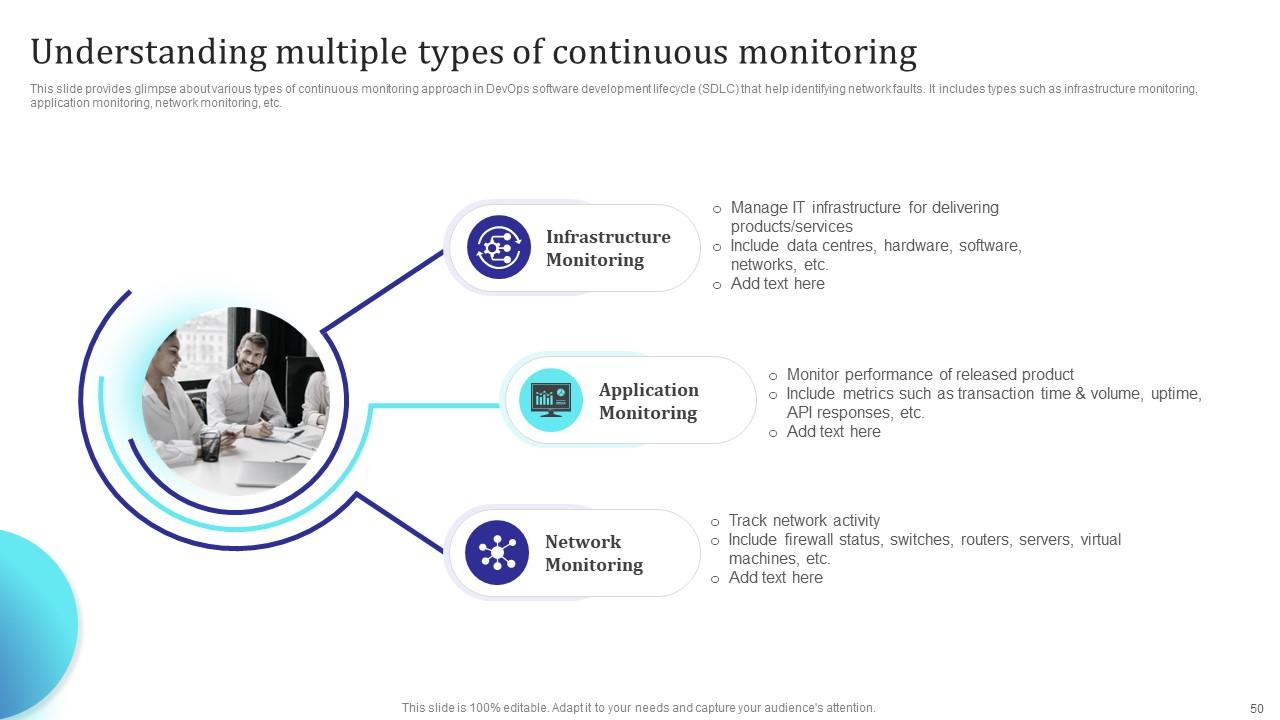
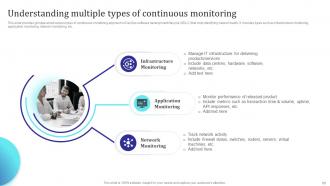
Slide 50: This slide provides glimpse about various types of continuous monitoring approach in DevOps software development lifecycle (SDLC) that help identifying network faults.
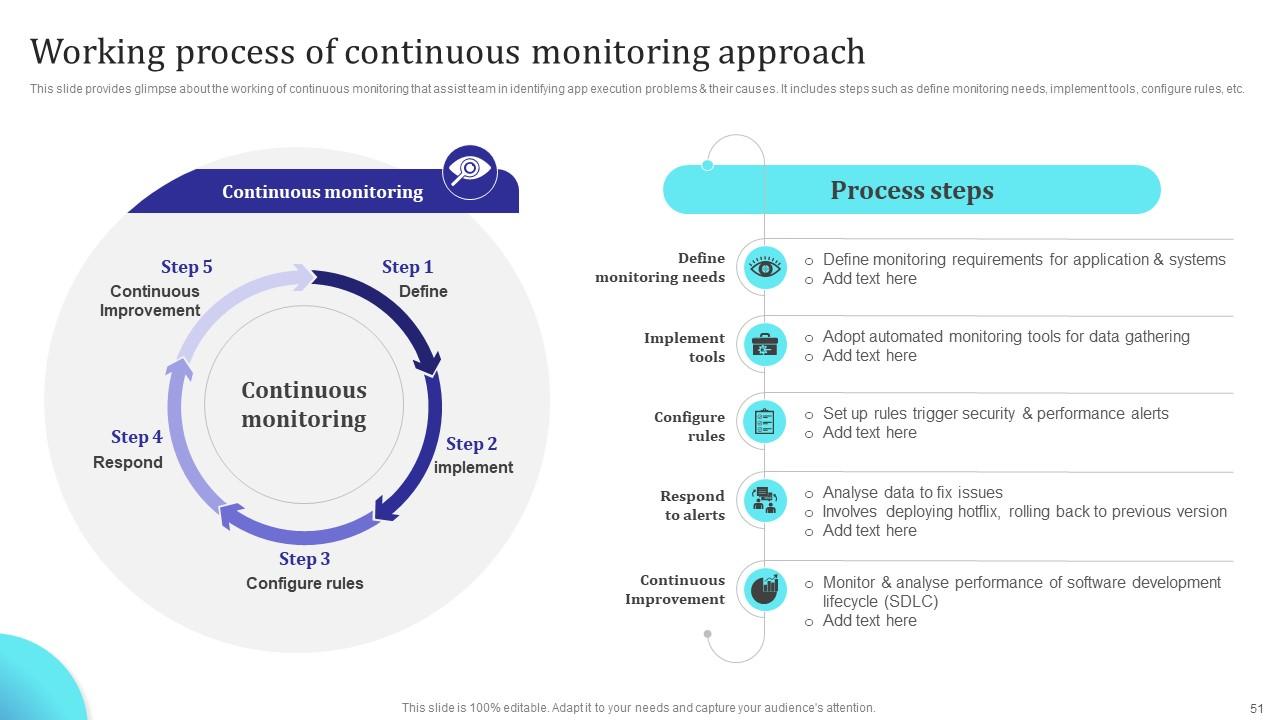
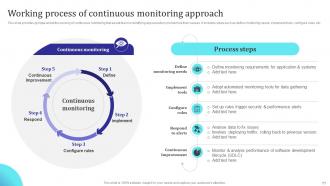
Slide 51: This slide provides glimpse about the working of continuous monitoring that assist team in identifying app execution problems & their causes.
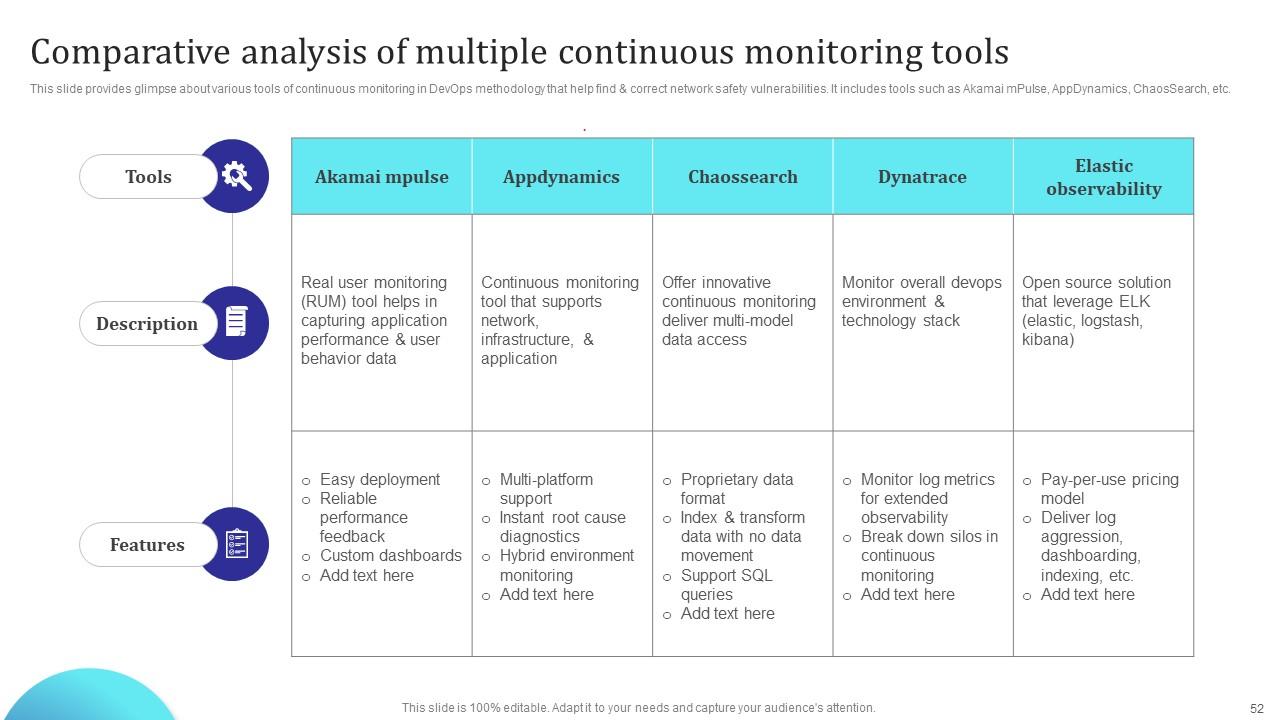
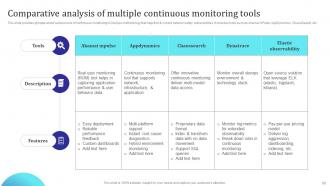
Slide 52: This slide provides glimpse about various tools of continuous monitoring in DevOps methodology that help find & correct network safety vulnerabilities.
Slide 53: This slide exhibit table of content that is to be discuss further.
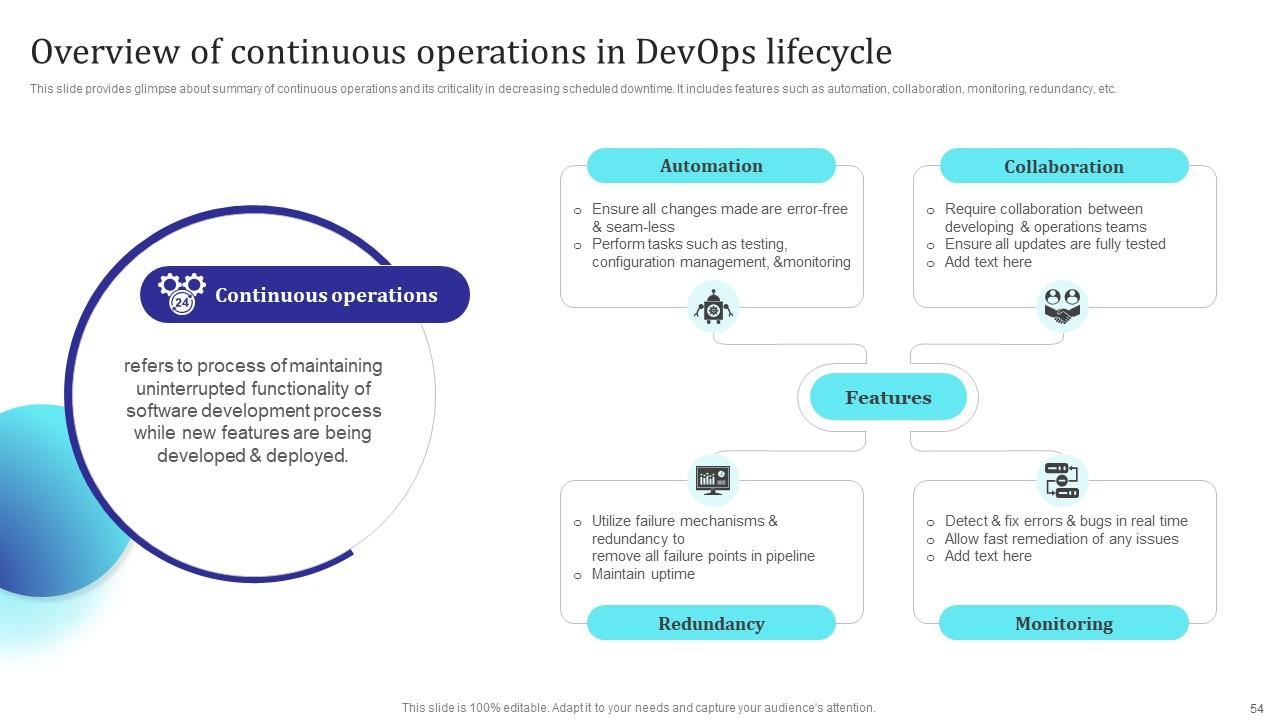
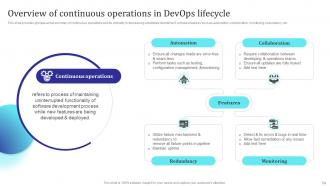
Slide 54: This slide provides glimpse about summary of continuous operations and its criticality in decreasing scheduled downtime.
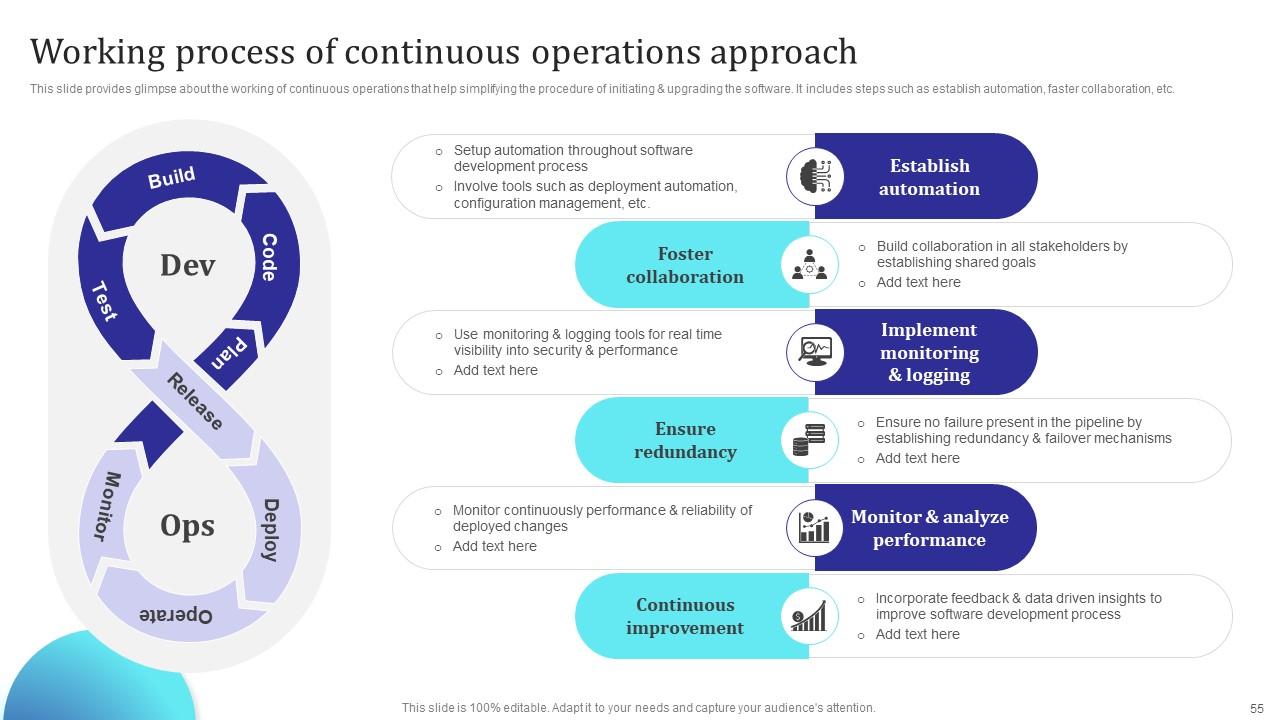
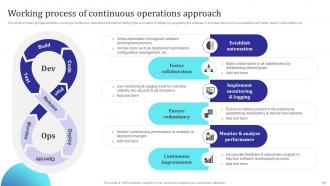
Slide 55: This slide provides glimpse about the working of continuous operations that help simplifying the procedure of initiating & upgrading the software.
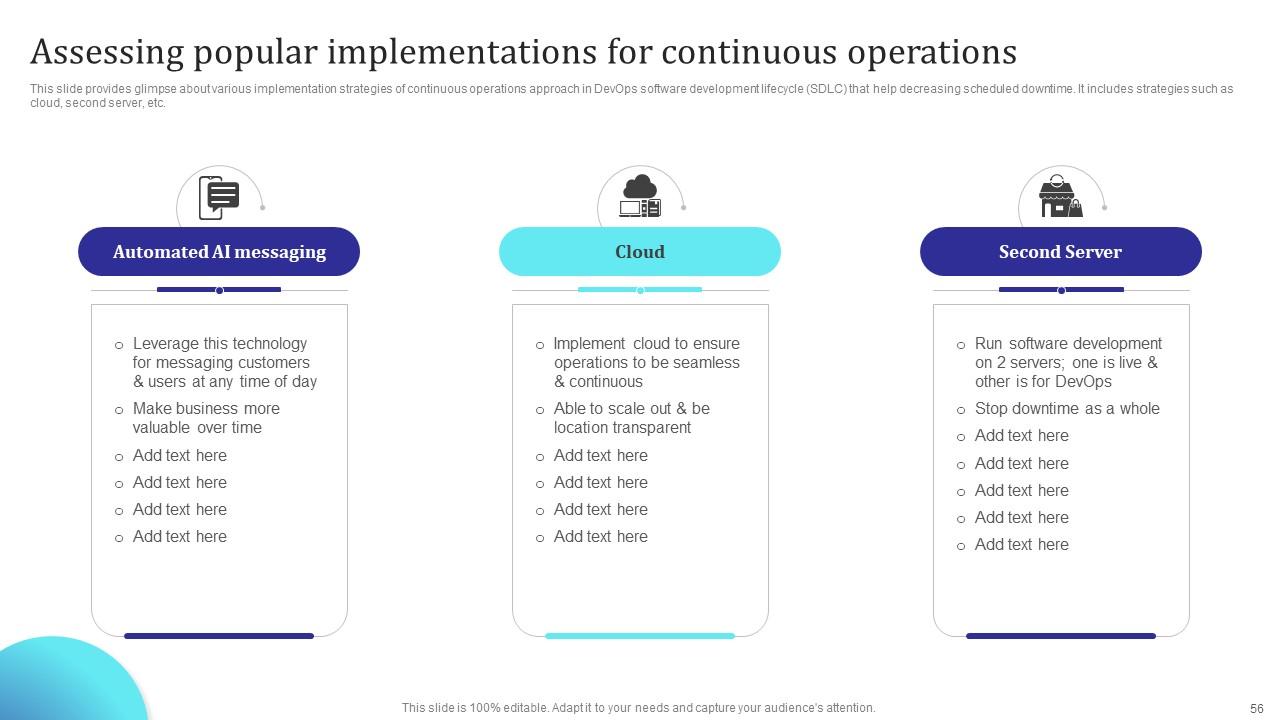
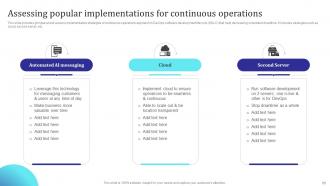
Slide 56: This slide provides glimpse about various implementation strategies of continuous operations approach in DevOps software development lifecycle.
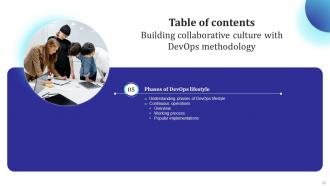
Slide 57: This slide exhibit table of content that is to be discuss further.
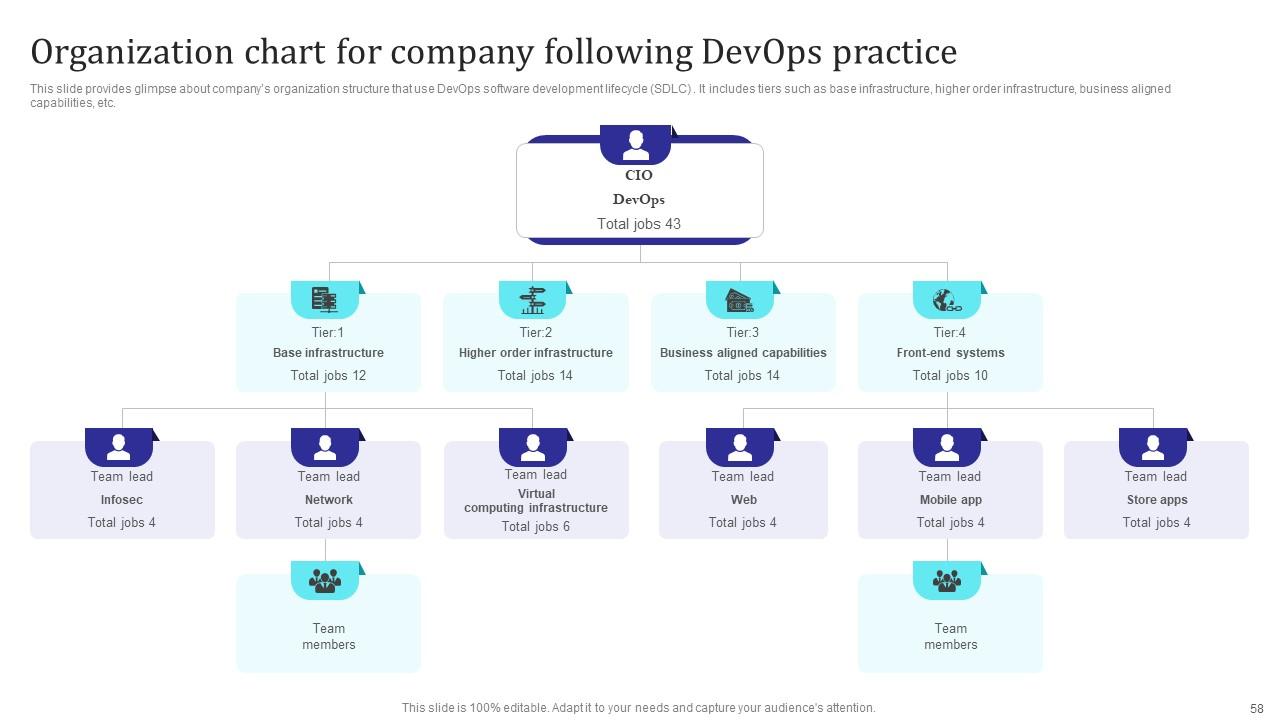
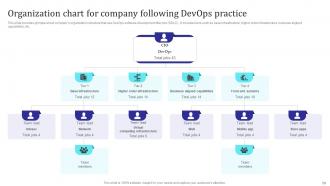
Slide 58: This slide provides glimpse about company’s organization structure that use DevOps software development lifecycle (SDLC).
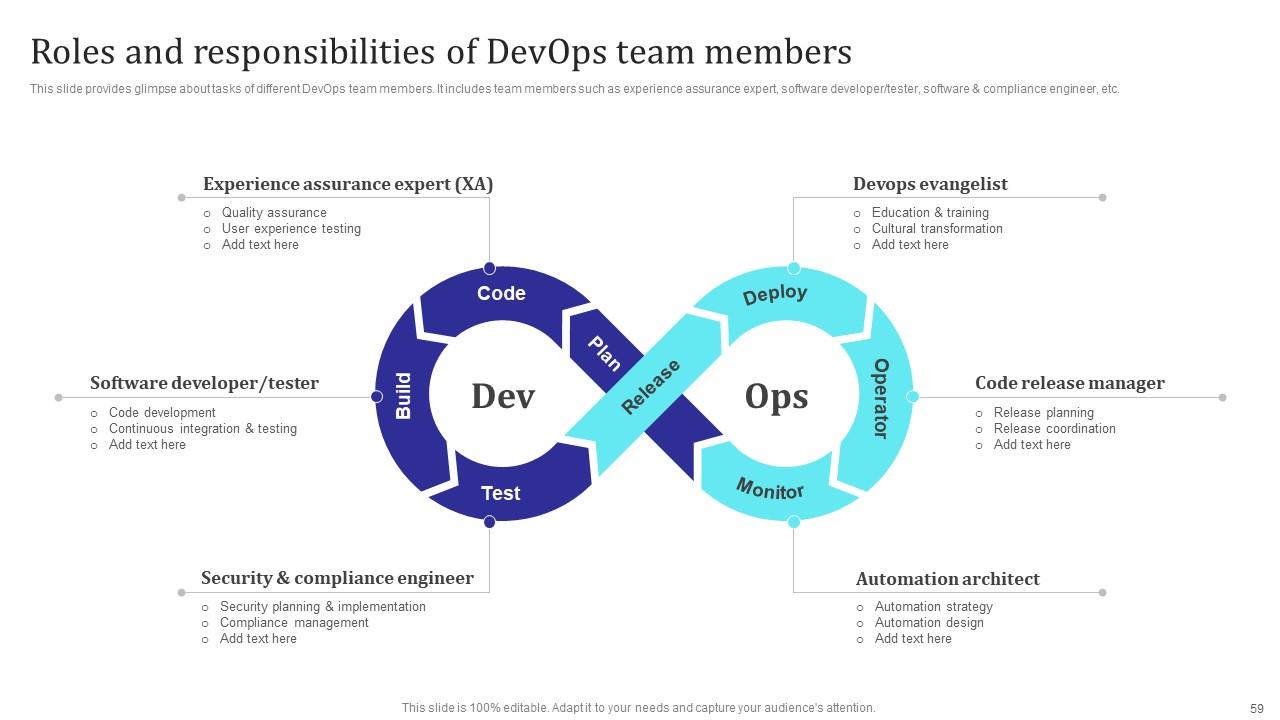
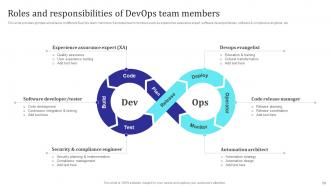
Slide 59: This slide provides glimpse about tasks of different DevOps team members.
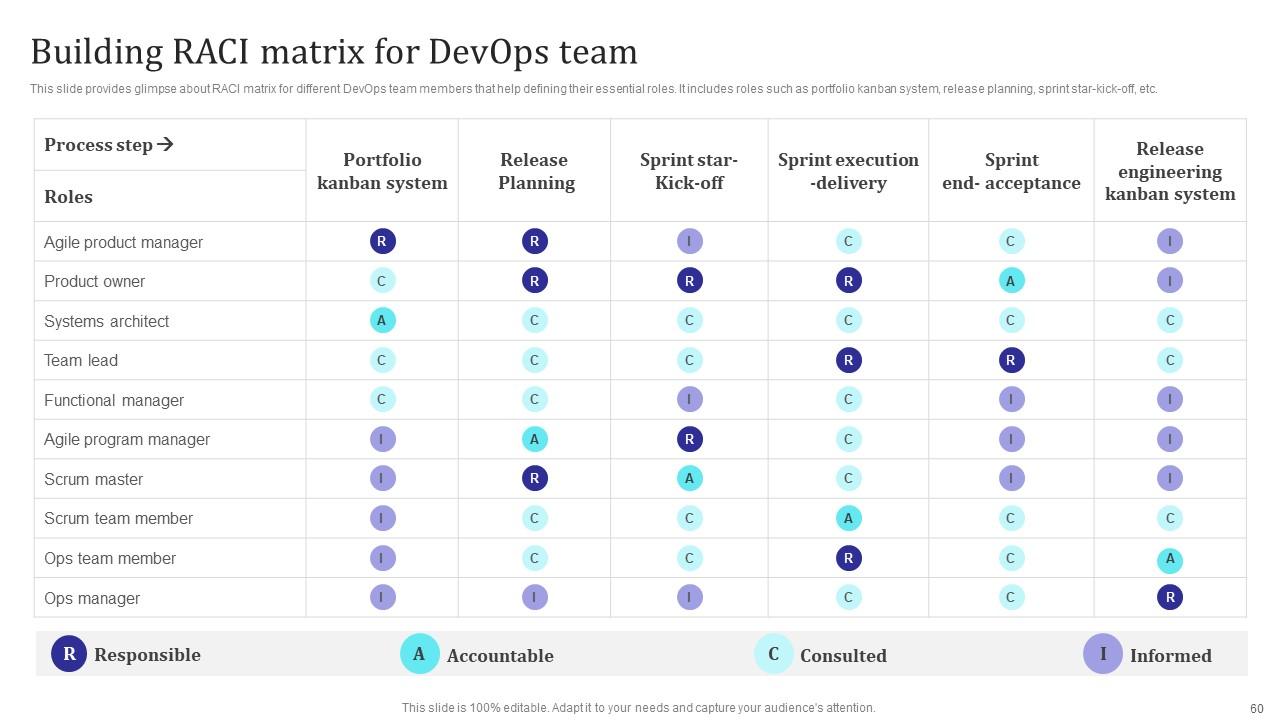
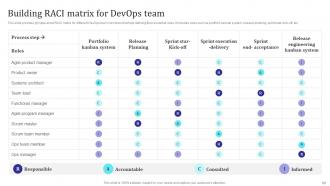
Slide 60: This slide provides glimpse about RACI matrix for different DevOps team members that help defining their essential roles.
Slide 61: This slide exhibit table of content that is to be discuss further.
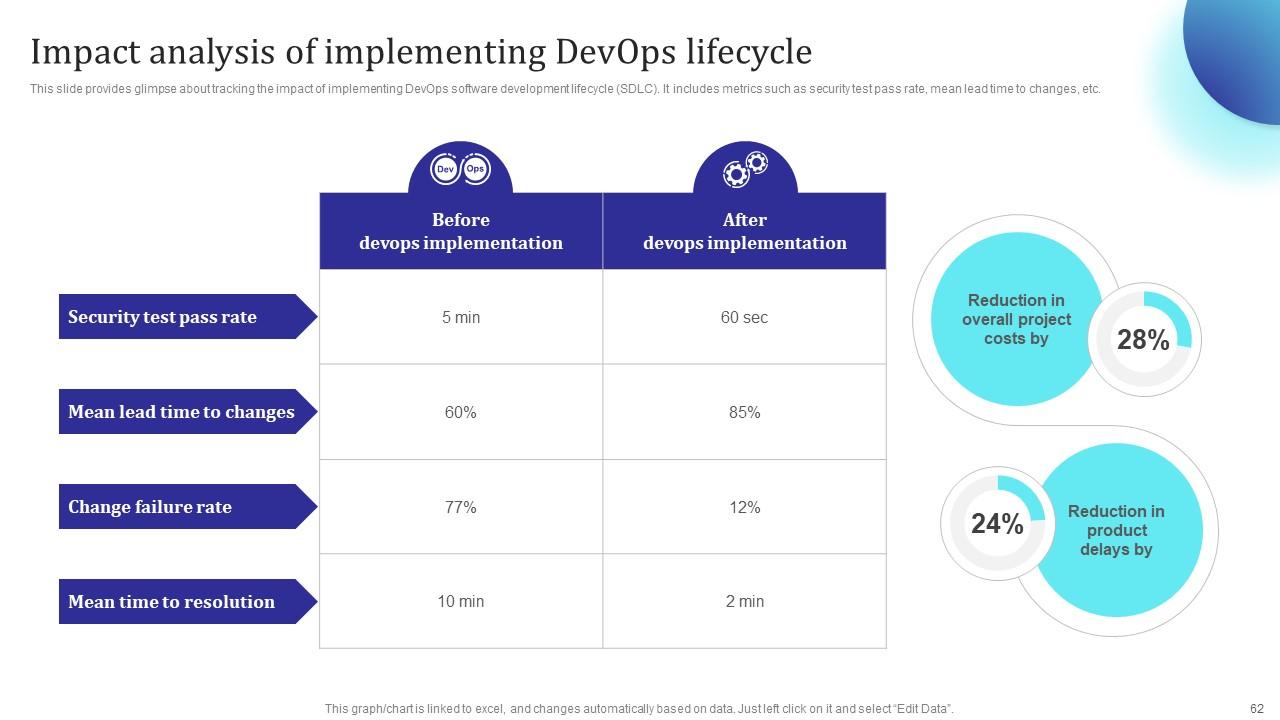
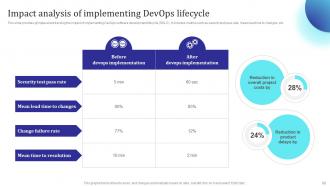
Slide 62: This slide provides glimpse about tracking the impact of implementing DevOps software development lifecycle (SDLC).
Slide 63: This slide exhibit table of content that is to be discuss further.
Slide 64: This slide exhibit table of content that is to be discuss further.
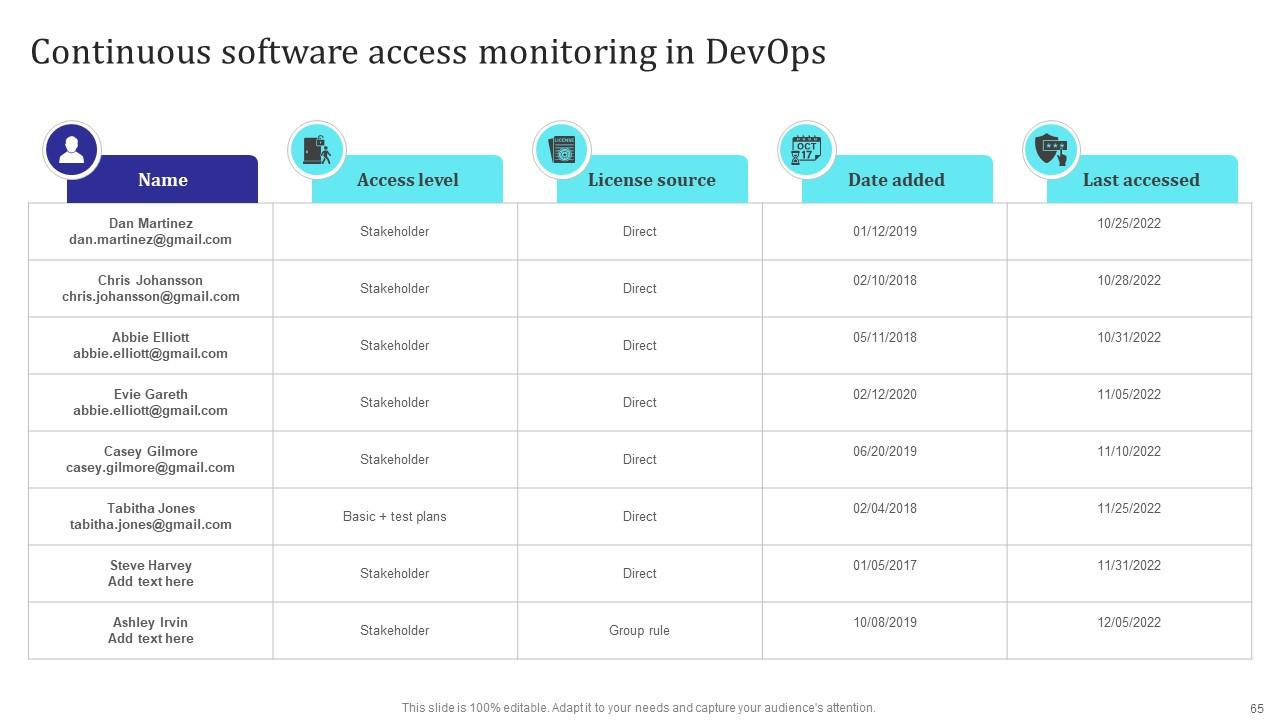
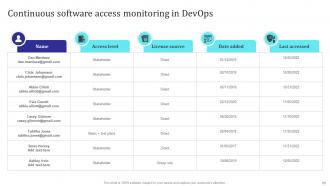
Slide 65: This slide showcase Continuous software access monitoring in DevOps.
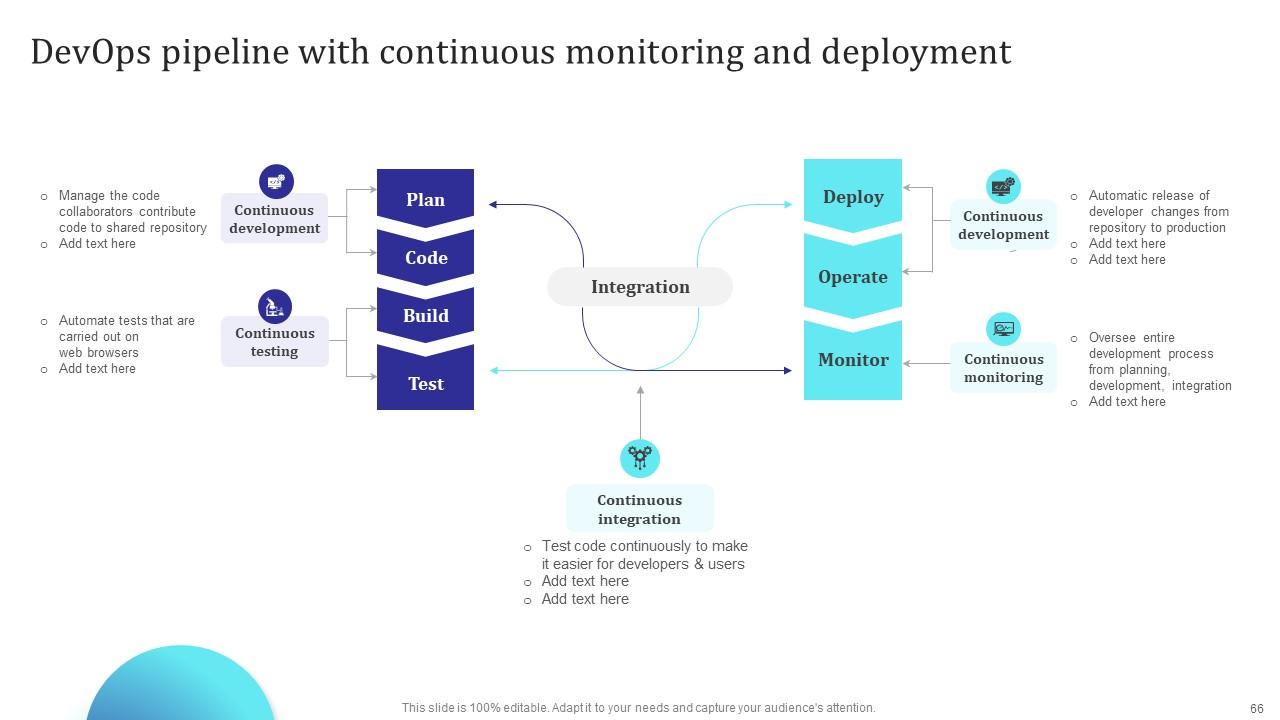
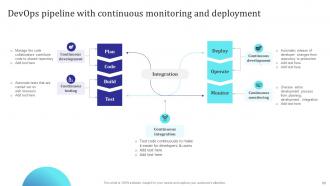
Slide 66: This slide showcase DevOps pipeline with continuous monitoring and deployment.
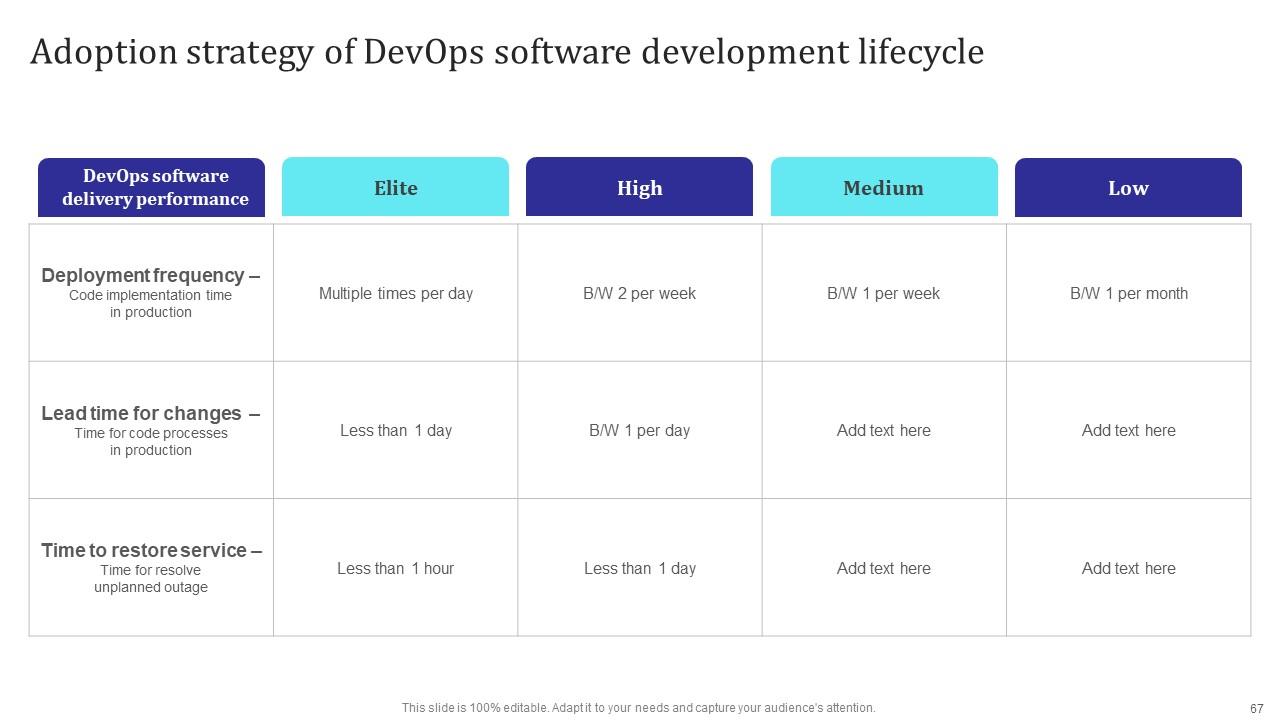
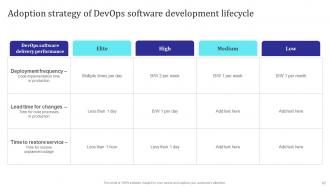
Slide 67: This slide showcase Adoption strategy of DevOps software development lifecycle
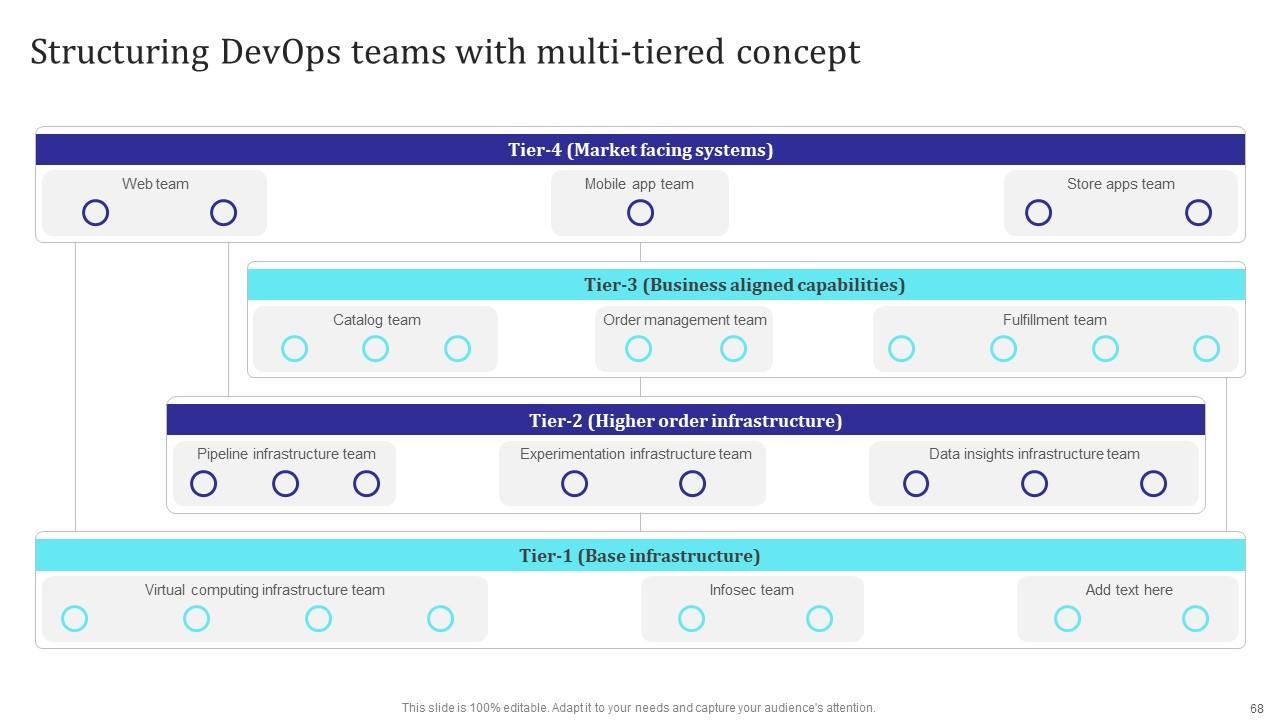
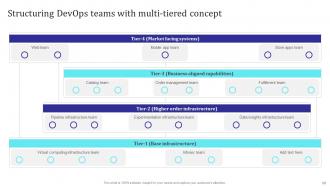
Slide 68: This slide showcase Structuring DevOps teams with multi-tiered concept.
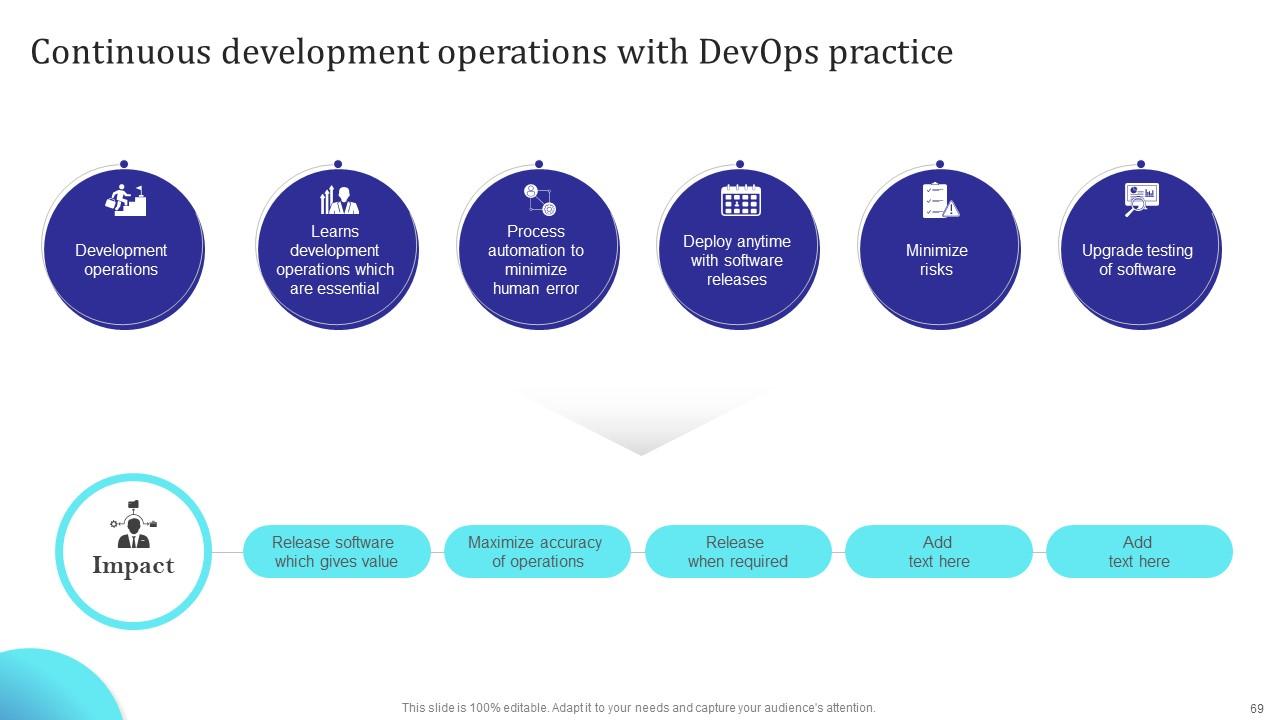
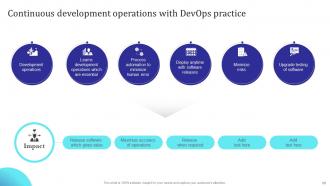
Slide 69: This slide showcase Continuous development operations with DevOps practice.
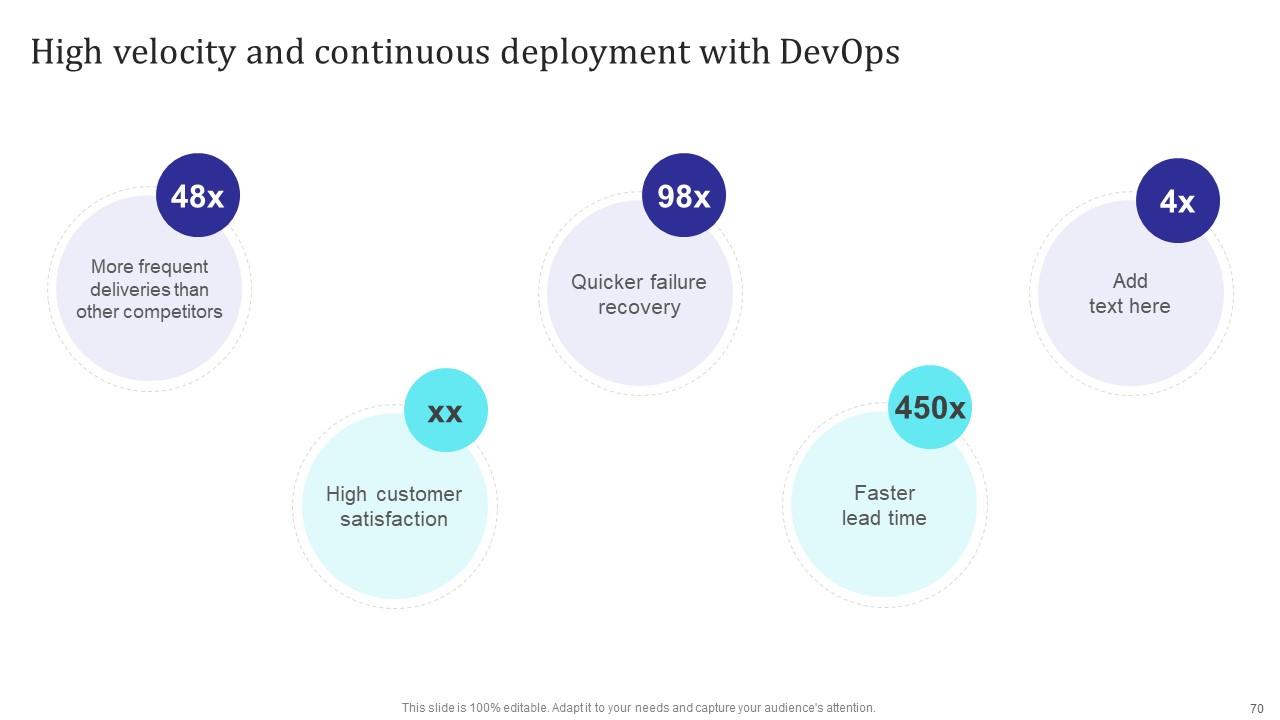
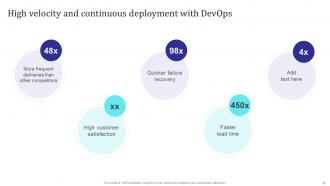
Slide 70: This slide showcaseHigh velocity and continuous deployment with DevOps.
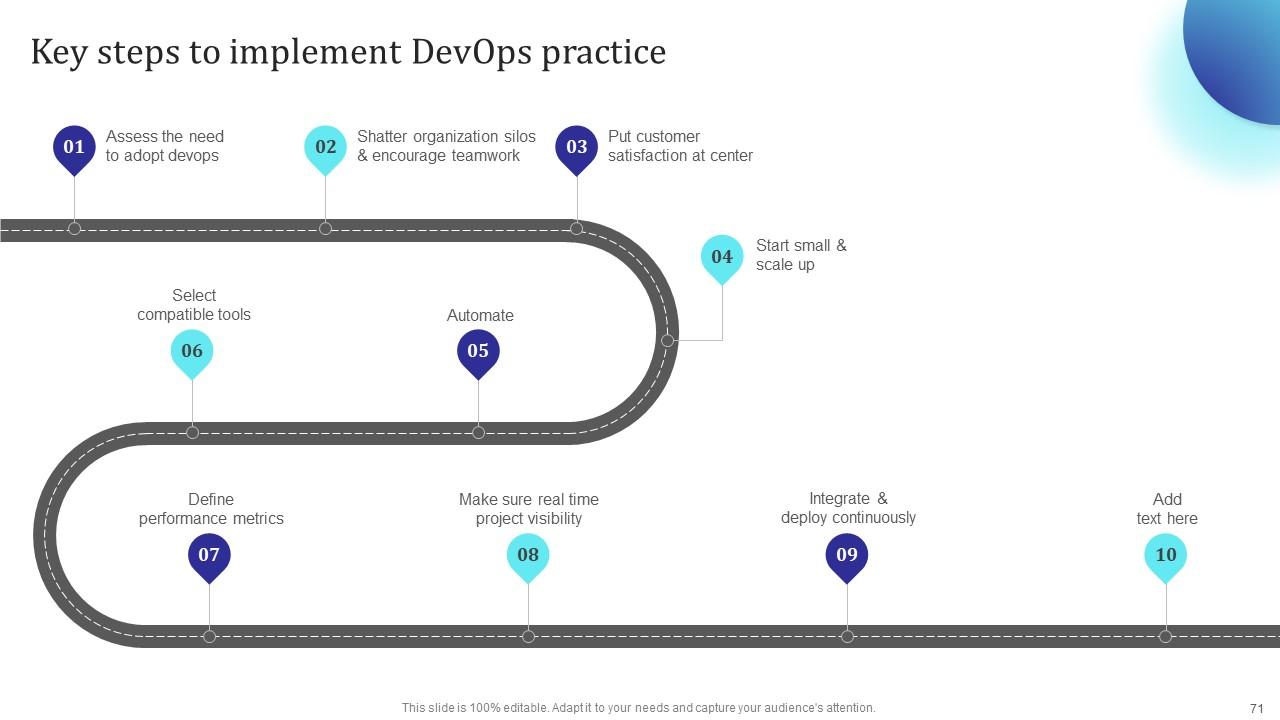
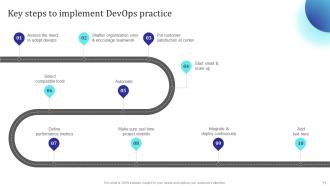
Slide 71: This slide showcase Key steps to implement DevOps practice.
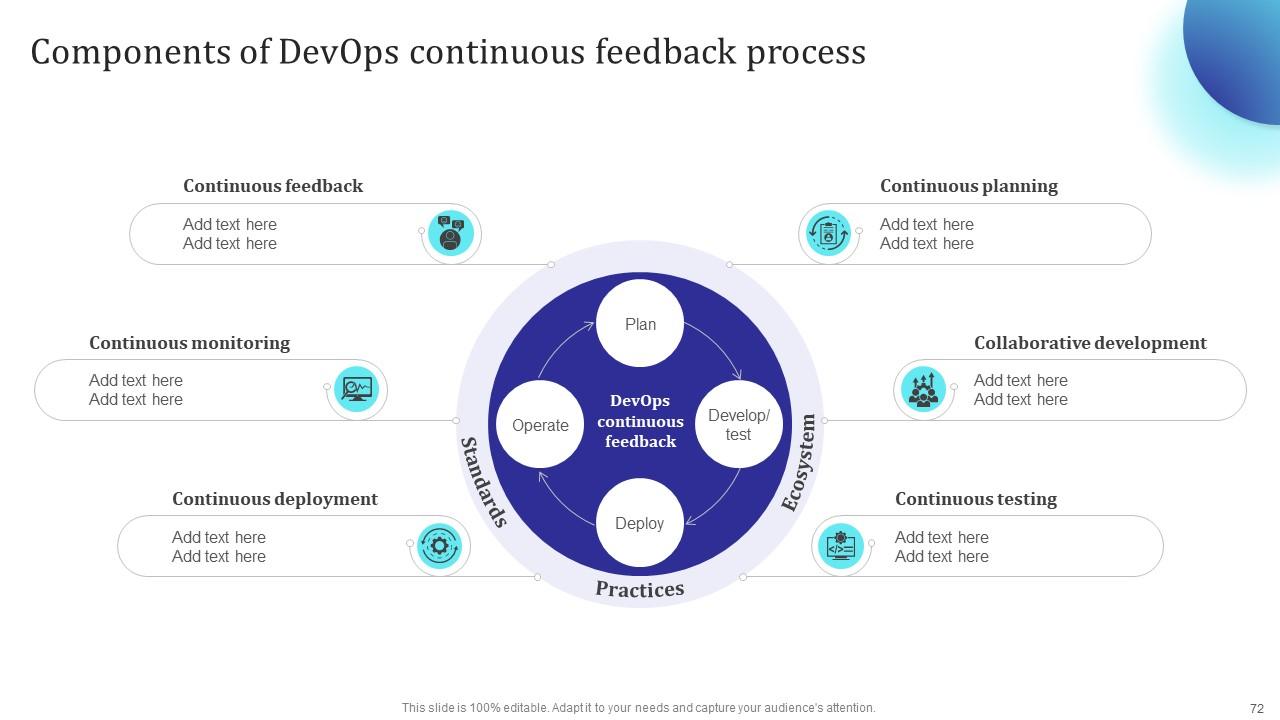
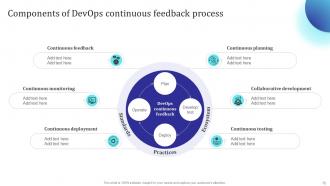
Slide 72: This slide showcase Components of DevOps continuous feedback process.
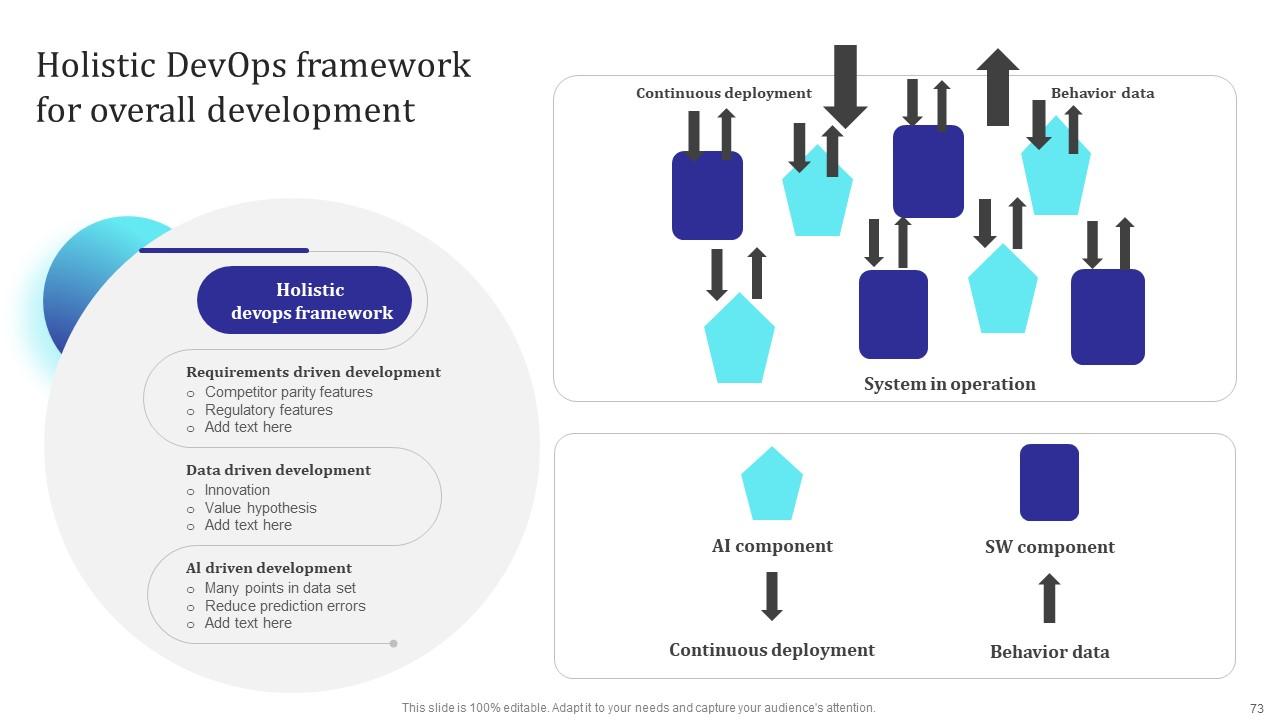
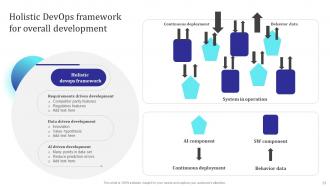
Slide 73: This slide showcase Holistic DevOps framework for overall development.
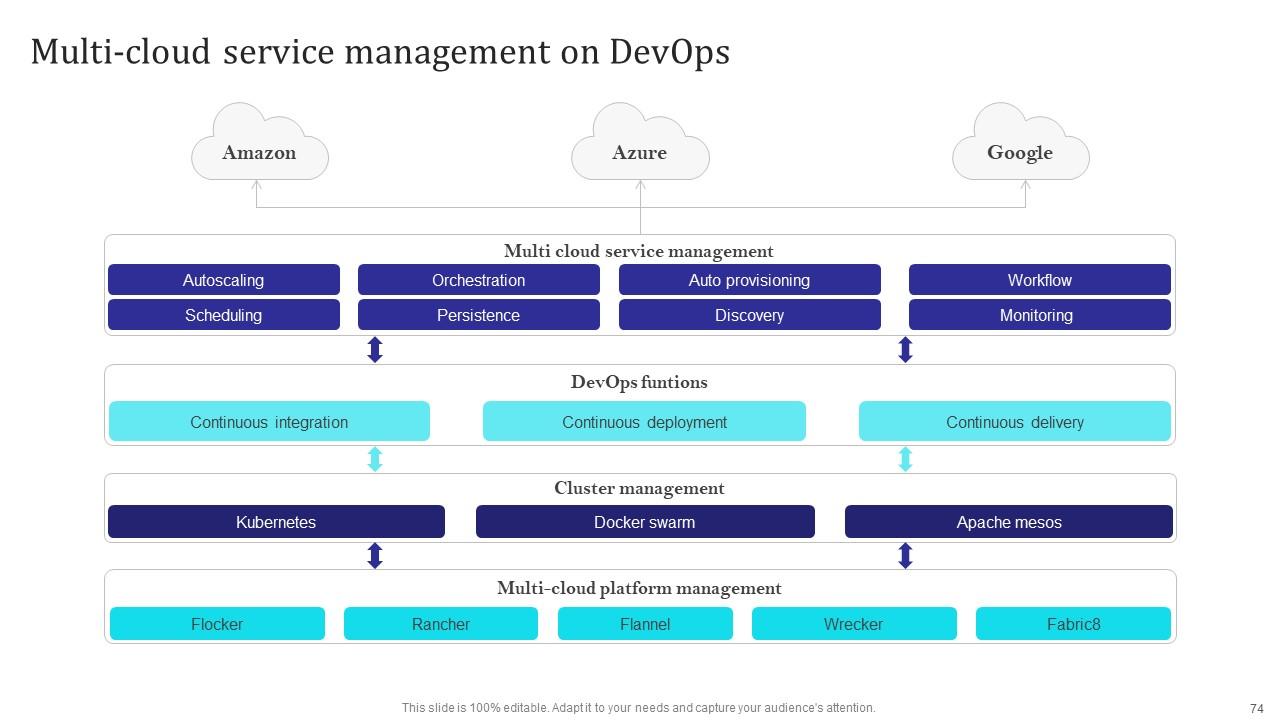
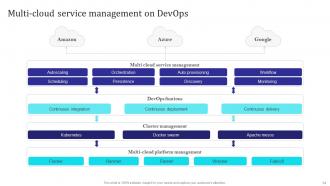
Slide 74: This slide showcase Multi-cloud service management on DevOps.
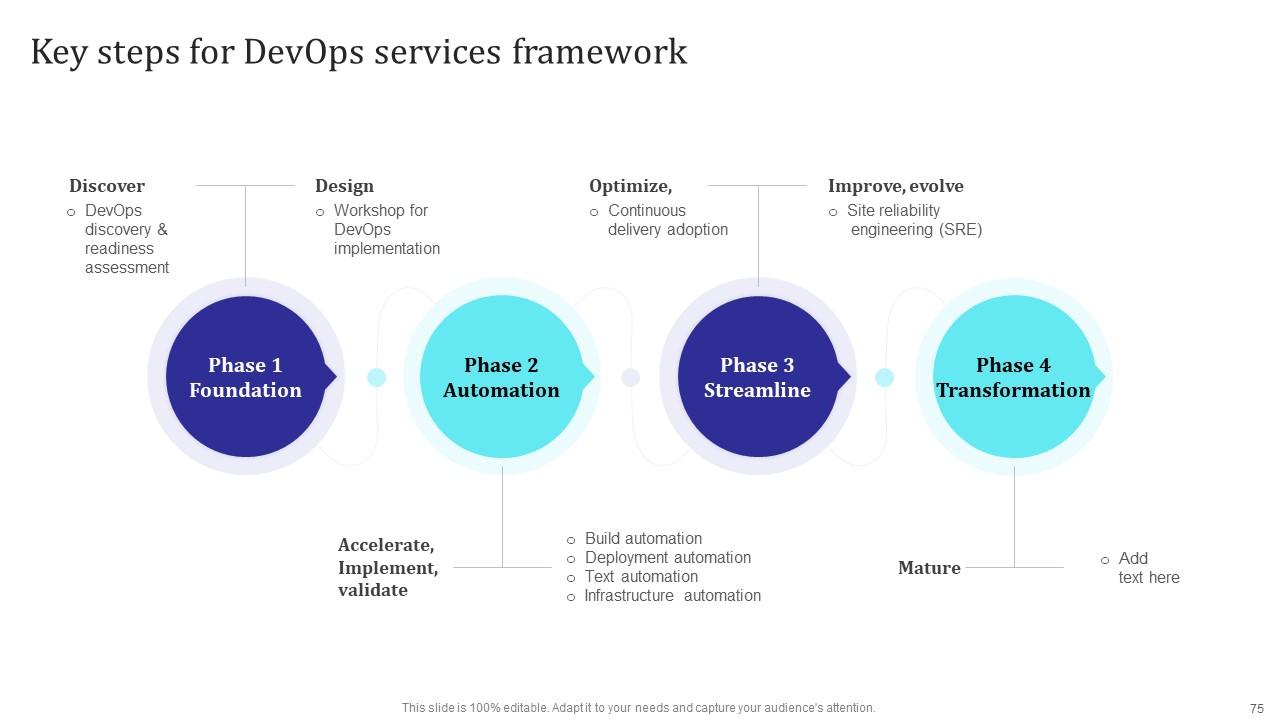
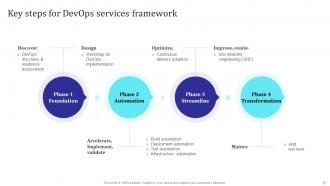
Slide 75: This slide showcase Key steps for DevOps services framework.
Slide 76: This is thank you slide & contains contact details of company like office address, phone no., etc.
Building Collaborative Culture With Devops Methodology Powerpoint Presentation Slides with all 85 slides:
Use our Building Collaborative Culture With Devops Methodology Powerpoint Presentation Slides to effectively help you save your valuable time. They are readymade to fit into any presentation structure.
-
The quality of the templates is as fine as it could get. It was a purchase well made!
-
Satisfied with the way SlideTeam resolved my query regarding the right business PPTs that I was having difficulty finding. I found the perfect match with their assistance.
