

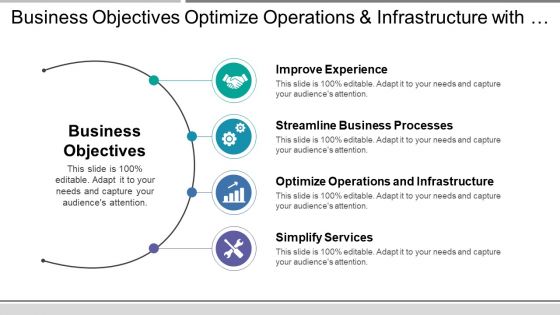
Business objectives optimize operations and infrastructure with icons





Try Before you Buy Download Free Sample Product
 Impress Your
 Audience
 100%
100% Editable
 Save Hours
 of Time


Join the argument with our Business Objectives Optimize Operations And Infrastructure With Icons. Give them a better insight into issues.
People who downloaded this PowerPoint presentation also viewed the following :
Business objectives optimize operations and infrastructure with icons with all 5 slides:
Force your critics to accept your argument with our Business Objectives Optimize Operations And Infrastructure With Icons. Be able to engage them effectively.



FAQs for Business objectives optimize operations and
Look, you gotta track both money stuff and operational things to see if you're actually making progress. Revenue per employee and profit margins are obvious ones. Then there's cycle time, customer satisfaction, employee productivity - that kind of thing. But honestly? Don't go crazy with metrics. Pick 3-5 that actually matter for what you're trying to fix. Like, tracking inventory makes zero sense if you're running a consulting firm or whatever. Measure consistently and check monthly for trends. I learned this the hard way - too many metrics just creates noise.
Honestly, data analytics is like getting x-ray vision for your business. You'll finally see what's actually happening vs. what you think is going on. Bottlenecks become obvious. Wasteful stuff jumps out at you. Plus you can predict demand way better instead of just guessing all the time - which, let's be real, we do more than we'd like to admit. The numbers don't lie about where you're bleeding time and money. My advice? Don't try to analyze everything at once. Just pick that one process that's been driving you crazy and start there.
Honestly, training your people is huge for process optimization. When employees actually get why they're doing something, they'll stick to the process way better. Short bursts work best - nobody wants to sit through 3-hour sessions. Your team sees stuff you don't from up in management land, so they'll catch problems and suggest fixes you'd never think of. Less mistakes, better efficiency, happier workers. Oh and make sure they understand how their specific job connects to the whole operation. Sounds obvious but you'd be surprised how many people work in silos.
Dude, automation tools are a lifesaver for all that boring repetitive crap - email scheduling, data entry, invoicing. Set up workflows that kick in automatically when stuff happens, like follow-ups after someone downloads something or spreadsheet updates when orders roll in. Start with whatever's making you want to scream daily. I swear, once you automate one annoying task, you'll get addicted to finding more. My friend automated her client onboarding and now acts like she discovered fire or something. Pick one process that's driving you crazy and go from there.
Track your spending for like 2 weeks first - you'll be shocked where money's going. Most suppliers will cut you a deal if you actually ask (learned this the hard way). Automate the boring repetitive stuff and cross-train people so you're not drowning in one department while another sits around. Remote work kills office costs. Buy decent equipment once instead of replacing garbage every year. Also check your subscriptions - I bet you're paying for random services you totally forgot about. The key is getting efficient without cutting corners on what actually matters to customers.
Honestly, most companies are awful at this but it's not that complicated. Collect feedback everywhere - surveys, reviews, support chats, whatever. Don't just read individual complaints though. Look for patterns instead, like if everyone's complaining about slow responses or your checkout process being confusing. Pick the biggest pain points first and actually fix them. Here's the thing people miss - you gotta close the loop! Let customers know you made changes based on their input. They eat that stuff up. Start with one obvious problem, fix it, see if it worked, then move on to the next mess.
Honestly, agile is a game changer for flexibility and speed. Instead of getting locked into some rigid plan that'll probably be irrelevant in two months anyway, you can pivot when things change. Your team works way closer with stakeholders too, so you catch problems early instead of discovering them at the worst possible moment. The sprint thing is pretty cool - you're constantly shipping working pieces, which keeps everyone happy and engaged. Oh, and definitely try it on just one project first. Don't go crazy and overhaul everything at once.
Your supply chain is literally your business backbone - keeps costs steady and stops those awful delays that tank customer relationships. Smooth operations mean you're not always putting out fires, so you can focus on actual growth stuff. Honestly, I've seen too many companies burn cash on rush shipping and bloated inventory when they could've just planned better. Reliable suppliers free up your cash flow big time. Map out where things break down first - that's usually where you'll find the easiest wins hiding.
Honestly, the biggest thing is getting everyone using the same tools instead of working in separate bubbles. We started with Slack for our team communication - way better than endless email chains. Project management stuff like Asana helps too since marketing, sales, and operations can all see what's happening without constantly asking for updates. Cloud storage is pretty much essential at this point. Video calls make those quick cross-department check-ins so much easier, though I'll admit some meetings could've been emails. My advice? Pick whatever tool fixes your worst communication headache first, then get everyone actually using it consistently.
Start by mapping everything out step-by-step with your team. Time how long tasks actually take vs. what they should take - yeah, it's tedious spreadsheet work but trust me on this. Hunt for duplicate approvals and pointless handoffs. Half the stuff exists just because "we've always done it this way." Focus on your most painful processes first since those are bleeding money. Once you spot the waste, test small tweaks before doing anything major. You don't want to accidentally break the one thing that's actually working smoothly.
Honestly, good time management is a game changer - I've literally doubled what I get done since figuring this out. The trick is being brutal about priorities and cutting out all the BS tasks that feel productive but aren't really. You'll be way less stressed too because you're not scrambling all the time. Track your time for a week first though - seriously, you'll be horrified at how much gets wasted on interruptions and random stuff. I was spending like 2 hours a day on email alone, which is insane. Focus on what actually matters and watch your productivity explode.
Honestly, don't think of sustainability as this huge burden - it's actually a way to save money. Look for spots where you're being wasteful AND it's costing you. Excessive packaging, lights left on everywhere, shipping stuff back and forth unnecessarily. Those are your goldmine areas right there. I've watched so many businesses stress about this when really, efficient processes just happen to be greener most of the time. Track both your savings and environmental wins together - that way you're hitting two birds with one stone and your boss stays happy.
Oh man, the worst thing companies do? They try fixing everything at once instead of tackling what actually matters. I've seen teams waste months analyzing stuff to death when they could've just tested quick changes. And don't even get me started on departments working in bubbles - marketing cranks up leads while ops can't handle them, total mess. People also forget to include their actual employees in changes, which obviously backfires. Here's what works: find your biggest bottleneck first. Get your team involved, see what happens, then move on. Baby steps beat grand plans every time.
Basically, benchmarking shows you exactly how you stack up against your competition and what gaps you need to fix. You'll spot processes that are dragging you down and inefficiencies you had no clue about. Then you can figure out which areas will actually give you the best bang for your buck when you optimize them. Way better than just guessing what needs work, right? Though fair warning - the data can be pretty brutal at first! The trick is using those insights to set targets that won't make you want to give up and focus on stuff that actually matters in your industry.
Dude, leadership makes or breaks this stuff. Your team's constantly watching - do you freak out when something fails? Actually listen to their ideas? I've watched so many improvement programs crash because managers just talked the talk. You gotta jump in yourself, celebrate the small wins, show that trying new things beats doing the same boring routine. Here's what works: ask your team what one thing bugs them most about their daily work. Then - and this is key - actually do something about it. That's how you prove you're serious.
-
Use of icon with content is very relateable, informative and appealing.
-
Awesome use of colors and designs in product templates.