


Business Operations Accounting Flow Chart




Try Before you Buy Download Free Sample Product
 Impress Your
 Audience
 100%
100% Editable
 Save Hours
 of Time


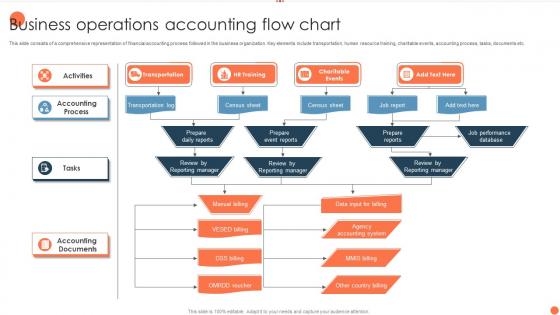
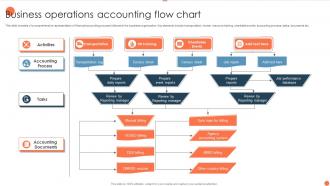
This slide consists of a comprehensive representation of financial accounting process followed in the business organization. Key elements include transportation, human resource training, charitable events, accounting process, tasks, documents etc.
People who downloaded this PowerPoint presentation also viewed the following :
Business Operations Accounting Flow Chart with all 6 slides:
Use our Business Operations Accounting Flow Chart to effectively help you save your valuable time. They are readymade to fit into any presentation structure.





FAQs for Business Operations
Focus on cost tracking and budget variance analysis first - that's your foundation. Cash flow forecasting is honestly where most people mess up though, even when their P&L looks solid. Track your direct/indirect costs religiously and measure efficiency ratios that actually move the needle for your business. I'd pick maybe 3-5 KPIs that really matter and build everything around those. Regular operational reviews help too - just comparing what happened vs what you planned. Don't get caught up tracking every single metric under the sun, it gets overwhelming fast.
Honestly, start with the stuff that's driving you crazy - like invoice processing and expense tracking. Those can mostly run themselves with decent software. I've seen people save hours just switching to something like QuickBooks or Xero. Worth the learning curve, trust me. Also, get everyone doing things the same way instead of having five different systems floating around. The real magic happens when your software talks to each other automatically - no more copying numbers from one place to another all day. Pick maybe two problem areas first though. Don't try fixing everything at once or you'll lose your mind.
Dude, you absolutely need good tech for accounting - it's what lets you scale without losing your mind. Cloud ERP systems handle the heavy lifting on financials. Automation kills off manual data entry (seriously life-changing). Real-time dashboards show you cash flow instantly, which is clutch. AI's even doing anomaly detection now and predictive stuff. Honestly, spreadsheet hell is mostly dead, though I still mess around with Excel pivot tables sometimes - old habits die hard I guess. But yeah, get your integrated accounting stack sorted early because manual processes will destroy you once you start growing fast.
Look, your performance metrics basically dictate how you build your whole accounting setup. Say you're tracking gross margins or inventory turnover - your systems need to actually capture that stuff properly first. Otherwise you'll be digging through spreadsheets later trying to piece together reports. Design your chart of accounts around what leadership cares about measuring. Same goes for when you recognize revenue and how you split up expenses. Honestly, I've seen too many companies skip this step and then wonder why their data's all over the place. It's way easier to align everything upfront than fix it later.
Ugh, data accuracy is probably your biggest nightmare - transactions ending up in the wrong periods, late expense submissions, the usual chaos. Honestly, chasing people for receipts is like pulling teeth. Allocating shared costs fairly across departments? Good luck with that political minefield. Compliance stuff changes constantly too, which is just fantastic. Set hard deadlines early and stick to them - people will push back but you need boundaries. Standardizing your processes upfront saves so much headache later, trust me on this one.
Okay so here's the thing - good financial reporting basically lets you see what's actually happening in real time. You can catch trends early and make smart moves fast. The numbers help you figure out which stuff is just bleeding money vs what's actually working. Makes it super easy to get budget approvals too when you've got solid data. But honestly? If your reports don't match what's really going down day-to-day, you're kinda screwed. Like, the whole point is seeing the real picture. Set up regular check-ins on your main metrics - trust me, it'll save you headaches later.
Pick one valuation method (FIFO or weighted average) and stick with it - switching around just creates chaos. Real-time inventory tracking is a game changer if you can swing it. Do cycle counts regularly instead of scrambling at year-end... learned that one the hard way! Raw materials, work-in-process, and finished goods need separate categories. Document any damaged or obsolete stuff so you can write it off properly. Honestly, most problems come from losing track of quantities and costs somewhere in your system. I'd start by auditing what you've got now and finding those blind spots.
Honestly, start with basic internal controls - separate duties so nobody runs the whole show alone. Document everything because when auditors show up, you'll thank yourself later. Monthly reconciliations beat scrambling at year-end, trust me on that. Keep your team current on GAAP and SOX (or whatever rules hit your industry). External auditors annually aren't cheap but they're worth it. The boring stuff like audit trails and procedure docs? That's what saves your butt during regulatory visits. Don't put this off - catching problems early is way less painful than explaining them later.
Dude, operational costs will absolutely destroy your margins if you're not watching them closely. I've seen so many businesses that looked solid until you actually broke down where their money was going - total wake-up call. These costs hit your operating income hard and mess with all your key ratios. Investors notice this stuff too, especially if your operational spend keeps climbing without good reason. You'll want to track everything consistently and see how you stack up against competitors. Short sentences here, longer explanations there - but seriously, catch problems early before they tank your cash flow.
So forecasting and budgeting are basically your GPS for finances. You'll catch problems way earlier and actually know where your money's going instead of just hoping for the best. Build decent forecasts first - they become your baseline for spotting when things go sideways. Monthly variance reports are where the magic happens though. Compare what actually happened vs what you planned, that's how you find the real issues. Honestly, most people hate looking at their numbers until there's already a fire. Don't be those people! The whole point is staying ahead of problems before they blow up.
Honestly, connecting your accounting with project management is a game changer. You'll see exactly which projects are actually making money vs just bringing in revenue - and trust me, there's often a big difference. Real-time cost tracking means you can catch budget overruns before they get crazy. No more spreadsheet hell either since everything syncs automatically. Your forecasting gets way better too. I'd start by looking at your current workflow and figuring out where integration would save you the most headaches. The data-driven resource decisions alone make it worth it.
Honestly, picking the wrong accounting software will make you hate your life. You'll spend forever doing manual data entry instead of actually growing your business. Good software automates invoicing and expense tracking, plus gives you real-time financial info. But here's the thing - it has to integrate with your other systems or you're screwed. Your CRM, payroll, banking stuff... they all need to talk to each other. My buddy learned this the hard way with QuickBooks (long story). Anyway, definitely test a few free trials first and make sure your team can figure it out without losing their minds.
Honestly, analytics will blow your mind for operations accounting. It handles all that boring expense categorization stuff automatically. You'll catch weird cost patterns you'd totally miss doing it by hand. The cash flow predictions are super helpful too - saves you from those "oh crap" moments when money gets tight. Budget forecasts become way more on point. My advice? Don't go crazy at first. Just pick expense tracking or something simple and see how it works. Once you realize how much time it saves on reconciliation (seriously, hours of your life back), then you can expand to other stuff. The predictive insights really do change how you plan everything.
So operational audits basically look at how your business actually runs day-to-day, not just whether your books balance. They'll catch where money's getting wasted or processes are broken - stuff that regular audits miss completely. It's way more thorough than just number-crunching. Like, they'll find control gaps and compliance problems that could bite you later. Honestly, most companies are shocked by what these turn up. Your investors and stakeholders get the real story about how healthy your operations are, not just the pretty financial summary. Take whatever they find and fix your internal systems.
You're gonna need management accounting and cost analysis down solid first. Excel is honestly make-or-break - I've seen people struggle just because their formulas were weak. Budget planning and financial analysis are huge too. Communication matters more than you'd think since you'll constantly translate finance stuff for ops managers who hate numbers. ERP systems like SAP are pretty standard, so get familiar with those. CPA helps obviously. Oh and maybe take some operations courses? Understanding how the actual business runs makes everything click better. It's way different from regular accounting - more strategic, less just recording transactions.
-
Kudos to SlideTeam for achieving the high success rate in delivering the top-notch slides.
-
Huge collection of high-quality templates. Worth each penny.