Business Process Audit Powerpoint Ppt Template Bundles

Rating:
100%
Business Process Audit Powerpoint Ppt Template Bundles
Slide 1 of 17
Favourites Favourites

Try Before you Buy Download Free Sample Product

Audience Impress Your
Audience
Editable 100%
Editable
Time Save Hours
of Time
The Biggest Sale is ending soon in
0
0
:
0
0
:
0
0
Rating:
100%
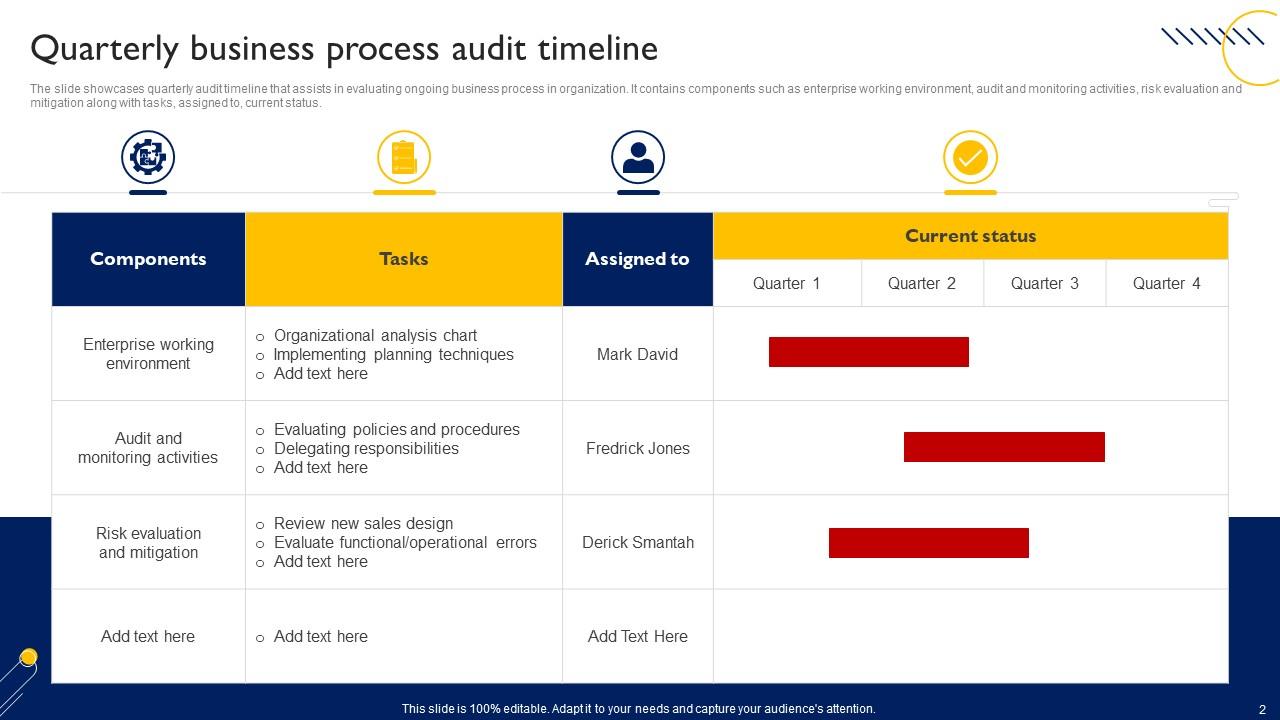
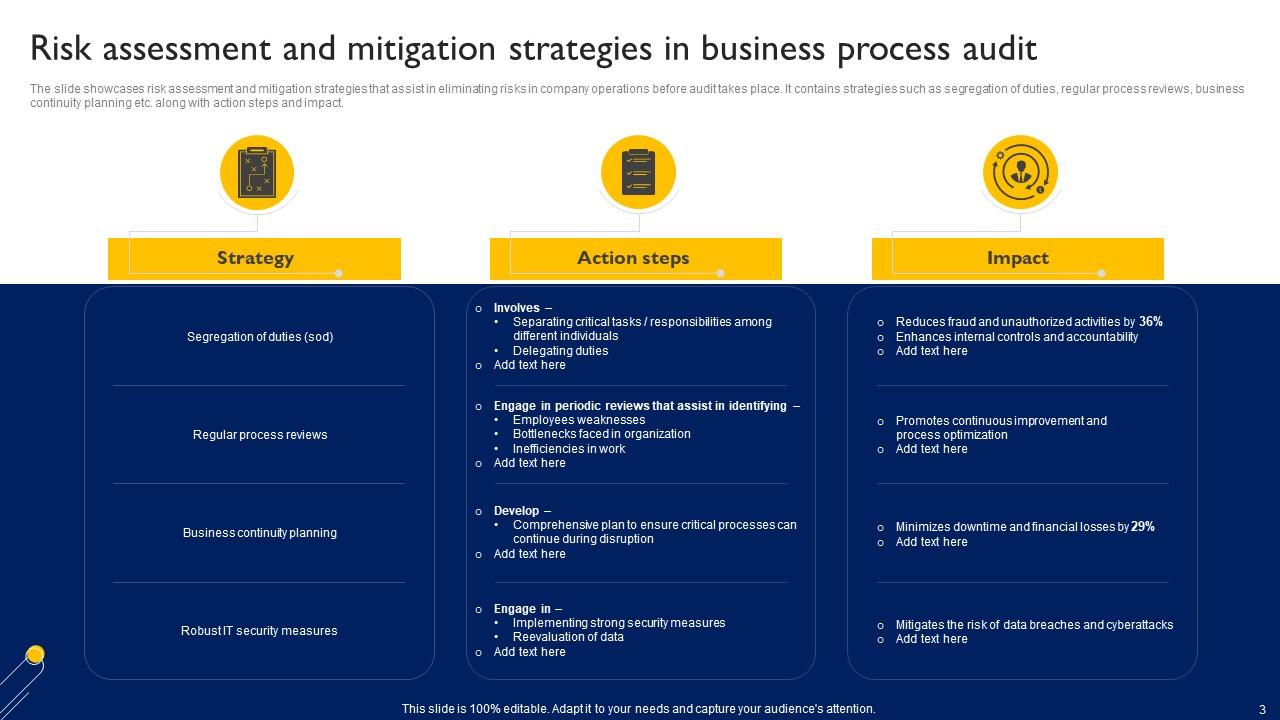
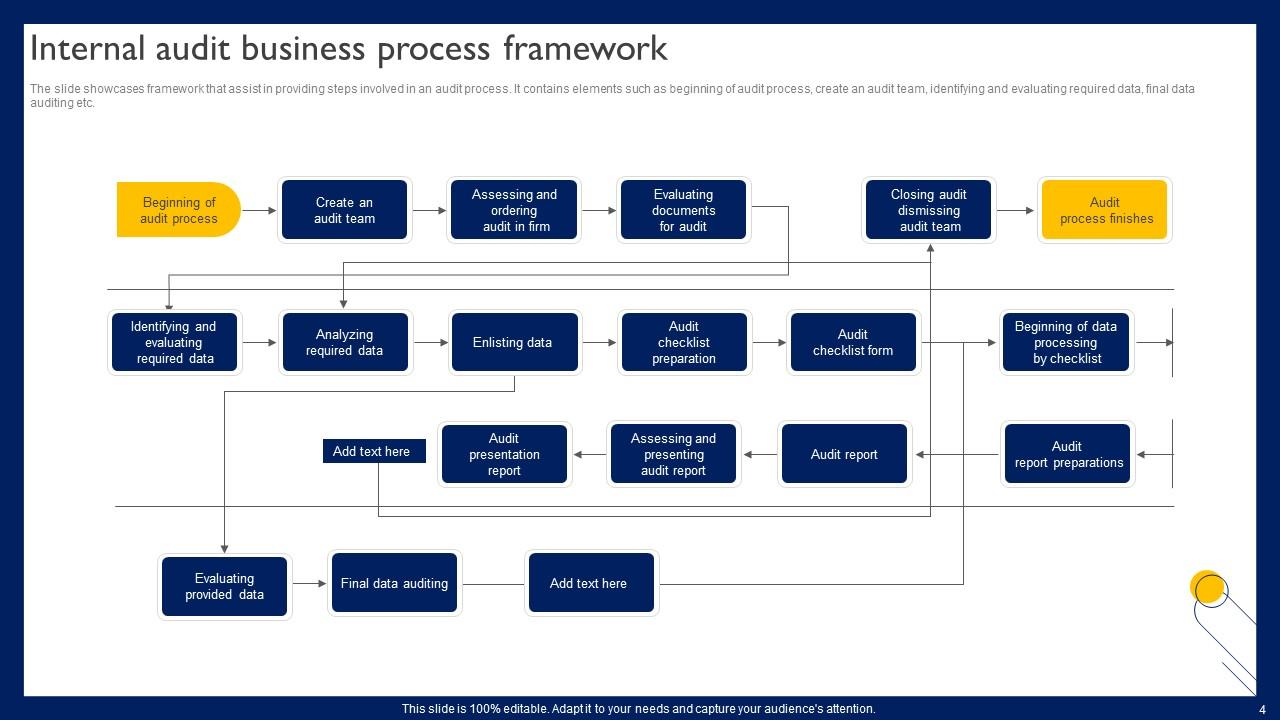
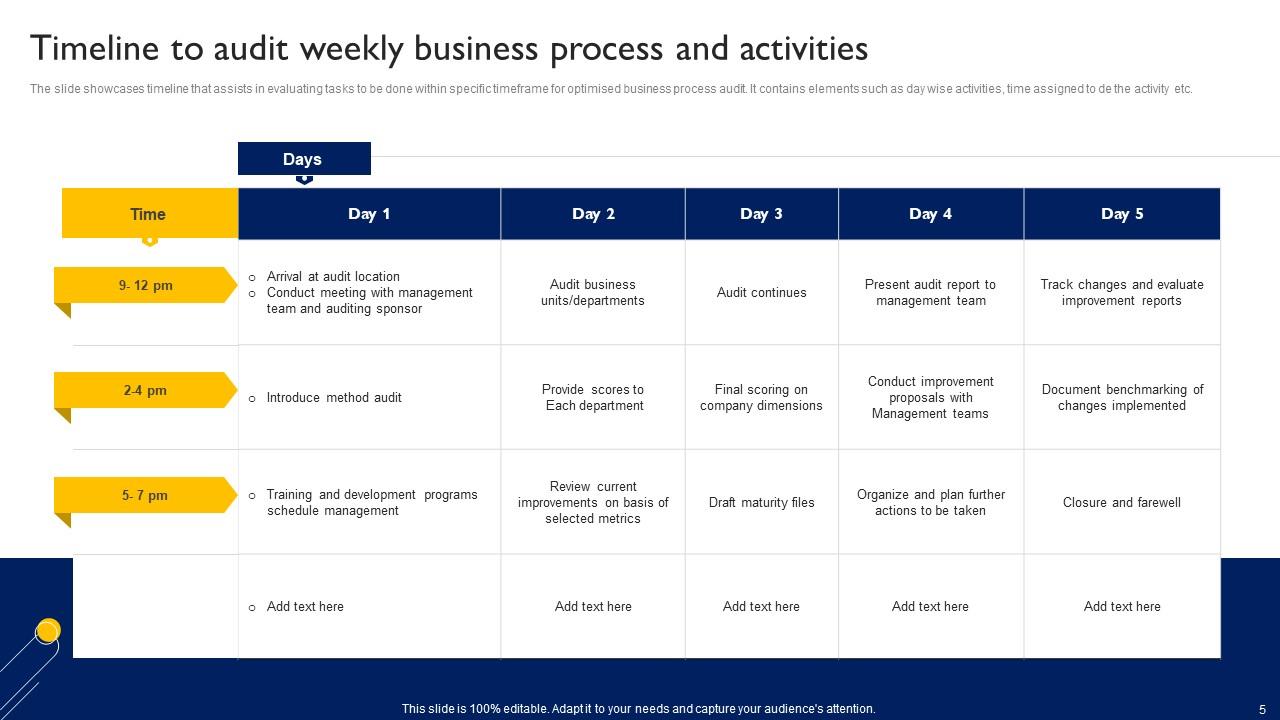
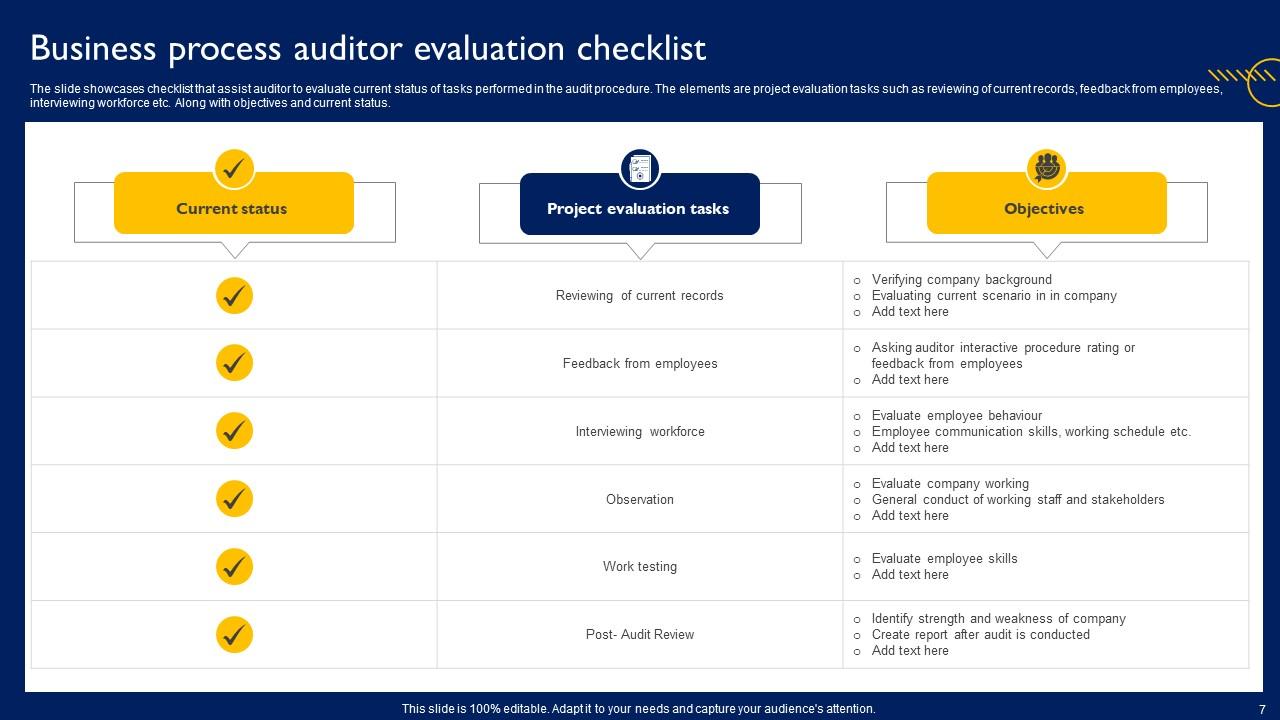
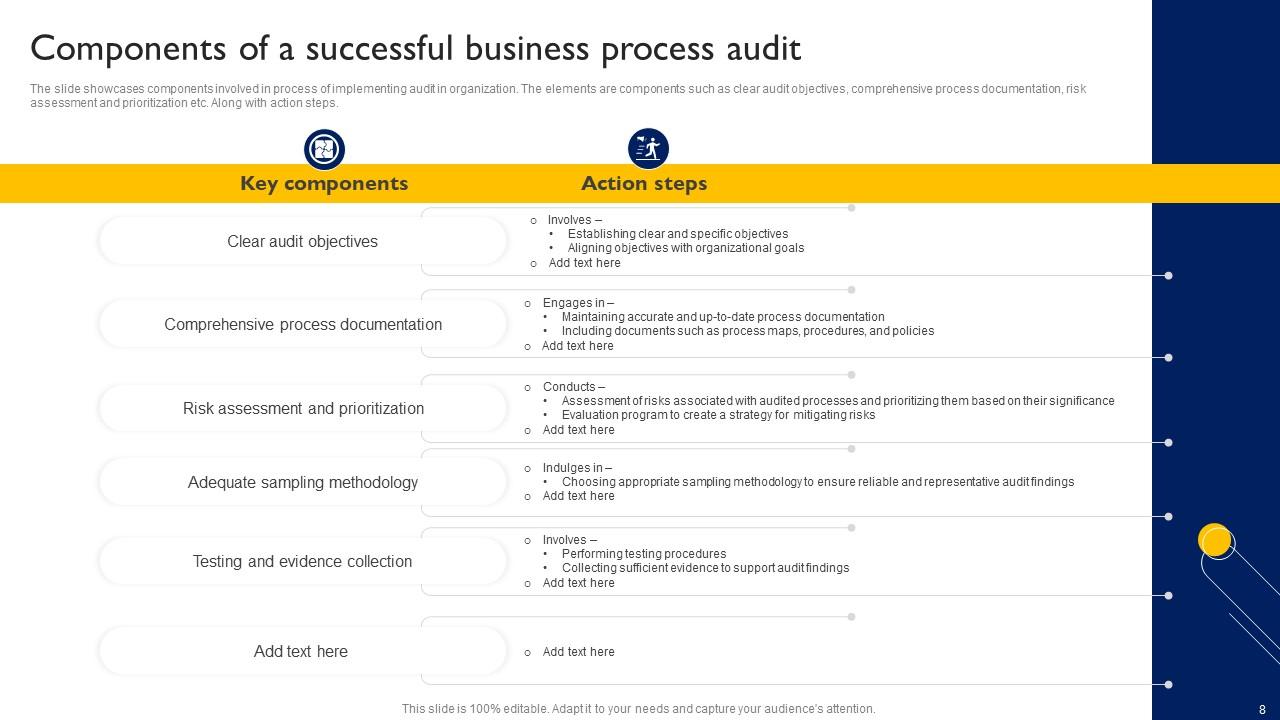
Deliver a credible and compelling presentation by deploying this Business Process Audit Powerpoint Ppt Template Bundles. Intensify your message with the right graphics, images, icons, etc. presented in this complete deck. This PPT template is a great starting point to convey your messages and build a good collaboration. The Twelve slides added to this PowerPoint slideshow helps you present a thorough explanation of the topic. You can use it to study and present various kinds of information in the form of stats, figures, data charts, and many more. This Business Process Audit Powerpoint Ppt Template Bundles PPT slideshow is available for use in standard and widescreen aspects ratios. So, you can use it as per your convenience. Apart from this, it can be downloaded in PNG, JPG, and PDF formats, all completely editable and modifiable. The most profound feature of this PPT design is that it is fully compatible with Google Slides making it suitable for every industry and business domain.

FAQs for Business Process Audit Powerpoint

Business process audit objectives include identifying inefficiencies, ensuring regulatory compliance, reducing operational costs, improving quality control, and enhancing customer satisfaction. Through systematic evaluation, organizations streamline workflows, eliminate redundancies, and optimize resource allocation, with many companies finding that regular audits deliver measurable cost savings and competitive advantages in increasingly complex markets.

A business process audit improves operational efficiency by identifying bottlenecks, redundant activities, and resource allocation gaps while streamlining workflows and eliminating waste. Through systematic analysis, organizations enhance productivity, reduce processing times, and minimize costs, with many companies finding that audit-driven improvements deliver faster service delivery and competitive advantage in increasingly demanding markets.

Organizations should avoid insufficient stakeholder engagement, focusing solely on documentation rather than actual practices, and rushing through data collection phases. These pitfalls can lead to incomplete assessments, missed optimization opportunities, and poor implementation of recommendations, with many companies finding that thorough preparation and cross-departmental collaboration ultimately deliver more accurate insights and sustainable process improvements.

Defining business process audit scope involves identifying specific processes to examine, establishing objectives and success metrics, determining stakeholder requirements, and setting clear boundaries for evaluation. Organizations typically focus on high-impact areas like customer service, financial operations, or supply chain management, with many finding that well-defined scope parameters enable more targeted improvements and measurable outcomes.

Effective business process audit methodologies include value stream mapping, process flow analysis, gap assessment, stakeholder interviews, and performance benchmarking. These approaches streamline operations by identifying inefficiencies, eliminating redundancies, and optimizing resource allocation, with many organizations finding that strategic combinations of these methodologies deliver enhanced operational efficiency and competitive advantage.

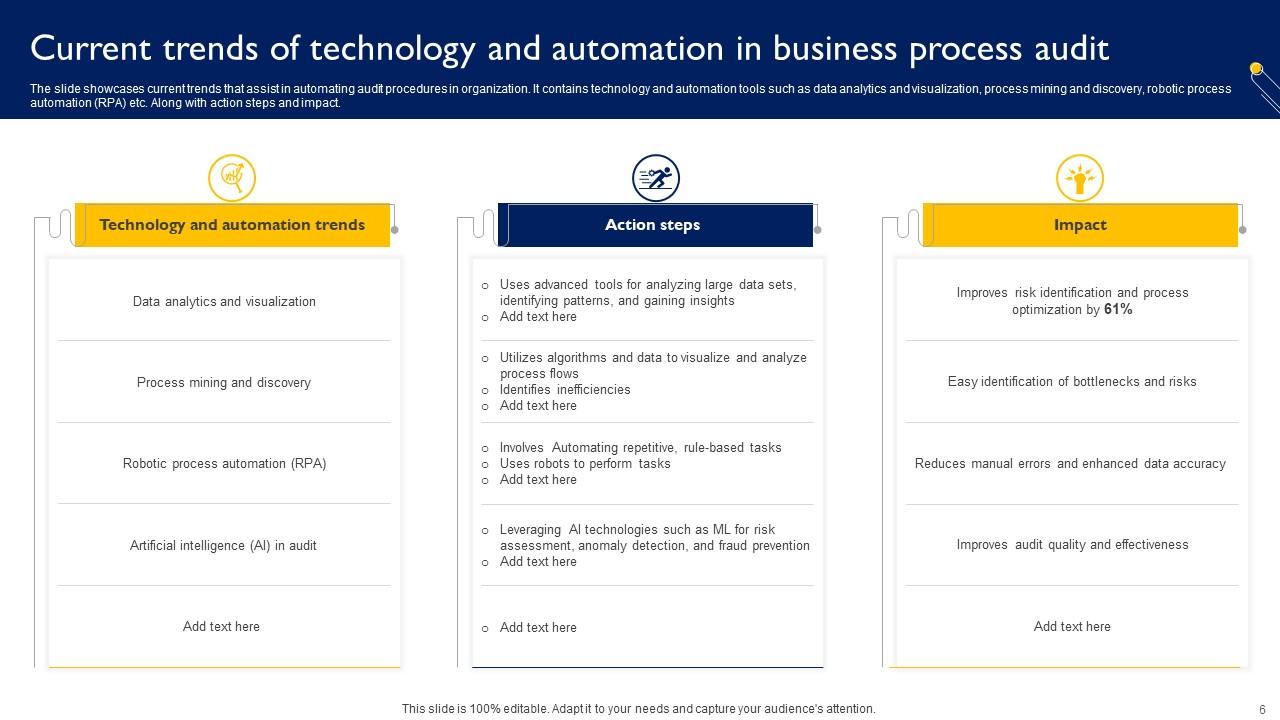
Technology enhances business process audit accuracy through automated data collection, real-time analytics, AI-powered anomaly detection, and digital documentation systems that minimize human error. These tools enable auditors to analyze larger datasets, identify inconsistencies faster, and generate comprehensive reports with greater precision, ultimately delivering more reliable insights and streamlined compliance processes.

Stakeholders provide essential input through process knowledge sharing, data access, and feedback on current workflows, while also serving as change champions during implementation phases. Their active participation enables auditors to identify inefficiencies, validate findings, and ensure recommended improvements align with operational realities, ultimately delivering smoother transitions and higher adoption rates across organizations.

Business process audit findings should be communicated through structured presentations, detailed written reports, and collaborative workshops that highlight specific inefficiencies, compliance gaps, and improvement opportunities. These communications enable teams to understand root causes, prioritize actionable solutions, and implement changes systematically, with many organizations finding that transparent, solution-focused discussions accelerate process optimization and enhance operational performance.

Business process audit effectiveness can be measured through cycle time reduction, cost savings percentages, error rate decreases, compliance score improvements, and customer satisfaction increases. These metrics help organizations quantify operational efficiency gains, with many companies finding that tracking defect reduction and resource utilization improvements ultimately delivers measurable ROI and enhanced competitive positioning.

Organizations should conduct comprehensive business process audits annually, with quarterly reviews for critical processes and monthly monitoring of high-risk areas. The frequency depends on industry regulations, process complexity, and organizational change rates, with many financial services and healthcare institutions finding that more frequent audits enhance compliance, operational efficiency, and competitive positioning.

Best practices for documenting business process audit results include creating standardized templates, maintaining detailed findings with supporting evidence, categorizing recommendations by priority and impact, establishing clear action plans with timelines, and ensuring comprehensive stakeholder communication. These documentation approaches streamline implementation by providing actionable insights, facilitating accountability, and enabling consistent tracking, with many organizations finding that structured documentation accelerates process improvements and delivers measurable operational efficiency gains.

A business process audit supports compliance and risk management by identifying regulatory gaps, documenting control weaknesses, and establishing systematic monitoring procedures across operational workflows. Through comprehensive process mapping and control testing, organizations streamline compliance reporting, minimize regulatory violations, and enhance risk mitigation strategies, ultimately delivering improved operational transparency and reduced audit costs.

Business process audit tools include process mapping software, workflow analyzers, compliance tracking systems, data analytics platforms, and automated monitoring solutions. These technologies streamline auditing by identifying inefficiencies, tracking regulatory compliance, and generating detailed performance reports, with many organizations finding that integrated audit platforms deliver faster assessments, enhanced transparency, and actionable insights for operational optimization.

A business process audit provides a comprehensive, point-in-time assessment of existing processes to identify gaps, compliance issues, and inefficiencies, while continuous process improvement involves ongoing optimization efforts embedded within daily operations. While audits deliver structured evaluations and formal recommendations, continuous improvement enables real-time adjustments and iterative enhancements, with many organizations finding that combining both approaches maximizes operational efficiency and strategic advantage.

Essential skills for business process audit professionals include analytical thinking, data interpretation, stakeholder communication, process mapping expertise, and risk assessment capabilities. These competencies enable auditors to systematically evaluate workflows, identify inefficiencies across departments like finance and operations, and deliver actionable recommendations, with many organizations finding that skilled auditors ultimately streamline processes and enhance operational performance.

Ratings and Reviews

100% of 100
Review Form
Write a review
Most Relevant Reviews
  1. 100%

    by Clifton Jenkins

    Great product with highly impressive and engaging designs.
  2. 100%

    by Darwin Mendez

    “Superb. What a great finding. Thankful for SlideTeam. We were paying people to make slides which went all in vain. We are so happy to have found you.”

2 Item(s)

per page: