category-banner

Business readiness plan for achieving effective governance

Rating:
100%
Business readiness plan for achieving effective governance
Slide 1 of 2
Favourites Favourites

Try Before you Buy Download Free Sample Product

Audience Impress Your
Audience
Editable 100%
Editable
Time Save Hours
of Time
The Biggest Sale is ending soon in
0
0
:
0
0
:
0
0
Rating:
100%
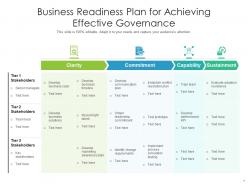
Presenting our well structured Business Readiness Plan For Achieving Effective Governance. The topics discussed in this slide are develop business case, develop business solutions, develop communication plan, obtain leadership commitment. This is an instantly available PowerPoint presentation that can be edited conveniently. Download it right away and captivate your audience.

People who downloaded this PowerPoint presentation also viewed the following :

FAQs for Business readiness plan for

Look, transparency and accountability are your bread and butter here. Map out who makes what decisions first - seriously, this fixes like 60% of governance headaches right there. People need to know who has final say, otherwise you're just asking for chaos. Set up regular check-ins and reporting so nothing falls through cracks. Don't forget stakeholder input either, though that can get messy if you're not careful about it. Start by writing down your current process. You'll probably spot the gaps pretty quick once it's all laid out.

Look, solid governance builds trust because stakeholders can see you're being transparent and making ethical calls. Independent boards, open communication about risks, clear oversight - all that stuff makes people feel safe putting their money or reputation on the line with you. Honestly, I've seen too many companies tank overnight from governance scandals. It's brutal. Good governance also gets stakeholders more engaged since they actually want to participate when leadership isn't sketchy. I'd start by taking a hard look at your current practices and figuring out where you're being too opaque.

So basically, tech becomes your governance backbone. It automates all that compliance tracking and centralizes policy stuff. Real-time dashboards show you risk levels, automated approvals, audit trails that don't suck. Manual audit prep is seriously the worst thing ever. AI can help with risk assessment too - spots problems before they blow up. Oh, and predictive analytics is pretty clutch for that. Just make sure whatever tools you pick actually play nice with your current systems. Otherwise you're just creating more headaches to deal with later.

Dude, transparency is like magic for organizations. People work so much harder when they actually get why decisions are made - the difference is crazy. Share your financial data, decision processes, all that stuff. Trust goes way up with employees and customers. Plus you catch problems faster because everyone's paying attention. Your teams become way more accountable and people feel safer speaking up with ideas. I swear, you'll attract better talent too since everyone wants to work somewhere real. Oh and innovation shoots up - probably because people aren't worried about politics anymore. Just try sharing more context in your next meeting.

Honestly? Resistance to change is your biggest enemy. People will fight you on new processes because they think it's just more paperwork. Resource constraints suck too - leadership always thinks implementation will be cheaper and faster than it actually is. Then there's the whole "who's responsible for what" mess. When roles aren't clear, stuff just... disappears into the void. Oh, and don't try to do everything at once - that's a recipe for disaster. Pick one small area, nail it, then move on. Much less painful that way.

Honestly, it's all about who you're answering to. Public sector? You're working for citizens and taxpayers, which means tons of transparency rules and oversight. Private companies just answer to shareholders and owners. The bureaucracy in government can be absolutely brutal - everything takes forever because of all the documentation and approval processes. Companies move way faster since they're focused on profits. Public sector has crazy strict rules for buying stuff, public meetings, disclosure requirements. None of that applies to private businesses. Just depends where you end up working, but public sector definitely requires way more patience.

Ok so you need clear risk appetite statements first - like actually clear ones, not corporate word salad. Map out who does what currently because I guarantee you'll find weird gaps. Set up that three lines of defense thing: business units own risks, risk management watches over them, internal audit double-checks everything. Most companies screw this up by keeping teams too separate though. Your board has to actually engage with risk stuff, not just rubber stamp reports. Build escalation procedures and do regular risk assessments that people actually use for decisions. Honestly, the "getting used" part is where most frameworks die.

Yeah so the thing is, what works great in one culture can completely bomb in another. Some places expect the boss to just make decisions and tell everyone what's happening. Other cultures? They need like endless meetings and everyone has to agree first. Communication styles mess things up too - some people are super direct, others hint around everything. I swear, most governance systems crash because they only think about how Western companies do things. You really need to build in flexibility from day one and maybe get your leaders some cultural training so they don't accidentally offend half the team.

Look at decision speed first - how long does your board take to actually resolve stuff? Track meeting attendance too, because empty chairs don't help anyone. Compliance rates are obvious but crucial. The messy part? Governance isn't always about numbers. You need stakeholder feedback surveys to catch what metrics miss. Risk oversight quality matters more than people think - are you spotting issues before they explode? Honestly, I'd start by timing your current decision processes and finding compliance gaps. Then just set quarterly goals. Some of this stuff you'll have to feel out rather than measure perfectly.

Honestly, just weave it into what you're already doing instead of making it this separate thing. Add sustainability stuff to your board reports and make sure leadership talks about it every meeting. I'd definitely tie exec pay to hitting environmental goals - that's when people actually care, you know? Short version: someone needs to own each outcome, and you need regular check-ins to see if it's working. But here's the big one - your policies should require sustainability considerations for major decisions, not just suggest them. Otherwise people will skip it when things get busy.

So governance is basically your company's rulebook for making ethical choices. It decides who gets to make the big calls and how they're supposed to do it. Without good governance? Things get messy fast - especially when money's involved (and honestly, that's when most companies lose their way). The tricky part isn't writing the policies though. You've got to actually weave them into how people work every day, not just leave them collecting dust in some manual. Otherwise you're just checking boxes while the real decisions happen however they want.

New laws basically force you to restructure everything - board makeup, reporting rules, how decisions get made. Like when data privacy stuff hit and companies suddenly needed oversight committees they never had before. Financial reforms? Now you need independent directors. It's probably the biggest outside force that can flip your whole governance setup overnight, honestly. You can't just pretend these changes don't exist either - the legal and financial mess from ignoring them isn't worth it. Best bet is watching regulatory trends early and keeping your structures flexible enough to pivot when new rules drop.

Diverse boards actually catch stuff homogeneous ones miss - you know how groups of similar people just agree with everything? Different backgrounds bring fresh risk assessment since everyone's pulling from totally different experiences. Decision quality goes way up when you've got multiple viewpoints in the room. Plus stakeholders and investors are really pushing for this now, so it helps your credibility. Honestly, I've seen too many boards that are just carbon copies of each other. When you're building yours, don't just focus on skills - actively hunt for people from different industries and ways of thinking.

Honestly, start by figuring out who's actually responsible for what - that's where most companies are totally lost. Give specific people specific jobs, none of this "team responsibility" nonsense. Train your people regularly so they're not just winging it. Set up some automated monitoring and do audits before things go sideways. Oh, and create an environment where people can speak up without getting their heads chopped off. The whole thing falls apart if everyone's scared to report problems. Map out your current setup first though - you'll probably find some pretty obvious gaps once you actually look at it on paper.

So governance models mostly change when they're forced to - like during crises or when new pressures pile up. COVID's a perfect example - it pushed digital transformation way faster than anyone planned. Climate change is making organizations work together more (which honestly should've happened sooner). Economic crashes usually lead to transparency reforms too, like all those financial regulations after 2008. The whole process is pretty messy though. First you get reactive quick fixes, then later the strategic stuff once people figure out what actually worked. Right now AI governance and ESG frameworks are totally reshaping decision-making processes.

Ratings and Reviews

100% of 100
Write a review
Most Relevant Reviews
  1. 100%

    by Darren Olson

    Informative design.
  2. 100%

    by Dion Dunn

    Great designs, Easily Editable.
  3. 100%

    by Connie Simmons

    Appreciate the research and its presentable format.

3 Item(s)

per page: