Business Swot Analysis And Strategic Recommendations
Try Before you Buy Download Free Sample Product
Audience
Editable
of Time
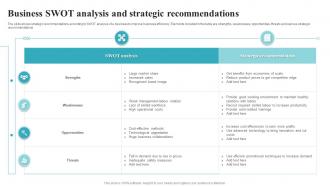
The slide shows strategic recommendations according to SWOT analysis of a business to improve business efficiency. Elements included in the table are strengths, weaknesses, opportunities, threats and various strategic recommendations
People who downloaded this PowerPoint presentation also viewed the following :
Business Swot Analysis And Strategic Recommendations with all 6 slides:
Use our Business Swot Analysis And Strategic Recommendations to effectively help you save your valuable time. They are readymade to fit into any presentation structure.
FAQs for Business Swot Analysis
SWOT is pretty straightforward - it's just Strengths, Weaknesses, Opportunities, and Threats. The main thing to remember is internal vs external stuff. Your strengths and weaknesses? That's all internal, things you actually control. Opportunities and threats come from outside - like market trends or competition. I used to mix up O and T constantly lol. But opportunities are good external things, threats are the scary ones. Honestly, the weakness part is brutal because nobody wants to admit their flaws. Just be real about it though. Then brainstorm each section and see how they connect.
Yeah, you've got to tailor your SWOT to whatever industry you're looking at. Tech companies? Focus on innovation speed, IP stuff, how well they scale, keeping good talent around. The whole "tech becomes obsolete overnight" thing is huge there. Healthcare's totally different - it's all about regulations, patient results, how they get paid back, clinical know-how. Generic SWOT templates are honestly pretty useless because they miss what actually matters. Like, what kills one type of company might not even be relevant somewhere else. Do some digging into what makes companies in your specific field succeed or crash and burn, then build your analysis around that instead.
Honestly, the worst thing you can do is be super vague - like writing "good reputation" without backing it up with anything real. Keep your team tiny, maybe 3-5 people who actually get the business. Don't let it turn into one of those meetings where everyone just throws random ideas around. Skip the obvious stuff too. "Competition is bad" isn't helpful to anyone. Oh, and here's what kills me - most teams spend hours on this then never look at it again! You've gotta pull out 2-3 things you'll actually act on, otherwise you just wasted everyone's time.
So you want to weave SWOT into your strategic planning? Do the analysis first - like right at the beginning before you get too deep into anything. Use your strengths to go after opportunities. Figure out which weaknesses might screw you over and fix those. Build backup plans for potential threats. I mean, it's basically a gut check before you make big moves. The real trick is turning those four boxes into actual action items and figuring out where to spend your money and time. Oh, and don't just do it once - things shift constantly so you'll need to update it pretty regularly.
Honestly, you really need outside voices for your SWOT or it'll just be your team patting themselves on the back. Customers spot weaknesses you're totally blind to. Suppliers see strengths you don't even realize you have. Different people know different threats and opportunities - like, your sales team probably knows competitor moves that leadership misses completely. I've watched companies do these analyses and miss huge obvious stuff because they only asked people in the room. Get input from customers, partners, employees at different levels, maybe even competitors if you can swing it. Otherwise you're just guessing.
Dude, visual SWOT analysis is a game changer. Executives' eyes glaze over with text-heavy slides, but throw in some quadrant charts or heat maps? Suddenly everyone's paying attention. I always do the basic color coding thing - green for strengths, red for weaknesses. Sounds cheesy but it works. Interactive dashboards are even better if you've got time. The visual setup helps people spot connections between different factors way faster than boring bullet points. Miro's my go-to, though honestly even a well-designed PowerPoint does the trick. Just makes the whole discussion more productive.
Honestly, prep work makes all the difference – send your team the framework beforehand and have them jot down ideas for each section. When you're actually running it, go quadrant by quadrant with sticky notes so people brainstorm solo first (seriously saves you from the usual suspects dominating everything). Timebox each section, maybe 10 minutes tops. The real work happens after though – you've gotta prioritize what came out of it. I learned this the hard way, but don't let it die on the whiteboard. Pick your top 3-5 items and assign owners right there.
At minimum, do it once a year. But quarterly makes way more sense - markets move too fast now. Tech companies? Maybe even monthly check-ins work better. Here's the thing though - most people just let their SWOT sit in some forgotten folder. Don't be that person. Actually put it on your calendar as a recurring thing, and make someone responsible for it. Otherwise you'll keep putting it off (guilty of this myself). Industries change overnight these days. New competitors show up, your team gets new skills, customer needs shift. Your SWOT should reflect reality, not what things looked like six months ago.
Honestly, SWOT analysis is pretty clutch for finding opportunities because it makes you actually look around at what's happening in your space. You'll catch things like new trends, gaps your competitors are missing, or how customer needs are shifting - stuff you can jump on. The threats section is gold too since it helps you see what could blindside you, whether that's new players coming in or regulation changes. Way better than just hoping you notice important stuff by accident. Just don't be one of those people who does the whole exercise then never looks at it again.
Track whether your SWOT insights actually become real strategies - that's what matters most. Does your team still reference it when making decisions months later? I'd also check if those strengths and weaknesses you mapped out are showing up in actual results. Honestly, most SWOTs just end up forgotten in some folder somewhere. During the session itself, notice if people are sharing fresh perspectives or just stating the obvious. The real win? When your SWOT helps you catch opportunities early or sidestep problems before they hit. Set a quarterly reminder to revisit it and see what actually played out.
Your strengths and weaknesses basically decide how well you can grab opportunities or fight off threats. Got strong skills? You'll catch market openings competitors totally miss. Weak spots though? They make you super vulnerable when bad stuff hits. Think of it like boxing reflexes - honestly makes or breaks you. Say your tech team rocks and AI's blowing up everywhere - perfect timing to move fast. But tight cash flow during a recession? Yikes, that's rough. You gotta match what you're actually good at with what's happening out there to make decent strategic calls.
SWOT's pretty much the easiest strategic tool out there - just four boxes to fill (strengths, weaknesses, opportunities, threats). Way less headache than Porter's Five Forces or PESTLE where you're researching industry stuff forever. Honestly love how quick it is! The downside though? You're getting surface-level insights. Won't give you the deep competitive analysis you'd get from value chain work or scenario planning. It's more like your starting point than your final answer - which isn't necessarily bad, just depends what you need.
Start with your strengths - figure out what you're already crushing compared to competitors and go harder on those things. The opportunities section is where you'll find the real money though, spotting market gaps before everyone else jumps in. Fix your weaknesses so competitors can't use them against you later. Threats help you build your defense strategy. Here's the thing - most companies do this whole analysis then just... forget about it? That's useless. You've got to turn everything into actual action plans with real deadlines and people responsible for getting stuff done.
Honestly, digital tools make SWOT analysis way less painful. Survey platforms let you collect everyone's input at once instead of herding cats into meetings. I'm obsessed with Miro and Lucidchart - real-time collaboration beats sticky note chaos every time. Market research APIs can automatically pull competitor data, which is pretty sweet. Most platforms spit out clean reports instantly too. The real win? Everything's saved digitally so you can update it later without starting from scratch. Way better than the old whiteboard photos that nobody can read.
So SWOT can actually save your ass in a crisis. Start with your strengths - what's working that you can double down on? Then honestly assess your weaknesses because they'll bite you when you're already down. Don't just focus on the obvious crisis though. Check what other threats are lurking - maybe suppliers getting shaky or competitors making moves. Here's the thing most people miss: crises create weird opportunities if you're paying attention. I'd update this regularly too, not just once. Oh, and use it to figure out which problems need your attention first - you can't fight every fire at once.
-
No second thoughts when I’m looking for excellent templates. SlideTeam is definitely my go-to website for well-designed slides.
-
Fantastic and innovative graphics with useful content. The templates are the best and latest in the industry.