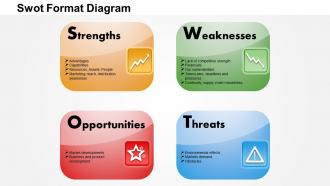
Apresentação em PowerPoint do formato SWOT 0514
Try Before you Buy Download Free Sample Product
Audience
Editable
of Time
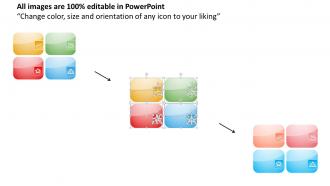
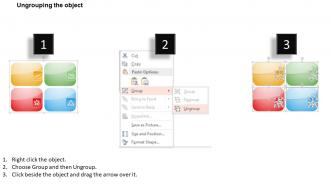
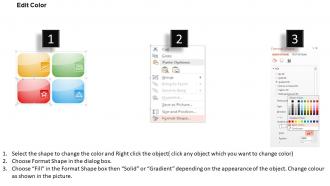
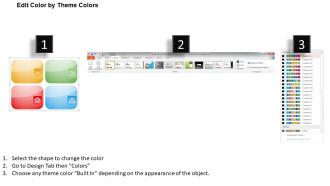
Cada setor de negócios passa por alguma situação crítica em um ponto ou outro. E para sair daquelas em circunstâncias de nuvem não pode haver nada melhor do que um design de apresentação. Use nossa apresentação em PowerPoint no formato 0514 Swot. Esta é a nossa nova apresentação SWOT PowerPoint rica em gráficos para os profissionais em movimento que não querem gastar toda a sua energia e tempo na construção de slides PPT de análise SWOT incríveis. Grandes ícones e segmentos usados aqui fornecem uma melhor compreensão do processo e ajudam os visualizadores a obter uma compreensão válida das ideias. Dessa forma, ele se torna um dos projetos líderes de PPT de negócios para tornar o processo de negócios limpo e descomplicado. Projetos vitais precisam de opiniões excepcionais, basta comunicar suas grandes ideias por meio de nosso design pronto. Nossos ícones PPT elegantes surgem com um clique e você começa a fazer uma apresentação adorável em um piscar de olhos. Dê alguma invasão às suas ideias. Torne-os mais nítidos em nossa apresentação em formato SWOT 0514.
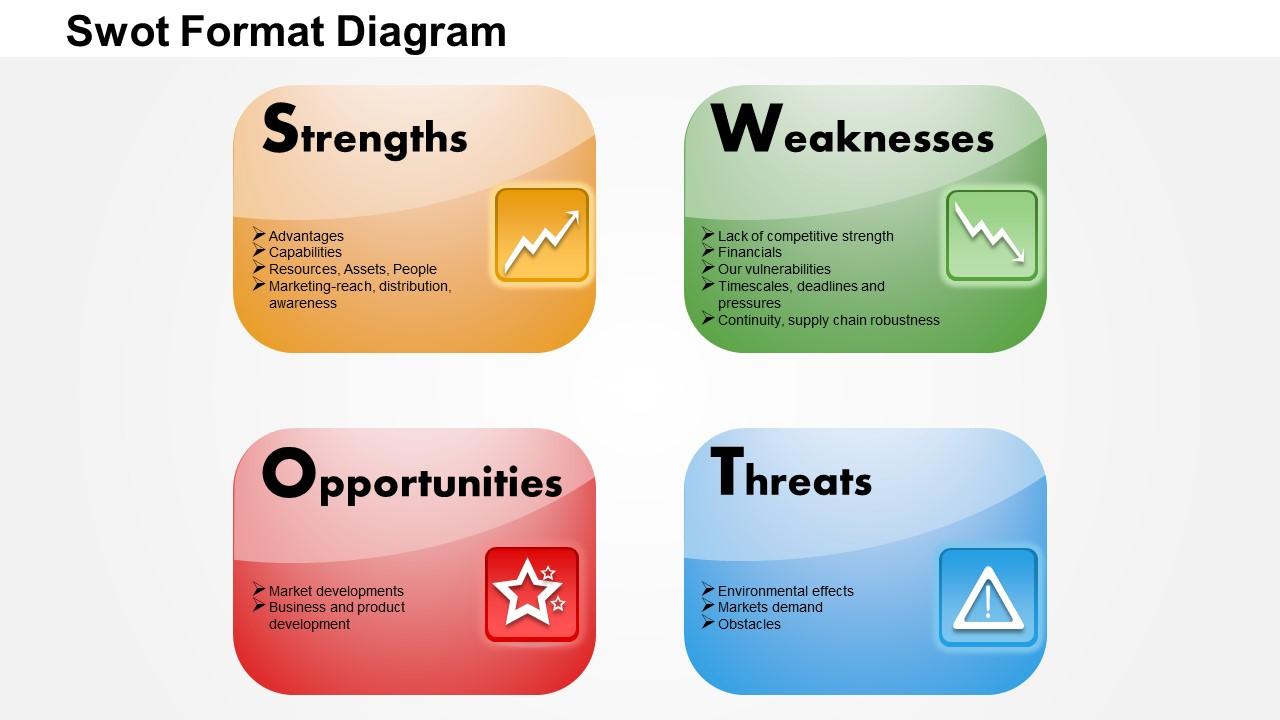
0514 Apresentação em PowerPoint em formato Swot com todos os 5 slides:
Mostre uma preocupação genuína com nossa apresentação em PowerPoint em formato SWOT 0514. A profundidade de seus sentimentos será revelada.
FAQs for 0514 swot
SWOT analysis comprises four critical elements: Strengths (internal advantages), Weaknesses (internal limitations), Opportunities (external possibilities), and Threats (external challenges). These components streamline strategic planning by enabling organizations to leverage competitive advantages, address operational gaps, and capitalize on market trends, with many businesses finding that this structured approach ultimately delivers clearer resource allocation and enhanced decision-making capabilities.
Businesses can effectively identify strengths by conducting internal audits of resources, capabilities, market position, financial performance, and competitive advantages. Through employee feedback sessions, customer testimonials, and performance metrics analysis, organizations systematically evaluate what differentiates them from competitors, with many companies finding that their unique processes, skilled workforce, or market reputation become key strategic assets for growth.
Organizations can uncover operational weaknesses through internal audits, employee feedback surveys, performance benchmarking against competitors, financial analysis, and customer satisfaction assessments. These methods enable companies to identify inefficiencies in processes, resource allocation gaps, and service delivery issues, with many finding that systematic weakness identification ultimately delivers enhanced operational efficiency and stronger competitive positioning.
Market opportunities identified in SWOT analysis directly shape long-term strategy by revealing untapped customer segments, emerging technologies, regulatory changes, and competitive gaps that companies can strategically exploit. These insights enable organizations to prioritize resource allocation, guide product development, and establish market positioning, with many successful companies finding that opportunity-driven strategies deliver sustainable competitive advantage and accelerated growth in increasingly dynamic markets.
Businesses can leverage strengths to mitigate threats by strategically deploying core competencies, strong market positions, and operational advantages as defensive mechanisms. For example, companies with strong brand loyalty can weather competitive threats, while those with robust financial resources can invest in innovation during market downturns, ultimately transforming potential vulnerabilities into competitive advantages.
Competitive analysis directly informs SWOT opportunities by revealing market gaps, underserved segments, and competitor weaknesses that organizations can exploit for strategic advantage. It shapes the threats section by identifying competitor strengths, emerging rivals, and market shifts that could impact business performance, with many companies finding that regular competitive monitoring enables proactive strategic positioning rather than reactive responses.
Teams can use SWOT analysis to foster innovation by identifying internal strengths to leverage, weaknesses to address through creative solutions, external opportunities for new products or markets, and threats that require innovative responses. This strategic framework enables organizations to systematically explore innovation gaps, prioritize creative initiatives, and align innovative efforts with business objectives, ultimately delivering competitive advantage and sustainable growth.
Common pitfalls include being overly subjective, focusing only on internal perspectives, using vague generalizations, failing to prioritize findings, and conducting analysis in isolation without stakeholder input. These missteps can be avoided by incorporating diverse viewpoints, using specific data-driven insights, and ensuring cross-functional collaboration, with many organizations finding that structured facilitation and regular updates ultimately deliver more actionable strategic insights.
Companies should revisit their SWOT analysis quarterly or bi-annually, with additional reviews triggered by significant market shifts, competitive changes, or strategic pivots. Through regular assessment cycles, organizations can identify emerging opportunities, address evolving weaknesses, and adapt to new threats, while many businesses find that frequent SWOT updates enhance strategic agility and competitive positioning.
SWOT analysis effectively applies to non-profit organizations by evaluating internal strengths like volunteer networks and community trust, weaknesses such as funding limitations, external opportunities including grant availability, and threats like regulatory changes. Non-profits use this strategic framework to optimize resource allocation, enhance program effectiveness, and strengthen donor relationships, with organizations in healthcare, education, and social services finding that regular SWOT assessments improve operational efficiency and mission impact.
Best practices for presenting SWOT analysis findings include using clear visual frameworks, prioritizing actionable insights, connecting findings to strategic objectives, and facilitating interactive discussions with stakeholders. These approaches enhance stakeholder engagement by streamlining complex data into digestible formats, enabling strategic decision-making through focused action plans, and ultimately delivering competitive advantage, with many organizations finding that structured presentations accelerate implementation timelines.
SWOT analysis integrates seamlessly with tools like Porter's Five Forces, PESTLE analysis, balanced scorecards, and scenario planning to create comprehensive strategic frameworks. This strategic combination enables organizations to cross-validate insights, identify market opportunities, and develop robust action plans, with many companies finding that integrated approaches deliver more accurate market assessments and sustainable competitive advantages.
Company culture significantly influences SWOT analysis findings by shaping how teams identify strengths, acknowledge weaknesses, assess opportunities, and perceive threats through their collective values and perspectives. Organizations with open, transparent cultures typically uncover more honest assessments of internal capabilities and market positioning, while hierarchical environments may produce filtered insights, ultimately affecting strategic decision-making accuracy and implementation success.
Small businesses should focus SWOT analysis on immediate market opportunities, local competitive advantages, and resource constraints, while multinational corporations examine global market dynamics, regulatory environments, and complex supply chains. Small businesses benefit from faster decision-making cycles and direct customer relationships, enabling more agile responses to identified weaknesses and threats, ultimately delivering competitive advantages through personalized services and localized market expertise.
Technology enhances SWOT analysis accuracy through data analytics platforms, AI-powered market intelligence tools, competitor monitoring software, automated survey systems, and real-time business intelligence dashboards. These technologies streamline data collection, minimize human bias, and provide comprehensive market insights, with many organizations finding that automated analysis delivers faster, more objective strategic assessments and competitive advantage.
-
The Designed Graphic are very professional and classic.
-
Wonderful templates design to use in business meetings.