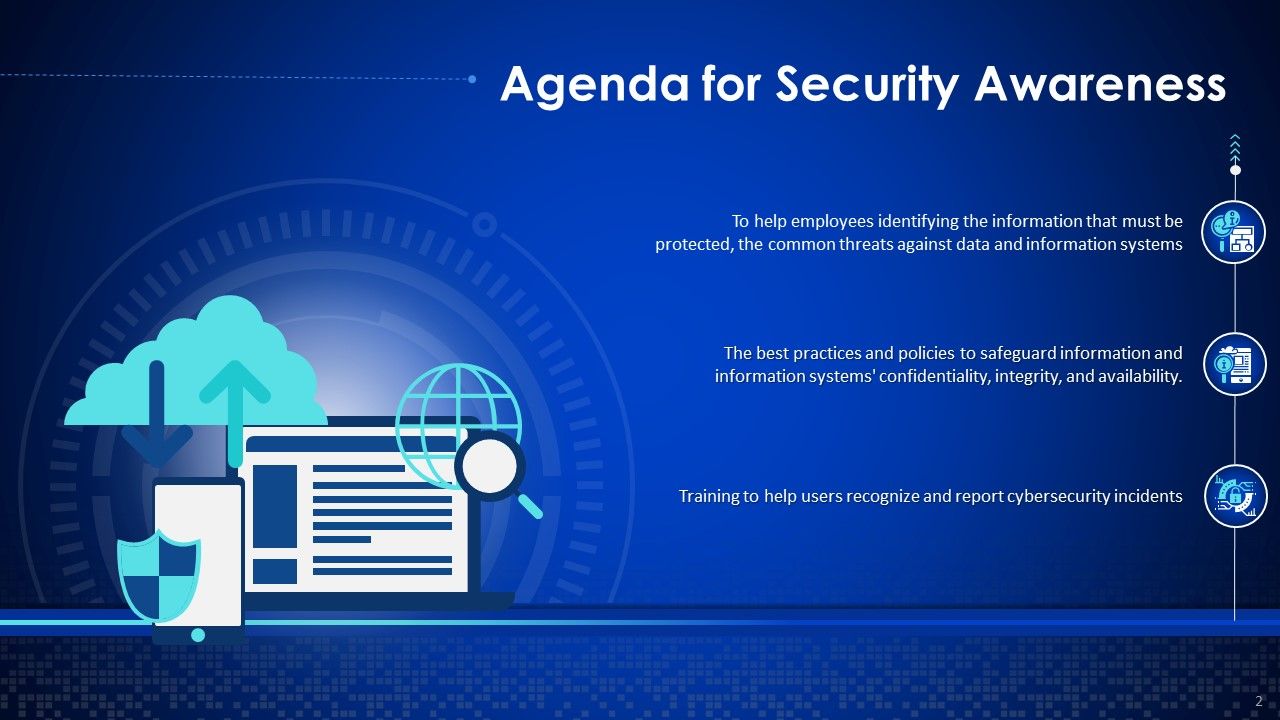
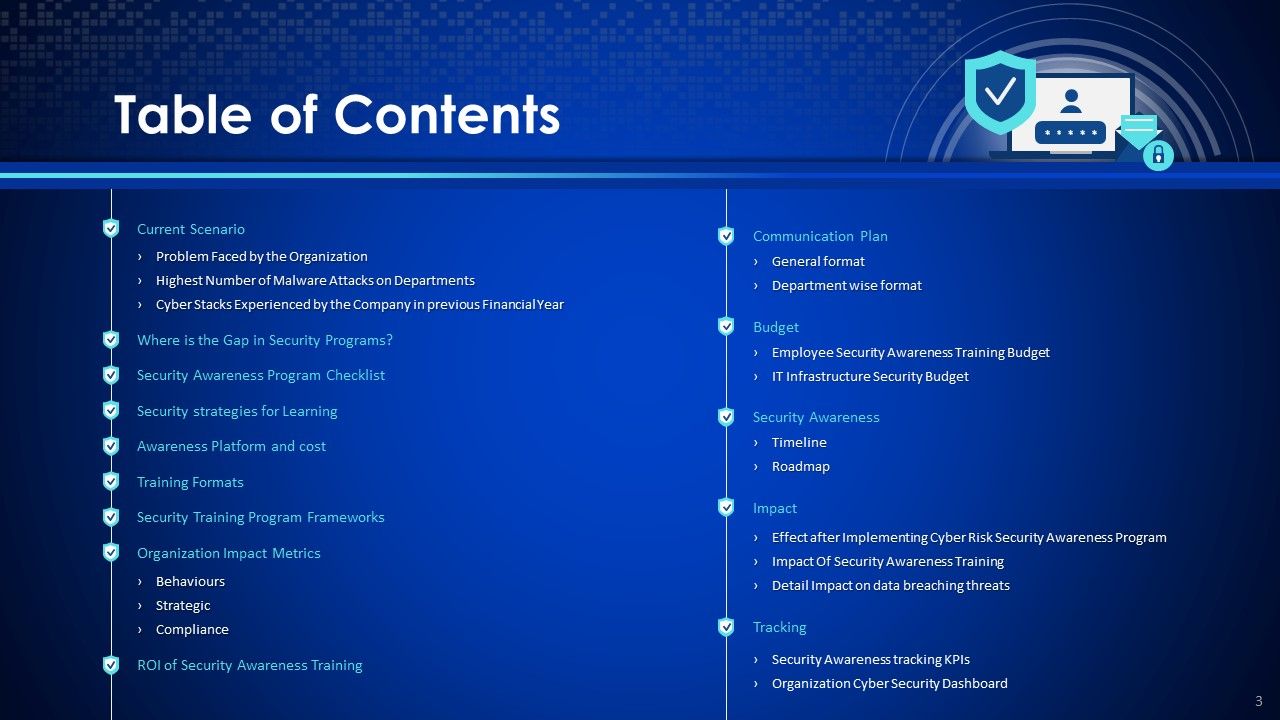
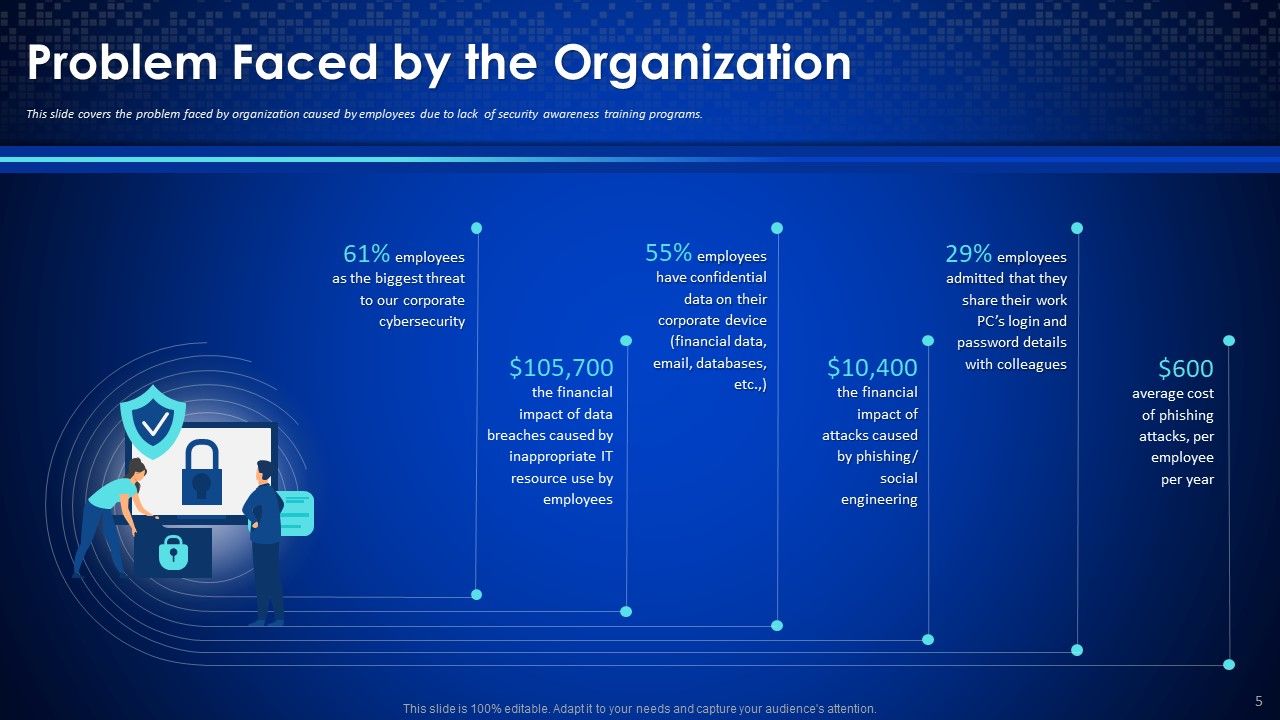
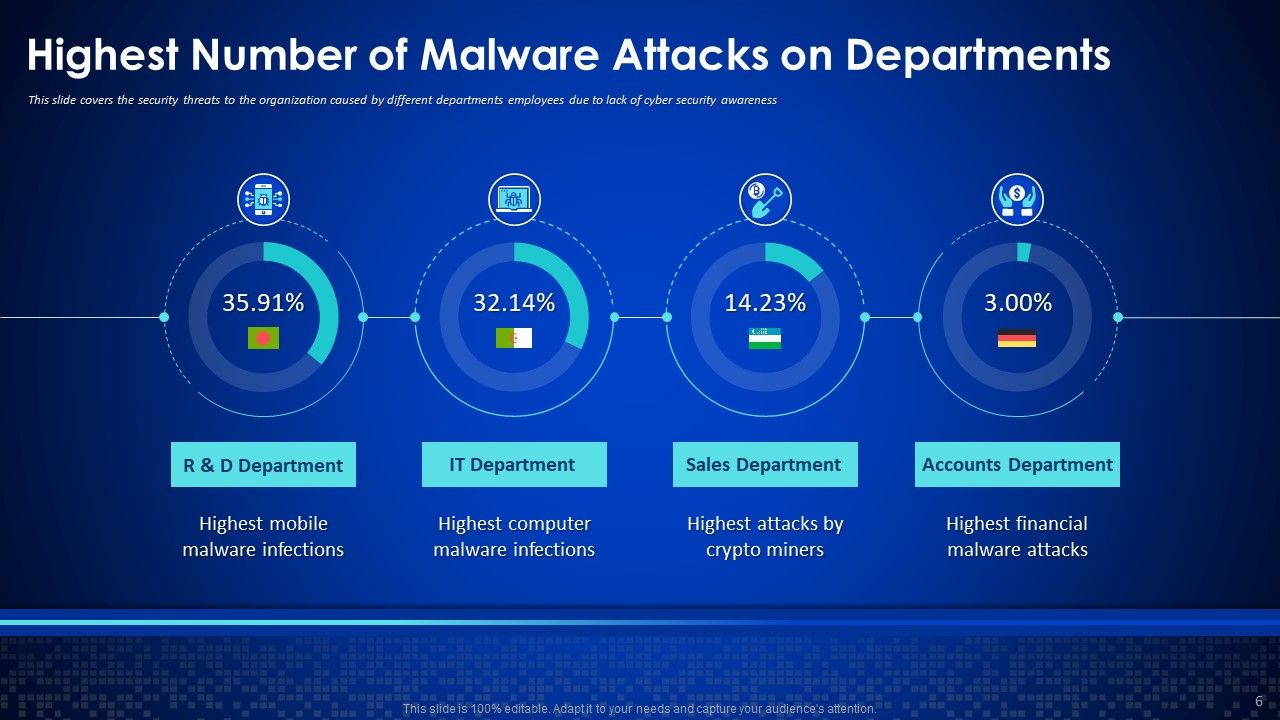
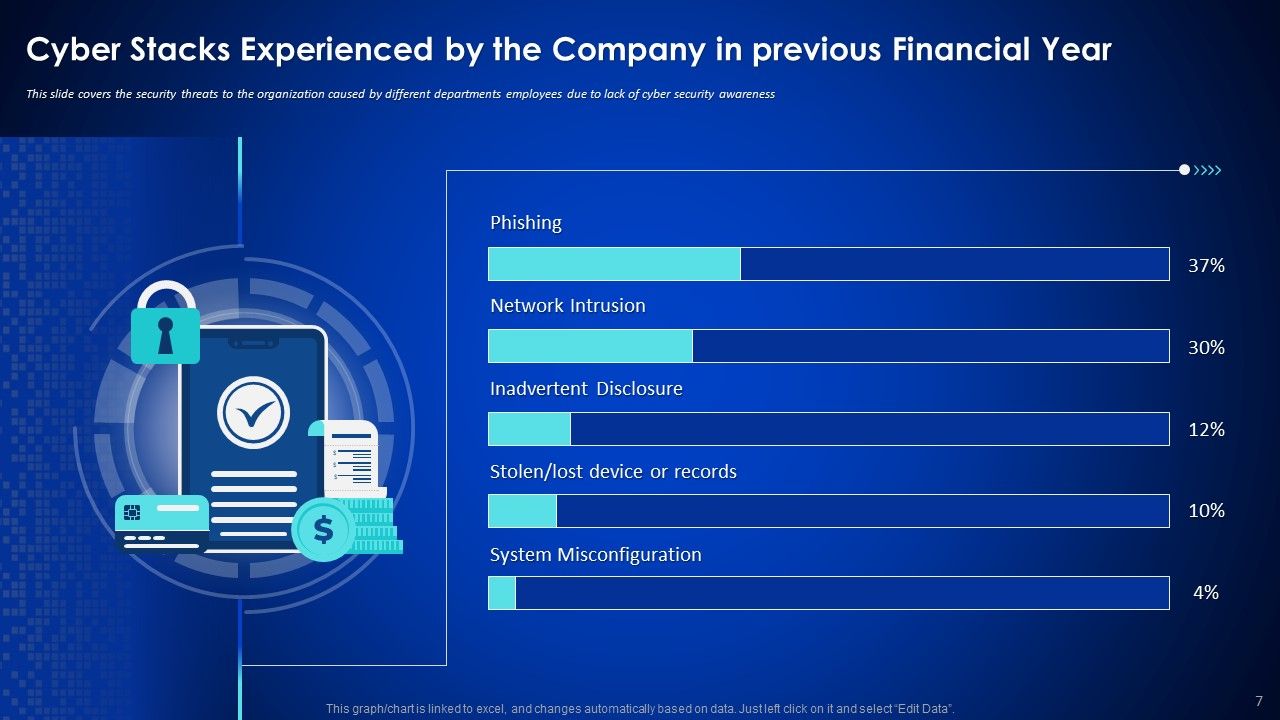
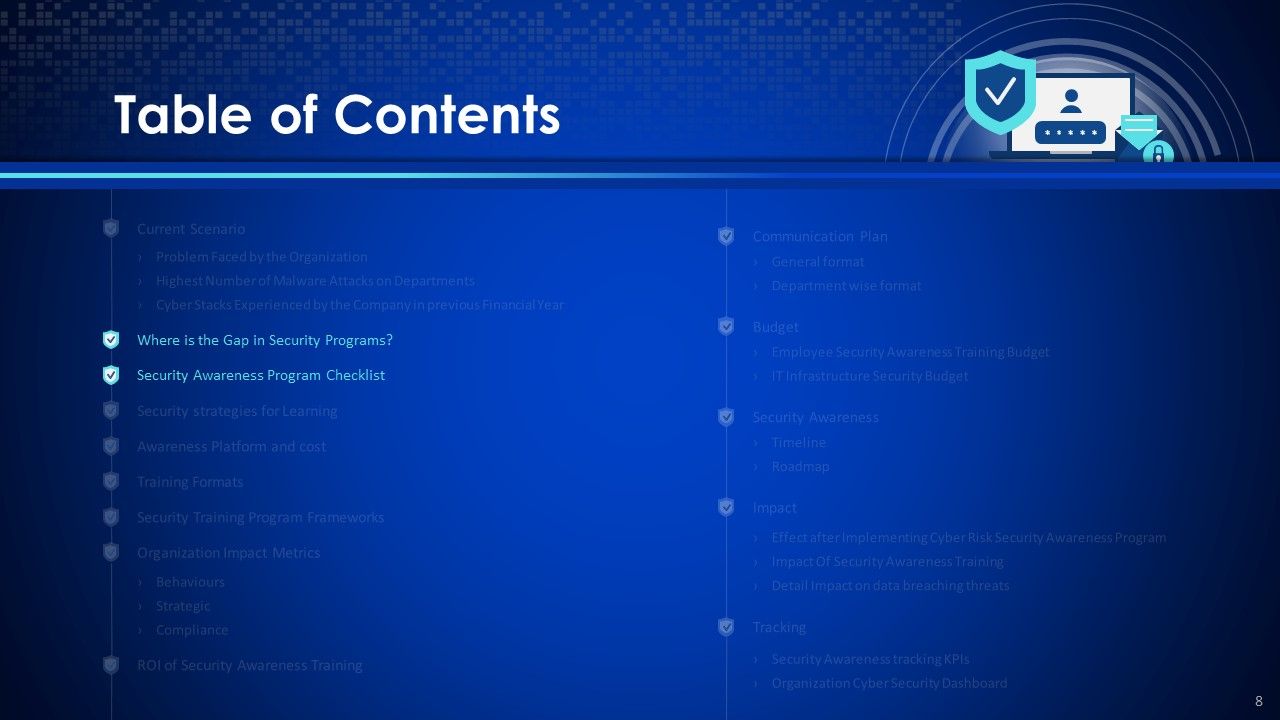
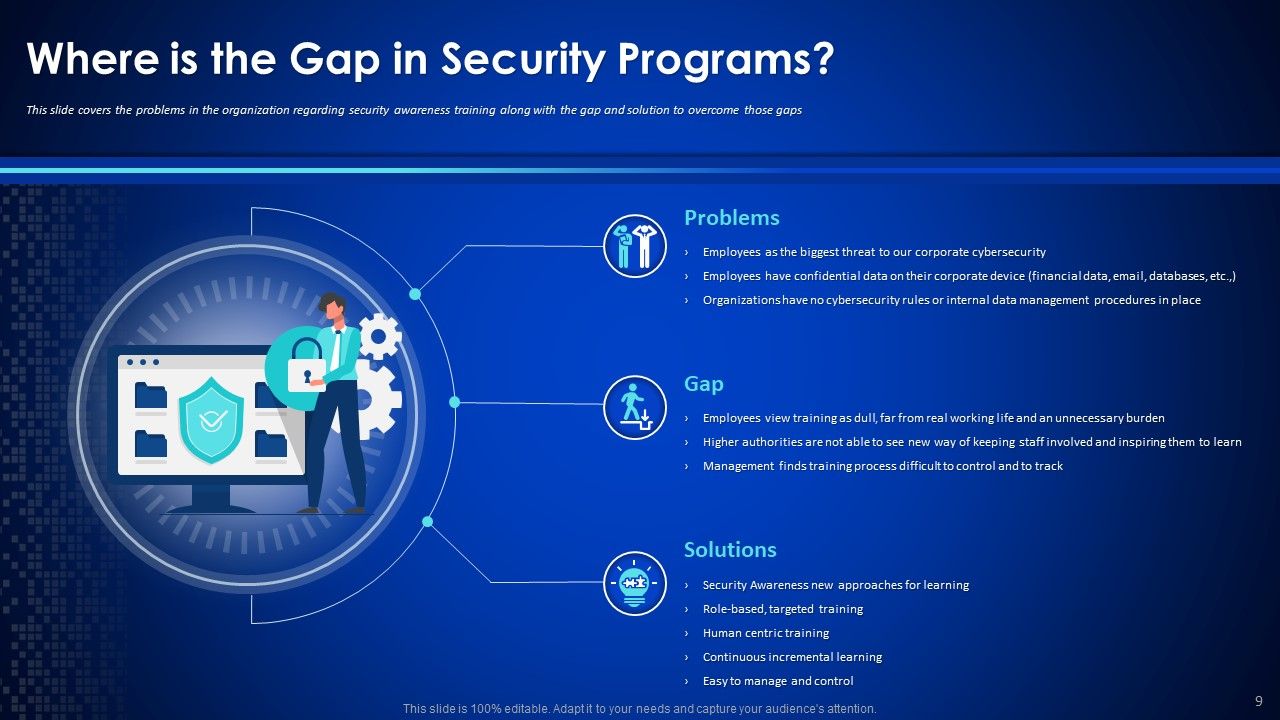
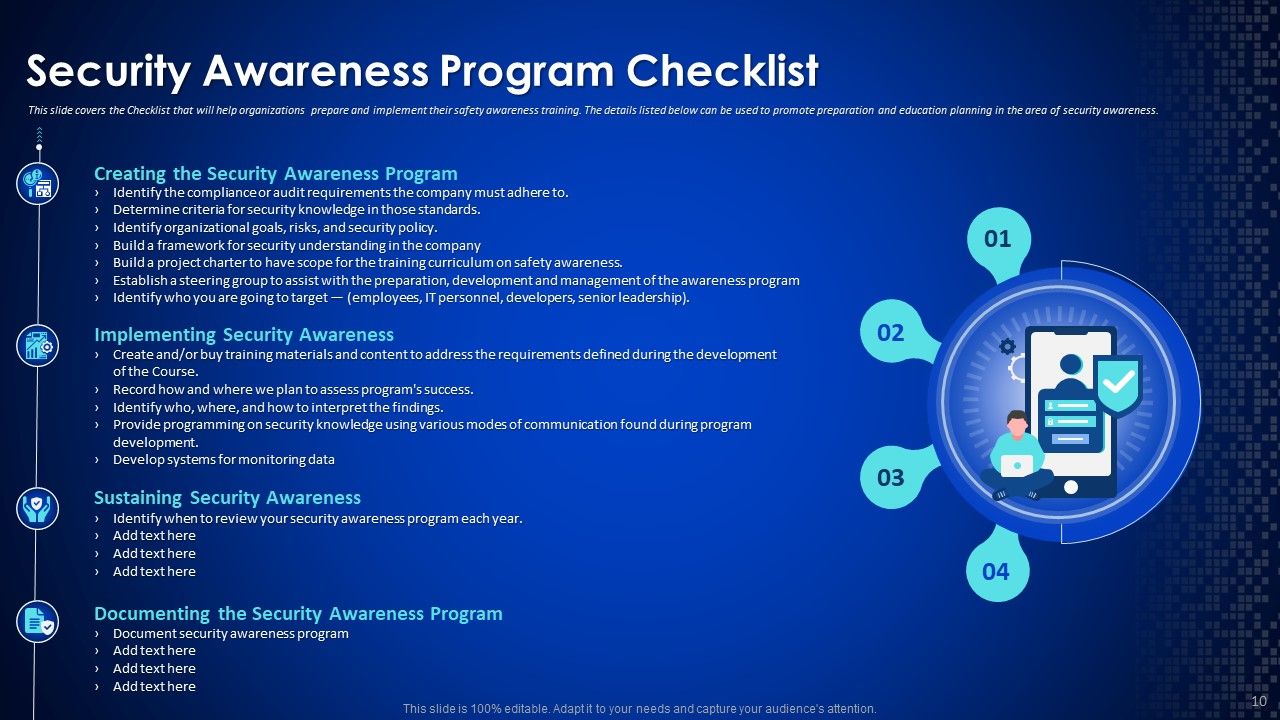
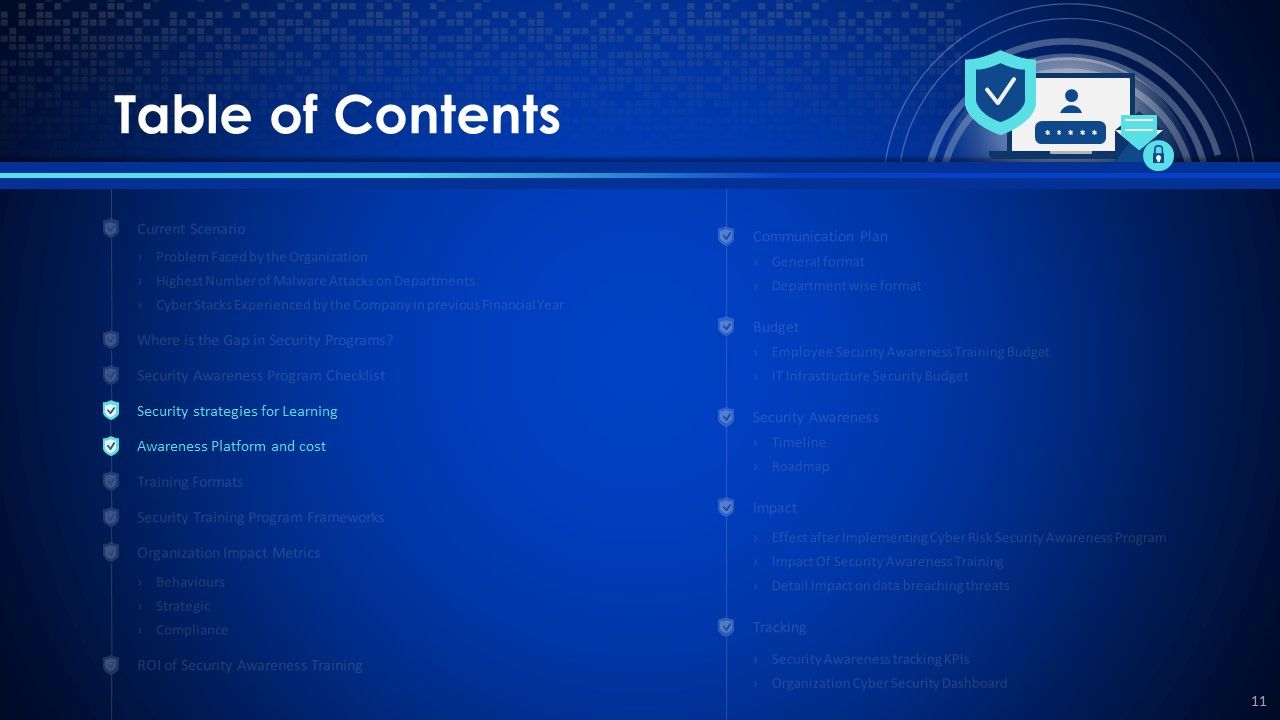
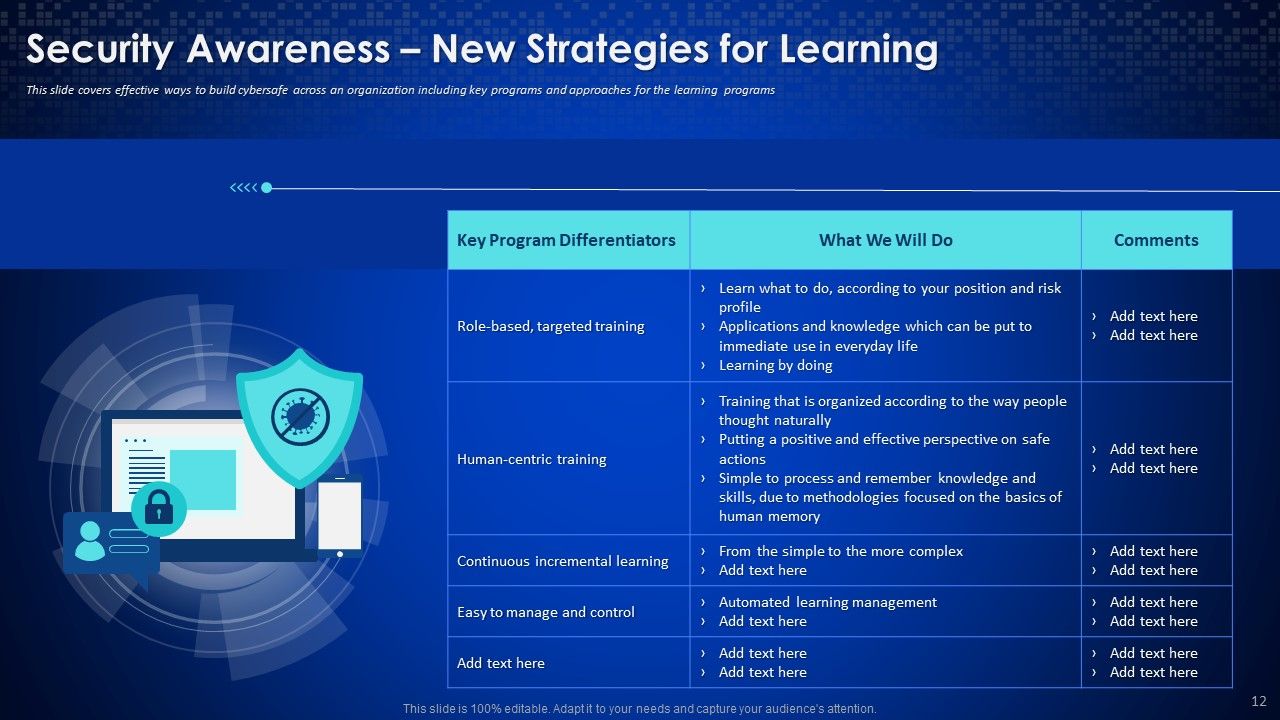
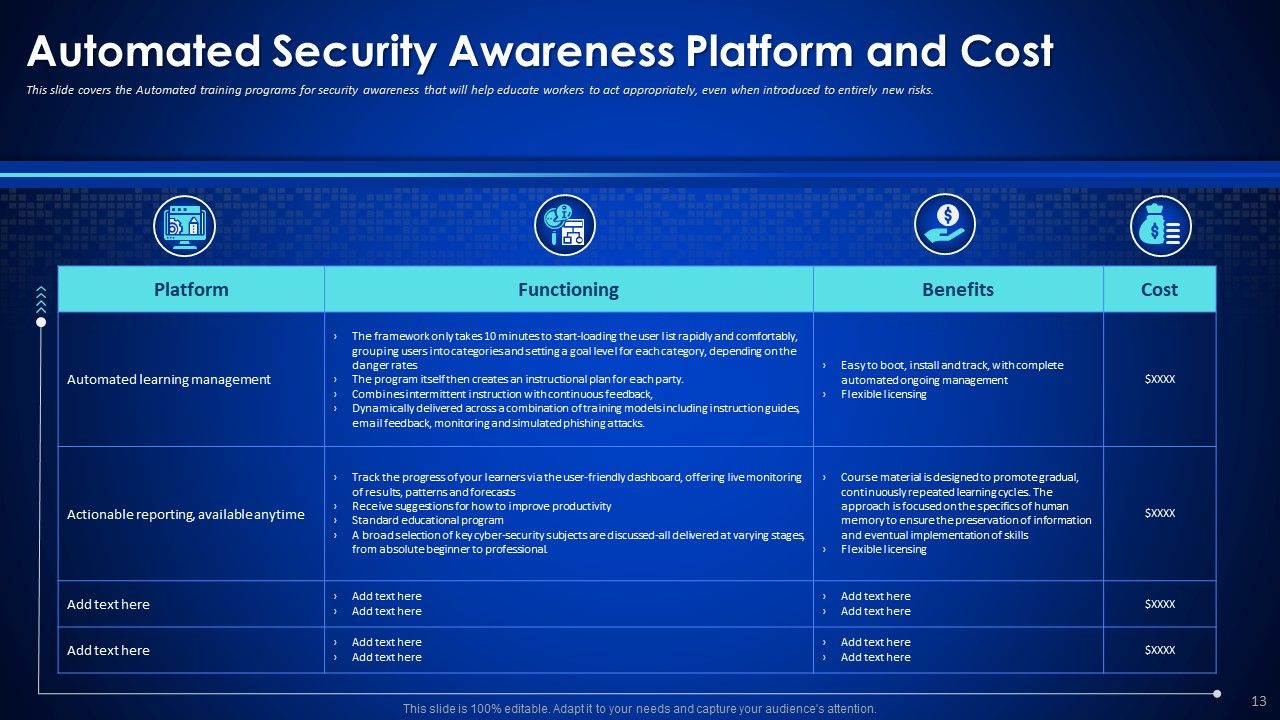
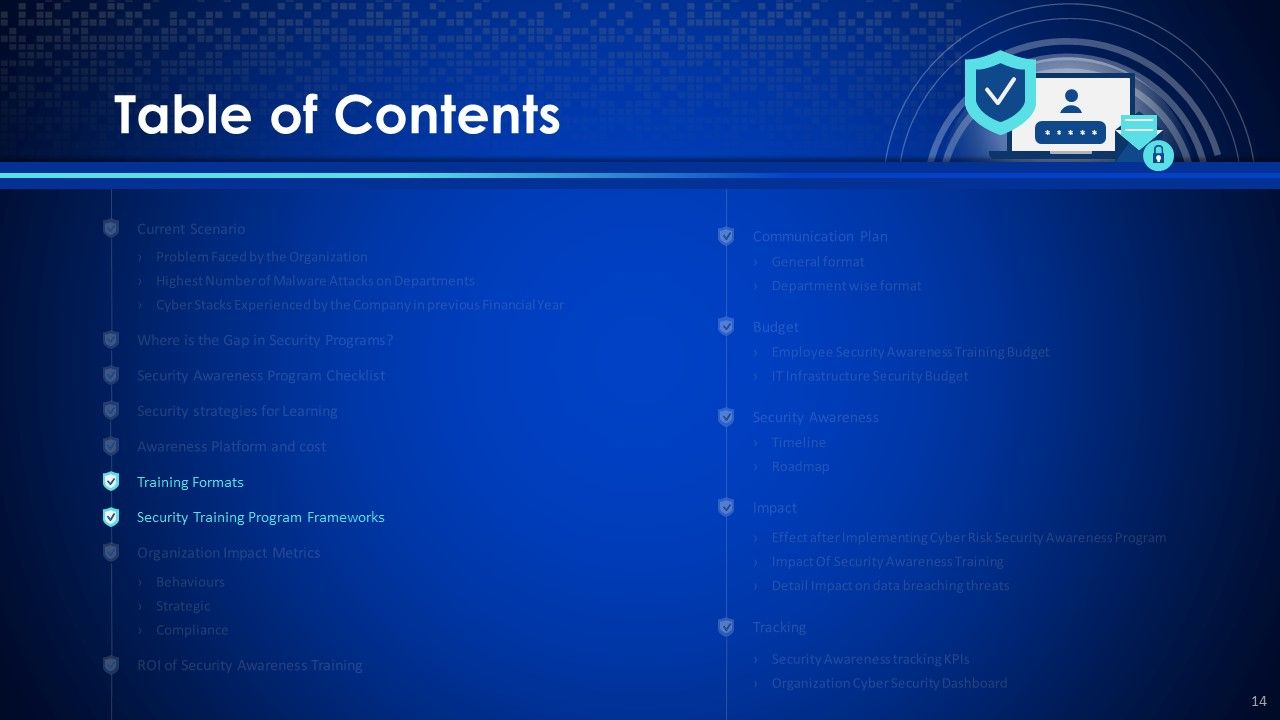
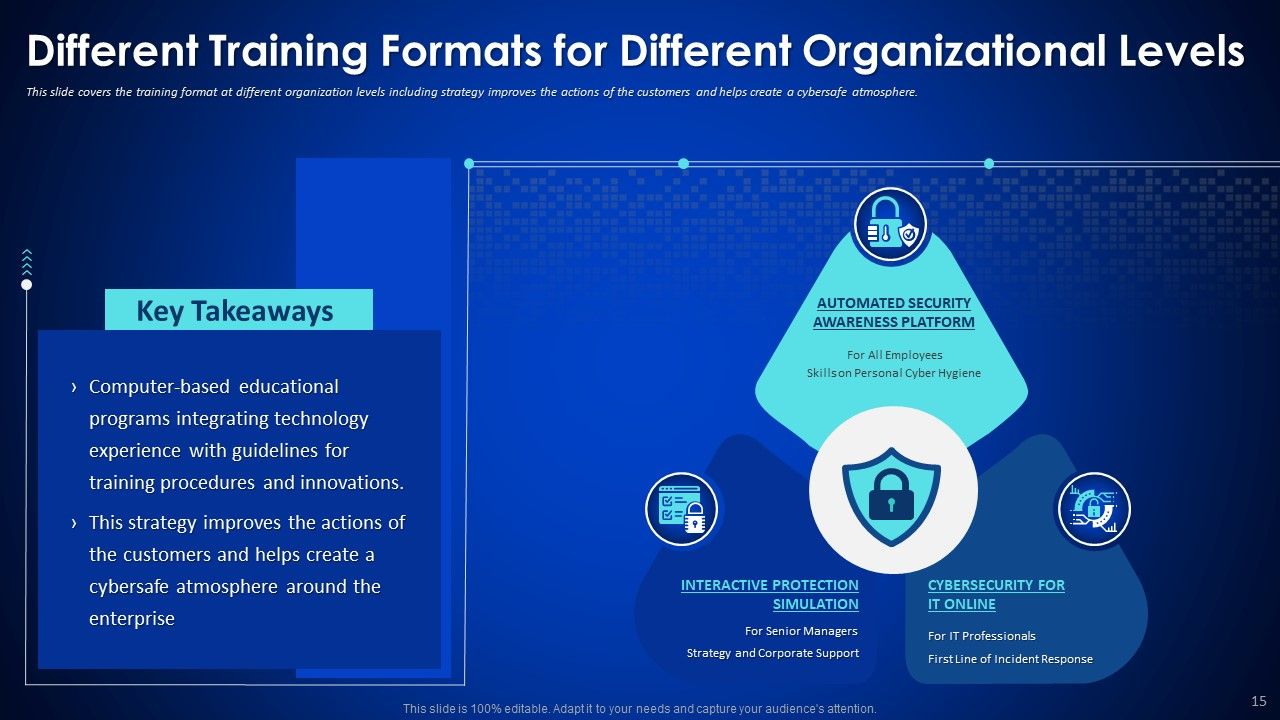
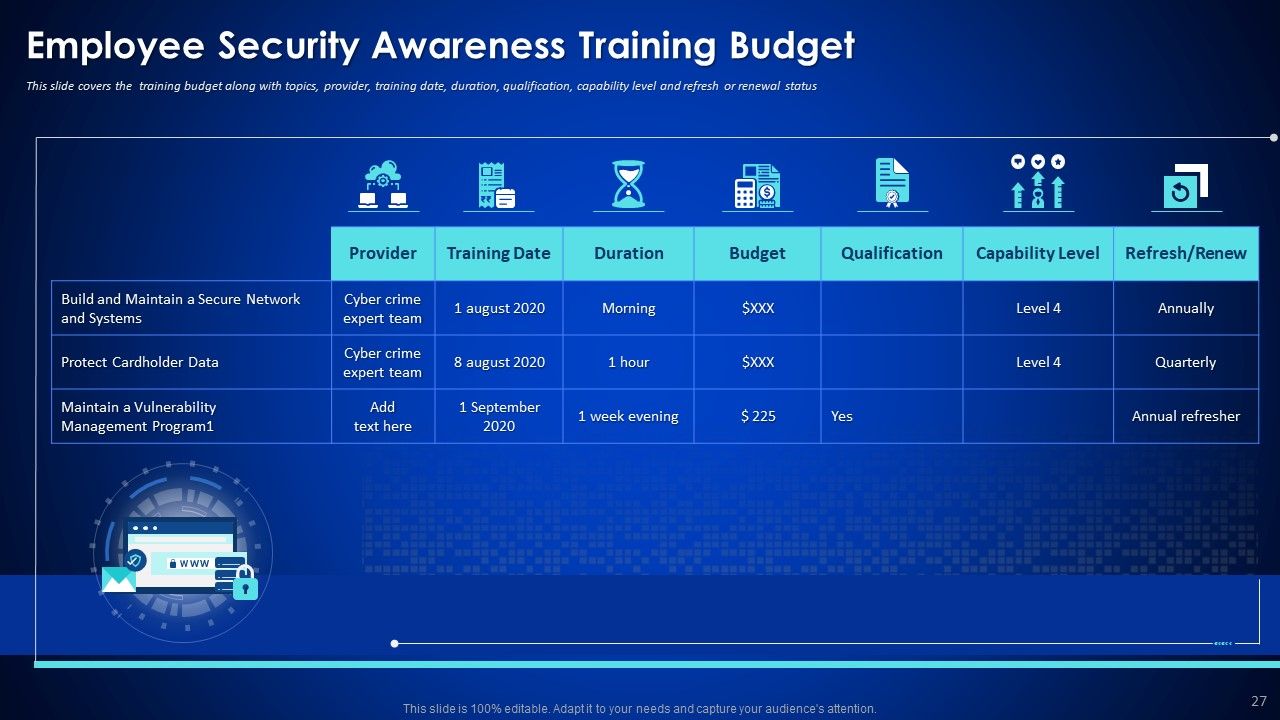
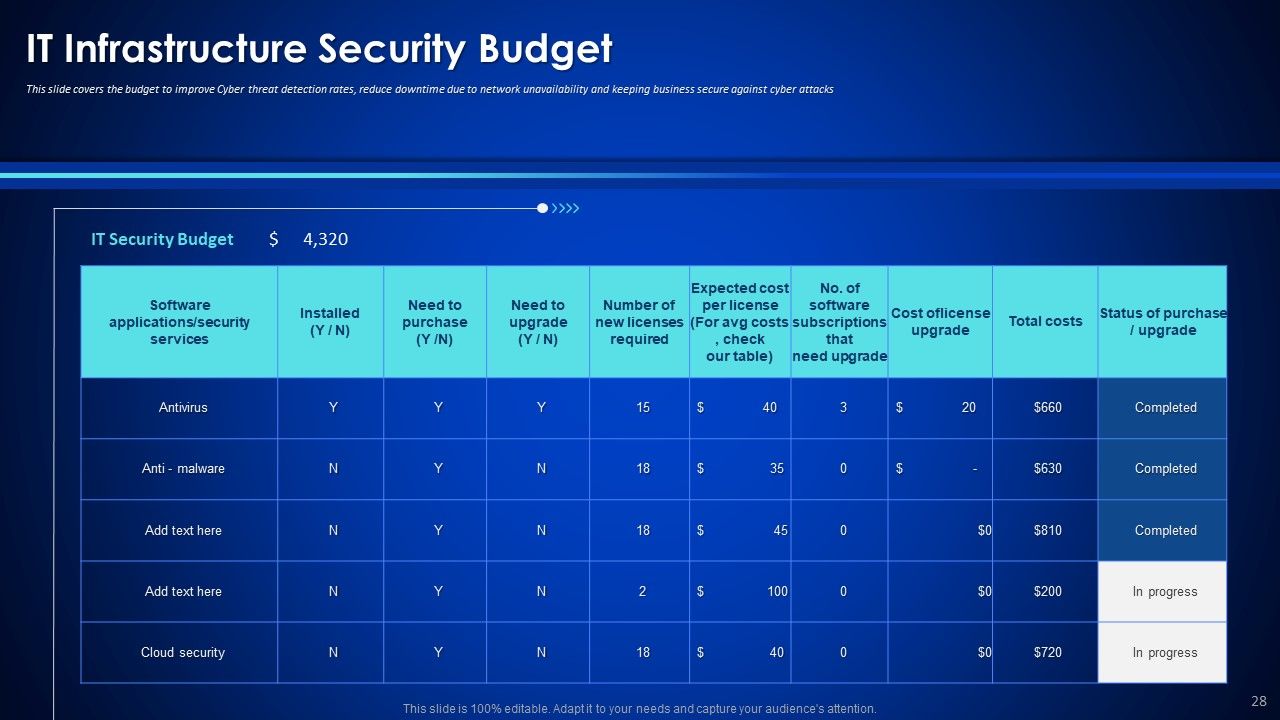
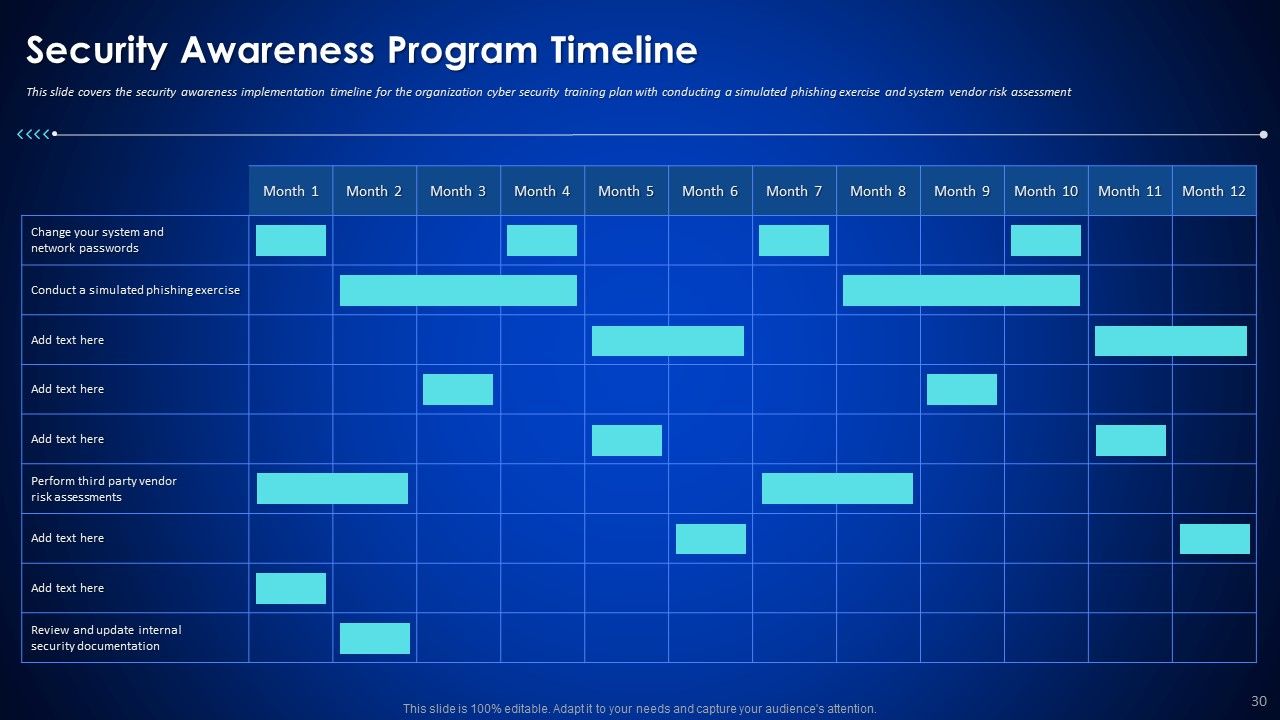
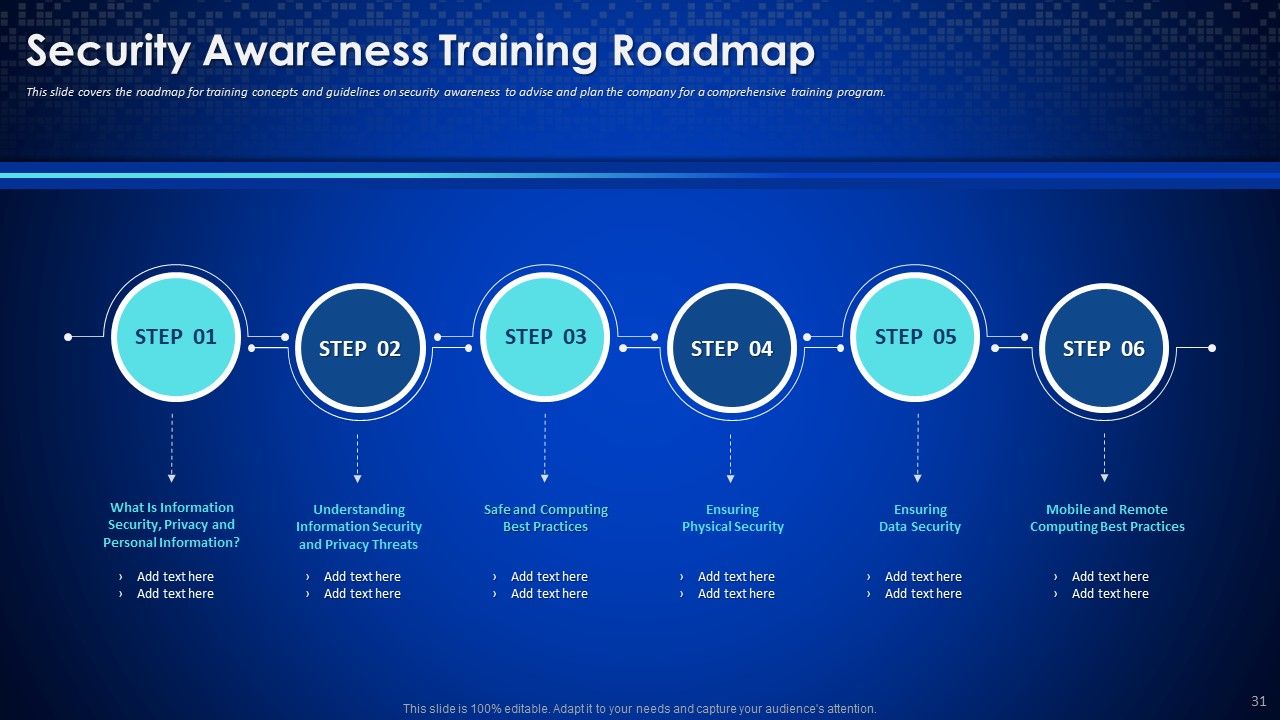
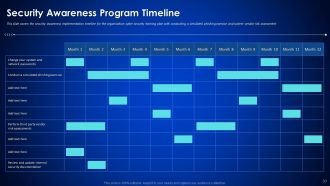
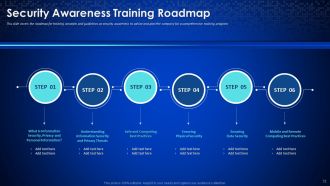
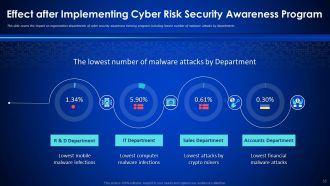
Enterprise cyber security awareness employees training complete deck
Try Before you Buy Download Free Sample Product
Audience
Editable
of Time
Our Enterprise Cyber Security Awareness Employees Training Complete Deck are topically designed to provide an attractive backdrop to any subject. Use them to look like a presentation pro.
Enterprise cyber security awareness employees training complete deck with all 54 slides:
Use our Enterprise Cyber Security Awareness Employees Training Complete Deck to effectively help you save your valuable time. They are readymade to fit into any presentation structure.
FAQs for Enterprise cyber security awareness employees
Honestly, phishing emails are probably the worst - scammers will pretend they're from your bank or even coworkers to steal your login info. Malware's another big one that can totally wreck your computer. Then there's social engineering where people just... manipulate you into giving up personal stuff. Some of these guys are actually pretty good at it, which is kinda scary. Oh, and ransomware can lock up everything you own. Best thing? Just be paranoid about weird emails, keep your stuff updated, and don't share passwords unless you're absolutely certain who you're talking to.
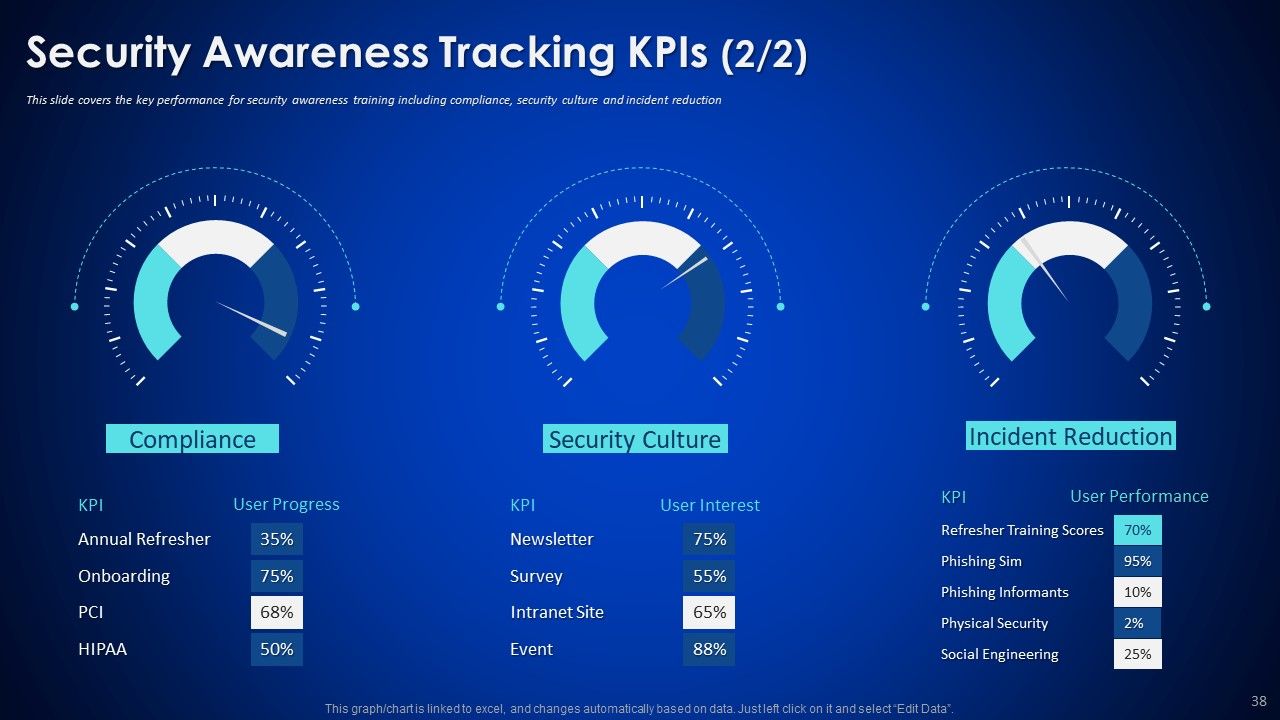
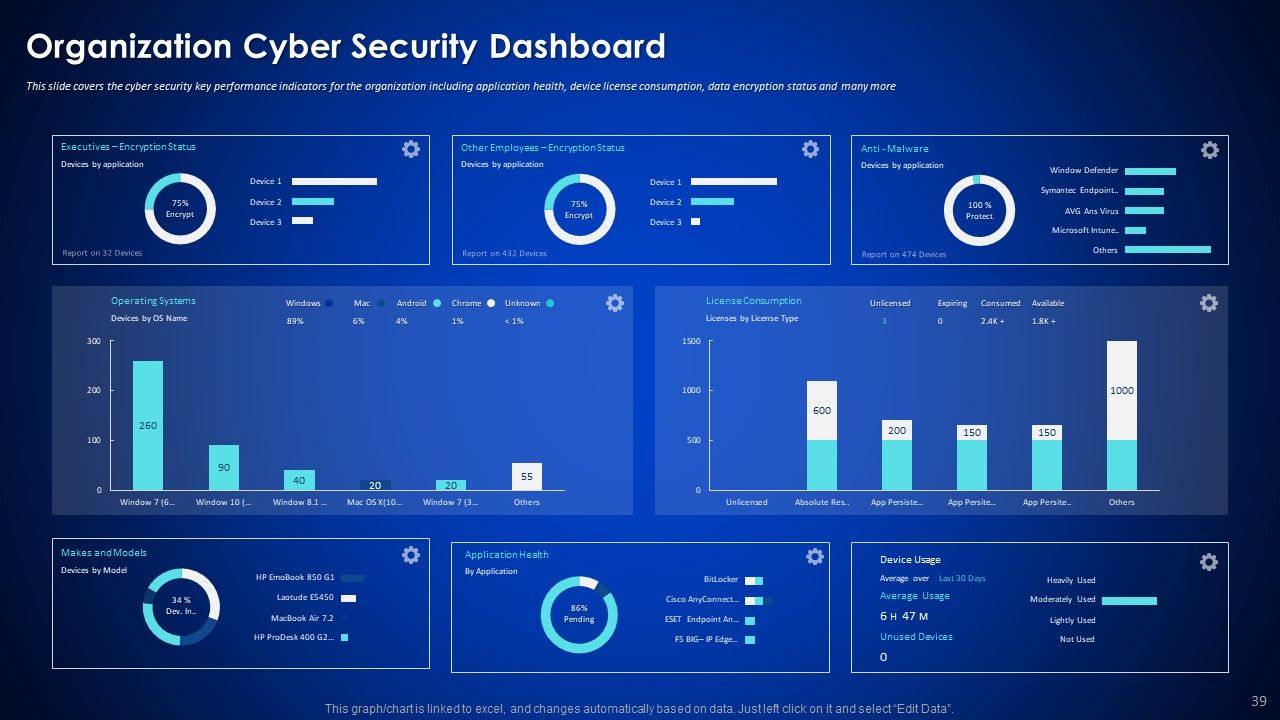
Honestly, completion rates are total BS - they don't tell you if anyone actually learned anything. What you really need is pre/post assessments to see if the info stuck. Then hit them with fake phishing emails every few months to test their reflexes. I'd track stuff like how many people click suspicious links, whether they're using better passwords, and if they're actually reporting weird incidents. The real trick is measuring what people do day-to-day, not just how they scored on some quiz. Get your baseline numbers first, then check back quarterly to see if you're moving the needle.

Honestly, phishing training is where you gotta start - that's how like 90% of breaches happen anyway. Train your people to catch sketchy emails and fake links before they click on them. I'd run quarterly phishing simulations because they're actually pretty effective for this kind of thing. Show real examples of what to look for and what red flags mean trouble. Your employees can either be your biggest problem or your best defense, so might as well make them good at it. Oh, and make sure they know who to report stuff to when something looks off. You'll definitely see results faster than you'd think.
Quarterly training is the bare minimum, but don't just check that box and call it done. People forget this stuff fast - I'd do refreshers every 3-4 months on the basics like phishing and passwords. Monthly phishing sims work great too, then you can see where your team's actually struggling. When new threats pop up or policies change, jump on training right away. Those companies doing once-a-year sessions? They're kidding themselves if they think people remember anything by month six. Oh, and keep sessions short - nobody's absorbing much after 30 minutes of threat scenarios anyway.
Honestly, skip the boring PowerPoint stuff - nobody pays attention anyway. Use real scenarios they'll actually encounter, like fake emails from your vendors instead of obvious scams. Keep it short, maybe 10-15 minutes tops. Interactive simulations work way better than lectures where people just click through for the completion badge. I'd start by asking your team what security stuff confuses them most, then build around those issues. Stories about actual breaches hit harder than abstract warnings. Oh, and update examples regularly since hackers constantly change tactics. The whole compliance checkbox mentality drives me crazy - you want them actually learning this stuff, not just getting through it.
Don't do generic training for everyone - it's a waste of time. Your IT people need the technical deep dive stuff, but marketing should focus on spotting social engineering tricks. Finance teams? Hit them hard with wire fraud scenarios since that's their biggest risk. C-suite gets the fancy targeted phishing sims because hackers love going after executives. Sales folks with laptops need mobile security basics, remote workers need to secure their home setups. Map out what each team actually faces day-to-day, then build training around those real threats instead of the usual "be careful clicking links" nonsense.
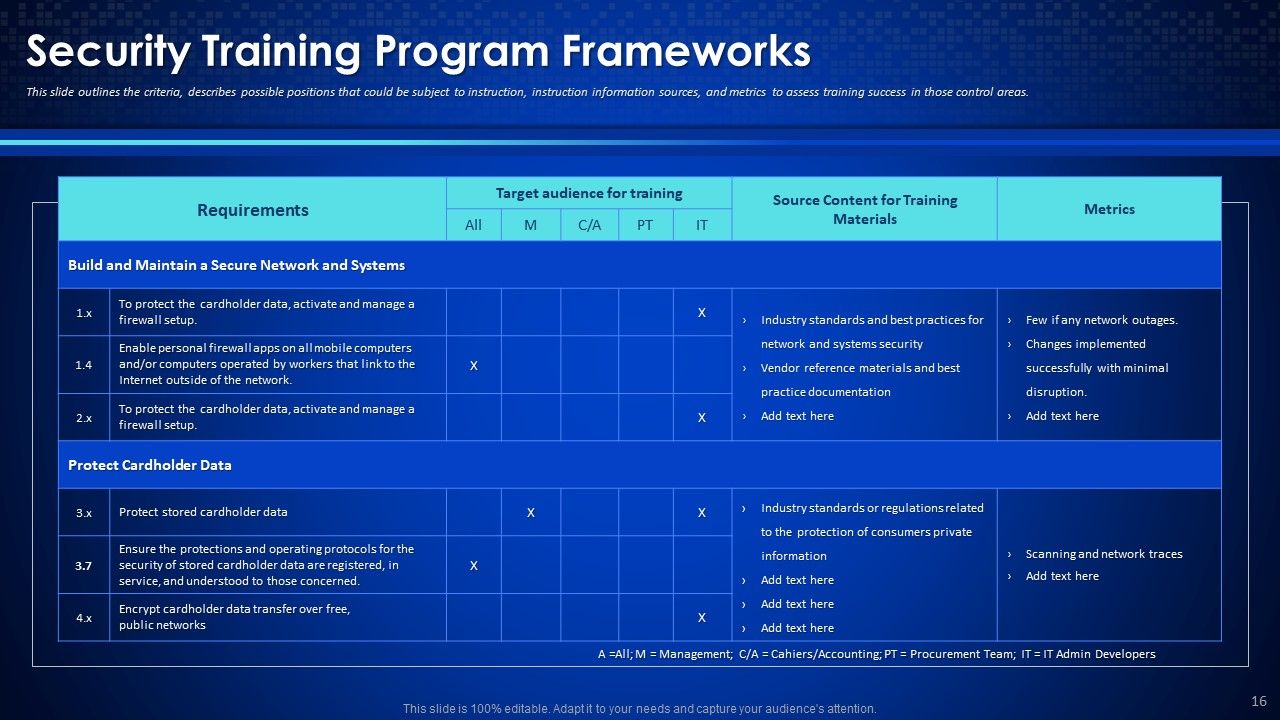
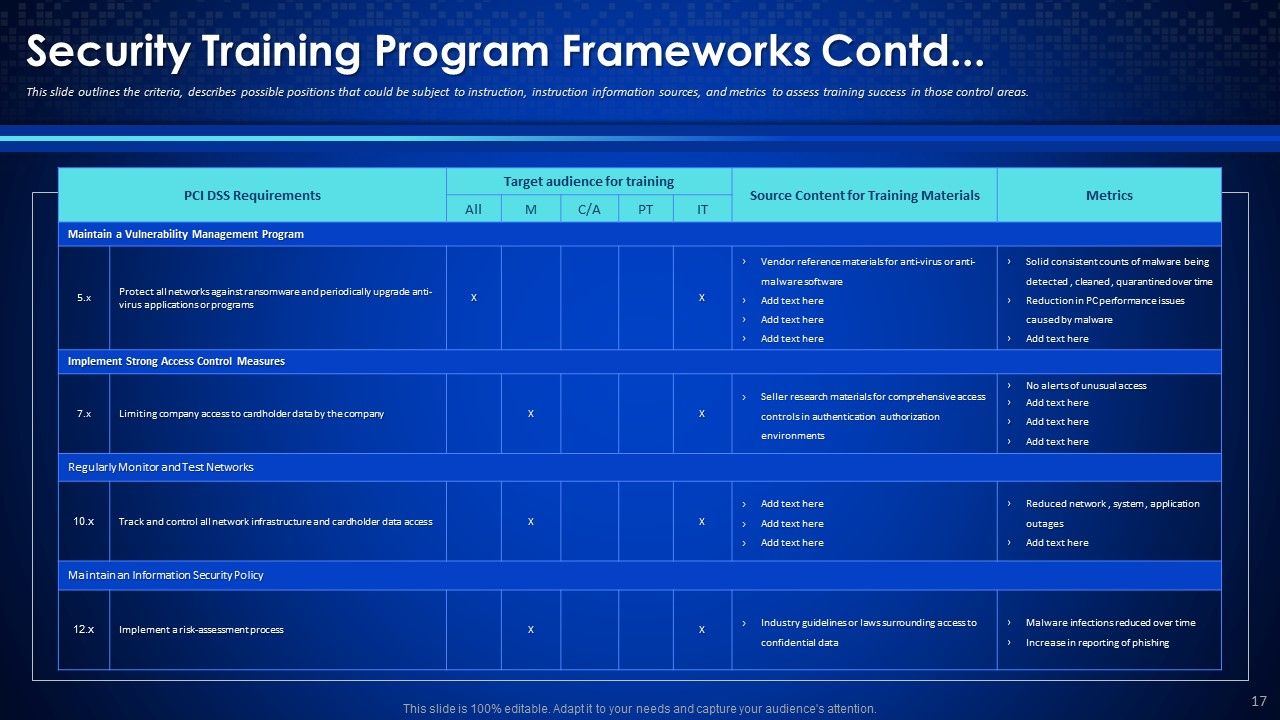
Honestly, it depends what kind of data you're dealing with. GDPR hits if you touch EU stuff - privacy training is mandatory there. Healthcare? HIPAA compliance training isn't optional, those fines will wreck you. SOX applies to public companies for cybersecurity awareness. Then there's PCI DSS if you process payments, plus NIST frameworks (government contractors love those). Oh and state laws keep getting tougher, especially for breach notifications. I'd map out what industries and data types you actually work with first. Way better to build targeted training around your specific requirements than some generic program that covers everything but helps with nothing.
Dude, think of it like turning your whole team into security guards who actually give a damn. When people see cybersecurity as their problem too (not just IT's headache), you get way better results. Phishing attempts get caught faster, passwords don't suck as much, and people actually report weird stuff instead of ignoring it. Honestly, the difference is huge - it's like having motivated employees vs ones who just don't care. Start small though - celebrate when someone catches a sketchy email. Positive vibes work way better than scaring people into compliance. Makes security feel less like a chore.
Honestly, there's so much cool stuff you can use now. Learning management systems like Moodle or TalentLMS are solid for tracking who's actually doing the training. But the real winners? Interactive simulation tools. KnowBe4 and Proofpoint let people practice catching phish emails without breaking anything - way better than boring PowerPoints. Virtual labs are clutch too. You can also throw in some gamification apps or mobile training. I'd probably start with just one or two tools that won't murder your budget, then add more later. Mix it up though - variety keeps people from zoning out completely.
So basically, your team gets to practice dealing with cyber attacks without any real consequences. Think of it like those old fire drills we used to hate, except actually useful for modern work life. They'll run through realistic situations - fake phishing emails, ransomware scares, that kind of stuff. Way better than just reading about it in some boring manual. When someone on your team gets a sketchy email, they won't freeze up or accidentally click something stupid. Start easy and make the scenarios trickier as everyone gets the hang of it. Honestly builds way more confidence than theory alone.
Honestly, you gotta track both the knowledge stuff AND whether people actually change their behavior. Pre/post test scores are good, but the real gold is watching phishing sim click rates drop over time. Track how fast your team reports sketchy emails too - that's huge. Don't ignore the boring metrics either though. Completion rates and feedback matter because if everyone's miserable during training, they're basically learning nothing. I always set up quarterly phishing tests since those show you what's actually sticking. The big win you're looking for? Fewer security incidents over time. That's when you know it's working.
Pull recent breaches like Equifax or Colonial Pipeline and walk through what went wrong. The human error stuff hits way harder than technical exploits - people actually think "oh shit, that could've been me." Set up workshops where your team analyzes the timeline and spots missed warning signs. What would you guys have done differently? Get your incident response team to share war stories if possible. That's always gold. Make sure it connects to your industry though, otherwise people zone out thinking it's irrelevant to their day-to-day.
Honestly, the main issues boil down to time crunch and skill gaps. You'll have people who struggle with basic tech sitting next to others who are super comfortable with it - so generic training just doesn't work. Most employees are already overwhelmed and view it as another task to get through rather than something helpful. Language differences complicate things too. What actually works? Break training into small chunks that relate directly to their roles. Offer it in different formats since everyone learns differently. Oh, and make sure it's actually relevant to what they do day-to-day, not some abstract scenario.
Honestly, you need a bunch of different ways to measure this stuff. Post-training surveys are obvious, but track the real numbers - like how people do on phishing tests and actual security incidents. Focus groups are gold because employees will straight-up tell you what sucked. Your IT security folks see the behavior changes firsthand, so definitely talk to them. Oh, and here's the thing everyone forgets - actually do something with the feedback you get. Update your training based on what people said, then tell them you changed it. People love knowing their complaints weren't ignored.
Honestly, it comes down to how you learn best. Online stuff is super convenient - you can pause, rewind, whatever. Way cheaper too. But in-person training? That's where you actually get to bug the instructor with random questions and do hands-on labs without your cat walking across the keyboard. The networking thing is real - I still talk to people from my last cert bootcamp. For cybersecurity, both work since you're mostly doing scenarios anyway. My take: start online for the basics, then hit up in-person workshops when things get complex. You'll focus better without Netflix tempting you.
No Reviews