Proposition de conseil en gestion du changement Diapositives de présentation Powerpoint
Try Before you Buy Download Free Sample Product
Audience
Editable
of Time
La gestion du changement se concentre sur la transition ou la transformation des objectifs, des processus ou des technologies d'une organisation. Consultez notre modèle de proposition de conseil en gestion du changement conçu avec intelligence. Il est conçu pour aider les organisations à naviguer dans le processus complexe de mise en œuvre du changement. Notre PPT sur le changement organisationnel couvre les détails des services de gestion du changement tels que l'évaluation de la préparation au changement, l'administration du changement culturel, etc. Cette proposition vise à identifier les domaines de changement et à élaborer un plan de mise en œuvre et de gestion. Notre plate-forme de conseil en gestion du changement présente des détails sur l'investissement, l'équipe d'experts, les témoignages de clients, l'accord de parrainage et les termes et conditions. En outre, il intègre le diagramme de Gantt, ainsi que le calendrier et les coordonnées de l'organisation. Cette proposition de conseil peut également aider l'entreprise dans la transformation organisationnelle et l'alignement du leadership. Téléchargez cette présentation modifiable à 100% et accédez à notre produit hautement recherché et habilement conçu.
Caractéristiques de ces diapositives de présentation PowerPoint :
Si votre entreprise doit soumettre une proposition de conseil en gestion du changement, les diapositives de présentation Powerpoint ne cherchez pas plus loin. Nos chercheurs ont analysé des milliers de propositions sur ce sujet pour l'efficacité et la conversion. Téléchargez simplement notre modèle, ajoutez les données de votre entreprise et soumettez-le à votre client pour une réponse positive.
People who downloaded this PowerPoint presentation also viewed the following :
Contenu de cette présentation Powerpoint
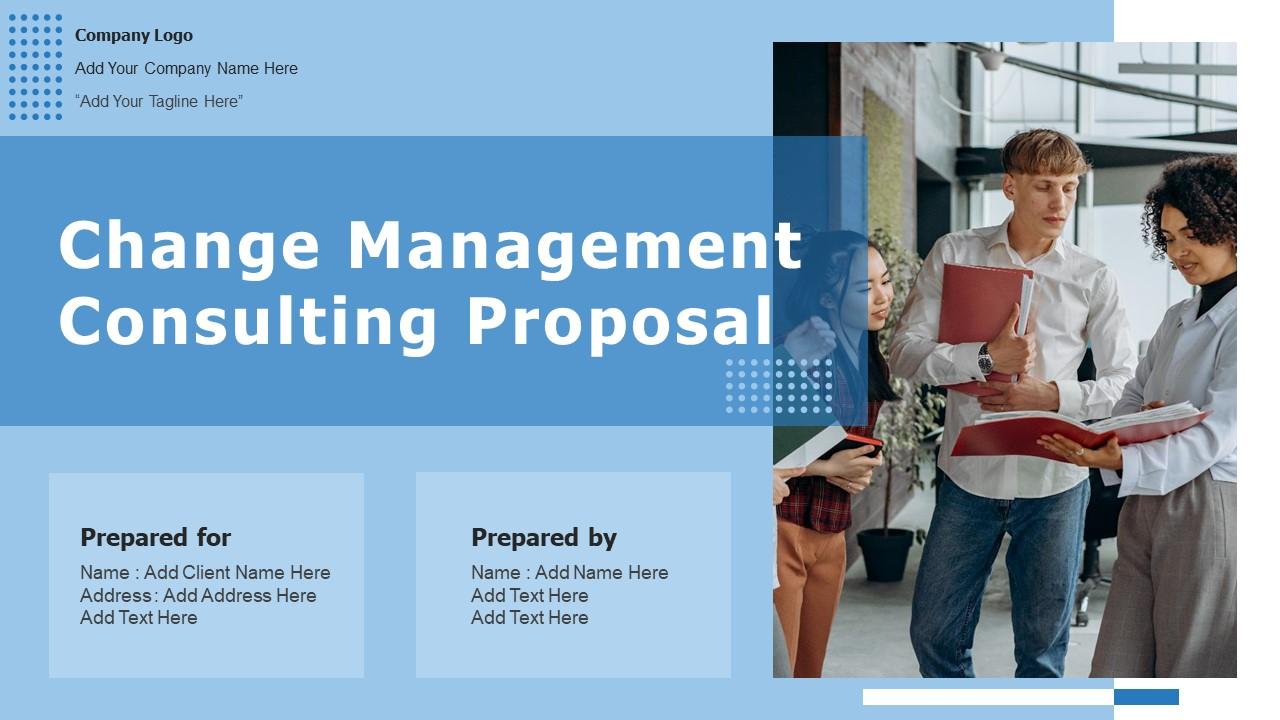
Diapositive 1 : Cette diapositive présente la proposition de conseil en gestion du changement. Commencez par indiquer le logo et le nom de votre entreprise.
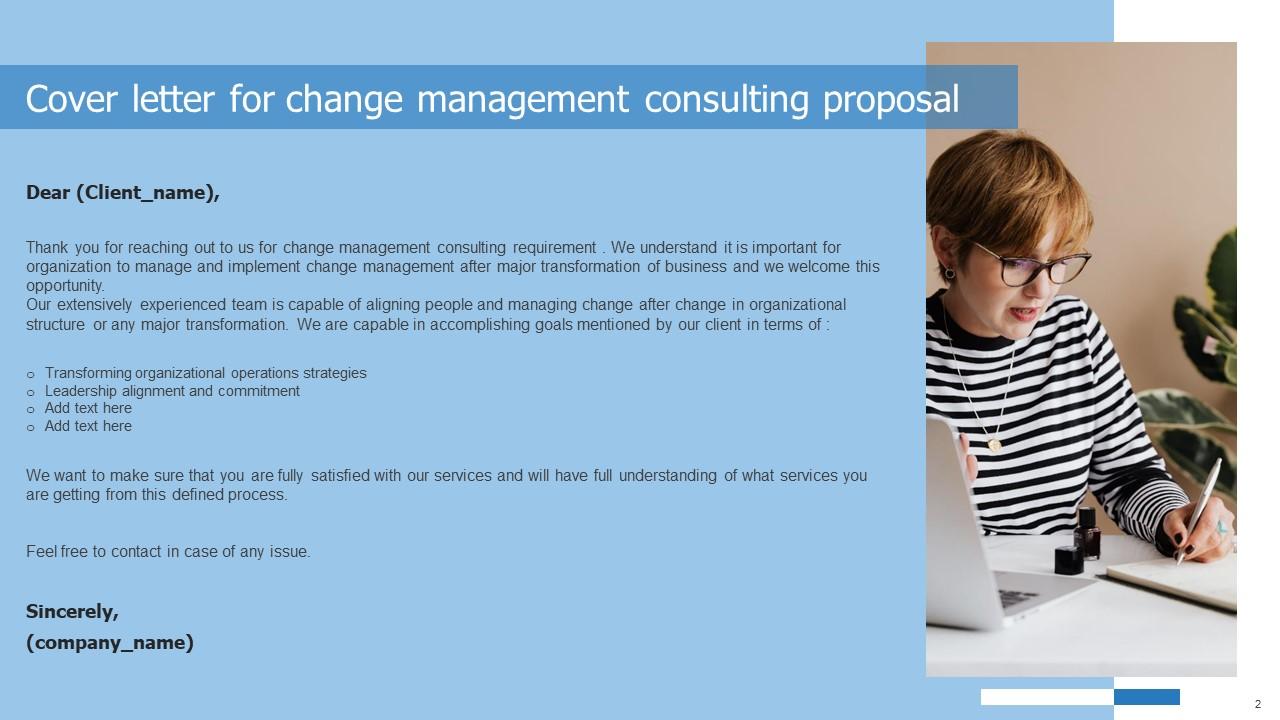
Diapositive 2 : Cette diapositive présente la lettre d'accompagnement de la présentation.
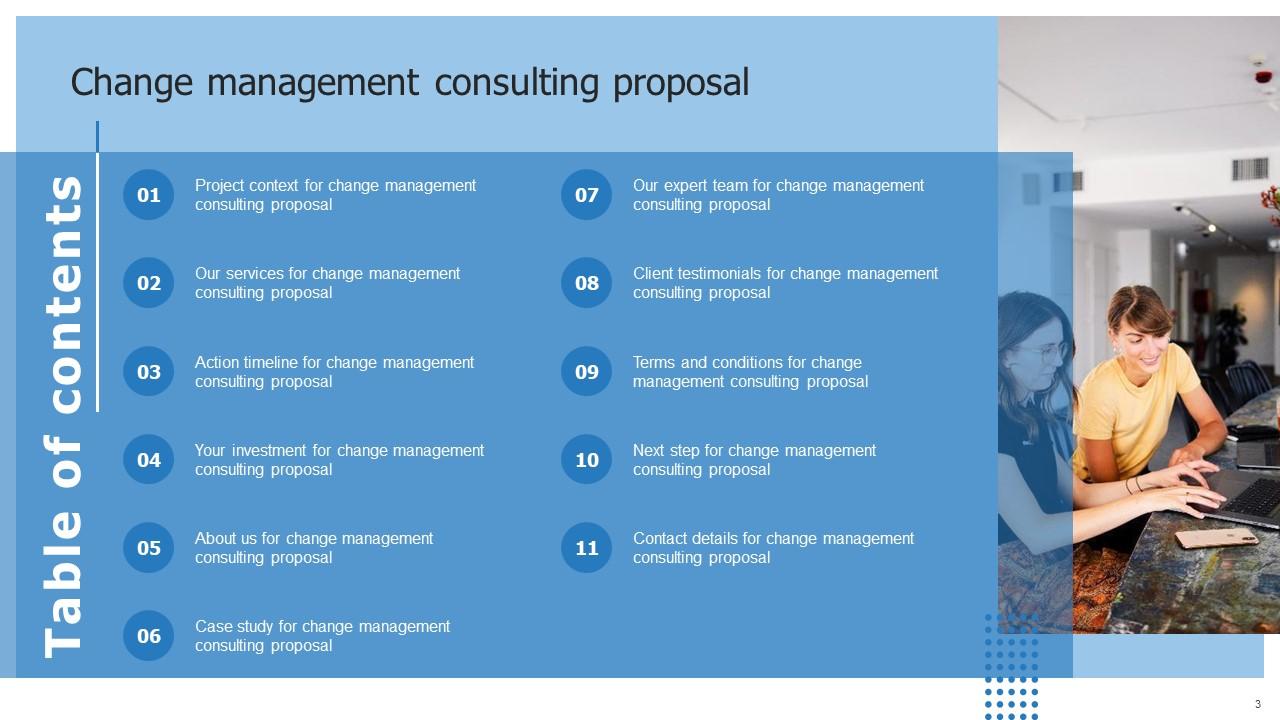
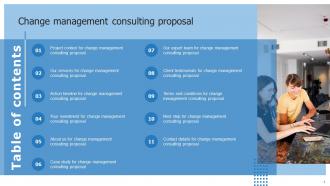
Diapositive 3 : Cette diapositive intègre la table des matières.
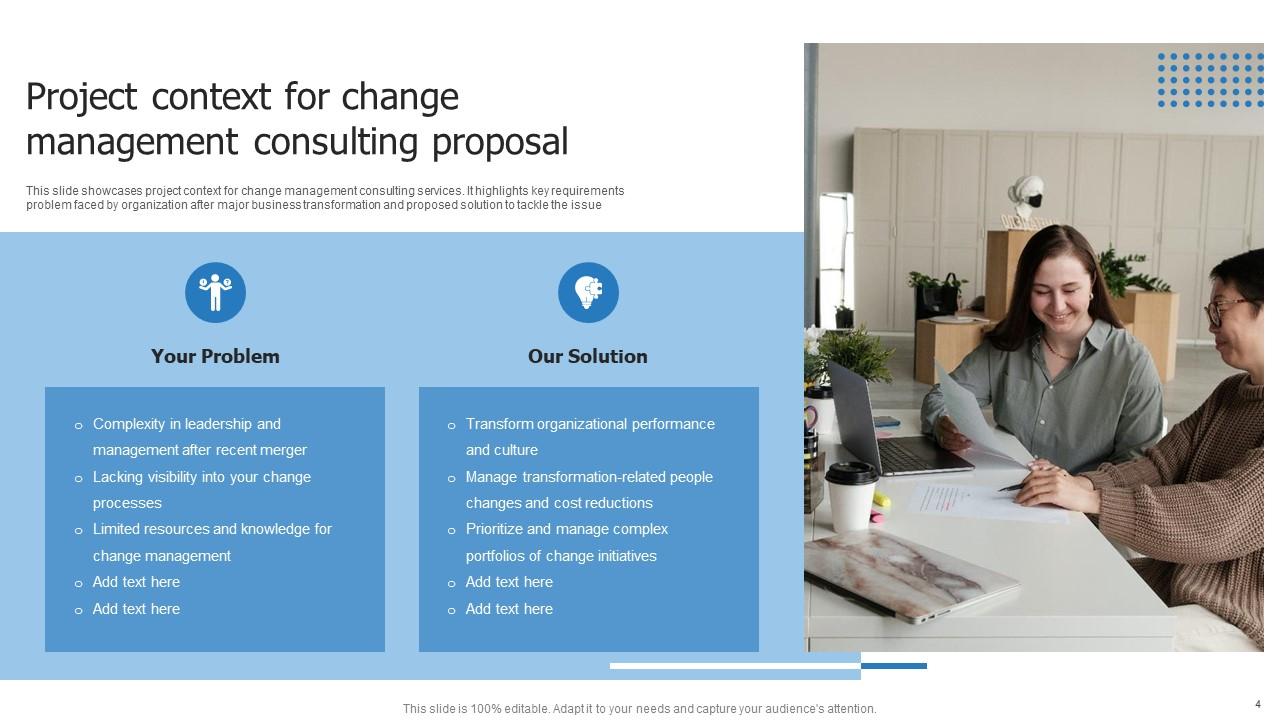
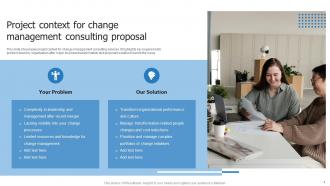
Diapositive 4 : Cette diapositive explique le contexte du projet pour la proposition de conseil en gestion du changement.
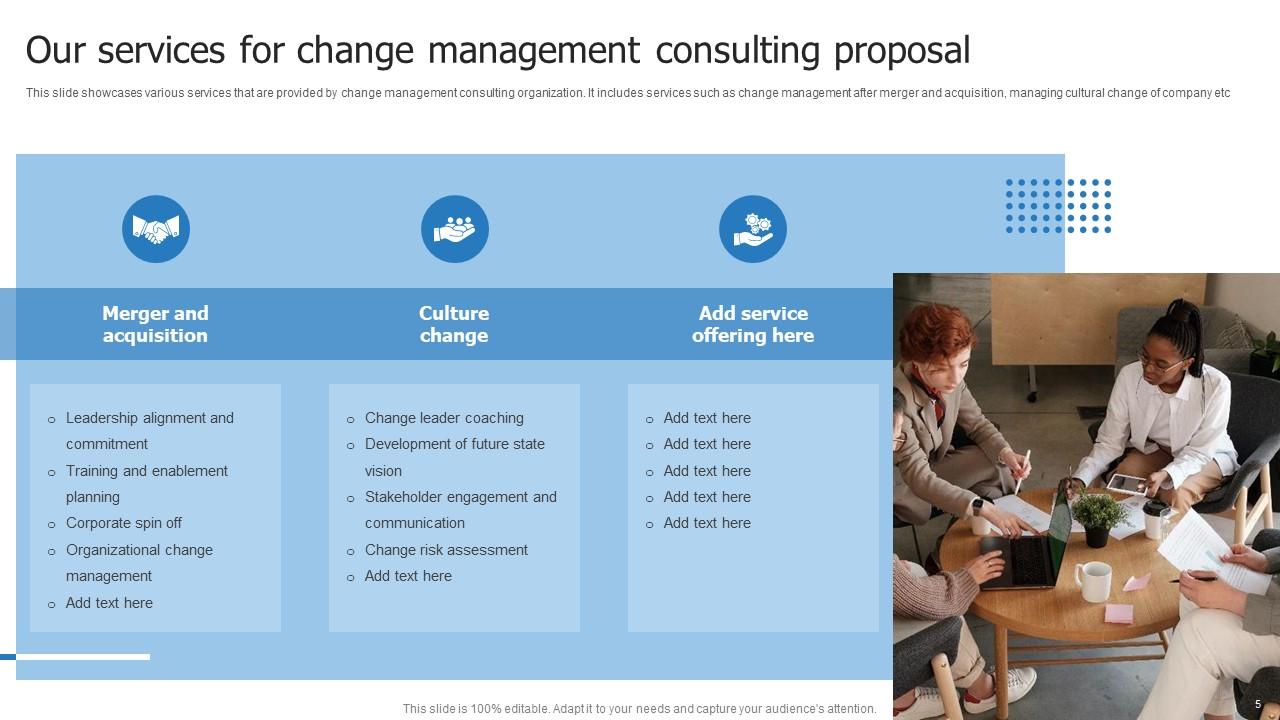
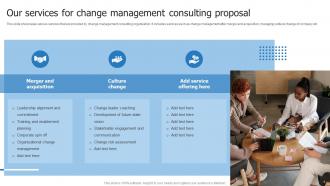
Diapositive 5 : Cette diapositive indique les différents services fournis par l'organisation de conseil en gestion du changement.
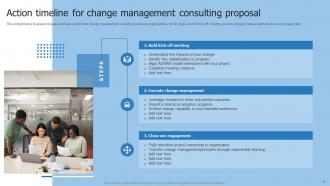
Diapositive 6 : Cette diapositive illustre le calendrier d'action pour la proposition de conseil en gestion du changement.
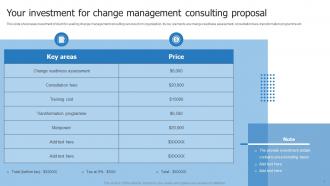
Diapositive 7 : Cette diapositive présente l'investissement du client pour bénéficier des services de conseil en gestion du changement de l'organisation.
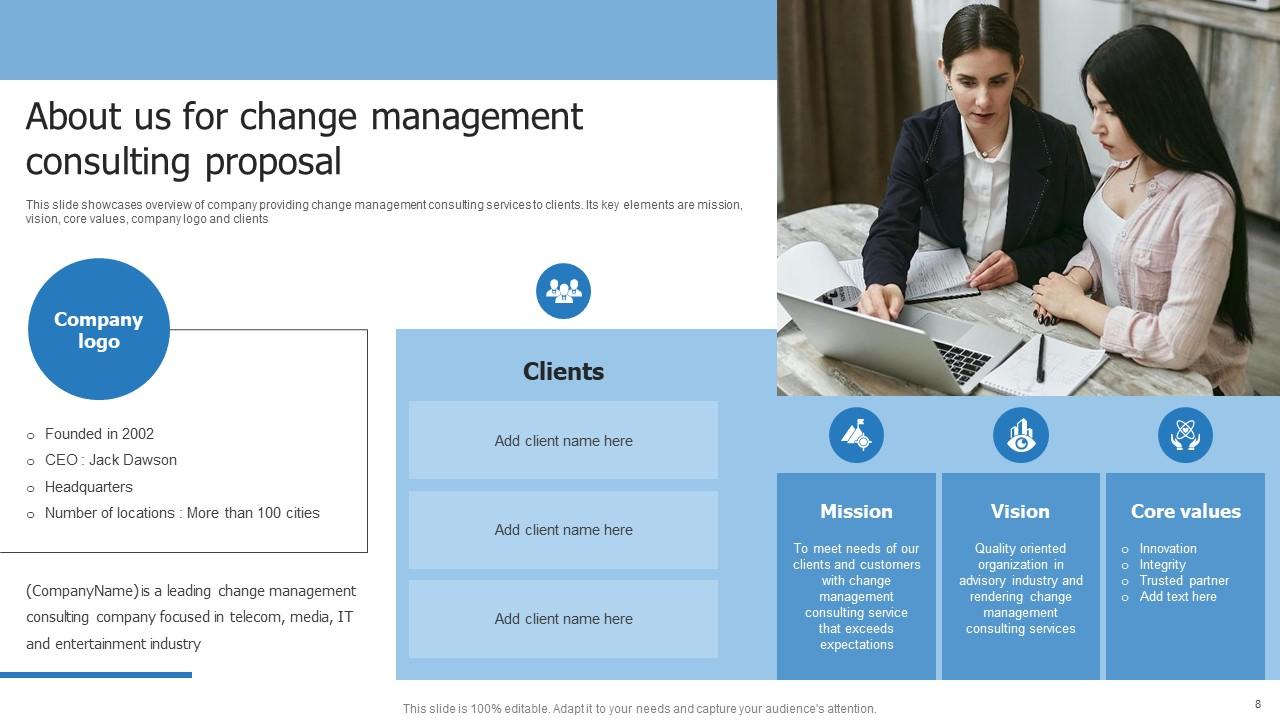
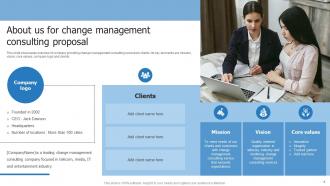
Diapositive 8 : Cette diapositive présente l'aperçu de l'entreprise fournissant des services de conseil en gestion du changement aux clients.
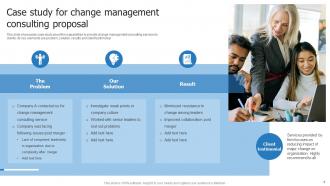
Diapositive 9 : Cette diapositive présente l'étude de cas sur les capacités de l'entreprise à fournir des services de conseil en gestion du changement aux clients.
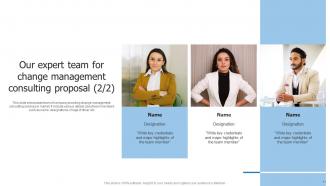
Diapositive 10 : Cette diapositive révèle l'équipe de l'entreprise fournissant des services de conseil en gestion du changement sur le marché.
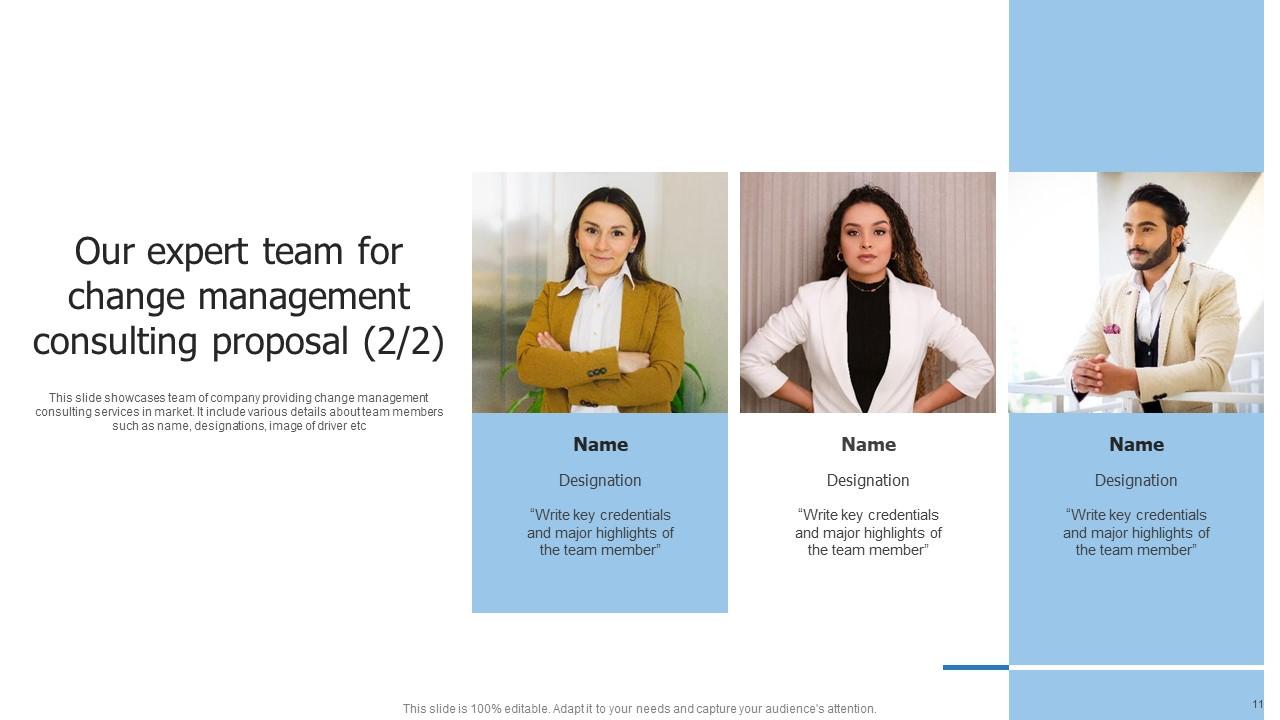
Diapositive 11 : Cette diapositive poursuit les informations relatives à l'équipe.
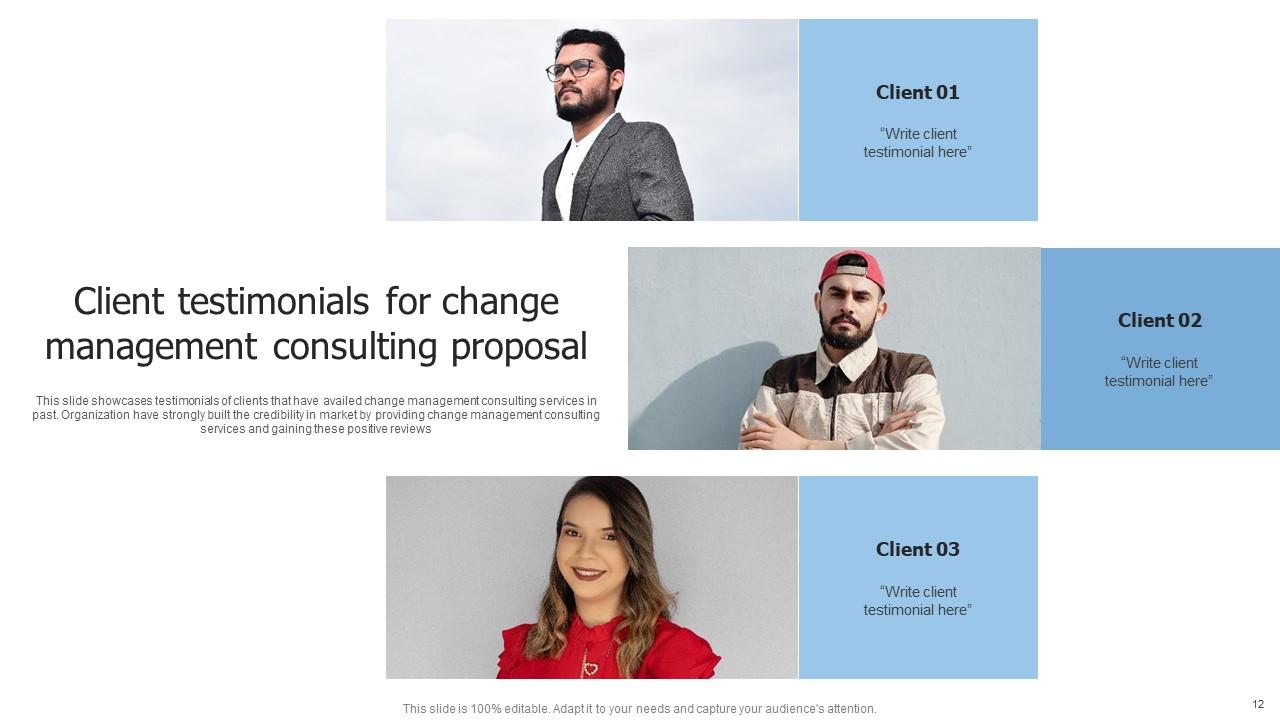
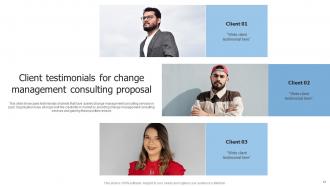
Diapositive 12 : Cette diapositive représente les témoignages de clients pour la proposition de conseil en conduite du changement.
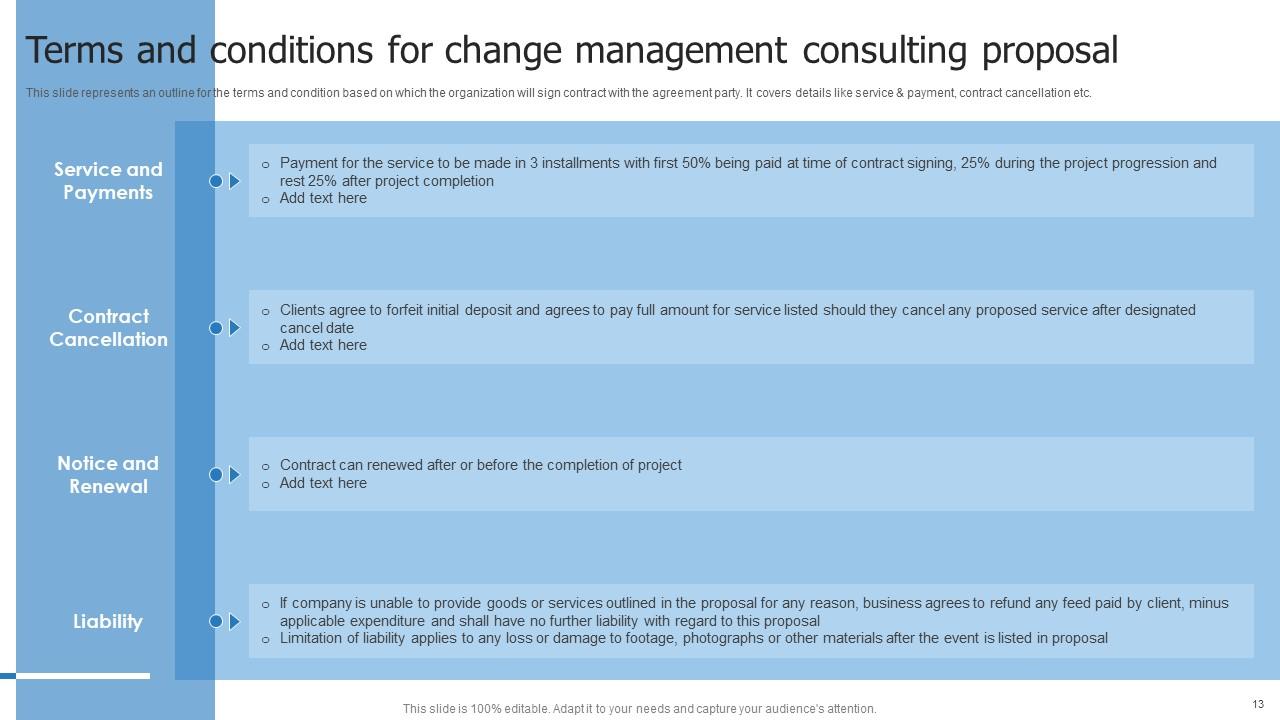
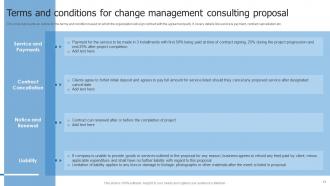
Diapositive 13 : Cette diapositive présente les termes et conditions de la proposition de conseil en gestion du changement.
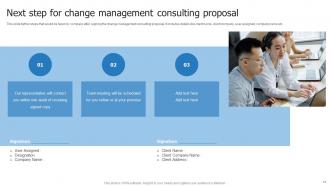
Diapositive 14 : Cette diapositive décrit la prochaine étape de la proposition de conseil en gestion du changement.
Diapositive 15 : Cette diapositive intègre les coordonnées de la proposition de conseil en gestion du changement.
Diapositive 16 : Il s'agit de la diapositive Icônes contenant toutes les icônes utilisées dans le plan.
Diapositive 17 : Cette diapositive est utilisée pour révéler des informations supplémentaires.
Diapositive 18 : Cette diapositive comprend la mission, la vision et le but de l'organisation.
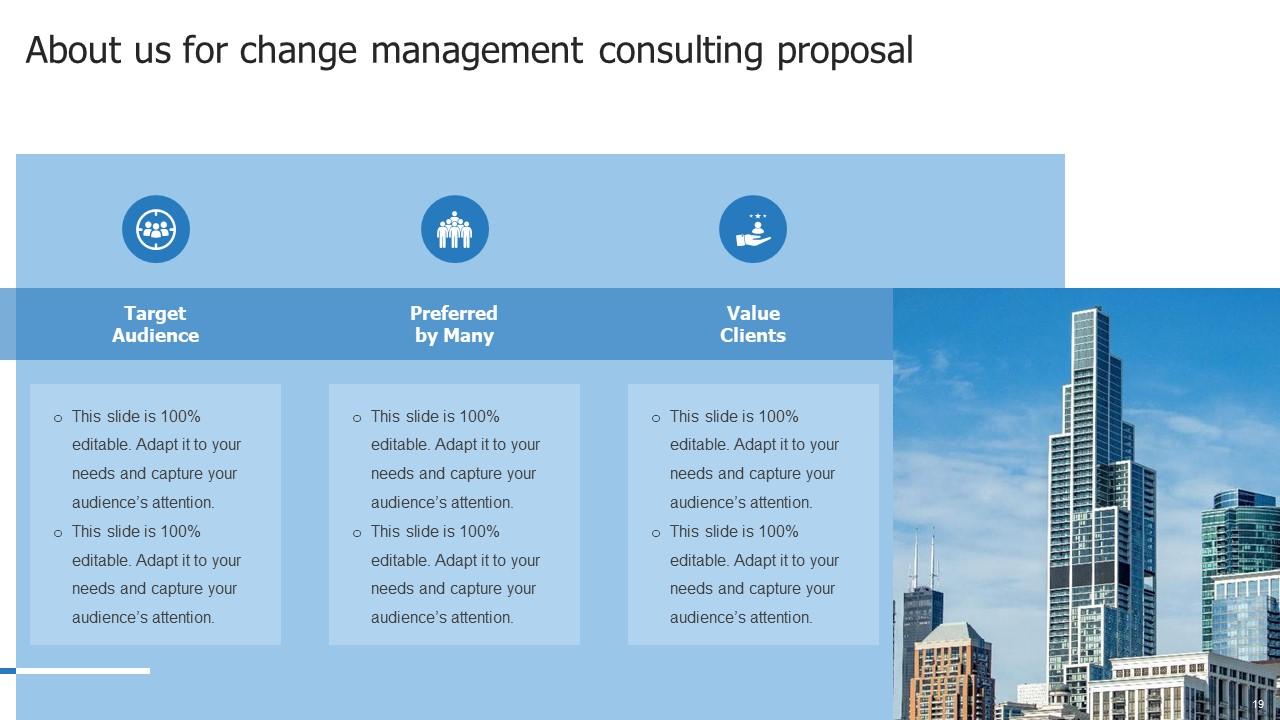
Diapositive 19 : Il s'agit de la diapositive À propos de nous contenant les informations relatives à l'entreprise.
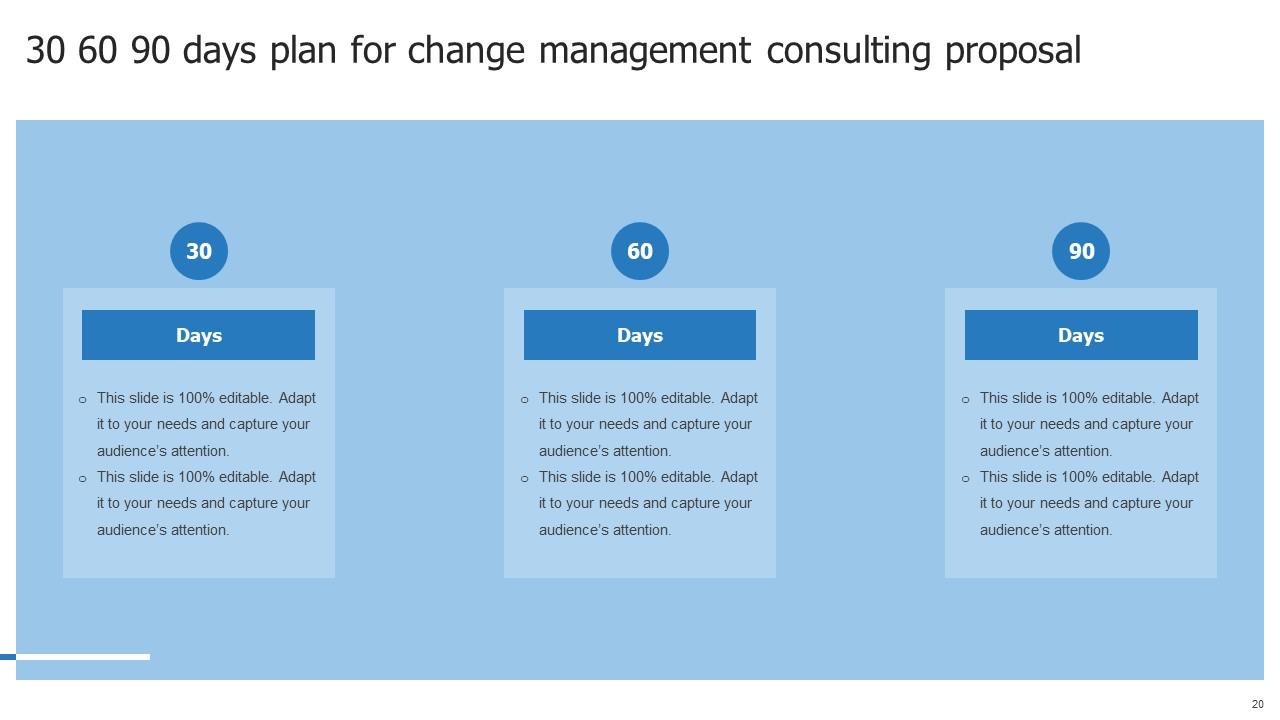
Diapositive 20 : Cette diapositive traite du plan 30 60 90 jours pour une planification efficace.
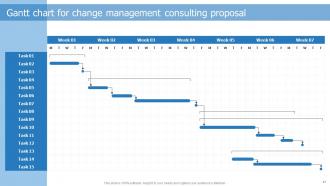
Diapositive 21 : Cette diapositive illustre le diagramme de Gantt pour la proposition de conseil en conduite du changement.
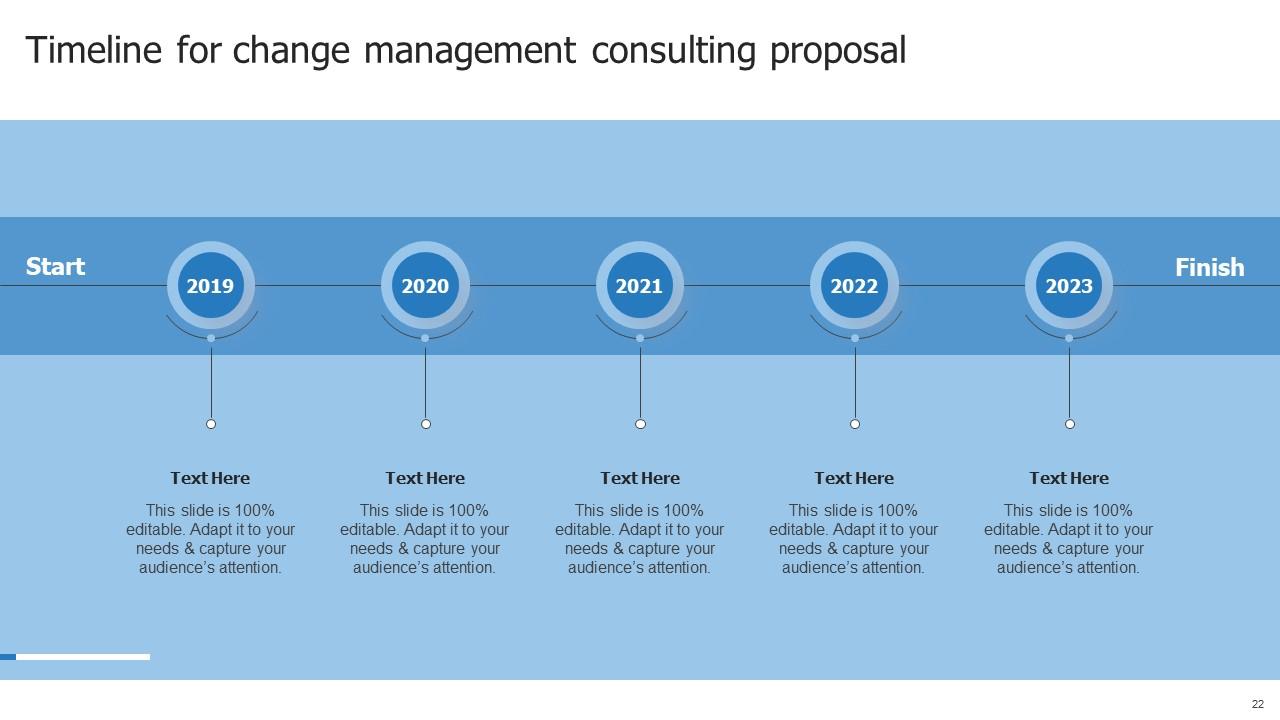
Diapositive 22 : Cette diapositive présente le calendrier de la proposition de conseil en gestion du changement.
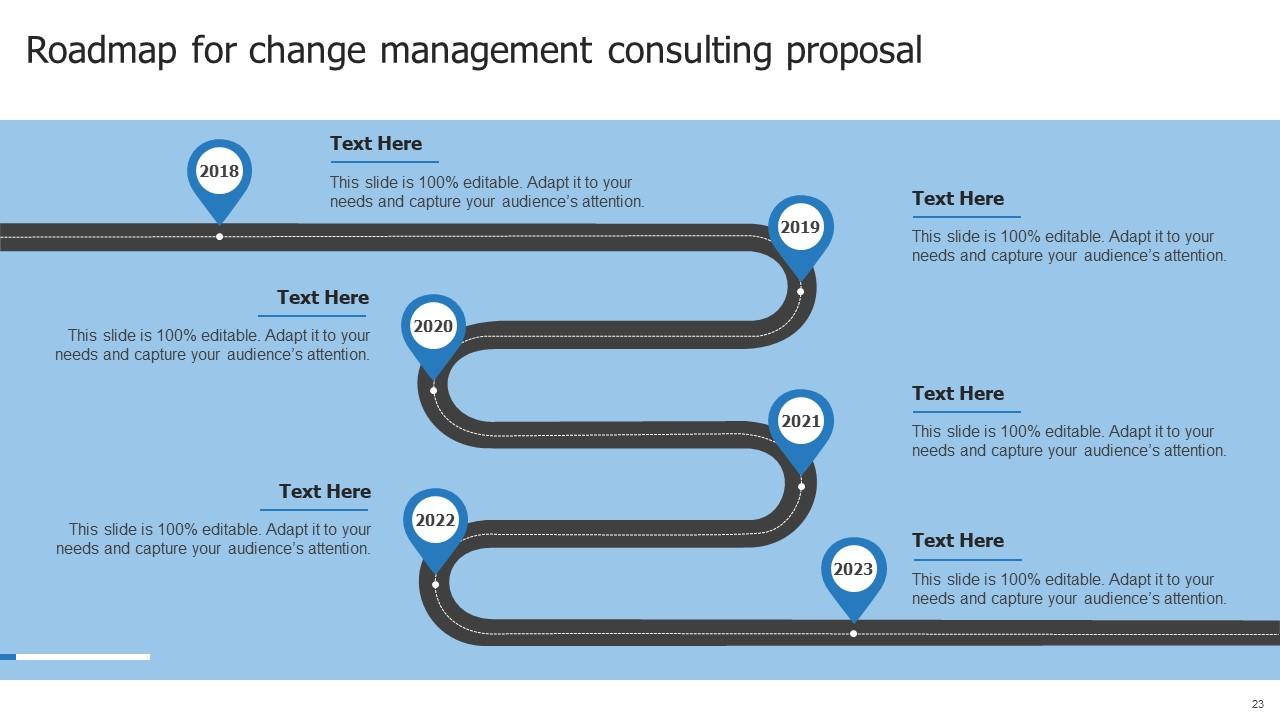
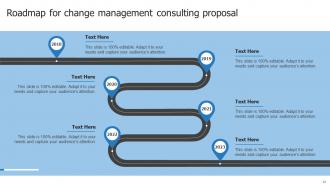
Diapositive 23 : Cette diapositive présente la feuille de route pour la proposition de conseil en gestion du changement.
Diapositives de présentation Powerpoint de la proposition de conseil en gestion du changement avec les 28 diapositives :
Utilisez nos diapositives de présentation Powerpoint de proposition de conseil en gestion du changement pour vous aider efficacement à gagner un temps précieux. Ils sont prêts à l'emploi pour s'adapter à n'importe quelle structure de présentation.
FAQs for Change Management Consulting Proposal
Ok so here's what's worked for me - start by explaining WHY you're changing things, because honestly people hate being kept in the dark. Get your key players on board first. Don't be shocked when people push back - it's normal and sometimes they have good points. I'd suggest trying pilot programs if you can swing it. Quick wins are huge for momentum. Training is super important too, otherwise your team feels lost. Oh and leadership really needs to walk the walk, not just talk about it. Basically think marathon, not sprint.
Ugh, culture stuff is SO underrated but it's honestly make-or-break for change projects. Like, if your company loves trying new things, you're golden. But hierarchical, play-it-safe places? Good luck with that resistance. You've gotta figure out how teams actually communicate and make decisions first - some need the CEO's blessing for everything, others work better bottom-up. I always tell people to scope out the culture before launching anything big. Way easier to work with what you've got than fight against years of "that's how we do things here."
Honestly, communication will make or break this whole thing. People freak out when they don't understand the "why" - and I mean really freak out. Leadership always thinks everyone just gets it automatically (spoiler: they don't). Start talking about it way earlier than feels necessary. Use every channel you can think of. Email, meetings, that random hallway conversation - whatever works. Oh, and make it a two-way street! Let people ask questions and actually listen to their concerns. Trust me, you'll think you're over-communicating, but you're probably not doing enough. Vague messaging just creates drama you don't need.
Honestly? Get everyone involved in the "why" right from the beginning. Be straight up about what's happening - people hate being blindsided. Actually listen when they voice concerns instead of just nodding along (I've watched so many managers mess this up). Let them contribute ideas where it makes sense. Short version: when people feel heard and see their input actually matters, they'll help drive the change instead of fighting it. Oh, and don't sugarcoat the uncomfortable stuff - that always backfires later.
Honestly? People hate change, so expect pushback right away. Communication usually sucks too - like, nobody explains WHY things need to shift. Plus if leadership isn't actually backing you up (just saying they do), you're screwed. Start small though. Get some quick wins first, then build from there. Don't try changing everything at once - I've watched that crash and burn so many times. Listen when people complain instead of brushing them off. Half the time they're worried about losing their jobs or getting dumped on with more work. Valid concerns you can actually fix if you pay attention.
Honestly, the right tech makes change management so much smoother. Project management platforms let you track who's actually adopting stuff and send updates without constantly bugging people. Analytics dashboards are a game-changer - they show exactly where pushback is happening instead of you just guessing. Digital training modules work well too since people can jump in whenever. I've watched teams spin their wheels for weeks targeting the wrong problems before they had decent data to work with. Just don't go overboard with tools that'll frustrate everyone. Start simple with something that handles communication and tracking, then add more later.
Track the obvious stuff - adoption rates, training completion, how fast people get up to speed. But honestly? The satisfaction piece matters way more than most people think. I've seen changes hit every technical milestone and still crash because everyone hated it. Survey people about communication too - are your key messages actually getting through to different teams? Don't go overboard though. Pick maybe 4-5 metrics tops and check in weekly with your change champions. You'll drown if you track everything.
Okay so basically Kotter's this big top-down thing for massive organizational changes - you know, create urgency, build coalitions, all that strategic stuff. ADKAR's completely different though. It focuses on individual people and what they actually need to change: Awareness, Desire, Knowledge, Ability, Reinforcement. Way more practical honestly. Kotter works great if you're restructuring the whole company or whatever, but it can feel like overkill for smaller stuff. ADKAR's perfect when you're rolling out new processes and need your team to actually get on board. I'd probably go with ADKAR most of the time - it just makes more sense for day-to-day changes.
People hate losing what they already have - that's the biggest thing. Plus there's this weird thing where teams automatically reject outside ideas just because they didn't think of them first. Honestly, I've seen grown adults act like toddlers over this stuff. When everything feels chaotic and there's no clear timeline, people just shut down. So explain the reasoning behind changes repeatedly (I know, annoying but necessary). Let them help plan when you can. Small victories really do work - gives them proof things aren't falling apart. Oh, and don't pretend the discomfort isn't real.
Honestly, celebrating those quick wins publicly is huge - people need to see progress happening. Communication can't stop after week one though. I've watched so many good changes just die because everyone assumes it'll keep rolling on its own (spoiler: it won't). Your change champions? Keep them fired up since they're doing half your work spreading the word. Check in regularly, catch problems early. Don't pop champagne until you're actually there. Oh, and build in ways for people to give you feedback - you'll need to pivot sometimes. Do a 30-day check-in ASAP.
Okay so stakeholder analysis is huge - basically you're mapping out who's got power and who gives a damn about your project. List everyone who's affected first. Then figure out their influence level and whether they're for or against you. I've watched so many initiatives crash because someone missed a random VP who decided to kill everything at the last second. Communication strategy flows from this - you'll know exactly where to spend your time and energy. Some people will champion your stuff, others will fight it. The trick is spotting the ones who can actually torpedo your work before they do.
Feedback loops are like having a GPS for your changes - you get constant updates on whether you're headed the right way or completely off track. You're gathering input from employees, watching what actually works (and what's bombing), then adjusting instead of just bulldozing ahead with your original plan. Honestly, most managers skip this part and wonder why everything falls apart later. Set up regular check-ins or quick pulse surveys so you can pivot fast when needed. It's way better than finding out six months later that nobody was on board.
Look, getting buy-in early is huge - explain WHY you're changing things instead of just dumping it on people. Listen when they complain (even if it's annoying) and actually address their concerns. Don't rush it either, that always blows up in your face. Training matters because half the pushback comes from people freaking out they won't know how to do their jobs anymore. Find your office influencers first - once they're cool with it, everyone else usually follows. Oh, and celebrate the small stuff along the way. Builds momentum.
Look, agile companies can't really exist without good change management - it's what makes the whole thing work. Your team needs to be ready to pivot when markets shift or opportunities pop up. I've noticed the best agile orgs don't freak people out with sudden changes because they've already built that adaptability into how they operate. Honestly, most companies wait too long to think about this stuff. You want your employees comfortable with change before you actually need them to be. Short version: start prepping your teams now so they're not resistant when you need to move fast later.
Honestly, bad change management is like a poison that spreads through your whole team. People stop trusting leadership and just mentally check out. I've watched entire departments where everyone rolls their eyes the second someone mentions "new initiatives" - it's pretty brutal to see. Your best employees will bolt for companies that don't suck at this stuff. Turnover goes up, productivity tanks. The solution isn't rocket science though. Just tell people WHY you're changing things and actually get their input instead of dropping decisions on them from above.
-
Wow, never been this impressed with any online service provider. Really appreciate the customer support all along from the navigation to purchasing the right products.
-
The content is very helpful from business point of view.