


Implementações de gerenciamento de mudanças Slides de apresentação em PowerPoint
Implementações de gerenciamento de mudanças Os slides de apresentação em PowerPoint são projetados para mostrar as etapas de implementação de um processo de gerenciamento de mudanças. Incorpore slides PPT do processo de transformação para gerenciar o processo de mudança. Mudança e transição O deck completo do PowerPoint contém um conjunto de slides prontos para usar, como plano de transição de mudança, curva de transição de mudança, plano de comunicação de gerenciamento de mudança, treinamento, cronogramas, impulso de sustentação, modelo de gerenciamento de mudança. Demonstrar as etapas necessárias, ou seja, reconhecer as mudanças, desenvolver os ajustes necessários, treinar os funcionários com os visuais PPT do plano de transformação do negócio. Todos os modelos são projetados de forma eficiente para um propósito específico. Isso permite que os usuários criem uma apresentação muito rapidamente. O slide do PowerPoint de estratégia de mudança também vai bem com vários tópicos relacionados, como processo de controle de mudança, mudança estratégica, gestão de desempenho, ferramentas e técnicas de gestão de mudança organizacional, plano de transição, melhoria contínua, controle de negócios e projetos de transformação. Baixe o layout de apresentação do plano de mudança organizacional para identificar o escopo da mudança e medir o progresso.
Implementações de gerenciamento de mudanças Os slides de apresentação em PowerPoint são projetados para mostrar as etapas ..







-

- Google Slides is a new FREE Presentation software from Google.
- All our content is 100% compatible with Google Slides.
- Just download our designs, and upload them to Google Slides and they will work automatically.
- Amaze your audience with SlideTeam and Google Slides.
-

Want Changes to This PPT Slide? Check out our Presentation Design Services
-

- WideScreen Aspect ratio is becoming a very popular format. When you download this product, the downloaded ZIP will contain this product in both standard and widescreen format.
-

- Some older products that we have may only be in standard format, but they can easily be converted to widescreen.
- To do this, please open the SlideTeam product in Powerpoint, and go to
- Design ( On the top bar) -> Page Setup -> and select "On-screen Show (16:9)” in the drop down for "Slides Sized for".
- The slide or theme will change to widescreen, and all graphics will adjust automatically. You can similarly convert our content to any other desired screen aspect ratio.
Compatible With Google Slides

Get This In WideScreen
You must be logged in to download this presentation.


Do you want to remove this product from your favourites?
Recursos desses slides de apresentação do PowerPoint:
Apresentando este conjunto de slides com Implementações de gerenciamento de mudanças Slides de apresentação do PowerPoint. Baixe PPT profissional em widescreen e tela padrão. A apresentação em PowerPoint compreende um total de 27 slides com conteúdo extensivamente pesquisado e design profissional. A apresentação do PowerPoint é uma obra-prima visual com modelos profissionais de PPT, gráficos baseados em dados, tabelas e tabelas. Isso é totalmente editável para que você possa fazer alterações nas cores, dados e fontes, se necessário. Os slides PPT são totalmente compatíveis com o Google Slides. Pode ser facilmente convertido em formato JPG ou PDF.

People who downloaded this PowerPoint presentation also viewed the following :
Conteúdo desta apresentação em PowerPoint
Slide 1 : Este slide apresenta as implementações de gerenciamento de mudanças. Coloque o nome da empresa etc. aqui.
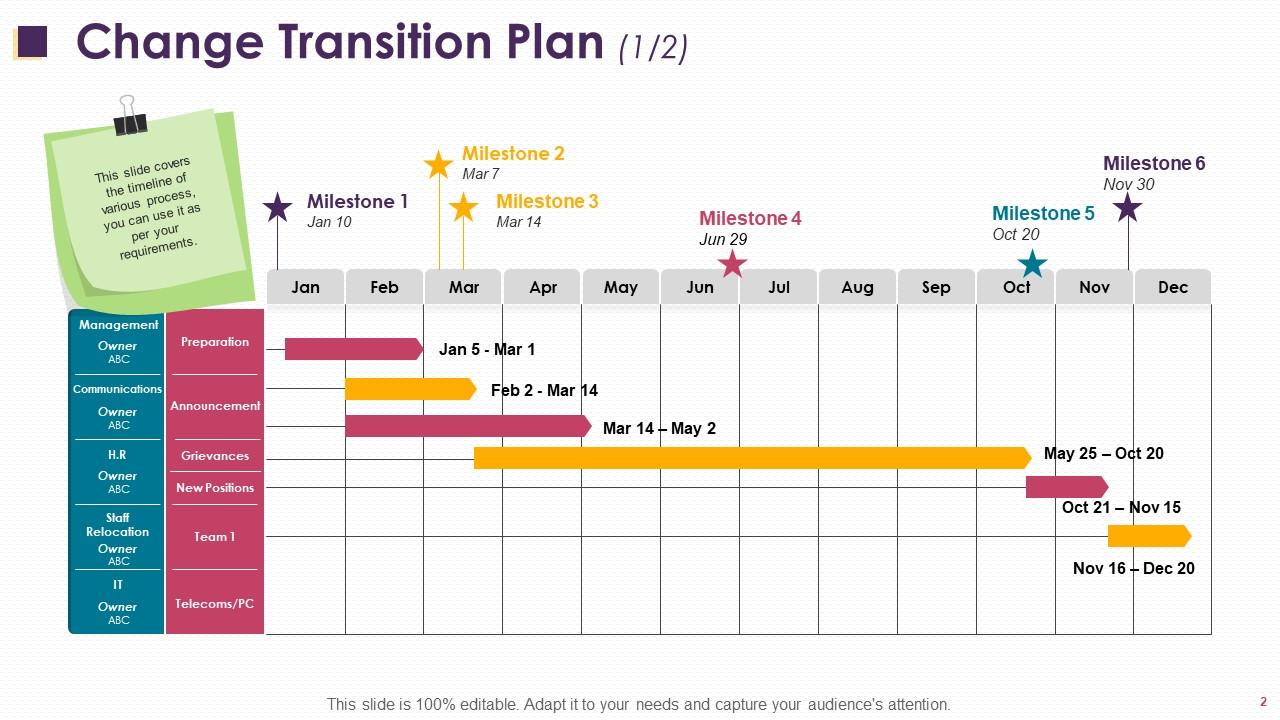
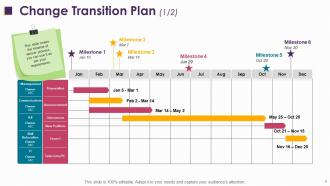
Slide 2 : Este slide apresenta uma linha do tempo que mostra o Plano de Transição de Mudança em termos de meses e anos. Use-o de acordo com sua necessidade.
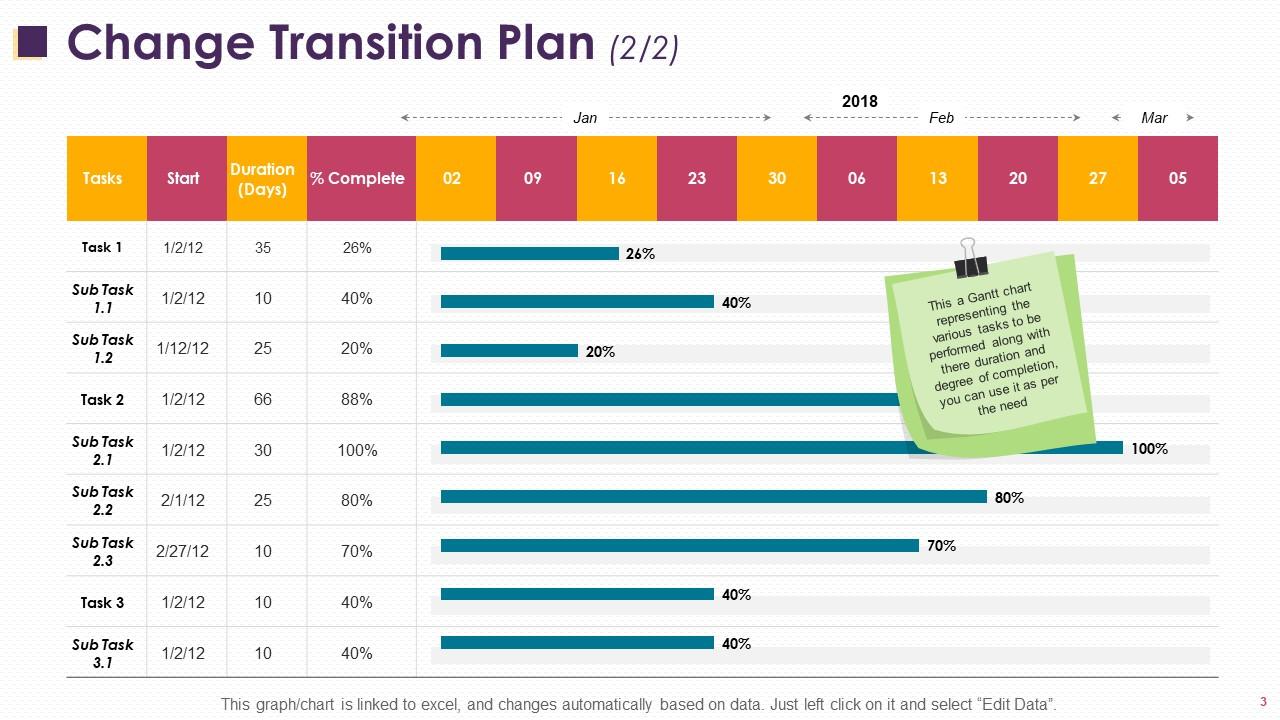
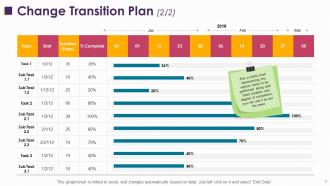
Slide 3 : Este é um slide do Gráfico de Gantt que mostra o Plano de Transição de Mudança. Este gráfico de Gantt representa as várias tarefas a serem realizadas junto com sua duração e grau de conclusão, você pode usá-lo conforme sua necessidade.
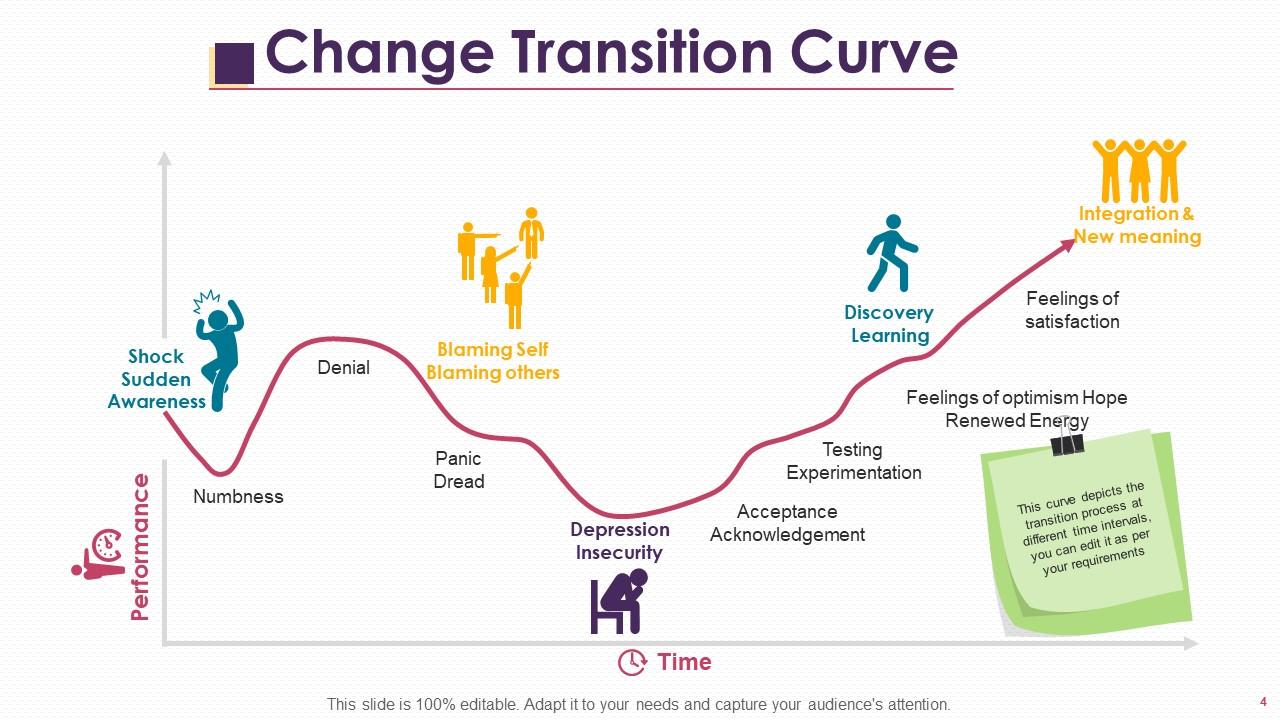
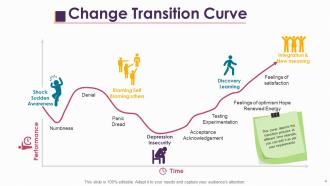
Slide 4 : Este slide exibe o diagrama da Curva de Transição de Mudança que descreve o processo de transição em diferentes intervalos de tempo. Você pode editá-lo de acordo com seus requisitos.
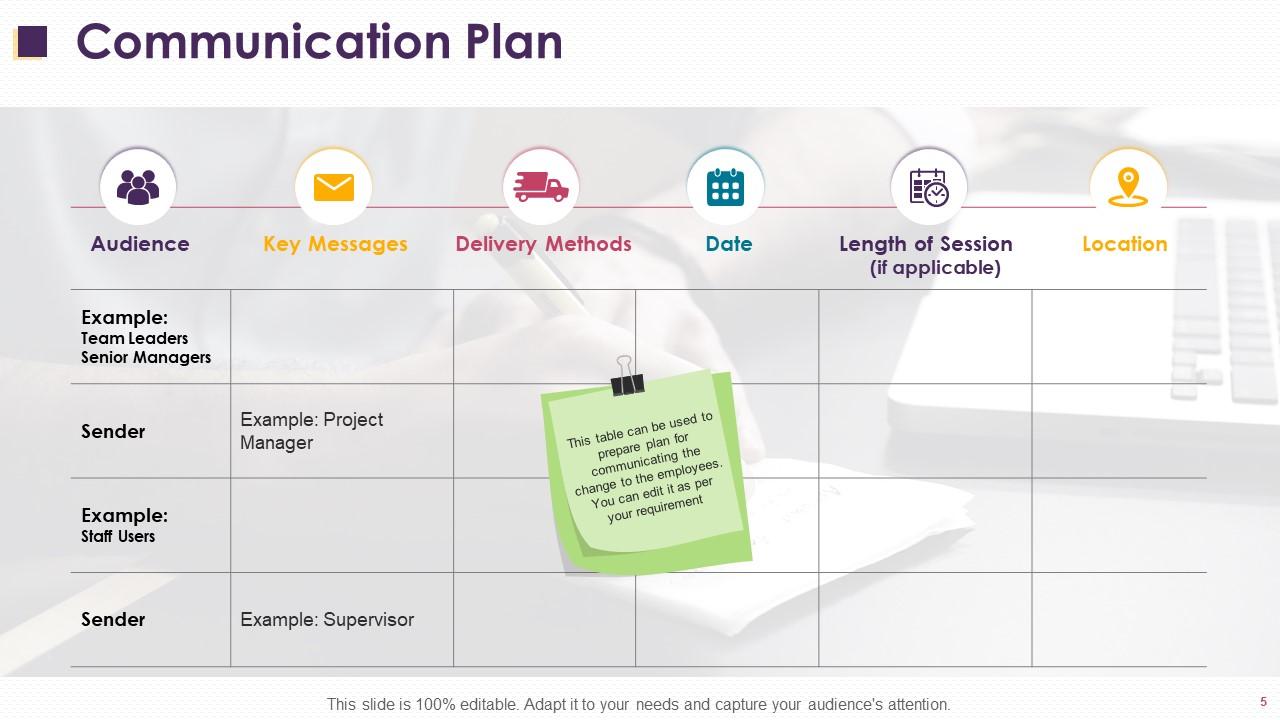
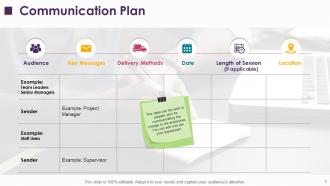
Slide 5 : Este slide mostra a tabela do Plano de Comunicação. Esta tabela pode ser usada para preparar um plano para comunicar a mudança aos funcionários. Você pode editá-lo de acordo com sua exigência.
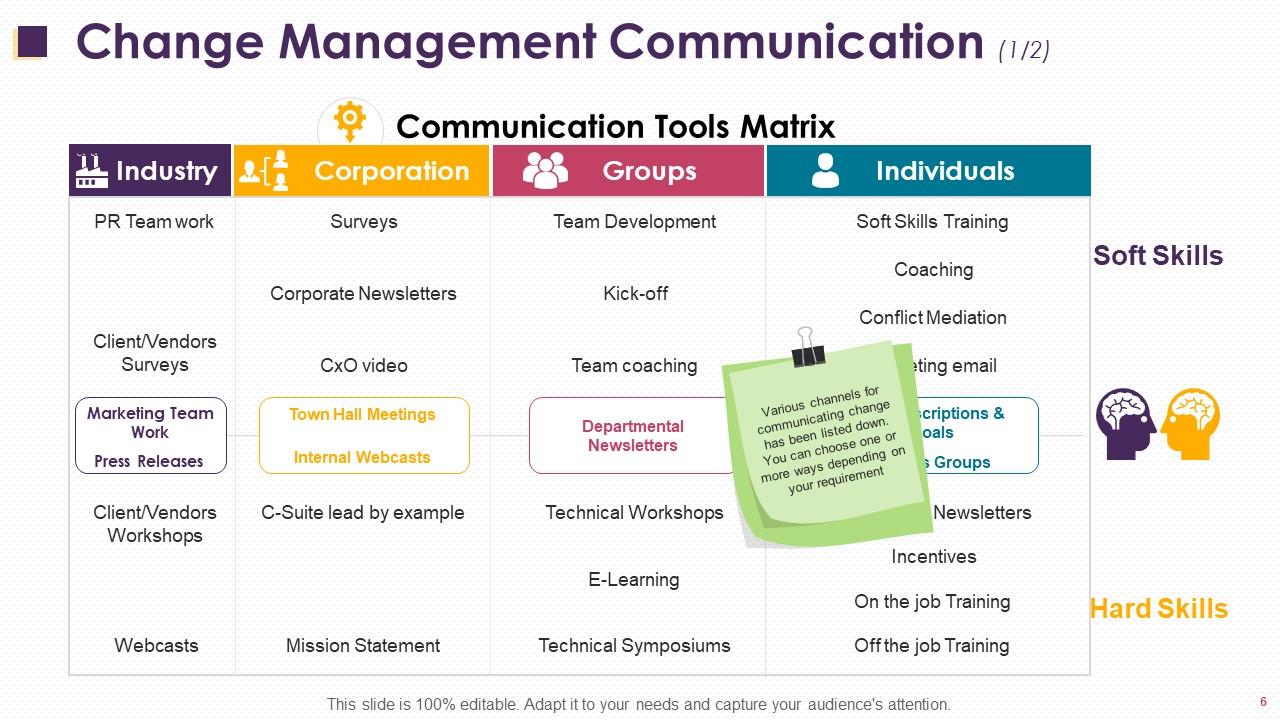
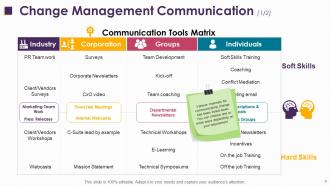
Slide 6 : Este slide mostra a comunicação da gestão da mudança com a matriz de ferramentas de comunicação. Vários canais para comunicar a mudança foram listados aqui. Você pode escolher uma ou mais maneiras, dependendo de sua necessidade.
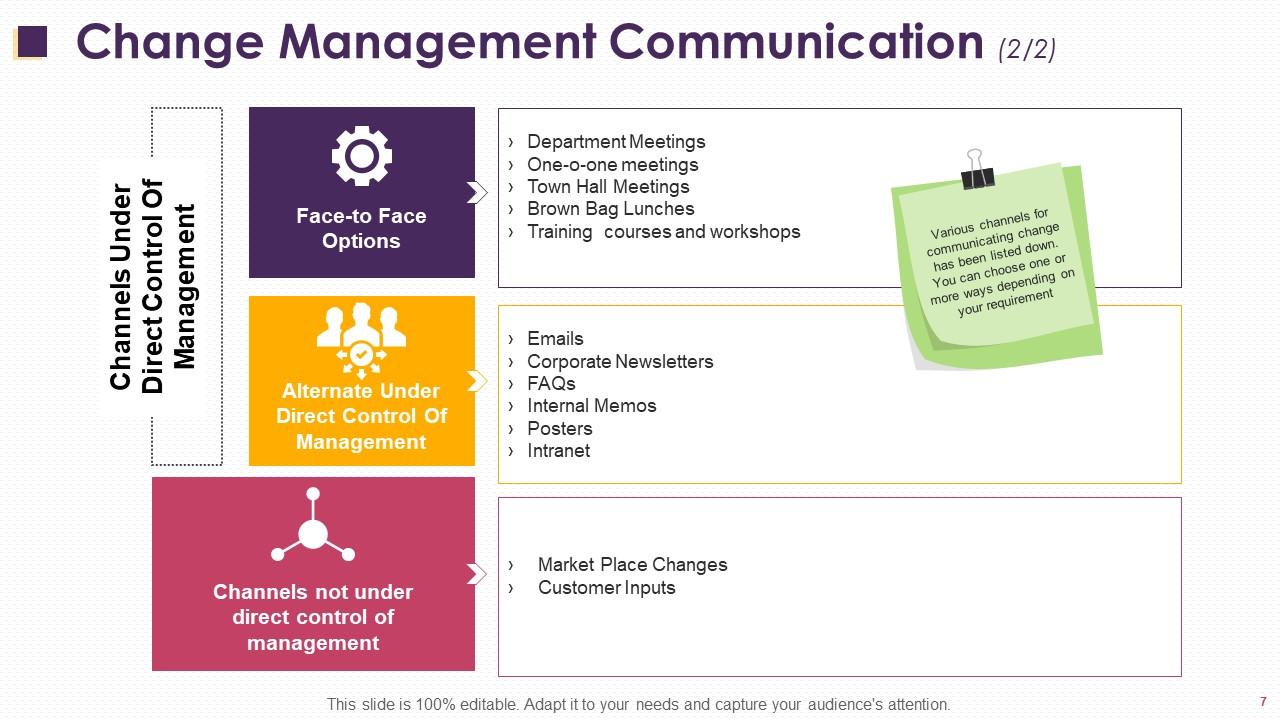
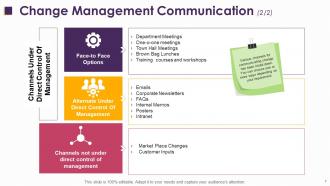
Slide 7 : Este é também o slide de Comunicação de Gerenciamento de Mudança mostrando Canais sob Controle Direto de Gerenciamento - 1) Opções Face a Face: reuniões de departamento, reuniões individuais, reuniões na prefeitura, almoços brown bag, cursos de treinamento e workshops. 2) Alternativo sob controle direto da gestão: e-mails, boletins corporativos, perguntas frequentes, memorandos internos, pôsteres, intranet. 3) Canais que não estão sob controle direto da administração: mudanças no mercado, entradas de clientes.
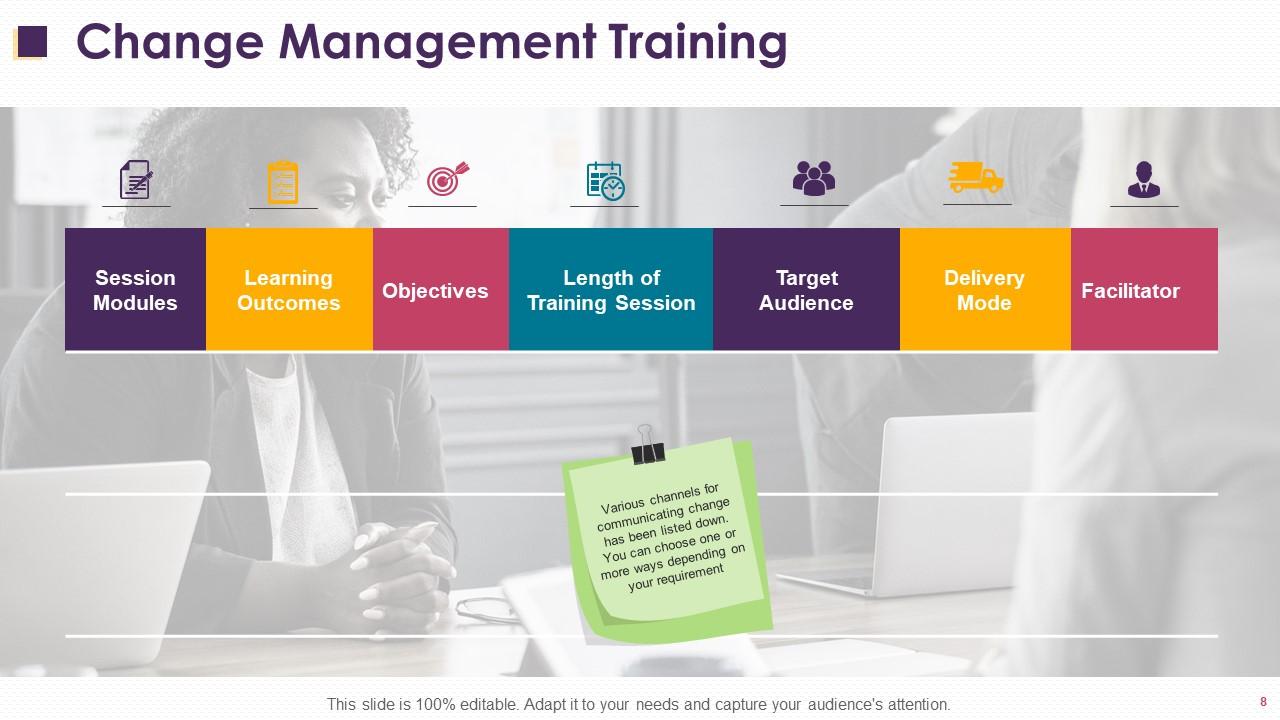
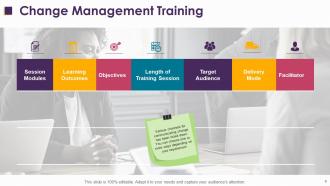
Slide 8 : Este slide apresenta o Treinamento em Gestão da Mudança com os seguintes subtítulos - Módulos da Sessão, Resultados de Aprendizagem, Objetivos, Duração da Sessão de Treinamento, Público Alvo, Modo de Entrega, Facilitador.
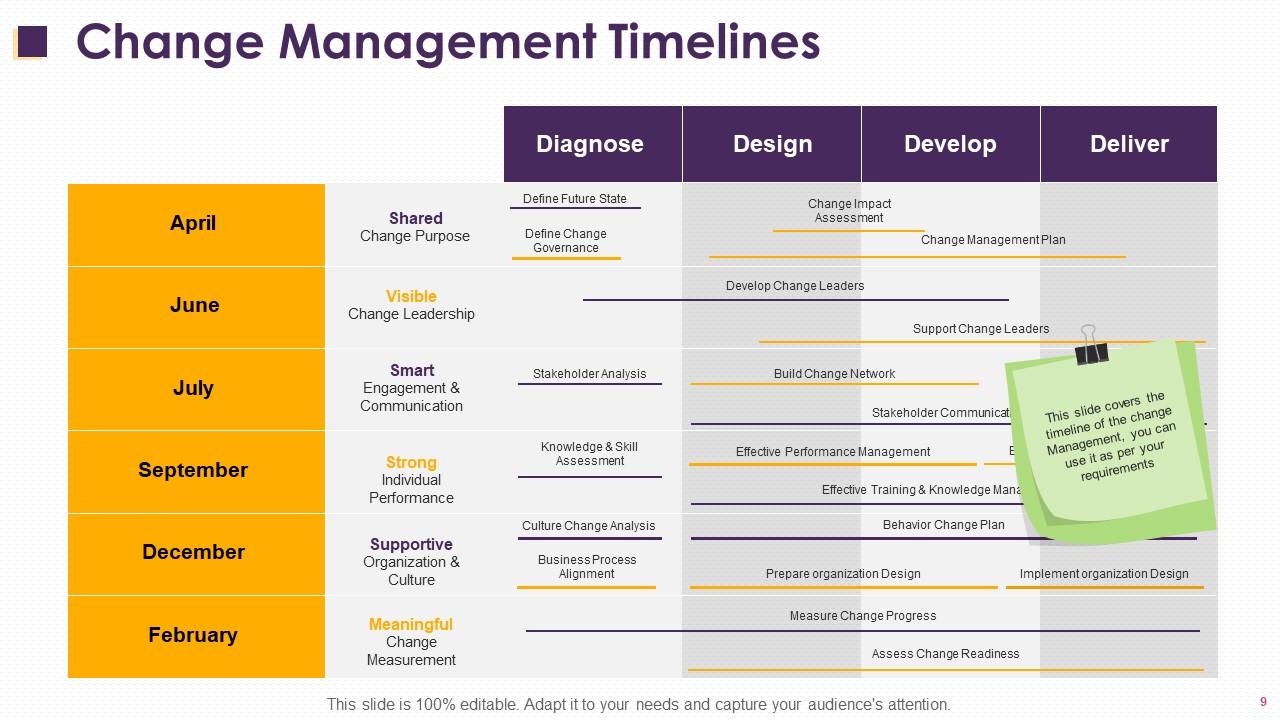
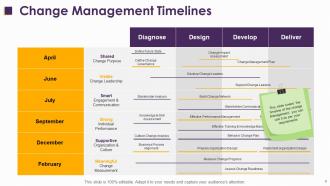
Slide 9 : Este slide é intitulado Cronogramas do gerenciamento de mudanças. Abrange a linha do tempo do gerenciamento de mudanças que você pode usar de acordo com sua necessidade.
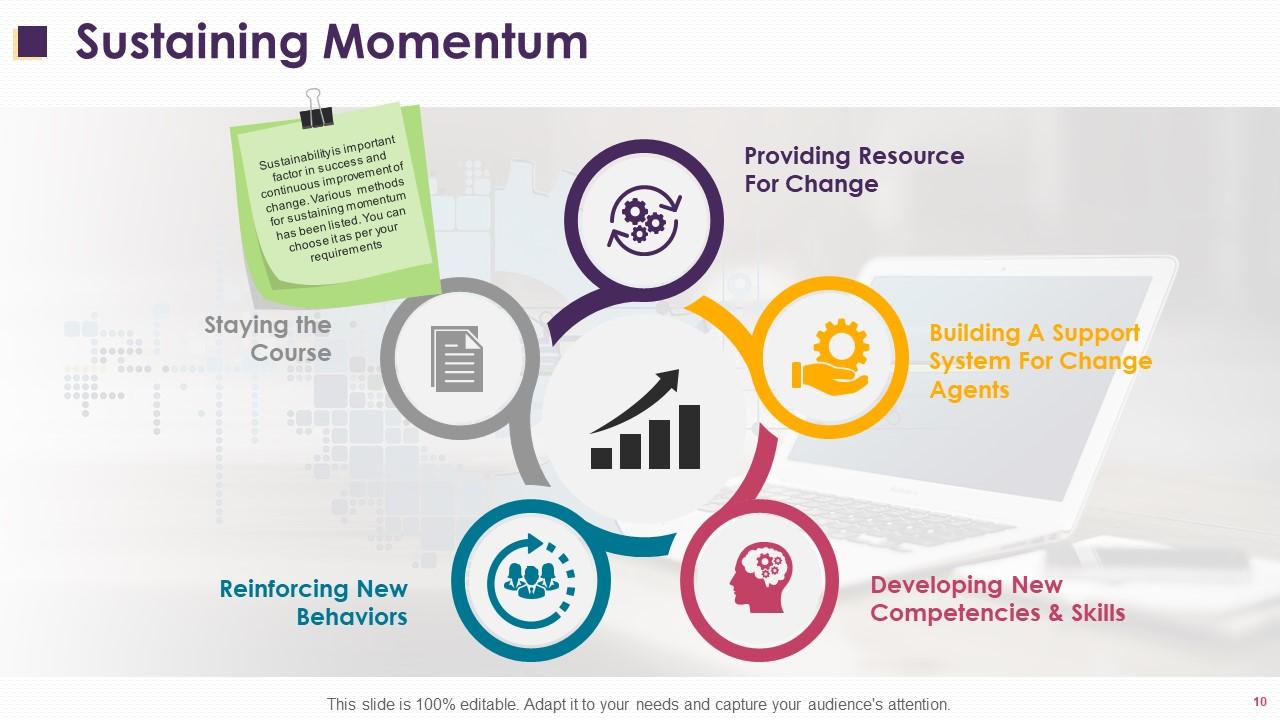
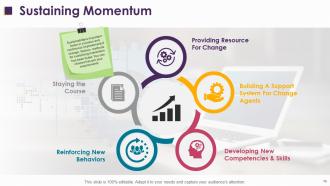
Slide 10 : Este slide mostra os seguintes fatores para Manter o Momentum - Construir um Sistema de Apoio para Agentes de Mudança, Desenvolver Novas Competências e Habilidades, Reforçar Novos Comportamentos, Manter o Rumo, Fornecer Recursos para Mudança. A sustentabilidade é um fator importante para o sucesso e melhoria contínua da mudança. Vários métodos para sustentar o momentum foram listados. Você pode escolhê-lo de acordo com seus requisitos.
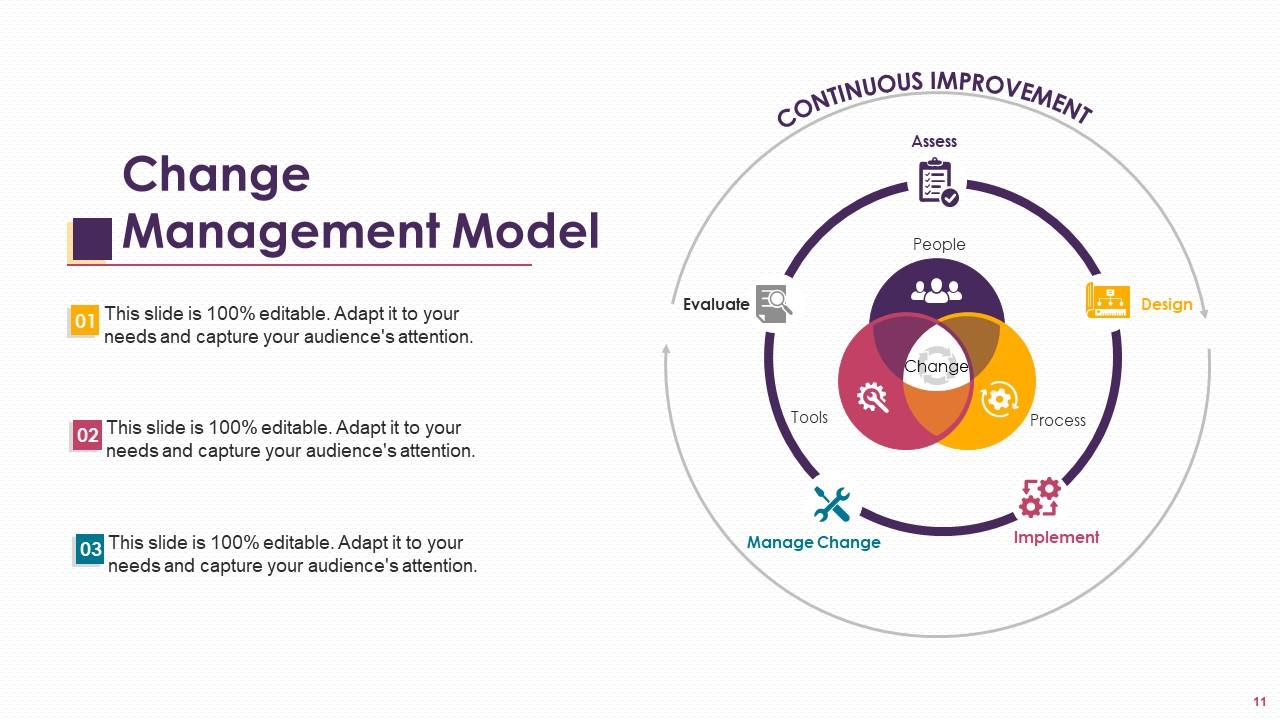
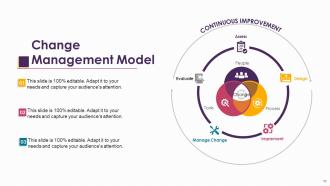
Slide 11 : Este slide mostra o Modelo de Gestão de Mudanças. Ele também mostra alguns de seus aspectos, como Mudança, Pessoas, Processo, Ferramentas, Avaliar, Projetar, Avaliar, Implementar etc.
Slide 12 : Este é o slide do ícone de Implementações de gerenciamento de mudanças. Altere conforme a necessidade.
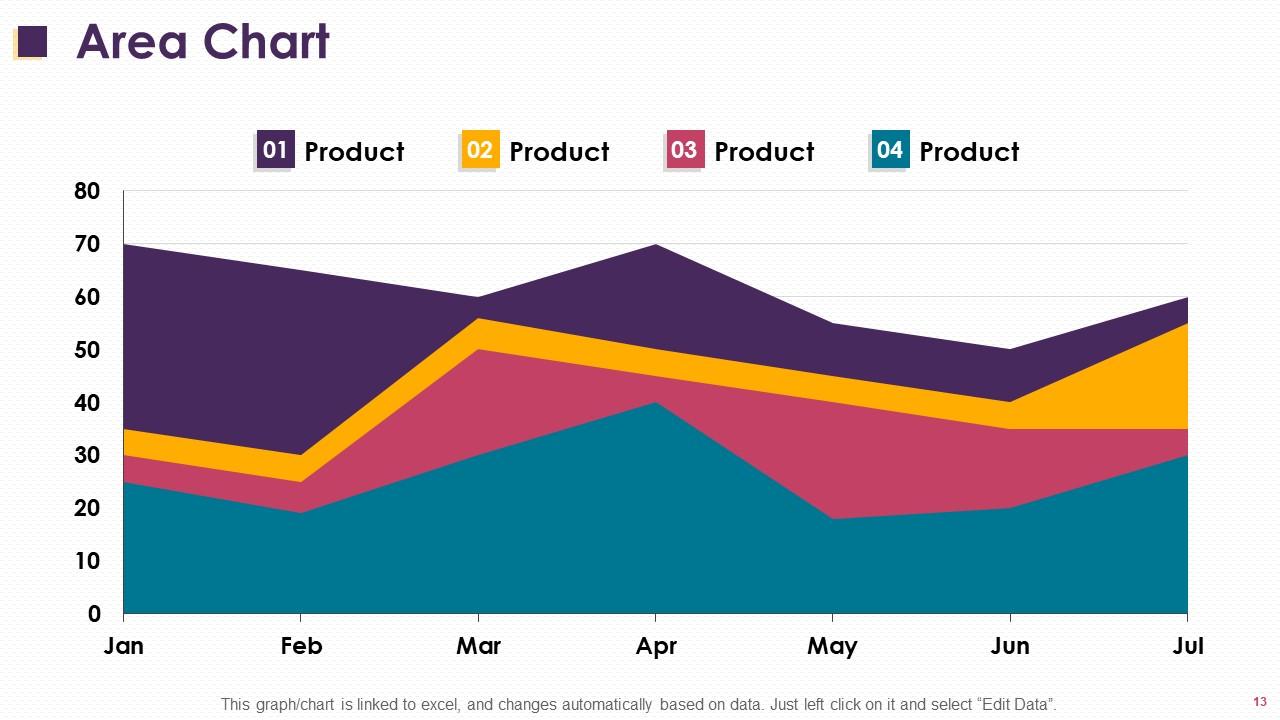
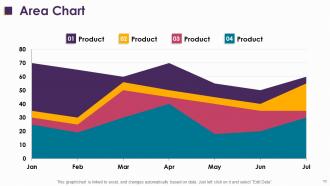
Slide 13 : Este é um slide do Gráfico de Área para mostrar o crescimento do produto / entidade, comparação, especificações, etc.
Slide 14 : Este slide contém Nossa Missão, Visão e Metas com caixas de texto.
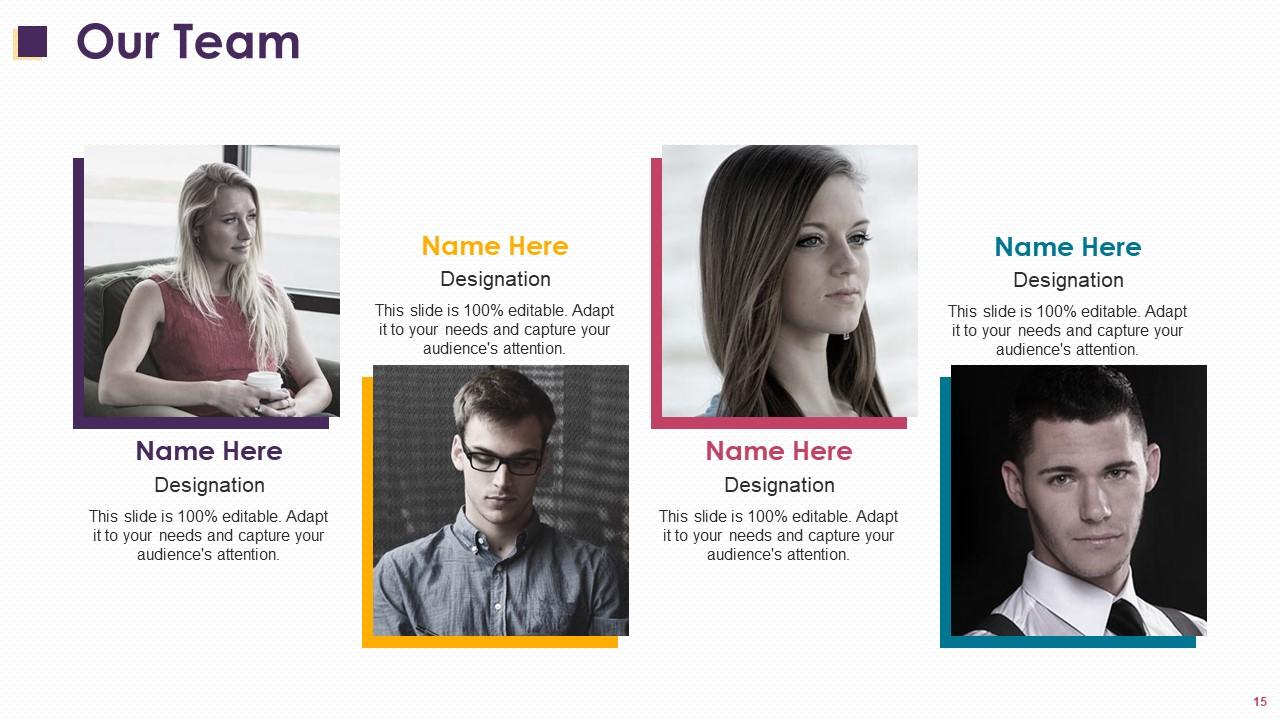
Slide 15 : Este slide mostra Nossa Equipe com Nome e Designação para preencher.
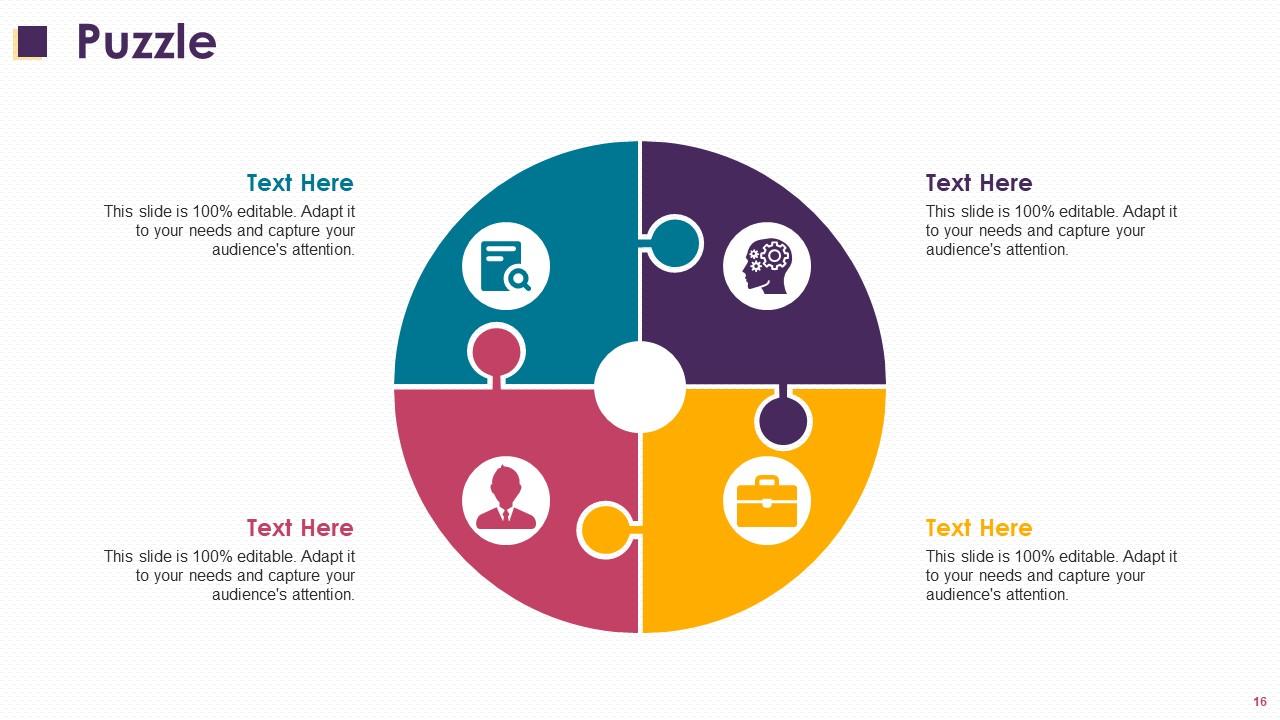
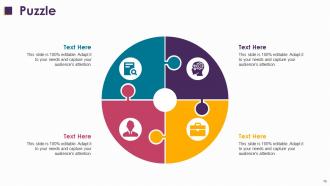
Slide 16 : Este é um slide de imagens de peças de quebra-cabeça para mostrar informações, especificações, etc.
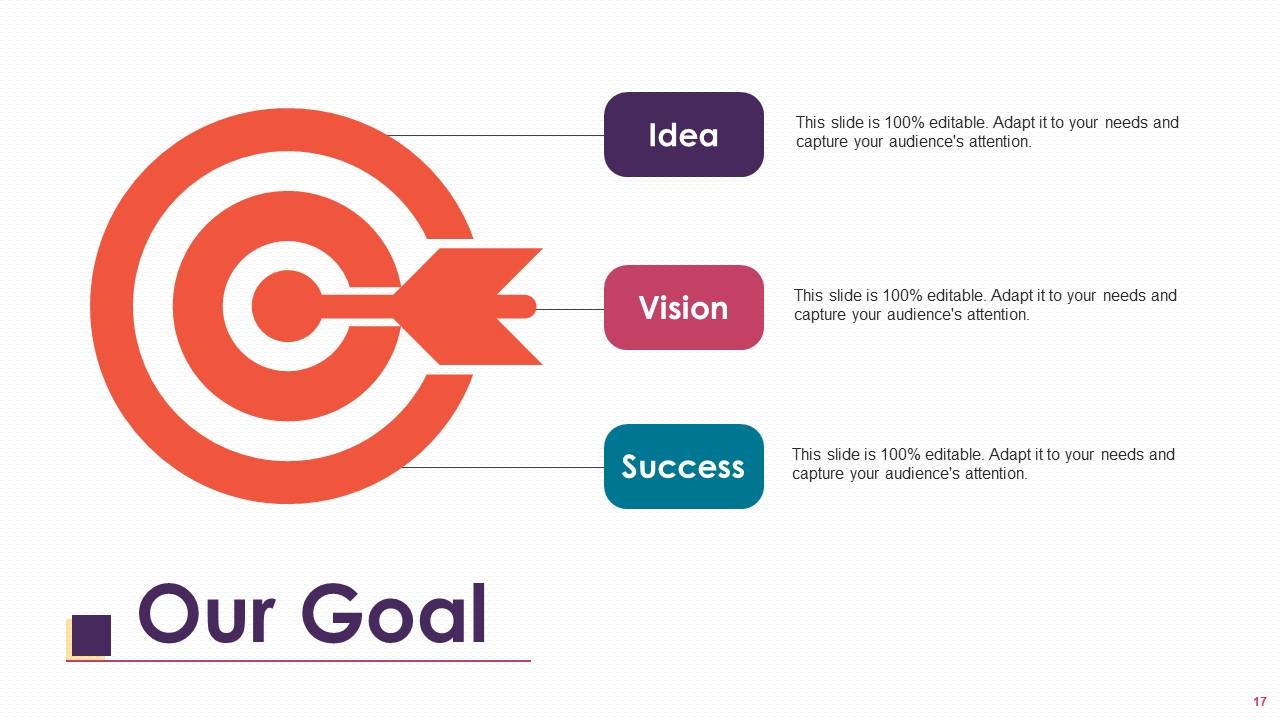
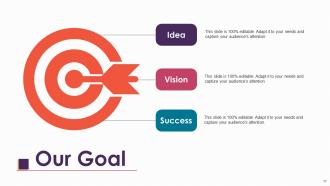
Slide 17 : Este é o slide da nossa meta. Declare seus objetivos aqui. Você também pode mencionar suas ideias, visão e sucesso aqui.
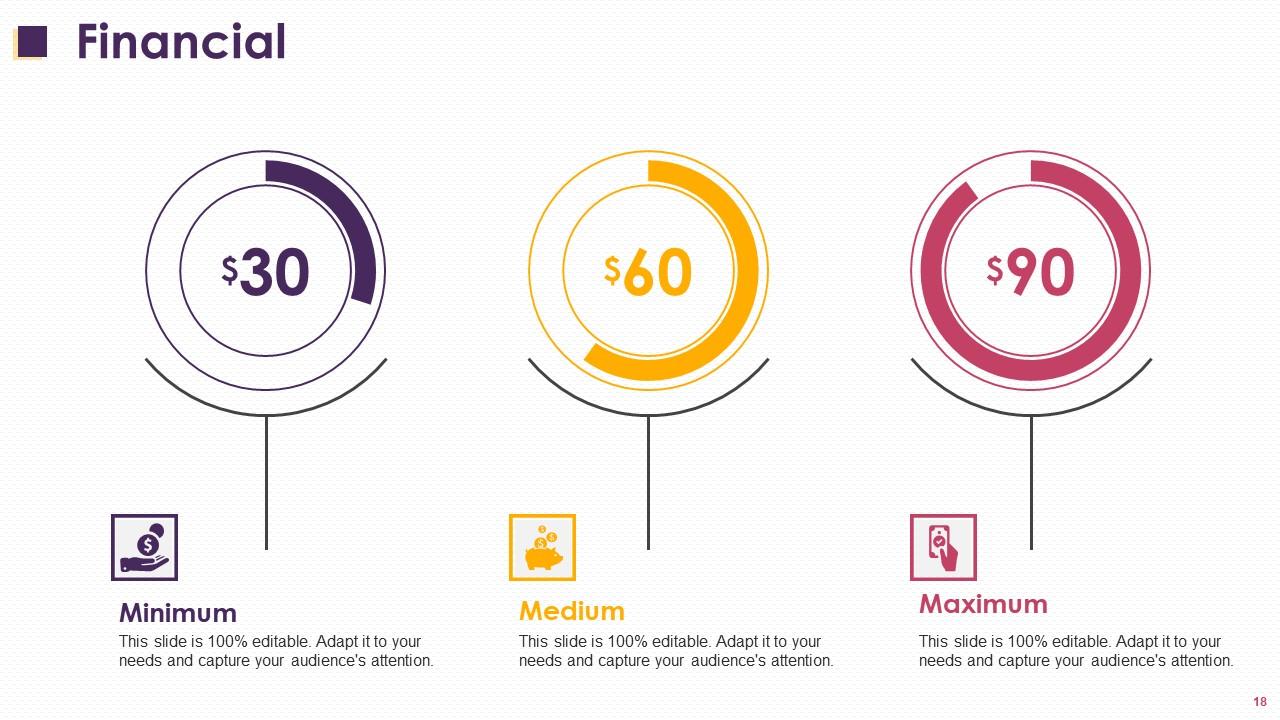
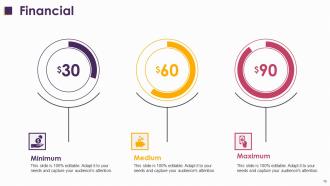
Slide 18 : Este slide exibe as pontuações financeiras, etc. em termos de mínimo, médio e máximo.
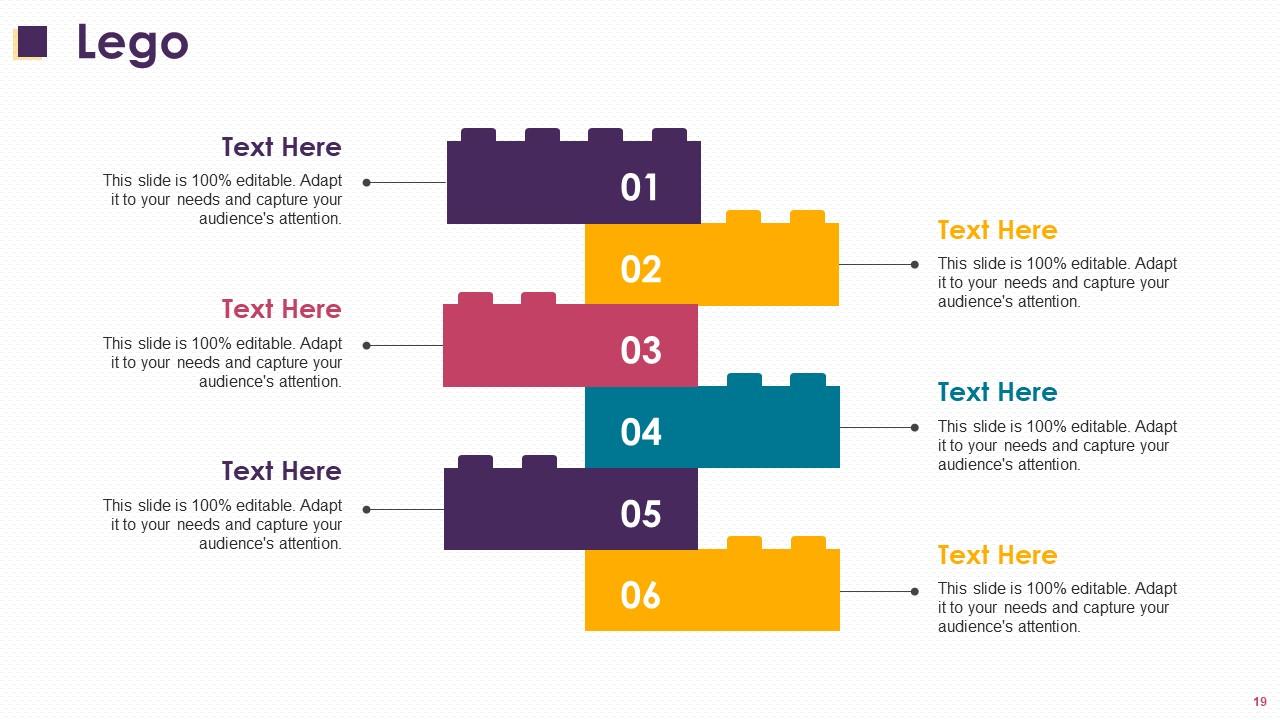
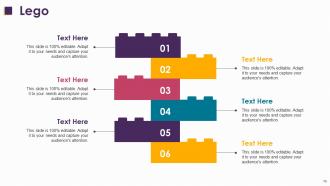
Slide 19 : Este é um slide de imagem de blocos de Lego para apresentar informações, especificações, etc.
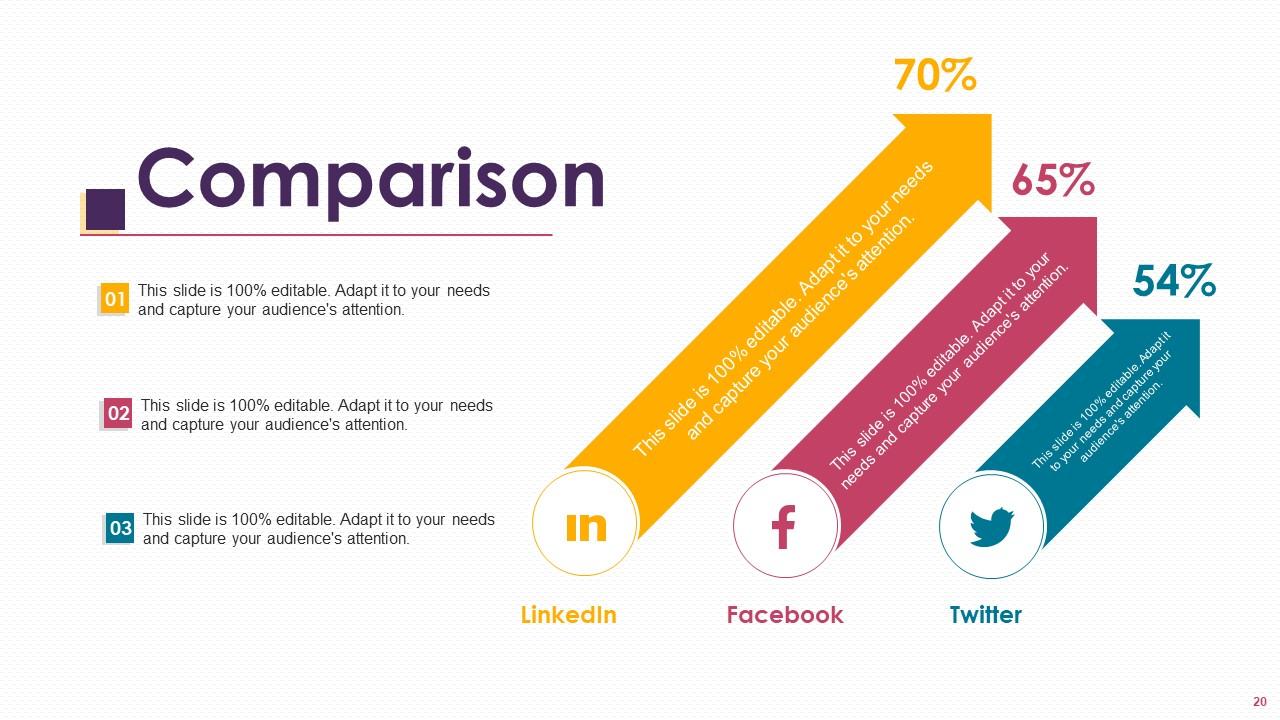
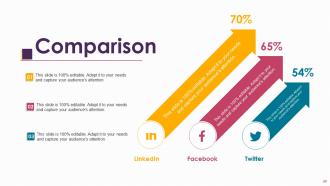
Slide 20 : Este é um slide de comparação para comparar entidades / produtos, etc. aqui.
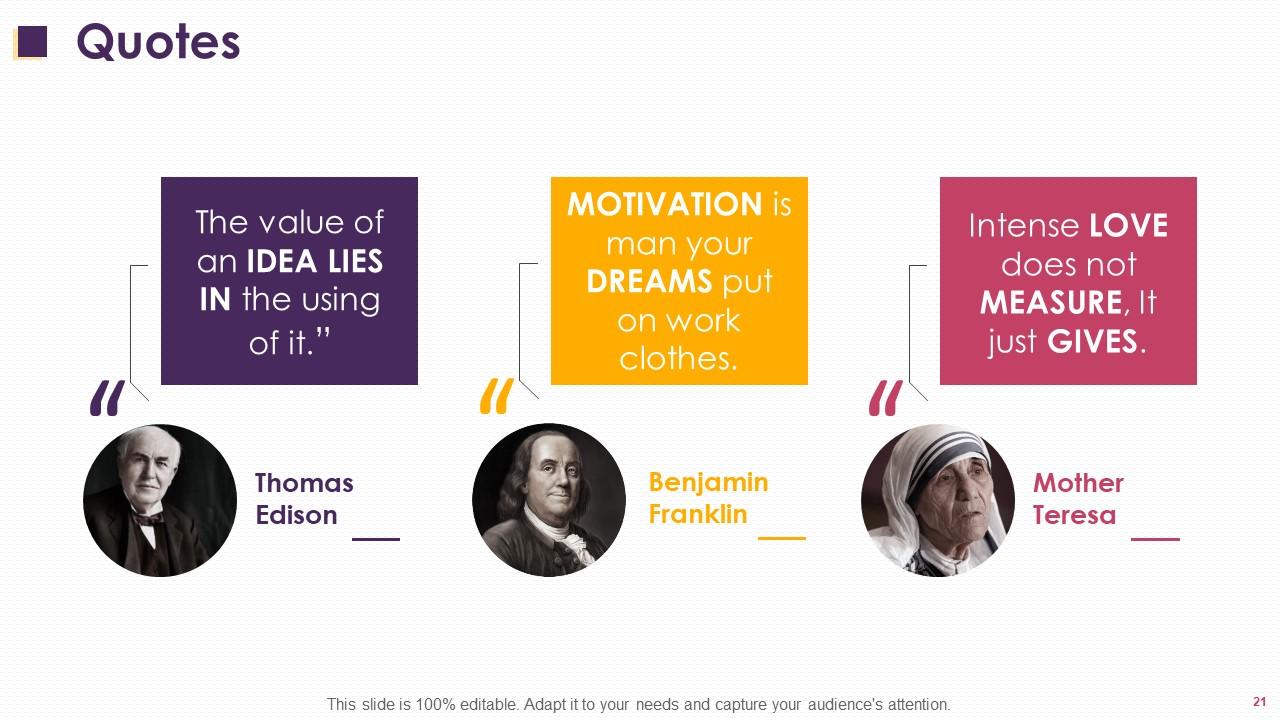
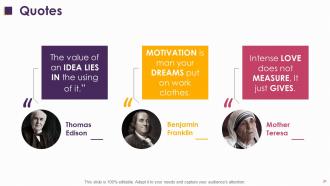
Slide 21 : Este é um slide de cotações para transmitir mensagens da empresa, crenças, etc. Você pode alterar o conteúdo do slide conforme a necessidade.
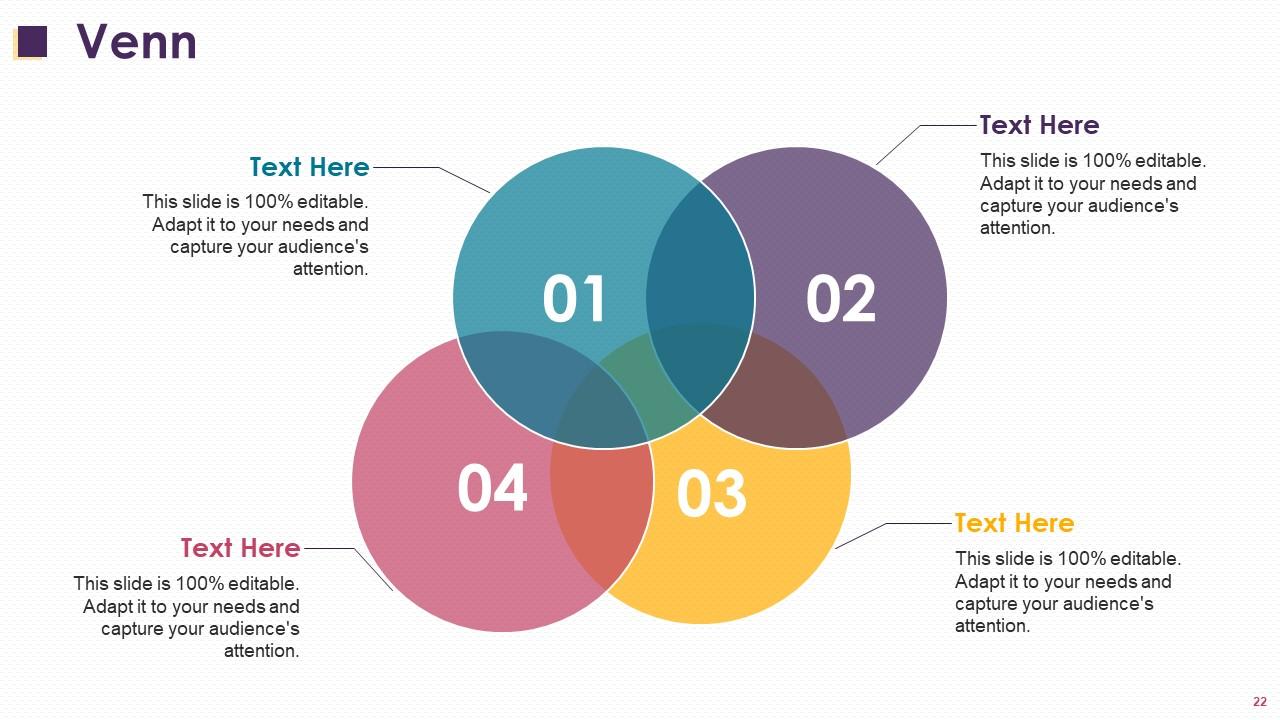
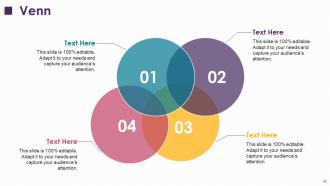
Slide 22 : Este é um slide de imagem do diagrama de Venn para mostrar informações, especificações, etc.
Slide 23 : Este é um slide Post It para marcar eventos, informações importantes, etc.
Slide 24 : Este é um slide de imagem de mapa mental para mostrar informações, especificações, etc.
Slide 25 : Este é um slide de Bulbo ou Ideia para apresentar uma nova ideia ou destacar especificações / informações, etc.
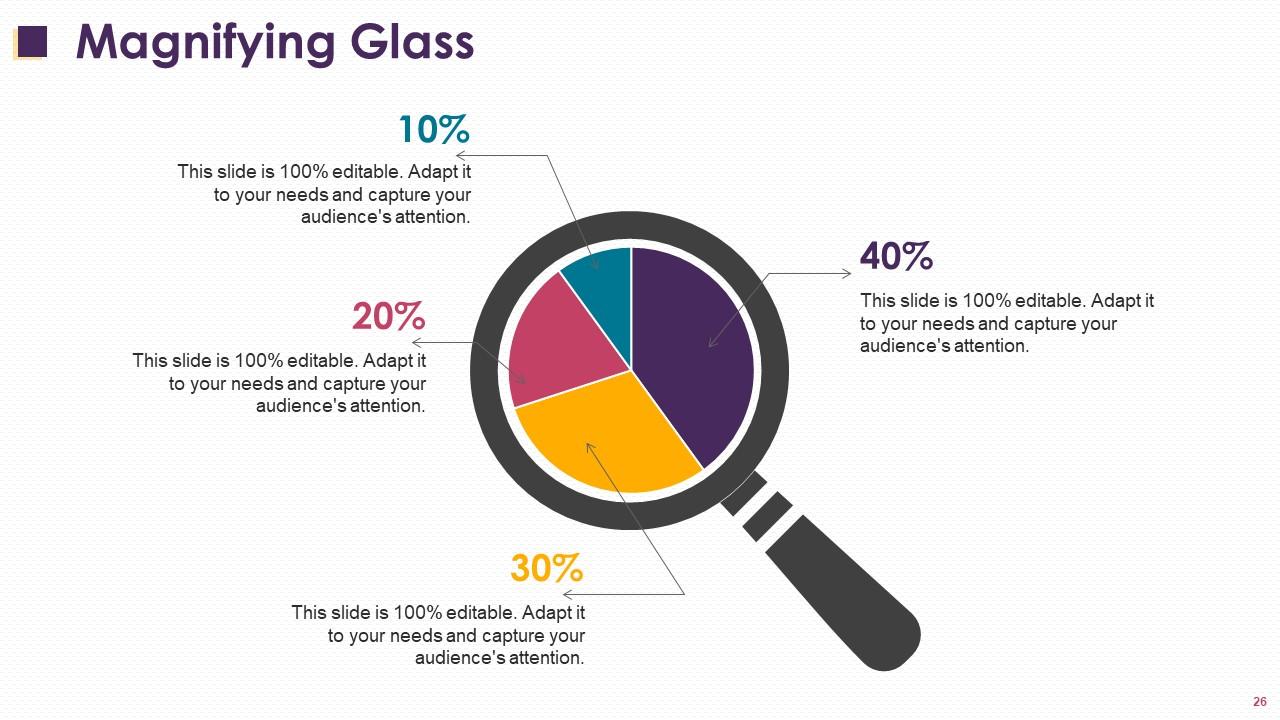
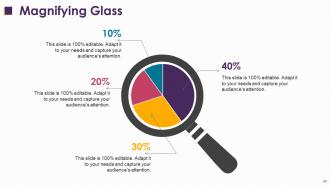
Slide 26 : Este é um slide de imagem de lupa para mostrar informações, aspectos do escopo, etc.
Slide 27 : Este é um slide de agradecimento com endereço #, rua, cidade, estado, endereço de e-mail, números de contato.
Slides de apresentação em PowerPoint de implementações de gerenciamento de mudanças com todos os 27 slides:
Suas ideias se tornarão o mantra mágico. Cante-as com nossos slides de apresentação em PowerPoint de implementações de gerenciamento de mudanças.
No Reviews
