


Introducción a la gestión de cambios Presentaciones de PowerPoint con diapositivas
Gestione el cambio impuesto o no planificado con la ayuda de las diapositivas de presentación de PowerPoint de Introducción a la gestión de cambios ya preparadas y diseñadas profesionalmente. Impulse un cambio efectivo dentro de una organización utilizando diapositivas PPT de gestión de cambios. Obtenga metodologías prácticas de cambio organizacional, marcos, pasos, procesos e implemente un cambio exitoso. Agregue una presentación de diapositivas de PowerPoint de gestión de cambios y personas conscientes de su organización sobre el cambio. Esta completa presentación de diapositivas de PowerPoint cubre temas como los impulsores de implementación de la gestión de cambios, identificar el cambio, tipos de gestión de cambios, fuerzas para el cambio, análisis de brechas, lista de verificación de preparación para el cambio de la organización, etc. Estos diseños de diapositivas PPT de introducción a la gestión de cambios son editables. Puede utilizarlos según sus necesidades organizativas. Prepare a sus empleados para el cambio y realice una transición exitosa. Agregue plantillas de PowerPoint de administración de cambios organizacionales para controlar y mejorar los procesos para el mejoramiento de una organización en su conjunto. Se vuelve necesario en el ciclo económico de una organización tener una reingeniería de procesos de negocio. Adopte un cambio y realice una transición sin problemas con la presentación de diapositivas PPT de introducción a la gestión de cambios. Desglose todo con nuestras diapositivas de presentación de Powerpoint de introducción a la gestión del cambio. Permita que cada elemento emerja de manera efectiva.











-

- Google Slides is a new FREE Presentation software from Google.
- All our content is 100% compatible with Google Slides.
- Just download our designs, and upload them to Google Slides and they will work automatically.
- Amaze your audience with SlideTeam and Google Slides.
-

Want Changes to This PPT Slide? Check out our Presentation Design Services
-

- WideScreen Aspect ratio is becoming a very popular format. When you download this product, the downloaded ZIP will contain this product in both standard and widescreen format.
-

- Some older products that we have may only be in standard format, but they can easily be converted to widescreen.
- To do this, please open the SlideTeam product in Powerpoint, and go to
- Design ( On the top bar) -> Page Setup -> and select "On-screen Show (16:9)” in the drop down for "Slides Sized for".
- The slide or theme will change to widescreen, and all graphics will adjust automatically. You can similarly convert our content to any other desired screen aspect ratio.
Compatible With Google Slides

Get This In WideScreen
You must be logged in to download this presentation.


Do you want to remove this product from your favourites?
Características de estas diapositivas de presentación de PowerPoint:
Presentación de diapositivas de presentación de PowerPoint de introducción a la gestión de cambios. Esta plataforma comprende un total de 25 plantillas PPT de gestión de cambios. Esta presentación de diapositivas de PowerPoint completa de gestión de cambios se compone de plantillas listas para el contenido. Cada diapositiva está bien elaborada y diseñada por nuestros expertos en PowerPoint. Nuestros diseñadores han incluido todos los diseños de PowerPoint necesarios en esta plataforma. Desde iconos hasta gráficos, esta plataforma PPT lo tiene todo. La mejor parte es que estas plantillas son fácilmente editables. Cambie el color, el texto, el tamaño de fuente, agregue o elimine el contenido según el requisito.

People who downloaded this PowerPoint presentation also viewed the following :
Contenido de esta presentación de Powerpoint
Diapositiva 1 : Esta diapositiva presenta la Introducción a la gestión del cambio. Indique el nombre de su empresa y comience.
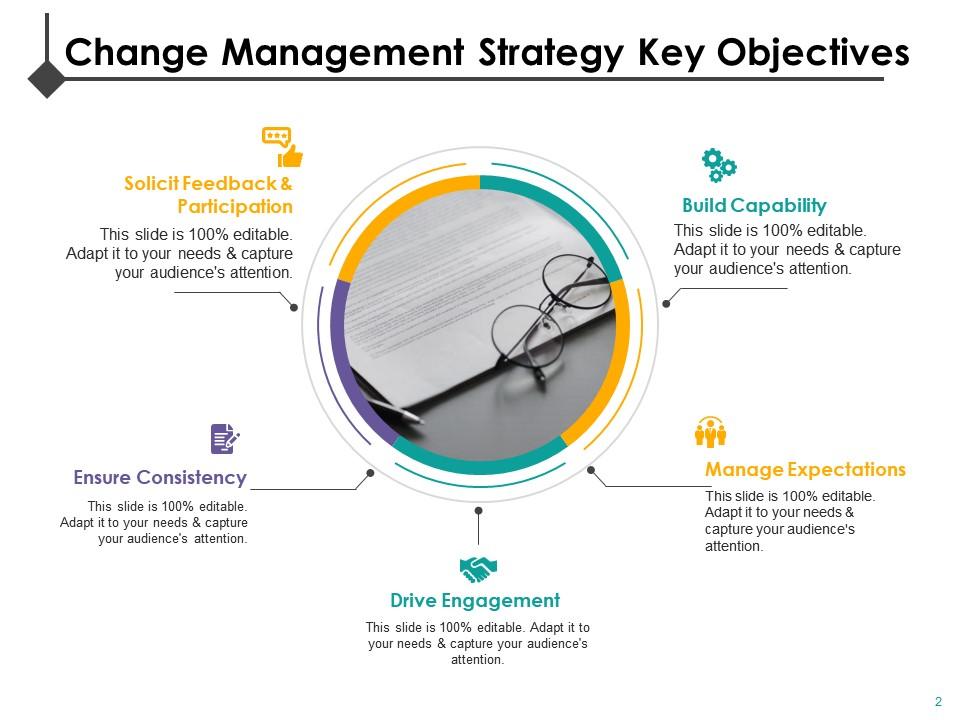
Diapositiva 2 : Esta diapositiva muestra los objetivos clave de la estrategia de gestión del cambio, como: gestionar las expectativas, impulsar el compromiso, garantizar la coherencia, desarrollar la capacidad, solicitar comentarios y participación.
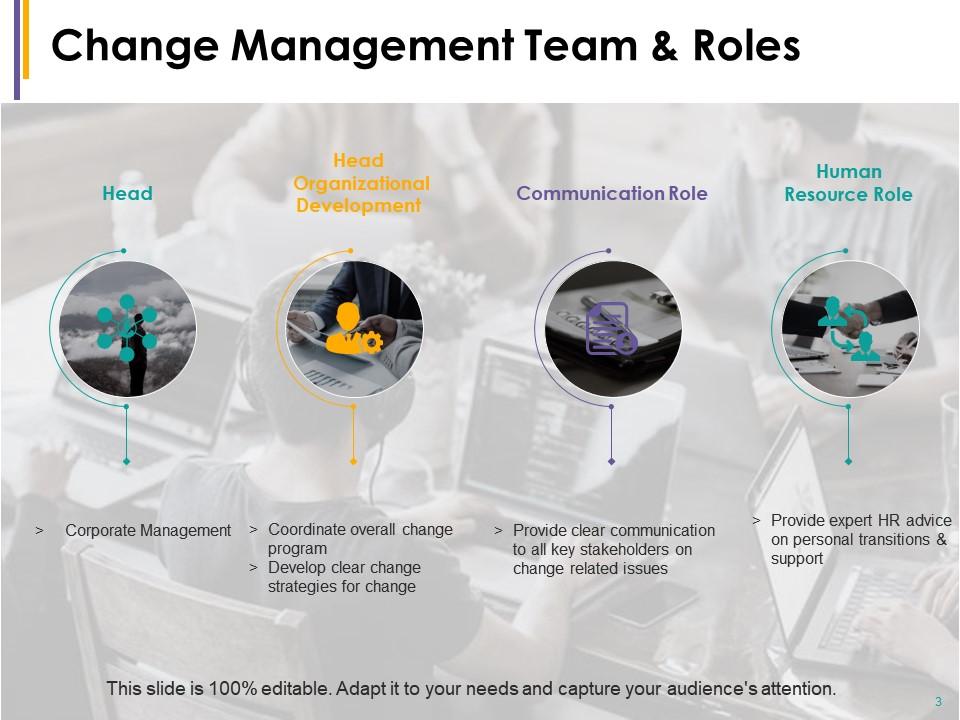
Diapositiva 3 : Esta diapositiva muestra el Equipo de gestión de cambios y los roles: Jefe: Gestión corporativa. Jefe: Desarrollo Organizacional Coordinar el programa de cambio general, Desarrollar estrategias claras de cambio para el cambio. Función de comunicación: proporcionar una comunicación clara a todas las partes interesadas clave sobre cuestiones relacionadas con el cambio. Rol de recursos humanos: Brindar asesoramiento experto en recursos humanos sobre transiciones personales y apoyo.
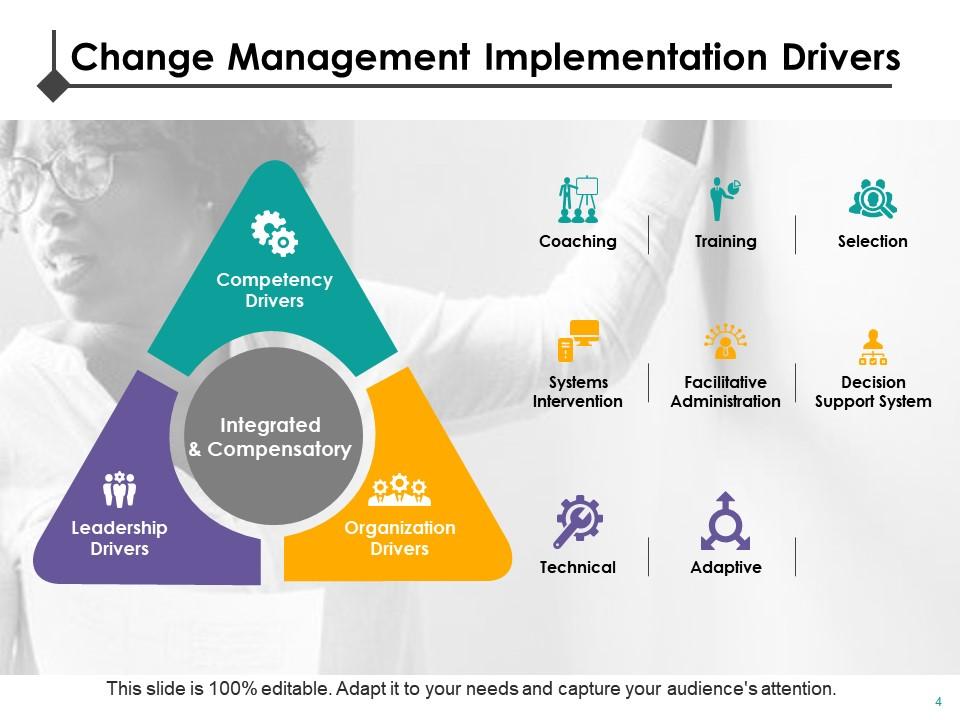
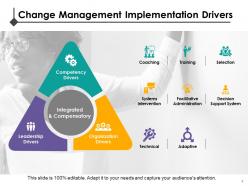
Diapositiva 4 : Esta diapositiva muestra los impulsores de implementación de la gestión del cambio divididos en: impulsores de competencia: coaching, capacitación, selección. Impulsores de la organización: intervención de sistemas, administración facilitadora, sistema de apoyo a la toma de decisiones. Impulsores de liderazgo: técnicos, adaptables.
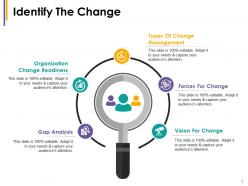
Diapositiva 5 : Esta diapositiva muestra Identificar el cambio con los siguientes subtítulos: Tipos de gestión del cambio, Fuerzas para el cambio, Visión para el cambio, Análisis de brechas, Preparación para el cambio organizacional.
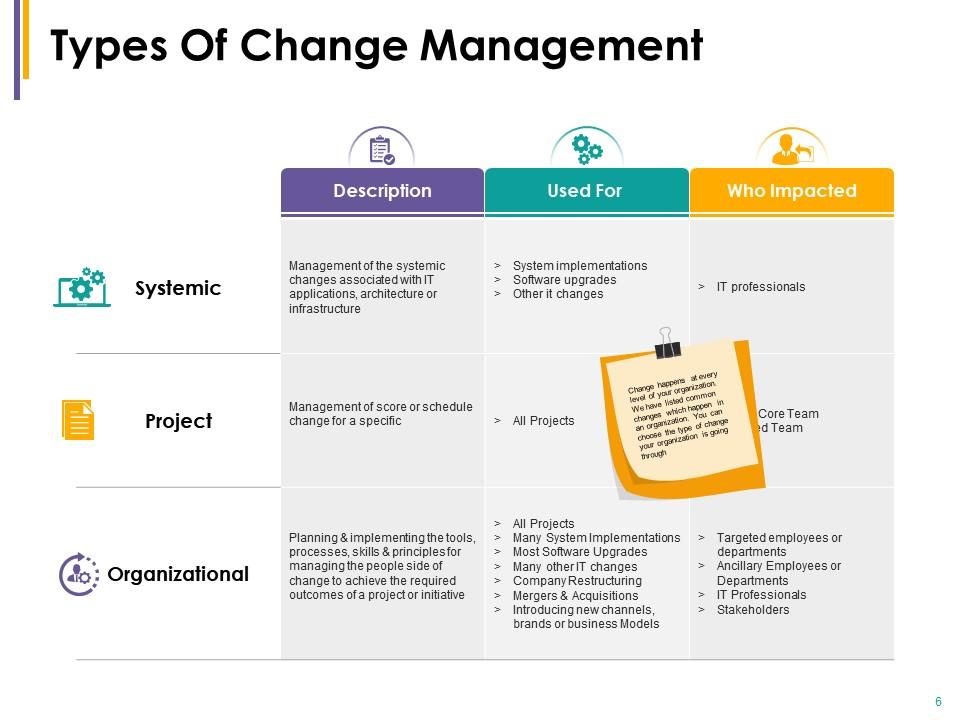
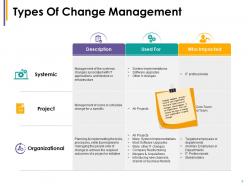
Diapositiva 6 : Esta diapositiva presenta los tipos de gestión de cambios que muestran: descripción, uso y quiénes impactan. El cambio ocurre en todos los niveles de su organización. Hemos enumerado los cambios comunes que ocurren en una organización. Puede elegir el tipo de cambio por el que está pasando su organización.
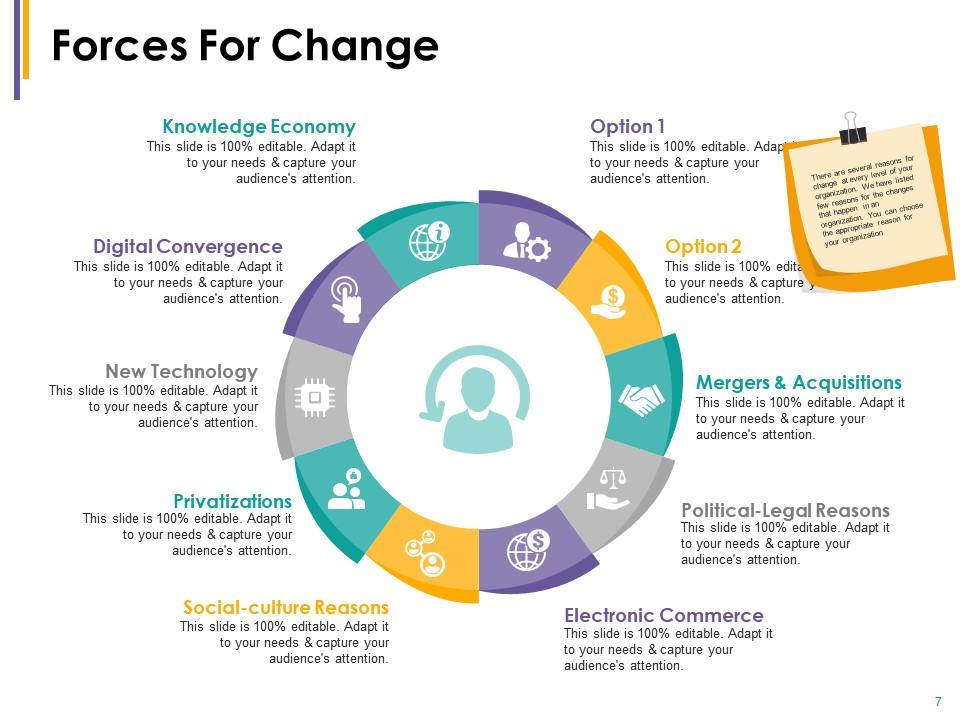
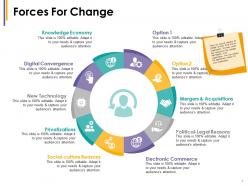
Diapositiva 7 : Esta diapositiva muestra Fuerzas para el cambio tales como: Fusiones y adquisiciones, Razones político-legales, Comercio electrónico, Economía del conocimiento, Convergencia digital, Nuevas tecnologías, Privatizaciones, Razones de la cultura social. Hay varias razones para el cambio en todos los niveles de su organización. Hemos enumerado algunas razones de los cambios que ocurren en una organización. Puede elegir el motivo adecuado para su organización.
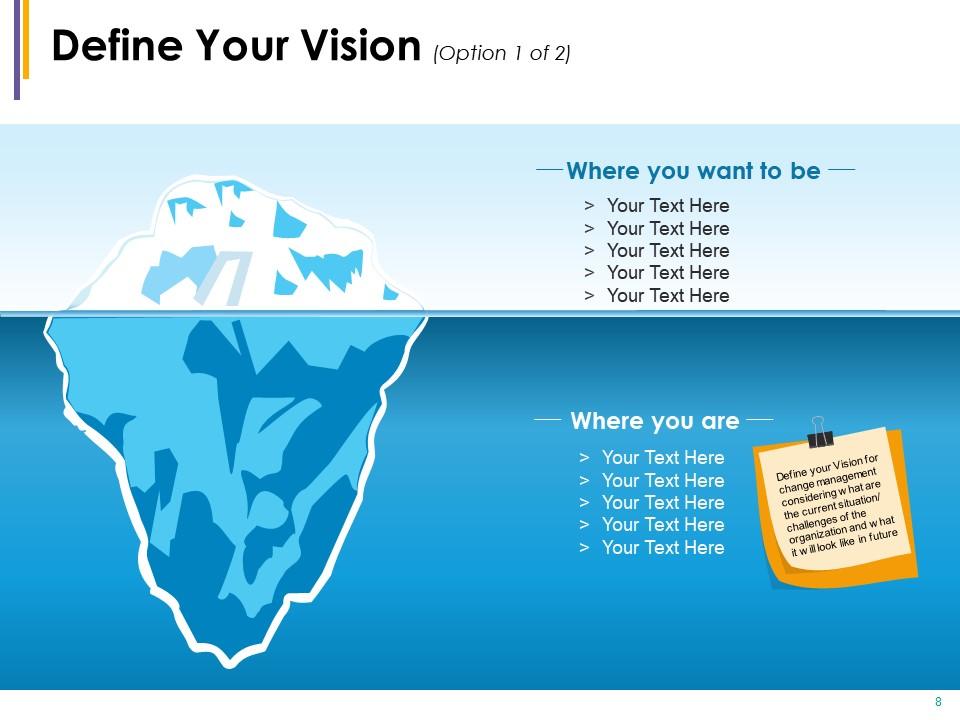
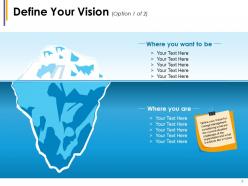
Diapositiva 8 : Esta diapositiva muestra Define Your Vision con imágenes creativas de iceberg. Defina su Visión para la gestión del cambio considerando cuál es la situación / desafíos actuales de la organización y cómo se verá en el futuro.
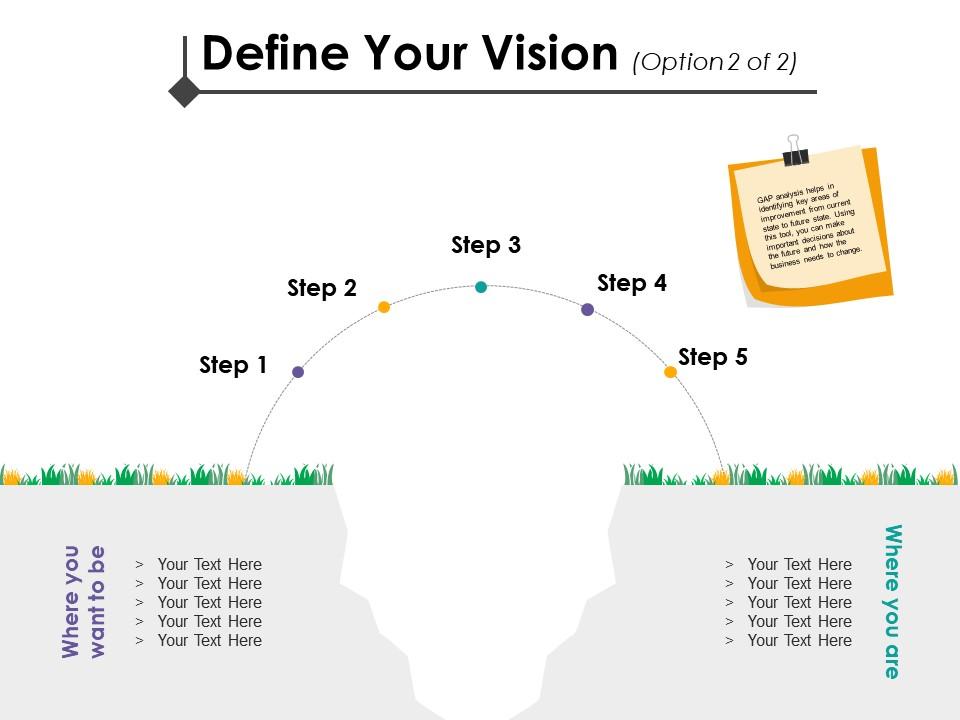
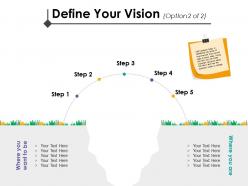
Diapositiva 9 : Esta diapositiva muestra Define Your Vision con imágenes semicirculares creativas. El análisis GAP ayuda a identificar áreas clave de mejora del estado actual al estado futuro. Con esta herramienta, puede tomar decisiones importantes sobre el futuro y cómo debe cambiar la empresa.
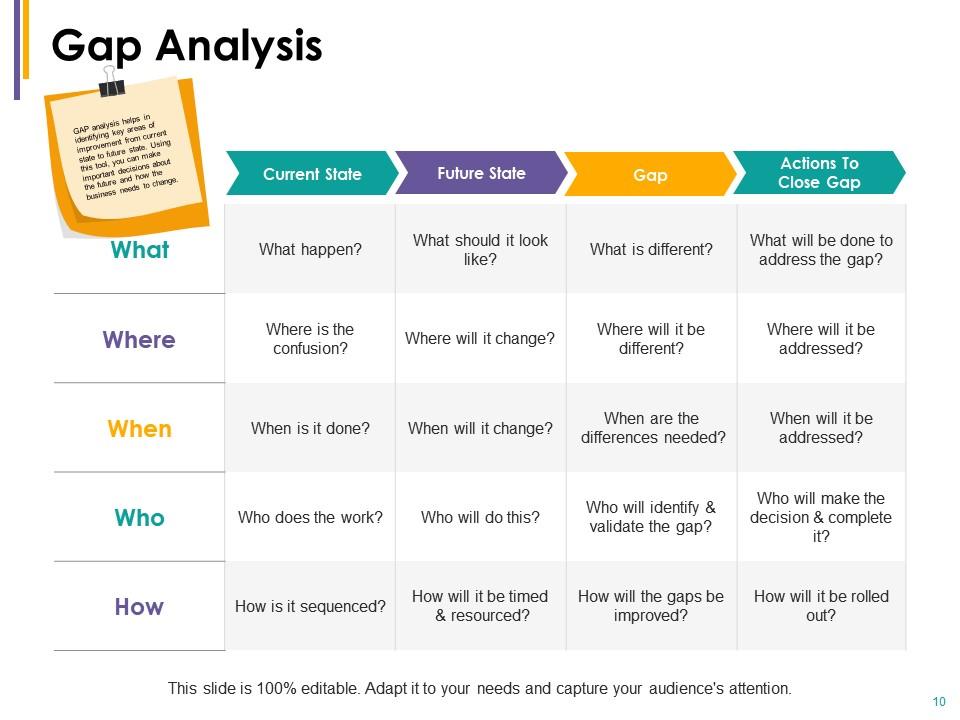
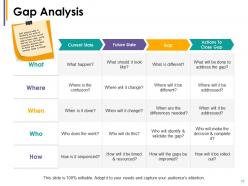
Diapositiva 10 : Esta diapositiva muestra el análisis de brechas: estado actual, estado futuro, brecha, acciones para cerrar la brecha. El análisis GAP ayuda a identificar áreas clave de mejora del estado actual al estado futuro. Con esta herramienta, puede tomar decisiones importantes sobre el futuro y cómo debe cambiar la empresa.
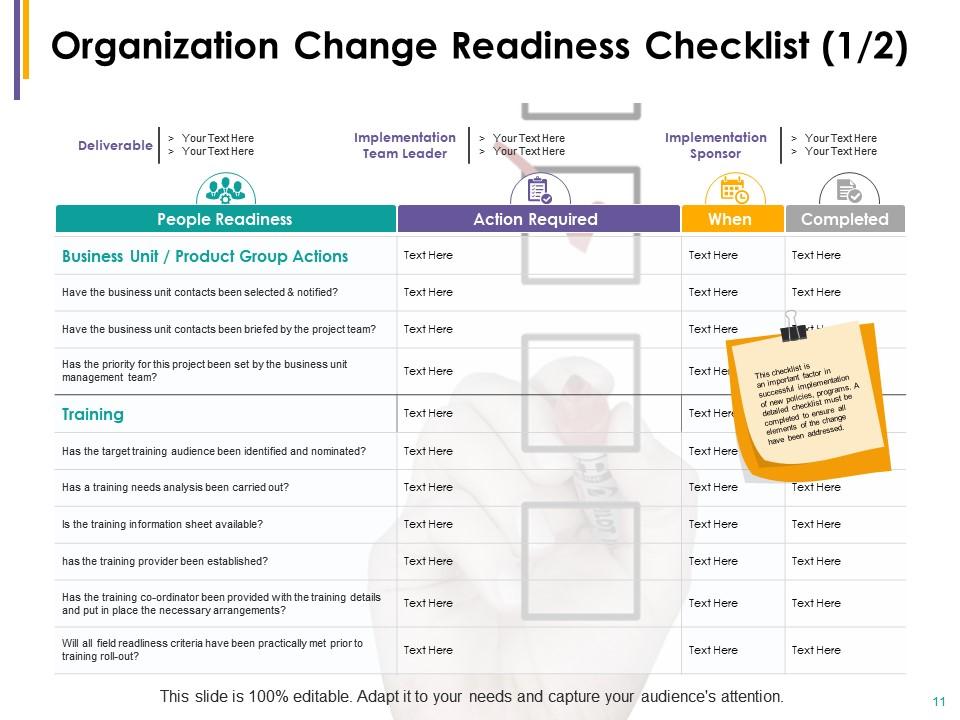
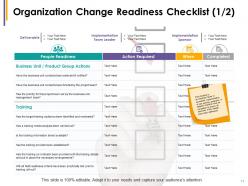
Diapositiva 11 : Esta diapositiva presenta la Lista de verificación de preparación para el cambio de la organización que muestra: Entregable, Líder del equipo de implementación, Patrocinador de implementación, Acción requerida, Cuándo, Completado, Disponibilidad de las personas. Esta lista de verificación es un factor importante para la implementación exitosa de nuevas políticas y programas. Se debe completar una lista de verificación detallada para garantizar que se hayan abordado todos los elementos del cambio.
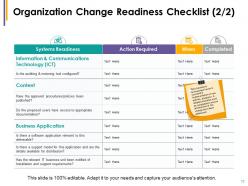
Diapositiva 12 : Esta diapositiva presenta la Lista de verificación de preparación para el cambio de la organización que muestra: Acción de preparación de los sistemas requerida cuando se completa Esta lista de verificación es un factor importante para la implementación exitosa de nuevas políticas y programas. Se debe completar una lista de verificación detallada para garantizar que se hayan abordado todos los elementos del cambio.
Diapositiva 13 : Esta es una diapositiva de icono de introducción a la gestión de cambios. Utilice los iconos según sea necesario.
Diapositiva 14 : esta diapositiva se titula Diapositivas adicionales. Puede cambiar el contenido según sus necesidades.
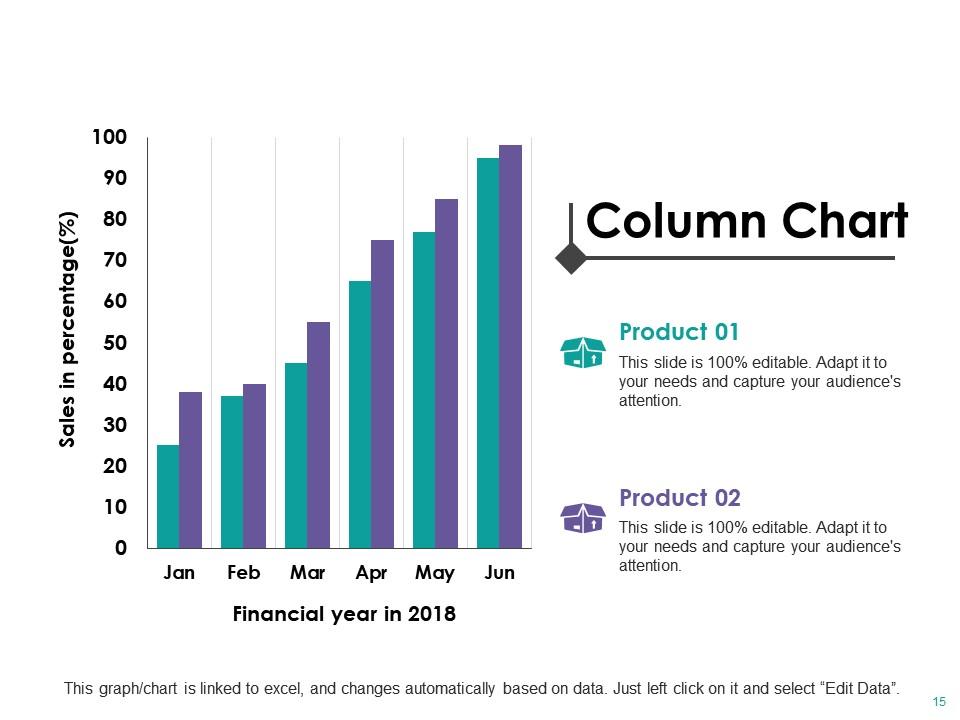
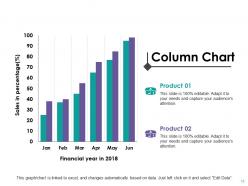
Diapositiva 15 : Esta diapositiva muestra un gráfico de columnas para la comparación de dos productos / entidades, información, especificaciones, etc.
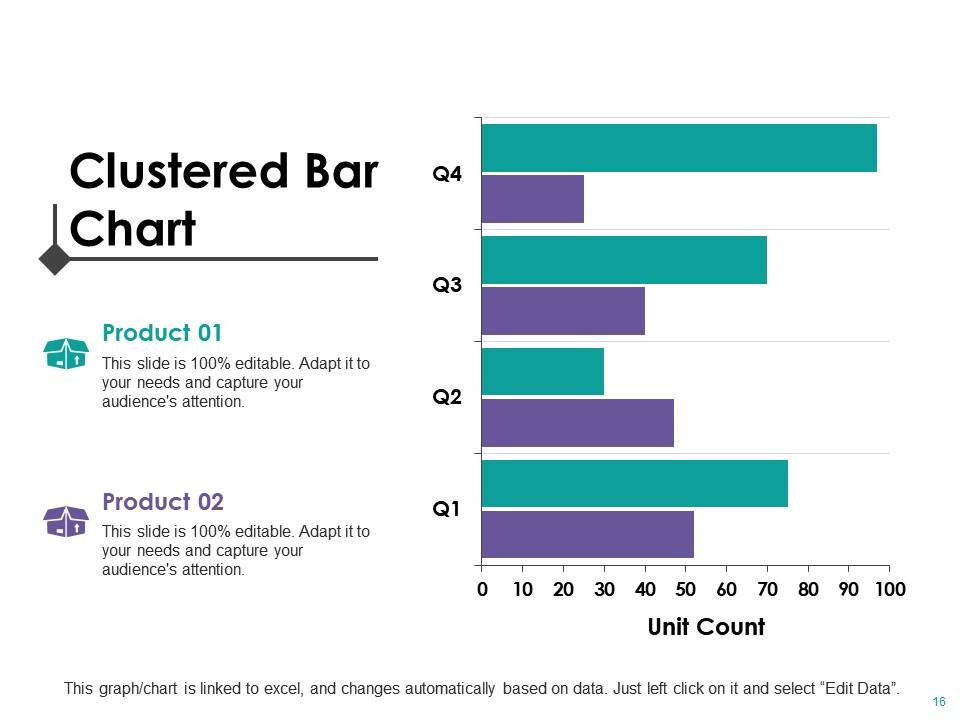
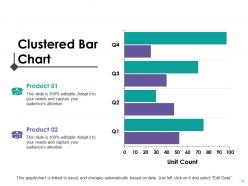
Diapositiva 16 : Esta diapositiva muestra un gráfico de barras agrupadas para la comparación de dos productos / entidades, información, especificaciones, etc.
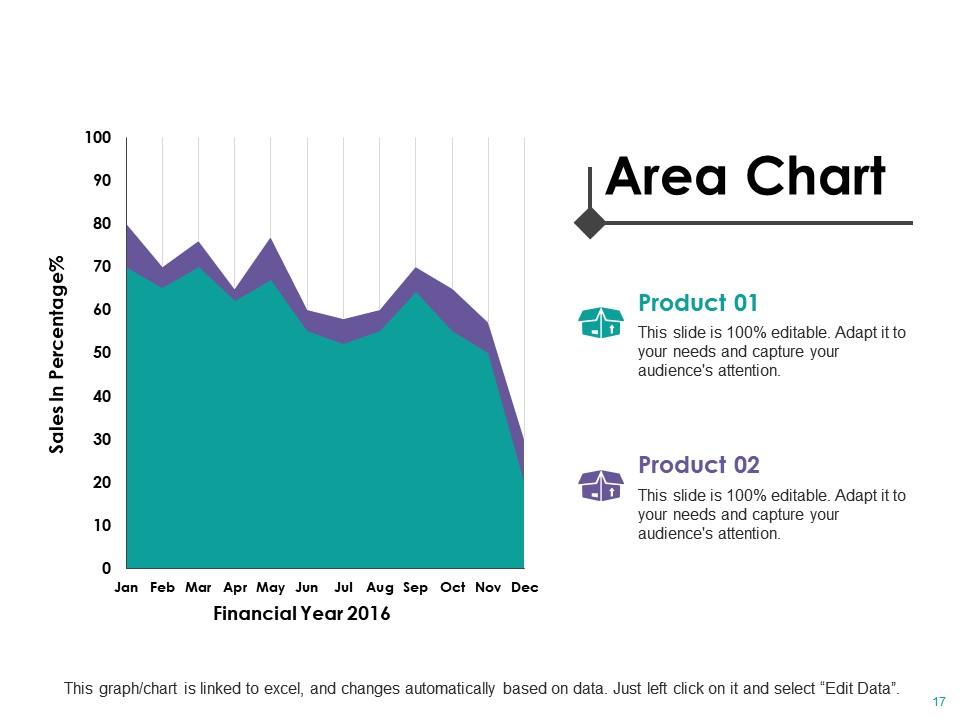
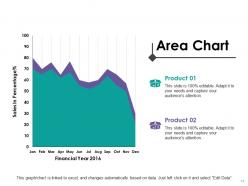
Diapositiva 17 : Esta diapositiva muestra un gráfico de área para la comparación de dos productos / entidades, información, especificaciones, etc.
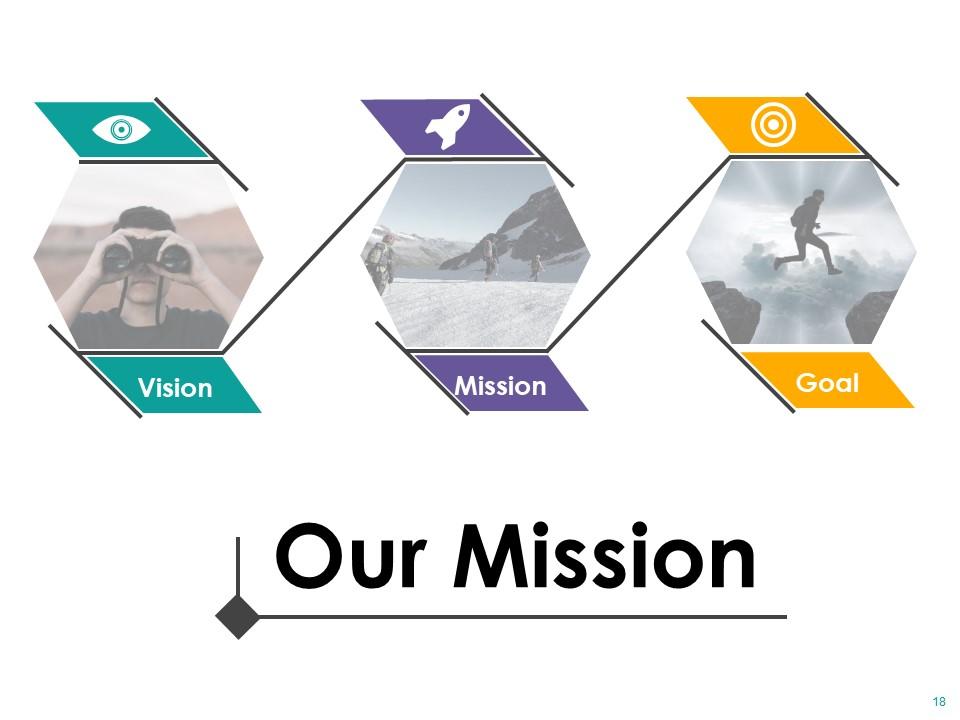
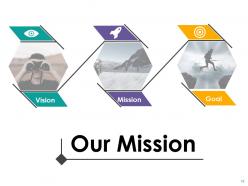
Diapositiva 18 : Esta diapositiva contiene Nuestra misión con visión y meta. Indíquelos aquí.
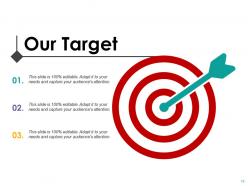
Diapositiva 19 : Esta es la diapositiva de Nuestro objetivo. Indíquelos aquí.
Diapositiva 20 : Esta es una diapositiva Acerca de nosotros. Indique su posición, hechos o cualquier asunto comercial aquí.
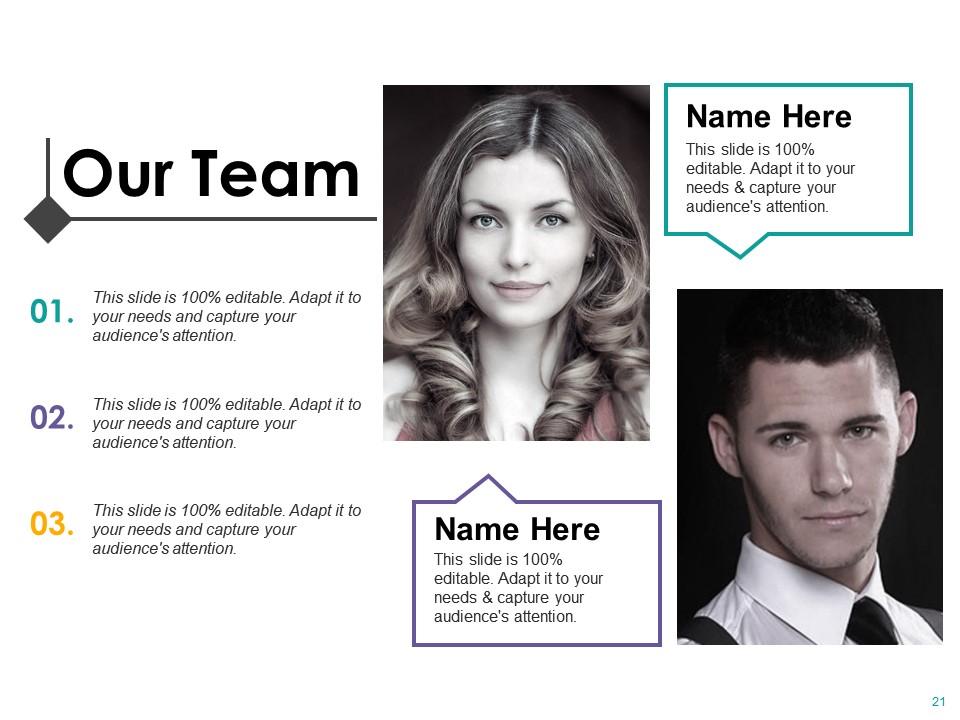
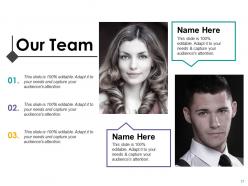
Diapositiva 21 : Esta diapositiva presenta a Nuestro equipo con la designación, el soporte de texto de la imagen y los cuadros de texto para completar la información.
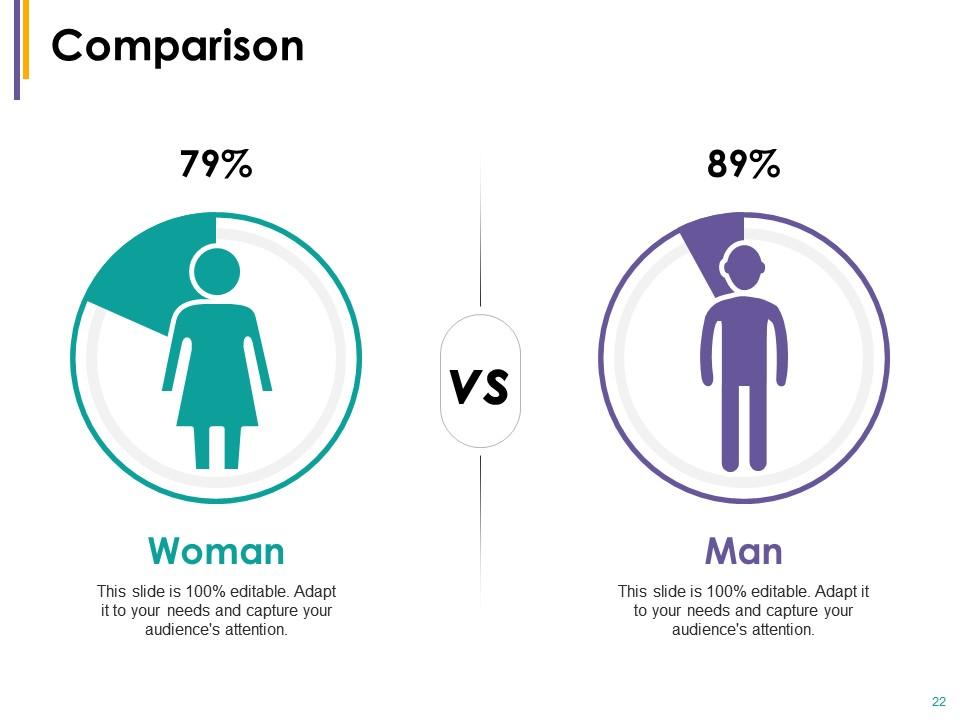
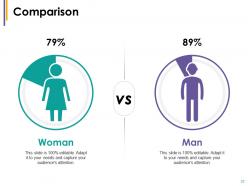
Diapositiva 22 : Esta diapositiva muestra la comparación de una manera creativa mostrando imágenes masculinas y femeninas. Indique los aspectos comparativos aquí.
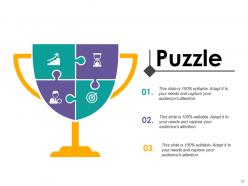
Diapositiva 23 : esta es una diapositiva de imagen de rompecabezas con cuadros de texto para indicar información, especificaciones, etc.
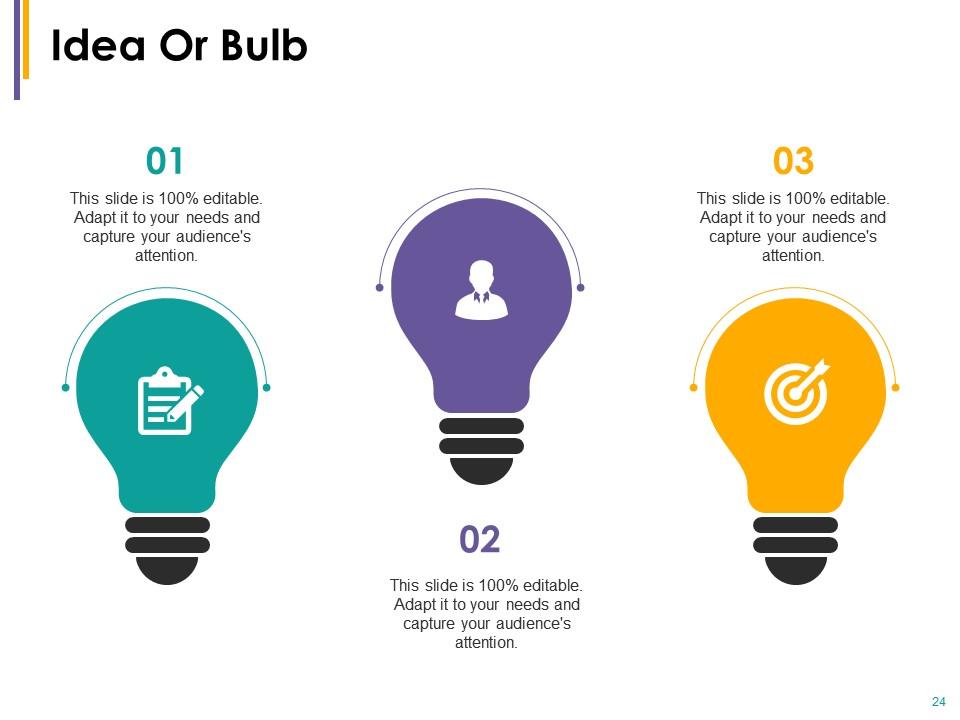
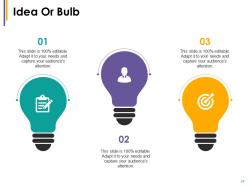
Diapositiva 24 : Esta es una diapositiva de imagen de Idea o Bulb. Presente cualquier información nueva, datos aquí.
Diapositiva 25 : Esta es una diapositiva de agradecimiento con dirección # número de calle, ciudad, estado, números de contacto, dirección de correo electrónico para colocar y mostrar.
Introducción a la gestión de cambios Presentación en Powerpoint Diapositivas con las 25 diapositivas:
Adáptese a las demandas en constante evolución con nuestras diapositivas de presentación de Powerpoint de introducción a la gestión del cambio. Están diseñados para ofrecer flexibilidad.
-
Awesome presentation, really professional and easy to edit.
-
It saves your time and decrease your efforts in half.
