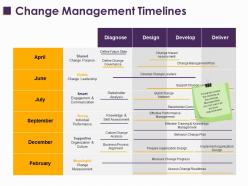
Gestión de cambios Cronogramas Ppt Layouts Microsoft
Try Before you Buy Download Free Sample Product
Audience
Editable
of Time
Resalte logros increíbles con nuestra Gestión de cambios Timelines Ppt Layouts Microsoft. Haga que la gente se sienta jubilosa.
Características de estas diapositivas de presentación de PowerPoint:
Presentar este conjunto de diapositivas con el nombre: Gestión de cambios Cronogramas Ppt Layouts Microsoft. Este es un proceso de cuatro etapas. Las etapas de este proceso son Negocios, Gestión, Estrategia, Análisis, Marketing.
People who downloaded this PowerPoint presentation also viewed the following :
Cambie las líneas de tiempo de administración Ppt Layouts Microsoft con las 5 diapositivas:
Deje que nuestras líneas de tiempo de gestión de cambios Ppt Layouts Microsoft sean los electrodos. Cargue las baterías de su equipo con sus pensamientos.
FAQs for Change management timelines
So there are four main phases you'll hit with change management. Preparation comes first - assess readiness, build your team, plan it all out. Implementation is next, where you actually roll things out and communicate constantly (honestly this part's exhausting). Then reinforcement kicks in - probably the trickiest phase since you're fighting to keep momentum and deal with pushback. Last is institutionalization, making sure it actually sticks long-term. They tend to overlap rather than happening in perfect order though. Oh, and definitely figure out which stakeholders you need for each phase before you start - saves headaches later.
Match your communication to where people's heads are at. Start with the big picture - get them caring about the "why" first. During planning, update them constantly even when nothing's happening. I swear, radio silence just makes people assume the worst. Once you're rolling out changes, communicate a lot but keep it super focused since everyone's already drowning in new stuff. Hit different channels too - some people need emails, others want face-to-face. But honestly? The game-changer is setting up feedback loops so you can actually hear what's working and pivot your messaging.
Honestly, you need both the quick wins and the long-term stuff to really see what's working. Start tracking adoption rates and how engaged people actually are - plus training completion rates. Those hit first. Business outcomes take longer but matter more: productivity numbers, customer satisfaction, revenue impacts. Time-to-competency is probably my favorite metric though - shows how fast people actually get comfortable with changes. Don't sleep on retention rates either. Monthly dashboard snapshots help you catch issues before they blow up. Oh, and sentiment from feedback surveys - people will tell you if something's not working way before the numbers do.
Oh man, external stuff will mess up your timeline every single time. Market changes, new regulations, budget cuts - they all force you to speed up or slam the brakes. Sometimes you get lucky and external pressure actually helps convince stubborn stakeholders. But usually? You're looking at resource issues or sudden priority changes that turn your neat 6-month plan into this never-ending project. I learned this the hard way on my last rollout - what a nightmare that was. Build in extra time from the start and have backup plans ready. Trust me on this one.
Honestly, I'd start with Asana or Monday.com - both have decent timeline views and won't break the bank. Microsoft Project is powerful but man, it's like using a sledgehammer for a thumbtack unless you're doing something really complex. Prosci makes specialized change management software that's pretty nice if you can swing the budget. Oh, and don't forget about Slack or Teams for updates. I learned this the hard way - your fancy timeline doesn't mean squat if people aren't talking. Pick whatever your team's already comfortable with though. Getting people to actually use it matters way more than having the coolest features.
Map out where people will push back at different stages. Job security fears hit first - be upfront about what's happening and get them involved in planning. Midway through? That's when everyone gets grumpy about new workflows and having to learn stuff. Training helps, but honestly quick wins are what really turn people around. By the end, they're just exhausted and wondering if any of this will actually stick. Regular team check-ins are clutch for catching problems early. Oh, and celebrate the small victories - people need to see it's working.
Honestly, if your leaders aren't 100% on board, you're basically screwed from the start. Employees can smell fake enthusiasm from a mile away - it's weird how good they are at that. Your leadership team has to be out there explaining why this change matters and actually doing what they're asking everyone else to do. Plus someone's gotta make the hard calls when things get messy (and they will). They need to free up resources and clear obstacles too. I learned this the hard way at my last job - our VP was just going through the motions and the whole thing fell apart. Get real commitment first.
Ugh, yeah this sucks but you gotta look at your timeline right now and be honest about what's realistic. Figure out what's actually critical vs the stuff that's just nice to have - you'll probably find more wiggle room than you think. I hate being the messenger too, but tell people about delays ASAP. Seriously saves your ass later. Add buffer time to whatever's left because problems usually come in clusters, you know? Don't just push everything back equally though - this is actually a good chance to cut the fluff that wasn't really adding value anyway.
Honestly, just pad your timeline with way more buffer than feels reasonable - trust me on this one. Get your stakeholders involved in planning so they actually buy into the deadlines instead of fighting them later. Break everything down into smaller pieces and grab some quick wins early to keep people motivated. I learned this the hard way, but rushing just makes everyone hate the process. Communication is huge too - keep updating people regularly and don't be stubborn about adjusting dates when stuff inevitably goes sideways. Oh, and build in flexibility from the start because something will definitely break your original plan.
Honestly, I'd start by figuring out who your top 5 stakeholders are and getting time with them ASAP. Map those conversations right into your project timeline - not as some afterthought, but as actual critical milestones. Set up feedback windows, town halls, maybe some one-on-ones at key points. I learned this the hard way on my last project... anyway, pulse checks every couple weeks work well to see how people are feeling. Most change stuff fails because teams treat stakeholder buy-in like it's optional. It's really not. Make their input part of your main timeline.
Big companies? You're gonna need that whole corporate cascade thing - champions in every department, standardized messaging, the works. Small orgs can just call an all-hands and hash it out directly. Honestly, I've seen too many big company changes die because someone forgot to loop in Finance or whatever. Those places need like 6 months of stakeholder meetings before anything moves. Smaller teams though? They can prototype something Tuesday and pivot by Friday since everyone's doing three jobs anyway. Map out who actually makes decisions first - saves you from going the wrong direction entirely.
Look, you HAVE to do post-implementation reviews or you're basically throwing money away. Most change projects look great on paper but people just go back to their old ways after a few weeks - it's honestly kind of depressing how predictable it is. Check in at 30, 60, and 90 days minimum to see if you actually hit your goals or if it was all just fancy PowerPoints. The real gold though? You'll start seeing patterns of what actually works versus what sounds good in meetings. Don't just collect the data - actually do something with it.
Don't wait until the end to check how things are going - build in checkpoints along the way. Pulse surveys and focus groups work great for this. Here's the thing though: if you keep asking for feedback but never actually change anything, people will stop caring pretty quickly. One-on-ones are clutch too. Keep notes on what patterns you're seeing across different projects so you'll catch problems earlier next time. Oh, and do a proper retrospective within 30 days of any big launch while it's all still fresh. That timing makes a huge difference.
Oh man, the classic mistake? Everyone thinks changes happen way faster than they actually do. People drag their feet, there's always pushback you didn't see coming. Don't pack too much into short timeframes either - change fatigue will absolutely wreck your progress. I swear, half the timelines I've seen are just fantasy from the start. Make sure you're not launching during their busiest season or when three other big projects are happening. My rule: whatever time you think it'll take, add 20% minimum. Trust me on this one. Set realistic expectations from day one or you'll hate your life later.
Oh man, culture makes a HUGE difference in your timelines. Japan and Latin American countries? You're gonna need forever for all the relationship stuff and getting everyone on board first. Some places with strong hierarchies will just roll with whatever the boss says, but then you've got individualistic cultures where you have to convince each person separately - it's honestly exhausting. I totally bombed a global project because I didn't factor this in early enough. My advice? Do your homework on cultural norms upfront. Build in extra time for the schmoozing phase, even if it feels excessive.
No Reviews