


Change Management Training Plan Powerpoint Presentation Slides




Try Before you Buy Download Free Sample Product
 Impress Your
 Audience
 100%
100% Editable
 Save Hours
 of Time


Change management is the systematic approach and application of knowledge, skills, tools, and resources to implement and deal with organizational change. Grab our Change management training plan template. It is professionally curated, exhibiting the development of training plans to prepare employees for effectively implementing organizational changes. Our Change management training program deck includes the seven change management models, with five types of changes implemented in the enterprise. It showcases the various types of organizational changes and training plans for implementing them in the enterprise. Additionally, our Strategic change management PPT incorporates issues the organization faces in implementing these changes, strategies to overcome challenges, and gap analysis. It also includes the benefits of implementing various changes in the enterprise. Further, our Change implementation training plan module mentions the roles and responsibilities of multiple stakeholders and details related to the cost incurred in facilitating training to employees. Lastly, it shows the impact of change management training on enterprises and employees with the dashboard to track and analyze the performance of training programs conducted by the organization. Get access now.
People who downloaded this PowerPoint presentation also viewed the following :
Content of this Powerpoint Presentation
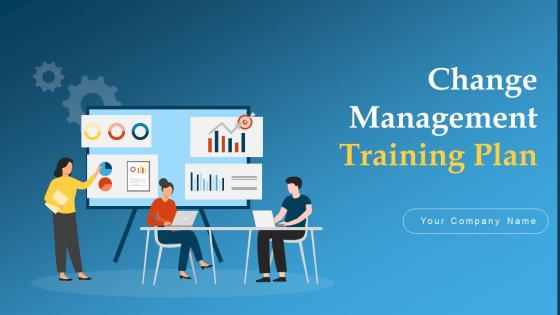
Slide 1: This slide introduces the Change Management Training Plan. Commence by stating Your Company Name.
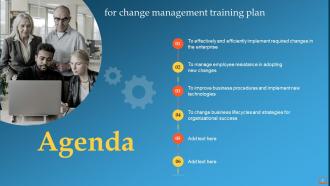
Slide 2: This slide depicts the Agenda of the presentation.
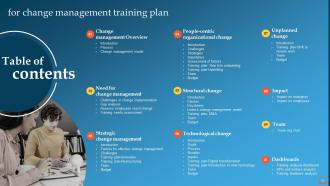
Slide 3: This slide incorporates the Table of Contents.
Slide 4: This slide highlights the Title for the Topics to be discussed further.
Slide 5: This slide covers the overview of change management which aims to reduce incidents and comply with the regulatory standards.
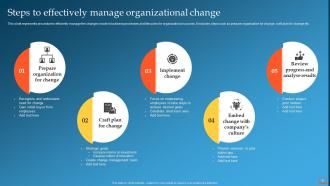
Slide 6: This slide showcases the Steps to effectively manage organizational change.
Slide 7: This slide represents the model which provides insights to employees regarding the importance of change implementation in organization.
Slide 8: This slide presents the Change management models-McKinsey 7S and Bridges transition model.
Slide 9: This slide exhibits the Change management models-Lewin's change management and PDCA model.
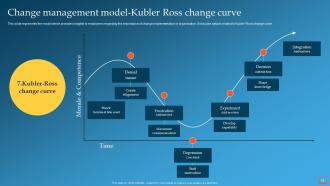
Slide 10: This slide deals with the Change management model-Kubler Ross change curve.
Slide 11: This slide portrays the Heading for the Contents to be discussed further.
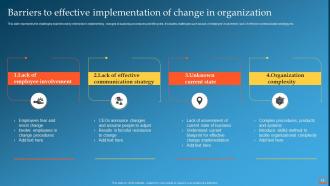
Slide 12: This slide shows the Barriers to effective implementation of change in organization.
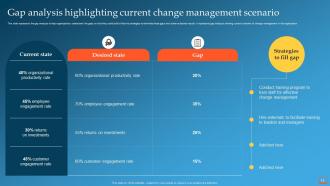
Slide 13: This slide reveals the Gap analysis highlighting current change management scenario.
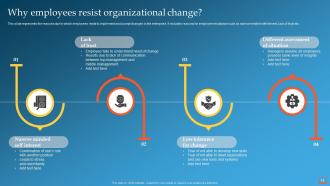
Slide 14: This slide represents the reasons due to which employees resist to implement and accept changes in the enterprise.
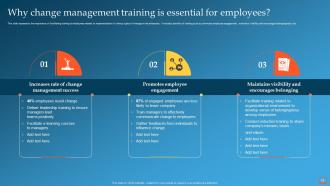
Slide 15: This slide talks about the importance of facilitating training to employees related to implementation of various types of changes in the enterprise.
Slide 16: This slide indicates the Title for the Ideas to be covered in the following template.
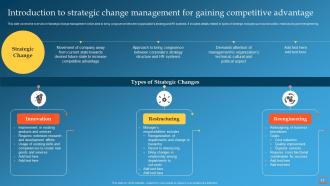
Slide 17: This slide covers the overview of strategic change management which aims to bring congruence between organization’s strategy and HR systems.
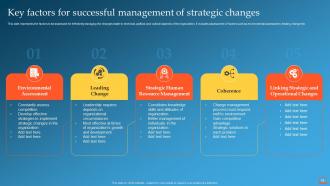
Slide 18: This slide states the Key factors for successful management of strategic changes.
Slide 19: This slide exhibits the Strategic change implementation issues experienced by enterprise.
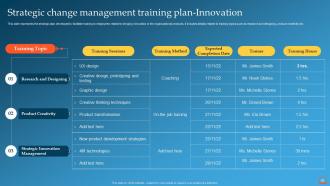
Slide 20: This slide illustrates the Strategic change management training plan-Innovation.
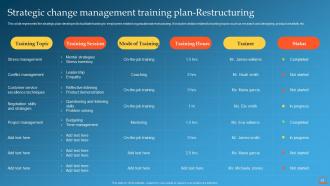
Slide 21: This slide deals with the Strategic change management training plan-Restructuring.
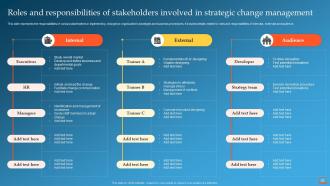
Slide 22: This slide highlights the Roles and responsibilities of stakeholders involved in strategic change management.
Slide 23: This slide presents the Budget plan for strategic change management.
Slide 24: This slide states the Heading for the Ideas to be discussed further.
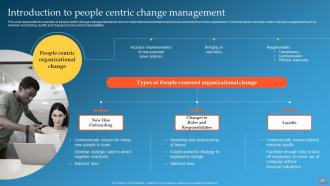
Slide 25: This slide reveals the overview of people centric change management which aims to implement new parental leave policies and new hires in the organization.
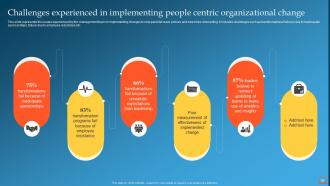
Slide 26: This slide talks about the Challenges experienced in implementing people centric organizational change.
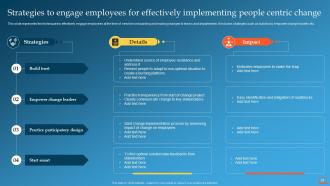
Slide 27: This slide focuses on the Strategies to engage employees for effectively implementing people centric change
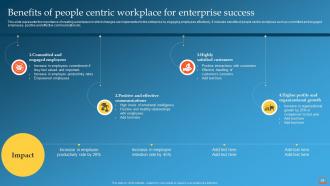
Slide 28: This slide portrays the Benefits of people centric workplace for enterprise success.
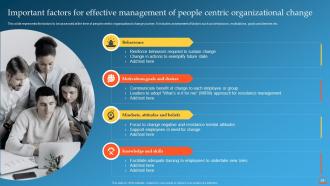
Slide 29: This slide highlights the Important factors for effective management of people centric organizational change.
Slide 30: This slide represents the plan prepared for facilitating training to employees related to new hire onboarding.
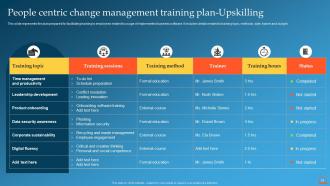
Slide 31: This slide showcases the People centric change management training plan-Upskilling.
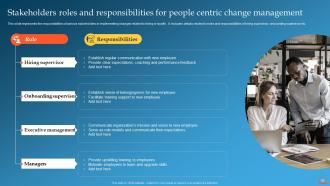
Slide 32: This slide depicts the Stakeholders roles and responsibilities for people centric change management.
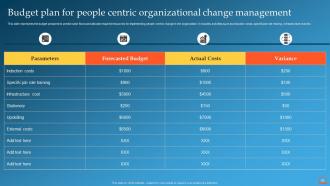
Slide 33: This slide presents the Budget plan for people centric organizational change management.
Slide 34: This slide indicates the Title for the Components to be covered in the forth-coming template.
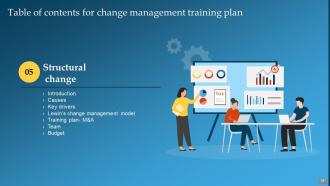
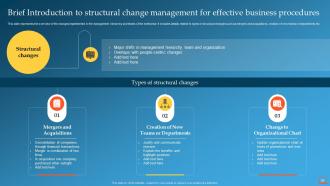
Slide 35: This slide gives a Brief Introduction to structural change management for effective business procedures.
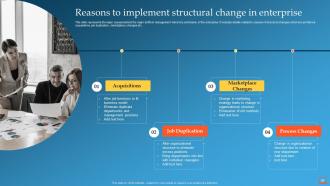
Slide 36: This slide exhibits the major causes behind the major shifts in management hierarchy and teams of the enterprise.
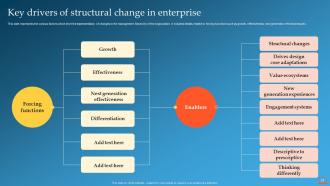
Slide 37: This slide states the Key drivers of structural change in enterprise.
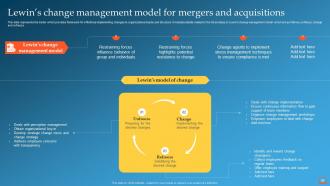
Slide 38: This slide represents the model which provides framework for effectively implementing changes to organizational teams and structure.
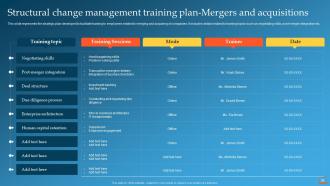
Slide 39: This slide provides information about the Structural change management training plan-Mergers and acquisitions.
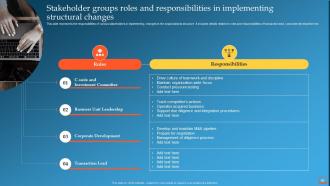
Slide 40: This slide talks about the Stakeholder groups roles and responsibilities in implementing structural changes.
Slide 41: This slide displays the Budget plan for structural change management.
Slide 42: This slide incorporates the Heading for the Topics to be further discussed.
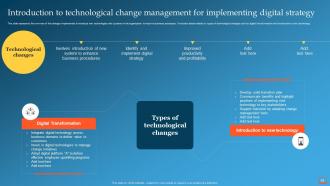
Slide 43: This slide gives an Introduction to technological change management for implementing digital strategy.
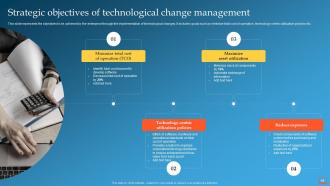
Slide 44: This slide reveals the objectives to be achieved by the enterprise through the implementation of technological changes.
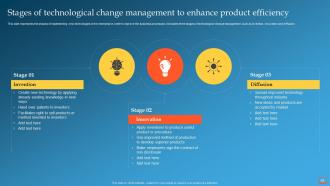
Slide 45: This slide depicts the phases of implementing new technologies in the enterprise in order to improve the business processes.
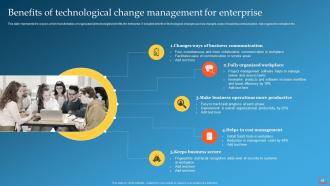
Slide 46: This slide includes the Benefits of technological change management for enterprise.
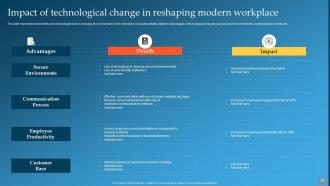
Slide 47: This slide highlights the Impact of technological change in reshaping modern workplace.
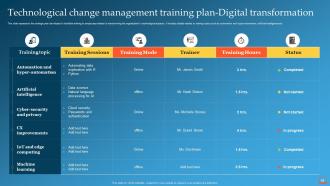
Slide 48: This slide talks about the Technological change management training plan-Digital transformation.
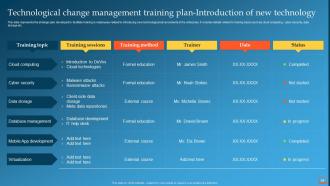
Slide 49: This slide portrays the Technological change management training plan-Introduction of new technology.
Slide 50: This slide showcases the responsibilities of various stakeholders in transforming the enterprise and introducing new technology.
Slide 51: This slide displays the Budget plan for technological change management.
Slide 52: This slide mentions the Title for the Topics to be covered further.
Slide 53: This slide gives an Introduction to unplanned change management for tackling unexpected events.
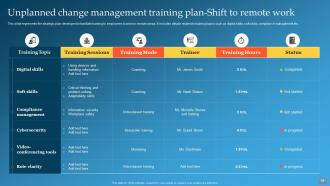
Slide 54: This slide talks about the Unplanned change management training plan-Shift to remote work.
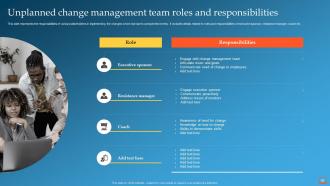
Slide 55: This slide portrays the Unplanned change management team roles and responsibilities.
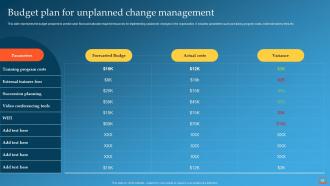
Slide 56: This slide represents the budget prepared to predict cash flows and allocate required resources for implementing unplanned changes in the organization.
Slide 57: This slide mentions the Heading for the Contents to be covered further.
Slide 58: This slide reveals the Impact of change management training on enterprise pre and post implementation.
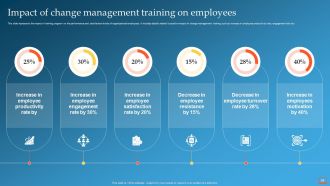
Slide 59: This slide showcases the Impact of change management training on employees.
Slide 60: This slide indicates the Title for the Ideas to be discussed in the following template.
Slide 61: This slide covers the details related to the team structure of the team responsible for implementing changes in the organization.
Slide 62: This slide depicts the Heading for the Ideas to be covered further.
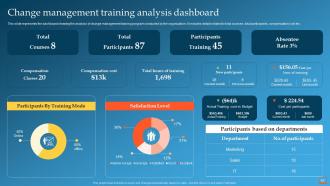
Slide 63: This slide represents the dashboard showing the analysis of change management training program conducted by the organization.
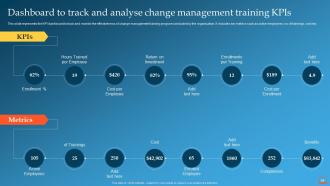
Slide 64: This slide elucidates the Dashboard to track and analyse change management training KPIs.
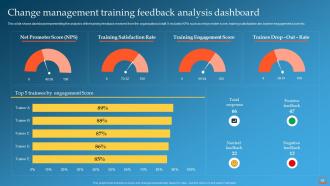
Slide 65: This slide displays the Change management training feedback analysis dashboard.
Slide 66: This is the Icons Slide containing all the Icons used in the plan.
Slide 67: This slide is used for showcasing some Additional information.
Slide 68: This is Our team slide. State your team-related information here.
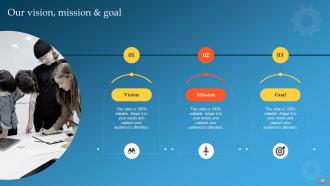
Slide 69: This slide exhibits the firm's vision, mission & goal.
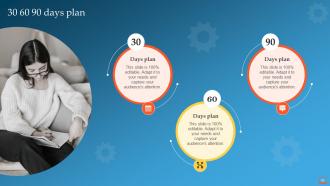
Slide 70: This is the 30 60 90 days plan slide for effective planning.
Slide 71: This is the Idea generation slide ofr encouraging fresh ideas.
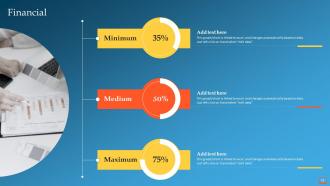
Slide 72: This slide shows information related to the Financial topic.
Slide 73: This slide contains the Post it notes for reminders and deadlines.
Slide 74: This is the Magnifying glass for minute details.
Slide 75: This slide reveals the SWOT Analysis.
Slide 76: This is Our Goal sldie. Mention your company goals here.
Slide 77: This is the Thank you slide for acknowledgement.
Change Management Training Plan Powerpoint Presentation Slides with all 82 slides:
Use our Change Management Training Plan Powerpoint Presentation Slides to effectively help you save your valuable time. They are readymade to fit into any presentation structure.





















FAQs for Change Management Training Plan
Look, communication is everything - like, actually talk to people instead of just sending an email blast. Get your leaders on board first because without them you're basically screwed. Oh, and don't expect everyone to love it immediately. Resistance happens. Train people properly and celebrate the little victories. Here's what I learned the hard way though: make sure you're fixing something that actually matters to them. I've watched so many "improvements" crash and burn because nobody cared about the problem. Start with your key people - once they're convinced, they'll do half the selling for you.
Honestly, start with surveying your team about how they handle change - you'll be shocked by what people actually tell you. Check if your current processes can pivot quickly when needed. Leadership support is huge here; without it, you're basically dead in the water. Also look at whether you've got decent communication systems and enough resources. I'd make a simple scoring thing for each area so you can spot the worst gaps. Oh, and don't forget to ask about past change experiences - that stuff really shapes how people react to new initiatives.
Honestly, leadership can totally make or break the whole thing. You need people at the top who'll actually explain *why* this change matters - not just demand everyone fall in line. They've got to walk the walk too, because nobody respects a leader who says one thing and does another. Quick wins are huge for keeping momentum going. Oh, and they can't just ignore when people push back or act confused (which always happens). If your leaders aren't visibly invested and supporting everyone through the mess, the whole initiative will just die a slow death. It's pretty predictable actually.
Honestly, you've gotta figure out why people are freaking out before doing anything else. Usually it's fear or feeling excluded from decisions - which, fair enough. Talk to them early about what's happening and why, because work surprises are the worst. Oh, and get the influential people on your team during planning so they'll actually help sell it to everyone else. Don't brush off complaints either - sometimes they're pointing out legit issues you didn't think of. If you involve people in the process instead of just announcing changes, they'll probably work with you rather than against you.
Talk to people early and don't keep them in the dark - that's honestly where most pushback comes from. Pull them into planning instead of just announcing stuff after you've already decided everything. Coffee chats work better than formal meetings half the time. Find your cheerleaders first - those people who actually like change and can help convince the skeptics. When someone complains, actually listen instead of brushing them off. Oh, and celebrate the small stuff! People need to feel like they're winning, not just surviving another corporate shake-up.
Dude, communication can totally make or break this whole thing. People absolutely hate being kept in the dark - like, who wouldn't? So you've gotta be super transparent about why changes are happening, when they'll hit, and what it means for everyone. Here's the thing though - you can't use the same message for your CEO and the warehouse crew. Different audiences need different approaches. Set up multiple ways for people to actually talk back to you, not just listen to announcements. Oh, and map out who your key people are first - saves you headaches later.
Ugh, the worst thing you can do is rush it. People need to actually understand what's happening and why - otherwise you'll get crazy pushback even on good changes. Communication is everything, but like, way more than you think you need. I learned this the hard way lol. Also make sure your leadership team is actually on board from the start, not just pretending to be. If the executives seem wishy-washy about it, everyone will notice. Oh and celebrate the small stuff! Sounds cheesy but it works. Expect everything to take twice as long as planned though.
Track the obvious stuff first - adoption rates, productivity, turnover, project deadlines. Numbers don't lie there. But honestly? The real gold is in those informal check-ins with your team. Send out surveys, grab coffee with people, see if they're actually buying into this thing or just faking it. I've seen too many "successful" changes that were total disasters under the surface. Measure early and often since people usually hate change at first, then warm up to it. Oh, and set up your tracking before you launch - learned that one the hard way.
Look, Kotter's 8-Step Process is probably your best bet - it's like the tried-and-true method everyone swears by for big organizational changes. ADKAR's solid if you're more worried about getting people on board (the whole awareness, desire, knowledge thing). But honestly? I've watched so many teams waste weeks debating which framework is "right" instead of just picking one and getting started. That drives me nuts. If you're working somewhere more agile, check out Lean Change Management too. My take is just match it to how your company actually operates, then tweak as you figure out what works.
Dude, tech is honestly a game-changer for managing change at work. Collaboration platforms keep everyone in the loop, project management tools help you track milestones, and those pulse survey apps show you how people actually feel about what's happening. The data visualization stuff is clutch when you need to show your boss what's working. Digital training helps too - people can build skills during transitions without the usual chaos. Oh, and don't go crazy trying to implement five different tools at once. Pick one that fixes your biggest headache first, then build from there.
Look, you gotta figure out who can actually kill your project before you start anything. I've watched so many changes crash and burn because someone missed that one person with veto power - super frustrating to watch. Map out everyone who's affected or has influence first. Then figure out their support level. Are they on board? Neutral? Ready to sabotage? Once you know that, you can plan your approach better. Talk differently to different people. Build alliances with the right folks. It's basically knowing the playing field before you step on it.
Honestly, the real trick is making change feel permanent, not just another company initiative that'll fade away. Get your managers on board first - they're the ones who'll either kill it or keep it alive. Set up regular check-ins so you can spot problems before they spiral. People need to see wins early on, otherwise they'll just drift back to whatever felt easier before. Oh, and don't just measure the obvious stuff. Track what actually matters for your specific situation. The change isn't really "done" until going backwards feels weird to everyone involved.
Honestly, training is make-or-break for change management. People freak out when they don't know how to do something new - it's just human nature. I've watched so many companies mess this up by assuming everyone will magically adapt. You can't just throw people into new systems and hope for the best. Start your training plan way before you even announce what's changing. Cover both the actual skills they'll need and help them get comfortable with the whole idea. Oh, and don't just do it once - keep supporting them throughout the transition. It's way cheaper than dealing with failed changes later.
Honestly, cultural differences can totally kill your change project if you're not thinking about it upfront. Japan and Germany aren't gonna respond the same way your Silicon Valley team does - different cultures have completely different expectations around decision-making and communication styles. Some places need tons of consensus-building time, others want clear top-down direction. It's actually pretty wild how different the responses can be. You'll definitely want to customize your approach for each region. Get local leaders involved early and give yourself way more time than you think you need for the cultural stuff.
Honestly, just talk to your team constantly during this stuff. People get weird when they don't know what's going on, so tell them everything - even the parts you're still figuring out. Nobody likes being lied to anyway. Listen when they complain (and they will complain). Give everyone something specific to do in the process so they're not just sitting there getting steamrolled. Oh, and celebrate the little victories along the way - keeps people from losing their minds. The whole thing sucks for everyone, so don't pretend it doesn't. Acknowledge that it's hard and you'll get way better buy-in.
-
Their professional templates are very impressive, even my manager was curious about the source. I am very grateful.
-
“Easy to use. I always wanted to have a quick search for products and SlideTeam has helped me have it.”