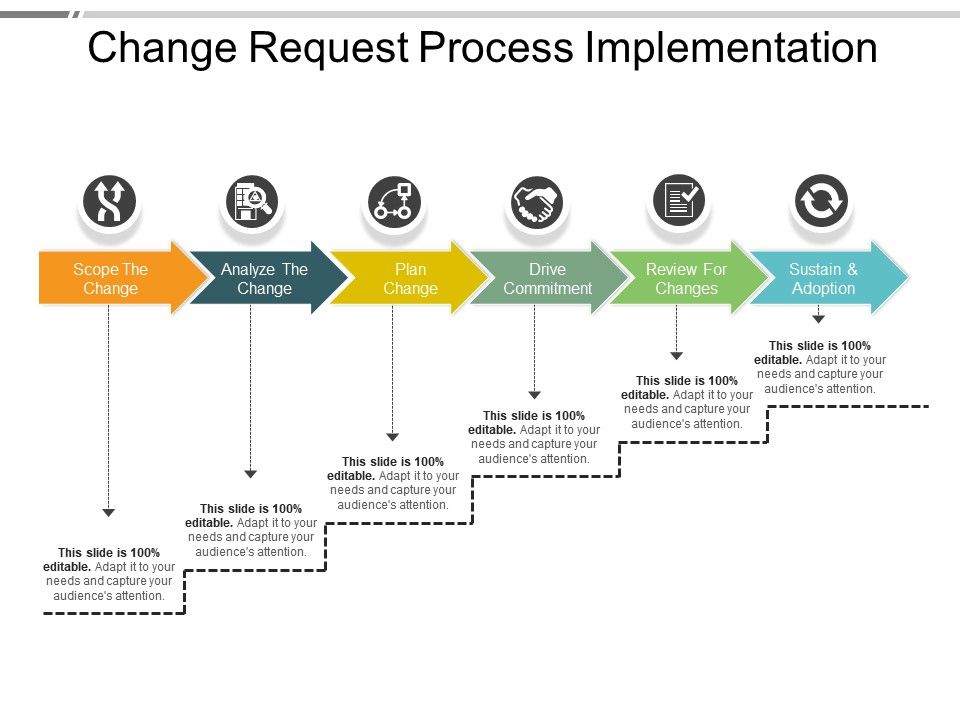
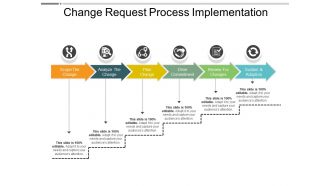
Implementación del proceso de solicitud de cambio

Rating:
80%
Slide 1 of 5
Favourites Favourites

Try Before you Buy Download Free Sample Product

Audience Impress Your
Audience
Editable 100%
Editable
Time Save Hours
of Time
The Biggest Sale is ending soon in
0
0
:
0
0
:
0
0
Rating:
80%

Características de estas diapositivas de presentación de PowerPoint:

Presentación de la diapositiva de PowerPoint de implementación del proceso de solicitud de cambio. Su diseño PPT es 100% editable y, por lo tanto, puede modificar la fuente, el color, el tamaño de fuente y las formas. Puede descargar este tema PPT en formatos como PDF, PNG y JPG. Esta presentación de PowerPoint es compatible con Google Slides y es de fácil acceso. Está disponible en proporciones de aspecto 4: 3 y 16: 9.

FAQs for Change

Honestly, most change fails because nobody explains WHY it's happening - people just hate being left in the dark. Get your leadership team actually excited first (fake enthusiasm is so obvious). Then find your early champions and let them help sell it. Don't rush the timeline though, that's where everything falls apart. Communicate way more than feels necessary. Resistance is gonna happen no matter what, so just expect it. Oh and celebrate the small stuff! Even tiny wins help people feel like it's actually working. Involving people in planning makes a huge difference too - they buy in when they have some control.

Honestly, culture makes or breaks everything when it comes to change. Some workplaces are naturally cool with trying new stuff - those are the lucky ones. But most places? People freak out over the tiniest shifts because "that's not how we do things here." I've watched amazing plans crash and burn because nobody thought about how stubborn everyone would be. You gotta read the room first. Are your coworkers generally adaptable or do they panic when someone moves their stapler? Once you know that, find the people who actually like change and get them on your side. They'll do half the work for you convincing everyone else.

Honestly, communication can totally make or break your change initiative. People need to understand WHY things are changing, not just what they're supposed to do differently. I've seen too many projects fail because leadership just assumed everyone would get on board without explanation. Keep giving regular updates - otherwise rumors start flying and everyone gets anxious. Oh, and create actual ways for people to give feedback instead of just talking AT them. Don't sugarcoat the tough stuff either. Map out who needs what info and when, because one company-wide email definitely won't cut it.

Honestly, just be straight with everyone from day one. Tell them what's happening and why - even the stuff you're not sure about yet. People can tell when you're bullshitting them and it kills any trust you had. Mix up how you talk to them too. Town halls are fine, but also do one-on-ones and just casual check-ins. Actually listen when they complain instead of giving some corporate non-answer. Here's the thing though - get your key people involved in planning this mess if you can. When they feel like they're helping shape things instead of just getting steamrolled, engagement goes way up.

Honestly, it usually boils down to fear - people don't know what's coming and hate losing control. Job security is huge too. Will I still be needed? Do I even have the right skills? Past changes probably went badly (surprise, surprise), so now everyone's skeptical. Plus some folks just love their routines. Oh, and terrible communication from management makes everything worse - nothing spreads faster than workplace rumors. Best approach? Be upfront about what's happening, get people involved in the process instead of just telling them what to do, and actually train them properly.

Kotter's 8-Step Process is probably your best bet - it's basically the gold standard that walks you through creating urgency all the way to making changes stick. ADKAR works well too if you want something focused on individual change (Awareness, Desire, Knowledge, Ability, Reinforcement). Teams love overcomplicating this stuff with fancy tools when honestly, a basic stakeholder map and change readiness check usually gets you pretty far. Prosci's good if your company wants something more formal. One thing though - pick a framework and actually stick with it. I've seen too many teams try mixing approaches and it just ends up confusing everyone.

Honestly, you can't use the same approach for every type of change - they're just too different. Strategic stuff needs executives all over it and tons of company-wide messaging since you're basically changing direction. But operational changes? Way more about tweaking processes and getting the right training to people. Tech changes are weirdly the trickiest though - everyone assumes they're simple system swaps, but they completely mess with people's daily routines. You've got to match your timeline and who you're talking to based on what you're actually changing. Figure out which type you're dealing with first, then build from there.

So here's what I'd focus on - definitely track the obvious stuff like adoption rates, ROI, and how quickly people get value from the change. But don't sleep on the softer metrics either. Employee satisfaction and resistance levels tell you way more than you'd think about whether this thing will actually stick. Communication effectiveness is huge too - are people actually getting the message? Oh, and timeline milestones because let's be real, nobody wants to explain why everything's behind schedule. Pick maybe 3-4 key metrics upfront though. Trust me, trying to measure everything just makes you crazy later.

Honestly, the trick is weaving changes into your actual daily routine and company culture - not just sending one email about it. Most leaders mess up by celebrating way too early (like whoops, we made it through week one!). Real change sticks when you bake new behaviors into how you measure performance, who you hire, and what gets rewarded. Find people at different levels who genuinely care about the change - they'll keep things moving when everyone else gets distracted. Set up ways to spot backsliding before it gets bad. And yeah, celebrate the tiny wins along the way.

Honestly, the biggest thing is being super transparent about what's happening and why. People absolutely hate workplace surprises - like, it's their worst nightmare. Get your team involved in the planning if you can, and don't forget to celebrate those little wins. Regular check-ins through team meetings or whatever works for you really help calm people's nerves. Upskilling is huge too. When people feel prepared, they're way less likely to freak out about changes. Oh, and find your change champions first - you know, those employees who roll with everything and can get others on board.

Dude, feedback during change is everything. You'll catch pushback before it derails things and actually know what's confusing people instead of just guessing. Multiple channels work best - surveys, one-on-ones, maybe those anonymous boxes (people love those honestly). When folks feel heard, they're way more willing to roll with changes. Sometimes they literally just need to complain first before they'll cooperate, which is... fair I guess? But here's the thing - you gotta actually DO something with what you hear. Don't just collect complaints and forget about them.

So stakeholder analysis is like mapping out who can help or hurt your project before you even start. First, figure out who gets impacted and who has real power to influence things. There's always that one person who'll fight you on everything - honestly, sometimes for no good reason. Map them on a grid showing influence vs impact. This tells you where to spend your time and energy. You'll spot potential roadblocks early instead of getting blindsided later. Without doing this upfront, you're basically guessing at your communication strategy and might miss the people who could either back you up or completely sabotage everything.

So planned change is basically when you've got everything mapped out ahead of time - your timeline, phases, what you're trying to achieve, all that stuff. Emergent change? That's when you're just rolling with whatever comes up and figuring it out as you go. If you can actually predict what's gonna happen, planned works awesome (like when you're upgrading systems or whatever). But honestly, most situations are too unpredictable for that. Real change usually ends up being some chaotic combination of both approaches. My take? Start with a rough plan but don't get too attached to it. You'll probably end up throwing half of it out the window anyway when things get weird.

Look, you can't just drop a big change on people and hope they'll figure it out - that never works. Training is what actually makes or breaks the whole thing. People need real skills, not just some announcement from management. Honestly, the timing matters more than most people think. Start by figuring out where the biggest knowledge gaps are, then build training around those specific problems instead of boring theory stuff. Good training makes scary changes feel way more doable. It's really about giving people confidence they can handle whatever's coming next.

Honestly, you're gonna need to over-communicate like crazy - video calls, Slack, emails, whatever actually gets people's attention. Remote teams miss all those random coffee conversations where info naturally spreads. Document stuff way more than you think you need to. One-on-ones become super important because it's harder to read the room virtually. Oh, and start small with pilot groups first - I learned that the hard way on my last project. The whole process just takes longer when everyone's distributed. Be patient with it, even if leadership's breathing down your neck for quick results.

Ratings and Reviews

80% of 100
Review Form
Write a review
Most Relevant Reviews
  1. 80%

    by Davis Gutierrez

    Excellent products for quick understanding.
  2. 80%

    by Devon Ferguson

    Informative design.

2 Item(s)

per page: