Channel Design Decisions In Marketing Management

Rating:
100%
Channel Design Decisions In Marketing Management
Slide 1 of 9
Favourites Favourites

Try Before you Buy Download Free Sample Product

Audience Impress Your
Audience
Editable 100%
Editable
Time Save Hours
of Time
The Biggest Sale is ending soon in
0
0
:
0
0
:
0
0
Rating:
100%
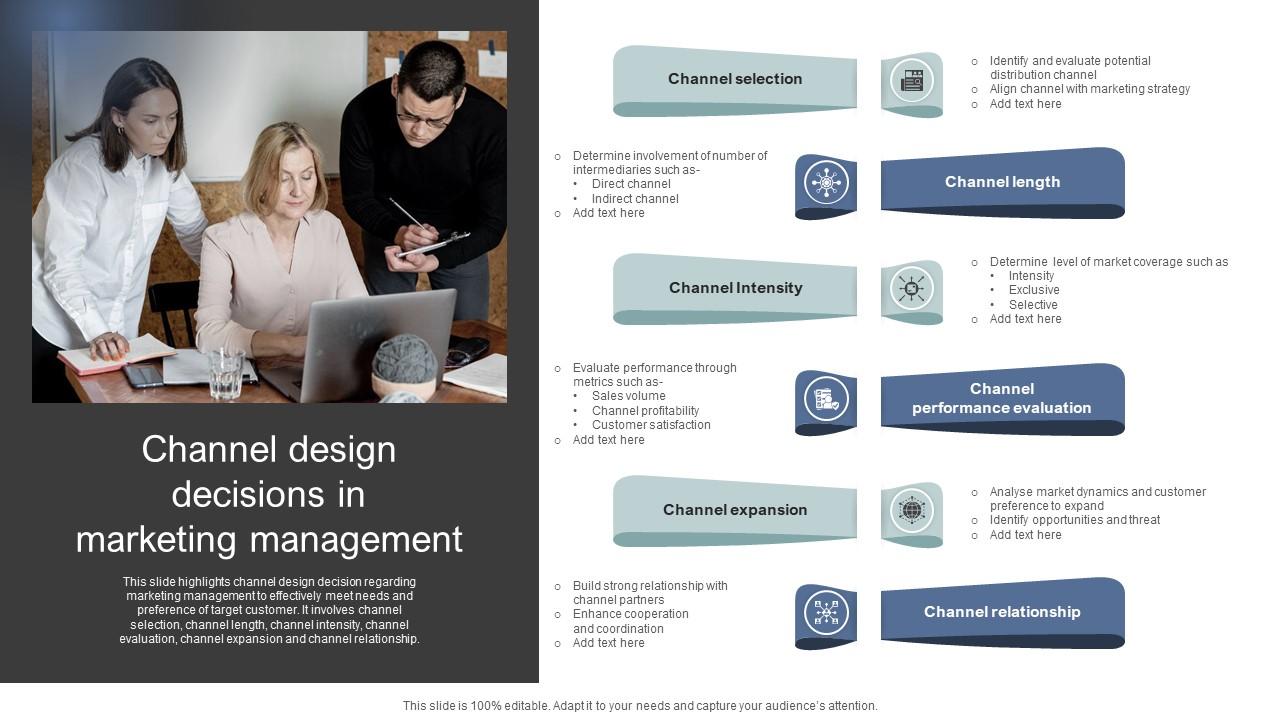
This slide highlights channel design decision regarding marketing management to effectively meet needs and preference of target customer. It involves channel selection, channel length, channel intensity, channel evaluation, channel expansion and channel relationship. Introducing our premium set of slides with Channel Design Decisions In Marketing Management. Ellicudate the six stages and present information using this PPT slide. This is a completely adaptable PowerPoint template design that can be used to interpret topics like Channel Selection, Channel Intensity. So download instantly and tailor it with your information.

People who downloaded this PowerPoint presentation also viewed the following :

FAQs for Channel Design Decisions

Honestly, start by figuring out where your customers actually buy stuff - are they online shoppers or do they still hit up stores? Your product matters too. Complex things usually need demos, but simple products can sell themselves online. Watch your margins though - some channels are total profit killers. The classic dilemma is control vs reach. Going direct means you control everything but you're kinda limiting yourself. Retail partnerships get you everywhere but then you lose influence over how customers experience your brand. I'd probably sketch out 2-3 options and test small first before throwing real money at it.

Honestly, market research is like your GPS for finding customers - it shows you exactly where they hang out and how they actually want to buy stuff. Look into what your competitors are doing, check out buying patterns, survey your current customers about their dream purchasing experience. Too many companies (and I've been guilty of this too) just assume they know what works without asking anyone. Short answer: let the data tell you if you need direct sales, partnerships, online stuff, or whatever mix makes sense. Your audience might want self-service options or need hand-holding - you won't know until you dig in.

Dude, technology is what makes multi-channel stuff actually work instead of being a total disaster. Your CRM tracks customers everywhere they go. Analytics show you what's working. Marketing automation keeps your messaging from being all over the place - which happens more than you'd think. Without integration tools you're basically guessing at everything. Most people need a CRM, Google Analytics, some customer data platform, and whatever automation you can afford. Oh, and audit your current tools first before buying anything new. You might already have half this stuff sitting around.

Honestly, you've gotta figure out where each channel actually shines instead of having them fight each other. Direct sales work awesome for complicated stuff that needs hand-holding or when you want total control over how customers experience your brand. Partners and distributors? They're perfect for hitting markets you can't reach easily or don't know well enough. The trick is setting up clear boundaries - maybe direct handles the big enterprise deals while partners go after smaller businesses? I'd start by looking at where your channels are stepping on each other's toes right now and figure out cleaner ways to divide things up.

Look, customer behavior is literally everything when designing your channels. Self-service types? Give them solid online portals and bots. Relationship people need human touchpoints - account managers, phone support, that stuff. Shopping habits are huge too. Impulse buyers want zero friction on mobile while researchers need tons of product details everywhere. It's kinda like designing around how people actually use their kitchen, not some magazine fantasy. Map out real customer journeys first (this step gets skipped way too often). Then build channels that work with their natural flow instead of fighting it.

Honestly, I'd look at four main things when comparing channels. Cost per sale is huge - what's it actually costing you to get customers? Then there's reach - are you even hitting the right people? Customer experience matters too, plus how fast you can get to market. Don't just obsess over raw sales numbers though, that's where most people mess up. Control is another factor - like how much say do you have over pricing and messaging? Maybe make a simple 1-10 scorecard for each channel on these points, then weight them based on what matters most to your business. Makes it way easier to see which ones are actually worth it.

Honestly, your channel choice is like the foundation for everything else. Direct-to-consumer means you're doing completely different messaging and pricing than if you go through retailers. Amazon vs your own site? Totally different playbooks. Each channel affects your margins, how much control you get over customer experience, what data you can actually collect - even which marketing tactics will work. I always tell people to pick where their customers are already hanging out and shopping. No point fighting against how people naturally want to buy from you.

Honestly, going global totally flips your distribution strategy on its head. What crushes it in the US might be a complete disaster in Europe or Asia - different cultures, regulations, the whole nine yards. You can't just copy-paste your domestic playbook and call it a day. Local partners become super important (though they can drive you nuts sometimes). Each region has its own quirks and competitors you've never heard of. My advice? Build flexibility into your channels from day one. That way you can customize without starting from scratch every single time you enter a new market.

Honestly, partnerships are clutch for filling those annoying gaps without doing everything yourself. Find companies already talking to your customers or ones with skills you don't have - could be distributors, tech people, whoever makes sense. You're basically using their connections and setup, which is genius if you ask me. Just don't partner with direct competitors (obviously). Pick people whose goals match yours. Hash out who does what, how you split money, and success metrics before you start - saves drama later. Test one partnership first, see what actually works, then do more.

Honestly, you really need flexibility because customer behavior shifts all the time - COVID proved that when brands scrambled to go direct after relying on retail partners. Mix up your channels instead of putting all your eggs in one basket. Modular processes help since they work across different touchpoints. Don't lock yourself into those exclusive long-term deals either (learned that one the hard way). Technology that connects everything smoothly is worth the investment. Here's what I'd do: map out 2-3 backup distribution plans and figure out how fast you could switch gears if needed.

Honestly, you've gotta match your brand vibe to where you're showing up. Like if you're going for that premium feel, don't go posting on bargain hunter forums - it'll just confuse people. Think about where your actual customers spend their time online, not just the cheapest places to blast ads. Instagram and TikTok are perfect for brands that can be playful and real, but they'd feel super weird for serious business stuff. I'd say audit each platform against what you actually stand for first. Start small with a few tests, then go hard on whatever feels natural. You'll know pretty quick when something clicks vs. when you're forcing it.

Honestly, the biggest thing is you're working with way less money and people than the big guys. Can't test out a bunch of different channels at once or build some fancy distribution setup. Retailers know you need them more than they need you, so the deals usually suck. But here's the thing - you can actually change direction super fast when something's not working. I'd say pick one, maybe two channels max and just crush those instead of half-assing five different ones. Better to be amazing at one thing than mediocre everywhere, you know?

So channel conflict is basically when your distribution partners start stepping on each other's toes - online stores undercutting physical ones, resellers trash-talking competitors, that fun stuff. What's worked for me? Set clear territories and minimum pricing rules upfront. Give each channel something unique to sell or a different angle. Honestly, separating product lines between channels can save you major headaches later. Communication is huge though - like, don't wait until partners are already fighting. Get solid agreements in place early because once people start competing dirty, it gets messy fast.

Look, you want omnichannel when your customers are actually jumping between channels - researching online then buying in-store, or starting purchases on their phone and finishing on desktop. Banking and retail especially need this since people expect smooth transitions. Honestly though? Most companies think they need it when they really just suck at executing one channel well first. But if your data shows real cross-channel behavior and you've got the budget to integrate everything properly, then yeah - it'll stop those annoying "please start over" moments that make people bail. I'd map out how customers actually move around before spending the money.

Start by checking out your current partners' green practices - you might be surprised what you find. Pick distributors who actually walk the walk on environmental stuff, not just talk about it. Efficient shipping, less wasteful packaging, real carbon goals. Digital channels are great since there's no physical transport, but honestly only if your customers prefer that anyway. I'd also think about the bigger picture - do these partners help with returns, recycling, that kind of thing? When you're choosing new channel partners, just make sustainability one of your must-haves from the start.

Ratings and Reviews

100% of 100
Write a review
Most Relevant Reviews
  1. 100%

    by Damian Martin

    Loved the fact that SlideTeam provides clean, high-definition, and professional PowerPoint products. 
  2. 100%

    by Clifton Jenkins

    The designs are very attractive and easy to edit. Looking forward to downloading more of your PowerPoint Presentations.

2 Item(s)

per page: