Checklist For Hotel Housekeeping Department Training Ppt
Try Before you Buy Download Free Sample Product
Audience
Editable
of Time
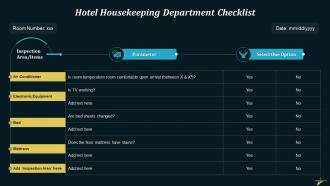
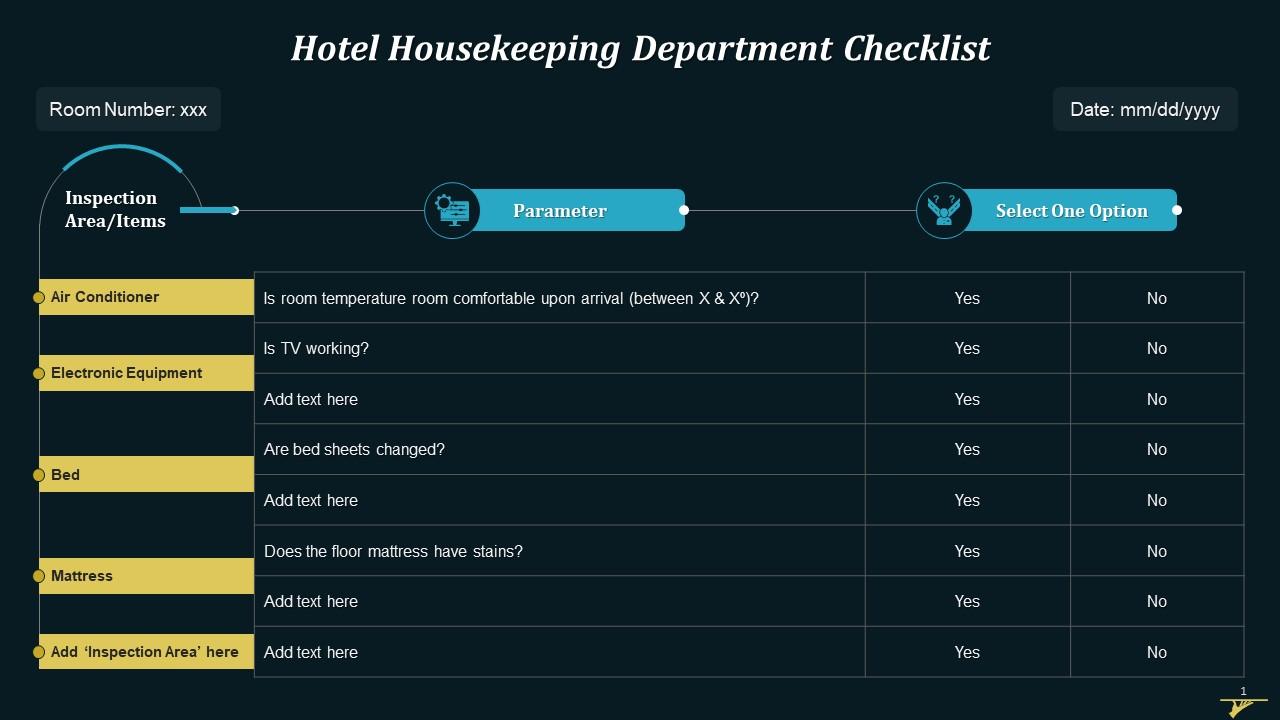
This slide showcases a housekeeping department checklist template to inspect cleanness and hygiene in hotel rooms.
People who downloaded this PowerPoint presentation also viewed the following :
Checklist For Hotel Housekeeping Department Training Ppt with all 19 slides:
Use our Checklist For Hotel Housekeeping Department Training Ppt to effectively help you save your valuable time. They are readymade to fit into any presentation structure.
FAQs for Checklist For Hotel Housekeeping
Essential skills include attention to detail, time management, proper cleaning techniques, inventory management, and guest service protocols. These competencies enable housekeepers to maintain quality standards, efficiently clean rooms within allocated timeframes, and handle guest requests professionally, with many hotels finding that comprehensive training ultimately delivers improved guest satisfaction scores and operational efficiency.
A training checklist enhances operational efficiency by standardizing procedures, reducing task completion times, and minimizing errors across housekeeping operations. Through systematic training protocols, hotels streamline room turnover processes, improve quality consistency, and optimize staff productivity, with many hospitality organizations finding that structured checklists ultimately deliver faster guest services and enhanced operational performance.
Hotel housekeeping safety protocols should include proper chemical handling and storage procedures, personal protective equipment usage, ergonomic lifting techniques, slip and fall prevention measures, and emergency response procedures. These protocols streamline operations by reducing workplace injuries, minimizing liability risks, and ensuring regulatory compliance, with many hotels finding that comprehensive safety training ultimately delivers lower insurance costs, improved staff retention, and enhanced guest confidence.
Technology integration in hotel housekeeping training includes mobile learning apps, virtual reality simulations, digital checklists, video-based modules, and automated tracking systems. These technologies streamline training delivery by enabling self-paced learning, providing realistic practice scenarios, and ensuring consistent standards across properties, with many hotel chains finding that digital platforms reduce training time while improving retention and service quality.

Communication plays a central role in effective hotel housekeeping training by ensuring clear task expectations, safety protocols, quality standards, and guest service procedures are consistently understood across all staff levels. Through structured communication channels, hotels streamline training delivery, enhance team coordination, and minimize operational errors, with many properties finding that strong communication frameworks ultimately deliver improved guest satisfaction and reduced staff turnover.

Sanitation and hygiene standards fundamentally shape housekeeping training curriculum by establishing comprehensive protocols for room cleaning, bathroom disinfection, linen handling, surface sanitization, and equipment maintenance procedures. These standards drive specialized training modules that focus on chemical safety, cross-contamination prevention, and health compliance requirements, with hotels increasingly finding that rigorous hygiene training delivers enhanced guest satisfaction and operational efficiency.
Essential cleaning techniques include top-to-bottom cleaning methodology, proper disinfection protocols, efficient bed-making procedures, bathroom sanitization standards, and systematic room inspection processes. These foundational skills enable housekeepers to maintain consistent quality standards, reduce cleaning times by up to 30%, and ensure guest satisfaction, with many hotels finding that well-trained staff significantly enhance operational efficiency and brand reputation.
Training programs address eco-friendly practices in hotel housekeeping by incorporating sustainable cleaning protocols, water conservation techniques, waste reduction strategies, and energy-efficient procedures into comprehensive curriculum modules. Through hands-on workshops and certification processes, hospitality organizations streamline environmental compliance while reducing operational costs, with many hotels finding that trained staff deliver enhanced guest satisfaction and competitive advantage in an increasingly sustainability-focused marketplace.
Common housekeeping training challenges include high staff turnover disrupting program continuity, language barriers among diverse workforces, time constraints balancing training with operational demands, maintaining consistent quality standards across teams, and adapting to varying guest expectations. These obstacles can significantly impact service delivery, with many hotels finding that structured training programs, multilingual resources, and ongoing mentorship help streamline operations while enhancing guest satisfaction and staff retention.
Feedback mechanisms can be implemented through digital surveys, peer evaluations, supervisor assessments, guest comment analysis, and real-time mobile reporting systems. These approaches enhance training effectiveness by identifying skill gaps, tracking performance improvements, and enabling continuous program refinement, with many hotels finding that structured feedback loops ultimately deliver higher guest satisfaction scores and operational efficiency.
Employee motivation significantly enhances housekeeping training effectiveness by increasing knowledge retention, accelerating skill development, and improving attention to detail during cleaning procedures. Motivated staff demonstrate greater commitment to quality standards, participate more actively in training sessions, and consistently apply learned techniques, with many hotels finding that engaged housekeeping teams deliver superior guest experiences and maintain higher cleanliness ratings.
Hotel housekeeping training checklists should evolve by incorporating technology integration, sustainability practices, enhanced sanitization protocols, personalized service standards, and contactless service options. These adaptations enable hotels to meet modern guest preferences for eco-friendly practices, health safety, and seamless digital experiences, while many properties find that updated training protocols significantly improve guest satisfaction scores and operational efficiency.
Best practices for training new hires in hotel housekeeping include comprehensive room cleaning protocols, safety procedures, time management techniques, guest service standards, and equipment operation guidelines. These training elements streamline onboarding by establishing consistent quality standards, reducing supervision needs, and enhancing guest satisfaction, with many hotels finding that structured programs ultimately deliver faster service times and improved operational efficiency.
Mentorship programs enhance traditional housekeeping training by providing personalized guidance, real-time feedback, and hands-on expertise transfer that supplements standard protocols. Experienced housekeepers mentor newcomers through complex scenarios, quality standards, and efficiency techniques, with many hotels finding that this combination accelerates skill development, reduces turnover, and ultimately delivers more consistent guest experiences while building stronger team cohesion.
Key performance indicators for post-housekeeping training include room cleaning time, guest satisfaction scores, quality inspection ratings, inventory accuracy, and staff retention rates. These metrics enable hotels to measure training effectiveness through reduced cleaning times, higher guest reviews, and improved operational efficiency, with many properties finding that comprehensive tracking ultimately delivers enhanced service standards and competitive advantage.
-
They helped us design the pamphlets for our church’s food drive! The people loved the design, and I’m happy to say it was successful. Thank you, SlideTeam!
-
Unique research projects to present in meeting.