Chief Strategy Officer Playbook Organizational Level Balance Scorecard System Improved

Rating:
100%
Chief Strategy Officer Playbook Organizational Level Balance Scorecard System Improved
Slide 1 of 6
Favourites Favourites

Try Before you Buy Download Free Sample Product

Audience Impress Your
Audience
Editable 100%
Editable
Time Save Hours
of Time
The Biggest Sale is ending soon in
0
0
:
0
0
:
0
0
Rating:
100%
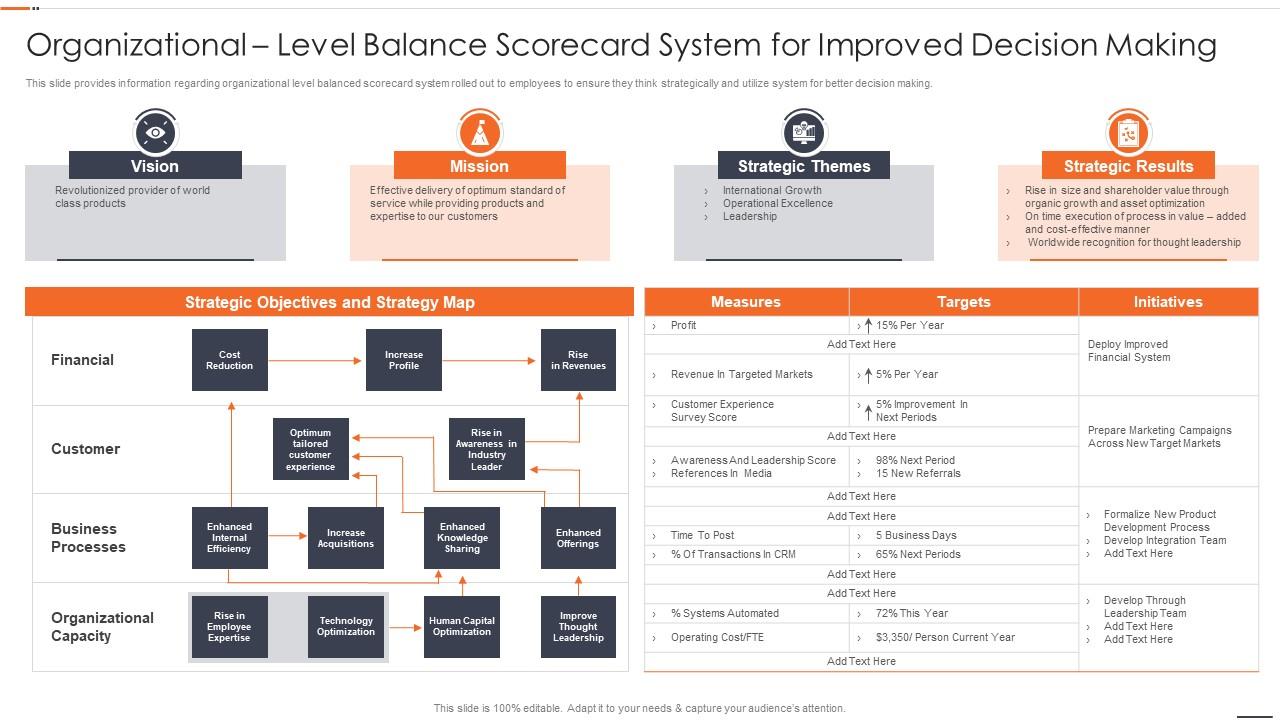
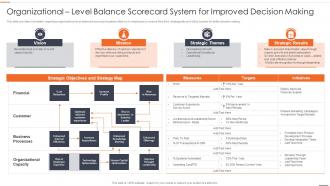
This slide provides information regarding organizational level balanced scorecard system rolled out to employees to ensure they think strategically and utilize system for better decision making. Deliver an outstanding presentation on the topic using this Chief Strategy Officer Playbook Organizational Level Balance Scorecard System Improved. Dispense information and present a thorough explanation of Scorecard, Organizational, Improved using the slides given. This template can be altered and personalized to fit your needs. It is also available for immediate download. So grab it now.

People who downloaded this PowerPoint presentation also viewed the following :

FAQs for Chief Strategy Officer Playbook Organizational Level Balance

A Chief Strategy Officer oversees long-term strategic planning, market analysis, competitive intelligence, business development initiatives, and organizational transformation efforts. They collaborate with executive leadership to identify growth opportunities, assess market trends, and guide strategic decision-making, with many organizations finding that effective CSOs deliver improved operational efficiency, enhanced competitive positioning, and accelerated business growth through data-driven strategic frameworks.

A Chief Strategy Officer focuses specifically on developing and implementing long-term strategic initiatives, market analysis, and competitive positioning, while a Chief Executive Officer oversees overall company operations, stakeholder relationships, and ultimate decision-making authority. The CSO enables strategic depth and specialized planning expertise, while the CEO balances multiple organizational priorities, with many companies finding that this division enhances strategic focus and operational efficiency.

A Chief Strategy Officer should possess strategic thinking, market analysis expertise, financial acumen, leadership capabilities, and strong communication skills. These competencies enable CSOs to identify growth opportunities, assess competitive landscapes, and align cross-functional teams, with many organizations finding that effective strategy officers ultimately deliver sustainable revenue growth and enhanced market positioning.

Chief Strategy Officers assess and prioritize strategic initiatives through comprehensive market analysis, competitive benchmarking, financial modeling, stakeholder alignment, and resource evaluation. By systematically scoring initiatives against strategic objectives and ROI potential, CSOs enable organizations to allocate resources effectively, with many companies finding that structured prioritization frameworks deliver measurable competitive advantage and accelerated growth outcomes.

A Chief Strategy Officer enhances corporate culture by aligning strategic vision with organizational values, facilitating cross-departmental collaboration, and ensuring transparent communication of company direction and priorities. Through strategic initiatives that emphasize employee development, innovation opportunities, and clear growth pathways, CSOs create engaging work environments where teams understand their contributions to broader business objectives, ultimately delivering higher retention rates and improved organizational performance.

Data analytics enables Chief Strategy Officers to make evidence-based decisions by analyzing market trends, customer behavior, competitive positioning, financial performance, and operational metrics. Through predictive modeling and real-time dashboards, CSOs can identify emerging opportunities, assess strategic risks, and measure initiative effectiveness, with many organizations finding that data-driven strategies deliver measurable competitive advantages and improved ROI.

A Chief Strategy Officer can effectively communicate vision by conducting regular cross-departmental presentations, creating clear strategic frameworks with measurable goals, and establishing consistent messaging protocols that align with each department's specific objectives. Through interactive workshops, quarterly alignment sessions, and collaborative planning processes, many organizations find that CSOs successfully bridge strategic vision with operational execution, ultimately ensuring unified direction and enhanced organizational coherence across all business units.

Chief Strategy Officers in dynamic markets face challenges including rapid technological disruption, shifting consumer behaviors, competitive landscape changes, resource allocation uncertainties, and stakeholder alignment difficulties. These complexities require strategic agility and continuous adaptation, with many organizations finding that successful CSOs leverage real-time market intelligence, cross-functional collaboration, and scenario planning to navigate uncertainty while maintaining competitive advantage.

A Chief Strategy Officer leverages competitive intelligence by analyzing market positioning, competitor strengths and weaknesses, pricing strategies, product developments, and strategic partnerships through systematic data collection and analysis. This intelligence enables informed decision-making about market entry, resource allocation, and strategic initiatives, with many organizations finding that comprehensive competitive insights drive more effective positioning and sustainable competitive advantages.

A Chief Strategy Officer can foster innovation through cross-functional collaboration teams, dedicated innovation labs, strategic partnerships with startups, employee idea incubation programs, and performance metrics tied to creative initiatives. These approaches streamline innovation by breaking down silos, allocating resources strategically, and creating accountability structures, with many organizations finding that systematic innovation frameworks ultimately deliver competitive advantages and accelerated growth.

Chief Strategy Officers measure strategic success through key performance indicators, financial metrics, market share analysis, operational benchmarks, and stakeholder feedback mechanisms. These leaders track both quantitative outcomes like revenue growth and cost reduction, alongside qualitative measures such as employee engagement and customer satisfaction, ultimately delivering comprehensive insights that enable data-driven strategic adjustments and sustained competitive advantage.

Emerging trends include digital transformation acceleration, AI-driven decision making, sustainability integration, remote workforce optimization, and data-driven customer personalization. These developments reshape competitive landscapes by enabling real-time market analysis, automated strategic planning, and enhanced operational efficiency, with many organizations finding that early adoption delivers significant competitive advantages and improved stakeholder value.

Collaboration enhances a Chief Strategy Officer's effectiveness by leveraging diverse expertise, aligning strategic initiatives with operational realities, and ensuring comprehensive resource allocation across departments. Through regular engagement with CFOs, CTOs, and CMOs, CSOs can integrate financial constraints, technological capabilities, and market insights into strategic planning, ultimately delivering more executable strategies and sustainable competitive advantage.

A Chief Strategy Officer can engage stakeholders through regular strategic review meetings, cross-functional workshops, executive dashboards, stakeholder surveys, and collaborative planning sessions. These approaches enable transparent communication of strategic priorities, gather diverse perspectives on market opportunities, and build consensus around resource allocation, ultimately ensuring organizational alignment and stronger stakeholder buy-in for strategic initiatives.

Technology has transformed the Chief Strategy Officer role from traditional long-term planning to dynamic, data-driven strategy formulation, requiring expertise in digital transformation, AI integration, and predictive analytics. Modern CSOs leverage real-time market intelligence, automation tools, and cross-functional collaboration platforms to accelerate decision-making processes, with many organizations finding that technology-enabled strategic insights deliver faster market responses and sustained competitive advantage.

Ratings and Reviews

100% of 100
Write a review
Most Relevant Reviews
  1. 100%

    by Dick Ryan

    It's always a delight to see new templates from you! I am extremely pleased with the fact that they are easy to modify and fit any presentation layout in seconds!
  2. 100%

    by Jack Johnson

    My search for complete decks ended with SlideTeam. Such a surplus collection of HD PowerPoints. Moreover, their standard and widescreen formats have helped me in delivering bullseye presentations.

2 Item(s)

per page: